:format(jpeg)/cloudfront-us-east-1.images.arcpublishing.com/tgam/CXFCL63AU5B7XF72I3FDTC5T2E.JPG)
Every day at 8 a.m., the gates on the bridge over the Massacre River open and thousands of people stream across. They are coming from Haiti, heading for the enormous market in Dajabon, a town of 30,000 on the Dominican Republic’s western edge.
Merchants tote bundles of clothing on their backs. Traders push wheelbarrows they will load up with goods to bring home. Hundreds of day labourers race each other, eager to be among the first across and have their pick of jobs unloading trucks.
The din from the crowd and the sound of shuffling feet drown out the shouts of Dominican border guards, who use sticks and golf clubs to direct the flow of people.
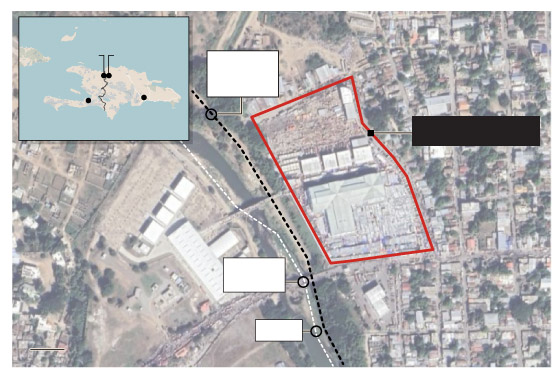
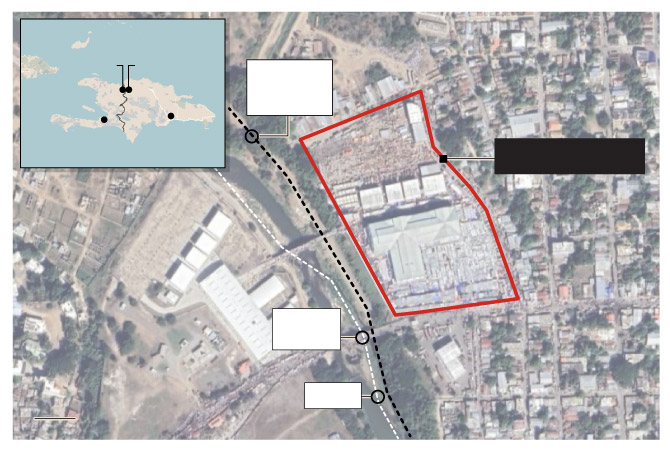
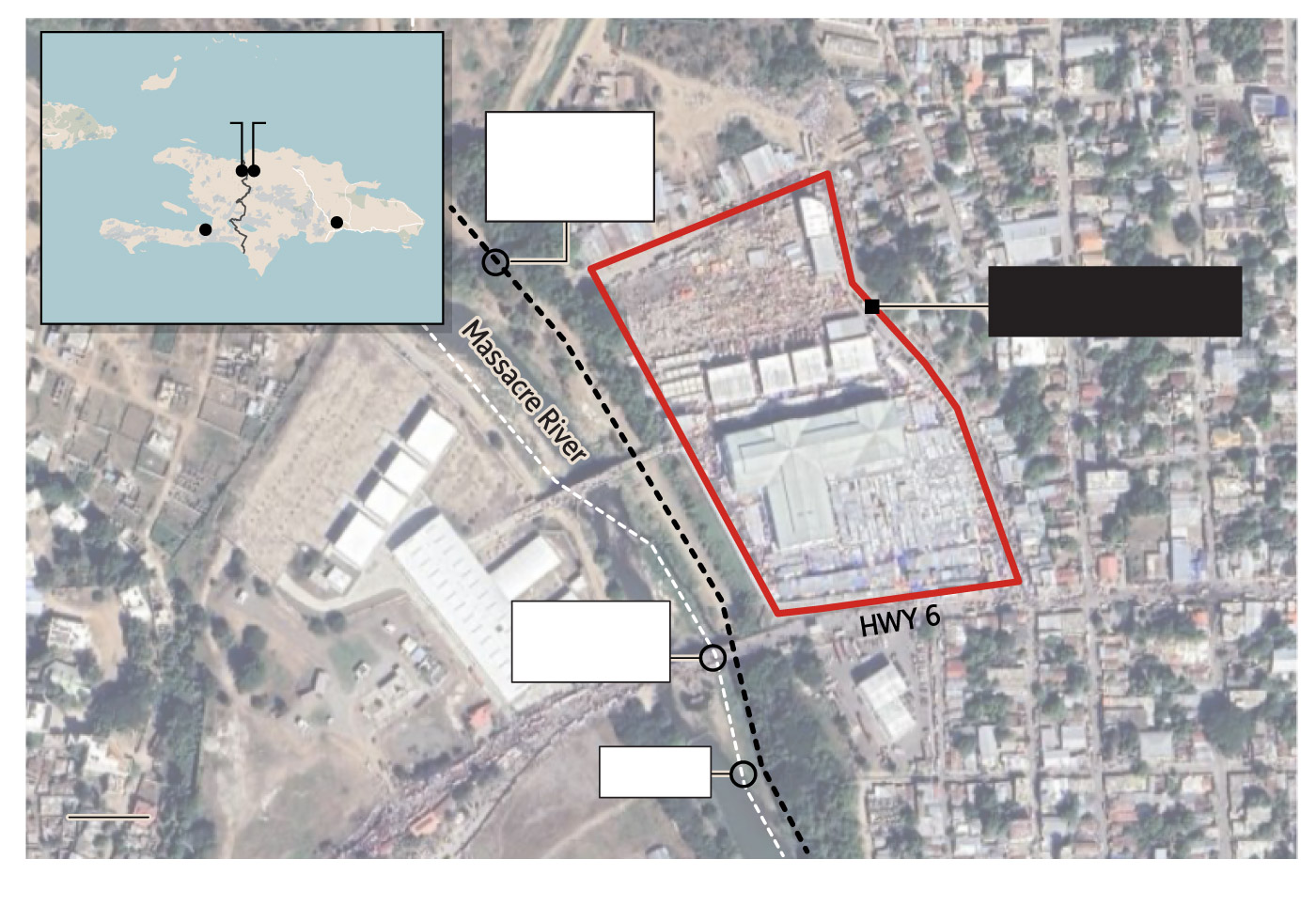
Occupying a site the size of about four city blocks, the market is centred on a cavernous, corrugated-metal building that shelters hundreds of stalls from the persistent, blazing sun. Hundreds more are packed along narrow laneways outside.
“We need to come here to make money. They need Haitians to do their work,” said Jeff Dorvilias, a lanky 30-year-old who lives in Ouanaminthe on the Haitian side and crosses daily to the market.
“If it wasn’t for Dajabon, Ouanaminthe would be on the edge of starvation. And if it wasn’t for Ouanaminthe, Dajabon couldn’t function.”
Ouanaminthe
Dajabon
Border wall
under
construction
HAITI
DOM. REP.
Santo
Domingo
Port-au-
Prince
Dajabon market
Massacre River
Dajabon
Ouanaminthe
market
HWY 6
Border
checkpoint
Ouanaminthe
Border
HAITI
DOMINICAN REPUBLIC
50 m
john sopinski/the globe and mail, Source: openstreetmap; google earth
Ouanaminthe
Dajabon
Border wall
under
construction
HAITI
DOM. REP.
Santo
Domingo
Port-au-
Prince
Dajabon market
Massacre River
Dajabon
Ouanaminthe
market
HWY 6
Border
checkpoint
Ouanaminthe
Border
HAITI
DOMINICAN REPUBLIC
50 m
john sopinski/the globe and mail, Source: openstreetmap; google earth
Ouanaminthe
Dajabon
Border wall
under
construction
HAITI
DOM. REP.
Santo
Domingo
Port-au-
Prince
Dajabon market
Dajabon
Ouanaminthe
market
Border
checkpoint
Ouanaminthe
Border
HAITI
DOMINICAN REPUBLIC
50 m
john sopinski/the globe and mail, Source: openstreetmap; google earth
This mutual economic benefit has led to an unusual arrangement in these borderlands.
During the day, Haitians can cross into the DR without a passport to use the market. Typically, they bring with them clothes from second-hand U.S. wholesalers (ubiquitous in their country) to sell. In Dajabon, they mostly buy food, often in short supply on the other side of the border.
If they venture far from the market, however, they can be stopped and sent back by the regular patrols of Dominican police and soldiers.
It’s a microcosm of the two countries’ larger relationship. The wealthier DR relies on labour from impoverished Haiti to run factories, farms and other businesses across the country. But Dominican authorities round up and deport thousands of Haitians daily, and President Luis Abinader is in the middle of building a wall along the border.
:format(jpeg)/cloudfront-us-east-1.images.arcpublishing.com/tgam/C3EPM2SFUNE7PMWTQ5V275AZLI.JPG)
:format(jpeg)/cloudfront-us-east-1.images.arcpublishing.com/tgam/YFOD4JYVPBD3TG2NKQYUVE4FKY.JPG)
:format(jpeg)/cloudfront-us-east-1.images.arcpublishing.com/tgam/QK4NPTNFBNDKVNIAQZSWN2XWFM.JPG)
:format(jpeg)/cloudfront-us-east-1.images.arcpublishing.com/tgam/V5NDFK22VJBHLL3GS3G5OMJJEY.JPG)
Amid the restless bustle of the market, there’s a desperate edge.
Selling sandals at one stall, Lima Anita said she has been coming here for 20 years. Business is particularly difficult right now. The worsening economy in Haiti has seen fewer buyers for her goods, while rising inflation and an unfavourable exchange rate between Haitian gourdes and Dominican pesos have increased her costs.
“Living conditions are getting harder and harder. Every day, I need to bring money home, but sometimes, by the end of the day, I don’t have anything,” said Ms. Anita, 51, a mother of five.
Her friend, Clunie Innocent, 40, said persistent gang violence and unemployment in her country have left the DR as the only viable place to make a living. “We come to this side because we don’t have any other options. We don’t have a government to defend us.”
At times, Dominican authorities have made their jobs more difficult, some Haitian vendors say. Jean Ronaldo, a clothing seller, recounted how customs officers have asked him for bribes while crossing the border for work. On one occasion when he wouldn’t pay, Mr. Ronaldo said, they confiscated his merchandise.
“They put their hands on me, they hit me several times. I had to leave everything I was selling,” said Mr. Ronaldo, 22. It was only the latest physical reminder of the difficulty in making a living: His right hand is mangled from an accident that happened while operating a sugar-cane processing machine at age 10.

Willy Dosius has a scar where a Dominican stabbed him in a dispute over money. He says he can't afford to travel to see a specialist to treat the wound.
Willy Dosius, 24, said a Dominican man stabbed him a week earlier during a dispute over a 1,000-peso note, equivalent to about $74, that he found on the ground. The doctors who stitched him up in Dajabon told him he should see a specialist in Santiago de los Caballeros, the closest big city in the DR, Mr. Dosius said. But he can’t afford it. So for now he’s continuing to work, hauling merchandise for others in the market.
“It went pretty deep and they weren’t sure what damage was done inside,” he said, lifting his shirt to show the wound. “I need a professional to know whether I have to get surgery.”
Frankelin Abreu-Gomez, a Dominican who runs a food wholesale operation, winces when he hears these stories. “The importance of the Haitians to the Dominican economy is crucial. If it were not for the Haitians, I wouldn’t be here,” he said. “When I see how Haitians are mistreated, it’s bad. It is a fact that it is happening.”
Haitians come to see the tall 23-year-old, who co-owns the business with his father, to buy everything from cooking oil to juice to resell on the other side of the border. Nearby, other food vendors pile up their offerings in the hundreds: boxes of hot peppers, live chickens, canned vegetables, dried beans. A PA system next to a makeshift café-bar blasts upbeat Latin pop.
Other parts of the market offer bicycles, pots and pans, hygiene products, fresh fruit, juices and plates of criollo cuisine.
Waiting for fares at a moto-taxi stand behind the market, driver Pocho de la Cruz Jimenez said he was glad for the cross-border commerce. “It benefits them, it benefits us. Two equal countries.” But he favoured at least some of the tighter border security the government is promising. “The wall will help to control contraband. They used to steal motorbikes and take them to the other side,” said Mr. de la Cruz, 32.
:format(jpeg)/cloudfront-us-east-1.images.arcpublishing.com/tgam/ZTUNFAZFLFF5LF3OXVLSA2FHVE.jpg)
:format(jpeg)/cloudfront-us-east-1.images.arcpublishing.com/tgam/6DLHUGNAIFH7RM6DRUXWG3YJFM.JPG)
:format(jpeg)/cloudfront-us-east-1.images.arcpublishing.com/tgam/GJY3VYYR65AC5HOIS67475WAZA.JPG)
:format(jpeg)/cloudfront-us-east-1.images.arcpublishing.com/tgam/6UONIXFYXJFTRCHEHLUFNMESOU.JPG)
Atop a berm on the Dominican side of the river, just a stone’s throw from the market, the concrete and metal wall is under construction. Many of the people working on it, ironically, are Haitians. Just down the embankment, families bathe in the water. Cattle and goats graze nearby.
In November, Haitians protesting the border crackdown blockaded the bridge, bringing commerce to a standstill. The Dominican government dialled back the number of deportations, but they are still a daily occurrence. Guards also bar entry to those they suspect are trying to slip into the country permanently rather than merely use the market.
One recent Friday morning, Richardson Forvela was turned back a half-dozen times. The 14-year-old, who carried a bag of shoes he said he was taking to his mother’s market stall, said guards typically assume unaccompanied minors are trying to illegally immigrate.
“I’m embarrassed because I can’t get in. But there’s nothing I can do,” he said as he stood at the side of the bridge, watching the crowd rush by.

Some Haitians rush to make it to the market before others. Many will buy food – an increasingly scarce commodity in Haiti – on the Dominican side.
For many of the Haitians in the market, a better life looks something like John Paul’s. Living in the Dominican Republic’s agriculture belt a few hours away, the 42-year-old was brought to the country by his aunt as an adolescent.
After stints working low-paid construction and farm jobs, Mr. Paul ultimately landed steady work at a cocoa-bean processing plant. His monthly salary of 18,000 pesos, about $440, is enough, he said, to provide for his wife and two children. He’s held down his job for 17 years.
“I’m treated well. I get paid, I have insurance. I have the freedom and ability to do my job. They respect me,” he said. “I’m lucky that I’ve never been deported, never been targeted. In my neighbourhood, I haven’t experienced any attacks or anything that’s made me uncomfortable.”
Still, even he hasn’t been able to escape some entrenched discrimination. When his older daughter turned 18 this year, she went to get a government identification card. Despite having been born in the DR and raised speaking Spanish, the government turned her down because her parents are Haitian. The ID is necessary for attending university, leaving the family at a loss over what to do.
“My children were born here. They have Dominican birth certificates. They have never been to Haiti. They don’t speak Creole,” he said. “But they are treated as foreigners.”

Haitians leave Dajabon along the border bridge at the end of another market day.