The business

of colour analysis
is booming
— again

TKTKT

Are you a Winter, Spring, Summer or Fall? Chances are, if you’ve been on social media lately you’ll know we’re not talking about your favourite season or your preferred time of year to go on vacation.
Colour analysis, originally a trend from the 1980s more popular than contour blush at the time (think Carole Jackson’s book Color Me Beautiful), has made a resurgence with a new generation of glow-up acolytes. Carol Brailey, who has 330K followers on TikTok, is perhaps Canada’s most famous expert, but there are now hundreds of studios across the country.
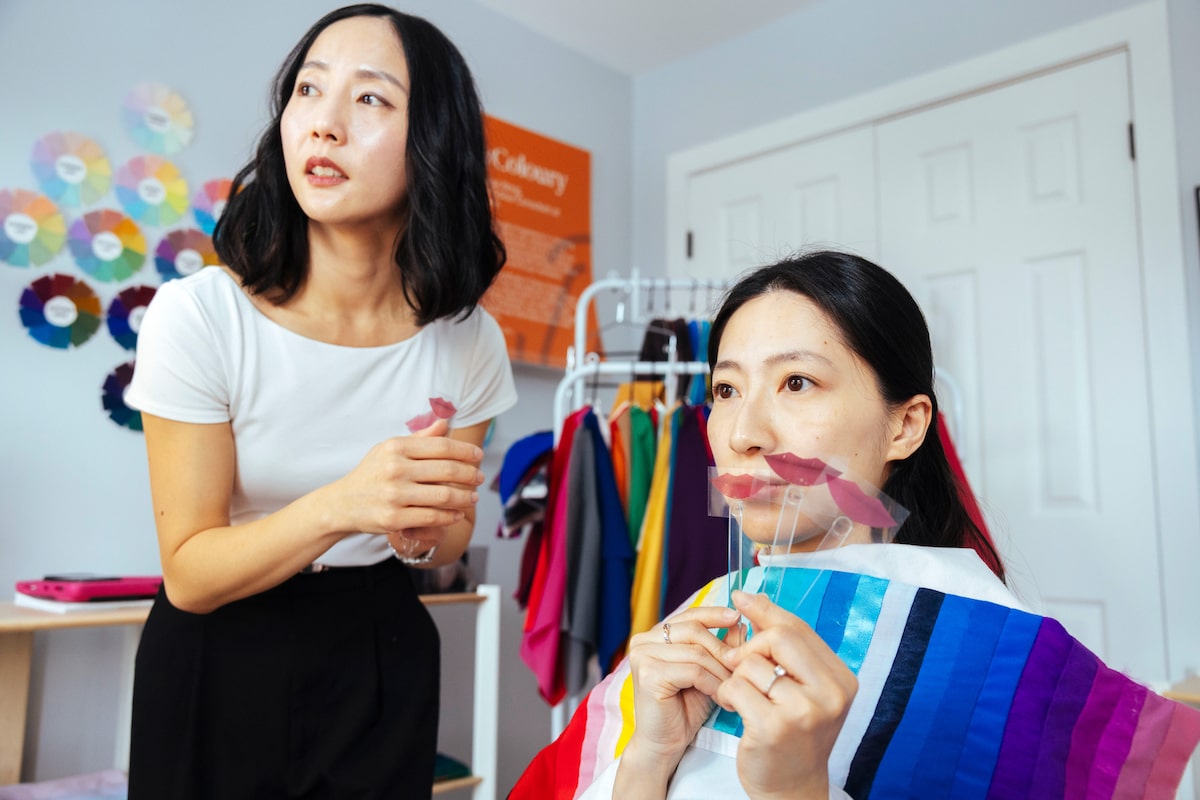
“Suddenly everybody wants to book an appointment,” says Yan Jin, who opened her colour analysis studio, Yan’s Powder Room in North York, Ont, after training in Korea and at Image & Style International in Montreal. It started as a side hustle in 2023, but quickly she found it took over full-time.
Ms. Jin gets everyone from teenagers to retirees to groups of friends and bachelorette parties, all predominantly women, coming to see her for 90-minute sessions, after which they leave equipped knowing their season, along with makeup and hair colour recommendations.
The goal, says MyColoury’s Jessy Wong, a Markham, Ont.-based colour analyst who works with people around the world, is personalization over trend-chasing. “We help people find colours that suit their natural features, their natural colouring,” she says, “just to make life a bit easier for them when it comes to shopping, dyeing their hair and buying makeup.”
But it’s not just a gut feeling. These experts use the science of colour theory. They look at three main things across skin, hair (if it’s your natural colour – if not they cover it with a cloth) and eye colour: undertone (cool or warm), value (light and dark) and intensity or saturation (muted versus bright). By establishing these base traits and then draping clothes of various colours near your face, they find your season. Winter and summer are the cooler seasons, and spring and autumn, warmer.
The “right” colours for you will decrease dark circles and redness or sallowness. It’s things you probably notice about yourself in the mirror when you wear a certain colour but can’t put your finger on it, adds Ms. Jin. “You look brighter. Your eyes are shinier. You don't look tired.”
Ms. Jin and Ms. Wong, like most colour analysts today, use a 16-season system, which is more inclusive than the historic system where there were just the four categories. There is no one school of training; systems with subtle differences are taught in Japan and Korea.
Seeking out this sort of fashion and beauty advice is nothing new. From “dos and don’ts” to trend reports to “who wore it best?”, shoppers have long turned to experts to tell us what’s in or out. (Experts who, let’s be honest, probably want to sell us something.)
 Jessy Wong runs MyColoury, a Markham, Ont.-based colour consultancy.
With colour analysis, Ms. Wong, who worked in corporate marketing before launching her business in 2023, says she’s trying to stop that overspending. Most clients, she adds, are looking to streamline their wardrobes but don’t know where to start.
“They're confused. They feel like they're always buying black, white, gray, brown, and that everyone is always wearing the same colours,” says Ms. Wong, who was trained at the International Image Institute in Toronto as well as in Japan and Korea.
The appeal of colour analysis offers a reprieve from the “wear this, not that” noise because it’s advice catered to you. It’s also psychologically effective in a world where, for better or for worse, how we look is so deeply connected to how we feel about ourselves inside
“You look brighter. Your eyes are shinier. You don't look tired.”
- Yan Jin
“People wanting to understand what suits them best goes back in line with this idea of personal style – but also personal improvement, always striving to be your best,” says Toronto, Ont.-based trend forecaster Tamara Szames.
Social media has become the perfect outlet for this trend because by nature it feeds us snack-size solutions to our problems, big and small.
Then again, the very nature of social media can make trends like colour analysis sometimes feel flash-in-the-pan, over before they’ve even taken off. Where does this leave these emerging businesses investing their time and money in a “trending” service?
With plenty of opportunity, according to Ms. Szames.
She believes tomorrow’s shoppers are going to continue to expect this level of personalization and beyond – whether it’s these types of hands-on consultations or via emerging AI technology.


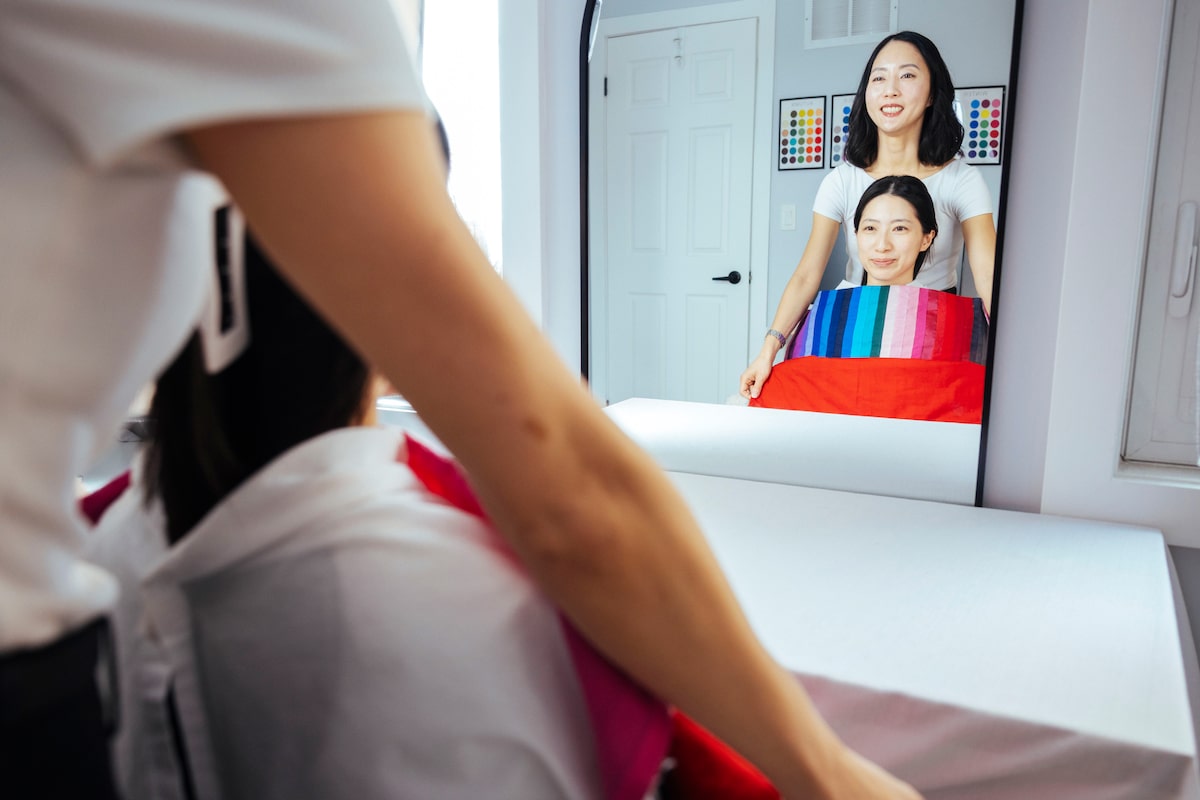 Experts like Wong use the science of colour theory to help clients find the “right” shades for them.
Indeed, StackAdapt’s 2026 The State of Personalization in Digital Marketing report found that 99 per cent of agencies say personalization in digital marketing directly drives client revenue growth. How does this apply to fashion and beauty businesses? Think: apps that will store your season as well as your size, your favourite brands and help you curate a wish list.
“It's going beyond fashion and beauty and more into personal branding and image,” says Ms. Szames, who expects growth in professional and executive coaching as well as personal styling.
In fact, colour analysis businesses sit squarely at the heart of a number of growing consumer trends. According to Forrester’s 2026 B2C marketing, customer experience and digital business predictions, premature generative AI self‑service experiences will erode customer trust at approximately one‑third of brands in the next year. The analog, in-person work of colour analysis, on the other hand, serves the growing group of consumers seeking “richer, more sensory interactions that digital channels can’t replicate,” – one third of consumers, according to the report.
 Ms. Wong with different colour cloths she drapes around a client’s face to help them find their ideal palette for hair, makeup and clothing.
It helps that the experience is fun and the results can be gasp-worthy. Reactions from her clients are the best part, says Ms. Wong, who regularly gets updates from them about how her service has changed their life. “I’ve had one or two people cry in the chair,” she says. “People who have skin issues, and when they see a colour that actually makes [the issues] fade away, they tear up because they're like, ‘I was so self-conscious about XYZ on my face, and I didn't realize this colour emphasized it.”
It’s the people who make it all worth it, agrees Ms. Jin. “At the end of the day, I want this person to feel good, feel better, happier,” she says. “So far, it’s my favourite job,” she adds. “Hopefully I can do it until I’m 65.”