
After an election campaign like no other – featuring historic turnarounds and threats to our very sovereignty – Canadians have voted in a Liberal minority government. So how can we make sense of how we got here, and what comes next? Those were the questions bandied about by The Globe and Mail’s Robyn Urback, Andrew Coyne, and Gary Mason. They joined Menaka Raman-Wilms, the host of The Globe’s daily podcast, The Decibel, to discuss the path ahead for Mark Carney’s victorious Liberals, Pierre Poilievre’s chastened Conservatives, and Jagmeet Singh’s shattered NDP. (This conversation was adapted and edited from this episode of The Decibel.)

How the Conservatives pulled defeat from the jaws of victory

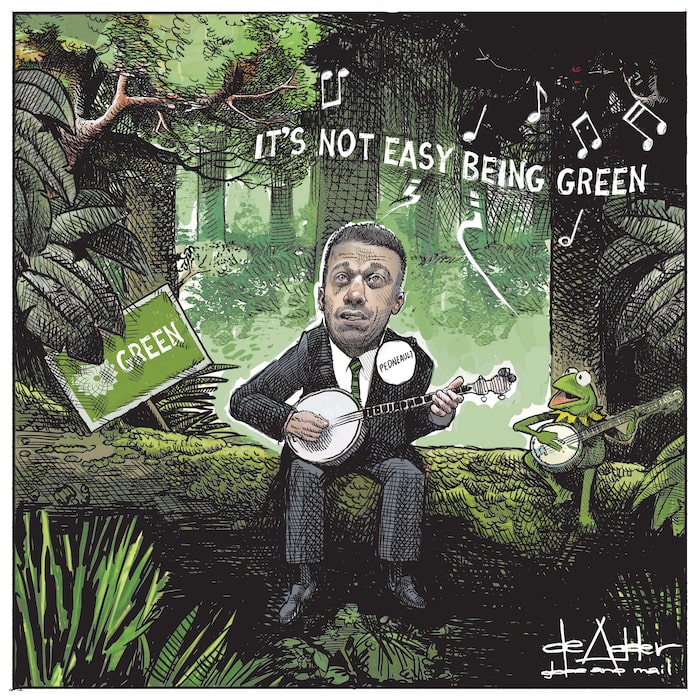
Andrew Coyne: [Pierre Poilievre] lost his own seat, I think for reasons particular to that riding. It’s an Ottawa riding. There’s a lot of public sector workers, as I understand it, who live there; he’s not going to necessarily be endearing himself to them. Plus people have memories of the Ottawa convoy and his encouragement and support of that. These are what people talked about as being possible reasons, but it’s very separate and distinct, I think, from the election as a whole. And yeah, the Conservatives got 42 per cent of the vote – that’s better than any federal Conservatives have done since 1988 – but that’s the kind of thing you say when you’ve lost an election. And I think the long and the short of it is that they had a 25-point lead weeks before the election, and here they are, still out of power.

Robyn Urback: To a certain extent, some of it was outside of his control. I know that we heard a lot about Doug Ford’s campaign manager, Kory Teneycke, saying that it was “campaign malpractice” to blow a 25 point lead. … But that’s not to absolve Pierre Poilievre and the Conservatives of the mistakes that they made throughout the campaign, which I think were numerous. And I think one of the most glaring ones, of course, was this failure to adapt to the changing conditions. It was almost as if they wanted to run against Justin Trudeau so badly that they tried to jam their old campaign strategy into this new election climate. It’s kind of like when toddlers have that toy where you have to put the star into the circle hole. They just kept banging that star and it wouldn’t go through the hole, and then finally they realized, okay, well, I need to find a different shape to get through. There was this real authenticity problem as well when it came to the Trump question … There was this discomfort with him taking that line, which was particularly odd for a guy like Pierre Poilievre, who has spent 20 years being an attack dog in the House of Commons. All of a sudden he’s like this little schnauzer that doesn’t know what he can do.
Gary Mason: To me, the surprise was that the Conservatives did as well as they did in the 905 area, because we were led to believe, certainly looking at this race from the West, it was like they were going to get blown out in that area, and that they were completely mishandling how they were campaigning in that area. So there’s some things that the Conservatives are going to be able to take from this, and that’s one: that they didn’t do as bad in … crucial parts of Ontario, as people said …The Conservatives gained a lot of votes from NDP supporters, blue-collar unionized supporters who turned their backs on the NDP because they were tired of identity politics and they felt that Poilievre did a better job speaking to them about affordability issues than Jagmeet Singh was doing.
Andrew Coyne: You know, the abiding strategy of the Liberal Party in every election since I was a child and probably before, is to say to NDP and progressive voters, “no, no, no, you can’t vote for the New Democrats. You can’t actually vote for the party that you support. You have to vote for us, because you have to work with us to stop the Tories from getting into power.” And when it works, it’s because the Tories, and the Tory leader in particular, scares the daylights out of progressive voters. When it doesn’t work is when the Tory leader is less scary. Pierre Poilievre was a definitively scary figure on his own, and then add to that the Trump thing. And so unless you’re committed to the Conservatives from the start and you’re worried about Trump, and you’re not terribly keen on Poilievre, and then along comes Mark Carney who seems to have been custom designed for this kind of crisis, then, you know, everything all adds up that people said, Okay, I’m really worried about Trump. I don’t think Poilievre has it in him, for various reasons to stand up to him, partly because he’s, as one Conservative called him, a “punk kid”, but partly because he’s got a base that he’s got to worry about.
What is Pierre Poilievre’s future as Conservative Leader?
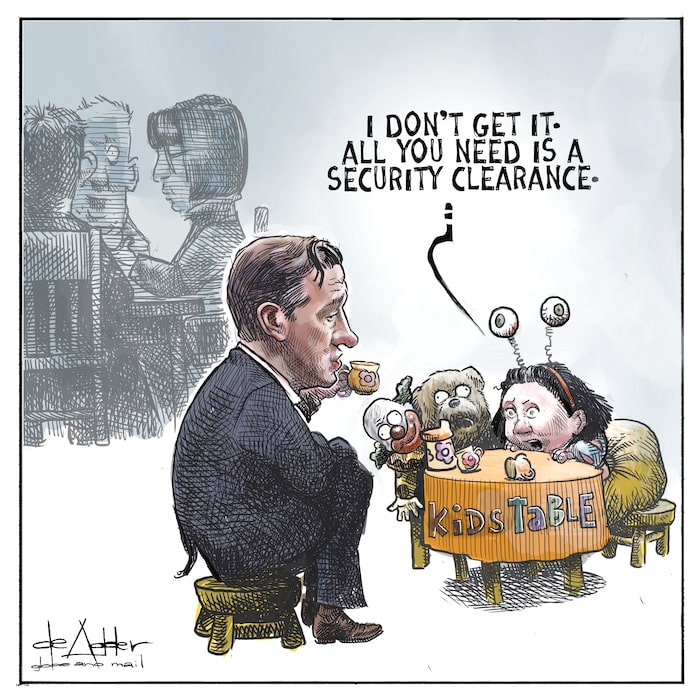
Robyn Urback: He says he’s going to stay on. That doesn’t necessarily mean that he’s going to. This is, to my mind, the first real humiliation for his political career. I don’t want to make any predictions as to whether he stays around or not, but I think it would be in the party’s interest, where they stand right now, to keep him around, even though the Conservatives … like to give these guys one shot and then kick them out. But if he does stay around, he’s got some work to do in the short term and the long term. In the short term, there’s very practical considerations. He doesn’t have a seat in the House of Commons. So first off, someone’s going to have to serve as the Leader of the Official Opposition in the House … So he has to decide, along with his caucus, who is going to serve in that role while he gets himself a seat. And to get himself that seat, someone’s going to have to effectively give up the job that they just won. We’re going to have to have a by-election, and he’s going to have to win in that by-election. So he’s going to have to pick a safe spot. … In the long term, there are bigger existential questions, if he does stick around, about what type of leader he’s going to be. And I think the dynamic changes a little bit after this election, by virtue of the fact that the People’s Party of Canada, has been basically obliterated.
Andrew Coyne: My guess is he’ll probably be allowed to stay, but he’ll be kept on maybe a shorter leash than he has in the past. And I would bet money that Jenni Byrne, his campaign strategist, will have to go. Particularly this business of picking fights with the premiers. On election night, it was really interesting – you had Poilievre giving quite a gracious concession speech, but meanwhile, he’s got his lieutenant Jamil Jivani basically declaring holy war on Doug Ford and the Ontario government. He just tore a strip off them up and down, and I doubt very much that that was unauthorized.
Gary Mason: Anybody who thinks that Doug Ford and Kory Teneycke are going to get rid of Pierre Poilievre are mistaken, because he’s incredibly popular in the West, and the West is where the heart of the federal Conservative Party is. So I don’t think Kory Teneycke is going to be calling the shots or nor is Doug Ford or anybody else. …He’s got some fences to mend, but I don’t think there’s any question that he’s going to stay in the job. He’s just too popular in the West.
How the Liberals won and what comes next
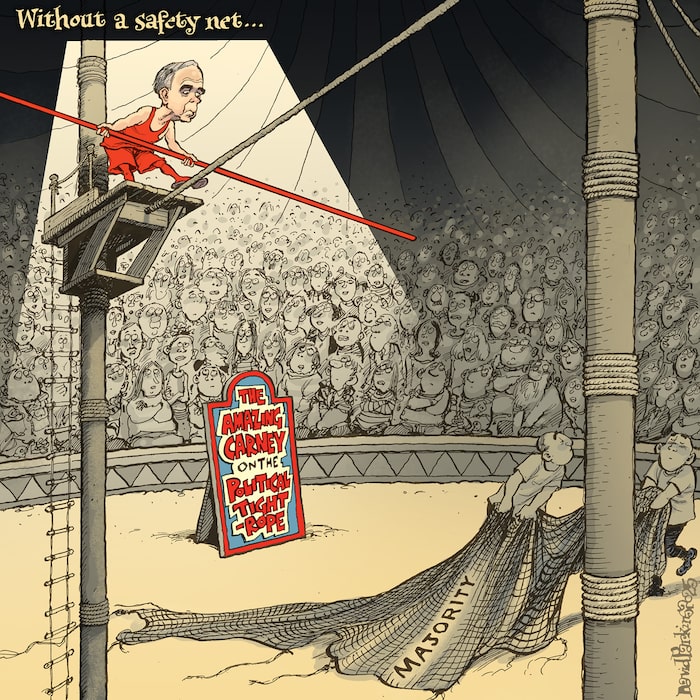
Gary Mason: I mean, obviously, for being in a minority situation, [Mark Carney] is in a pretty good minority situation. I mean, he’s only a few votes away from majority status. I don’t think it’s going to be difficult at all finding votes from the NDP or even the Bloc to move his agenda ahead. I mean, for all intents and purposes, he has a majority government, in my view. I don’t even think he’s going to have to make deals necessarily, with the NDP … the way that Trudeau did with Singh.
Andrew Coyne: Trump is still lurking out there and is a very combustible, unpredictable force. Secondly, we’re going to be possibly plunged into a recession, and any time you’re in government and a recession, things don’t go necessarily so well for you. Carney’s at the helm of a party that, until recently, was in really bad odor with the public, and they put that aside for now because they were dealing with Trump and because they liked the cut of Mark Carney’s jib. But you know, does that come back before long? Because people are reminded of the mistakes they made in the previous terms. So there’s reasons to think that, okay, he’s riding relatively high now, although on a relatively slim mandate.
Robyn Urback: We had our finance minister quit, we had our prime minister resign. Then we had to sit through a leadership race, and then we had an election, and all of these things were going on as we were being threatened with these punishing tariffs and possible annexation. So all of this was going on, and I think we’re at a point now where we have a plan for government, and we want to actually see things getting done now, to the best of our legislators’ abilities, with this minority Parliament. I don’t think there’s going to be a lot of patience for whomever decides to stand in the way. So for that reason, I think Mark Carney is in an advantageous position in that he can potentially put forward legislation and get it passed, because no one wants to be that obstacle after a volatile couple of months.
Gary Mason: Unless your name is Danielle Smith, in which case you don’t really care what kind of obstacles are in the way. I mean, Robyn, you mentioned that Pierre Poilievre was his own attack dog, but actually [the Alberta Premier] was his biggest proxy in that regard. I think those two are tight, and she is going to try and make life as miserable as possible for the Prime Minister, despite all this bafflegab about how Canada comes first, and how she’s always been lobbying for Canada, which is all bull.
How the NDP completely collapsed
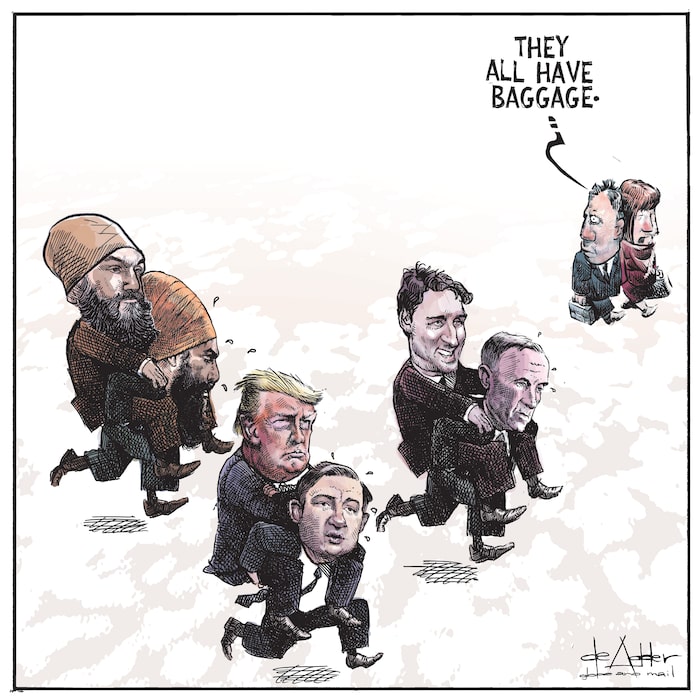
Andrew Coyne: We should be wary of writing anybody off. You know, the NDP was flat on its back in 1993 and they came back. The Conservatives were flat on their back in 1993; they came back. The Liberals were dead in 2011; they came back. So it’s not unheard of that party loyalties and party brands endure. [But] this is clearly the worst result the NDP have ever had. They, too, have their division between the sort of downtown progressives who are very interested in identity politics and the environment, and the blue-collar workers, maybe fewer in number these days, who are certainly being targeted by the Conservatives for support. But that urban-rural split remains a factor. They do have two provincial governments in the West that they can draw on as a basis of support. They’ve got a very popular premier in Manitoba, Wab Kinew, who people talk of fondly as a possible future leader. He’ll have some decisions to make in that regard. A leader can make a big difference, obviously, in our leader-centric politics. So I would urge them not to make any hasty decisions. Let the government make some mistakes.
Gary Mason: For all his qualities, Jagmeet Singh – he seemed like an inspirational choice at the time, but he was never going to fly in Quebec. In a resolutely secular province like Quebec, a turban-wearing provincial politician was never going to accumulate wide support, and then Bill 21 [a provincial bill banning some religious symbols in the public sector] came along that made it even more difficult for Singh and the NDP to build in a province that they desperately need if they’re going to call themselves a national party. They’ve got a big problem in Quebec, which is an important province for any political party. And then they also have the bigger problem, which is: what is the NDP now? What does it stand for?
Robyn Urback: I also wonder if they’ve lost some support permanently to the Conservatives. If you look at the success that the Conservatives had in southwestern Ontario this election, and some ridings that were heavily manufacturing-based, and even ridings … like the Kitchener-Waterloo area, where there are a lot of students – they seem to support the Conservative candidates. And that’s very different, right? We would have thought that would have been solidly NDP territory. NDP had the workers and the students, and that seems to be shifting. My view is that an NDP revival has to start on the left, and there’s room there now, frankly, because for the last decade, the Liberals were basically just taking that land as their own right and claiming that progressive territory and calling it Liberal with all sorts of different initiatives and promises under Justin Trudeau. And of course, some of it was implicit with things like pharmacare and dental care. They basically took NDP proposals and made them their own. So I think the Liberals have yielded that space now for the NDP to come back as that progressive party. … There’s still a healthy proportion of Canadians who want that progressive option, and I think a renewed NDP can provide that.
Listen to the full episode
For the best listening experience and to never miss an episode, subscribe to The Decibel on your favourite podcast app or platform: Apple Podcasts, Spotify, Amazon Music, iHeartRadio, Pocket Casts and Youtube.