To pick the perfect apple—or at least one that satisfies the fussy demands of blemish-averse Canadian shoppers—it takes swift hands and a strong back. A commercial picker has less than one second to assess an apple’s colour, size and quality, and then pluck it from a cluster of other fruit without knocking any to the ground. And they have to repeat that process a dizzying multitude of times each day, loading thousands of pounds of fruit into heavy harvest bags that will then be poured into bins bound for cold storage.
This, for the past 40 years, has been Roy Campbell’s job. Campbell lives in Montego Bay, Jamaica—or he does for four months of the year. For the other eight, he lives with seven of his fellow countrymen in a bunkhouse at Apple Hill Lavender Farm, just outside the town of Simcoe, in Norfolk County, a two-hour drive southwest of Toronto. Since first travelling to Canada in the mid-1980s as a seasonal farm worker—“I came the 23rd of July, 1985,” Campbell says, proudly rhyming off the date—he’s returned every year to the same small family farm, which grows apples and lavender. Each season, the 67-year-old earns roughly $25,000 after deductions, with he and his crew picking 50,000 pounds of apples a day.

Campbell is part of a brigade of about 80,000 foreign workers who keep Canada’s farms running and food on our plates. There’s been much scrutiny of Canada’s use of temporary foreign labour in recent years, even as domestic farmers increasingly struggle to find people willing to do the difficult job of harvesting their crops. That dynamic has come into sharp focus amid U.S. President Donald Trump’s crackdown on immigrants (undocumented or otherwise), which has seen him unleash waves of raids on U.S. farms, scaring away workers and leaving crops to rot in the fields.
It’s not just America’s food system that relies on offshore labour. Simply put, Canada’s agricultural sector would collapse if it weren’t for workers like Campbell. Which is why, when Conservative leader Pierre Poilievre in September said he’d scrap Canada’s temporary foreign worker program, he vowed to establish “a separate, standalone program for legitimately difficult-to-fill agricultural labour.”
Primary agriculture contributed nearly $32 billion to Canada’s GDP in 2024, and the sector employed roughly 223,000 people—35% of them temporary foreign workers. In labour-intense areas like fruits and vegetables—Norfolk County’s sweet spot—and greenhouses, more than half of all work is done by foreign hands. And even that’s often insufficient to meet demand. A 2024 report by the Canadian Agricultural Human Resource Council estimated that 28,200 jobs went unfilled during the 2022 harvest season, resulting in $3.5 billion in lost sales.
In few parts of Canada is this reliance more glaring than in Norfolk County, which bills itself as Ontario’s garden. These are my old stomping grounds—I grew up harvesting crops here, alongside seasonal workers from Mexico and Trinidad and Tobago, but also other area teens. You’d be hard-pressed to find any locals in the fields today, aside from the farm owners themselves.
“In Norfolk, it’s really hard to hire Canadian labour,” says Shawn McGowan, who operates Agri-Business HR Solutions. “I’ve got 600 jobs that nobody wants.” A while back, he thought he’d managed to hire four Canadian workers—they passed the interview stage (most locals don’t even bother to show up), toured the farm and were trained to pick apples. “They got there on their first day and were super excited,” McGowan says. “By the next morning, all their scan cards were on my desk. They’d quit.”
Yet Canada’s offshore labour force is largely invisible to the bulk of Canadians who live far removed from the nation’s food-producing regions—in other words, city folk. Likely the only time they even think about field labourers is when an accusation of abuse or injury makes headlines, and then it’s to view these workers largely as victims.
Campbell embodies the far more complex reality on the ground. Since coming to Apple Hill, he’s been able to buy land, build a house and start a small grocery business back home in Jamaica, where 8% of residents live in poverty and a minimum-wage farm worker earns the equivalent of just $3.46 an hour, less than 20% of what they make here. He’s put six children through school, and two sons have followed in his farmwork footsteps: His eldest works at a spread near Niagara Falls and the other in Florida. Sitting at a table in Apple Hill’s simple, air conditioned bunkhouse—the kitchen has multiple fridges, stoves and microwaves, and each bedroom houses three men with a full bunk bed apiece, the top bunk used for storage and the bottom draped with blankets for privacy—Campbell scrolls through photos showing the latest fruit of his labour: an ornate $2,100 front gate leading to his two-storey home.
Campbell is far from unique: Nearly every worker I spoke with in Norfolk has built a house or launched a business back home using the proceeds of their jobs here. “If you knew how many lawyers, teachers, nurses and doctors in Jamaica were built from this program because people can work and send their kids to school, you’d be amazed,” Campbell says. Still, the disconnect when it comes to understanding where the food on our plates comes from isn’t lost on him. “The Canadians who think this job is too hard,” he says, “ask them where they could get their fresh cucumber to eat, where they get their asparagus, their apples. They should appreciate it.”
Roy Campbell has been coming to Canada every year for the last 40 years from Jamaica, to work as a commercial picker at Apple Hill Lavender Farm near Simcoe, Ont. harvesting apples and lavender.
It’s barely 9 a.m., and the temperature is on its way to 30°C at Sandy Shore Farms, a 1,400-acre family-owned operation on the far-west edge of Norfolk. The name is apt: The county’s rich, sandy soil is some of the most fertile in the province, making it one of Ontario’s largest sources of asparagus, peppers, squash, zucchini and other vegetables. As for Sandy Shore, it represents the modern face of farming. Ken Wall carries the title of CEO. The HR department has a staff of four, and workers carry ID badges that they use to swipe in each day.
Sandy Shore isn’t just a grower. It also boasts a large processing plant that exports peppers and onions across Canada and the U.S. Wall says he and other Canadian processors have been fielding frantic calls from U.S. customers looking for vast quantities of produce. “These folks are saying their suppliers in California, Oregon and Washington have got ICE raids going on,” says Wall, who’s just back from an equipment-buying trip to California, where he also met customers. “Even without the raids, people are afraid to show up for work.”

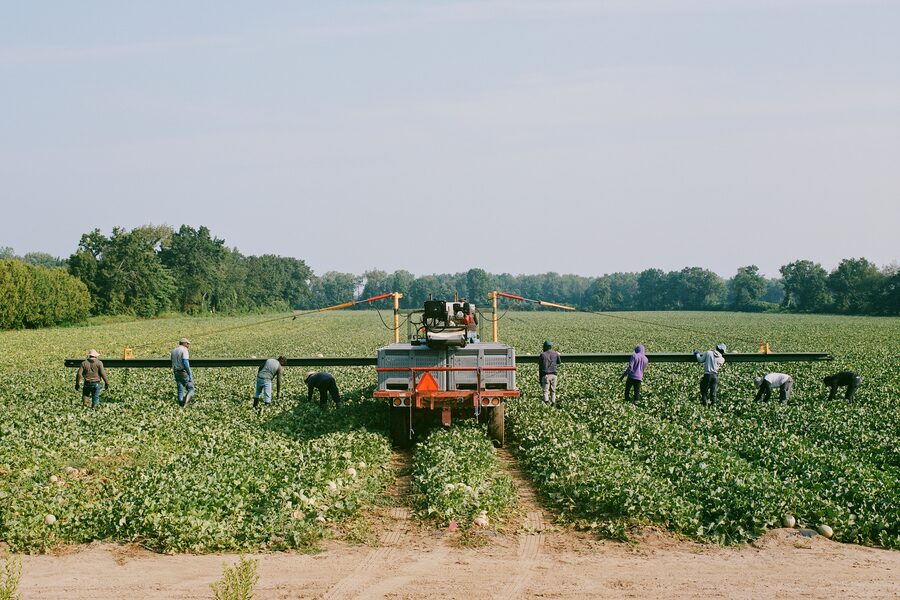
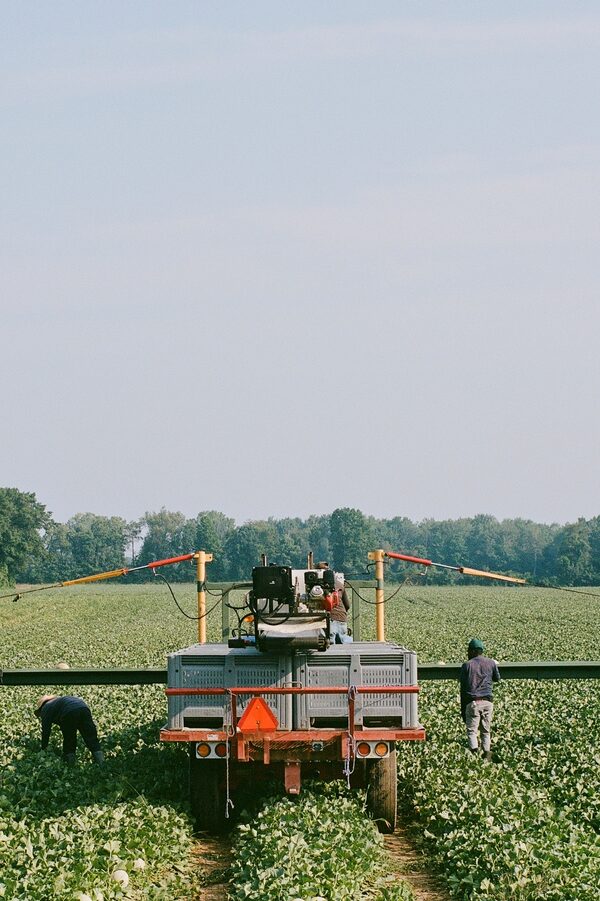
The Sandy Shore crew is already hard at work by the time I arrive in the sprawling field. Nine men sit on individual seats behind a tractor, picking the right side of a row and tossing green peppers onto a 45-foot-wide conveyor-belt contraption nicknamed the donkey. Nine more walk ahead, plucking vegetables from the other side and tossing them into hampers. All seem impossibly overdressed in sweatshirts, hoodies, hats and pants, but no one seems to break a sweat.
Shaniel Murray, who’s been coming here from Jamaica for five years, offers to show me the ropes. I’m quickly humbled. Murray’s hands dart into the leaves and pull out softball-sized bell peppers while I hamfistedly rummaged about. “You’re doing good, mon,” he lies.
You’d never know I actually used to get paid to do this. I started picking vegetables (including peppers) at 14, and after a couple of years, I graduated to tobacco. It was so common for kids to do this kind of work—and so necessary—that the high schools looked the other way when we skipped the first few weeks of school to complete the fall season.
Now here I was, drenched in sweat, huffing to keep pace as pickers from Jamaica and Mexico—some with 10 years on my 51—raced each other to the end of the half-kilometre-long rows. At the farm’s busiest, during the spring asparagus harvest, more than 200 men come here from Mexico, Jamaica, Trinidad and Tobago, and El Salvador.
For Wall, who left the family farm as a young man to work as a corporate lawyer in Vancouver, it’s a stark contrast to how things looked when he returned three decades ago. Back then, 300 to 400 locals worked here. Now, locals account for roughly 20% to 30% of Sandy Shore’s work force, mostly in the head office and processing plant. “We run job fairs in the community, and you’ll get people who last an hour or until noon,” he says. “A lot of produce comes out of this community, and there isn’t one grower who would survive without access to the offshore program.”
He’s referring to the Seasonal Agricultural Worker Program (SAWP), launched in 1966, which covers labourers from Mexico and the Caribbean for up to eight months, as well as the agricultural stream of the temporary foreign worker program, which allows farms to employ workers for up to two years. In both programs, employers must first prove that no Canadians or permanent residents could be found to do the work.
Back in the field, I ask Murray—who’s launched an import and resale business back home—why he thinks no Canadians want his job. He laughs. “I’ve heard people say it doesn’t pay enough—maybe that’s it. It’s raining and cold sometimes. But I’ve been here five years, and I’ve never seen a Canadian in the field.”
He’s right about the pay—depending on their responsibilities, Murray and his crewmates make slightly more than minimum wage, which in Ontario is $17.60 as of Oct. 1. For a Canadian trying to pay for housing and transportation, that’s barely enough to live, even in Norfolk County. But for these workers, it’s a solid middle-class wage, especially when employers largely cover the workers’ costs, though they can recoup some money for airfare under SAWP (but not all do) and deduct $2.75 a day for utilities. On-site rent under the TFW ag stream, meanwhile, is capped at $30 a week.
Workers face other deductions that many feel are unfair. On top of paying taxes, they contribute to EI, though the majority aren’t eligible to receive any benefits. They also pay into CPP and can claim a pension when they retire, though the reams of paperwork involved means not all do.
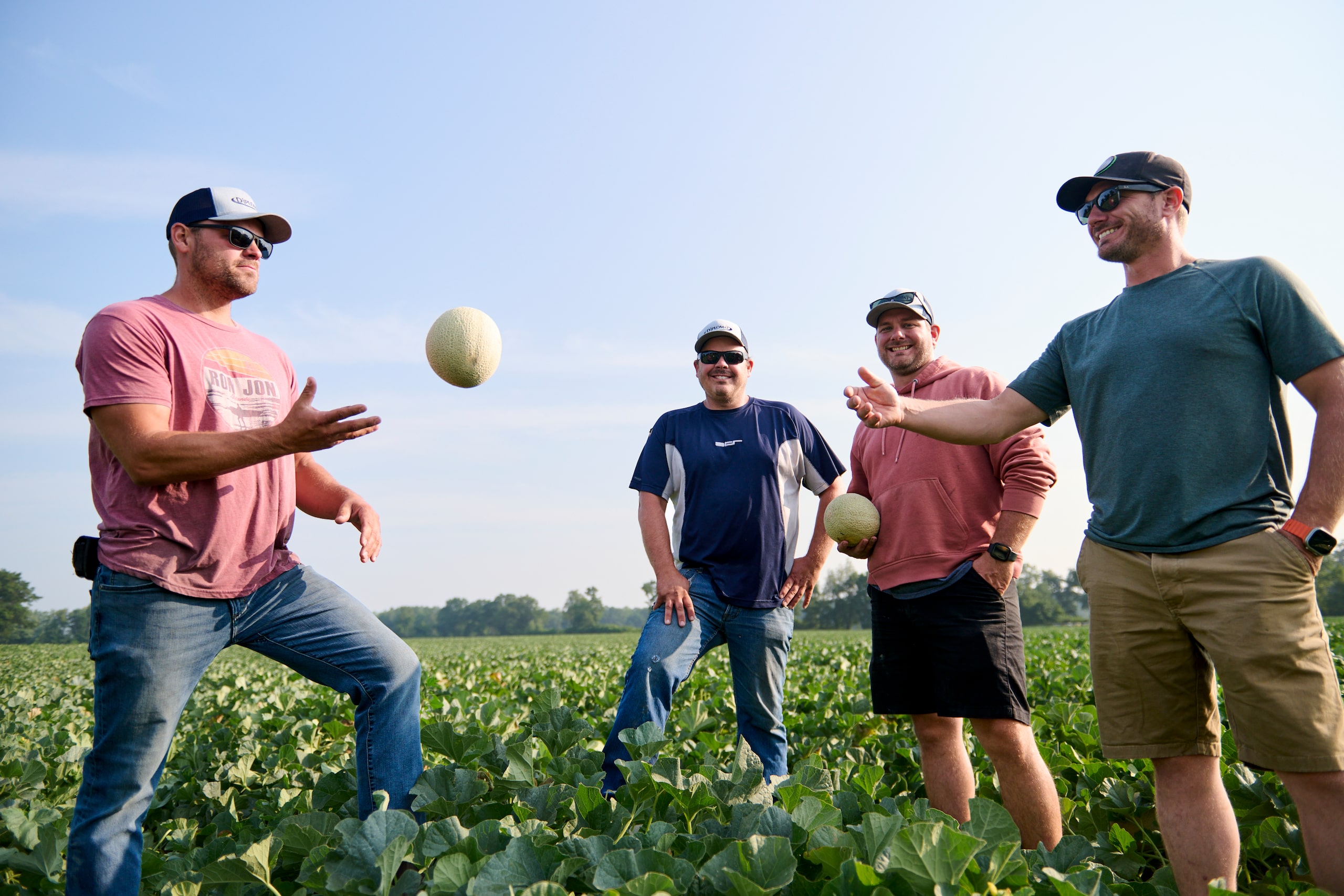
Farm work can also be brutal and hot, and the hours punishing—and overtime rules don’t apply. “The weather dictates how much work has to get done,” says Nathan Cebulak, a fourth-generation farmer who employs 140 Jamaican workers at the vegetable, ginseng and tobacco farm he co-owns near Delhi, Ont., alongside his brother and two cousins. “We don’t just close the doors at 6 p.m. If it’s going to rain tomorrow and the fruit is ready to come off, it’s go time, even if it’s a Sunday.”
“When you look at the minimum wage and you hear people say ‘cheap labour,’ they don’t realize at the end of the day that offshore is not our cheapest labour. It’s our most reliable labour.”
– Nathan Cebulak, fourth-generation farmer and co-owner of Cebulak Family Farms
For the guys I talked to, that’s a feature, not a bug. One Mexican worker at Sandy Shore, José Diego Canul Matu—who, like many workers here, transfers to another farm during lulls between harvests—explained it succinctly in a mix of Spanish and broken English: “Mucho trabajo, mucho dinero.” A lot of work, a lot of money.
That, says Cebulak, is why these seasonal labourers are so highly prized. “When you look at the minimum wage and you hear people say ‘cheap labour,’ they don’t realize at the end of the day that offshore is not our cheapest labour. It’s our most reliable labour.”
You only need to speak with a handful of workers to get a sense of the financial freedom these jobs offer. Many, like Campbell, now own homes and businesses back home. Antonio Galindo, now a team lead at Sandy Shore after six seasons, bought land near Puebla, Mexico, two years in; he now farms coffee and is building a house there. His coworker José David García Pérez built a house in the small city of Taxco. He plans to retire when he turns 50, in about 13 years. “If it’s earlier,” he says, “even better.”
I met Sylvester at an offshore workers’ event at Trinity Anglican Church in Simcoe. He’s been coming to Canada for 24 years from the Mexican state of Chiapas, where his family lives in a fishing village and relies on the money he sends back. At home, he says, “if we don’t work today, there is no food on the table. The truth is, from here, I was able to pay for my children’s schooling and get a house.”
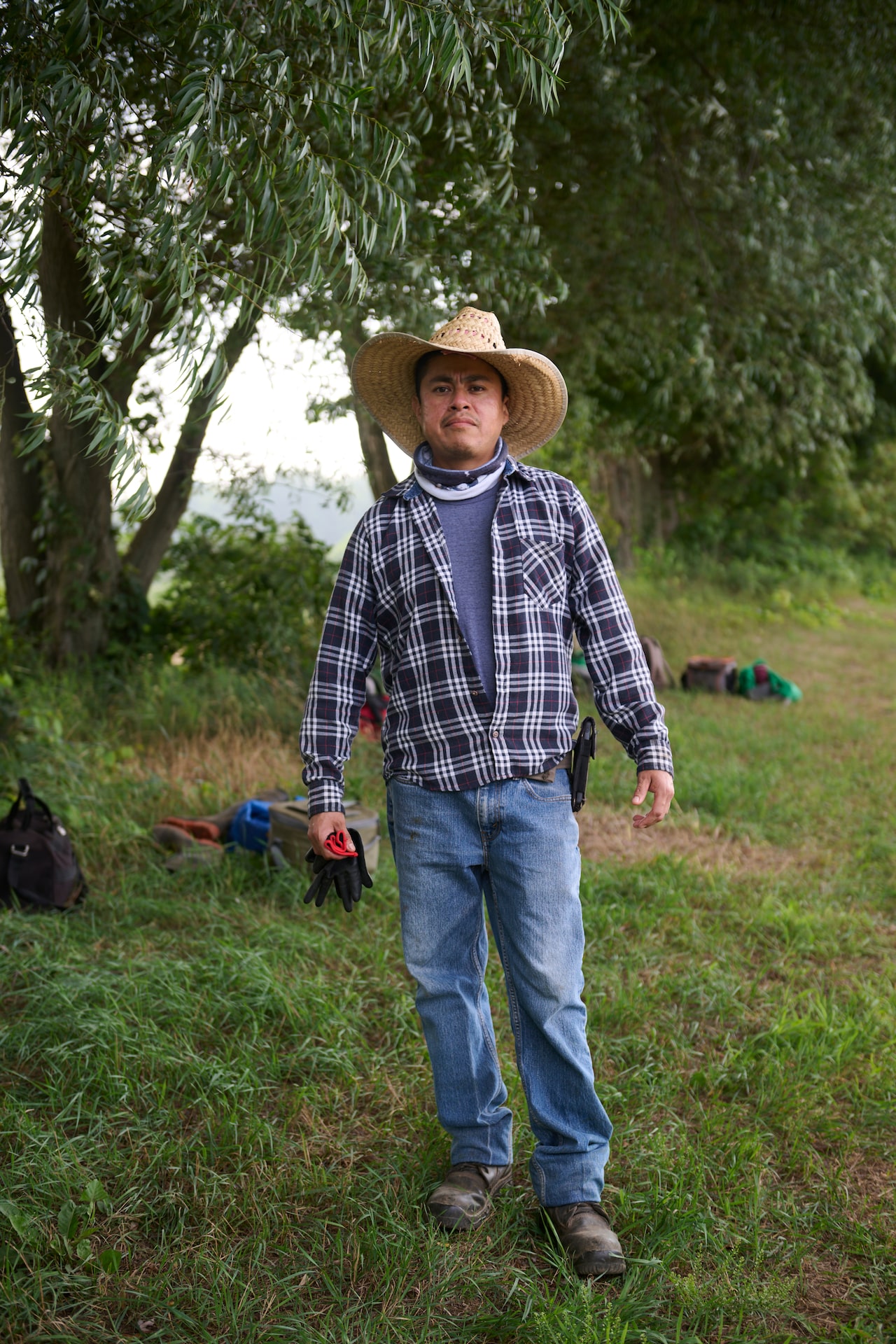
Brenton Wood joined Cebulak Family Farms nine years ago. After three seasons, he bought land in Jamaica and started to build a home. “Because of our tropical weather, you can take as long as you want to build your house—you don’t need to put a roof on right away,” he says. Each year, he chips away at the project, sending home $500 to $600 some months. In Jamaica, that’s equivalent to a month’s worth of groceries for a family, plus utilities.
He’s also amassing a trove of goods to take advantage of shipping services that cater to offshore workers, who cram crates with non-perishable food, electronics, clothes and even generators, and have them shipped back by ocean. (One liquidation store in Simcoe has stacks of generators for sale geared to this clientele.)
Wood has begun to fill this year’s crate with kitchen equipment for the catering business he’s launched, along with hardware for his house. He figures he has about four years left before it’s done, roof and all.
You’d be excused for assuming that Canada’s agriculture sector is rife with abuse and exploitation. Certainly there’s no shortage of reports of workers living in poor conditions, being injured on the job or even killed. And a report last year from the United Nations Human Rights Council—citing widespread overcrowding in bunkhouses, the closed-end nature of work permits and a lack of union representation—called Canada’s temporary foreign worker (TFW) program “a breeding ground for contemporary forms of slavery.”
The first plane-load of farm workers landed in Canada in 1966, but it’s only in the past five or six years that things have changed substantially for the better, says Leanne Arnal, manager of community development for Catholic Community Services of York Region, who’s been advocating on behalf of Caribbean workers in Norfolk for 15 years. “I think we need to stand behind the farm owners and the international farm employees who are doing the work,” she says, adding that 98% of farm owners are responsible. “It’s the 2% that are the problem—and 2% is still a large number of people who might be mistreated or living or working in unsafe environments.”
It’s worth noting that farms are some of the most dangerous industrial work environments in Canada. In the past decade, an average of 62 people died in farming accidents each year, according to the Canadian Agricultural Safety Association, 80% of them owners/operators, their children, spouses or other relatives. Hired workers accounted for 11%. That 62 is an improvement from the 1990s, when nearly double the number died annually.
Althea Riley, head of the Jamaica Liaison Service based in Toronto, forcefully rejects the characterization of widespread abuse. An arm of the Jamaican government, her team recruits and vets workers in Jamaica and is responsible for ensuring their welfare once they’re in Canada. Each of the 640 farms that employ Jamaican workers—8,400 in all—is subject to at least two unannounced visits each season. If the liaison office uncovers abuse that it can’t resolve, it can remove the workers immediately and bar the farm from using Jamaican labour in the future. It has done so in four cases over the past three years. “There’s this misconception of the workers being slaves. Personally, I find it offensive,” says Riley. “If somebody like myself, who was born and raised in Jamaica and really understands what slavery is and the depth and atrocity of slavery, then you wouldn’t compare this to being a slave program.”
These workers come to Canada willingly, and they’ve been doing so for nearly 60 years, sending home about $380 million in 2024, according to the Bank of Jamaica, an amount equal to roughly 1.5% of its GDP. “The program isn’t perfect,” she says, “but there are improvements being made and have been made over many, many years.”
Others defend the program. FARMS, or Foreign Agricultural Resource Management Services, is a farmer-owned non-profit set up in the 1980s to handle the administrative and logistical side of bringing SAWP workers to Ontario. “We get a lot of blowback about worker protection, but we tend to find a lot of those concerns happen outside of SAWP, which is under a constant microscope,” says Andy Vergeer, the organization’s vice-president.
Riley also notes that farms range drastically in size—from one worker living in a trailer on a family farm to corporate operations housing hundreds of labourers in multiple bunkhouses, all of which face regular inspections both by local health authorities and the liaison office. It makes a cookie-cutter approach to regulating housing difficult, but she says, “we’re satisfied with 95% of our workers’ accommodations.”
Building suitable housing is a considerable undertaking. Jennifer Schooley, who co-owns Apple Hill, built a new bunkhouse three years ago, complete with air conditioning and a large kitchen, at a cost of $385,000. Cebulak estimates that 80% of the housing at his family’s farm was built in the past eight years, exceeding local health unit requirements. At Sandy Shore, its two newest bunkhouses went up five years ago at a cost of $1.4 million to house 80 workers. The buildings accommodate two to three workers per room, while several of its other bunkhouses were converted from old farm homes.
It was a welcome change for José David, a Mexican worker at Sandy Shore, who spent a year at another farm where workers shared bunk beds in a garage: “It was all ugly. One gets depressed after so much time living in a house in bad condition.”


Attendance is taken before the start of the workday at Cebulak Farms. Nathan Cebulak estimates that 80 per cent of the workers housing at his family’s farm was built in the past eight years.
For Wall, providing his workers with a safe and comfortable work environment is a matter of self-interest. “Any business person who treats their employees with contempt or puts them in substandard housing is destined to fail,” he says. “As much as I want to pat ourselves on the back for our guys being happy and content, we do that because it ensures the greatest likelihood of success for us as a business.”
There are some challenges, though—space and capital being the biggest. “These guys are here for a long time, and it would be lovely if we could get everyone their own room,” says Amanda Doughty, head of HR at Sandy Shore. That would be hard enough at her operation, which employs more than 200 seasonal workers. For even larger farms in the region—some with 600 on the payroll—it would require buildings the size of a hotel. “Realistically, how do you do that from a space perspective?” she says. For one thing, zoning rules restrict the number of buildings per lot and include strict regulations around the size of septic systems, since urban sewer systems don’t extend out here. Plus, additional buildings eat up crop space. “We’re saying to the government, there are grants for everything under the sun,” says Doughty, “but where are the grants for maintaining bunkhouses?”
A bigger-picture concern is giving workers who want it—and not all do—a better shot at permanent residency. Some who seek it out do succeed, but that’s rare. And with Ottawa tightening immigration inflows, it’s only getting harder.
Sylvester, the worker from Chiapas, told me that an organized crime group in Mexico kidnapped his nephew last year, forcing the family to move for safety reasons. “Last year I didn’t want to return to Mexico,” he said through a translator. “This year I don’t either.” But then he looked into the hoops he’d need to jump through to obtain permanent residency, despite working in Canada seasonally for nearly a quarter of a century. “Sometimes I feel like applying, but sometimes you shut down: Where would I go? Where would I rent, work? How would I manage?”
Others are pushing ahead. Dwayne Serfe has been coming from Jamaica for 12 years and now works at Cebulak Farms. He switched from the SAWP to the TFW agriculture stream, allowing him to work year-round packing produce and doing maintenance. He first applied for permanent residency in 2023, and the process is ongoing. “It would be better for the kids to grow up in Canada,” he says. “More free. It’s safer here.”
Later, Nathan Cebulak tells me: “If anybody deserves it, it’s him. He’s such a key guy to us.”

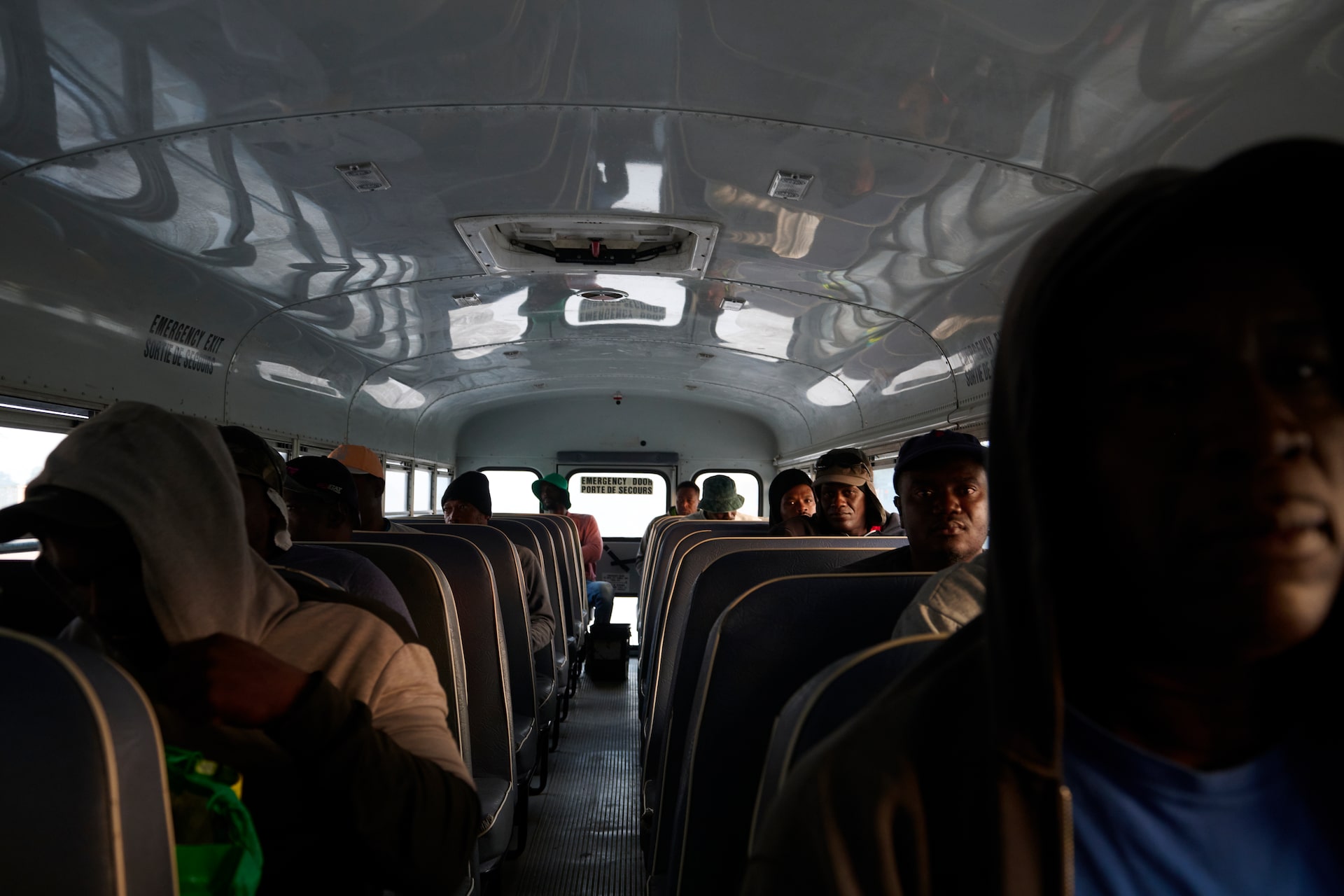
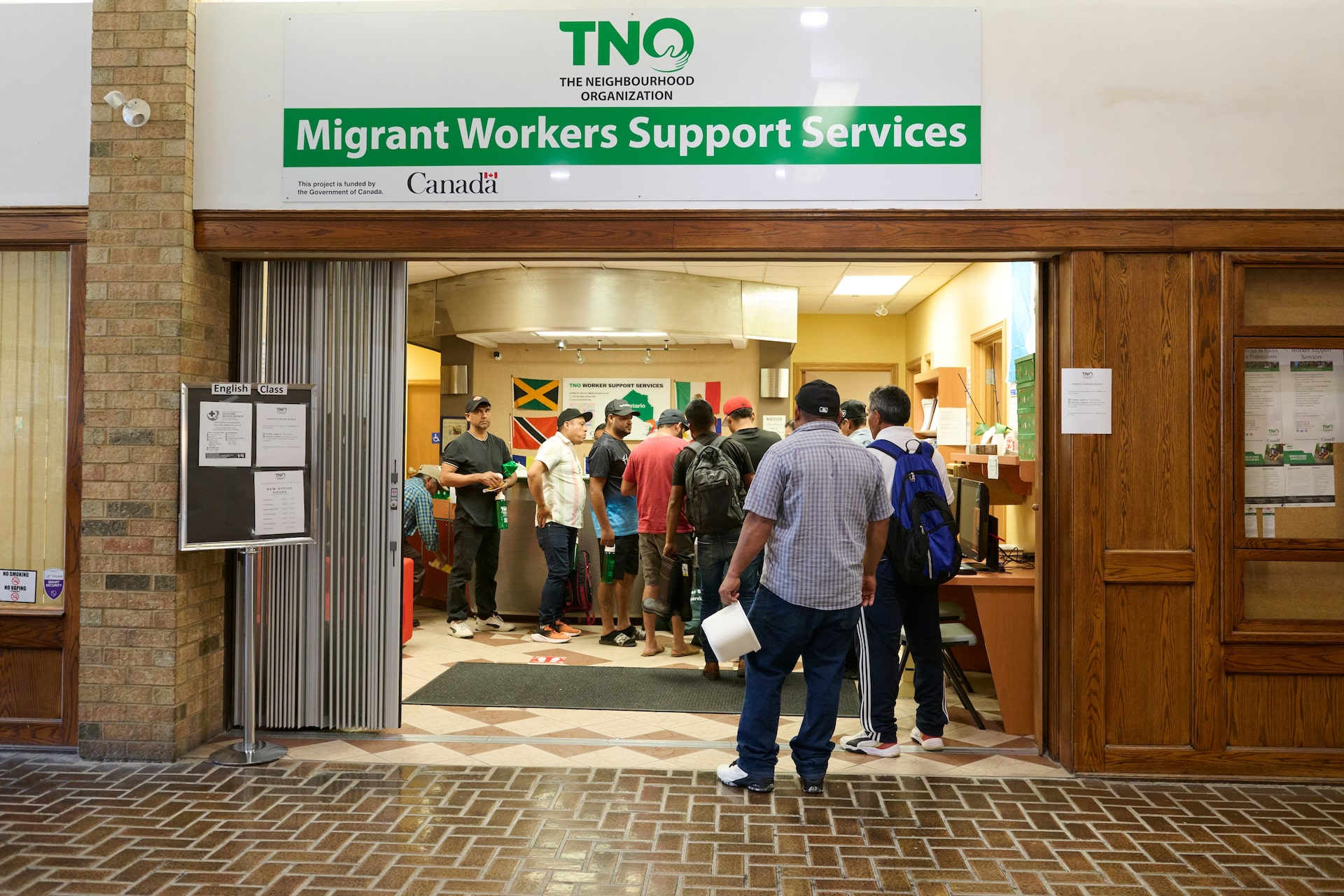
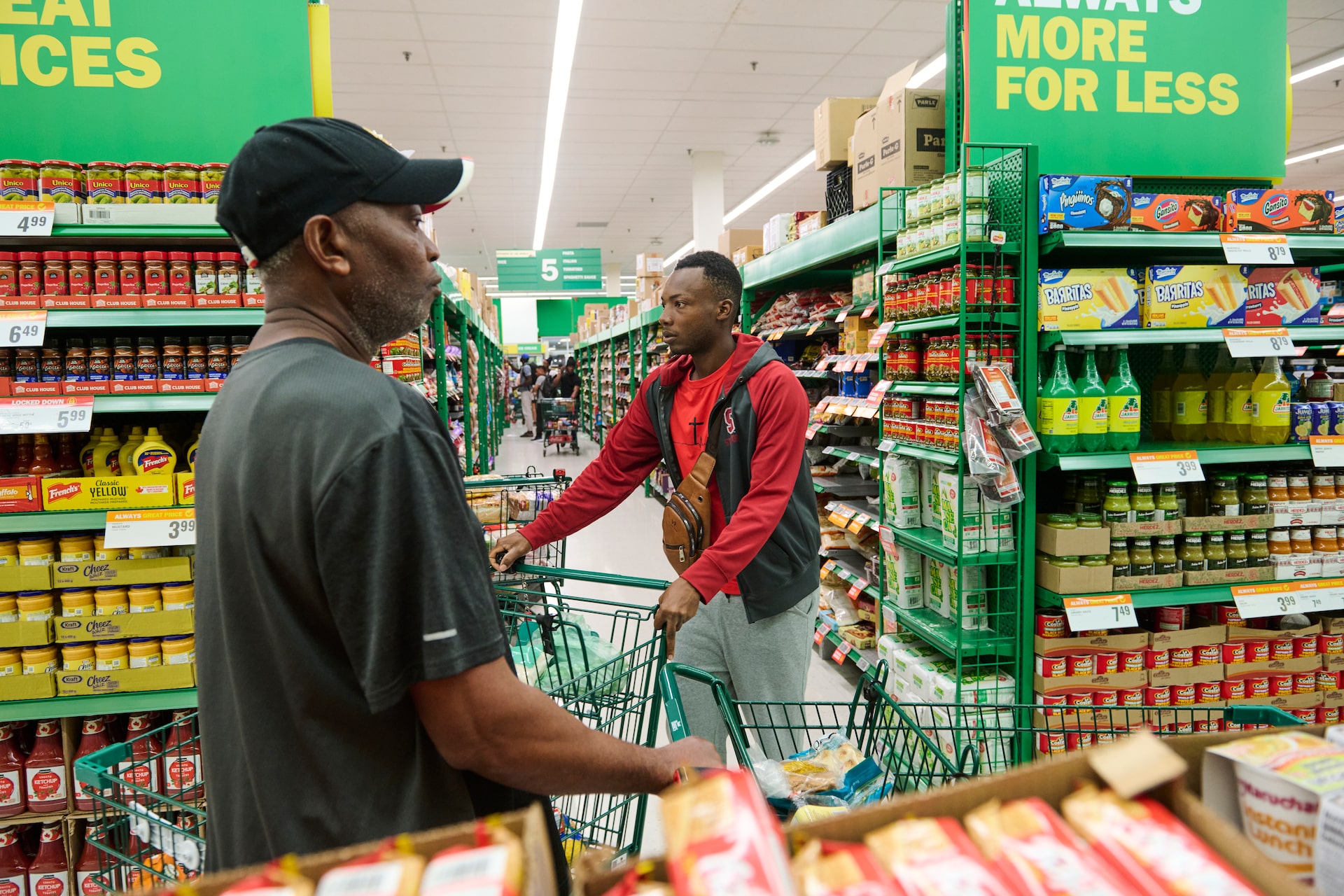
During farming season, downtown Simcoe is transformed on Thursday and Friday evenings. Dozens of farm vehicles, mostly retired schoolbuses, descend on the parking lot of the usually sleepy Simcoe Town Centre, with its many empty storefronts, and disgorge hundreds of workers looking to buy supplies, send money home and simply unwind. Many immediately head to the mall’s Food Basics grocery store, packing the aisles and stocking up on Jamaican bulla cakes and Mexican jalapeño tostadas. As other workers stroll the streets in groups, about the only locals in view are a small group of men who lounge on camping chairs or lie on the sidewalk outside a vape shop, cursing loudly—one yells at another in a wheelchair, accusing him of theft. They pay little attention to the workers, and vice versa.
There were few supports for offshore workers when I was growing up here. That’s changed. A host of businesses, restaurants and services have sprung up to serve the roughly 6,000 seasonal workers who come here each year, equal to about 9% of Norfolk County’s permanent population. A group of South American workers stops by The Neighbourhood Organization, a Toronto-based hub that supports newcomers and connects them to local communities. It opened here in 2022 to help workers navigate health care, banking and taxation; hand out welcome bags filled with toiletries and towels; and host sessions on avoiding heat exhaustion, fraud awareness and even how to fix a bicycle, a popular way for workers to navigate the countryside. A walk-in health clinic devoted to migrant workers opened about a decade ago. Other organizations host regular social events, like farm-versus-farm soccer tournaments and domino competitions.

Teams warm up before the sixth annual Farms of Norfolk Football Association (FNFA) tournament, which is primarily made up of migrant workers from local farms.

Farm workers stop in for a meal at the So Mexican Eatery restaurant in Simcoe, which serves the migrant worker community that comes to the region each year.
Meanwhile, scores of Mexicans flock to the mall’s So Mexican Eatery, one of several Mexican restaurants in Simcoe. Vera Mendes, who was born in Portugal, met her Mexican husband, Mauro Lares, in 2017, while he was working on a farm near Simcoe. The pair married two years later and branched out from a small Mexican convenience store to launch a catering business and restaurant. On some Thursdays and Fridays, they crank out more than 400 orders of burritos and tacos, and serve hundreds of meals to workers in the fields each day. “These guys are leaving their homes and families behind,” says Mendes as she shows off the kitchen, “so this is a little bit of their culture.”
Her grin fades when she talks about the hardships many of them face. Recently, one 32-year-old worker learned his wife had fallen sick. He rushed back to Mexico, and she died three days later. “He’s now left with three kids who he barely knows because he’s here all the time working,” says Mendes. “They get to a point where they’re tourists in their own house.”
Juan, who hails from the Mexican state of Tlaxcala, has been coming to Canada for 13 years. While the TFW program enabled him to build a house for his wife and two children, it came at a cost. “You want to be with your family, but it’s necessary to work,” he says through a local translator, the word “sacrificios” coming through clearly.
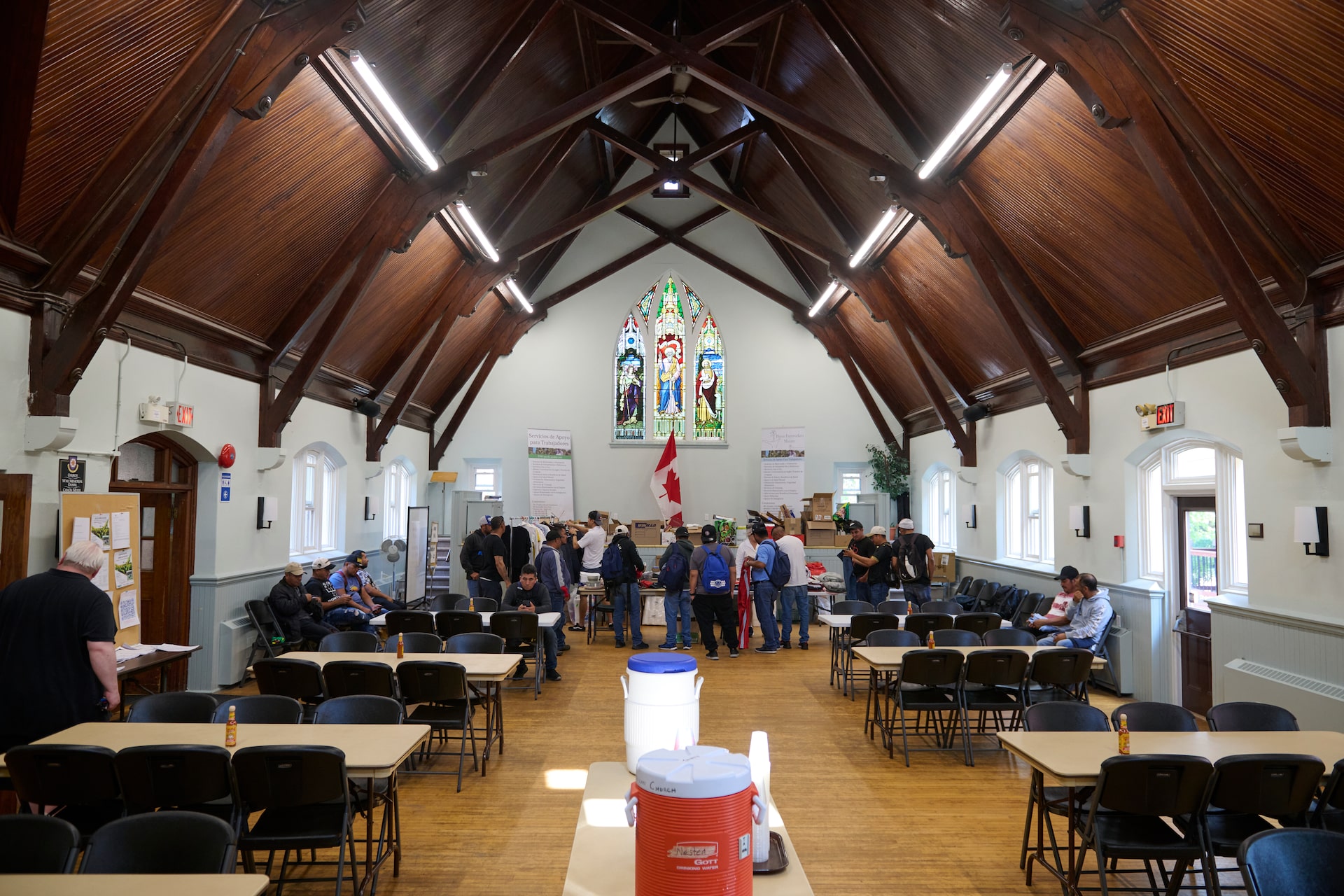
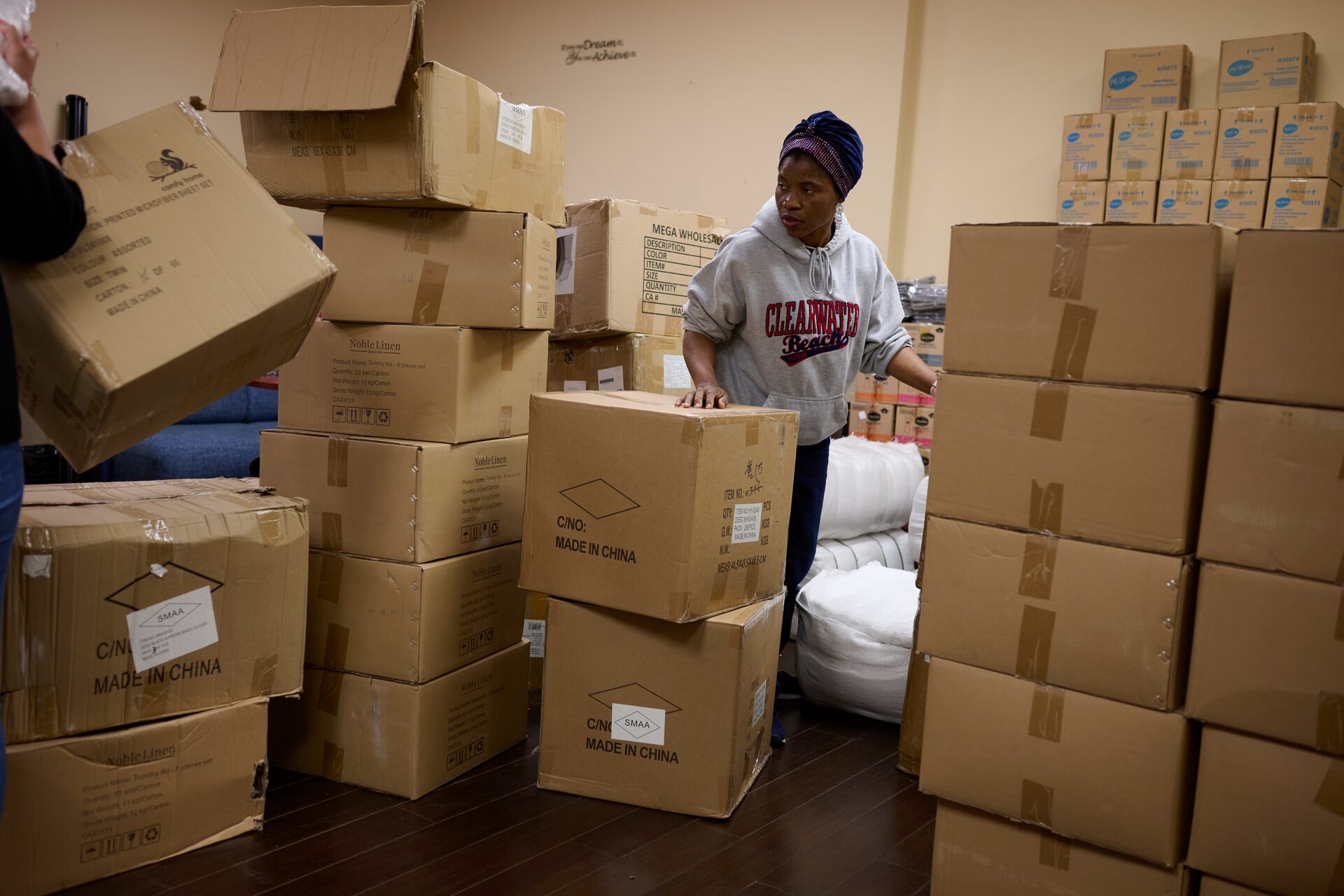
I also met Juan at the Anglican church in Simcoe, home of the Huron Farmworkers Ministry. Launched five years ago, it’s headed by Rev. Enrique Martínez, a priest in London, Ont., who emigrated from Colombia in 2005. Each Thursday and Friday night, roughly 350 workers show up here to eat meals and pick up donated clothing and supplies like toilet paper. (One volunteer, Joanne Hall, says it bothers her that some farmers don’t supply such essentials and claw back money for air travel, while most workers pay into the EI program they can’t use. “Canada has a lot of black marks when it comes to these guys,” she says.)
Martínez freely hands out his WhatsApp number, and he’s used to late-night messages from workers looking to confide in someone who speaks their language. While he says there are instances of poor treatment, they’re rare. “I cannot say that it’s not happening, but I can tell you things have improved every year that I’ve been doing this,” he says. And he takes a bluntly practical view of the role the workers play in Canada. Without them, produce prices would be higher, he says, or we’d need to import it from countries with no labour standards whatsoever. “Yes, we need the workers, but those workers need the money, and that money comes because the farmers produce it,” says Martínez. “It’s a big machine that everyone is part of, and that’s what we try to show people.”
Back at the mall, workers line up outside the local branch of JN Money Services, a Jamaica-based financial services company that processes remittances and allows workers to pay bills back home. A steady flow of customers files through, sending amounts ranging from $300 to $500 to their families back home. JN’s regional manager, Claude Thompson, says his branch handles between 8,000 and 10,000 such transactions in a year, totalling millions of dollars.
“It’s too bad they don’t get the respect they deserve, the acknowledgement they deserve. We’re doing the work that Canadians don’t want to do. If these guys weren’t coming up, there basically wouldn’t be food on the table.”
– Kathy-Ann Fearon, co-owner of JK’s Caribbean Restaurant in Simcoe.
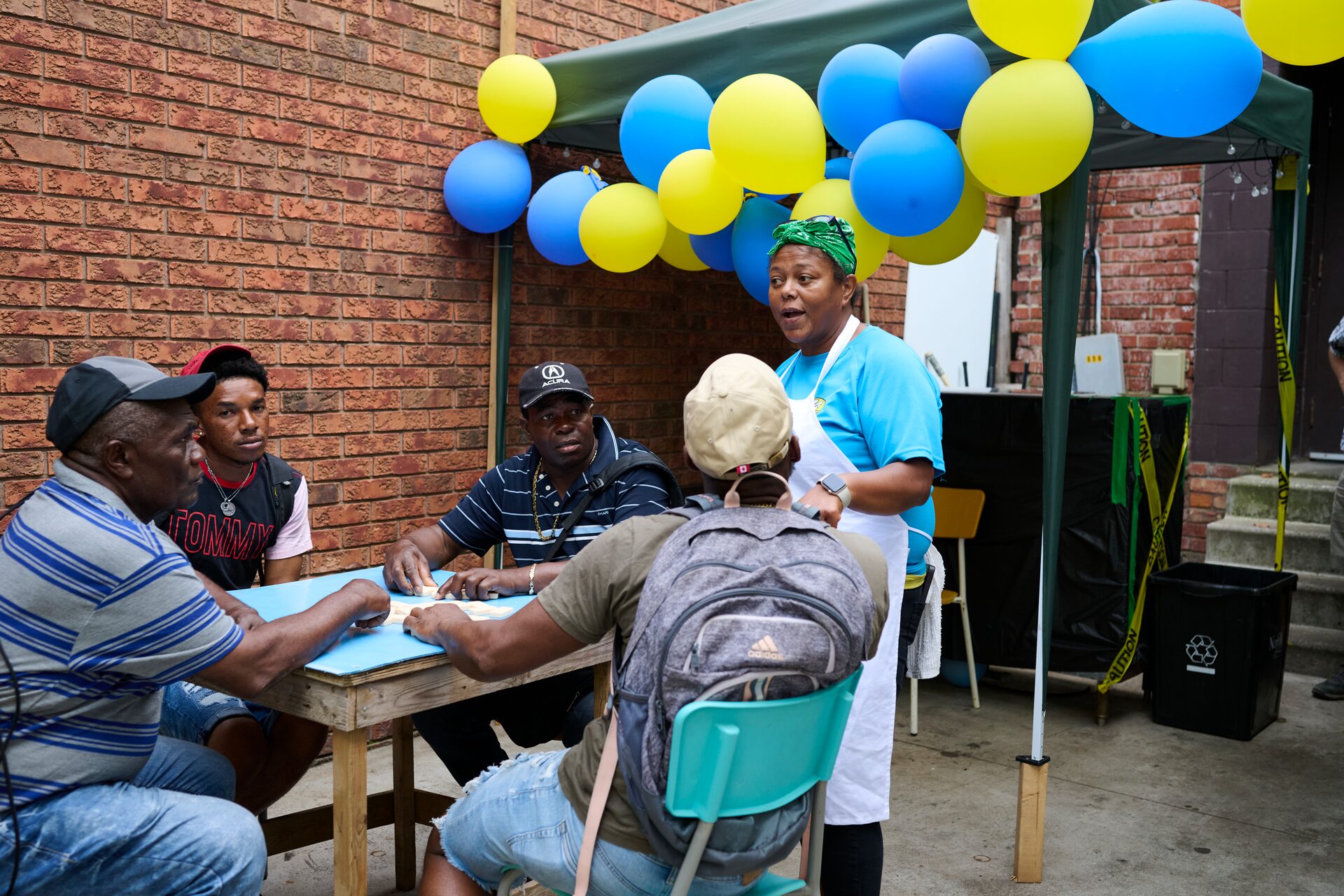
A few blocks away, the thump, thump of Caribbean tunes blare from a patio at JK’s Caribbean Restaurant. Kathy-Ann Fearon, a Barbadian whose father came to the region as a farm worker when she was growing up, opened the restaurant with her husband in 2017 “as a place for the guys to feel at home.” In one corner, a group of men play an intense game of dominos, slapping down tiles while calling out to Fearon from across the patio, who responds in an almost maternal manner. “It’s too bad they don’t get the respect they deserve, the acknowledgement they deserve,” she says. “We’re doing the work that Canadians don’t want to do. If these guys weren’t coming up, there basically wouldn’t be food on the table.”
She sounds a lot like Roy Campbell at Apple Hill farms—though his brand of pragmatism might chafe a bit harder against egalitarian middle-class Canadian sensibilities. “We should always remember that somebody has to be there to take care of the cow, the pig, the chicken, the goat, clean the supermarket, clean the washroom,” he says. “So anybody who looks down on that and thinks it’s a bad job, they’re not living in the real world.”
Campbell is two years past the standard retirement age in Canada, but when I ask how long he plans to keep coming back, he demurs.
His 51-year-old employer, Jennifer Schooley—who’s known Campbell since she was a child and deeply values his contribution to the farm—knows the answer she wants to hear: Forever, Roy, forever,” she says with a laugh.
“If I go home to Jamaica and one morning this farm closed,” he says finally, “that’s it for me.”

Since coming to Canada as a temporary agricultural worker 40 years ago, Roy Campbell been able to put put six children through school, buy land, build a house and start a small grocery business back home in Jamaica.