For more than five years, Michelle Strzalkowski handled sales at Brock Street Brewing Company in Whitby, on the eastern edge of the Greater Toronto Area. She would call up LCBO locations, some as far away as Thunder Bay, to get the brews on store shelves and she managed local deliveries, too.
But like a lot of small brewers, Brock Street was struggling. Last fall, Ms. Strzalkowski talked to a co-worker about the situation and their personal finances.
He told her about a way to earn some extra cash if she needed it. There was a place that had opened up down the street where she could sell a part of her blood called plasma. She would get paid between $30 and $100 each time, and he’d get a bonus for referring her.

Michelle Strzalkowski and Spencer Smith drive to Whitby twice a week to donate plasma.Eduardo Lima/The Globe and Mail
A few weeks later, the brewery closed. Ms. Strzalkowski and her husband Spencer Smith, who also worked at the brewery, lost their jobs.
In the months that followed, as the couple looked for work, they decided to sell their plasma. Ms. Strzalkowski estimates she’s gone to the Whitby collection centre at least 10 times so far this year.
She said it’s been good for her. And ”for other people getting my plasma who need it, it’s obviously beneficial.”
Mr. Smith, who confesses he doesn’t like needles, says they’ll probably keep selling plasma even when they do find jobs again.
“We’re not in an economy where you can leave anything on the table any more,” he said.
Paying people for their plasma and using that protein-rich fluid to manufacture pharmaceutical products is a multibillion-dollar global industry. Demand for these medicines is rising as they are increasingly used to help patients that have acquired immune deficiencies, such as those being treated for cancer. Commercial collection has operated primarily in the United States and a handful of other countries, including Germany and Egypt.
Now it has come to Canada.

For nearly 30 years, this country’s blood and plasma collection (outside of Quebec) has been run almost exclusively by Canadian Blood Services, and was founded in the wake of the tainted blood scandal of the 1980s. The charity was founded on the principle of not paying donors.
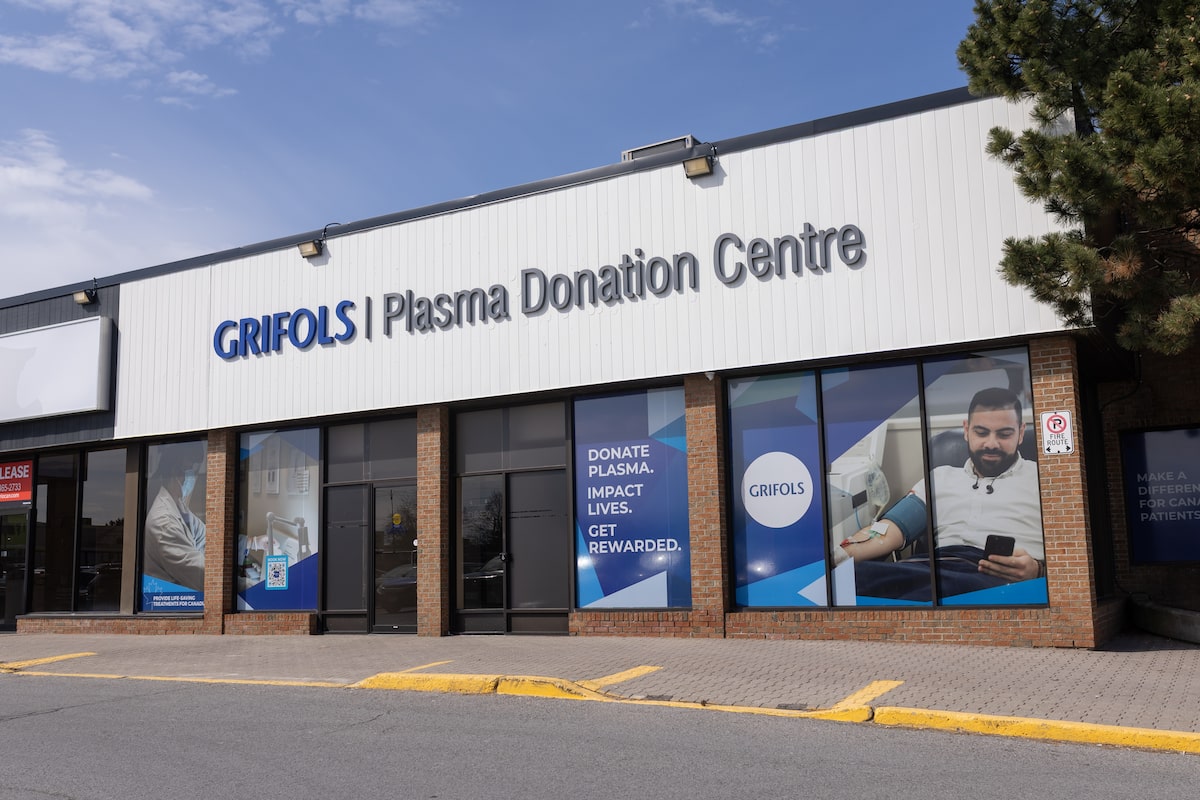
Then in 2022, CBS struck an unprecedented 15-year deal with a global giant in the industry, Spanish company Grifols, which has been selling plasma-derived drugs to CBS for 30 years. In the new deal, CBS and Grifols would work together to increase domestic collection, which CBS said was the only way to meet rising demand.
Grifols bought a factory in Montreal and the small number of for-profit collection sites that already existed in Canada. Its deal with CBS allowed it to circumvent Ontario’s ban on paying plasma donors by acting as the charity’s “agent.” Grifols now owns 17 sites across the country and tells investors it sees Canada as a major market.
But the company has also been rocked by the deaths of two donors in Winnipeg in recent months. Health Canada has said it has not identified a link between the plasma donations and the deaths, however it imposed conditions on Grifols’ licences, raising concerns about the safeguards on how donors are screened and how often they should be allowed to donate.
Paying plasma donors has always been a fraught business. The recent deaths and other health concerns have prompted discussion on whether safety is at risk.
But beyond that, the issue remains whether it is ethical to pay people for their blood. And if they need the money, whether is it ethical not to.

To really understand plasma donation, I wanted to experience it myself. I chose a place where I would not be paid.
On a recent weekday, a photographer and I drove out to a Canadian Blood Services collection centre in Toronto’s east end. The clinic is a squat, grey building next to a Boston Pizza, in an industrial park just off of Scarborough’s Golden Mile.
I registered with a receptionist and then filled out a health questionnaire on a small screen. Queries included: Am I feeling well today? Have I been vaccinated for rabies in the last year? Have I taken money or drugs for sex?
When I finished, a nurse whisked me into an exam room. She pricked my finger to test my blood. She measured my height and weight to calculate my blood volume and a safe donation amount. I eventually donated about 13 per cent of my blood, or 825 millilitres.
Staff plied me with water and salty snacks to help with blood volume. Full disclosure: I ate a couple of small bags of chips.
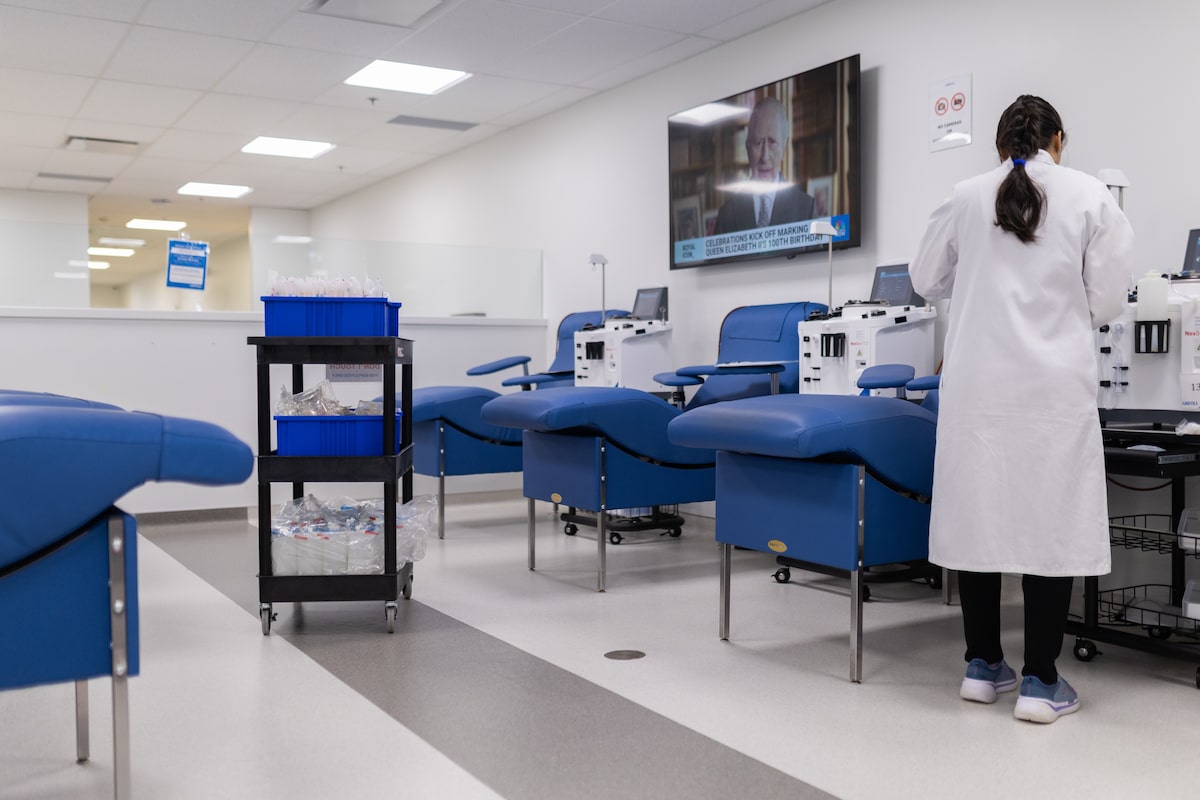
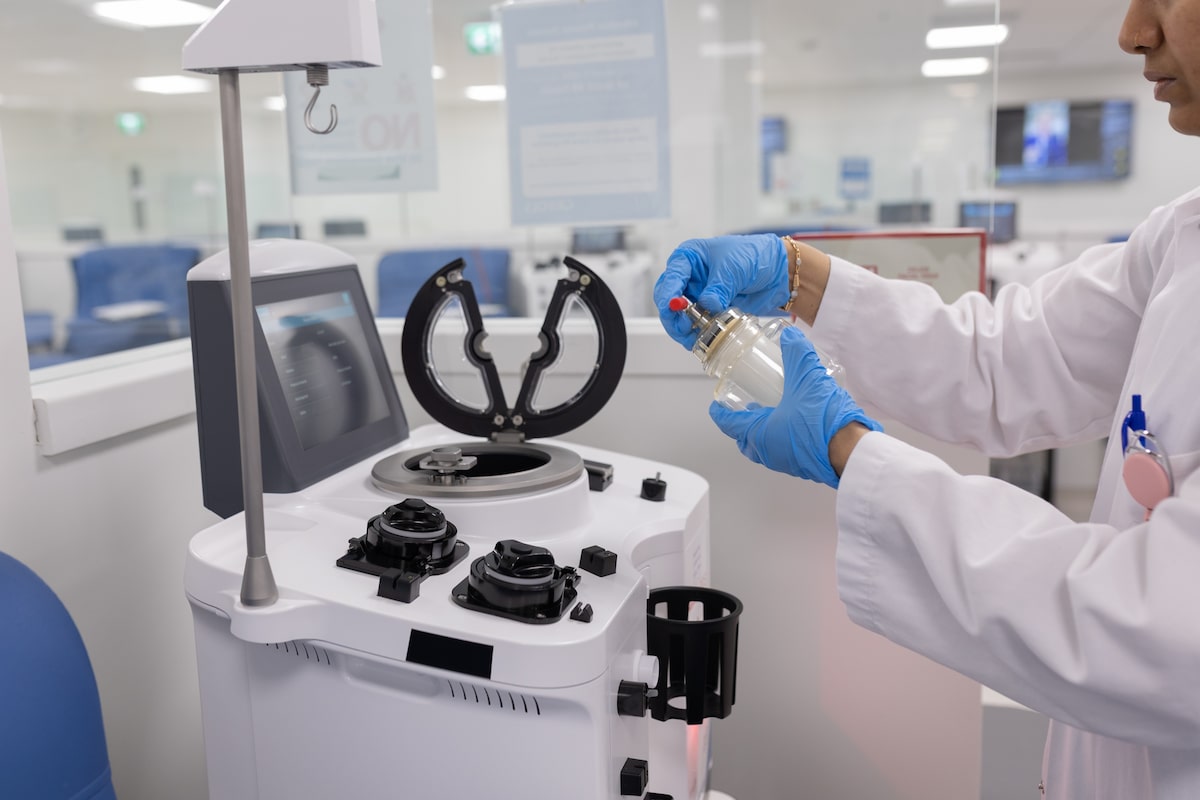
Then I was directed to my station: a reclined seat and a plasmapheresis machine, which looks kind of like a medium-sized printer.

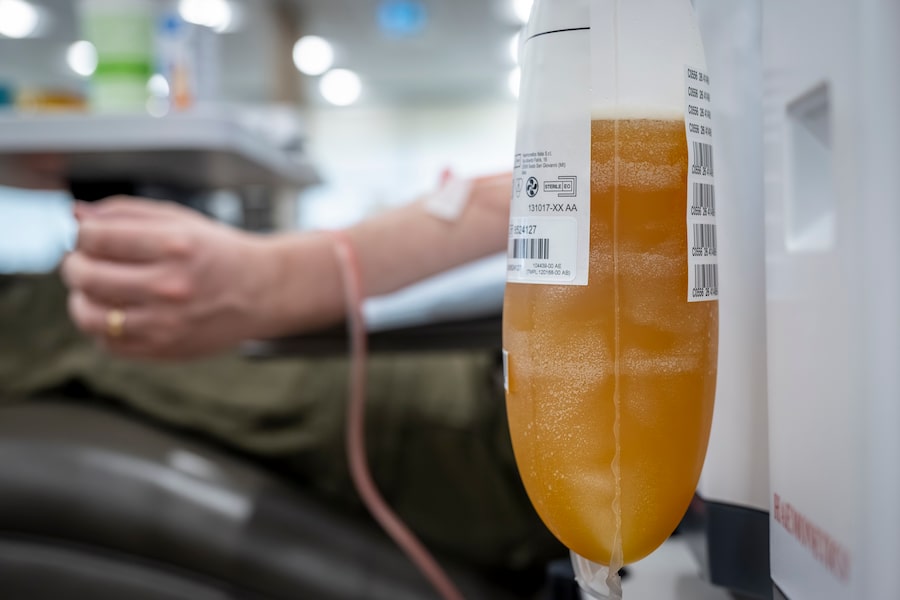
While some of the tubes to and from the patient's arm are blood-red, others on the plasmapheresis machine are golden-coloured. They are filled with refined plasma.Eduardo Lima/The Globe and Mail

John Olaveson, a repeat donor, has a book to pass the time while his plasma is collected.Eduardo Lima/The Globe and Mail
Near me was John Olaveson, a 42-year-old civil engineer. He had donated plasma and “whole blood” – the industry’s term for blood before plasma has been separated from it – more than 50 times before.
He said he keeps coming back because the staff are always friendly and the procedure doesn’t hurt. And of course: “The snacks are good.”
I later spoke by phone with Erin Waite, 67, who lives in Calgary and has donated 225 times to CBS over the years. Nearly all of those have been plasma because it’s easier on her iron levels than giving whole blood.
She said she would not accept payment for plasma donations and thinks it is important to give back to ones’ community – and this is her way to do it.
She finds the clinics a nice place to be. “It just ends up, overall, on all levels, a very pleasant experience, and it’s easy to make a habit of.”

Canadian Blood Services does not pay its donors, partly because of a contamination scandal in the 1980s involving HIV and hepatitis C.Jeff McIntosh/The Canadian Press
Back in Scarborough, the phlebotomist – the term for someone who draws blood, who CBS refers to as a donor centre associate – examined my arm to find a good vein. She cleaned the skin and inserted a needle connected to tubing. She took five samples of my blood in small vials to be tested for pathogens such as hepatitis and HIV. And then we began.
Plasma donation is done through a process called plasmapheresis. It’s different from whole blood donation, where fluid moves in one direction only: out.
In plasmapheresis, fluids go back and forth. Whole blood exits the patient and enters the machine, where a small centrifuge separates the blood into components, and anticoagulants are added to prevent clotting. Red blood cells and saline are inserted back into the donor and the machine keeps the rest: a protein- and antibody-rich, golden-coloured liquid called plasma.
After the machine has cycled through collection a few times, a bag hanging off the front begins to fill. After about an hour the bag is full, and later it’s collected with others into boxes, which are shipped at the end of each day to a central CBS facility in Brampton, Ont.

The fluid that Arlene Sauri collects in Scarborough has been screened of red blood cells by a centrifuge.Eduardo Lima/The Globe and Mail
As of 2024-2025, about 1 per cent of the 317,000 litres of plasma that CBS collected was used for direct transfusion into patients. All the rest is frozen and shipped in trucks south to North Carolina, where a Grifols manufacturing facility will transform the plasma into pharmaceutical products for Canadians. (Eventually it will be shipped to a Grifols factory in Montreal, which is under construction and currently only produces a plasma product called albumin for export to foreign markets.)
The main pharmaceutical product CBS needs is immunoglobulin. It is used for patients with immune deficiencies, such as those treated for cancer. CBS’s spending on immunoglobulin has doubled in the last 10 years, and CBS expects demand to increase another 50 per cent over the next five years.
It was this rising demand that, CBS says, made it necessary to strike its deal with Grifols that opened the door for the company to operate in Canada.
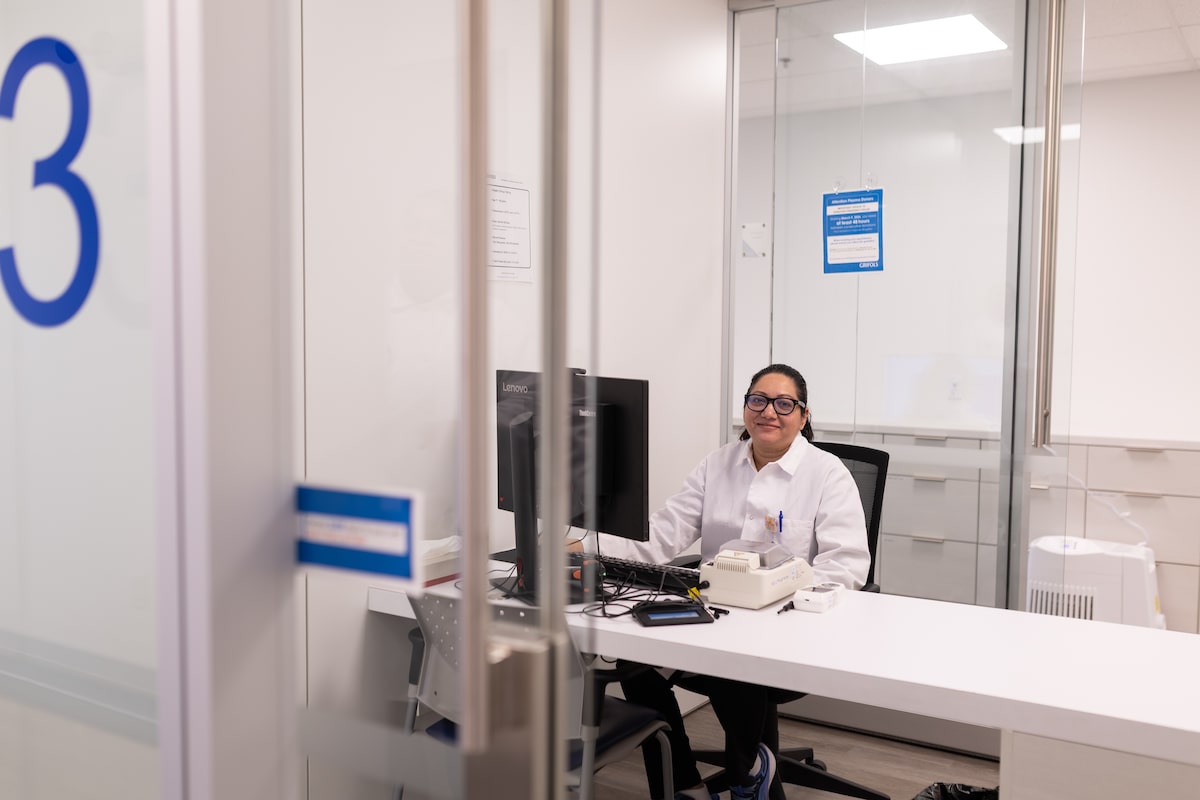
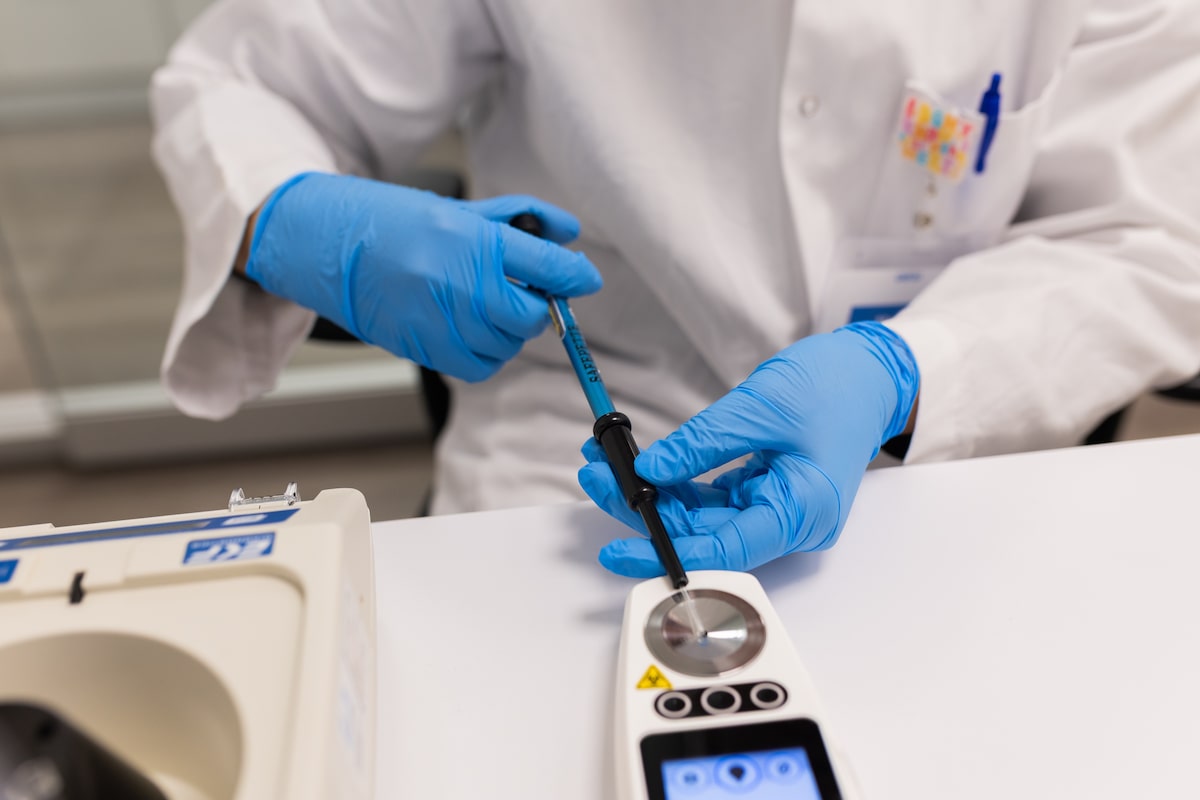
Days later, Grifols let me and a photographer into the Whitby location for a tour with several staff members when no donors were present.
Inside the centre, which opened in February, 2025, had all the same essential elements of the CBS location: a waiting area, screening and exam rooms, and an open area with reclined seats and plasmapheresis machines.
The main visible difference was the signage. In the waiting room was a vertical banner that advertised referral rates: from $25 per person up to a maximum of $50, depending on the number of referrals made. “Refer 10+ persons to earn more than $500 in a month,” the banner said.
In the consult room, with a bed and other equipment one would find in a medical clinic, a chart explained Grifols’ payment schedule. Payments range from $60 to $100 for the first 12 donations. After that, amounts vary from $30 to $75, depending on volume and whether two appointments are kept within a week. Plus there are bonuses, including $50 for 10 donations within six weeks or $100 for donating 100 in a year.

Signs in the Grifols waiting area alert donors to the potential rewards of referring someone else who will donate plasma.Shay Conroy/The Globe and Mail
All those amounts sound expensive to pay out. But the essential theory of commercial plasma collection is that the easiest and cheapest way to create a large base of recurring donors is to pay them. The alternative, used by unpaid collectors like CBS, is to pour money into marketing budgets and donor-engagement campaigns.
A Health Canada expert panel reported in 2018 that unpaid collection of plasma was two to four times more expensive than paid collection.
The key is volume, said Peter Jaworski, a teaching professor at Georgetown University in Washington, D.C., and founder of the Georgetown Blood and Plasma Research Group, which does independent academic research. By Mr. Jaworski’s calculations, for-profit centres in Canada collect at least twice as much plasma per year as CBS centres.
“The overhead costs to run a plasma centre are roughly similar between commercial and non-commercial centres, but it gets divided by many, many more litres on the commercial side, meaning that the price per litre is much less,” he said.

Christine Bryce, a registered practical nurse at Grifols, consults and follows up with donors as needed. Grifols gives donors incentives to come back on a regular basis.Shay Conroy/The Globe and Mail
Commercial centres structure their payment schedule to encourage twice-weekly donations and so extract more plasma from donors on a regular basis. (Donors of whole blood need to wait two or three months between appointments because it takes longer to regenerate red blood cells.)
The Grifols donors that The Globe spoke with agreed money was the primary reason they donated.
Jill Bingeman, a stay-at-home mom in Kitchener, Ont., said she started donating plasma last fall in nearby Cambridge because she was looking for ways to earn some money during the day while her four kids are in school.
“I thought it was kind of unbelievable because I used to give blood when I had time and energy, and the fact that they were going to pay me was pretty awesome,” she said.
She said she referred a number of her friends to donate, including one who saved up the money she earned to go on a self-care trip.
“She’s a single mom, and she’s taking care of herself and working hard, and then she was like: ‘This is just something extra I can put aside for myself,’” Ms. Bingeman said.

Whitby is one of five Ontario communities where for-profit plasma donations were introduced last year.Sammy Kogan/The Globe and Mail
The plasma industry in the U.S. used to target donors in the poorest neighbourhoods who were most in need of the money, Mr. Jaworski said. But there’s been a shift and now the target demographic is more on the lower end of middle class: those earning enough to be in one stable location but still needing just a little more each month to make ends meet.
He refers to the industry as a “shadow safety net.”
One U.S. study from 2021 found the typical plasma donor in the United States had low income and, when a plasma centre opened in a neighbourhood, donors there were 18 per cent less likely to take on a payday loan.
The Globe and Mail ran its own analysis of the Canadian plasma donation locations, with a methodology similar to the U.S. study and in consultation with the study’s authors.
The Globe’s analysis mirrored the U.S. findings: plasma donation centres in Canada are more likely to be located in regions where income is lower. (The results were statistically significant but more open to error than the U.S. analysis because the Canadian sample size is much smaller.)
As for the connection with payday lenders, in one stark, though anecdotal, illustration of the trend, Google Street View pictures show that an empty storefront next to Grifols’ Whitby site used to be a Cash 4 You payday lender.

‘For other people getting my plasma who need it, it’s obviously beneficial,’ Ms. Strzalkowski says of the arrangement she and Mr. Smith have used to make money.Eduardo Lima/The Globe and Mail
Ms. Strzalkowski, the Whitby donor, said there are many people with financial difficulties in the area for different reasons, such as the tough job market. Payday loans can leave someone owing more money in interest each month and trying to catch up. But with plasma donation, she says: “It gives the option to get out of that rut to some degree.”
Quinn Grundy, an associate professor at the University of Toronto who studies the pharmaceutical industry, said the plasma industry is part of an evolution of how our health care system treats blood as a pharmaceutical product.
“It’s a market-based solution, right?” Prof. Grundy said. “They’re going to be located in areas where people are willing to trade their plasma for money.”
At the beginning of 2025, Alisha Friedt lost her job at a telecom company. She was 33, living with her husband and their four-year-old in Hamilton, Ont., and looking for a way to make some extra money when she saw an ad on Facebook for Grifols.
“Why not? I mean, I’m not afraid of needles, and it’s not a big deal,” she said. She began donating regularly. She said the staff was great and she enjoyed getting to know some of the other regular donors.
But she had to stop that summer. After an appointment in July, she went home and began feeling poorly: chills, nausea and shaking. “I never get sick, so this was super weird for me. Actually my husband, he’s like: ‘If you’re sick, something’s wrong,’” she said. “It almost felt like being severely dehydrated.”
She spent the next few days in and out of hospitals, and suffered a complication that left her hospitalized a further two weeks.
Ms. Friedt blamed a diet she was on at the time for possibly causing the symptoms she experienced after donating, though she said she disclosed it to Grifols staff during screening.

The plasma lab on Winnipeg’s Taylor Avenue found itself at the centre of a lawsuit recently after a donor complained of kidney problems. The allegations have not been tested in court.Shannon VanRaes/The Globe and Mail
A few patients, particularly repeat ones, have described health complications.
Grifols is facing a lawsuit in Manitoba from a donor who alleged in a statement of claim that he suffered an “acute kidney injury” and was rushed to hospital after a donation. The statement said the donor received an e-mail from the company shortly after the donation that said that, due to a “machine error,” some of his red blood cells had been “broken” and inserted back into his body, which could lead to symptoms such as blood in the urine and lower flank pain. He said he experienced fatigue for months afterwards.
In a statement of defence filed in court, Grifols said the donor was aware of the risks and side effects of plasma donation and, if any injury had been sustained, it was not the fault of the company or its employees. The claims have not yet been tested in court.
Even more seriously, the two donors who died in Winnipeg in the last year raise further questions about safety. One was a 22-year-old whose heart stopped during the procedure and died on the way to hospital in October, friends told The Globe. The identity and situation of the other donor, who died in January, has not become public.
Health Canada has reviewed the incidents and said it could not establish a link between the plasma donation process and the deaths. However, it has imposed conditions on Grifols’ licences that include limits on the number of donors seen at a time and improved staff supervision.

Companies like Grifols must answer to Health Canada’s regulators to collect plasma from donors.Sean Kilpatrick/The Canadian Press
Grifols did not provide data on how many adverse reactions have followed donations in Canada. The company said plasma donation is generally low risk and serious adverse events are rare. It said the most common reaction is bruising or swelling where the needle is inserted.
Fatalities are generally rare in plasma donation. The U.S. Food and Drug Administration reports annually on deaths after blood product collection and transfusion and finds a dozen or fewer confirmed deaths each year among tens of millions of plasma donations.
But the prevalence of adverse health effects that are less severe than death are not well understood medically, according to Christian Erikstrup, chair professor at the department of clinical medicine at the Aarhus University and chief physician at the department of clinical immunology at Aarhus University Hospital in Denmark.
Dr. Erikstrup is co-author of a 2024 systematic review on the impact of frequent plasma donation on donor health. The review found high frequency donations, such as twice weekly, could cause long-term declines in levels of antibodies and ferritin, a protein that stores iron.
“What we really fear about the high-frequency plasma donations is side effects, which could be due to the removal of plasma proteins from your body,” he said.
He said relatively little research has been done in this area and said there was a need for large trials to properly assess the health effects.
In Denmark, plasma donations are only allowed once every two weeks. Canadian Blood Services takes plasma donations up to once a week per donor, while Grifols in Canada (and other commercial collectors operating in the U.S.) encourage donations of up to twice a week.

The adverse effects of regular plasma donation are little understood, a Danish researcher who spoke with The Globe said.Fred Lum/The Globe and Mail
After the deaths in Winnipeg, some public-health advocates, including the Canadian Health Coalition, said commercial collection should be banned in Canada because of the safety risks.
Jason MacLean, chair of the coalition, said blood is a public resource and should be managed in a voluntary, publicly managed system.
Some donors say they are aware of the risks and want to continue donating.
Jeff Kowall, who lives in Winnipeg, said he started donating plasma regularly nearly three years ago to supplement his main job working at a countertop and cabinet shop, especially with a baby at home.
He said he trusts Health Canada to review Grifols’ operations. He has spoken to local advocates who want Grifols to cease operations in the city, but he is unconvinced.
“You know, their heart is in the right place,” he said. “They’re doing it because they’re concerned for the safety of donors. But I think that we can ensure donor safety without banning the process.”
With data analysis from Dexter McMillan

Illustration by The Globe and Mail/Getty Images
To your health: More from The Globe
From our health reporters
My family of five tried to cut out ultraprocessed foods for a week. Here’s what we learned
Six months after loss of measles elimination status, Canada nowhere close to stamping out the virus
Drug-overdose deaths are falling across Canada. Why is Edmonton an exception?
Commentary from André Picard
Can we spare future generations from smoking?
The path to an AIDS cure is rare and brutal
To address racism in health care, we need to collect data on race
The Decibel podcast
To get ready for generic Ozempic’s debut in Canada, The Globe’ limited-series podcast Skinny Inc. took a deeper look at the GLP-1 revolution. Learn more about the science and big business behind the drugs, and the effect they’ve had on the body positivity movement and mental health.