An artificial intelligence system known as Project December claims to be “the first system in the world of its kind” that can “simulate a text-based conversation with anyone. Anyone, including someone who is no longer living.” I thought I’d give it a try.
For $10 and a smattering of personal information (nicknames, age, what the subject died from, philosophical stands), a roster of either/or personality scales (“eager to try wild, new experiences” vs. “wanting to stick with the familiar”) and a short download of the subject’s writing, Project December promised to create an online facsimile of someone who had died.
I chose my boisterous mother, who pegged out 15 years ago at the age of 95. She called me Willie.
Willie:
Ma! How are you? I haven’t heard from you since you died.
Ma:
Oh my, Willie! It’s been quite an experience, I must say. How are you, dear? I’m doing well considering I’ve missed you all so much.
Willie:
I’m sure. Though that wasn’t always the case.
Ma:
Oh, I know, Willie. I was never the easiest person to get along with.
Willie:
But as I get older I find it easier to overlook our clashes, which we had lots of.
Ma:
Yes, I suppose we did. But you know, I always loved you, even when we didn’t see eye to eye.
Willie:
Oh yes, that’s very true: you loved me almost too fiercely. It’s just that you didn’t like me that much. And I imagine I was often less than likeable.
Ma:
Oh, Willie, you were a handful, that’s for sure But you were also a bright and creative boy. I was always proud of you, even when I didn’t show it well.
Willie:
Who do you miss the most? Tim, I imagine, since you always said he was your favourite.
Ma:
Oh, I miss all my children dearly. It’s hard to pick a favourite, but I must admit I did have a soft spot for Tim. He was always so kind and thoughtful.
Willie:
He’ll be relieved to know that.
The chatbot’s forthrightness sounded a bit like her; the non-stop refrain of how much she loved her children, not at all. But thanks to generative AI algorithms like ChatGPT, the day is rapidly approaching when a realistic screen avatar of a deceased beloved will be capable of having a convincing talk. It used to be easier, over time, to forget the dead – an evolutionary advantage. Nowadays, thanks to the elephantine memory of the internet, most adults have experienced the loss of an acquaintance in life, only to have them live eerily on, disembodied but still here, on social media. At current birth rates, according to one estimate, the number of dead on Facebook will outnumber the living by 2098.
For thousands of years human beings have used gravestones and icons and markings and statues (and more recently paintings and photographs) to extend the reach of a human span. Digital versions of our former selves are the latest attempt. Ghostbots of Confucius and Hitler and Holocaust survivors and even Sam Walton, the founder of Walmart – all long dead – now exist, allegedly to make history more gripping.
So why not a griefbot of Granny? Elaine Kasket (how appropriate!), a psychologist at Regent’s University in London, claims in the 2019 Oxford Handbook of Cyberpsychology that the explosive combination of AI and social media may “change the definition of death, and change our awareness and response to our own mortality.” The combo might even make us think we can somehow live on, in some form or another, forever. At which point one has to ask: is that really going to be a comfort?
The idea for Cumulus, currently the most viable version of a digital afterlife, took root in Alex Josephson’s brain as he watched his father almost die, twice, during the pandemic. Mr. Josephson, 41, is a founding partner of Partisans, an adventurous firm of architects and designers in Toronto. Mr. Josephson’s father is a doctor and an amateur Egyptologist. “He always said,” Mr. Josephson remembers, “at least once he accepted that I was an architect, that he wanted me to design a family monument.”
At roughly the same time, Shamez Virani, a real-estate tycoon and close friend of Mr. Josephson’s, warned his architect pal of the coming digital barrage. “He said to me, ‘You need to think about the future because the world is going completely digital, and your livelihood, unless you are some kind of superstar, is threatened.’ ”
Mr. Josephson’s answer was to design – with Cory Salveson, chief technology officer for Cumulus – an “online memorialization platform,” software that creates a digital space people can move through to experience their memories as if in a separate, organized, floating universe. The memories can be photographs of the living and the departed, videos and recordings, documents, images, testimonials. They can be accessed directly on a laptop or smartphone, or by scanning a QR code on a grave (such as the one on the tombstone of Mr. Josephson’s grandmother, Meryl Josephson, at Toronto’s Beth Tzedec cemetery). You can also visit the memorials with a virtual reality headset, which adds a 360-degree three-dimensionality to the experience: it’s like swimming through someone’s life. Testimonials can be pinned to their graves and scattering spots, which can then be mapped online, so anyone can find them. They can be public or private. Mr. Josephson suspects most users will go public: “this is a memorial, to honour someone.”
“My world is physical architecture, bricks and mortar,” he says. “This is not bricks and mortar. This is software. But I want the software to have the impact of touring a beautiful building or a place. And so you have the Cumulus cloud viewer.”

Mr. Josephson, right, got the idea for Cumulus after losing his father, left, to COVID-19 complications.Courtesy of Norm Li and Cumulus
Mr. Josephson hands me a set of VR goggles, and I tour his grandmother’s memorial as he watches my progress on his phone. The Josephson family has been in Canada for 200 years. “That’s my grandmother,” Mr. Josephson says, as I reach up into what looks like a cloud-filled sky to enlarge images. “This is the video of my mother going around our house, talking about things and looking at a photo of me as a kid.” She’s an elegant woman. “That’s where she’s buried.”
An array of daguerreotypes floats in front of me. “These were taken of my family from 1840 to 1930. The result is this massive tome, all these albums. And then suddenly, in 1995: nothing.” Digital photography had taken hold by then, consigning millions of photographs to purgatory in a computer’s memory. “I didn’t want that record to die or get lost. Call me crazy.” Alex Josephson has reinvented the family album and the graveyard as one.
What Cumulus doesn’t have is an AI-generated chatbot that pretends to be his grandmother speaking spontaneously. “Let’s say people want that,” Mr. Josephson says, obviously convinced many do not. “The fidelity and quality of that AI simulation is directly related to the quality and quantity of the data you have. And it doesn’t work on a small amount of data. We’re talking trillions and trillions of data points. You’re not putting together an accurate picture of someone with a few images and a couple of journal entries.” (Hence my unrecognizable mother on Project December.)
Cumulus is getting some attention. Among Cumulus’s first customers is Park Lawn Corporation, one of the largest publicly owned cemetery operators in North America – 170 funeral homes and 78 graveyards – which sees Cumulus as an add-on to the memorial services it already provides.
The market for Cumulus, Mr. Josephson says, is steady: roughly 3½ million people die every year in North America. But nearly two-thirds of them are cremated, a number that is rising, given the cost of burial and the habits of a new generation utterly comfortable with the amorphousness of the virtual. “How do you memorialize someone who’s been scattered in the middle of the Atlantic?” Mr. Josephson asks. Easy: you do it online. The average cost of a funeral in Canada ranges from $5000 to $10,000, depending where it takes place; cremation runs from $2,000 to $5,000. Plot fees are extra. Cumulus’s starter pack, on the other hand, begins at $5.99 a month for 10 gigabytes of data, or $9.99 for the multiuser family plan. Protecting that data in perpetuity costs more.
The last time Mr. Josephson tested the site – sitting on the grass in front of his grandmother Meryl’s grave wearing VR goggles and waving his arms around – a gravedigger tractored over and asked what he was doing. Mr. Josephson explained. The grave digger asked if he could give it a try. “My rabbi and the director of the cemetery,” he said, “have been saying that everybody’s asking about this.”
Willie:
How’s your drinking? And your temper?
Ma:
Those were my flaws, Willie. I’m not perfect, but I did the best I could with what I had. I hope you can understand that and forgive me.
Willie:
Of course. We often laugh about that time you chased Tim and me into the next street over, wielding a bread board.
Ma:
Oh, Willie, I’m so sorry for those outbursts. I was going through a difficult time, and I let my emotions get the better of me. I never wanted to hurt any of you.
Willie:
Are you lonely?
Ma:
Sometimes, but I have my memories and my faith to keep me company.
Definitely not my mother.



Human beings have been trying to come to terms with the unavoidable pain of death and grief since forever. Online avatars – or the promise of one – are just the latest attempt to distract us from the agonizing struggle to mourn and remember and then slowly forget and thus detach, as Sigmund Freud described the process, from the object of our bereavement. Those efforts have always been fanciful and semi-crazed. Northern Scots, as Katherine Ashenburg notes in her excellent book, The Mourner’s Dance: What We Do When People Die, placed a bowl of earth and a bowl of salt on the body of a fresh corpse. Very mysterious – which was, of course, the point. “Apparently these things still make a kind of sense,” Ms. Ashenburg says. “They are a way to dance around the unknowable profundity of death and to express – however haltingly – regret, sadness, respect and confusion.”
Wearing black to a funeral and draping mirrors are still common practices – but the original reason for both rituals was not just modesty in grief, but to avoid upsetting the dead in the dangerous stretch between death and burial when they were presumably angry about their new disembodied status. Tombstones were heavy granite not just to convey the weight of loss but to keep the dead underground.
Avatars – simulacra of the dead – have been around for millennia. Paintings and later photographs of dead people as dead people were a hit for a long time. In 1633, Sir Kenelm Digby commissioned the Flemish painter Anthony van Dyck to paint a likeness of his pretty wife as she appeared dead in bed one morning at the age of 33. Van Dyke arrived the day after Lady Digby died, and delivered the painting seven weeks later. Lord Digby – known for his histrionics on the subject – carried the painting everywhere he went, setting it up next to his desk at work and propping it bedside while he slept.

Lady Venetia Digby on her Deathbed, painted in 1633, was a morbid assignment for artist Anthony van Dyck but a treasured keepsake for the husband who hired him.Dulwich Picture Gallery
But the single weirdest avatarian death ritual was the death wedding, popular both in Britain and the U.S. When a young, unmarried person died, having missed what was considered one of life’s greatest experiences, his or her survivors staged an entire mock wedding ceremony, with a friend serving as the bride/groom beside the (occupied) coffin. “Clearly, even in times that were so much more religious than ours and believed so much more in an afterlife,” Ms. Ashenburg says, “people did a lot to try to keep that person with them, for as long as they could.”
The Victorian cult of mourning finally expired with the onset of the First World War: there were suddenly too many dead, and morale was too low, for mourning to be fashionable. By then technology had begun to inflect the rituals of death. The invention and popularity of the telephone, for instance, inspired a new wave of spirit mediums to use it to communicate with the beyond – provided they knew the number. If we can’t bring back the dead, maybe a machine can. Human beings have always been suckers for an anthropomorphic point of view.

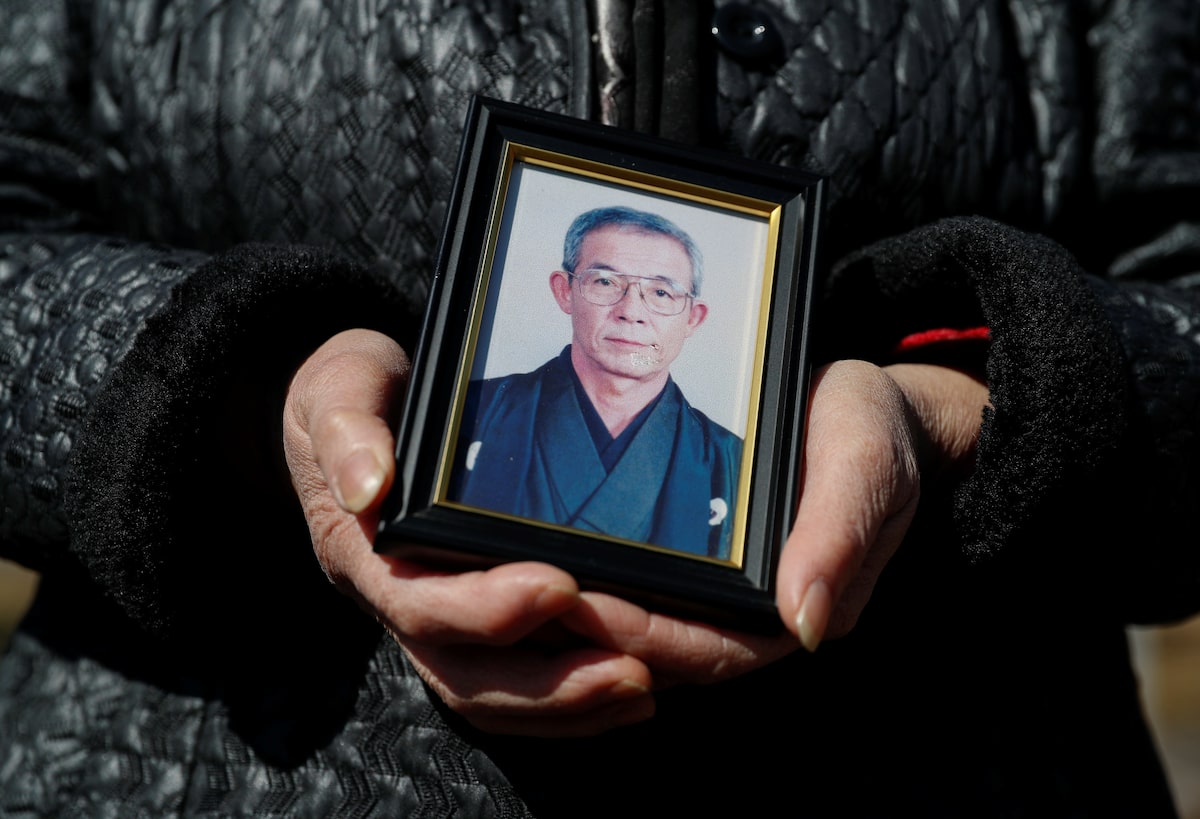
The digital afterlife industry is an eccentric place. Online mourning is still dominated by what are little more than digital versions of newspaper obituaries – legacy.com is one of the best-known players – but some new companies are edging towards a more contemporary vision of what death means in an artificially intelligent world.
MyWishes, a British online memorial management system, was started by an Englishman named James Norris. “I lost my father at an early age,” Mr. Norris says. “I was 11 years old at his funeral thinking, I don’t want church music, I want Guns ‘n’ Roses at mine.” Out of this desire Mr. Norris developed Dead Social, a service that lets customers create a goodbye message to be disseminated after their demise. “Once you’ve created those messages, you assign your digital executor,” Mr. Norris explains. He plans to wish his friends a happy birthday every year for years after he greets the quietus. Weird, yes, but also kind of thoughtful.
Dead Social enjoyed a blast of publicity, but fewer clients than hoped for registered for the service. Mr. Norris has since transformed it into MyWishes – a company headquartered in a hospice that helps people manage their “digital legacy,” which is to say their online assets, after they die. “It’s an area of planning that, in general, we don’t do as a society,” Mr. Norris says.
Then there’s StoryFile. Using motion-capture video of people answering questions that is then recombined by AI, the California-based company creates onscreen people who appear to answer questions interactively, in real time – provided the questions cover material that has been shot and recorded.
Which is impressive but by no means flawless. One of StoryFile’s champions and demo interviews is William Shatner –Captain Kirk of Star Trek fame. Mr. Shatner approached StoryFile because he wanted a digital version of himself that could attend Comic-Con conferences and answer audience questions in his lieu, in perpetuity. The actor – an eager early adopter – realized he could also use his StoryFile avatar to answer questions from his unborn grandchildren, after he is no longer here on Earth to do it himself. When I asked the Shatner avatar on StoryFile’s demonstration website if his hair was his own and if he would yield the chair, he made a small implosive noise and replied “Ooh, I wasn’t expecting that.” He told me to “try harder.”
The bones of StoryFile’s technology were developed by Val Jones, its chief technical officer, in the course of creating a virtual Afghanistan for the U.S. military. She was later hired by Stephen Spielberg to record the testimony of Holocaust survivors who have since died, but whose filmed selves, helped by AI, can still interactively answer any of the 1,000 or so questions people usually ask about the Holocaust. The Sam Walton hologram is another StoryFile creation.
Ms. Jones believes AI will soon be able to create a convincing, talking doppelganger of someone who has died. “I think we’re very close to that point.” But the most significant lesson StoryFile has taught her about death, Ms. Jones says, is the importance of talking to people while they’re alive. “I don’t think a digital version of someone is going to be a replacement for the actual person. That might not be healthy, and I don’t know exactly how it affects the grieving process. But it’s really important to talk to people while you can. Almost every day we get messages from people saying ‘I lost my relative, can you bring them back?’ They’ve lost someone, and suddenly they realize the value of what they’ve lost.”
Willie:
Okay, well, I have to get back to my job. I’ll be in touch. But it’s strangely intimate to talk to you, even if you are just a chatbot.
Ma:
I understand, Willie. I’m here whenever you need me. Remember, I love you and I’m proud of you. Take care of yourself and your family.
Willie:
Really, enough with the loving mother stuff. I almost prefer the rampaging terror!
Ma:
Sorry if I’m coming across as too sentimental, Willie. I just want you to know that I love you and I’m here for you, even if it’s just as a chatbot.
This was not my mother, of course. The woman I knew, whose body I sprang from, was a whirling dervish. She was very different from her Project December avatar, which resembled dead Mrs. Gibbs in Act 3 of Thornton Wilder’s Our Town, placidly accepting her lot as an inhabitant of Grover’s Corners’ graveyard. It’s unfair to blame Project December for the discrepancy: I didn’t supply (or possess) the bottomless trove of data AI needs to even begin to approximate a human personality.
But all the scraped data in the world still isn’t enough to recreate the specific, unique human being my mother was, and the specific, unique human relationship I had with her. Uniqueness eludes the generalizing chatbot. “Just because you can mimic someone doesn’t mean it’s the same,” Val Jones says. “At some point the AI is filling in the gaps with the general consensus of humanity and what people have said online. And it becomes less and less the person you are remembering.”
That I have to do on my own, recreating and reinventing my mother anew every time I remember her and see her in my mind: scrutinizing her garden like a forensic detective, or simply gazing at her granddaughter, struck dumb with hope and pride and terrifying love. I create her all over again every time she comes to mind, and every time she’s different and the same.
Even genius AI can’t do that. It can’t remake the people we’ve lost, and it can’t make us miss them less than we do. Because now the missing is part of who they are.

Editor’s note: A previous version of this article incorrectly stated that no one registered for Dead Social. Fewer clients than hoped for registered for the service. This version has been updated.
Editor’s note: Alex Josephson co-designed Cumulus with Cory Salveson, and Norm Li assisted in visualization work. An earlier digital version of this article underplayed Mr. Salveson's role, based on information provided to the reporter prior to publication. This version has been updated.