John Turley-Ewart is a contributing columnist for The Globe and Mail, a regulatory compliance consultant and a Canadian banking historian.
This essay is part of the Prosperity’s Path series. With the U.S. trade war, the problems with Canada's economy have only gotten more visible, more numerous and worse. This series brings solutions.
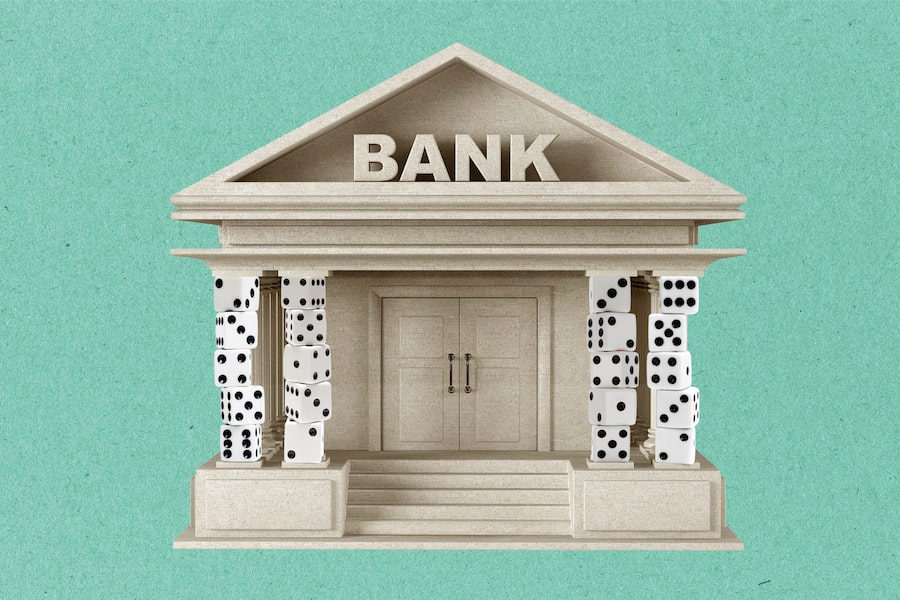
Fear is compromising our banking system. The regulatory obsession with bank failures sustains our banking oligopoly, stifles competition and undermines economic growth.
Canada’s banks must keep reserves stacked upon reserves to cover potential losses. Putting too much money aside, however, is a drag on the sector.
Worst among those reserves is the dysfunctional system of the domestic stability buffer that the Office of the Superintendent of Financial Institutions, or OSFI, introduced in 2018.
Big Six banks, deemed “systemically important,” must presently keep a DSB amounting to 3.5 per cent of total risk-weighted assets – tens of billions of dollars. And under that system, smaller banks, while not subject to the DSB, are most often subject to even more onerous reserve requirements, which hinders their competitiveness.
Canada’s outsized fear of bank failures makes it harder for newer banks to enter the market and excel, dampening banking innovation and raising costs for customers. It also makes it harder for the big banks to compete globally.
That system means there is less money to lend, leading to less business formation and consumer spending – dampening economic activity, which ultimately affects Canadians’ paycheques.
The DSB needs to go for the sake of the country’s economic well-being, as well as preserving what competition there is in the banking system.
When pressed on the effectiveness of the Canadian bank regulatory system, Peter Routledge, who leads OSFI, brags about the absence of bank failures over the past quarter-century.
Mr. Routledge has little else to brag about. Commercial lending has fallen from roughly 60 per cent of bank loan portfolios in 1982 to 25 per cent today.

On Tuesday, Laurentian Bank announced plans to sell its retail business to National Bank and its commercial operations to Fairstone Bank.Christinne Muschi/The Canadian Press
The big banks posted stellar quarterly results last week, but what about the smaller banks? On Tuesday, long-troubled Laurentian LB-T threw up its hands and surrendered to a merger. The next day, the even smaller President’s Choice Financial, the banking division of Loblaw Cos. Ltd. L-T, did the same. That’s the third of the year, after National Bank’s NA-T acquisition of Canadian Western.
Over the past decade, the U.S. has seen roughly 70 new banks launched. Our number of banks continues to shrink.
OSFI oversees a banking system that is a direct descendant of Finance Department decisions in the late 19th and early 20th centuries that entrenched less is more – less banks, more stability. Smaller banks began disappearing. For almost 50 years Canada had no more than 10 domestic banks operating at one time, simplifying supervision.
Then, in 1985, the failure of two upstart banks caused Canadian political leaders to lose the plot. A federal commission was appointed, bank inspection underwent a material transformation, and what we know as OSFI today emerged with a back-to-the-future mandate: no bank failures, no bailouts.
In the aftermath of the 2008-09 financial crisis, OSFI spent 15 years turning the regulatory screws even tighter on the banks, apparently preparing to fight the next financial crisis. It failed to show.
The regulatory cudgels it swings are now striking blows against the country’s economy. To his credit, Prime Minister Mark Carney called this out in his government’s Nov. 4 budget with new policies designed to unlock bank capital, help smaller banks grow and compete and streamline regulation.
And yet, OSFI’s tin ear persists. About two weeks after the budget, it announced a 90-day public consultation on regulatory changes to free up bank cash for business, land development and real estate loans. The consultation would then be followed by eight months of leisurely contemplation, some changes a year from now and a potential increase in bank loans in the months to follow that.

Prime Minister Mark Carney delivers his pre-budget speech, touting Canada’s plan to build a stronger economy, on Oct. 22.Patrick Doyle/Reuters
Mr. Carney’s prebudget speech noted that “over the centuries, to succeed and prosper, we have had to go further, build faster and dream bigger.” OSFI hasn’t even woken up.
OSFI could have acted quickly and with immediate effect by simply reducing the amount of funds it requires the Big Six to put aside in the DSB rainy-day fund. It still has a chance to do so this month. This one-size-fits-all requirement is adjusted up or down by the regulator depending on its view of the country’s economic fortunes.
Today the DSB is adjusted to almost the maximum amount permitted (3.5 per cent of total risk-weighted assets out of a maximum of 4 per cent), indicating that OSFI believes the risk of loan losses is high and now isn’t a good time to push money into the economy.
Herein lies the problem with the DSB. On the one hand OSFI is launching a process to reduce the funds banks are supposed to hold in different rainy-day funds so they can lend more to business, but it won’t cut the DSB rainy-day fund today because it seems it doesn’t want the Big Six lending more to business.
Worse, the DSB is currently running counter to the Bank of Canada’s efforts to ease rates and support the economy by making money cheaper, so borrowing is more affordable and thus there is more of it.
Atop of this, the DSB increases the cost of borrowing when it is high – banks make up for lost revenue for all that cash in the rainy-day fund by charging more fees and higher interest rates. At the same time, the DSB gives the Big Six a cost advantage over smaller banks that are not subject to it.
OSFI requires smaller institutions to use a different regime for calculating how much they must put aside in their rainy-day funds, which is often more for the same type of loans than Big Six banks must stash away. This increases costs for smaller banks.
The solution is tried and tested: a stress capital buffer that is used by the U.S. Federal Reserve on large, systemically important banks that is tailored to each bank’s stress test results. This can be applied to large and small banks alike in Canada, creating greater opportunity for smaller banks to compete on a level playing field. It also helps keep the costs of borrowing competitive as well and tailors safety to the actual risks of individual banks versus one-size-fits-all solutions.
Importantly, it doesn’t run into potential conflicts with monetary policy from the central bank.
The DSB’s demise would, in one swift blow, meet the federal government’s objectives for the banking system, unlock capital, help even the playing field between large and smaller banks and streamline regulation.
Stability at all costs serves neither the economy nor Canadians well. Faced with declining living standards and new marching orders from Mr. Carney, OSFI is now open to experimenting. Perhaps a thought experiment should be the first. Mr. Routledge might imagine a banking system without the DSB that allows bankers to do more of their job, managing risk, rather than trying to do it for them with excessive capital reserves driven by fear rather than material risk.
Prosperity’s Path
Opinion: To fix Canada, we must fix our troubled stock market
Opinion: As pipeline politics begin anew, Ottawa must fast-track the courts
Opinion: What will you sacrifice for Carney and country?