Fen Osler Hampson is chancellor’s professor at Carleton University and co-chair of the Expert Group on Canada-U.S. Relations.
Tim Sargent is director of domestic policy at the Macdonald-Laurier Institute.
This essay is part of the Prosperity’s Path series. In a time of geopolitical instability and a shifting world order, the challenges facing Canada's economy have only gotten more visible, numerous and intense. This series brings solutions.
For decades, Canadians have assumed that, as a mid‑sized, high‑wage economy, we are simply too small and too expensive to make much of anything ourselves. It is best to instead focus on our inherent comparative advantage. We ship out natural resources and buy back electronics and most of the manufactured goods we consume from lower‑cost countries. That belief in outsourcing manufacturing has shaped our trade deals, our industrial policy and even our economic self‑image.
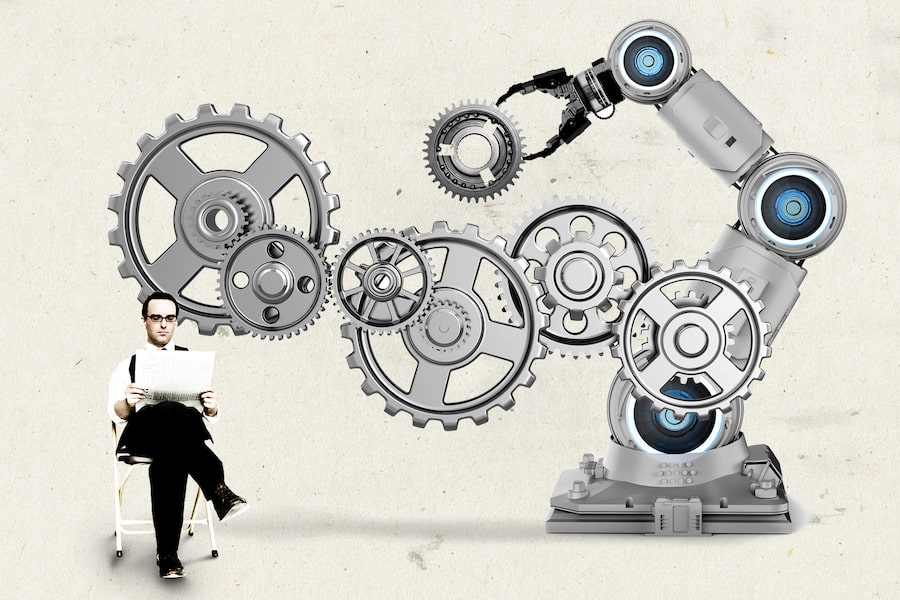
Now, as free trade comes under attack and the world order fractures, it is time to shed the assumption that we cannot make things ourselves. In fact, we can do so with the aid of a new wave of “physical AI” and by advanced manufacturing technologies.
To see why, let’s begin with how a modern factory works. Production requires blue-collar workers on the factory floor to operate machines and move material around, but it also requires white-collar supervisors who can oversee and co-ordinate the production process. The cost of this more expensive supervisory labour is equal to about half the cost of all the production workers whom they oversee in a typical manufacturing company in Canada. Countries such as China have been successful in attracting manufacturing from developed countries not simply because of cheap production workers, but because they also have capable and diligent managers and supervisors who earn a fraction of what their U.S. or Canadian counterparts do.
Arda, a startup founded by former OpenAI research chief Bob McGrew, is targeting these supervisory wage costs directly. Its software uses advanced video models to observe what happens on factory floors, learn real-world workflows, and then apply that knowledge with artificial intelligence to train robots and co-ordinate people, machines and materials across the entire production cycle – from initial design to final assembly. The stated goal is to make manufacturing in high-wage regions cost-competitive again and reduce reliance on China-centred supply chains.
If such platforms work, they will dramatically reduce the need for on‑site supervision of labour, logistics, administration and co-ordination, where white‑collar fixed costs loom large. Every time a decision or workflow shifts from human managers to software that can be copied at near‑zero cost, the managerial and administrative overhead required to run an efficient plant falls. Lower fixed costs, in turn, reduce the minimum efficient scale of production. Instead of needing a continental market to justify a single giant plant, running smaller, highly automated factories that serve national or even regional markets becomes viable.
This comes on top of a longer-term transformation in blue‑collar work. Industrial robot installations have more than tripled worldwide over the past decade, and Canada’s deployments, largely concentrated in the automotive sector, have also increased significantly. As robots and AI systems take on more physical tasks, wage differences between countries matter less. What matters more is access to capital, energy costs, logistics and political risk.
Now, add one more technology to the mix: industrial-scale 3-D printing and other forms of additive manufacturing. These tools allow entire components or products to be built layer by layer directly from digital files, often with far less tooling, waste and setup time than traditional methods. Studies and industry analyses point to a world in which companies that can 3-D print substantial parts of their products benefit from shorter supply chains, cheaper prototyping and the ability to produce closer to the point of use. Crucially, additive manufacturing lowers both the capital and co-ordination costs of producing complex items in smaller batches, aligning with the strengths of smaller economies.
Put these trends together, and the picture is striking. The economic logic of manufacturing is shifting toward smaller‑scale, more distributed and more knowledge‑intensive production. That shift creates a historic opening for small and medium‑sized economies.
Could Canada produce its own smartphones, appliances and advanced industrial components across a network of smaller, AI‑driven factories? Technically, the answer is increasingly yes. With AI platforms reducing supervisory overhead, robots handling more of the physical work, and 3-D printers producing complex, customized parts without the vast tooling costs, the traditional reasons for concentrating production in a handful of low‑wage megahubs are weakening.
Some constraints remain. Comparative advantage does not disappear entirely. Canada will still be relatively better at producing critical minerals, low-carbon energy, agricultural products and forestry resources than at producing certain mass-market consumer goods. Supply chains for highly complex products such as smartphones will continue to rely on vast global networks of specialized component suppliers. And some highly capital-intensive industrial processes – from blast furnaces to large shipyards – will continue to exhibit strong economies of scale.
But these constraints are no longer insurmountable across all sectors. The combination of AI-orchestrated factories and additive manufacturing reduces the penalty for not being the world’s cheapest labour market or the largest single consumer market. It allows Canada and other countries like it to host viable plants in sectors where they were previously priced out, capture more value from their resource endowments, and develop new export-oriented niches in advanced manufacturing that integrate into global value chains on far more equal terms.
For Ottawa, these innovations point to the need for a clear economic strategy. Canada already lags many of its peers in robot density and in the adoption of advanced manufacturing technologies outside the auto sector. If the minimum efficient scale of production is about to fall sharply across a wide range of industries, the first movers will lock in new clusters of plants, suppliers and skilled workers. Countries that hesitate will, yet again, export raw materials and import finished goods made elsewhere, thus remaining “hewers of wood and drawers of water,” without capitalizing on the full potential of this new AI- and 3-D printing-driven industrial revolution.
The policy response must be unapologetically ambitious. Canada should treat physical AI and additive manufacturing as core components of its industrial strategy, not as afterthoughts. That means accelerating the deployment of AI‑enabled factory platforms, investing in 3-D printing capabilities and skills, and removing regulatory and tax obstacles that deter capital from backing new plants on Canadian soil.
If we act now, the prize is substantial. We will be a country that can produce far more of what it consumes at a profit, that anchors new high‑value export sectors, and that competes in advanced manufacturing on brains, data and energy rather than on cheap labour. It is a future in which small and medium‑sized economies are no longer relegated to the sidelines of global manufacturing. How these new technologies rewrite our economic fortunes is up to us to decide.