
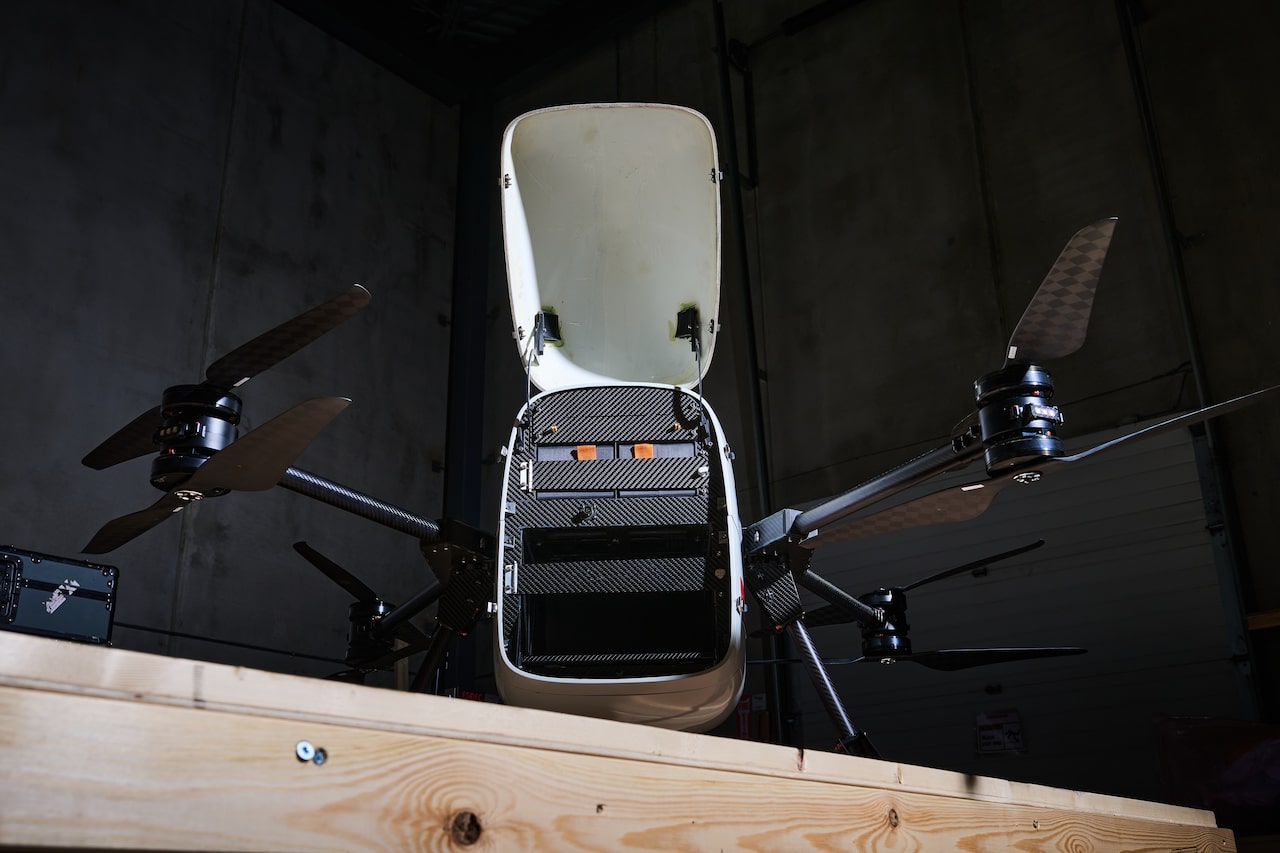
The drone shoots skyward out of its nesting box in a flash, piercing the air with an intense buzzing sound comparable to what the world’s biggest mosquito might sound like. It hovers for a moment, as if deciding what to do next, before zipping off in the opposite direction, quickly shrinking into a mere speck on the skyline.
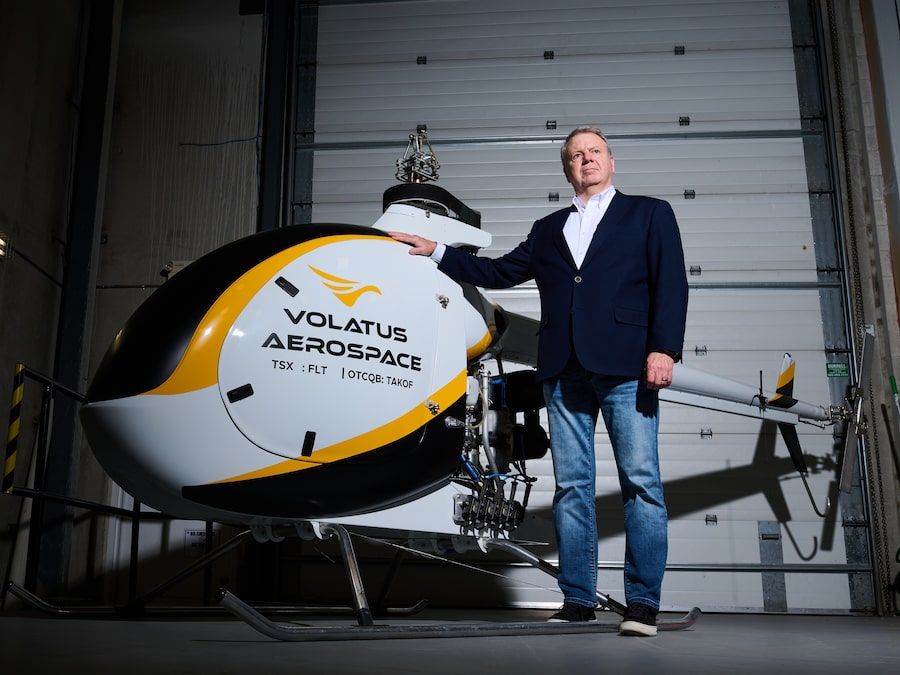
Below it, the snow-crusted ground of a grassy field in Kleinburg, a village just less than an hour’s drive north of Toronto, seems an unlikely setting for the quadcopter’s test flight. But the property is an important, yet little-known, asset of Canadian company Volatus Aerospace Corp., a drone reseller, trainer, manufacturer and service provider. It’s one of the places where it can test new technologies and train operators when they’re not in the classroom, a short drive away at the company’s headquarters in Vaughan, Ont.
Later that day, a group of Volatus pilots from its U.S. and Canadian operations, will come to the field to test a low-cost drone with a flight endurance of an hour and a half – perfect for intelligence, surveillance or reconnaissance flights carried out by the military.
Through facilities like this, and its new domestic manufacturing hub, Volatus is raising the stakes of what’s possible for a Canadian drone company. And it’s in good company, as its fellow innovators from across the country flock to the sector in droves.
“It’s a rising tide,” said Glen Lynch, chief executive officer of Volatus. “Industry is going to do well, if they don’t get in one another’s way.”
Canada is behind in the global drone race. Without a war on its doorstep to incentivize innovation, its Armed Forces have been left lacking some of the critical technologies needed to fight on the modern battlefield.
Meanwhile, Ukraine’s response to Russia’s illegal invasion continues to change the world of warfare through an influx of uncrewed systems. Front lines have become blurred and the rate at which new technologies are becoming obsolete on the battlefield is rapid. Lessons learned in Ukraine are being amplified further by the conflict in the Middle East, where expensive legacy systems built for the U.S. military are coming under fire from mass-saturation attacks by cheaper Iranian drones.
But Canada is catching up fast. Prime Minister Mark Carney intends to spend big on defence, aiming to allocate 5 per cent of the country’s gross domestic product toward the sector by 2035. And according to Ottawa’s new Defence Industrial Strategy, uncrewed and autonomous systems are one of 10 key sectors sure to benefit. This, plus Canadian Army Commander Lieutenant-General Michael Wright repeatedly saying he wants to “flood” the army with drones as it undergoes a massive modernization effort, is sparking a gold rush mentality within Canadian industry.
Building for Canada
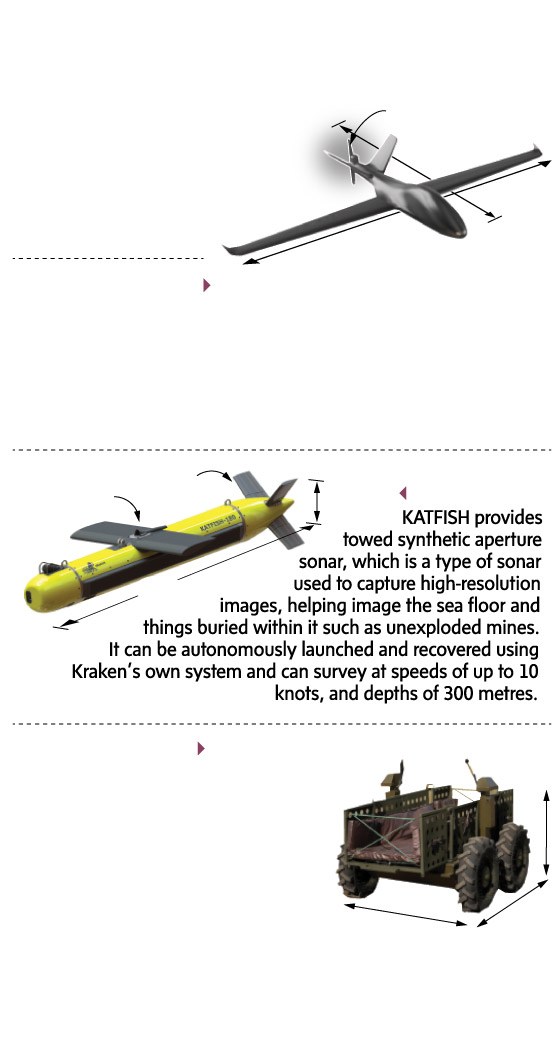
The federal government has identified
uncrewed and autonomous systems as one of 10 sovereign capabilities it wants to build at home. These companies, all headquartered in Canada, are already building their uncrewed vehicles at home and abroad, ready to meet domestic demand.
Propeller
2.1 m
3.2 m
SENTINEL REKAM 3.2
ReKam is a fixed-wing uncrewed aerial vehicle designed for multiple use cases. It’s payload agnostic, meaning it can be used for anything from intelligence, surveillance and reconnaissance to electronic warfare to counterdrone missions, depending on how it’s configured. The platform can be launched in various ways and has a range of 500 kilometres.
Fin
actuators
Depressor
wing: 1.2 m
KRAKEN KATFISH
0.3 m
2.9 m
INKAS HEEMAR UGV
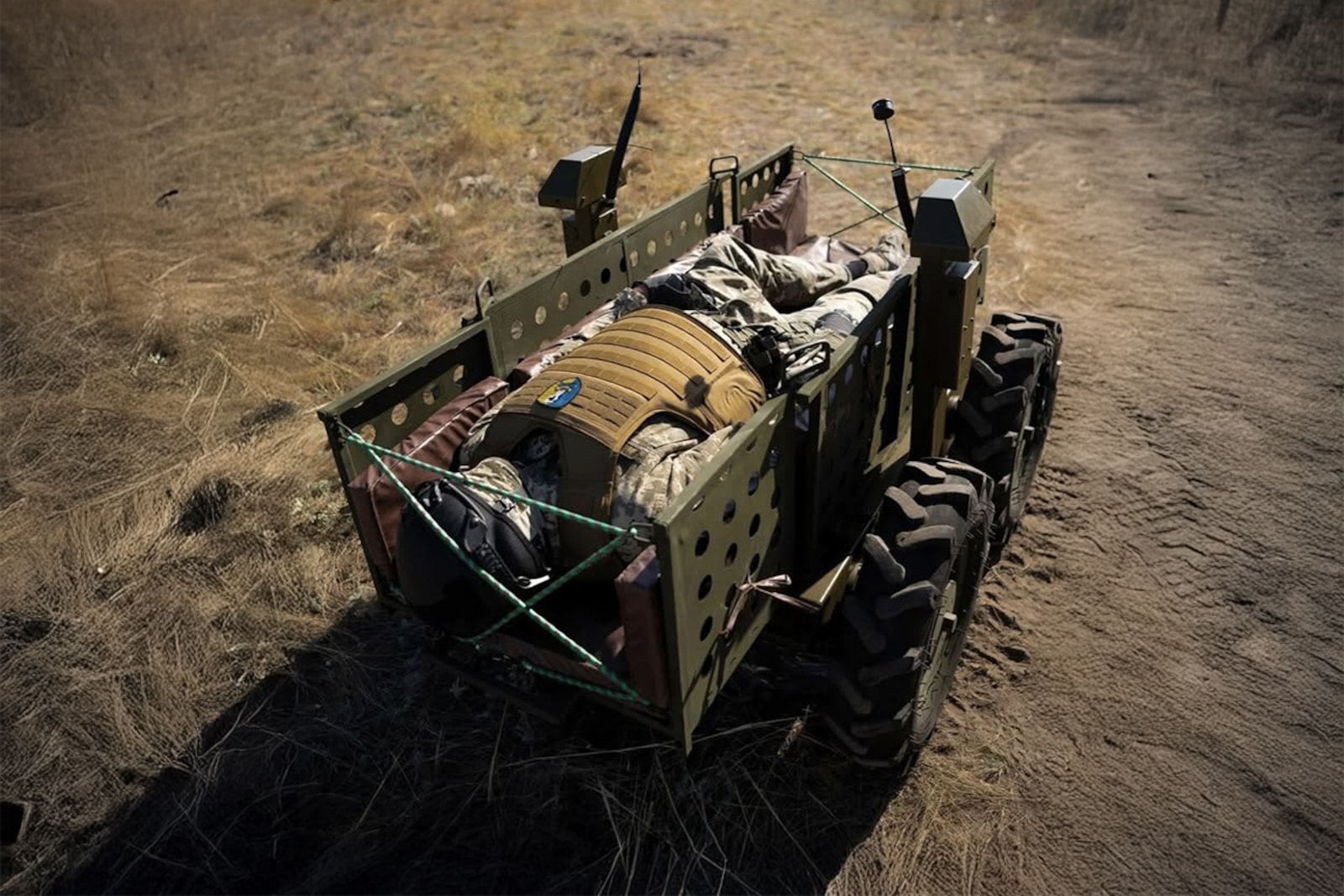
INKAS’ Heemar uncrewed ground vehicle is designed to evacuate wounded personnel, carry cargo and lay landmines, though this latter use requires a separate attachment. It’s remotely operated, with a range of 45 kilometres and a top speed of 16 km/h. As a transport platform, it can carry up to 350 kilograms and as a landmine layer, it can carry up to 16 mines.
1.06 m
1.75 m
1.33 m
the globe and mail, Source: SENTINEL RESEARCH AND DEVELOPMENT;
KRAKEN ROBOTICS; INKAS AEROSPACE & DEFENSE
Building for Canada
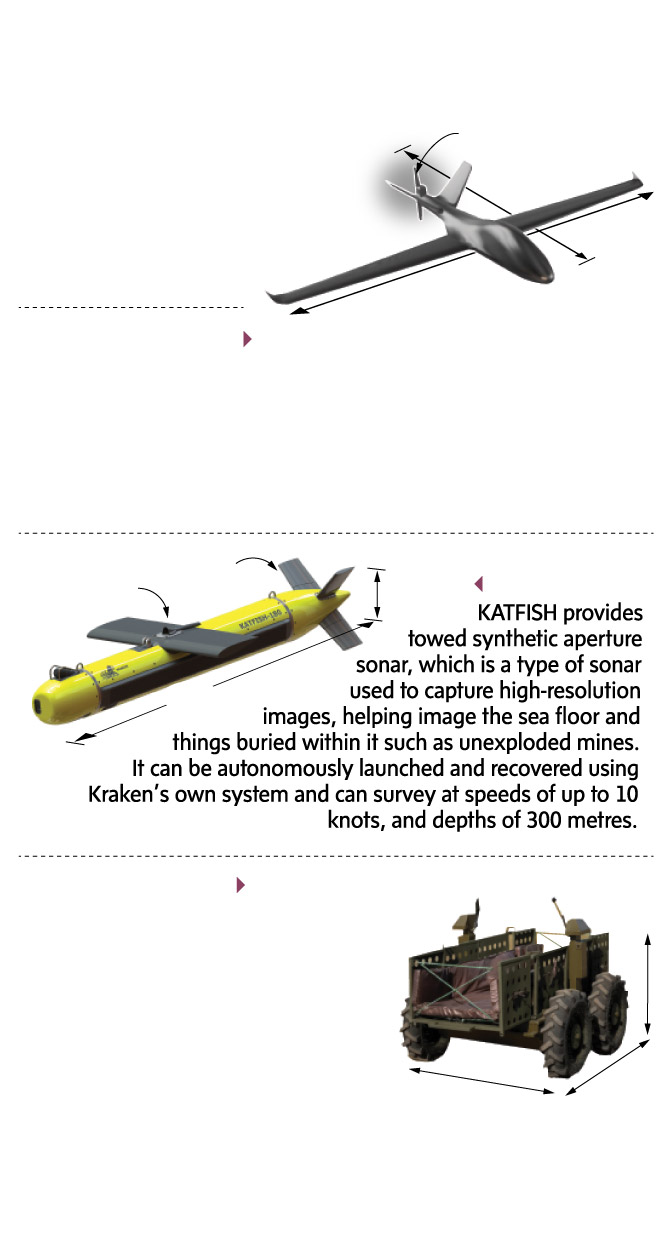
The federal government has identified
uncrewed and autonomous systems as one of 10 sovereign capabilities it wants to build at home. These companies, all headquartered in Canada, are already building their uncrewed vehicles at home and abroad, ready to meet domestic demand.
Propeller
2.1 m
3.2 m
SENTINEL REKAM 3.2
ReKam is a fixed-wing uncrewed aerial vehicle designed for multiple use cases. It’s payload agnostic, meaning it can be used for anything from intelligence, surveillance and reconnaissance to electronic warfare to counterdrone missions, depending on how it’s configured. The platform can be launched in various ways and has a range of 500 kilometres.
Fin
actuators
Depressor
wing: 1.2 m
KRAKEN KATFISH
0.3 m
2.9 m
INKAS HEEMAR UGV
INKAS’ Heemar uncrewed ground vehicle is designed to evacuate wounded personnel, carry cargo and lay landmines, though this latter use requires a separate attachment. It’s remotely operated, with a range of 45 kilometres and a top speed of 16 km/h. As a transport platform, it can carry up to 350 kilograms and as a landmine layer, it can carry up to 16 mines.
1.06 m
1.75 m
1.33 m
the globe and mail, Source: SENTINEL RESEARCH AND DEVELOPMENT;
KRAKEN ROBOTICS; INKAS AEROSPACE & DEFENSE
Building for Canada
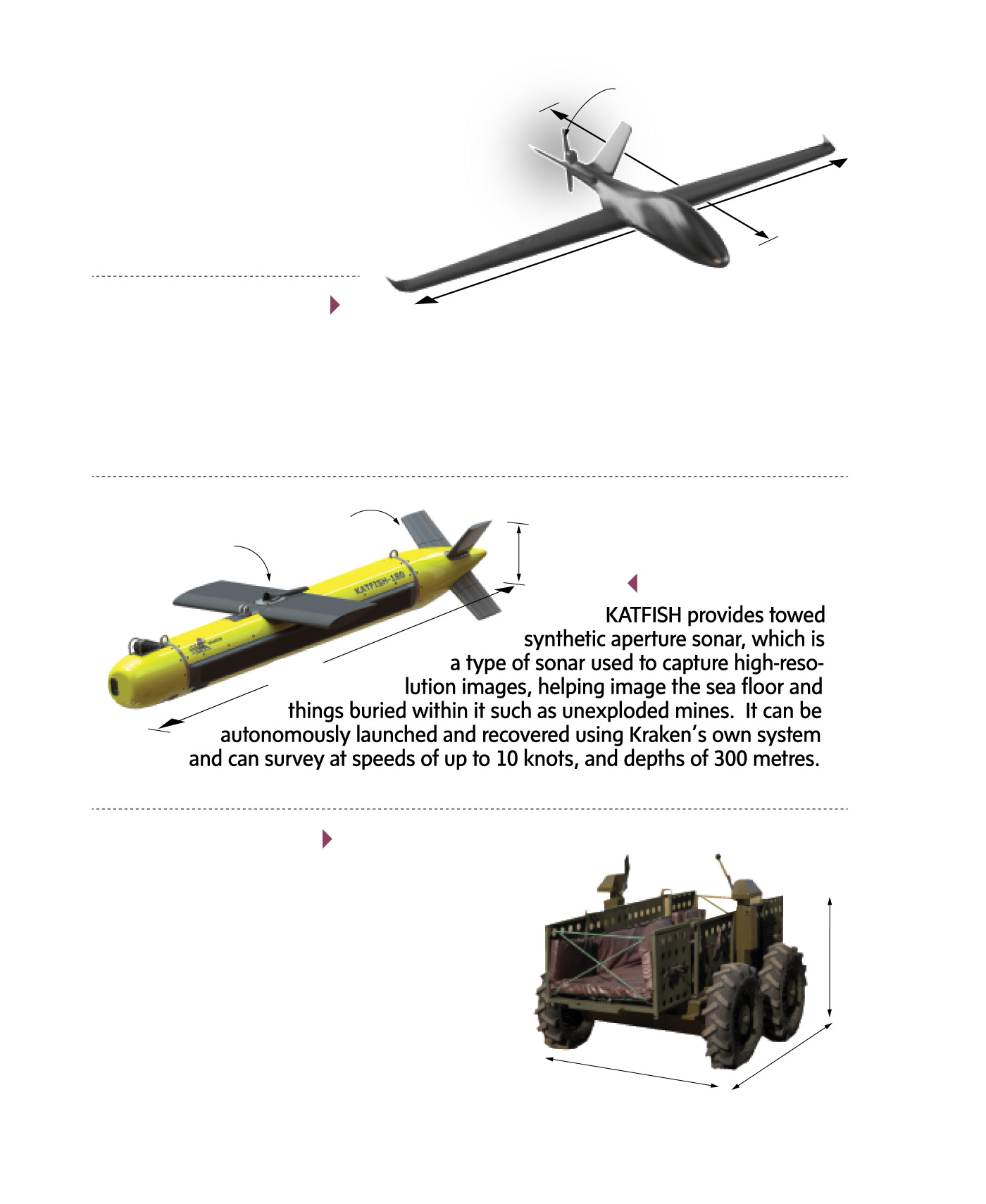
The federal government has identified
uncrewed and autonomous systems as
one of 10 sovereign capabilities it wants to build at home. These companies, all headquartered in Canada, are already building their uncrewed vehicles at home and abroad, ready to meet domestic demand.
Propeller
2.1 m
3.2 m
SENTINEL REKAM 3.2
ReKam is a fixed-wing uncrewed aerial vehicle designed for multiple use cases. It’s payload agnostic, meaning it can be used for anything from intelligence, surveillance and reconnaissance to electronic warfare to counterdrone missions, depending on how it’s configured. The platform can be launched in various ways and has a range of 500 kilometres.
Fin
actuators
Depressor
wing: 1.2 m
0.3 m
KRAKEN KATFISH
2.9 m
INKAS HEEMAR UGV
INKAS’ Heemar uncrewed ground vehicle is designed to evacuate wounded personnel, carry cargo and lay landmines, though this latter use requires a separate attachment. It’s remotely operated, with a range of 45 kilometres and a top speed of 16 km/h. As a transport platform, it can carry up to 350 kilograms and as a landmine layer, it can carry up to 16 mines.
1.06 m
1.75 m
1.33 m
the globe and mail, Source: SENTINEL RESEARCH AND DEVELOPMENT;
KRAKEN ROBOTICS; INKAS AEROSPACE & DEFENSE
After all, it’s impossible to build a fighter jet overnight. But a drone? Well, that’s something even small companies can do – and for a fraction of the cost.
From labs to dorm rooms, Ottawa to Victoria, hundreds of companies are making uncrewed technologies for the air, land and sea, populating the sector as they endeavour to meet the needs of the Canadian Armed Forces.
It’s an emerging industry built upon existing strengths such as Canada’s aerospace and marine sectors, and its aptitude for research and development. Uncrewed and autonomous technology offerings in Canada have been developing for decades, but only now are all eyes trained on defence.
Ottawa plans to support drone development, quantum tech with $900-million for defence strategy
“There are a lot of companies that have gone from, ‘Well, we’re thinking about it’ to ‘You know what? No, we’re in defence. This is what we’re doing. We have to protect ourselves. We have to protect our allies and our troops,’” said Jordan Cicoria, a board member of the Aerial Evolution Association of Canada, which represents stakeholders in the aerial, remotely piloted systems sector.
According to a 2024 market assessment by Josh Ogden, CEO and co-founder of Aerial Vehicle Safety Solutions Inc., there are at least 200 players working in the aerial drone industry. This includes manufacturers, resellers, software and service providers, industry associations, postsecondary institutions and counterdrone companies.
While legacy procurements, such as Canada’s decision to modernize and restock its fighter jet fleet, are still under way, some industry experts question whether the billions of dollars being spent on these complex systems are worth it. Or if the country’s dollars should be redirected elsewhere, toward systems that will only set the government back thousands or tens of thousands of dollars, not millions, if lost in the theatre of war.
After all, Mr. Lynch said, “Everybody knows drones are the new warfare. Rifles used to be the first line of resistance. They’re now the last line.”
In the skies
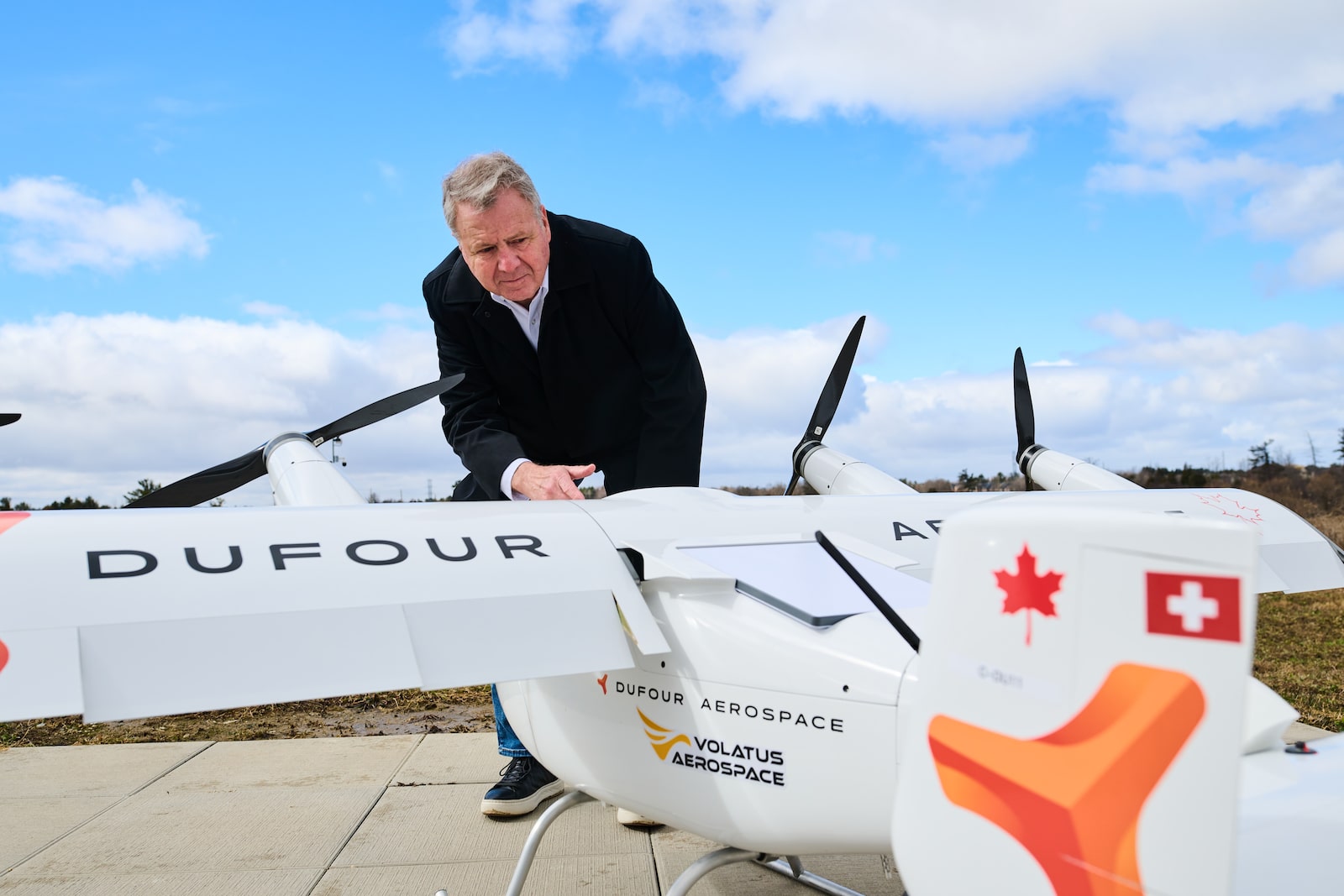
As a prominent leader in the Canadian drone industry, Mr. Lynch hasn’t slept enough lately. His world has been turned upside down - or in this case, right side up – by the Canadian government’s recent about-face decision to fund the defence industry. Like many of his colleagues, Mr. Lynch feels there’s little time to sleep when there’s money on the line.
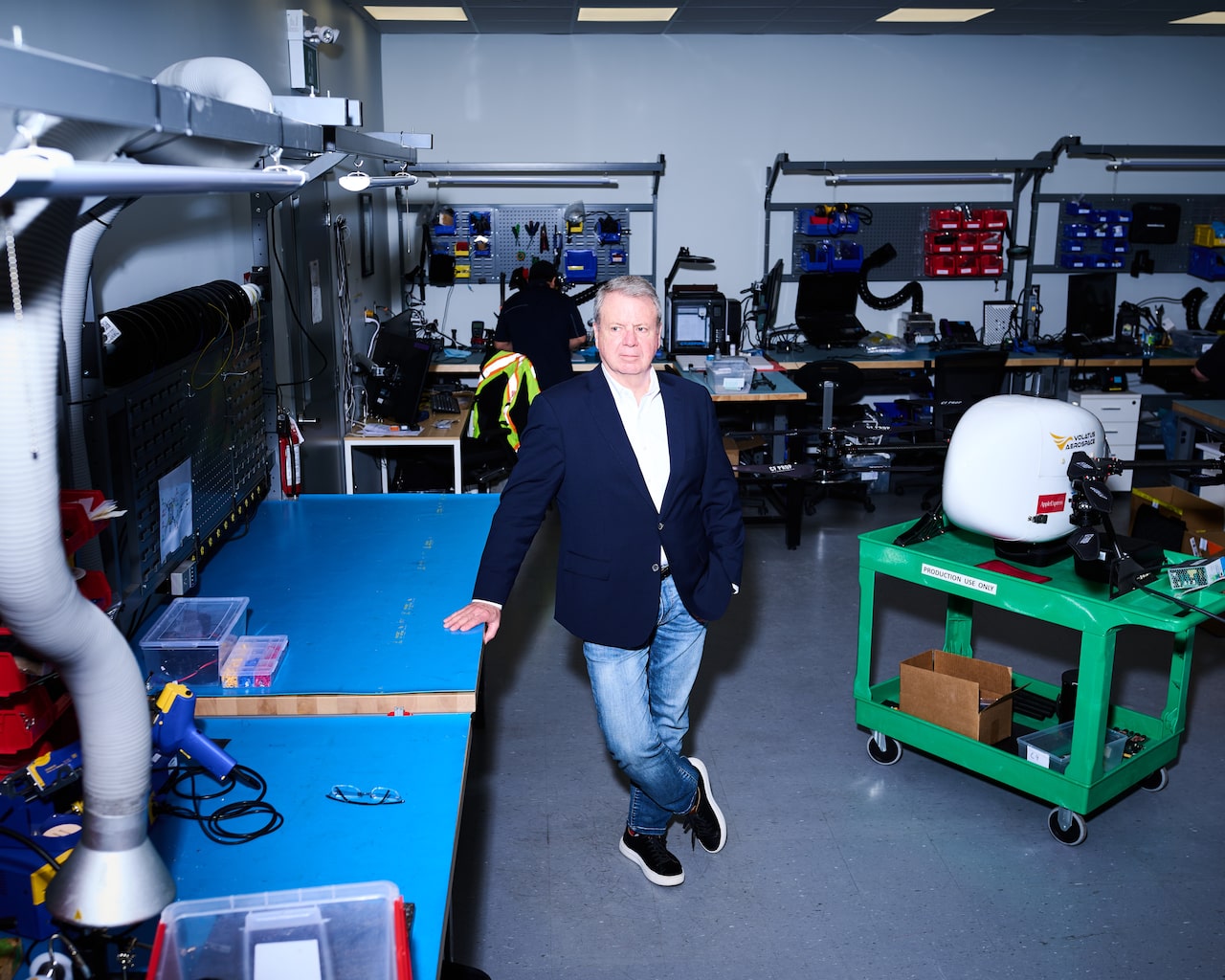
Founded in 2019, Volatus employs around 200 full-time staff and operates seven offices across Canada, the United States and Britain. The publicly traded company generates about $10-million in revenue per fiscal quarter, Mr. Lynch said, “So, still a small business, but for a drone company, we’re like an 800-pound gorilla.”
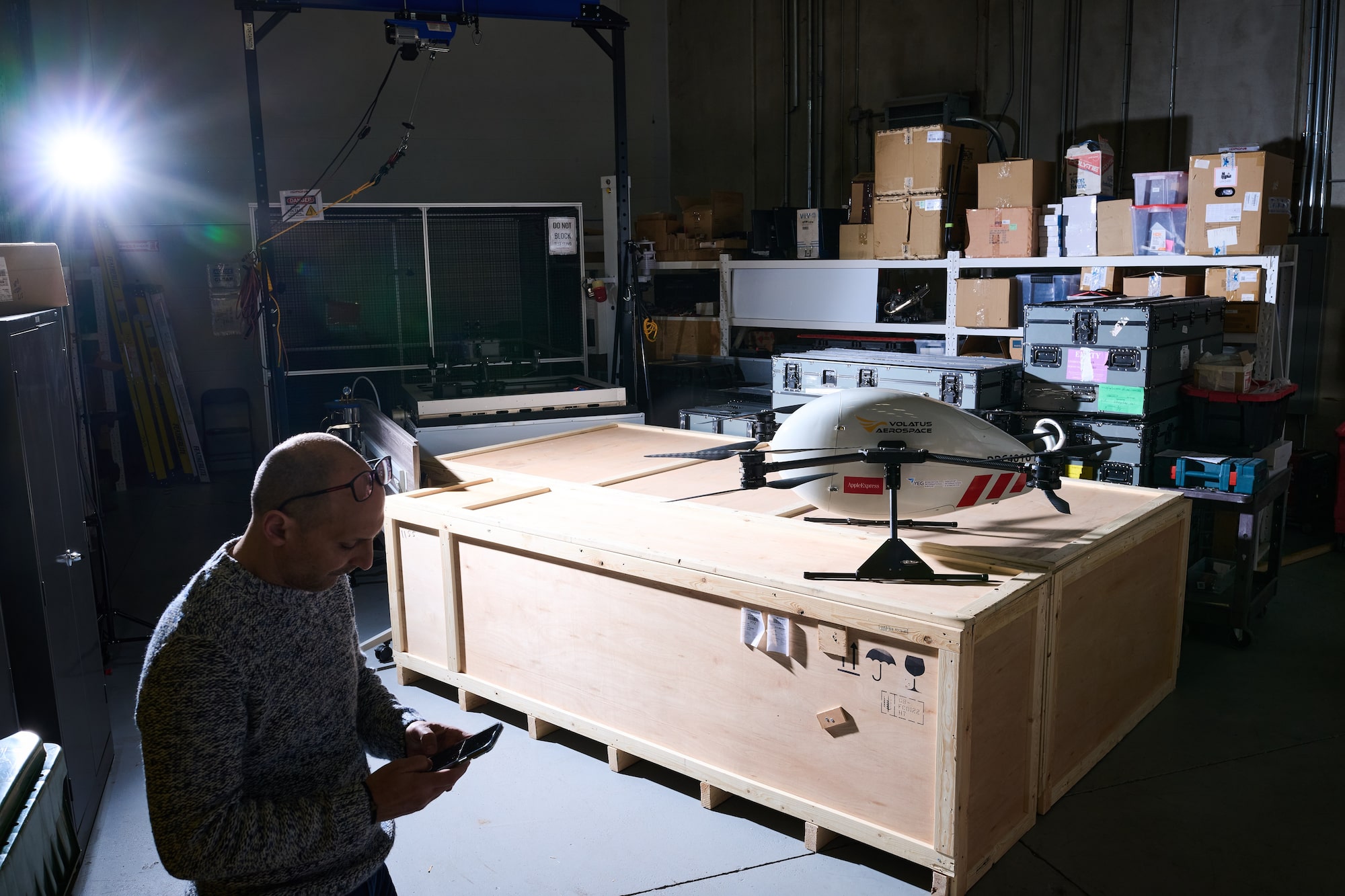
In response to Ottawa’s call for Canadian companies to build at home, Volatus is gearing up its domestic manufacturing capabilities. It recently moved into an approximately 53,000 square-foot facility in Mirabel, Que. There, it’s developing seven different products, including three medium-altitude, long-endurance uncrewed aircraft with surveillance, reconnaissance and strike capabilities – a significant production line the Canadian Armed Forces can access at home.

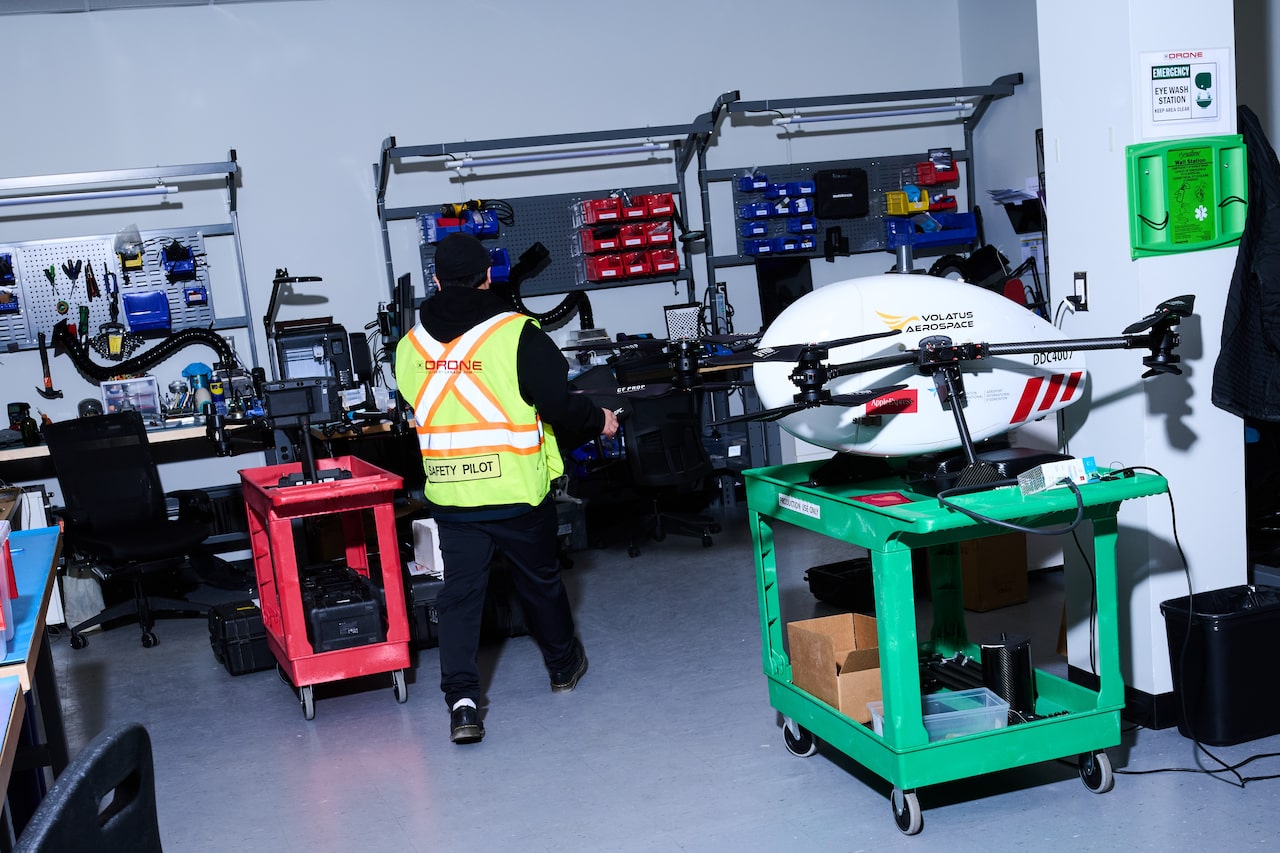
Volatus specializes in large drones, designed for heavy cargo and long-range deliveries.Sammy Kogan/The Globe and Mail
The largest of these three drones will have a wingspan of 10 metres and two of them will be Arctic-operable, thanks to their use of heavy fuel, weather-resistant materials and ability to operate in environments with limited communications, Mr. Lynch said.
Other systems Volatus plans to produce in Mirabel include a helicopter drone designed for heavy lifts, a remote drone deployment dock, an interceptor drone and smaller, low-cost systems to meet Canadian defence requirements. By early summer 2026, Mr. Lynch said he expects to be flying completed aircraft out of the Mirabel facility.
Volatus’ repertoire includes a specialty in large drones, unlike those you can find off-the-shelf at Best Buy, and the company has extensive experience training operators as well as carrying out remote operations.
Distinction in an increasingly crowded sector is important to Kath Intson, CEO of Sentinel R&D, as well. Her Hamilton-based company is exclusively developing the intellectual property for its composite manufacturing, which helps set it apart. That, and the fact that Sentinel’s drone “flies like a bat out of hell,” she said.
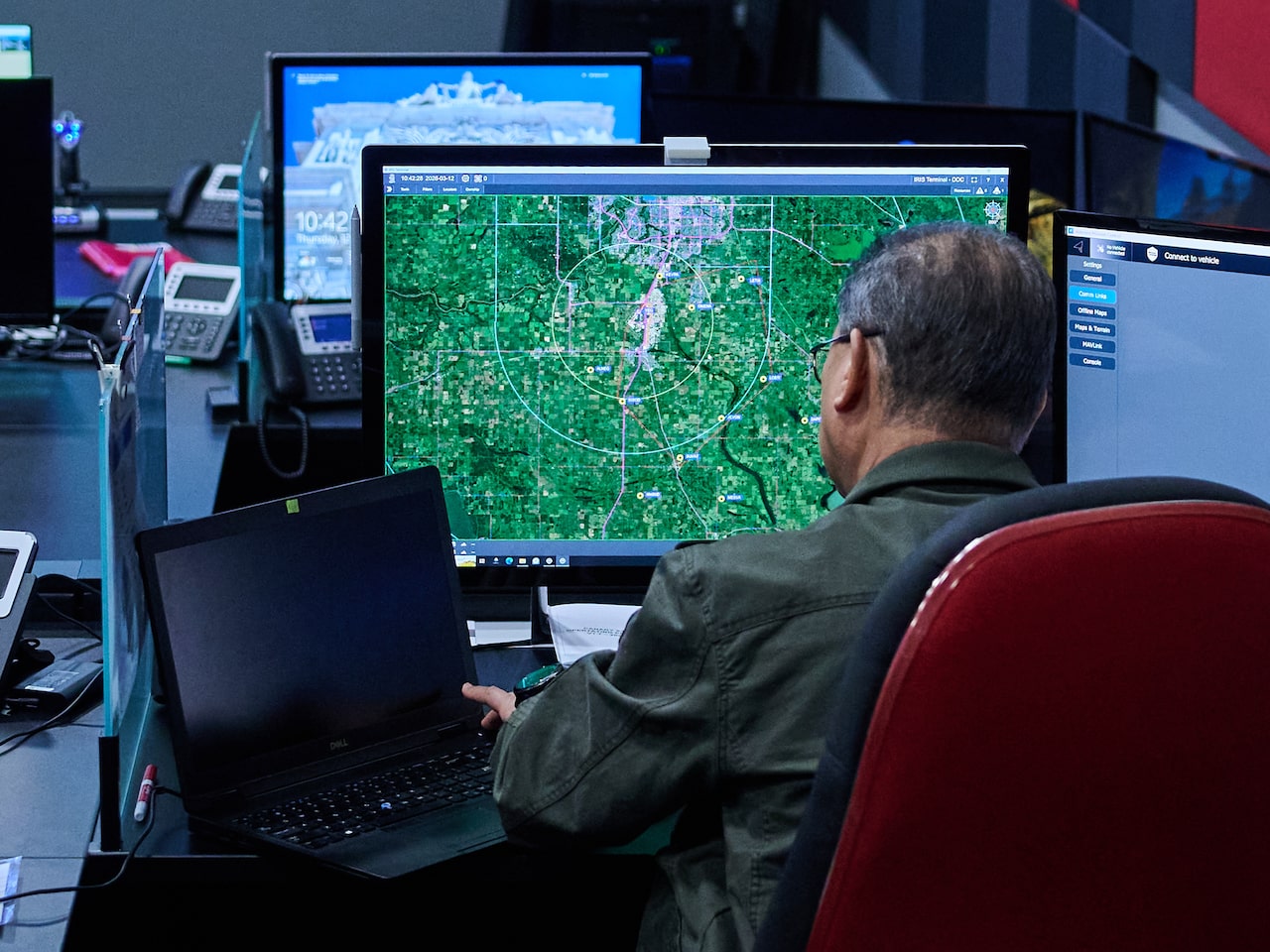
The company’s signature ReKam platform, pronounced “wreck ‘em,” is designed and manufactured entirely in Canada. It has a range of around 500 kilometres and a top horizontal speed of more than 180 kilometres per hour.
“It can fulfill a very wide mission set. Everything from surveillance and reconnaissance to small cargo delivery to strike to signal relay to electronic warfare,” Ms. Intson said. Owing to a recent partnership, it’s also one of the products Volatus will help assemble and integrate components for in Mirabel. Ms. Intson’s goal? To have Sentinel become the go-to drone original equipment manufacturer, or OEM, for the North Atlantic Treaty Organization and have its platform widely adopted by members.
At Pegasus Aeronautics, CEO and and co-founder Matt McRoberts said the Waterloo, Ont.-based company’s hybrid powertrains make it unique. A powertrain refers to anything that helps keep a drone in the air, such as motors and generators, he said. Pegasus’ Canadian-made powertrains use a combination of fuel and batteries, making them particularly adept at operating in harsh environments such as the Arctic. “That’s where our system really excels,” he said.
Each of these companies brings something different to the uncrewed aerial vehicles space. And they’re only three of dozens more building sovereign drone and counterdrone solutions in Canada. If Ottawa is serious about procuring autonomous uncrewed technologies domestically, it must engage with a range of companies, covering as much of the supply chain as possible, Mr. Cicoria said.
Canada may not be able to build it all, but it can certainly give its companies the chance to try.
“We have to start doing it at least in small enough batches that should we have to ramp up, we can. Should we have that supply chain cut off, we’re not completely dead in the water,” Mr. Cicoria said.
In the water
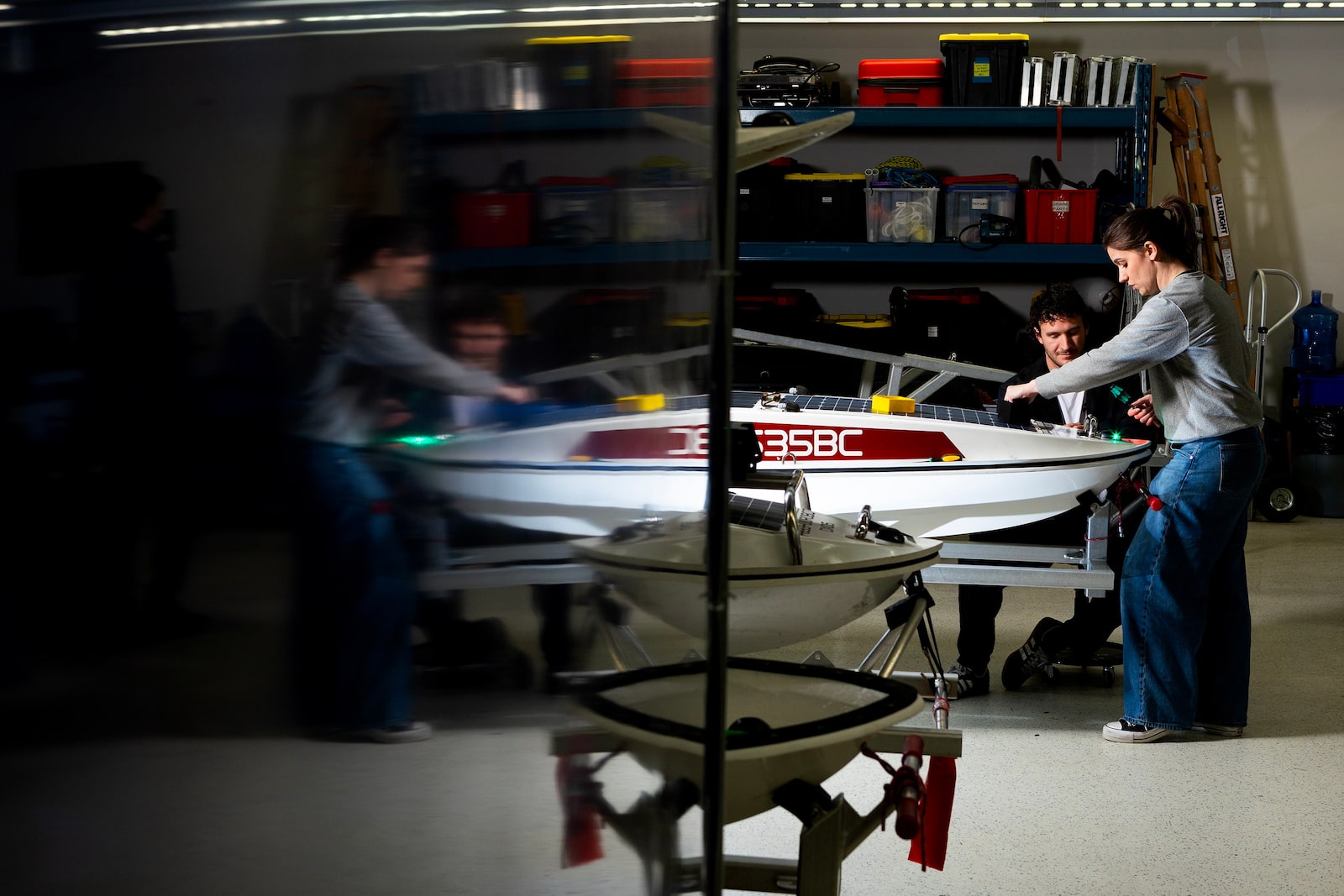
Julie Angus isn’t your typical defence tech entrepreneur. Her inspiration to design and build solar-powered autonomous surface vessels came after spending five months rowing across the Atlantic Ocean, making her the first woman, accompanied by her fiancé at the time, to complete the trip from mainland to mainland.
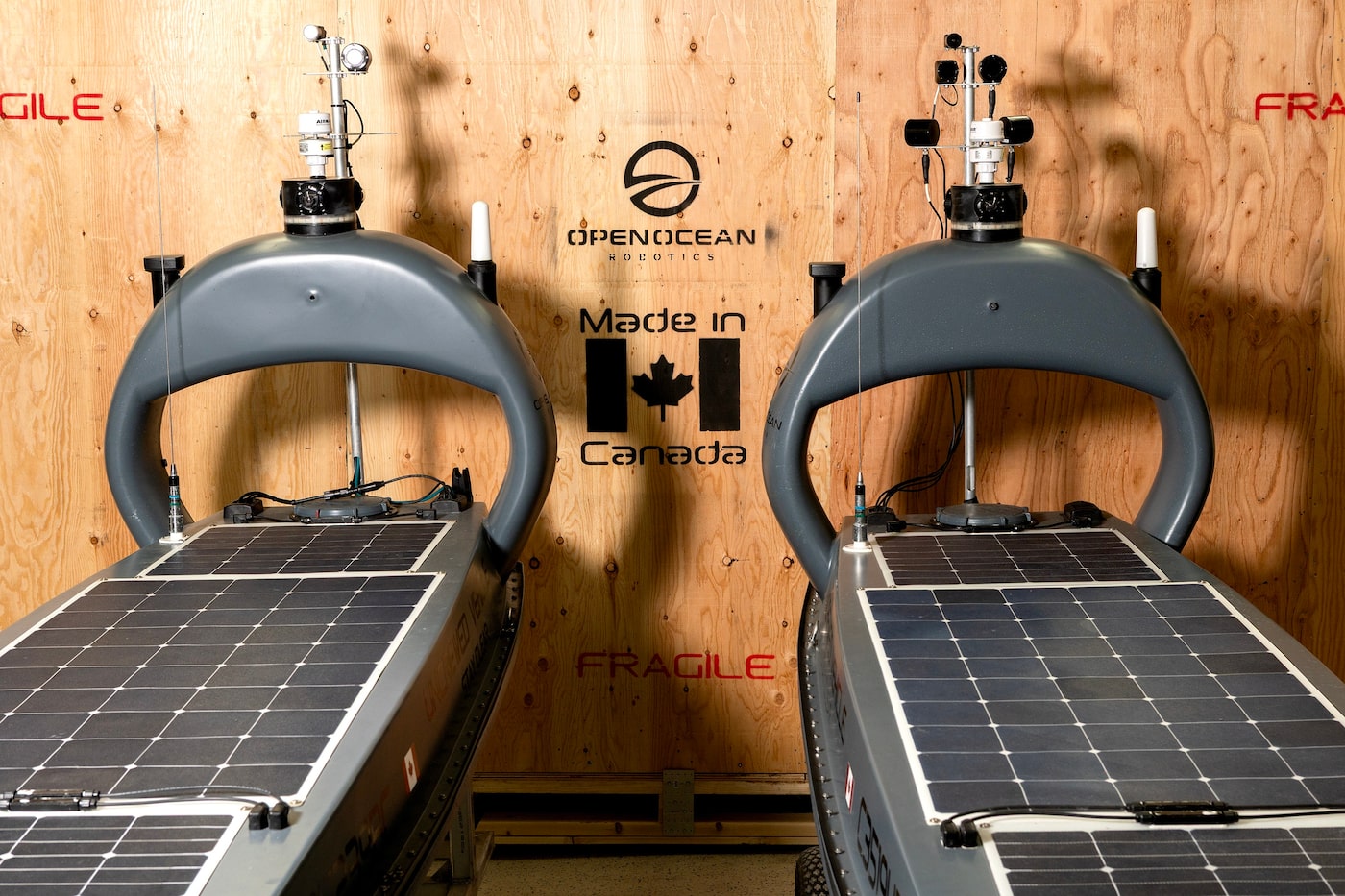
Today, she runs Open Ocean Robotics, a Victoria-headquartered company focused on building endurance vessels capable of navigating rough seas and collecting data along the way. Its boats can be tapped for a range of tasks, such as using a hydrophone to collect acoustic data or using surveying instruments to map the ocean floor.
One of the company’s first jobs was to monitor endangered marine mammals using a suite of sensors, Ms. Angus said. Today, that same technology is being used, with additional sensors such as 360-degree cameras, to detect and identify other vessels through a security lens. “In many ways, we have always been inherently dual use,” Ms. Angus said, referring to products with defence and commercial applications.
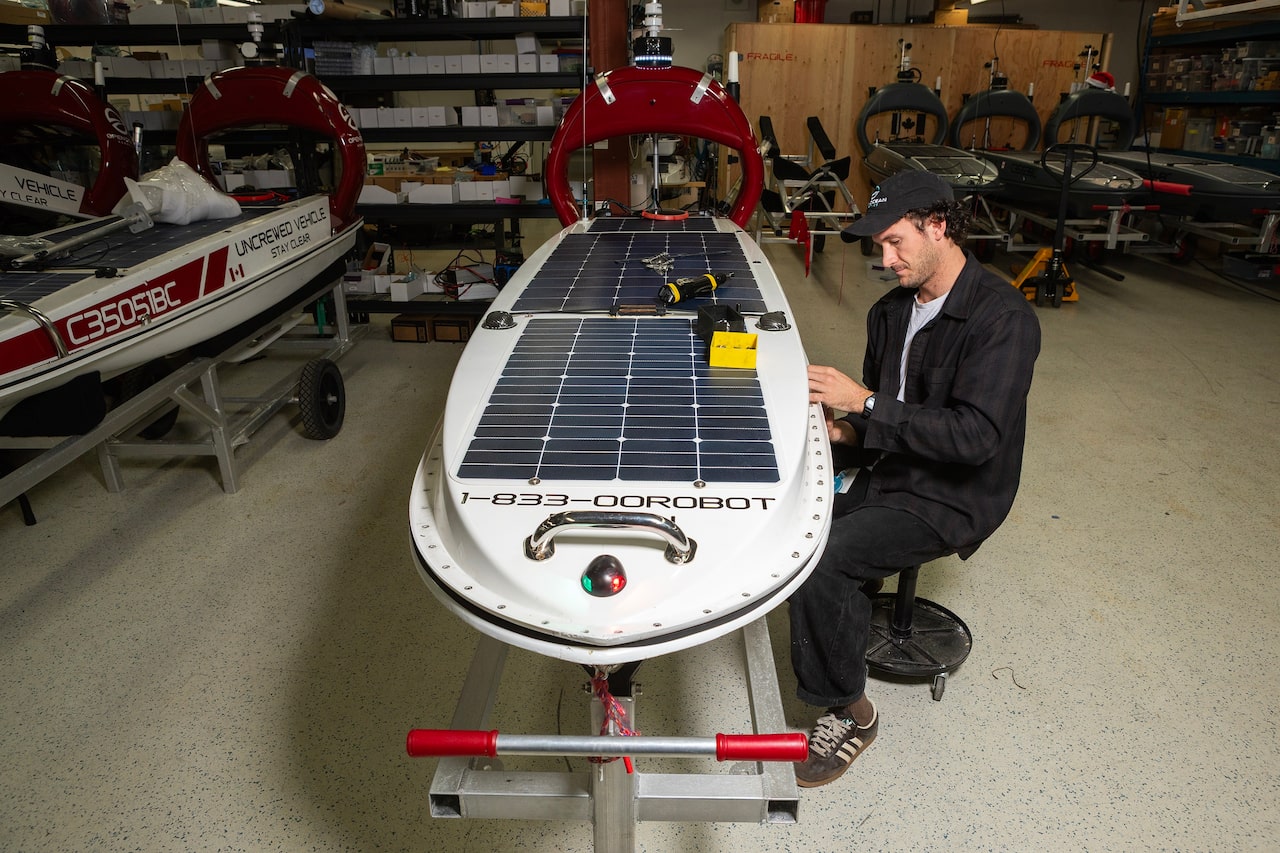
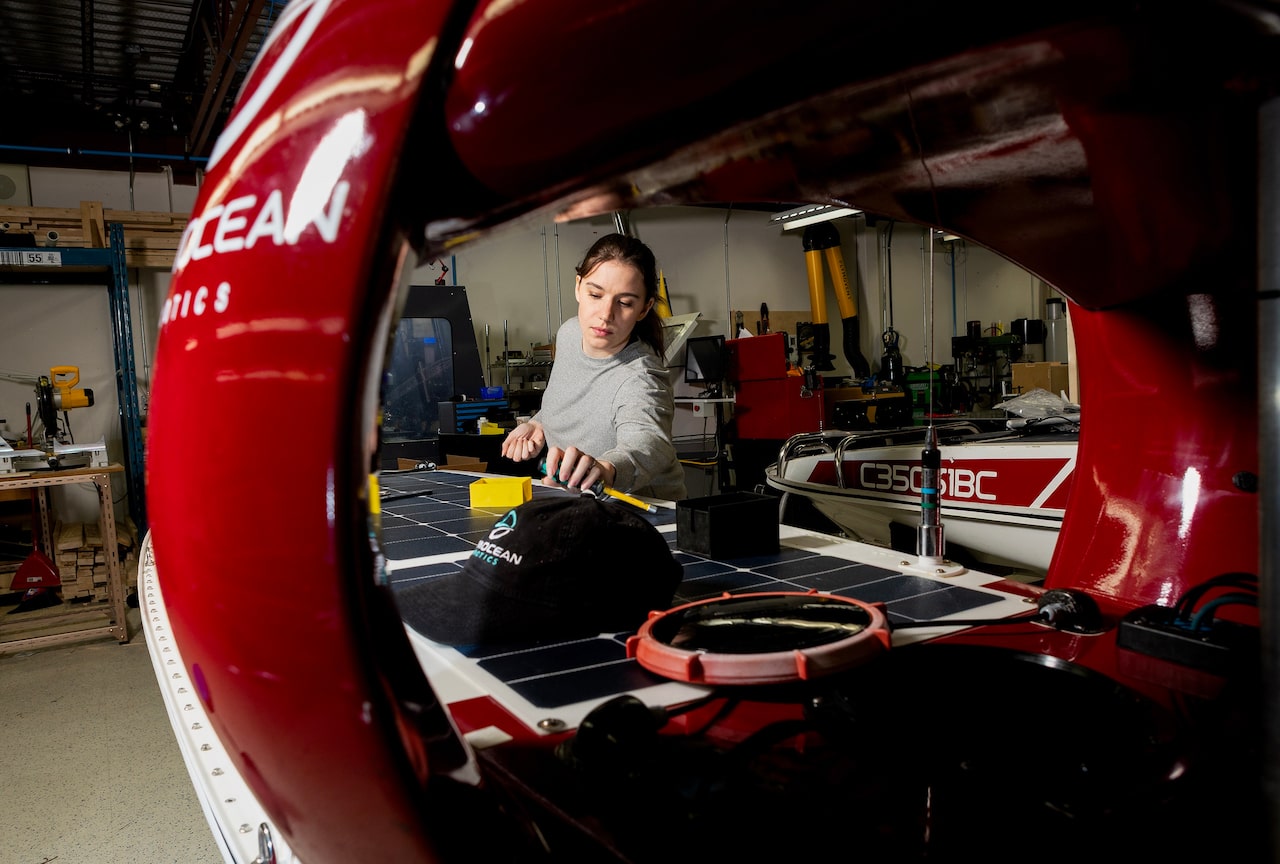
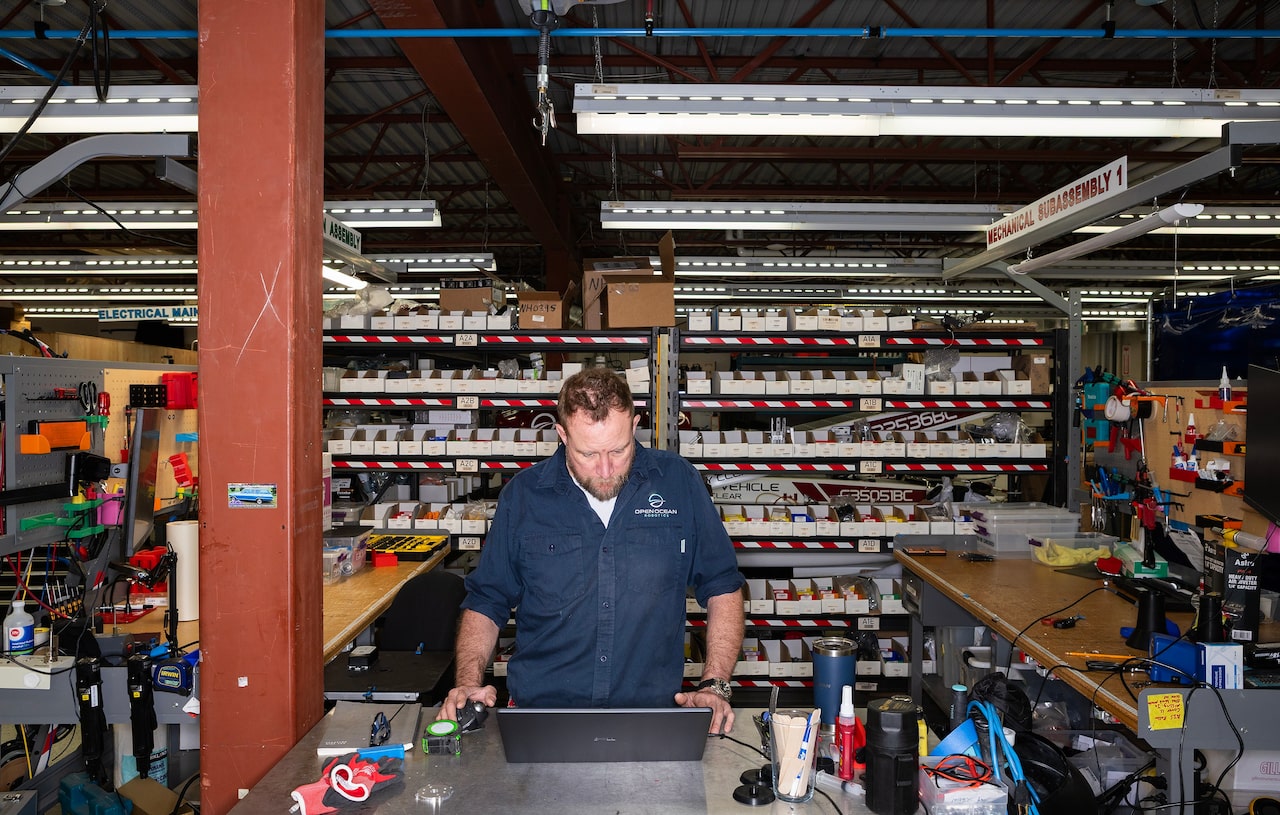
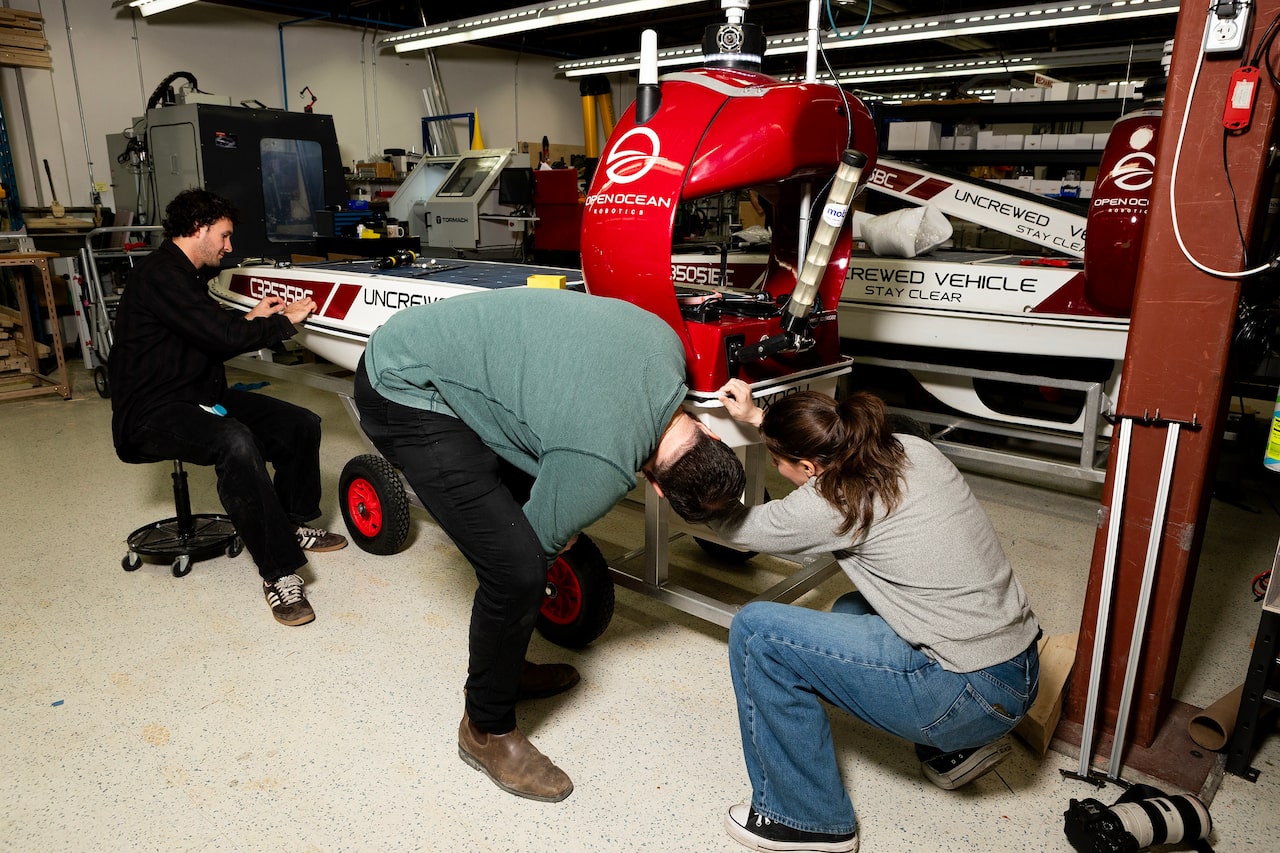
Open Ocean has worked with the U.S. Navy and with Defence Research and Development Canada since its founding in 2018, focusing largely on maritime security and domain awareness. However, lately, Ms. Angus said the company’s work with government has begun shifting from mostly pilots and tests to more substantial contracts.
“The pace of adoption for uncrewed technologies is accelerating,” she said. To meet the domestic demand, Ms. Angus said Open Ocean is “hardening” its technologies for Arctic use, which includes training its artificial-intelligence-powered camera vision to operate in icy environments and reinforcing the hulls of its boats.
Like many Canadian entrepreneurs, defence wasn’t the primary market Sam Macdonald had in mind either when she co-founded Deep Trekker in 2010. The Kitchener, Ont.-headquartered company builds remotely operated vehicles for underwater inspections and monitoring, born out of Ms. Macdonald’s desire to explore shipwrecks and underwater archaeology.
In the five or six years before she left the company in 2024, Ms. Macdonald said the defence market for Deep Trekker’s technologies grew significantly, particularly for applications such as underwater mine and threat identification. “As bad actors are putting things that go boom in places that we also are involved in, in shipping, tourism or infrastructure, it’s become more and more important.”
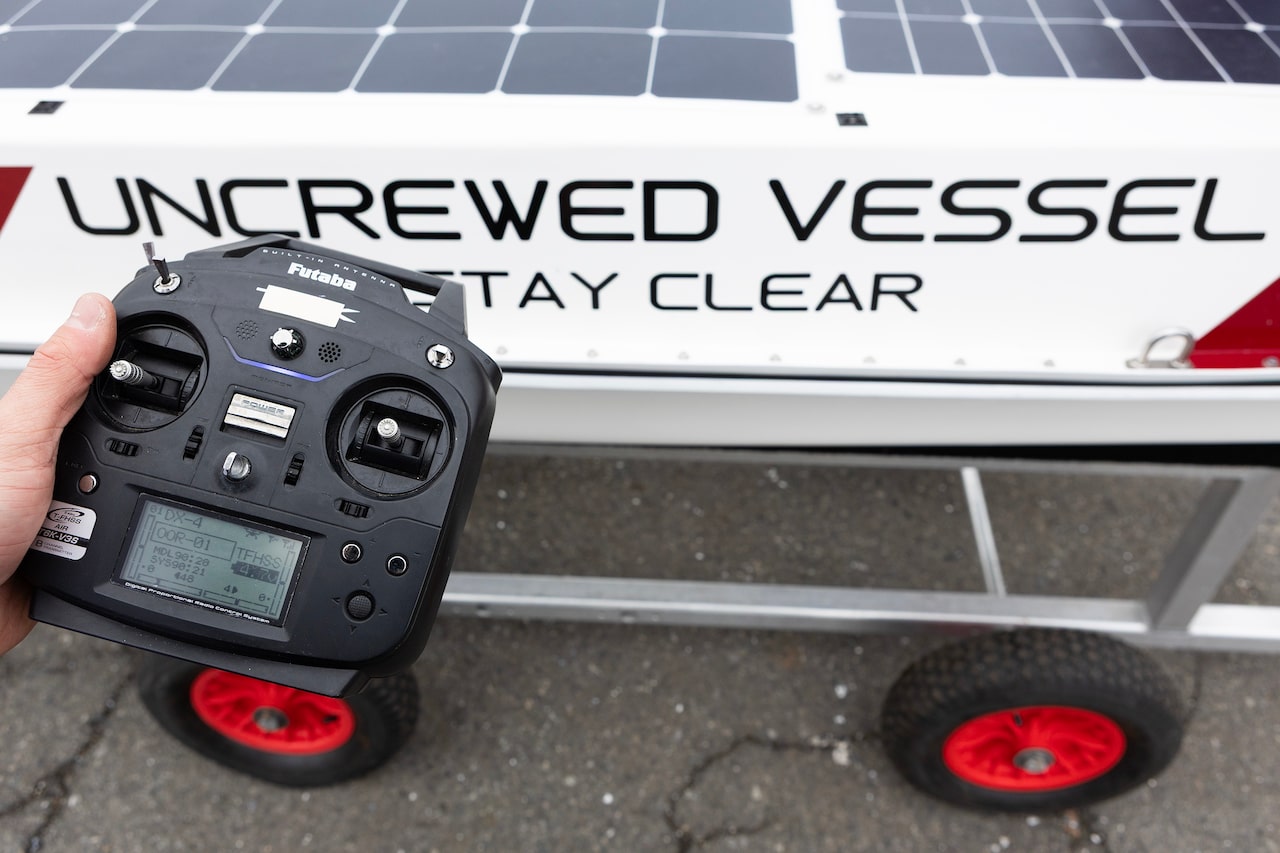
Selling mine countermeasures is a significant stream of business for Greg Reid, president and CEO at Kraken Robotics Inc., as well. Founded in 2012 to commercialize synthetic aperture sonar, which is used to capture high-resolution images, the Mount Pearl, N.L.-headquartered company has made waves lately in the uncrewed underwater vehicles space. Today, Kraken employs about 450 people and has offices in Canada, the U.S., Brazil, Britain and Germany.
Kraken’s sonar and optical sensor technology, and subsea batteries, are sought out by navies all over the world, as well as offshore energy companies, to image the sea floor and things buried within it, such as unexploded mines. Some of these explosives are left over from past conflicts and others are being placed today as a form of defence against ships or submarines, Mr. Reid said.
Kraken sells an underwater drone, called the KATFISH, in addition to sales of its sonar and subsea lithium-ion batteries, which other companies buy to supplement their own autonomous vehicles. This includes Norwegian defence contractor Kongsberg Gruppen ASA, as well as U.S.-based Lockheed Martin Corp. and defence darling Anduril Industries, to name a few.
In 2020, Kraken generated about $12-million in revenue. Five years later, that number climbed to more than $100-million. “The defence market has taken off a fair amount,” Mr. Reid said.
Much like their counterparts in the skies, underwater drones are increasingly being used to complement fleets of larger vessels, potentially saving countries from multibillion-dollar mistakes, he said.
“If you lose a couple of $20-million dollar drones, it’s not great, but it’s way better than losing a whole multibillion-dollar submarine,” Mr. Reid said. “Plus, you’re keeping people out of harm’s way.”
On the land
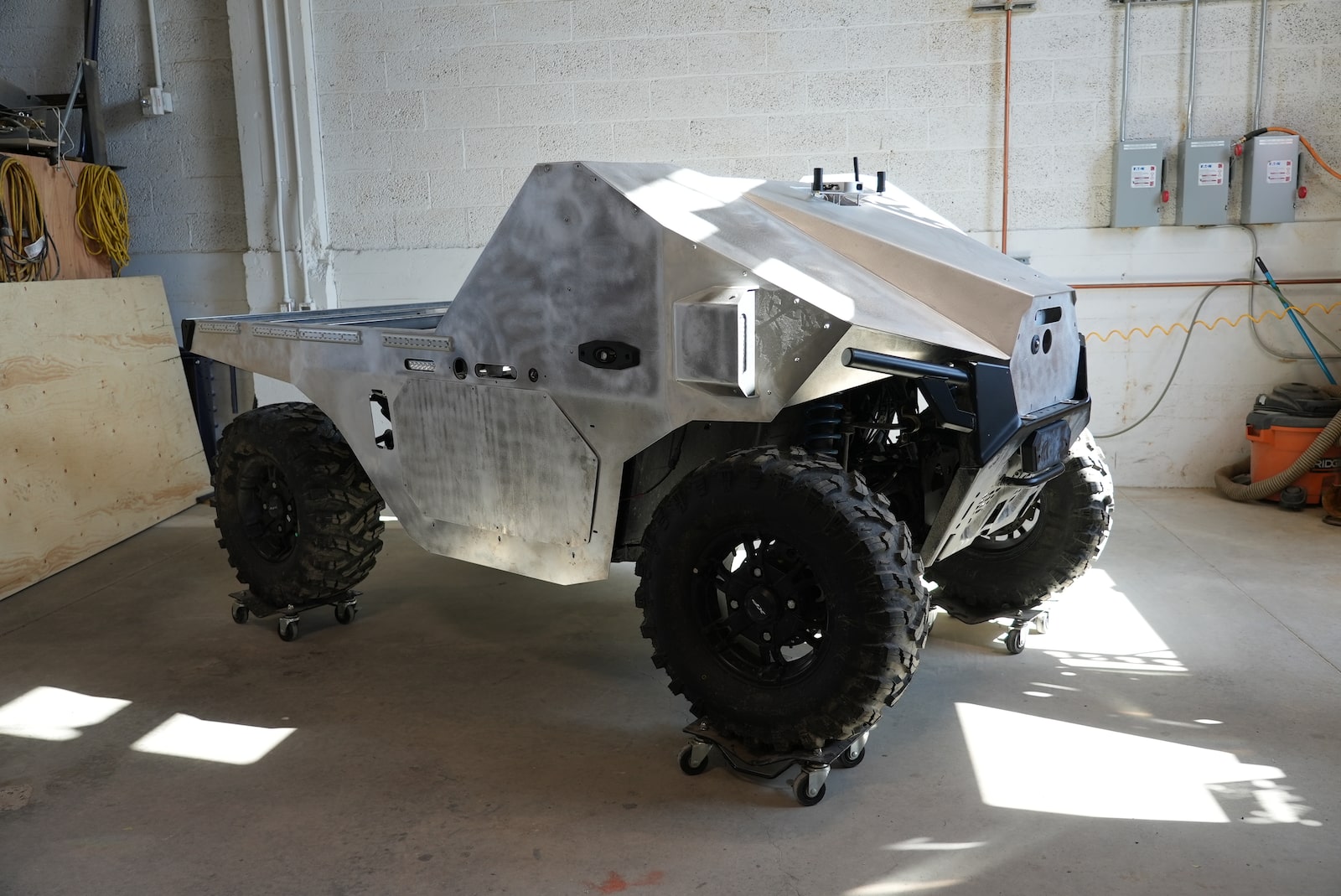
Keeping soldiers safe and healthy is part of the appeal of Philip Reece’s robots. Whether that’s by carrying troops’ heavy packs over tough terrain, transporting injured parties or investigating potentially dangerous obstacles along the way.
Mr. Reece’s Sidney, B.C.-based company, InDro Robotics, makes a variety of platforms, from aerial drones to humanoids, but its uncrewed ground vehicles are seeing the most demand. Whereas the market for aerial vehicles in Canada is flooding with new companies, he said the market for their counterparts on land is experiencing more of a steady stream. But that’s not to say it’s any less important.
“Drones are the splashy cousin who gets out there and gets everybody’s attention and does cool things, and the ground robot is the workhorse that’s getting things done behind it,” Mr. Reece said.

InDro Robotics founder and CEO Philip Reece. His B.C.-based company, makes a variety of products, but its uncrewed ground vehicles are seeing the most demand.InDro Robotics/Supplied
Founded in 2014, InDro won its first contract with the Department of National Defence about five years ago through an Innovation for Defence Excellence and Security competition, in which it received approximately $2.2-million to help build a ground platform that can carry supplies or act as a stretcher. Today, InDro features several different ground robots, aerial drones and other platforms and accessories on its website.
The company has two locations in British Columbia, as well as two R&D facilities in Ottawa, and it is currently looking to scale operations from rapid prototyping to domestic manufacturing. Mr. Reece said he’s also looking to up the share of Canadian content in his robots from around 50 per cent to 80 per cent, in line with Ottawa’s ask for domestic manufacturers to meet its new Buy Canadian standards.
Across the country, in Toronto, INKAS is building an uncrewed ground vehicle to assist soldiers on the battlefield. Made to carry supplies or wounded people, or lay landmines, the company’s remote-controlled Heemar platform resembles a padded wagon or cart with four large, deeply treaded tires.
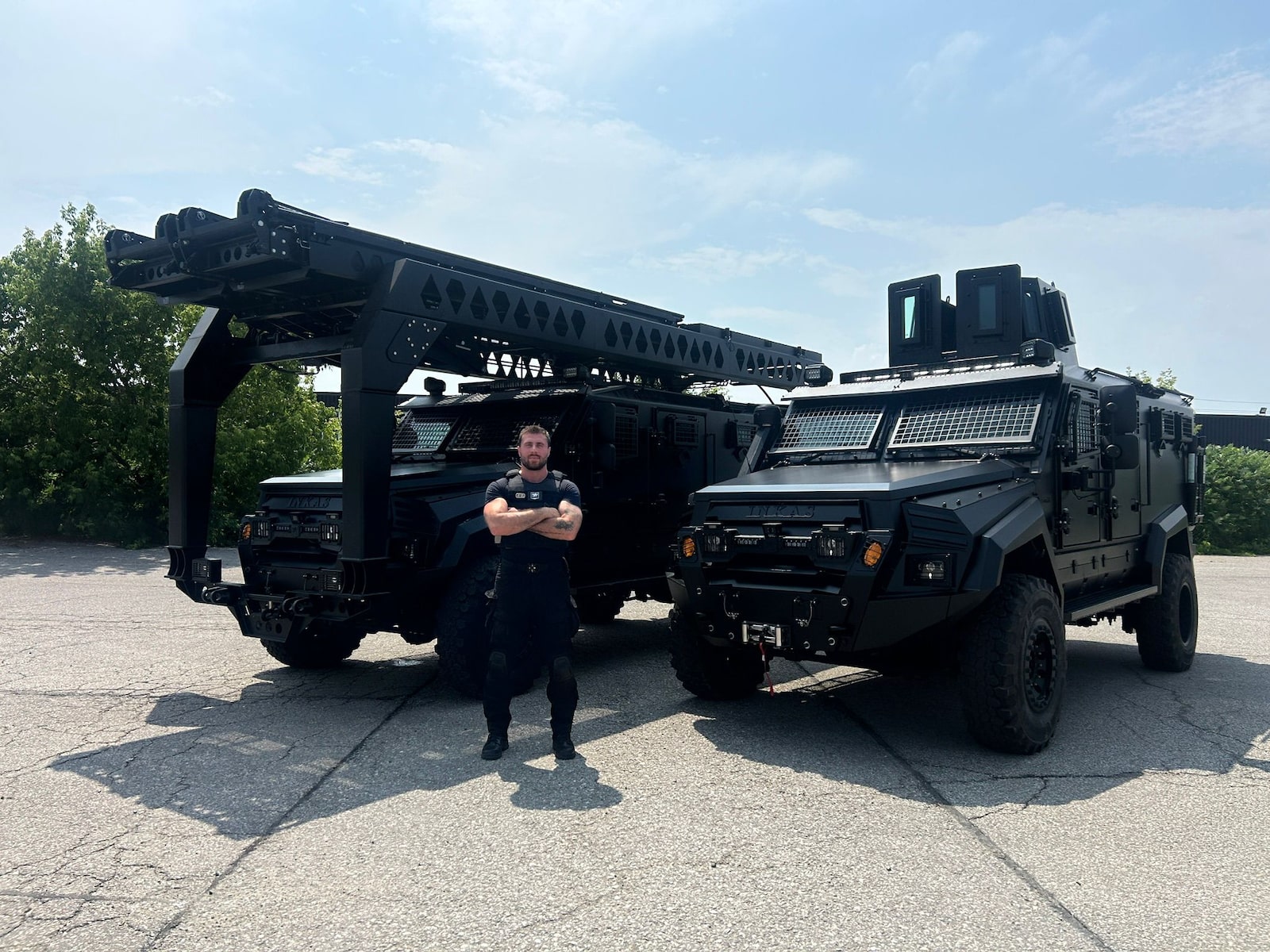
Founded in 1995, INKAS is a group of companies that includes armoured vehicle manufacturing, aerospace and defence, safe manufacturing, payment solutions and metal fabrication. It employs more than 350 people and specializes in ensuring its products are field-tested, through footprints the company has in places such as Ukraine, said Habib Irani, product and business development manager at INKAS Aerospace and Defence.
Production of INKAS’ uncrewed Heemar vehicle is already under way in Ukraine and is slated to begin in Canada soon at a facility the company just acquired close to its Toronto headquarters, he said. The new 10,000-square-foot facility will be dedicated exclusively to meeting domestic demand for uncrewed vehicles, as well as some armoured vehicles.
“We’re going hard. We’re going straight for the Canadian government. We’re going there and basically grabbing them by the shirt and saying, ‘Look at this, look at what I’ve got. Open your eyes, because you have it locally,’” Mr. Irani said.
What Canada needs
Grabbing the attention of their own government has long been a struggle for emerging Canadian defence entrepreneurs. Many end up selling abroad to foreign militaries before gaining any traction at home.
Small to medium-sized businesses that make uncrewed technologies are no exception, Mr. Cicoria said. “Unfortunately, the vast size of this country sometimes works against us,” he said. “But we are starting to see that change, and it’s exciting.”
That’s because the Canadian Armed Forces want to work with companies in its own backyard, but this hasn’t always been a priority for the federal government departments in charge of procurement. As director of joint requirements for the Forces, Colonel Chris Labbé said it’s in his best interest to ensure members have the weapons they need when they need them.
“That includes making sure that our supply chains for weapons systems and drones, for example, are assured,” he said. “So that if we need to, for example, scale up production because we have a lot of demand, Canada is in a position to do so.”


Thermal imaging drone capabilities are tested during Operation Nanook, the Canadian Armed Forces' annual Arctic training and sovereignty operation, in Inuvik, N.W.T. in February, 2025. According to Ottawa’s new Defence Industrial Strategy, uncrewed and autonomous systems are one of 10 key sectors sure to benefit from the increase in defence spending.COLE BURSTON/AFP/Getty Images
Military-industry engagement is soaring to new heights in Canada as part of an attempt to ensure defence technology procurement happens in a more timely, effective manner. Senior officers on both sides, from colonels to executives, are touting newfound relationships with each other and a surplus of benefits from military-led efforts, such as the MINERVA Initiative, which was set up to help drone companies learn directly from their end users.
There’s no question that uncrewed systems will shape the way the Canadian Armed Forces function at home and abroad in this new world order, just as they have already done for countries such as Ukraine. What’s not yet clear is the role they will play in shaping the Canadian defence industry, and the country’s economy, by consequence, as it undergoes immense change.
But can Canadian companies handle this capacity and grow with what the Armed Forces need? The answer to that, Mr. Cicoria said, is, “We don’t have a choice. We have to.”