It’s a cold, overcast day in West Virginia, and I’m in the back of an armoured black Suburban when a man starts pounding on the doors and windows. He’s screaming at me, furious: “You ruined my life!” The driver, Barry, puts the SUV into gear and takes off, while Arthur, the second of my two-man security team, calmly speaks into the mic wired to his earpiece and radio, informing a command centre in Boca Raton, Fla., that I’m now the target of a proximate threat.
Suddenly, there’s a car on our tail, honking wildly. Barry veers back and forth to avoid detritus on the road, the five-tonne armoured SUV rearing from side to side. I’m wearing my seatbelt, but I need to grab the handle in the door to steady myself, adrenaline coursing through my body. Barry sees a barricade in our path, so he slams on the brakes, quickly reverses and changes course. The pursuant vehicle, another massive black SUV, is suddenly in front of us, and Barry deftly manoeuvres out of its path.
I can’t see the trailing car anymore, but one of the Suburban’s tires has blown, so we come to a halt. I can hear Arthur repeating his request for law enforcement into his mic. Within seconds, another armoured Suburban pulls up alongside ours. Arthur turns to me and calmly explains that we’re evacuating to the second vehicle, and tells me which door I should prepare to exit from. He comes around to pull open the back doors of both the new SUV and the one I’m still sitting in, creating a bulletproof barricade. I quickly slip out of the car, and Arthur practically tosses me onto the floor of the new Suburban. He scrambles in after me, covering me with a ballistic blanket, and asks if I’m okay, if I’ve been hurt—all while our new driver takes off at high speed.
The top priority in all of this is, of course, me. I’m the “asset” or “principal,” the centre of a security team highly trained to deal with everything from assassination attempts and overly enthusiastic fans to picking up kids from school. On the other end of Arthur’s radio is the global network of resources offered by GardaWorld’s Crisis24 Private Strategic Group (PSG), a global protection service that offers clients real-time monitoring of social media and political instability, convoy coverage and integrated medical services, available 24-7, 365 days a year in any country except North Korea—at least, for those with deep enough pockets to pay for a service that can run into the millions.
Sadly, I don’t have those kinds of resources. But GardaWorld has invited me to at least pretend to be an important executive in need of protection. For a day, I’ll be sampling a range of services in Charles Town, West Virginia, in the hands of agents who’ve flown in from New York City, the Bay Area and Oxford, U.K.
PSG is the brainchild of Stephan Crétier, the founder and CEO of GardaWorld, a many-headed security company headquartered in Montreal (though Crétier splits his time between Dubai and Florida). Crétier started GardaWorld (then Trans-Quebec Security) in 1995, taking out a second mortgage on his home to scrape together the money.
It now employs 132,000 people worldwide and does everything from rent out mall cops and pick up cash from banks and businesses to staff airport security and protect corporate personnel in hot zones. “We’ve built this into a powerhouse of different businesses,” says Crétier. He and several of his managers recently restructured the business, selling 30% to hedge fund HPS Investment Partners and other investors, and keeping the rest. The deal valued Garda—which was publicly traded until 2012—at $14 billion.
Several years ago, Crétier was, as he puts it, “talking to my fellow billionaires” about the fact that no one had figured out how to integrate the range of personal protection, logistics, medical and white-glove concierge services typically available to the fabulously rich. “They were looking for the head-of-state experience,” says Crétier. In June 2024, GardaWorld announced an expansion of its Crisis24 risk management business, building it out to create an integrated concierge medical practice and personal protection service. The unit now has 200 billionaires on its PSG protection roster.

Crisis24 agent Arthur holds a bulletproof shield over reporter Sarah as they flee towards a waiting vehicle.
The world has always been full of danger, and celebrities and other high-net-worth individuals (including Canada’s richest families) have long relied on personal protection to beat back crowds and secure the perimeters of their first, second and third homes. But an increasing number of top executives are starting to worry, too, particularly in the wake of the brazen daylight assassination of Brian Thompson, CEO of America’s largest health insurer, UnitedHealthcare, in Manhattan this past December.
Jeff Marquart, PSG’s managing director, says the murder has shocked CEOs into assessing their own risk—and just how much the public might have it out for them. Marquart would know. He’s protected some of the world’s most powerful people, managed security operations in 40-plus countries and co-authored a sort of bodyguard’s bible called Just 2 Seconds, which analyzed more than 1,400 incidents involving at-risk individuals. For one thing, there’s simmering anger about the ever-widening wealth gap. Then there’s the folk-hero treatment of Thompson’s alleged killer, Luigi Mangione, now awaiting trial at a prison in Brooklyn. “People who might’ve considered doing harm but doubted their ability to pull it off,” says Marquart, “will now be encouraged.”
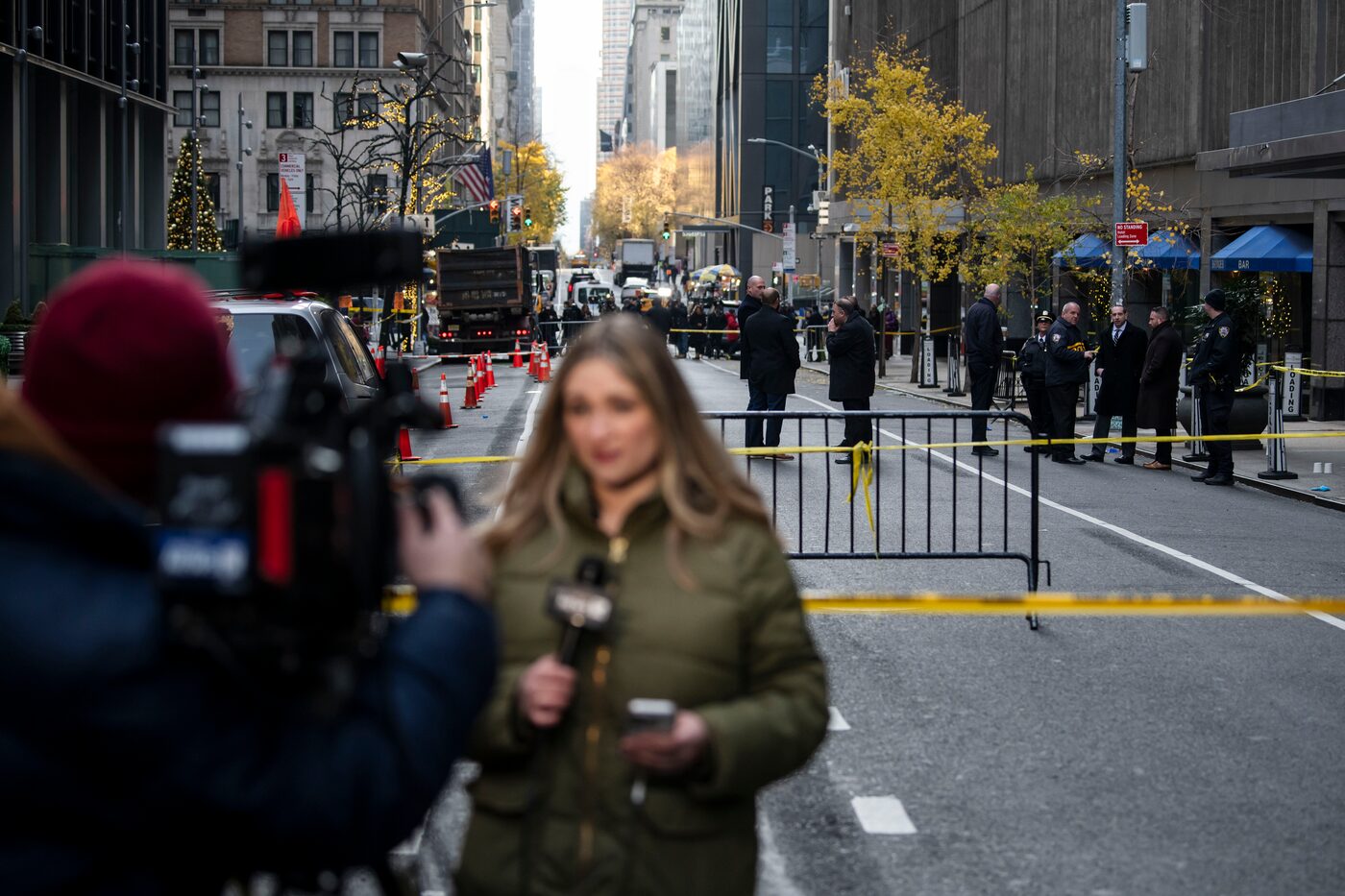
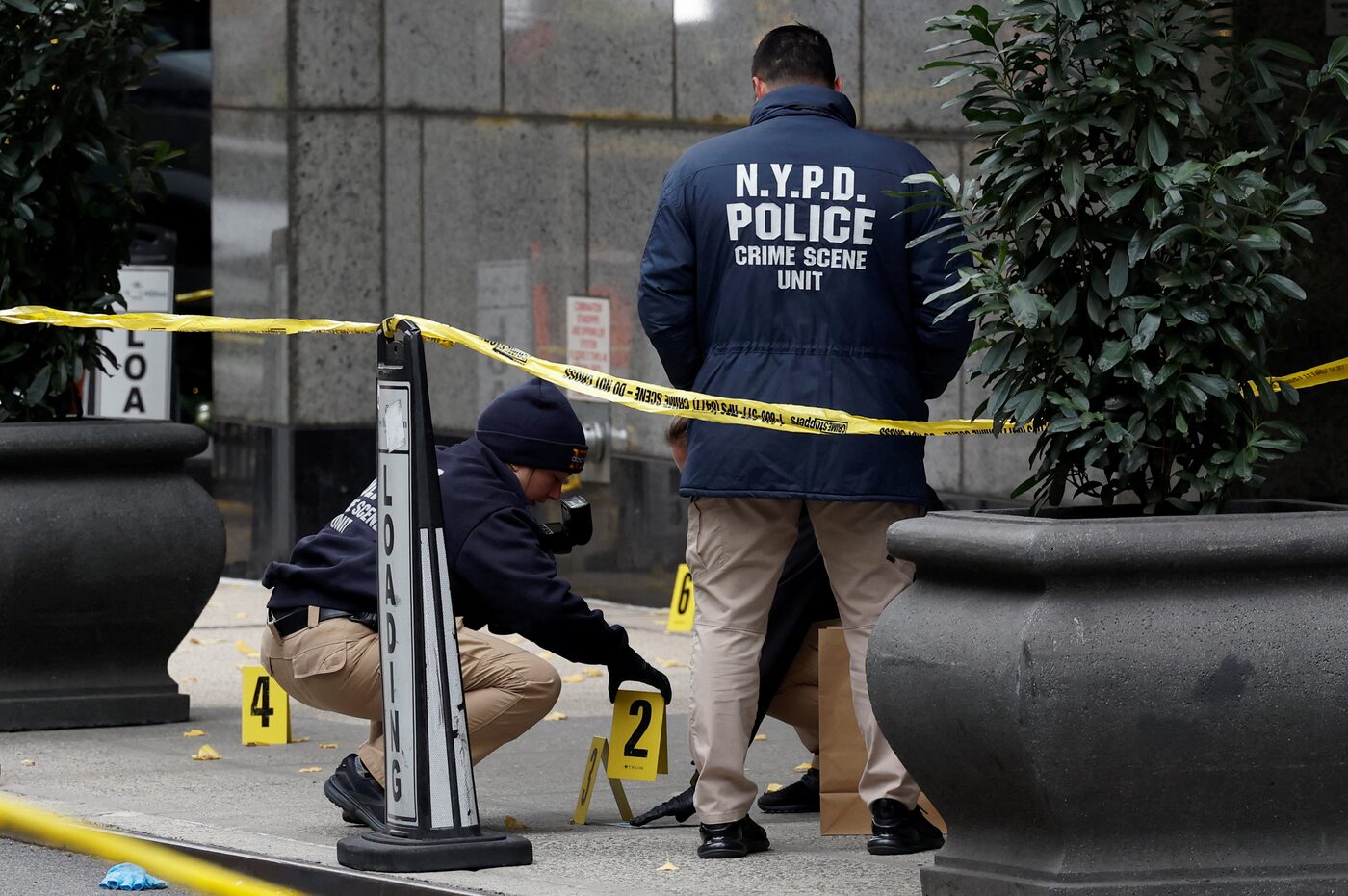
In fact, since Thompson’s death, Crétier says executive on-boarding for his protection services has increased fivefold or more. Now more than ever, boards understand that a single CEO can represent billions in market value. (UnitedHealth Group’s stock, for instance, dropped by nearly 8% in the week after the murder, erasing $40 billion in market value.) Would you put $1 billion in an Uber and just hope for the best?
Add to the list of worries growing concern about natural disasters, medical emergencies, and the ability to access appropriate care in a system of crumbling public services. In January, as wildfires ravaged Los Angeles, Marquart’s own home was surrounded by fire on three sides as he coordinated the evacuation of numerous local PSG clients and waited to see whether he’d have to go, too. And that’s the niche PSG hopes to fill—smart protection for the decline of the Western world, less for acute danger than potential for inconvenience. One agent described the business model as “70% concierge, 30% security.” It’s an amazing concept: Someone who knows just how you like your latte will also protect you with his life. Ultimately, they’re fixers. For a steep fee, they can make your problems—including the ones you haven’t even thought of yet—go away.
My day of elite private security starts at the Holiday Inn Express in Charles Town—not the most likely genesis for most high-net-worth executives, but perfectly serviceable nonetheless. Arthur, an unusually tall Englishman with sandy blond hair wearing a navy and black gingham raincoat, zeroes in on me the second I arrive in the lobby. He asks how I’m feeling and if I need anything. I’m with a group—photographers, a GardaWorld wrangler—but I’m told to hang back in the lobby while everyone else gets settled in the car. “Let’s keep you here, where you’re nice and warm,” says Arthur encouragingly.
I immediately warm up—not just because the lobby is blasting heat to guard against the constant opening and closing of automatic doors, but because I’m already completely on board with being singled out for special attention. As it turns out, this isn’t just a luxurious courtesy; approximately 70% of “attacks”—a word used to describe a broad array of disruptive actions, from verbal abuse to active shooters—happen during loading and unloading from a vehicle, and inside is always considered a safer, more controlled environment for an asset. The goal is to get “from known space to known space,” and briskly.
When the massive SUV is finally ready for me, Arthur asks if I’d like to leave and, after waiting for my affirmative response, extends one of his very long arms forward, toward the automatic doors. It’s maybe 20 feet to the car, but I feel his presence behind me, matching my pace. He’s one arm’s length back and to the side, which gives me a bit of space, allows him to see everything in front of me, and keeps him close enough to suddenly grab me in the event of an emergency.
We arrive at Summit Point, a shared training facility owned by GardaWorld and used for both public and private security. (Garda’s Crisis24 agents are typically trained at the company’s facilities on the West Coast and in London, but we’re improvising.) There, I’m introduced to Devon Taggart, Crisis24’s director of training. Taggart, who has auburn hair and a neatly trimmed beard, is fit and attentive, warm but not overly familiar, and supremely professional. In fact, he’s so calm, confident and seemingly capable that later, when he tells me he sometimes wears Birkenstocks off-duty, it doesn’t undermine his authority.
PSG has around 1,400 agents in the U.S. (its biggest market), and they tend to be recruited from military, law enforcement or paramedic backgrounds. They’re not the thick-necked meatheads of popular culture, something Crisis24 emphasizes. While agents must meet certain fitness standards—some more rigorous than others, especially if your principal is super into heli-skiing or runs marathons—they’ve also got to be thinkers, says Taggart. Soft skills, like discretion, communication and the ability to blend seamlessly into a refined crowd, are key. Female agents are often in demand by female executives, or the wives and families of clients.
Crétier tells me that the PSG hallmark is proactivity and discretion, noting that he was once “partying with a Persian client in Cannes,” his personal security inconspicuously posted throughout the room, when a celebrity basketball player came in with his own detail, all of whom proceeded to sit around the same player, joining the party. When someone attempted to film the basketball star, who was sitting close to Crétier, the Crisis24 PSG team stepped in before anyone noticed and again faded into the background. Three weeks later, Crétier says he got a call from the basketball player, inquiring about protection.
Agents typically work in eight- or 12-hour shifts, seven days on and off. Some Crisis24 clients require round-the-clock protection, and there’s a fine balance between familiarity and professionalism. Clients have known threats, the things that keep them up at night or a recent jarring event, but there’s also a host of unknown menaces—a random person making dark threats online or something as seemingly innocuous as your 16-year-old daughter aggressively broadcasting her location on social media.
To maximize protection, agents need to understand a full picture of a principal’s life. If they’re married but have three mistresses, that’s important information. It’s reasonable to assume, says Taggart, that agents sometimes know more about an individual they’re protecting than even some close family members.
After grabbing a coffee and getting a very brief tour, I’m told that we’re going to kick off the day with an active shooter drill. Arthur and Jamie, a blonde and very serious local agent and former police officer, will act as my protective detail. Barry, who projects good-natured composure despite rarely speaking, will act as a gun-toting (paintball only, but still) assailant so I can see how things unfold in a crisis.
The scenario and every step of what’s going to happen are explained to me a few times. But I’m still nervous as I walk into the simulation, Jamie playing the advance agent, walking just a few steps ahead of me, and Arthur, just behind. As I round the corner, Barry emerges from a doorway, firing a paintball round in the air, well above my head. In an instant, Arthur grabs me by the hip and shoulder, practically bending me in half and ushering me in the opposite direction, while yelling “move, move, move” until he gets me around the corner to a place that was deemed safe in advance. If this were real life and not a training facility with temporary walls, Arthur would be shouting a destination to me—car, for example—so I’d know where to go if he got hit. No matter what happens, he tells me, I keep going to the safer location.
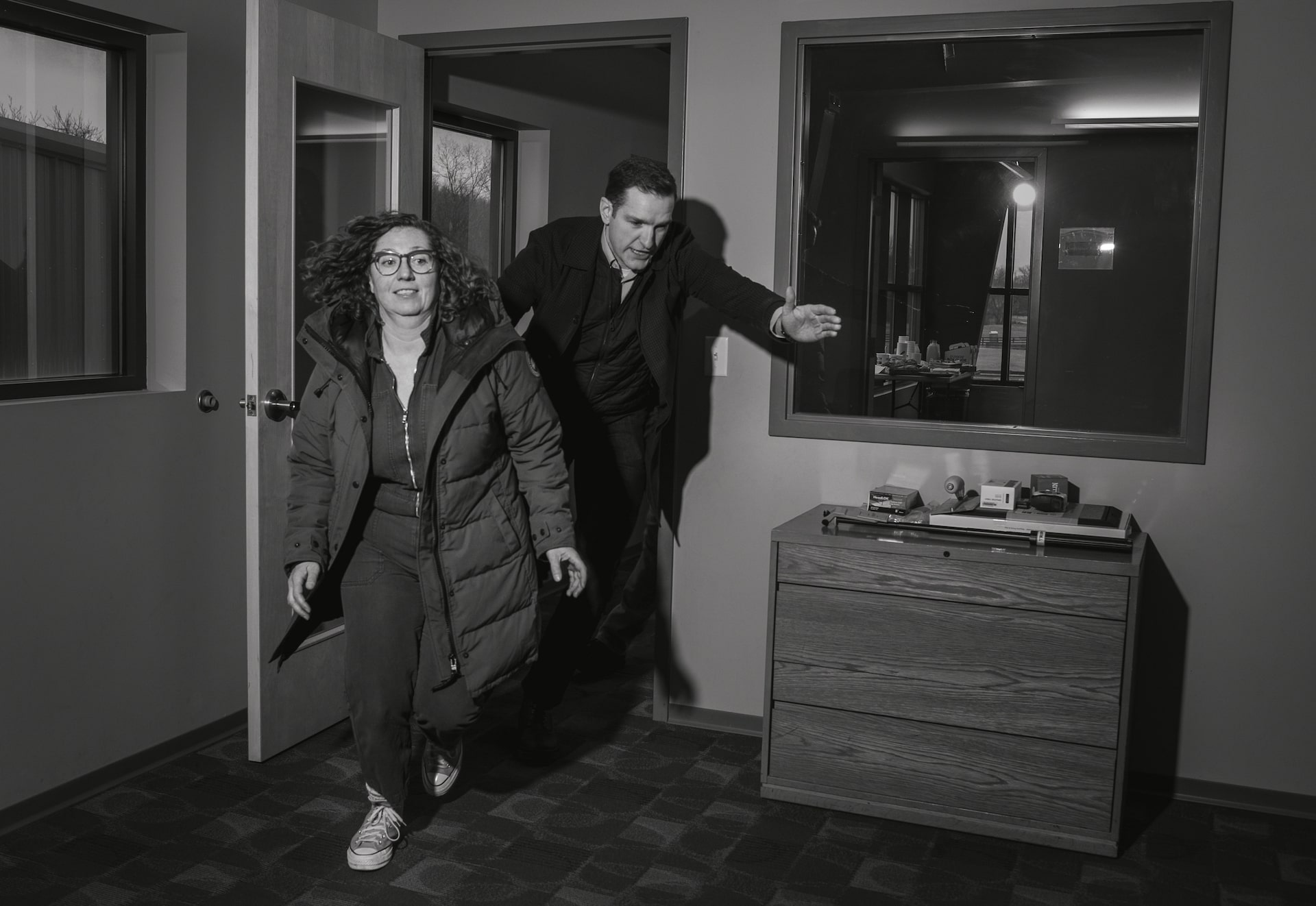
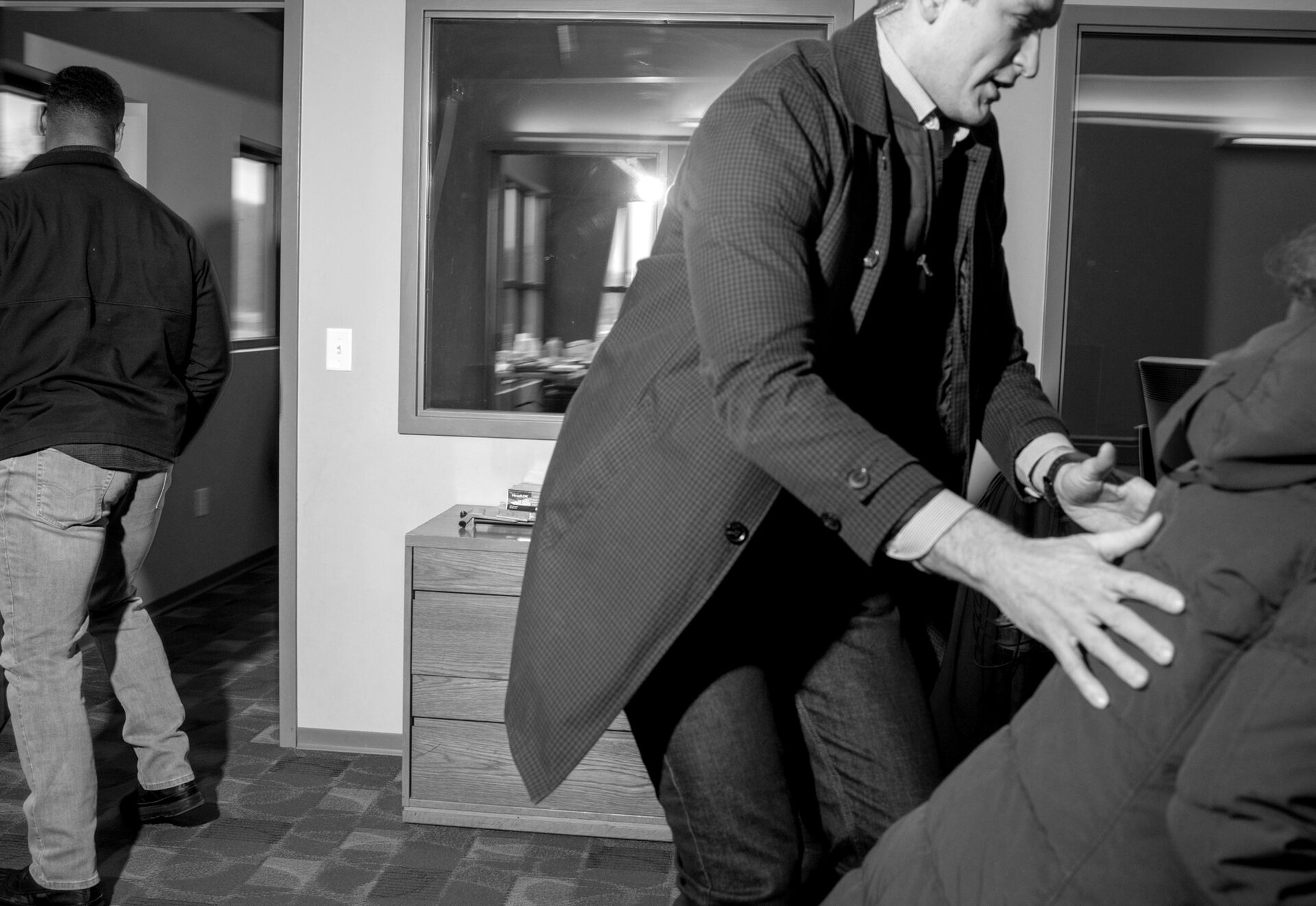
Immediately struck by anxiety and adrenaline, near panic despite the obvious contrivance, I feel my mind go completely blank the second Arthur leaps into action. I don’t notice that Jamie has moved toward Barry, pushing down both of his arms to get him off target and ensure that Arthur can move me to safety. Later, I ask why Jamie didn’t draw her own weapon to stop the attack. Taggart explains that most PSG agents aren’t armed; instead, they’re trained in threat assessment, reaction time and martial arts like jujitsu. Carrying firearms comes with its own risks, and deadly force often isn’t the best option. “If you’re using a gun, you’re already losing,” says Arthur. In the case of Barry’s paintball attack, it would’ve taken valuable seconds for Jamie to draw her own weapon, and even if she had fired off several rounds, Barry could have kept firing in that time. Even if Barry isn’t disarmed, it’s about buying time to get the principal to relative safety.
Everyone I meet reminds me, over and over, as my mind wanders to worst-case scenarios, that the protective services business isn’t like sweeps week. The goal is avoiding danger rather than confronting it—even if agents are prepared for both. And anyway, clients are far more likely to suffer a medical incident than an active shooter. “I’m more often judged on how quickly I can find a Band-Aid than respond to gunfire,” Arthur tells me. Still, agents operate on the precautionary principle—employing a range of idioms, including “two is one, one is none,” suggesting that something will always go wrong—and the assumption that one can never be overprepared.
Crisis24’s services are à la carte, running anywhere from a few thousand dollars for a background check into a new employee to eight figures for full global protection that includes drivers, agents, home protection and vetting systems, intelligence operations, social media monitoring, K9 sweeps and dedicated medical services. More than 100 clients use Crisis24’s 24-7 residence support (including some Canadians), which typically comprises five agents.
All clients and agents receive a dedicated PSG call-in number so that in case of emergency, there’s no time wasted trying to verify their identity. Agents are trained in first aid, and they carry comprehensive medical kits, including EpiPens and portable defibrillators (with TSA-approved batteries so they can travel in-cabin), as well as a portable diagnostic tool developed by Crisis24 that digitally transmits a client’s vitals in real time to any of Crisis24’s medical staff. And it’s customized, too; if a client has a ranch in Texas, agents might carry snake antivenom. Agents also carry naloxone to counteract opioid overdoses—a growing concern among even the rich and famous, and something Crisis24 links to reputation management. “If your gardener ODs, we want to insulate you from harm,” says Taggart.
Crisis24’s chief medical officer, Dr. William Lang, is a West Point graduate and former director of the White House medical unit, and he oversees more than a million “contacts” all over the world—including a stable of the world’s top specialists on retainer. Lang’s medical team knows what’s possible, anywhere in the world, well in advance. “Clients have the means. What they need is coordination,” says Lang. “They don’t want to roll into the local urgent care or the local hut that’s been labelled a clinic.”
High-level execs sometimes need other forms of assistance—securing sensitive work at a hotel, for example, or ensuring a certain level of discretion to ensure markets don’t react. Crisis24 snuck one CEO in and out of a hospital’s back doors following a suspected coronary event, investors none the wiser. This tier of service doesn’t exist exclusively in the realm of private care. Special privileges can be had at public facilities, too—though it’s harder to navigate in places like Canada that are, as Lang says, “more perfectly egalitarian.”
My one-day schedule at Summit Point is a condensed version of Crisis24’s agent training regimen, which includes advanced medical, defensive driving and firearms for certain U.S.-based agents. I don’t get a chance to shoot any guns or simulate a water rescue, but Brian—a large, affable man with a booming voice—offers to put me in a protective suit and have a dog attack me. I barely have time to mull it over before Garda’s wrangler shuts it down. Instead, Brian—who manages a GardaWorld K9 unit—has his handlers bring out Booza and Khan, a pair of beautiful brown and blond Belgian Malinois who strain against their leads. They greet each of us in turn, jumping up, panting wildly, tongues lolling, and they strike me as completely lovable and among the least-trained dogs I’ve ever met.
But unlike the “service” poodles I regularly encounter on airplanes wearing vests with stern “do not pet, working dog” directives, the K9 team doesn’t care whether you pet Booza or Khan. They’re dogs, and they act like dogs, with one key exception: They’re trained to detect all manner of problematic materials, from drugs to incendiary devices, and they’re used to perform sweeps of cars and jets. (They’re also a low-shed breed, reducing the chance they’ll leave behind dog hair on a client’s lambskin seats.)
After Booza, who’s still in the early stages of training, is deemed overly excitable, six-year-old Khan steps in. His handler gently guides him to our SUV, occasionally touching the bumper or side of the car to keep him on track, a nudge Khan rarely needs as he gets up in the SUV’s business, smelling the vehicle’s underside and enthusiastically climbing up on the tires to stick his nose in the wheel well. If Khan had smelled anything concerning, he’d immediately sit or lie down. After a handler confirms a dog’s intuition (though false positives do happen), the next call is typically to 911. Principals, usually waiting inside while these sweeps are done, are evacuated or placed in a safe room until agents get an all clear.

Khan — a six-year-old Belgian Malinois who’s part of a GardaWorld K9 unit — sweeps the vehicle for drugs, incendiary devices and other dangerous material

Reporter Sarah is given the code name "November ST," and a profile is created outlining her personal details, which agents review to prepare for potential risks ahead of their outing.
Khan detects no danger, so we plan our trip into Charles Town. Before leaving the property, I sit in on a briefing on myself. Inside a small classroom, I see a screen bearing a picture of me—code name: November ST—alongside a profile outlining the broad details of my life. The screen bisects to show a man in a headset broadcasting live from a cubicle in Boca Raton. This is Kevin, and he works for Crisis24’s Global Securities Operations Centre, which offers real-time risk management, crisis response and security services. Some clients even have their own dedicated full-time GSOC personnel, often embedded in their company HQ. He offers a rundown of our destination (small, low crime, well patrolled), before noting that they’re monitoring for political instability, worrying social media content or anything that might give away our location. Taggart mentions escorting a celebrity client to a boxing match and getting a note from GSOC that someone had posted a picture of the asset from inside the arena, suggesting a confrontation; agents were able to find and dissuade the individual before he got close enough to be disruptive.
We drive to a coffee shop on Charles Town’s short main street. When Arthur opens the door of the SUV, I walk briskly toward the shop, where Jamie—who’d set out in advance to scout the location and explain my entourage to the staff—is holding open the door. She’s already secured both a table and my coffee after noticing earlier in the day that I take it with a little milk. Barry remains outside, the car parked in front. Arthur takes a table by the window, where he can see both me and Barry.
I sit down, noting a couple of curious stares in my direction, and sip my coffee, which is exactly right. I feel oddly superfluous to my own mundane existence, and I’m reminded of an acquaintance who briefly worked for Bill Clinton in his Harlem office and once told me that the ex-president’s years at the top, constantly surrounded by assistants, had rendered him incapable of even dialling a phone. The idea, of course, is that time is money. And in addition to keeping me safe, the seamless coordination offered by Crisis24 frees me up to focus on the important stuff.

While Sarah grabs a coffee from Sibling Roasters in Charles Town, Crisis24 agent Arthur stands guard outside. Two other agents wait in a backup vehicle nearby in case a sudden evacuation is necessary.
When we return to the training facility, we move to the driver training track, where I’m thrown into several emergency situations, watching as the agents deftly and swiftly respond to obstacles, and occasionally being tossed into the back of the Suburban. Then it’s my turn to drive. Crisis24 sometimes helps clients buy or convert regular SUVs into armoured vehicles—they recently helped one client secure a total of five of them—and then teach them how to drive them.
Armoured vehicles are significantly heavier than regular cars, and when I climb into the driver’s seat, I imagine this is what it feels like to drive a bus. It’s a “fast hands” exercise to adjust to the weight of the vehicle while avoiding obstacles in the road. Taggart is sitting in the passenger seat, and I press my foot on the accelerator, weaving in and out of the pylons set up in our path, the massive vehicle jerking back and forth. My heart’s in my throat—the SUV is outfitted with interior roll bars, but I don’t want to tip it—and while I feel in control, it’s hard to suppress the sense of high alert. When I get through the course, I slow to a stop, and we turn to review my work. I haven’t knocked over a single pylon. “That was great,” says Taggart, seeming to mean it. “Now, let’s do it again and see if you can go faster than 15 miles an hour.”
When the day wraps up, I’m disappointed to find that I’m once again expected to open my own doors. It’s intoxicating—being the most important person in any given scenario, knowing your survival is paramount to a group of highly trained individuals who constantly reinforce that idea. But I can’t help but wonder if there’s something these execs risk losing if they float above society this way—rigidly protected not just from specific dangers but even everyday annoyances, and isolated from the elements of shared daily humanity.
Just kidding. It’s awesome.
Your time is valuable. Have the Top Business Headlines newsletter conveniently delivered to your inbox in the morning or evening. Sign up today.