The Canadian plan to evolve into global critical-metals player by opening one of the biggest copper mines in South America got off to an unlucky start.
On Sept. 25, 1996, Frank Pickard, the Sudbury, Ont., native who was the CEO of Falconbridge, then one of Canada’s top two diversified mining companies (the other was Inco), boarded a small aircraft on the Chilean coast and flew to the Collahuasi mine in the Atacama Desert, in the far north of the country, in the Andean foothills near the Bolivian border.
Within minutes of stepping out at 4,400 metres (14,400 feet)—half the height of Everest—he was felled by a heart attack and died. He was 63. A retired mining engineer and consultant friend of mine, Jeffrey Franzen, who worked for a subsidiary of Falconbridge at the time, told me that based on the story he’d heard, Pickard’s failure to acclimatize before reaching the Andean heavens, where effective oxygen levels are far lower than those at sea level, probably triggered his death. (Legend says he was buried in a coffin made of nickel, Falconbridge’s main product, as was his wish.)
A decade later, Falconbridge, which owned 44% of Collahuasi, was bought by Xstrata, which was later absorbed into Switzerland’s Glencore, one of the world’s largest mining companies and commodities traders. Collahuasi today is the world’s third-biggest copper mine and no longer has any Canadian ownership.
But all is not lost for Canada’s hopes to propel itself into copper’s premier league as the low-carbon energy revolution builds momentum and everyone from Tesla’s Elon Musk to electricity-grid operators in China demand more of the metal than miners can produce.
Enter Teck Resources of Vancouver. Eleven kilometres from Collahuasi, the ambitious second phase of Teck’s Quebrada Blanca operation, known as QB2, is complete, and production is climbing, burying Teck’s coal past. While QB is less than half the size of Collahuasi, measured by copper production, it’s big enough to make Teck—and by extension Canada—a big-name player in the critical-metals industry. Teck’s remake has been remarkable, radical and fast. In the early part of this decade, Teck was largely a metallurgical coal company, with an Alberta oil sands business, and some copper and zinc at its side.

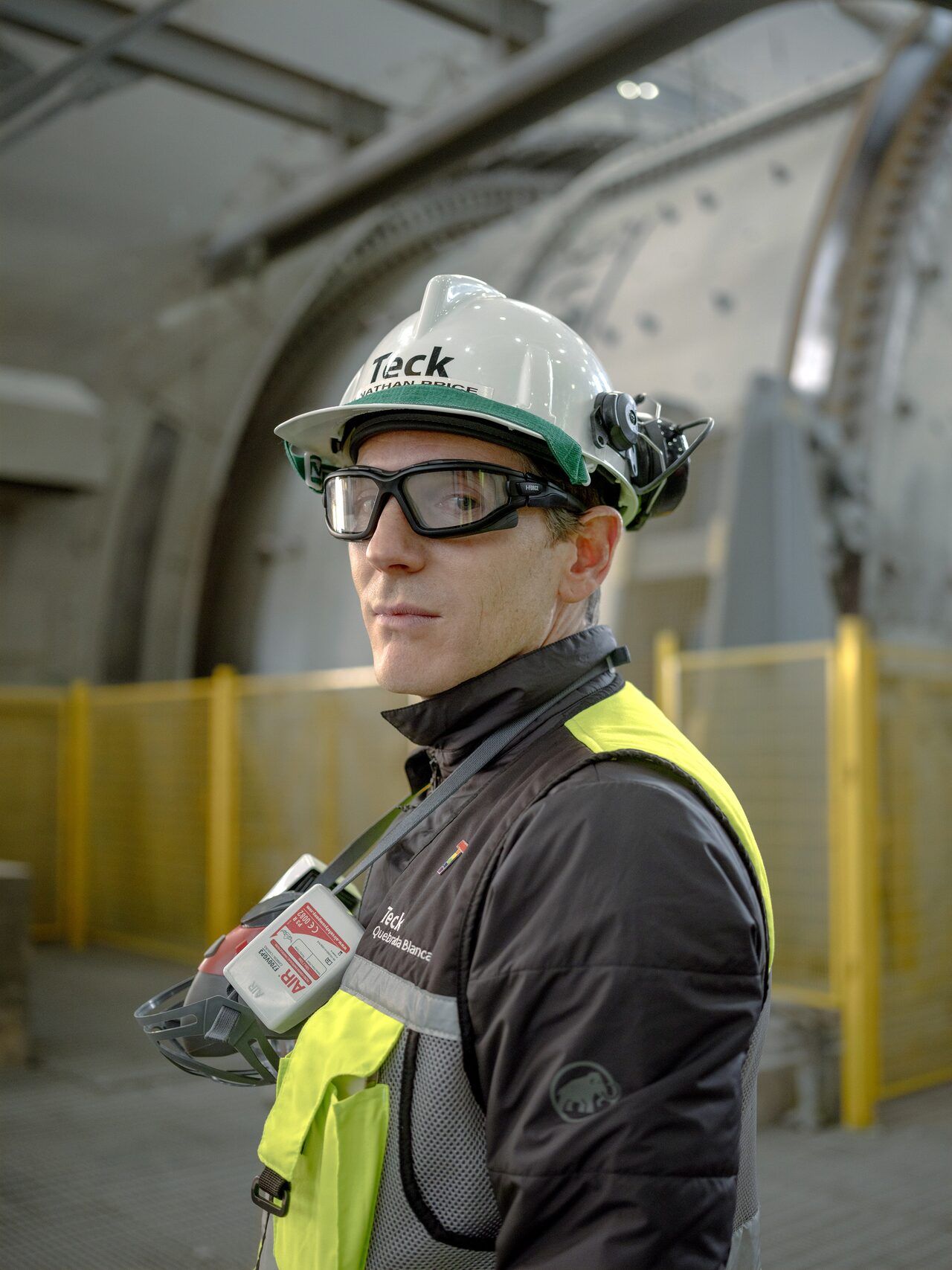
Jonathan Price joined Teck in 2020, and replaced Don Lindsay as CEO two years later.
“With QB ramping up, we have the potential to move ourselves into copper’s top 10,” Teck’s Welsh-born CEO, Jonathan Price, 48, who joined the company in 2020 and replaced Don Lindsay as boss two years later, told me before we visited QB. “I would say we are already a Canadian-based, globally significant copper producer, and we have compelling growth prospects. You don’t see many of the majors with growth projects like us in the pipeline.”
His scenario assumes that Teck doesn’t become prey to the larger mining companies as takeover madness grips the industry. Two years ago, the company almost fell victim to Glencore, the great white shark of the mining industry. Against all odds, Price beat off the hostile takeover offer and sold 77% of Teck’s enormous metallurgical coal operation to Glencore for US$6.9 billion as a sort of consolation prize. The transaction left Teck as a pure critical-metals company, dominated by copper, with a hefty dollop of zinc at its side.
But Collahuasi and its owners—Glencore and rival Anglo American each own 44% of the joint venture—openly covet QB and have already drawn up tentative merger plans for the two mines that, they believe, would boost operating profits from the combined operations by US$1.5 billion to US$2 billion a year. Teck has resisted the merger scenario. But at some point down the road, shareholders might bulldoze Price into a deal. “It makes strategic sense to put the two mines together,” Jorge Gómez, Collahuasi’s executive president, told me.
Were that to happen, Canada would, once again, take a blow in the race to create a global metals champion. Inco and Falconbridge are long gone. If Teck, the last diversified miner of any size still standing in Canada, were to be bought outright or simply lose QB, the country would be an also-ran in one of the few global industries where it could become competitive. In that sense, Price is under enormous pressure to get Teck’s growth strategy right and add truckloads of shareholder value to prevent the business from turning into some foreign company’s hollowed-out Canadian branch plant.
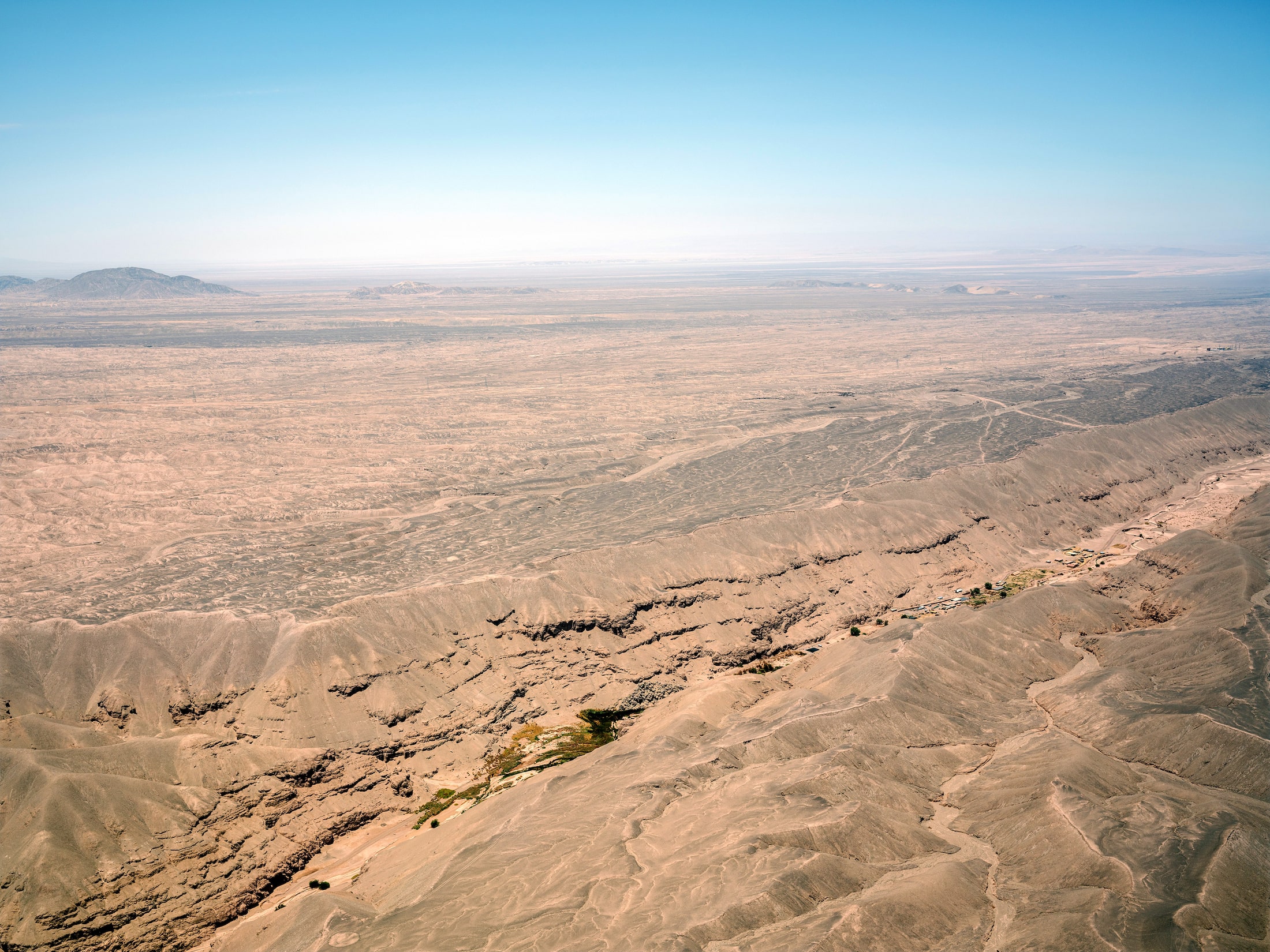
The Atacama Desert is the driest non-polar desert. It’s also home to one of the world’s, perhaps the world’s, richest copper belts, though the plateau costs a fortune to explore and develop because of its isolation, extremely high altitude and lack of natural water required in the milling process, where the copper extracted from the ore is turned into a powdery green concentrate that’s loaded onto ships and sent to refineries.
Prospectors with a taste for adventure have poked around the Atacama for centuries, hunting for gold, silver, copper, iron and sodium nitrate, also known as Chile saltpeter, a chemical used in fertilizer and gunpowder. They found lots of each substance, especially copper, so much so that Chile is now the largest single source of the metal, responsible for a quarter of world supply (the Democratic Republic of the Congo and Peru are in second and third place). In the 1800s, dozens of small mining towns—now abandoned—were built here and there in the desert, along with a railway. In 1915, the Chuquicamata mine, which would become one of the world’s deepest open-pit mines, opened. It’s now an underground operation, though one of declining ore quality as the reserves get tapped out. It’s owned by the National Copper Corp. of Chile, better known as Codelco.
The first QB claims were staked in the 1950s, according to a book written by Teck’s founder, Norman Bell Keevil. The property came under Codelco ownership in the early 1970s. Falconbridge and Superior Oil optioned the property in 1977 and did extensive exploration, but they decided that building a mine on South America’s rooftop was a test too far. The site lay dormant until 1989, when Cominco, Teck’s crosstown rival, optioned the property and brought in Teck as a partner. A decade later, Teck sold its stake in QB to Aur Resources. Teck and Cominco merged in 2001, after which Teck, as the enlarged company would eventually be known, reacquired QB through the purchase of Aur. Teck retained 60% of QB. Japan’s Sumitomo came in for 30%, and Codelco took a 10% carried interest, meaning it doesn’t help fund the business.

Vicuña, a protected relative of the llama, the national animal of Peru, graze along the side of the road from Paposo Airport to the QB2 mine entrance.
In 2018, as “electrification” became the rallying cry for climate-obsessed governments and net zero advocates around the world, QB’s owners decided to launch QB2, one of the most ambitious mining projects on the planet. The ore body was of relatively low grade. What it lacked in copper content per tonne would be overcome by feeding enormous amounts of ore into the mill, demanding infrastructure on a grand scale. The COVID-19 pandemic made a mockery of the construction schedule, as did various engineering setbacks, ensuring the development went cruelly over budget. The original cost estimate came in at US$5.2 billion; the final price will be as much as US$8.8 billion. QB2’s first output came in March 2023, almost two years later than planned.
Price admits that Teck executives were gripped with anxiety during the cost-overrun period. At one point in 2022, the shares fell below $35, almost half their current level, as investors became spooked by QB2’s soaring costs. Norm Keevil, 87, Teck’s chair emeritus and controlling shareholder (and son of Teck’s founder), says the company’s managers underestimated the cost of expanding QB, partly because they had little or no mine-building experience. “We had built 12 mines in the previous 25 years, but not one in the last 15 years,” he says.
The mine, which will approach full output later this year, has transformed Teck by dominating the company’s metals portfolio. QB produced 208,000 tonnes of pure copper in 2024. The guidance provided to analysts for 2025 is 230,000 to 270,000 tonnes; Scotiabank’s mining analysts forecast 250,000 tonnes. In 2023, Teck was largely a coal company—57% of its revenues came from this dirtiest of fuels. This year, with coal gone, about 70% of revenues will come from copper, largely from QB, with most of the rest from zinc, lead and molybdenum, a copper mining by-product. “Developing QB was a very significant move,” says Keevil. “It has transformed us.”
The transformation to a critical-metals company is reflected in the share price. In early March, the Toronto-listed shares were up 8% over 12 months, giving the company a market value of $29 billion. Better yet, the valuation multiples have expanded, allowing the shares to trade at a premium over those of mining companies with a broader range of critical and non-critical products, such as iron or diamonds.
In effect, Teck is starting to trade as a pure-play copper company. “QB2 has been touted as the raison d’être for a new leaner, forward-facing Teck,” Franzen, the mining consultant, says. “The market has been paying close attention to its uneven execution and startup. As holder of the high-water mark for capital intensity, QB2 is going where no low-grade copper megaproject has gone before.”
Mining is all about reducing the cost per tonne of output. The lower the cash cost, the higher the profit margin and the happier the investor. To squeeze costs and minimize head count, mining companies use sophisticated processes, machinery and computers that were unheard of a decade ago.
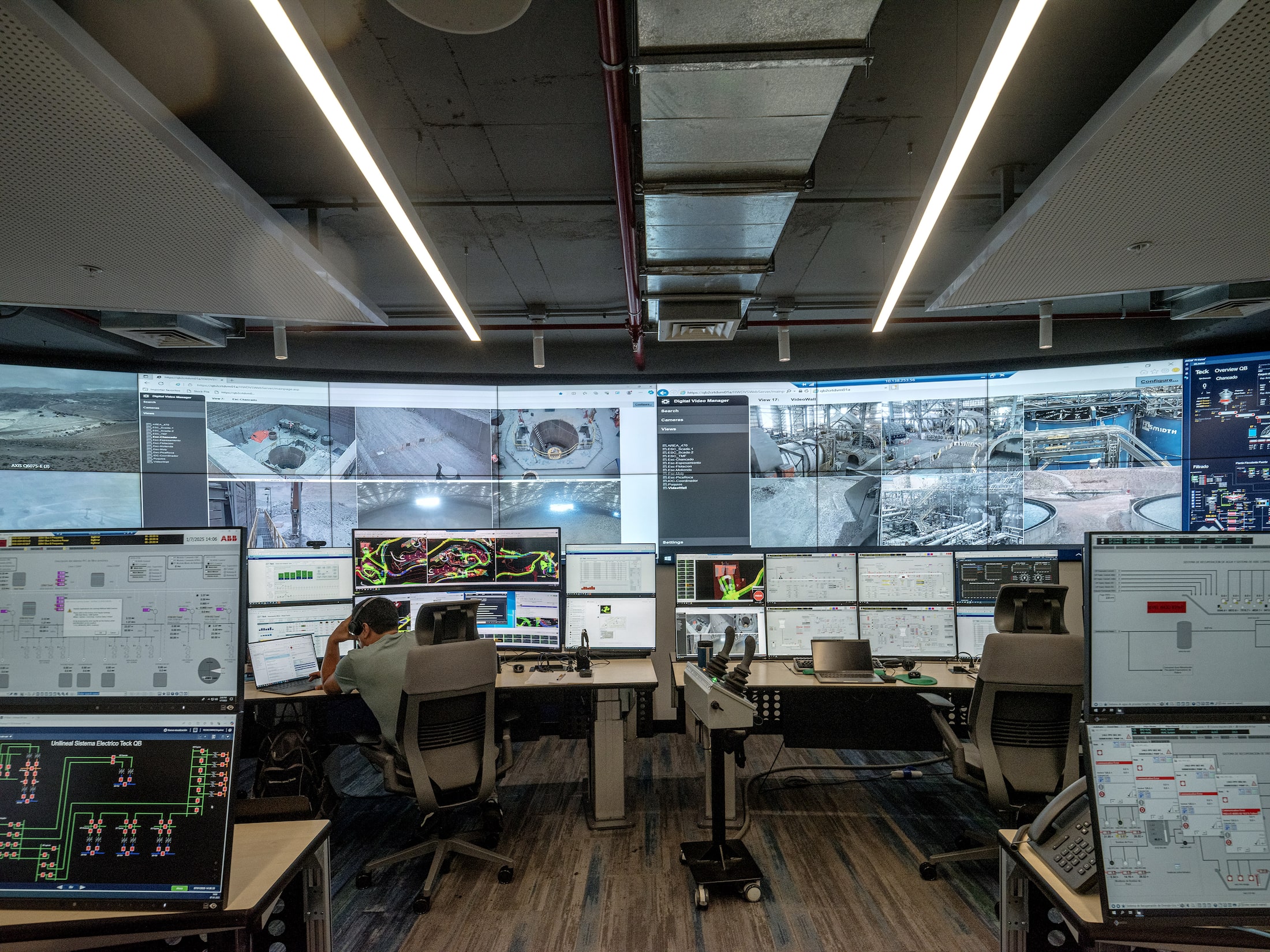
Our mining tour began in the centre of Santiago, 1,500 kilometres south of the QB mine site itself. The ninth floor of the office tower next to the Mandarin Oriental hotel is home to QB’s operations centre. It’s the electronic heart of the mining and milling operations. There, technicians plan and monitor virtually every aspect of the mining processes and even operate some of them remotely.
The centre is full of screens that show everything from the amount of crushed ore funnelling into the concentrator to the paths of the enormous driverless diesel trucks, each laden with 300 tonnes of ore, as they grind their way from the bottom of the QB pit to the top—a vertical distance of 300 metres. The monitoring process is so advanced that the technicians can see the makeup of the ore before it’s loaded into the truck. Sensors developed by Vancouver tech company MineSense line the buckets of the machines that load the ore into the trucks and can reveal the degree of copper content. “You can feel the vibe of the operations in real time here,” said Dale Webb, Teck’s senior vice-president of operations for Latin America.
Travelling to the Tarapacá plateau is no easy exercise. QB has 3,200 workers, half of them company employees, the other half contractors. Those who live in Santiago—the miners work one week on, one week off—fly two hours north on a commercial flight to Iquique, the seaside city more than 200 kilometres down from the QB and Collahuasi mines. They then grind up from Iquique by car or bus, a tortuous journey that takes four or five hours.

Reporter Eric Reguly joins Mr. Price and his team on a flight from Santiago directly to the Quebrada Blanca (QB) mine, located in the Atacama Desert in Chile's Tarapacá region.
At the height of the Chilean summer, in early January, Price, his QB lieutenants and I took the direct route to QB from Santiago in a small chartered Gulfstream jet. As we flew north, we passed over Escondida, a joint venture between BHP, Rio Tinto and Japan’s JECO that is the biggest copper project in the world, and various sites that produce lithium, another key component of the batteries used in electric vehicles.
After we landed on the strip, medics measured our blood pressure and oxygen levels. A few of us felt dizzy, and one of us was given oxygen. We were instructed to breathe deeply and walk slowly. We boarded a bus that was trailed by an ambulance in case one of us collapsed. Other first-time visitors and I were haunted by the oxygen-starved fate of Falconbridge’s Pickard (visitors to the Collahuasi site are given portable oxygen canisters that are good for a few puffs).
The Atacama Desert in the Tarapacá region has an otherworldly feel about it, like a Martian landscape. The area, in fact, has been used as an experiment site for Mars expedition simulations. It’s not a desert in the Sahara sense—there are no sand dunes. Instead, rolling hills dotted with small, ankle-deep brown and green shrubs form the landscape. The sky is big, the sun piercing, the air dry. We drove by somewhat menacing semi-active volcanoes that, with their tops melted off, looked like Vesuvius. In the distance, we could see the snow-capped mountains of the High Andes. En route to QB, we passed dozens of vicuña, a protected relative of the llama that is the national animal of Peru. The animals’ soft, fine wool is prized for its insulating qualities and is highly expensive. The morning temperature was 8°C. The region rarely gets rain and receives only a smattering of snow in the winter. “I had to explain to my guys what a snowball was,” Webb said.
The desert can be dangerous. Collahuasi managers say armed raiders from Bolivia sometimes cross the border at night to steal trucks and SUVs. In one incident, they stopped a vehicle by throwing boulders onto the road. In another, they shot the driver, who survived.
The QB mine itself, at 4,400 metres above sea level, is one kilometre across and delivers 100 million tonnes of ore, with an average copper grade of 0.52%, to the crushers a year. The fairly low grade is the bad news; the good is that the “strip” ratio is only 0.65 to one, meaning less than one tonne of “overburden” needs to be moved to expose one tonne of ore. Compare that to Collahuasi’s strip ratio, which is a far more costly four to one. So the opportunity for growth at QB is enormous. The project so far has tapped into only 14% of the resource, meaning the mine can stay alive for decades, barring a collapse in the copper price. The more Teck drills, the more it finds. Ditto Collahuasi. “It’s huge for us to have delivered something on this scale,” Price said as he and I peered into the QB pit. “We feel a great sense of pride for what we accomplished here.”
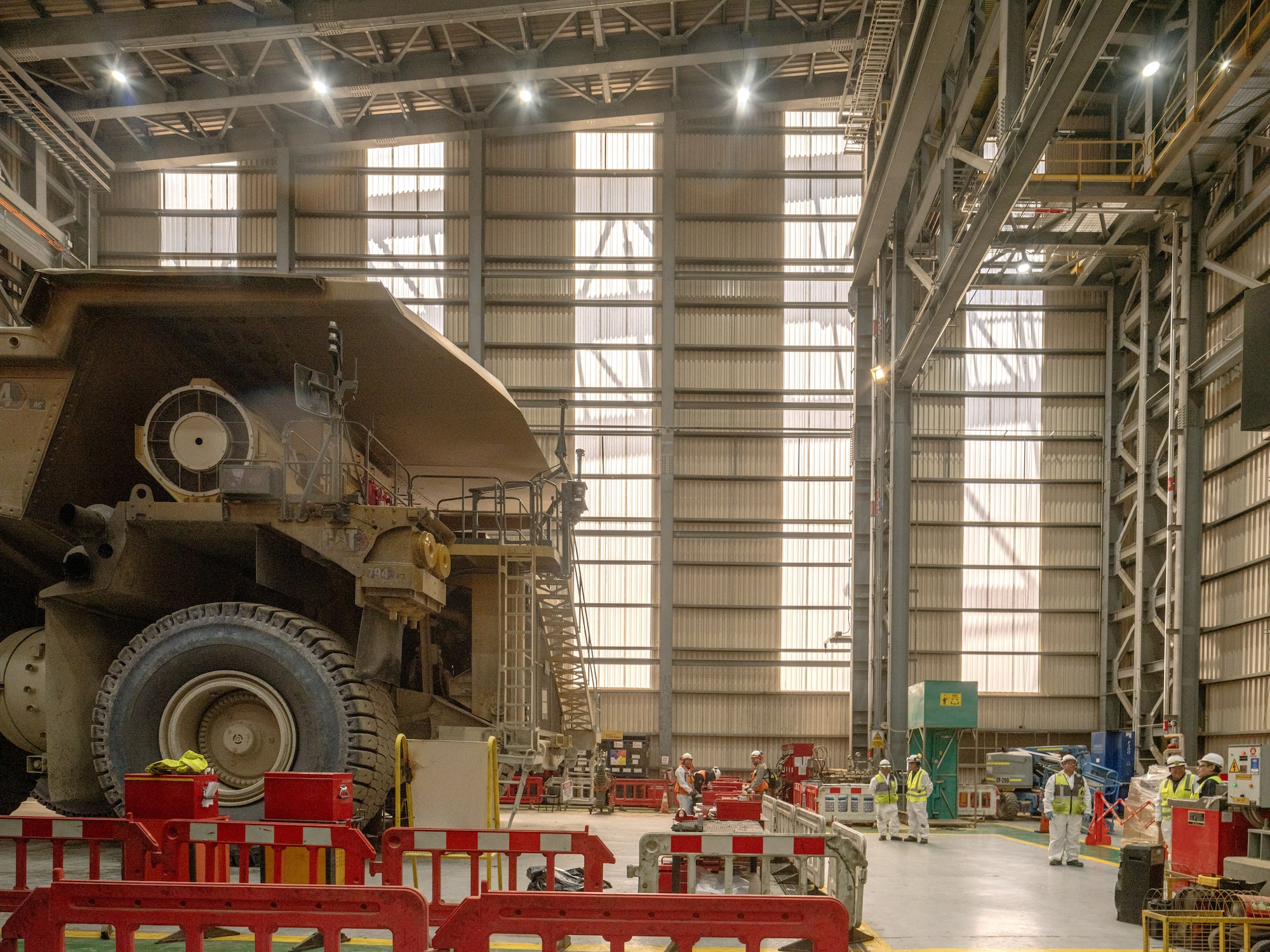
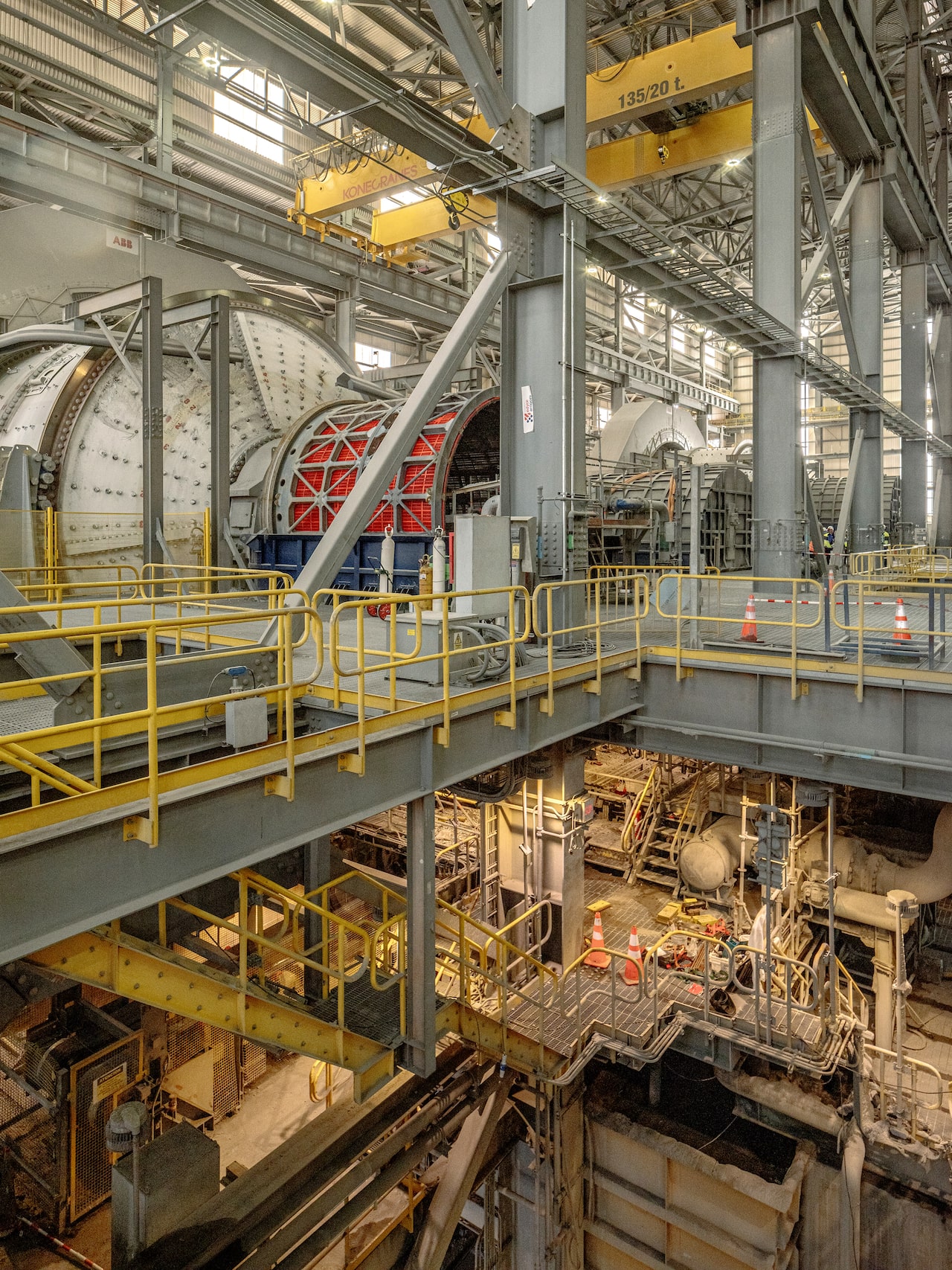
On the day of our visit, the QB mill, where the ore is crushed in enormous rotating drums filled with iron balls, was down for maintenance. Other pieces of infrastructure, including the tailings facility, where the waste material is sent, were also being tweaked. So there was little milling action to see. The truck shed was enormous. Each of QB’s 20 Caterpillar machines, which are about seven metres tall and burn 250 litres of fuel an hour, costs about US$15 million. Their tires are worth US$40,000 apiece.
There was a lot of action at the oxygen-rich far end of the QB value chain, on the Pacific Ocean. After the mine site tour, a small Airbus helicopter took us to the seaport, about 75 kilometres south of Iquique, where the copper concentrate, sent down to sea level in a 165-kilometre pipeline, is poured into ships. The port, which lies right next to Collahuasi’s port, is also the site of the desalinization plant that pumps 1,000 litres of water a second up to the QB mine. The mining, milling and pipeline operations are highly water intensive. QB sells some of its water to Collahuasi, which is building a US$3-billion-plus desalinization plant at its seaport, at a fat price (saltwater reservoirs have provided most of Collahuasi’s water).
While all the heavy lifting is done at the QB mine, the site is still a work in progress. Price said the mining and milling operations are going through an “optimization and debottlenecking” process that will cost Teck US$100 million to US$200 million. “It is basically getting everything to run faster through the mill so we get more production output,” he said. “The goal is 300,000 tonnes of copper output a year. That’s a material step-up from where we were in 2024, in the region of 50%.”
With QB set to run at full throttle, and with billions in the bank from the coal sale to Glencore, Price and his team have turned their focus to other projects that, if approved, would keep the company’s copper growth intact, giving it a credible route into the world’s top 10 copper club.
The biggie in Canada, a region Teck has largely ignored in recent years as Chile occupied centre stage, is the potential life extension of Highland Valley Copper, Canada’s biggest copper operation, in south-central British Columbia. Digging began in the area of HVC, which is now 100% owned by Teck, in the early 1960s. It’s running out of puff and will close in 2028 unless the existing infrastructure, including two open pits, is enlarged. An expansion that would cost Teck as much as US$1.4 billion is set to get the green light this year and would boost the mine’s lifespan by about 20 years.
Two other projects are likely, though each is small compared to QB. The first is the 80%-owned Zafranal mine in Peru, which would cost Teck up to US$1.8 billion to develop. The second is the half-owned San Nicolás project in Mexico, which would cost Teck between US$300 million and US$500 million. It comes with more than 1% ore grade, about double QB’s. If the HVC, Peru and Mexico projects are a go, and QB’s debottlenecking exercise works its magic, Teck’s copper production could rise to 800,000 tonnes a year by the end of the decade, almost double last year’s output, Price has said.
Production that high could make Teck the world’s sixth- or seventh-largest copper producer, though the market is moving fast as demand soars, and consolidation and expansion could turn the industry on its head. Today’s winners could turn into tomorrow’s losers, and vice-versa, as demand for critical metals, especially copper, proves insatiable. Already, there are strong rumours that Anglo American, which fended off a hostile takeover from mighty BHP early last year, will be a goner once it finishes a restructuring designed to focus its operations on copper, iron ore and crop nutrients. And in January, reports surfaced of a possible mega-merger between Glencore and Rio Tinto, which owns the Montreal-based aluminum giant formerly known as Alcan, though the talks seem to have fizzled out.
Teck is small compared to the industry giants, even as its copper output soars. In a commodities market obsessed with copper, Teck’s reinvention as a critical-metals player could prove its undoing as an independent player.
The Collahuasi mine near Teck’s QB is a monster. The lip of the Rosario pit, the mine’s main hole in the ground, lies at 4,800 metres above sea level. The pit is 3.5 kilometres across and a kilometre deep. At the bottom of the hole, the enormous yellow Caterpillar trucks look like ants.
Collahuasi has been instrumental in turning its main owners, Glencore and Anglo American, into global-scale copper producers and helped to make them rich. It will continue to lavish them with fortunes for decades to come, since the mine has enough copper ore—four billion tonnes of proven reserves and another six billion of probable reserves (known as resources)—to keep the operation humming until 2100. The grade is relatively high, at 0.8% per tonne, which is more than 50% better than QB’s average grade. Since 2005, Collahuasi has paid its owners some US$20 billion in dividends from the initial capital contribution of US$657 million.
Collahuasi’s owners see another way to add value: merge its operations with those of QB.
The idea is not new. The owners of both mines have had on-again, off-again discussions for years about at least sharing some infrastructure, if not an outright merger of the two mines, though the talks went largely nowhere. The only breakthrough was QB’s agreement to supply some desalinated water to the Collahuasi site, whose demand for water is voracious, given its enormous scale.
But a merger is still high on the list of longer-term priorities for Collahuasi. A mine presentation given to me and a few other visitors contained a slide entitled “Opportunities for industrial strategies in the region”—the region being the sites covered by QB and Collahuasi. It included a map, which showed the short distances between the open pit mines and their mills. No doubt the synergies would be compelling.
Collahuasi’s idea is to build a conveyor belt to take Collahuasi’s richer ore to QB’s mill, leaving QB’s ore in the ground until it’s needed, perhaps decades down the road. Much of the rest of the infrastructure would be shared, including the port facilities. Analysts see the value-creation potential in putting the two mines together, though they don’t expect a deal any time soon. “We believe that all participants in both mines are aware of the potential for synergies,” Bank of America’s mining analysts said in a January note. “That said, we believe that recent M&A approaches for both Teck and Anglo American may mean that management’s focus is elsewhere, at least for the moment.”


Copper from the QB2 is sent to sea level in a 165-kilometre pipe, where it's then loaded onto ships for export in Iquique, Chile. The mine, which will approach full output later this year, has transformed Teck by dominating the company’s metals portfolio.
The proposal seems to be a non-starter for Teck. Price and his team say they have a plan in place, one that would vault Teck into the global copper big leagues, and they presumably want to see it through. That plan is fully funded, largely finished and in no way envisages an extensive tie-up with Collahuasi, even if Price hasn’t ruled out some cost-sharing activities down the road. “We will look at any and all opportunities that we believe would be in the best interests of our shareholders,” he says. “There is potential value in some sort of tie-up, which could very much be about infrastructure. But right now, it is in the best interest of shareholders to complete the ramp-up of QB to full capacity. It will take only a low amount of capital to potentially greatly increase the capacity of the plant.”
What Price isn’t saying is that Teck would shrink considerably, to the point of global irrelevance, were the two mining operations to merge. The owners of Collahuasi would like to see Collahuasi and QB placed into a joint venture. Since Collahuasi is much bigger than QB, Teck’s ownership of the entity would land at about 20%. The ownership of Glencore and Anglo American would fall, too, but not by nearly as much as Teck’s. In other words, QB-Collahuasi would be their show, not Teck’s. No CEO wants to run a smaller business.
Keevil sees the merit of combining some of QB’s operations with those of Collahuasi’s in the name of synergies, such as feeding some of the latter’s ore into QB’s mill, but says there’s no rush. He would resist the creation of a full joint venture that would turn Teck into a minority stakeholder in the combined mining operations. “I spent 60 years helping to build this company, and I see it continuing to grow,” he says. “QB is a core Teck operation, and I expect it to stay that way.”
Still, there’s no doubt that Teck will attract the attention of the industry Goliaths as its copper portfolio expands. Keevil’s control of the A shares, which come with 100 votes apiece—the common B shares come with a single vote—means he can veto any takeover. But the A shares disappear in four and a half years, theoretically making Teck vulnerable to a takeover (though the increasingly nationalistic Canadian government may have a different take on that). In effect, that date is a deadline for Price as CEO. Teck must be big enough and, more importantly, valuable enough to make it—unaffordable to copper-obsessed predators such as Glencore, BHP and Rio Tinto.
Price knows he’s in the hot seat. If Teck’s copper play in Chile or elsewhere falters for whatever reason, such as another share-price-busting cost overrun or a strategic error, Teck would leave itself open to a takeover. “The advantage of what we have done is we have made ourselves more expensive,” he says. “So our best strategy is to focus on value creation so that we trade at a significant premium to the conglomerate mining companies.”
If it doesn’t work, Teck could easily lose its independence in a few years. Teck’s future lies in the thin air of the high Chilean desert. So does Canada’s future as a critical-metals player on the global stage.
Your time is valuable. Have the Top Business Headlines newsletter conveniently delivered to your inbox in the morning or evening. Sign up today.