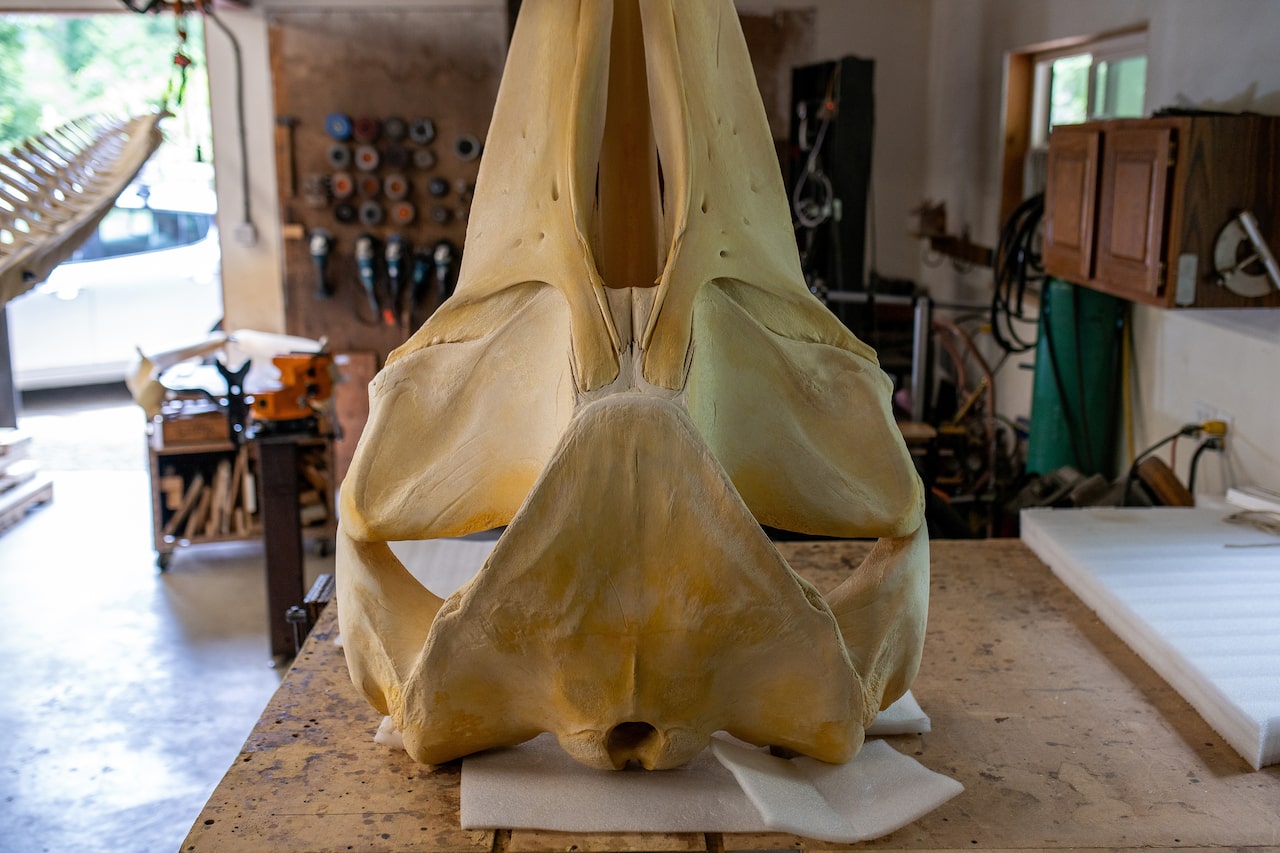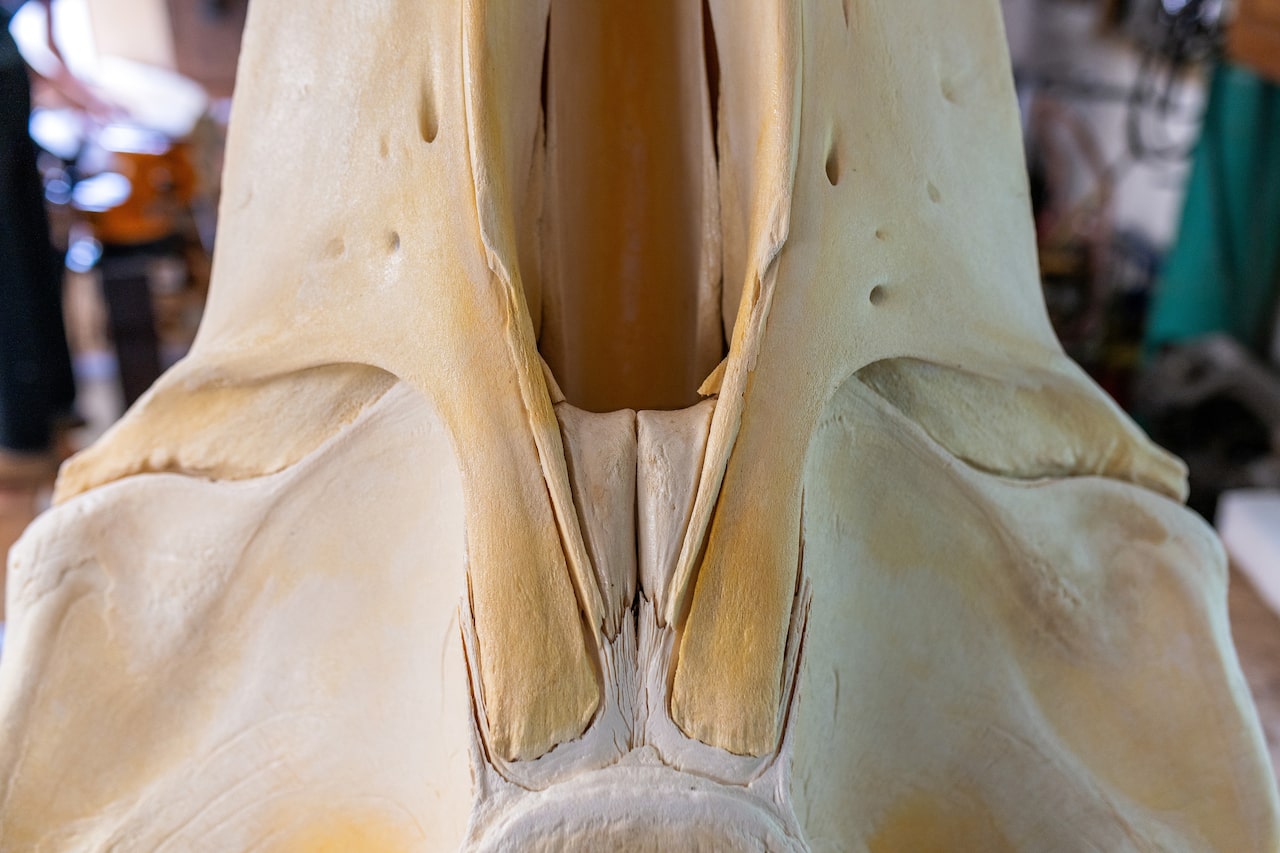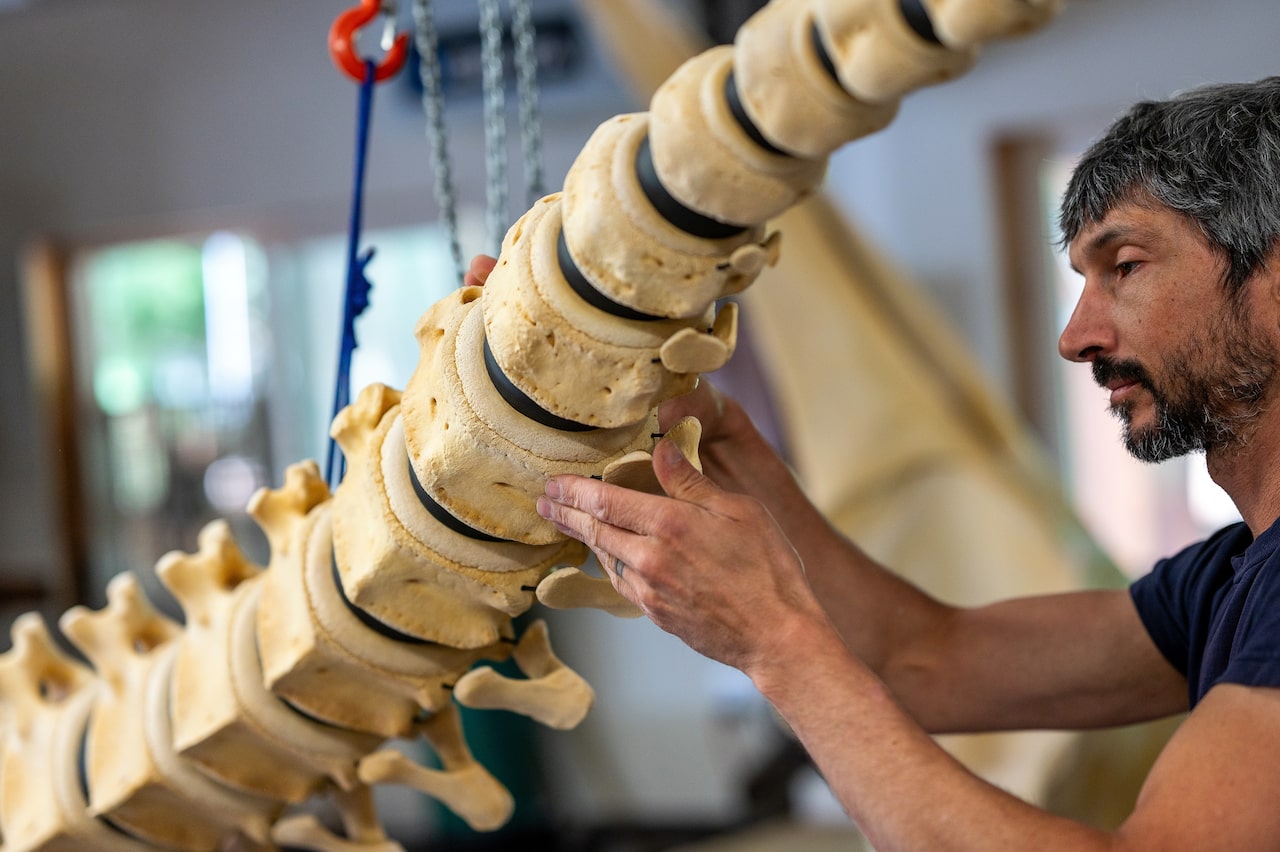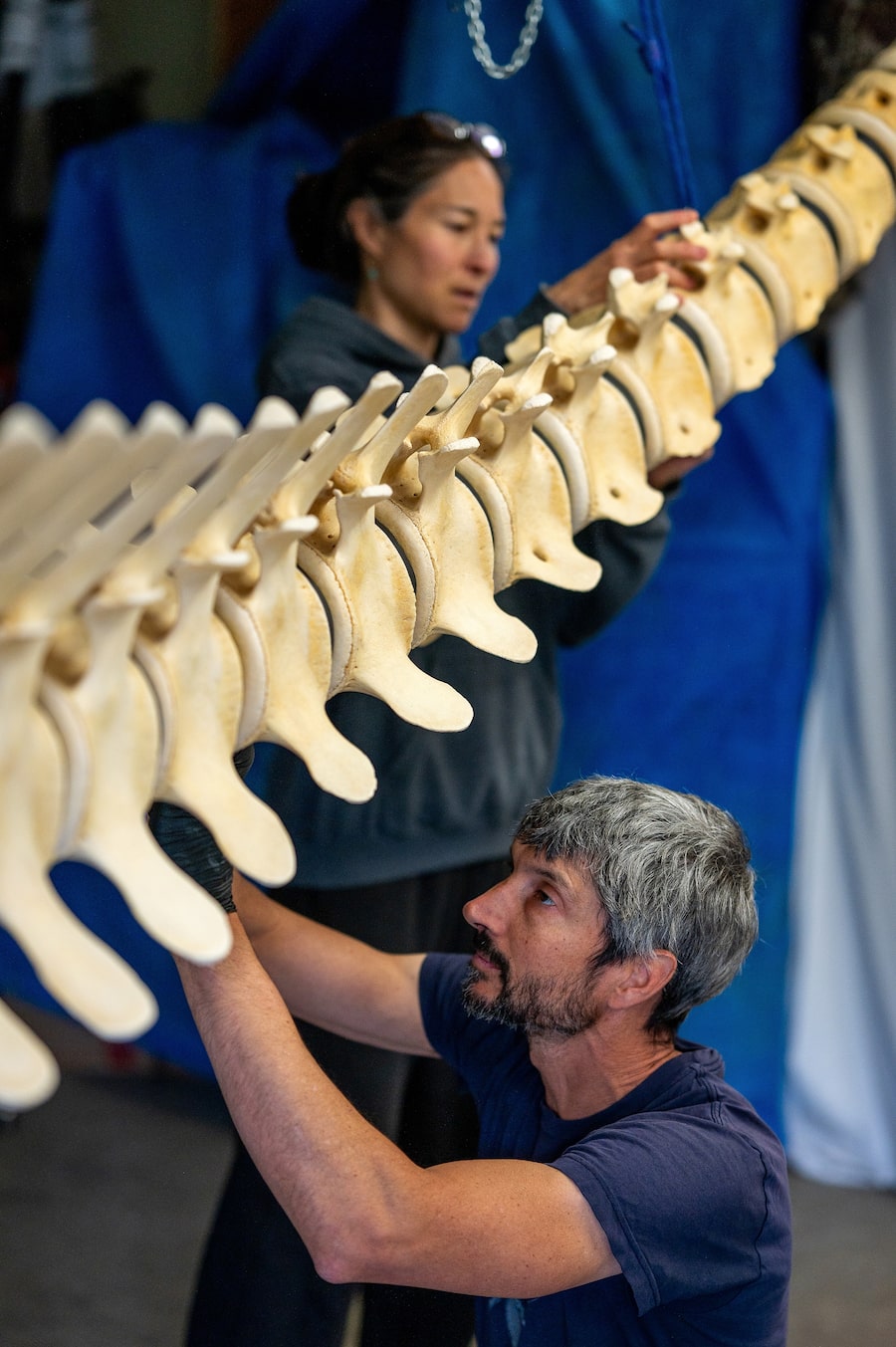
What might have led this juvenile Bryde’s whale so far from its usual tropical waters will forever be speculation. But having died of natural causes in Canadian waters near Victoria, B.C., it is now being meticulously and methodically reconstructed, bone by bone, in the workshop of Cetacea.
Cetacea is a family business on Salt Spring Island, B.C., run by Michael deRoos and his partner Michiru Main. Mr. deRoos has been articulating skeletons full-time since 2004, with Ms. Main working alongside since 2007 as project manager, business administrator, and assistant articulator on a variety of projects.
As Ms. Main describes it, “No, there was never a plan!” to get into this type of work. “We both have biology degrees that focused on marine biology and conservation. The skeleton thing kind of found Mike because of the unique skillset he gained working in construction, growing up on boats and his interest in marine mammals.”
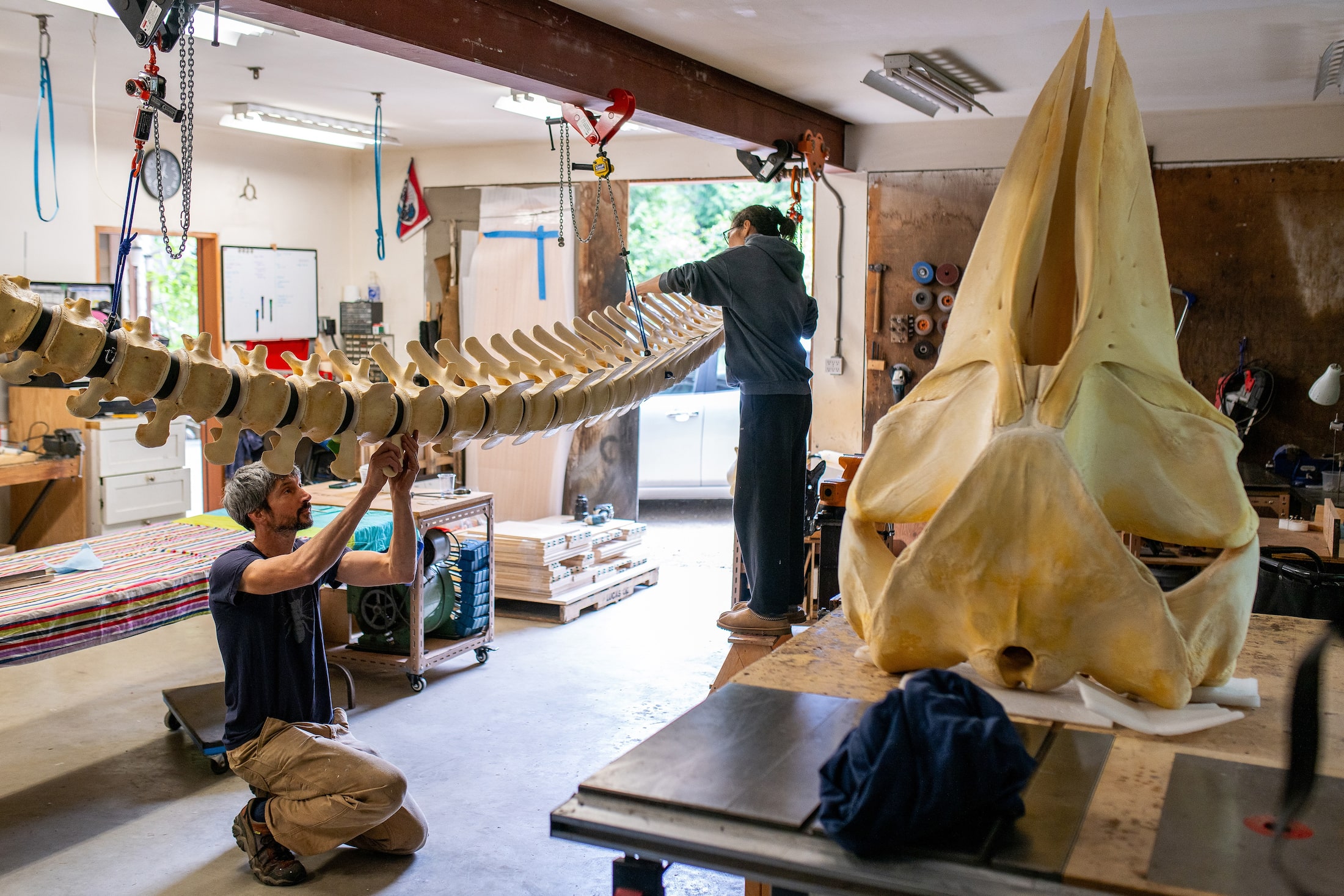
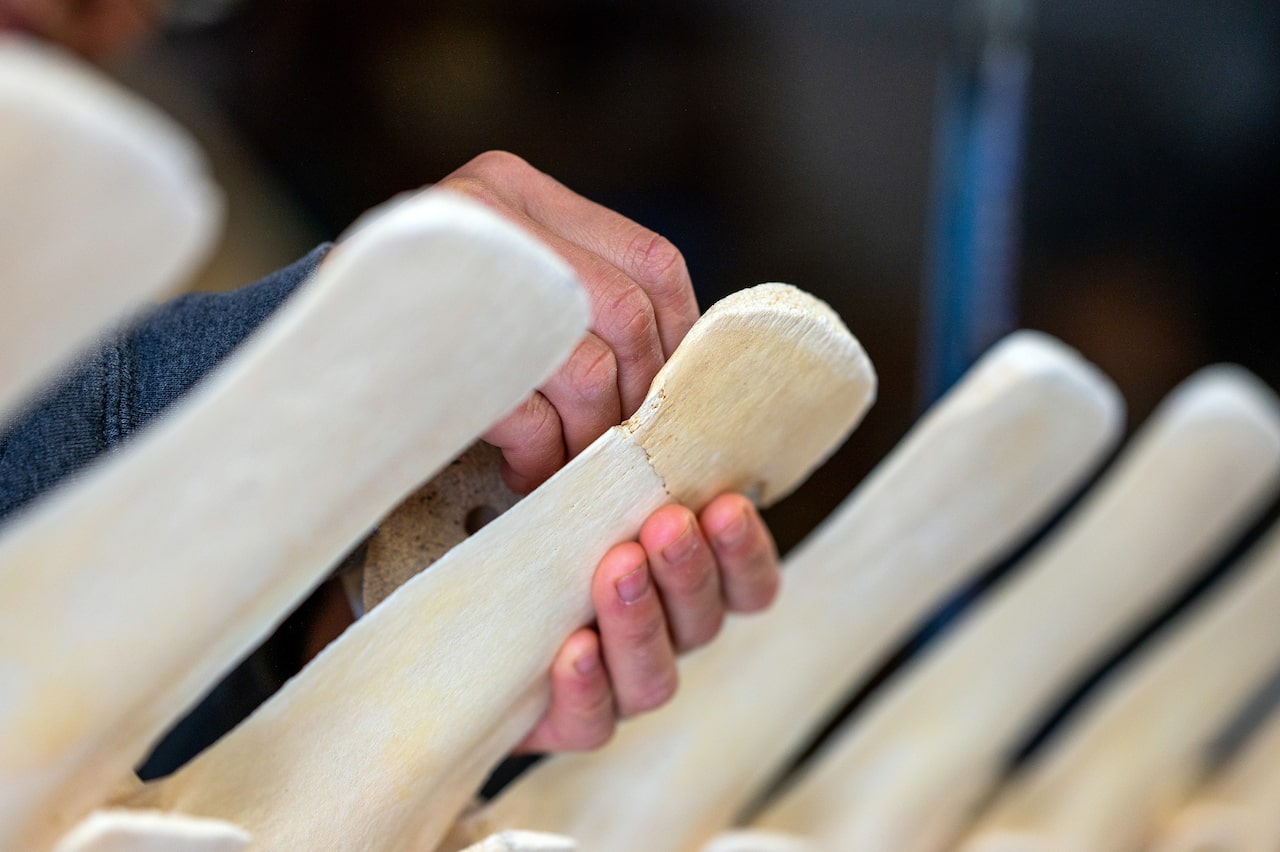
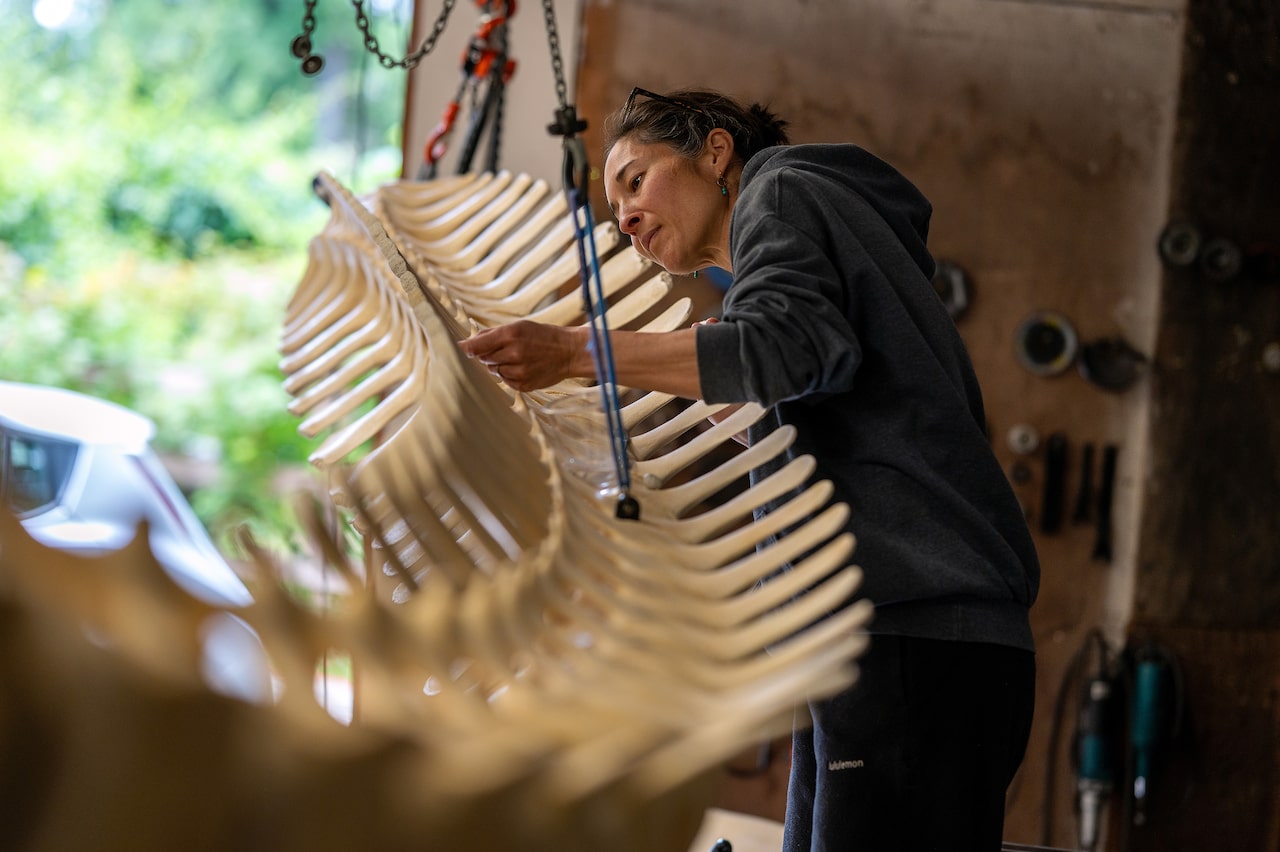
The current Bryde’s whale skeleton that is being articulated is slated to be displayed in the newly reconstructed Whale Interpretive Centre in Telegraph Cove on northern Vancouver Island. What makes it unique is that the animal was the first of its species to be found in Canadian waters.
“Every skeleton we work on is different in many ways and we find them all interesting,” says Ms. Main. “Whether it is an elderly grandmother orca with debilitating spondylosis, a species of baleen whale with cervical ribs, or a sea lion whose broken bones never healed, each tells a story of how that animal lived and sometimes how they may have died.”