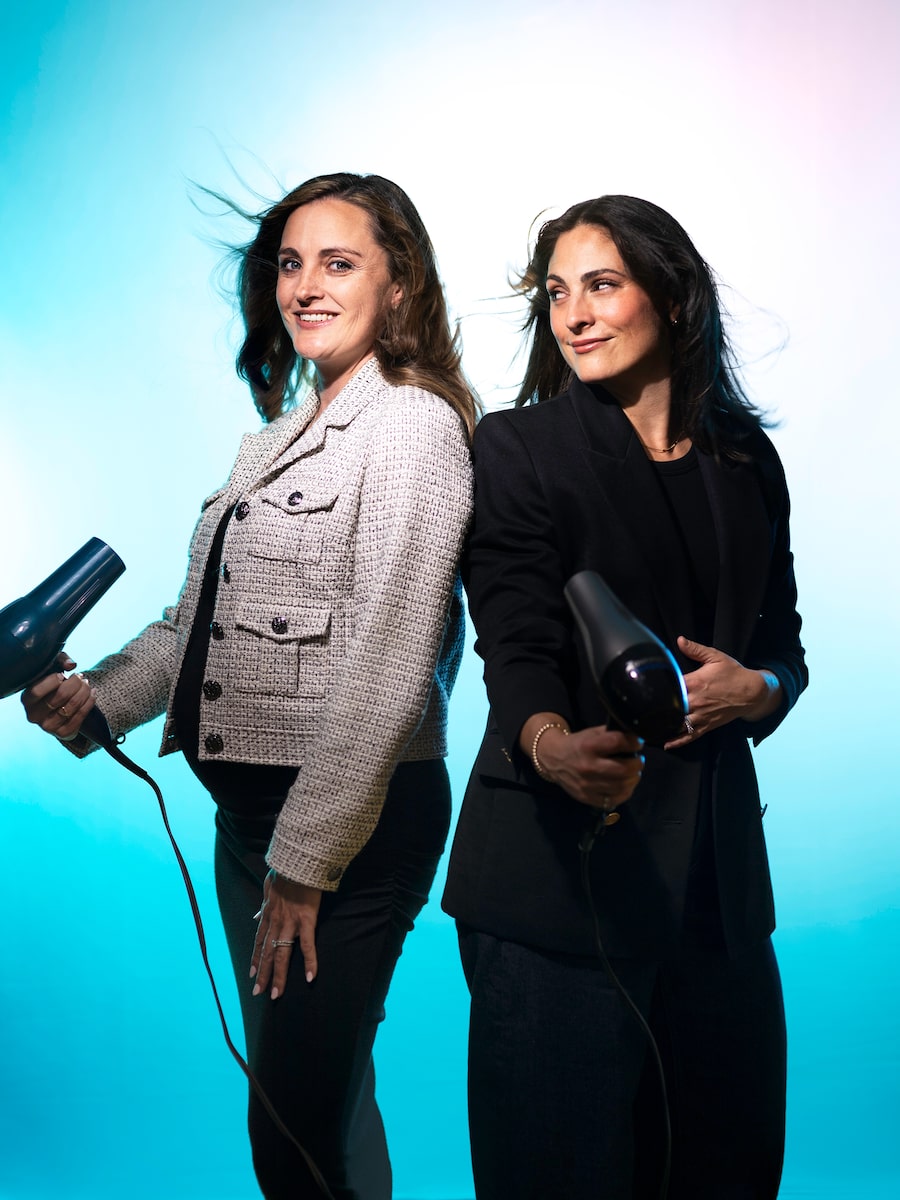
“The last five years have probably been the most challenging I can think of for any entrepreneur.”
So says Dan Park, CEO of Clutch, a Toronto-based used-car upstart that has managed to stamp out a stable growth path amid conditions that haven’t been particularly conducive to doing so. “If you’ve been building a company, you’ve dealt with the pandemic, plus evaporation of growth capital, plus tariff risk, plus political chaos, plus uncertainty. I just don’t know if there’s been a worse time.”
The silver lining? Many experts believe the worst is behind us.
One is Pierre Cléroux, BDC’s chief economist and vice-president of research, whose current outlook skews sunny: “For most Canadian businesses, excluding the tariff-impacted sectors, the context is actually not so bad,” he says, pointing for proof to a growing domestic economy, stable inflation and eased interest rates.
But Cléroux shares Park’s view that nothing since 2020 has been normal for entrepreneurs: “It’s been very challenging.”
For the seventh year, Report on Business has produced a ranking of Canada’s Top Growing Companies, measuring businesses on three-year revenue growth. As a cohort, the 400 companies on this year’s list incontestably bear the scars of the hard yards behind them.
Ranking Canada’s Top Growing Companies of 2025
The median growth rate among the winners is the lowest it’s been since the ranking launched in 2019. (To be fair, that “low” median rate is 175%—a clip most ventures would never dream of.)
Almost every business on the list has had to retrench, adapt, pivot, beg and/or borrow their way through at least one major crisis to get where they are today. Canada’s Top Growing Companies are, to borrow the favourite word of every politician, resilient.
That doesn’t just mean bouncing back, says Marwa Abdou, senior research director at the Canadian Chamber of Commerce’s Business Data Lab. “It’s about developing the capacity to absorb shocks and adapt to uncertainty. It’s about maintaining a sense of purpose and momentum. It’s about building forward with intent.”
This year’s Top Growing Companies know a thing or two about that—and they’re willing to dish. Read on for dozens of examples of resilience, in real life.
CASE STUDIES

Founders Adam and Megan Schmidt bound through the Activate's Mega Grid room in Winnipeg. Six years after Activate opened its first location in early 2019, the company opened its 50th location in Miami, Fla., this August.Matt Horseman/The Globe and Mail
Make crisis an opportunity
What do you do when a global pandemic shutters your dream business? If you’re Activate Games, you give ’er
If Activate Games kept a leader board for its recent corporate wins, like the real-time tallies its diehard players obsess over, it might look like this:
In August, the company opened its 50th location, on a palm tree–lined boulevard in suburban Miami. (+1,000 points.)
Less than two weeks later, it wrapped its first-ever Global League tournament, a seven-week showdown that saw 36 teams of superfans on three continents compete head-to-head in pursuit of serious bragging rights. (+2,000 points.)
Somewhere in the middle, Activate welcomed its seven millionth player. (+7,000,000 points.)
It’s hard to describe the Activate “active gaming experience” without playing it yourself, but here goes: Once you’ve entered a venue—typically a big-box storefront—you’ll find a maze of rooms (known as micro-arenas), each offering a unique mental and physical puzzle involving lights, lasers and/or Tron-like grids. Your precise experience depends on the difficulty level you’ve chosen, the type of game you want to play, how competitive you’re feeling and whatever wild new challenges Activate HQ has pushed out that day. Your stats and preferences are all logged in your player profile, which follows you across different games, visits and venues. The whole thing is immersive, exhilarating and addictive—a bit like doing a Tabata class inside Tetris. You leave understanding why Activate has so quickly become a staple of kids’ birthday parties, corporate team building and after-work hangs.
Activate is the brainchild of husband-and-wife duo Adam and Megan Schmidt, a former commercial pilot and physiotherapist, respectively, who in 2014 opened an escape room in Winnipeg. When it became clear The Real Escape was a hit, the couple began to think of expansion, but quickly deemed the concept tough to scale. Was there an easier way to proliferate the brain-bending thrill of in-person puzzle-solving? Could they perhaps lean on technology to create something distinctive, replicable and updateable at the press of a button? “We thought of all the things we wanted to do, and out popped Activate,” Adam recalls.
The first Activate opened on Winnipeg’s Portage Ave. in early 2019. The concept worked, people loved it, and the Schmidts decided to move fast, signing leases for two locations in Ontario. That’s where they were perched when COVID-19 forced their ambitions to a halt.
Like so many businesses reliant on foot traffic, the onset of what would prove to be a two-year cycle of closures and reopenings was rough. But the Schmidts knew they were on to something good. “We had opened a concept that no one had seen before, and we had a year of customer testing when we had to shut down,” Megan says. “We had the chance to ask, ‘What is working and what is not?’” Then, they made a key decision: “We could either stay on the down low and grow eventually, or we could give ’er and see what happened,” Adam says. “We gave ’er.”
Internally, that meant bringing back all development staff to strengthen the tech stack, improve the room experiences and dream up new challenges. Externally, that meant generating buzz. Activate’s intensely visual spectacle makes it a natural scroll-stopper, so the Schmidts—who, not for nothing, project an approachable winsomeness that translates well to small screens—started shooting TikToks. “That blew up massively,” Adam says. In came thousands, then hundreds of thousands, of followers. In came a flood of inquiries from would-be franchisors. “It was crazy,” Adam says. “The whole world knew about us, but we weren’t even open.” When the first expansion location opened after lockdown—in Burlington, Ont.—nearly every new customer cited TikTok as their reason for visiting.
There are now Activates in six provinces, 17 U.S. states, two U.K. cities, and Dubai. About half are corporately owned; the rest are managed by partners who license the concept. Agreements are in place for nine more countries. The plan is to surpass 200 locations in the decade ahead; the Schmidts dream of getting to 400.
Organizationally, that means a lot of work to build processes, teams and logistical infrastructure that won’t crumble with expansion. That also means a lot of stakeholders—players, employees, investors and partners—counting on Activate’s success. Such is the price of givin’ ’er. “You need resilience to keep it alive for everyone, and that weight is always on you,” Adam admits. “But it’s a beautiful thing, owning a business like this.”

Create a new category
Consumer returns are a $1-trillion problem that few retailers can figure out how to crack. Enter REBEL
By now, Emily Hosie knows what to do when people don’t get it.
In the five years since launching REBEL, she’s had to explain what, exactly, a “returns recommerce” business does more times than she can count. She’s informed unaware retailers that almost all of the products that customers sent back to them ended up in landfills—including merchandise that had never been used. She’s touted the rich market for bargain baby gear, full of savvy and highly engaged shoppers, in granular detail. In one particularly memorable instance, she got into the nitty-gritty of the business on a virtual call with soon-to-be investors moments after her water broke for her second child. (Hosie has a picture of herself signing the deal’s documents in the maternity ward.)
So yes, Hosie has a spiel: “We partner directly with brands and retailers to take their simply opened—never used—returns from them and get them into the hands of consumers at up to 70% off,” she says with ease. Such is the work of the category-creator.
For customers, who skew young and female, REBEL promises a satisfying, even thrilling, shopping experience, with thousands of quality-checked items (ranging from strollers to sippy cups to, lately, saucepans and small appliances) served up daily via a slick digital platform. (Picture the aesthetic opposite of Craigslist.) For brands, the value proposition is potent: By partnering with REBEL, they can turn the staggering volume of stuff returned every day—which averages between 13% and 20% of sales—from writeoff into monetizeable asset, all while keeping box-fresh Bugaboos out of the dump.
The idea for REBEL came to Hosie when she was pregnant with her first child, trying to source the many (many!) accoutrements of new parenthood without going broke. “I didn’t want used product,” she says. “I just wanted deals, and I couldn’t find them. And I couldn’t understand why, because you can find deals in every other vertical.” Having spent much of her career in the off-price retail space, including senior roles at Saks OFF 5th and TJX, she sensed a ripe opportunity.
Baby items tend to be bulky and in need of careful handling—an expensive hassle to transport and restock. Then there’s the trust factor: No parent wants to put their bundle of joy anywhere near a product of dubious quality. As Hosie says, “It’s very different from buying an open-box toaster.” But she saw these as surmountable obstacles and launched a business to do just that—then called Rebelstork—from her Toronto basement in 2020.
Even with her retail expertise, it was often a tough sell to investors and brand partners needed to grow the business. Sometimes, what she knew to be an airtight pitch fell on blank stares. “It’s hard for people to envision something they can’t see,” she says. “If you truly are creating something that’s never been done, you need to spend a lot of time educating and explaining. You have to figure out how to tell your story.”
Hosie homed in on what mattered: the specific ways her business could help solve the returns problem in a sustainable and transparent way. It resonated with enough early-adopter brands to spark the “pretty remarkable” growth that has followed. The company expanded into the U.S. three years ago, a year after it earned B Corp status. Several high-profile investors have come on board (including Serena Williams and Jay-Z, whose respective venture funds contributed to a $24.45-million Series A round in the fall of 2024). Earlier this year, REBEL rebranded (dropping the “stork” suffix) and added returned home goods to the mix, with more new verticals planned for the fall.
After cracking the complexities of baby recommerce, the hope is that other products will be a breeze. But if not, Hosie won’t be fazed. “Not everyone is going to see your vision right away, and some never will,” she says. “That’s okay. The challenge is to not start doubting yourself, because you need to keep moving forward.”
Go where the impact is
How is veritree growing through an ESG backlash? By helping businesses turn good eco-intentions into real outcomes
Derrick Emsley has a thing about trees. His first job out of university was a carbon offsets outfit he started at a tree farm in Saskatchewan. In 2012, he, his brother Kalen, their cousin Stephen Emsley and their buddy David Luba launched another business, the cult-favourite eco-apparel brand tentree, with a mission to plant, well, 10 trees for every item sold. (The running tally now tops 105 million.) And with his latest venture, Vancouver-based veritree, he and his team are using technology to scale his arboreal ambitions in an exponential way.
At root, veritree operates a climate-tech platform that helps businesses verify, track, measure and expand their investments in nature restoration. “We’re trying to build the infrastructure to power investment in global reforestation,” Emsley says. It works by bridging the data gap between those who plant trees (and may excel at getting saplings in the ground but often struggle to document the process) and the organizations bankrolling the endeavour (which increasingly need transparent, auditable information about what has been done and where).
Veritree started as a solution to a tentree problem. “We wanted to be able to prove that if we said a tree was planted, it actually got planted,” Emsley says. “There really wasn’t a solution that would allow us to confidently collect, manage, audit and verify that data coming, so we built it.”
It was a tricky job. Nature is a famously complicated thing to quantify and standardize: The ecosystem benefits that come from planting a sapling in the mangroves of Brazil are wildly different than on a wildfire-scorched slope in B.C, for example. “Our challenge was in building a technology that follows the workflow of restoration, but is fluid and dynamic enough to be applicable in a variety of nature-based use cases,” Emsley says.
But over time, the team built a tool that worked. Word got around, and other organizations began asking to try it themselves. That’s when Emsley began to see some growth potential.
At the start of 2022, Emsley, Stephen and Luba spun veritree out as an independent business. The team’s tentree bonafides gave them quick credibility, and the mission met the moment, as enterprises sought ways to prove no greenwashing was afoot. It’s been a dizzying growth story ever since. Global corporations—including Telus, BMO and Samsung—now use the platform. Veritree’s goal is to be responsible for one billion new trees by 2030; Emsley thinks they’ll hit it sooner.
Emsley acknowledges that amid the current ESG backlash, it’s a tough moment to sell do-gooderism for its own sake. Thankfully, that’s not the business he’s in. Veritree quantifies the outputs that come from every tree planted—from carbon captured to jobs created—and supports it all with photos, videos and regular updates. In essence, it turns good intentions into measurable, annual-report-worthy deliverables.
Nearly two decades in, Emsley thinks about impact a lot. “My first company was a tree farm in Saskatchewan. Tentree allowed us to plant thousands of tree farms. Veritree allows us to create thousands of tentrees,” he says. “It’s a different point of leverage for how we create impact. It’s an exponential opportunity to drive change.”
Lean into your magic
Moniker has learned that when you build your brand on going the extra mile, customers will follow—even when the world shuts down
You’re standing in the courtyard of a Tuscan castle with a few dozen colleagues. You’re jet-lagged, disoriented and—if you’re honest—a bit resentful of having to turn up to a mandatory team bonding exercise an ocean away from home.
Then a Carabinieri officer comes careening down the driveway, sirens blazing. He says there’s been a robbery in a nearby town and that his small police force could use some help solving it. He leads you around the corner, where a fleet of Fiat Cinquecentos awaits, each stocked with walkie-talkies and clue-stuffed envelopes. In the hours that follow, you and your co-workers joyously buzz around the Italian countryside, talking to locals and gathering intel from planted actors to crack the case.
Welcome to the Moniker experience, a wildly creative spin on corporate retreats and incentive trips. If your only experience with team building involves trust falls in a windowless conference room, consider it a significant step up. “We don’t do experiences that are off the shelf,” understates founder and managing partner Sean Hoff.
Premium, no-detail-unsweated team outings have been the company’s bread and butter since Hoff started the business in 2013, a few years after an incentive trip to New Orleans (earned for excelling at his banking job) sparked a passion for what awesome work outings could entail. For nearly eight years, Moniker developed a reputation as the place to go for big-ticket morale-building. At the start of 2020—a few months after delivering the aforementioned Italian caper—Hoff told his team to prepare for the best year ever.
Then the world shut down. Hoff had just mapped out a 20-week survival plan (the gist: cut expenses, then hibernate) when a client called to ask whether Moniker could do something to rally the troops virtually. Feeling defeated, Hoff said he didn’t think so.
Then he actually thought about it. “It dawned on me that our whole business is about clients coming to us to help them get their people together. If the only way for us to do that was on Zoom, then that’s what we’d do.” The team responded with the energy you’d expect from people who choose to create unforgettable experiences for a living. Within a few weeks, they’d pulled together an interactive virtual murder-mystery concept, complete with breakout rooms, hired actors and a gripping script. The first client team to try it loved it. So did the 250-odd others that followed. “It took off,” Hoff says, stressing that none of it was his idea. “There is so much untapped wisdom that is just sitting there in your organization. You just have to be open-minded enough to ask for it and to actually, truly, receive it.” Improbably, Moniker came out of COVID-19 with a bigger team and a healthier bottom line than ever.
The momentum spilled into real-world experiences when borders reopened, as newly remote teams sought ways to connect IRL. Moniker’s revenue grew four-fold in the past three years, and its team nearly doubled.
Hoff says the fraught vibe of international relations at the moment is cooling demand a bit, but he isn’t panicking. That’s because the company is about to launch a service for custom small-group retreats—for executive teams, boards and the like—a long-asked-for service that AI is making economically feasible. And besides, he now knows that his team can make magic anywhere. “We’ve gained a lot of confidence that we can persevere through obstacles,” he says. “There’s a belief in ourselves that we can tackle anything.”
HOW TO ...

...tariff-proof your business
For more than 20 years, Eco Guardian Inc. has been designing and manufacturing sustainable and compostable food-contact packaging, including plates, bowls, cups and clamshells. To date, most of its wares have been made in Asian factories. The company is currently building a production facility in Aurora, Ont., to help offset the risks of tariffs and supply chain volatility. CEO Anil Abrol explains:
“Canada is home. But right now, 20% to 25% of our market is in the U.S., and most of our products come from Asia. The tariffs have definitely created a lot of uncertainty, but so far, for the most part, we have navigated it.
Our biggest win is that we had already started working on a plant in Canada when the tariffs hit. Our plan is to be running by the end of the year, with capacity to make two billion paper cups and bowls. There’s a big market for these products in North America, and we are not capturing it all. That’s enough to take a risk and start manufacturing here.
Because of that, the tariffs have become, to an extent, blessings in disguise. People have begun looking for Canadian-made products. All of the cups that Canada’s largest coffee chains use currently come from the U.S., but since Canada put up a tariff on all U.S. manufactured products, we just became 25% more advantageous to them. And U.S. customers are not going to want to import from China, with a 65% or 68% duty on some products. So even if we lose 3% or 4% of our sales this year, I’m pretty sure that when the plant is up and running, we will be in a way better position than we are today.
In my view, there’s nothing to panic about, because every challenge brings an opportunity. Our new manufacturing facility will open new doors for us. South America has some doors where there’s less competition. There are still untapped markets here in Canada. There will always be some disturbances, but we entrepreneurs are not afraid of taking them on.”
...raise money (in this economy!?)
Fintel Connect operates a marketplace that helps banks acquire new customers online. In 2022, amid a sharp seizure in venture capital in Canada, it raised a $4.8-million seed round led by Utah-based BankTech Ventures, with support from Export Development Canada. For founder and CEO Nicky Senyard—a serial entrepreneur whose previous ventures had been entirely bootstrapped—the process was both energizing and eye-opening.
“People think fundraising means you’re going cap in hand, which you are. But there’s more to it than that. You have to know what your investors need to see, which is your vision, your story and—of course—your numbers. You have to know what your investors will need to be a good partner to you. And you also have to really know what you’re trying to get out of the exchange. Sometimes it’s money, sometimes it’s profile, sometimes it’s intelligence. For me, the criteria was money, definitely, but also access to proof cases. BankTech had 100 LPs that were banks and a managing director who had used our technology at a fintech. That helped. If you really have to explain what you do to an investor, then that person doesn’t bring the set of knowledge you want at the table.
Another thing I realized is that people buy people. I had known the people who ended up investing for quite a long time. I’d tell anyone who wants to raise money to start socializing the concept 12 months before you ask. Get to know the people involved, get to understand what they’re motivated by, hang out with them. That makes the process a matter of, ‘Of course we’re going to invest, because you’re a good investment.’ It becomes a buy rather than a sell.
There was lots of uncertainty and stress, and we were uncomfortable the whole way. But we were able to find a great partner. Not many people are able to say ‘I love my investors’ and ‘I loved the process,’ but it’s three years in. We’ve made it through the honeymoon period, and we’re still married.”
...pivot productively
Perkopolis operates a digital marketplace that gives employees of participating organizations access to deals on everything from cruises to Crocs to Cirque du Soleil, and vendors—known as publishers—targeted exposure to millions of Canadians with jobs. The business started in 1999 as an in-office concierge service and evolved into a successful reseller of tickets and travel experiences, before the jolt of COVID forced a shift into its current iteration as a full-scale digital advertising agency. Founder and CEO Morgan Marlowe explains the pivot.
“Before COVID, we made most of our money from tickets and hotels. We were doing great, in our mind. We’d joke, ‘If the world stops, it’ll be a problem,’ never thinking it would happen. Then the world stopped, and yes, it was a problem. Overnight, revenues went down 95%.
We disappeared for three months, thinking we were done. Then we said, ‘We’ve got to figure this out.’ We knew we had an excellent ability to provide publishers with a great audience of employed people, but we weren’t very good at segmenting it. We ended up building a data warehouse, which allows us to analyze segments, create targeted lists and help publishers get to who they want. We put data intelligence at the forefront, along with strategic partnerships and member experience. We basically became a digital advertising agency with our own data.
One thing we did really well was maintain how the service appeared to customers. Most of our users didn’t see a difference, beyond seeing more and better offerings.
If people don’t trust what we do, we’re not here, whether they’re an end user looking for a deal or an HR lead looking for ways to show employees that, ‘Hey, we see you’re human outside of work, and we want to make it easier for you to experience things.’ We now have about two million active users and an opt-in list of more than a million. These are people who trust us. Some have been with us for 25 years. That’s very valuable.
COVID was one of the worst things that ever happened to us—but also one of the best. The way we make money is better now, and we have more to offer. We would have gotten here eventually, but it definitely put fire under us to have to do it.”

...balance growth and profitability
Clutch operates a buzzy e-commerce platform for used cars known for its simplified and transparent transactions. But the company’s journey has had plenty of stops and starts: In 2023, it ran out of cash when capital dried up and abandoned its growth-at-all-costs mindset in an attempt to survive. Clutch today is back in expansion mode, with a new strategic companion: profitability. CEO Dan Park explains his approach to chasing both top- and bottom-line growth.
“Our growth has been exponential: We’ve effectively doubled the business every year for the past six years. But that’s not to say we haven’t had our setbacks.
We’re a traditional venture-backed business. Between about 2012 to 2022, there was a lot of cheap capital relatively readily available. The formula was to grow as fast as you could and only to start thinking about unit economics and profitability once you reached scale. That was the mandate when I started at Clutch in 2019. We had a number of competitors trying to capture the digital e-commerce opportunity in used cars, and it was really a land grab.
We raised $100 million in 2022, and our investors told us there was another $100 million behind it. But within six months, the prevailing attitude had shifted from ‘growth at all costs’ to ‘If you’re not profitable, you’re not investible.’ We had to retrench. We had to go from a pure growth mindset to a pure profitable mindset within four or five months. We went from 365 people at our peak to 85. We narrowed our focus to a few concrete initiatives, and we set a very concrete goal that would get us pretty close to profitability by summer. And we did hit it. We were able to show that the unit economics of this business were quite strong, which allowed us to raise an additional round at a time when it was very difficult to do so. By the end of 2024, we hit profitability. We’re now net-income, bottom-line, positive.
It’s really hard to achieve growth and profitability at the same time. So we toggle between times we’re growing and times we’re not. This year, we’re going to be up two and a half times last year’s revenue. That’s great, but I think we’re almost done growing for the year. So the back half of the year will be about stabilizing and fixing the infrastructure to get us to the next inflection point.
We’re not done yet. We have a lot left to do. But at least we’ve got that existential crisis out of the way.”
...keep your team from checking out
On paper, Candybox Marketing Inc. is a great place to work. (Literally: The Oakville, Ont.-headquartered digital agency has earned the Great Place to Work Canada designation five years running.) But founder and CEO Darrell Keezer knows that awards and accolades don’t tell the whole story. He shares a more proactive approach to assessing a team’s vibe.
“These days, disengagement is closer than any organization thinks. As a leader, you can’t just catch the vibe by walking around anymore. You need to have your pulse on what is actually happening. You have to really think about the whole employee experience, and you have to live the culture you want.
Some organizations will do things like bring in pizzas on a Friday to try to tick the box of corporate culture. But then their leaders will swear at somebody or say something mean. No one ever says, ‘My boss said I was a complete moron yesterday, but this slice of pepperoni is delicious.’
One way to kill engagement is to do an annual survey. By the time you get the result, the people who were pissed are gone, and everybody else is left with the sense that you only care what they feel once a year. It’s like flying a jet through fog without a radar—by the time you see a mountain, it’s too late not to crash into it.
We use a software tool that polls our people with rotating questions once a week. We look at the results, see where we’re doing poorly and come up with a plan to do better. The problems change all the time, and they’re rarely the ones we assume, because as leaders we have our own biases. An example: We had employees complain that we didn’t have a healthy workplace, because the only snacks we had were candy. My first reaction was, ‘Are you kidding me?’ But then I cooled down and got some fruit bowls.
Today, I’d characterize the vibe as happy—and I don’t think that is owner’s delusion. Our studio is alive, it’s collaborative, it’s fun. And we don’t subscribe to the idea that agency life means people working 70 hours a week. At 5 p.m., I start telling people to go home; at 5:05, it’s usually me closing the door. We have issues like anybody else, but we deal with them before they become major problems, and overall, it’s a pretty great place to work.”
MARKET HIT

Find the right message
How Everist found the sell line that propelled its hair concentrates to the mainstream
Jessica Stevenson and Jayme Jenkins knew exactly when they perfected their hero product. It was the fall of 2022, a year and a half after the beauty-industry veterans had launched Everist. The duo had spent months in the lab tinkering with the company’s shampoo concentrate and totally revamping its deep conditioning companion, and they’d finally got the mix just right: “We kind of knew it would be a winner,” says Stevenson, the company’s CEO.
But not even the best product can sell itself, leading Stevenson and Jenkins on a year-long journey to find what they call their “message-customer fit”—the unique selling proposition that would scale the company’s audience from a devoted core of superfans to the mainstream.
Part of their problem was that Everist products have a lot of distinct selling points. They’re innovative: The company deals in active-ingredient-dense concentrates that lather up upon contact with water. They’re sustainable: All concentrates are plant-based, cruelty free, and come in compact, recyclable aluminum packaging. They’re also unusual, requiring customers to go about an everyday task in a different way.
But none of those points of differentiation quite captured the Everist magic. In fact, when the team dug into what made customers really love the brand, it was something else—the results they experienced to both their hair and their scalp health. “Our products really can perform differently than anything else in the market,” Stevenson says. “So we flipped the script and decided to lead with the performance message—that using Everist is an upgrade.”
After considerable brainstorming, the company arrived at a tag line for its core product pair—“hair care meets skin care”—that imparted the key value prop in a snappy and attention-piquing way. “It felt really intuitive, and it highlighted the uniqueness of the product,” says Jenkins, who serves as chief brand officer. Everist began testing its new positioning in ads, on social media, and at events in the fall of 2023, to near-immediate effect: “The flywheel really started working,” Stevenson says.
Everist’s sales have ballooned six-fold since the start of 2024. Repeat business is way up, and the website conversion rate has gone from less than 3% to more than six. (Shopify considers 4.7% best-in-class.) The repositioned messaging isn’t the only contributing factor—the company has also added products and built out its supply chain—but the founders know the value of their branding breakthrough. “What we offer is a very different form factor,” Jenkins explains. “Finding a simple way to explain that to people really helped unlock a lot of our growth.”
Iterate in the real world
How 4AG Robotics developed a mushroom-harvesting robot that tackles one of modern farming’s trickiest problems
Here’s the thing about mushrooms: They’re delicious. They’re nutritious. They’re wildly—and increasingly—popular. And they’re a pain in the butt to cultivate. They grow fast—about 4% per hour. They’re finicky, prone to bruising and mushing. They must be harvested every day, sometimes around the clock, which involves non-stop climbing, reaching and bending.
Enter Salmon Arm, B.C.-based 4AG Robotics, which is aiming to solve the mushroom paradox by replacing many human hands with a few big, hyper-intelligent robotic ones. 4AG, formerly known as TechBrew Robotics, has in recent years evolved from a custom contract engineer into a product-based growing concern, with fungi farming firmly in its crosshairs.
No one expected a straightforward pivot. “There’s a very deep graveyard of companies who’ve tried and failed,” says Sean O’Connor, who joined as CEO in 2023 from Conexus Credit Union, where he led the organization’s agtech venture capital arms. But the 4AG team was talented and keen, and they knew what mushroom farmers needed: something reliable and efficient that could be retrofitted into the barns they’d already invested millions in.
After an intense burst of R&D, the team built a prototype and persuaded a few Lower Mainland farms to give it a go in exchange for some favourable terms. This, O’Connor says, proved invaluable. One example: 4AG robots use a suction cup to coax mushrooms from their growing racks. In the company’s test facility, they worked beautifully. They did on the farms, too—until the harvest moved to cold storage, when they started sporting hickey-like blemishes. So the team developed a softer cup that distributes suction more evenly, and presto—bye-bye bruises. “You have to get in a real environment as fast as possible,” O’Connor says. “You can spend so much time testing in your creative environment, and it is just not indicative of the real world.”
This iterative process helped 4AG land on its hero robot, more than 50 of which have now been sold on three continents. (Geographic diversification is prudent when you’re selling six-figure machines in a trade war.) It also equipped 4AG with muscle memory to pivot fast, which will come in handy: In July, the company secured $40 million in capital to feed its next growth phase. “We are the first mover on a global basis in this space, and we want to capture that advantage as quickly as possible,” O’Connor says. “We’re trying to build in a way that gives us the ability to take a punch and keep on going.”
Expand your ecosystem
How joni’s smart pad and tampon dispenser is improving access to period care
The mission of Victoria-based joni is informed by a few core tenets: First, half of Earth’s population menstruates at some point. Second, too many menstruators struggle to afford the pads and tampons they need. And finally, everyone deserves easy access to high-quality period products.
That’s the thinking that led pharma pro Jayesh Vekariya to develop affordable plant-based pads and tampons as an offshoot of his MBA, and it’s what persuaded startup veteran Linda Biggs to join him as co-founder and CEO (Vekariya is chief innovation officer). It’s what’s helped the B Corp–certified brand amass a fierce and devoted conscious-consumer following since its launch five years ago. And joni’s mission is what led Vekariya and Biggs to expand this past summer into an entirely new category, with an entirely different sales cycle, with the launch of its Model V period-care dispenser. “We want to meet people where they are,” Biggs says. “People need period care when they’re at work, when they’re at school and when they travel. But the systems haven’t been built for that.”
If you’ve never surfed the crimson wave, here’s a sample of what’s wrong with the standard—and, usually, ancient—pad and tampon dispenser found in most public bathrooms: It requires exact change, it regularly jams, it’s often empty, and the products within come entombed in layers of single-use packaging.
With the Model V, you simply press a button, and out comes a pad or tampon—no money required. It’s also meant to improve the experience of building managers: The dispensers are equipped with sensors to alert low inventory, pads and tampons can be added in bulk, and each machine is programmed with 30-second delays between transactions. (If someone wants to stock their own vanities with freebees, they have to be pretty committed to amass a haul.) “It’s making the job of the facility management team significantly easier and more comfortable,” Vekariya says.
The dispenser gives joni a platform to grow the business-to-business channel it’s been building out with pad and tampon sales over the past few years. It’s also meant to expand the base of end users, who can currently shop directly (via the joni website) or through one of its dozens of retail partners. “The three channels create what we call our brand flywheel,” Biggs says. “Having our dispensers in more places allows us to build brand trust through trial, and brand awareness, which is not cheap to create. It creates an ecosystem that builds itself, which will allow us to grow even faster.”
Grow with your gut
Inside Unbound Merino’s people-centric design process
There’s something beautifully human about the way Unbound Merino develops the clothing it sells. CEO Daniel Demsky started the company because he couldn’t find what he wanted: an impeccably designed merino wool T-shirt that he could huck in his carry-on and re-wear without it getting stinky or wrinkly. “I was the core customer,” he recalls. “I thought, ‘Someone has to do this. Why not me?’”
Demsky brought in his best friends Andrew Cariboni and Dima Zelikman, and they cobbled together a prototype by buying shirts from every brand they could find and marking what they liked and didn’t about each with sticky notes. They landed on a fit that felt amazing on their three body types, validated its viability with an oversubscribed crowdfunding campaign, and spent 2016 to 2023 growing into a go-to brand for the type of jet-setting man who appreciates Dieter Rams’s “less but better” design maxim.
Adding women’s clothing wasn’t part of the plan: “We’re all dudes, and building out the product assortment was very intuitive and obvious to us,” Demsky says. “We didn’t know how to establish a vision for women’s apparel.” But the noise from women who were buying Unbound for their male partners—and, increasingly, for themselves—became hard to ignore. So they hired a freelance designer who understood the brand’s ethos to build a mini-assortment of women’s options. It was a smash. Today, all women’s designs go through VP of product Halla Koudsi. “What she does feels so true to what we are, but beautifully evolved,” says Demsky. Earlier this year, sales of women’s clothing eclipsed men’s. Since Unbound is self-funded and profitable, this velocity has created a cushion against the economic volatility of 2025 (80% of its customers are in the U.S.).
However things unfold, Demsky says he isn’t interested in algorithmically appealing to the masses (a mindset that is, perhaps, necessary when you’re asking people to drop $124 on a crew-neck when they can buy a polyester Shein alternative for less than a latte). “We’re the antithesis to fast fashion,” he says. “If you look at any good brand, it’s not catering to everybody. It’s catering to someone specific. And that’s what we do.”

Package peace of mind
How Wasp Wildfire gets its gutter-mount sprinklers where they’re needed most
At first glance, the home protection kits offered by Kelowna, B.C.-based Wasp Wildfire look like little more than a sprinkler on a chip clip attached to a garden hose. On closer inspection, however, you’ll see that it’s an agricultural-grade sprinkler meant to conserve water, the clip is made of high-quality plastic that can withstand the same heat as aluminum, and the hose is a lay-flat model made of the same materials fire departments use. The made-in-Canada kit is simple, yes, but not shoddy. And simple is good in a crisis.
The kits came out of president Randy Cowling (a lifelong entrepreneur) and Darrell Pyke (an experienced logger), who’d been working together on products for use in the creation of fire breaks often used to halt the spread of wildfires. During one meeting, a senior B.C. Wildfire Service officer asked for a pivot: “Can you figure out a way for us to get sprinklers on rooftops without our guys having to climb up in the middle of the night to nail them in?”
After much tinkering, Pyke tapped into a solution: a lightweight device that could be hoisted using a stick or pole, and clipped on a gutter like a Christmas light. They took a prototype back to B.C. Wildfire, which loved it—especially the speed, which matters when you’re rushing to rig up hundreds of structures in a wildfire’s path. Cowling sold 30 units in the room, swore his new client to secrecy, applied for patents (which the company now holds in Canada and the U.S., and which are pending worldwide) and began building out a business plan.
That was 2014. As the need for wildfire protection has intensified, so has demand for Wasp’s kits—and its sales channels have evolved accordingly. Civilians can buy a kit on the Wasp website, on Amazon and at major retailers. Local fire departments and governments can buy them wholesale, then choose to sell them at cost or at a premium as a fundraiser, or give them away. And in the U.S., where the company is experiencing significant growth, the strategy is slightly different: Insurance companies are a major customer as they attempt to protect policyholders from an increasingly flammable actuarial reality.
By streamlining the stressful business of emergency response and offering an accessible bit of reassurance for homeowners, Wasp Wildfire is chipping away at one of humanity’s most pervasive and escalating natural threats. “Our whole product line has expanded around these gutter-mount brackets,” says Cowling, pointing to the pumps and trailers the company now provides to emergency response teams. “And we’ve grown with that, as well.”