

Listen to the Decibel podcast where reporters Carrie Tait and Tom Cardoso explain what The Globe learned about Alberta’s health-care procurement controversy.
On election night in May, 2023, Danielle Smith’s senior advisers gathered in a suite at Calgary’s Fairmont Palliser hotel to watch Alberta’s results roll in.
Ms. Smith was facing her first election as premier and leader of the United Conservative Party, positions she’d clinched during a leadership race seven months earlier. The dozen or so people in the room included seasoned political operatives: Marshall Smith, her chief of staff, and Rob Anderson, the executive director of the Premier’s Office.
Ms. Smith stopped by the suite, but otherwise spent most of the evening watching the returns elsewhere with her husband.
Someone else was in the room that night, a man who was neither politician nor campaign operative. Dressed in black, Sam Mraiche, a medical-supply entrepreneur, waited with the political coterie, according to multiple sources present that evening. The Globe and Mail is keeping the names of the sources confidential because they fear professional repercussions.
Over the previous three years, Mr. Mraiche’s Edmonton business had struck deals with Alberta’s health authority worth hundreds of millions of dollars.
It’s not unusual for business owners to forge ties with governments, and, if not for what unfolded almost two years later, Mr. Mraiche’s appearance in that suite may not have been noteworthy. But in February, 2025, a senior public servant stepped forward with allegations of political interference in the awarding of large health contracts, prompting investigators, auditors and opposition politicians to look more closely at Mr. Mraiche’s relationship with Premier Smith’s government.

Alberta Health Services awarded Mr. Mraiche's company, MHCare Medical Corp., more than $600-million in business since the beginning of the COVID-19 pandemic.Paul Swanson/The Globe and Mail

Athana Mentzelopoulos investigated health care procurement when she was the CEO of Alberta Health Services. The government fired her in January.Jennifer Gauthier/The Globe and Mail
Athana Mentzelopoulos, the former chief executive of Alberta Health Services, alleged in a wrongful dismissal lawsuit that the government fired her for investigating ties between procurement officials at her agency and companies they had contracted. Before she’d joined as CEO, the agency’s purchasing department had awarded Mr. Mraiche’s medical-supply company, MHCare Medical Corp., more than $600-million in business – including $70-million for children’s pain-relief medication, roughly a third of which was delivered.
Ms. Mentzelopoulos also alleged that she had been pressured by Premier Smith’s government to proceed with deals for private surgical centres. Mr. Mraiche is a part owner of two of the businesses involved, which had pitched the agency on contracts worth an estimated $430-million.
In its statement of defence, the government said it dismissed Ms. Mentzelopoulos because she failed to execute its vision for the health care system. Neither parties’ allegations have been tested in court.
Alberta, like most levels of government in Canada, places rules on officials when spending taxpayers’ money to ensure it is allocated based on merit and not on personal or business relationships. Politicians and public servants are expected to disclose and avoid these conflicts of interest, whether real or perceived, and can be sanctioned for violating ethics policies. In her lawsuit, Ms. Mentzelopoulos alleged bureaucrats may have crossed these lines – and that while she was looking into this, the Smith government shut her down.

The Alberta legislature has been in turmoil since The Globe and Mail first reported allegations tied to the health care procurement controversy.Paul Swanson/The Globe and Mail
The fallout from these allegations has already reshaped Alberta’s political landscape. Peter Guthrie, then-Minister of Infrastructure, resigned from cabinet, troubled by what he said was an insufficient government response to a five-alarm fire. The province’s separatist and progressive conservative movements are feeding off the controversy, and multiple investigations, including by Alberta’s Auditor-General and the RCMP, are under way.
The Globe has now found the connections between Mr. Mraiche, purchasing officials and senior Alberta political figures have existed longer – and are more extensive – than what Ms. Mentzelopoulos alleged in her lawsuit.
Ms. Smith’s relationship with Mr. Mraiche, for example, preceded her time as premier, including dinner plans and a scheduled video call during her leadership campaign.
New photos obtained by The Globe show that, once elected, Ms. Smith, members of her cabinet and staff socialized with Mr. Mraiche at Edmonton Oilers games.
Her former chief of staff, Marshall Smith, hired multiple relatives of Mr. Mraiche at the same time as he was living in a home owned by one of Mr. Mraiche’s sisters.
And the health agency’s most senior purchasing official, Jitendra Prasad, helped facilitate a deal between Mr. Mraiche’s company and a COVID-19 test supplier, an agreement that later ended up in court.

Marshall Smith, conferring with his team in Edmonton last May, has since left his job as chief of staff to the Premier. Danielle Smith, no relation, once described him as a ‘spiritual leader’ in her government.Megan Albu/The Globe and Mail
For this investigation, The Globe charted the rise of Mr. Mraiche, and how he pivoted from legal and financial duress as a young man to success as an oil and gas maintenance entrepreneur before becoming one of Alberta Health Services’ major suppliers of masks, gowns and other essential items during the COVID-19 pandemic.
The Globe also pulled court, real estate and corporate records dating back nearly three decades across multiple countries, filed more than 70 freedom-of-information requests, obtained confidential records and visited Mr. Mraiche’s ancestral hometown in Lebanon.
The Globe sent Mr. Mraiche a detailed list of its findings, and questions about his background, business history and dealings with the Alberta government. Scott Hutchison, a lawyer for Mr. Mraiche, said that the “vast majority” of those questions “appear to bear no relevance to AHS procurement, nor do they appear to concern matters in the public interest.” He said they “seem calculated to unfairly cast aspersions” on his client.
“Mr. Mraiche has laboured hard since his youth to build successful and thriving businesses based solely on his work ethic and entrepreneurial instinct,” Mr. Hutchison said.
The lawyer also said that Ms. Mentzelopoulos’ allegations are “unproven and have been vigorously disputed in court.” MHCare is not a party to her lawsuit.
Sam Blackett, a spokesperson for Premier Smith, declined to answer questions. “Most of these questions provided contain a host of oftentimes wildly inaccurate or misleading information,” Mr. Blackett said. The government, he added, has already addressed the questions “that do have a factual basis” in previous statements and in a recently published report by Raymond Wyant, a retired Manitoba judge Ms. Smith appointed to look into procurement in Alberta.
Nadim Haidar, an oil and gas industry consultant who grew up around the corner from the Mraiche family and described himself as a childhood friend, spoke highly of the Alberta entrepreneur. “Hassin – Sam Mraiche – is a very good man,” he said. “He’s very generous. He never shuts his door against anybody.”
Hassin Khalil Sam Mraiche, who was born in Edmonton in 1979, has left behind a paper trail that document episodes of his life.
One of the earliest public records concerning Mr. Mraiche dates back to 1998. Six days after his 19th birthday, he was convicted of using or dealing in a credit card he knew had been illegally obtained, according to Edmonton court records. He received probation and a suspended sentence, and a judge ordered him to pay the Canadian Imperial Bank of Commerce $6,995 in restitution. Following publication of this story, David Postel, one of Mr. Mraiche’s lawyers, said his client was granted a pardon for this offence more than two decades ago.
A few years later, when he was 21, he went bankrupt. He’d racked up more than $100,000 in debt across multiple banks and credit cards, which he’d used to gamble at casinos and on the stock market, according to bankruptcy filings. “Started gambling years ago, couldn’t stop,” he said in a sworn statement. “It became a nightmare.”
He was discharged from bankruptcy 16 months later, having paid $2,800 on a total debt of $118,000.
In 2003, Mr. Mraiche found a job as a salesman for Lincoln Technology Corp., an oil field company in the business of preventing equipment breakdowns. He soon found himself in yet another predicament: After launching a business in 2006 with one of Lincoln’s owners, the company sued the two men for $1.8-million, claiming they conspired to steal its clients. Mr. Mraiche denied the allegations and counter-sued for wrongful termination, and the company ultimately withdrew its claims against him. The public record does not show how Mr. Mraiche’s suit was resolved, if at all.

Mr. Mraiche found work in the oil and gas sector in the 2000s, when prices were high and construction was booming in Alberta.Chris Bolin/The Globe and Mail
His new oil field inventory management company, Carver PA Corp., marked a turning point for Mr. Mraiche.
Over the next several years, Carver grew into an operation with roughly two dozen staff, according to Linda Zankl, a retired accountant who worked at the company from 2012 to 2018. By the time she joined Carver, Mr. Mraiche was living the life of a jet-setting executive, she said.
When it came to his business, he was thrifty, she recalled, and skilled at sourcing goods in bulk. “All the office supplies, all the file folders, everything stationery came from China,” Ms. Zankl said. “Chairs fell apart like you wouldn’t believe.”
A serial entrepreneur, Mr. Mraiche has owned or been the director of at least 20 companies identified through corporate filings, including an underground utility construction contractor and a boutique luxury car dealership. His business interests have also extended beyond Canada. He set up a Panamanian company in 2014 and a Bahraini Carver offshoot in 2015, both of which are not operating. He has also owned a business in Brazil since 2016.
He has also left behind a string of legal actions. The Globe identified more than 60 civil proceedings in which Mr. Mraiche or his companies were participants. Court records show he has, for instance, twice sued an opponent’s lawyers and twice been taken to court by his own lawyers over allegedly unpaid legal bills.
In Brazil, he has been embroiled in property disputes with rural residents. Several men alleged in lawsuits that invaders, some of whom were armed, told them to leave a parcel of land they occupied. In court, Mr. Mraiche’s company claimed possession of the land and took responsibility for sending representatives to the property, but denied that they threatened anyone or acted improperly. This resulted in at least three lawsuits: One was resolved in Mr. Mraiche’s favour, but in the others the residents prevailed. The judgments reviewed by The Globe focused on property rights and did not make a determination regarding the alleged conduct of the company’s representatives.


‘I know how the Alberta government works’
In 2020, Mr. Mraiche leaned into a line of business where his global reach would prove invaluable.
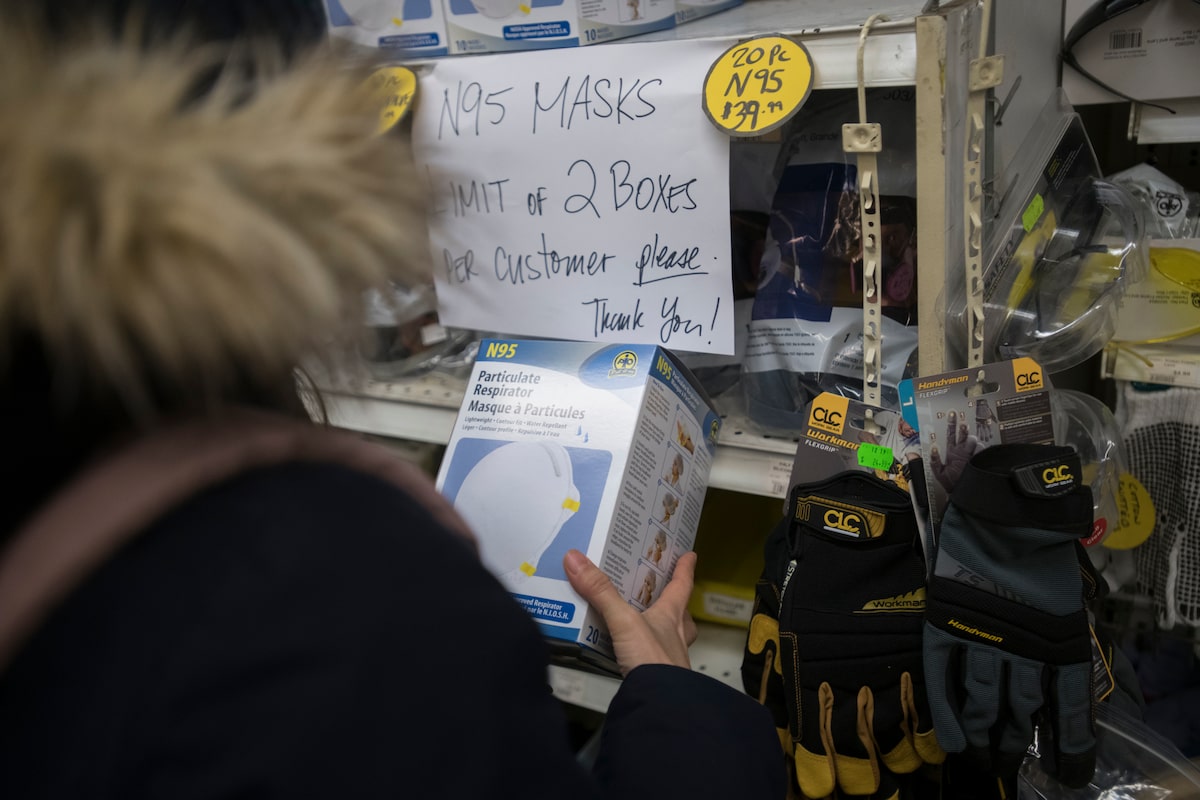
As the COVID-19 pandemic took hold, health care workers quickly burned through personal protective equipment. Worldwide supply chains had all but frozen, and an international battle royale for medical supplies ensued.
Canadian procurement offices – slow, methodical and fundamentally bureaucratic – scrambled to supply front-line health care staff. Purchases typically co-ordinated over the course of several months would have to be made in a fraction of the time.
In Alberta, Sam Mraiche was among the vendors who stepped up. By late March – just a few weeks after the World Health Organization declared a global pandemic – Alberta Health Services was finalizing a deal with his company worth millions for masks, gowns, thermometers and face shields.
Becoming a health agency supplier was a coup for Mr. Mraiche. As Canada’s largest integrated health system, Alberta Health Services – which offered care at more than 800 facilities across the province and employed more than 100,000 people – enjoyed significant purchasing power.
The health agency’s ability to source medical supplies during the global crunch was so notable that Jason Kenney, then the province’s premier, applauded Jitendra Prasad, Alberta Health Services’ chief procurement official, during a speech in the legislature, and featured the bureaucrat at a press conference.
Over the next three years, Mr. Mraiche’s medical-supply company, MHCare Medical Corp., was awarded $614-million in business, according to documents prepared by the health agency.
Mr. Prasad later claimed to have been essential to these contracts; in an e-mail to colleagues in late 2022, he wrote that he handled “all the dealings” with MHCare during the pandemic.
In 2021, the two men negotiated with a potential supplier when Alberta was looking to acquire COVID-19 home test kits.
MHCare had approached BTNX Inc., a Canadian COVID-19 test supplier, to purchase kits for Alberta Health Services, court records show. The companies’ discussions – documented in transcripts of eight recordings from December, 2021, to February, 2022, and filed in court by Mr. Mraiche – offer a glimpse into MHCare’s approach to negotiations.
During a call on Dec. 21, Mr. Mraiche told Iqbal Sunderani, BTNX’s chief executive, that he was going to loop in someone from Alberta Health Services. “I just want to make an introduction,” he said. Mr. Prasad joined the call.
Mr. Prasad said the agency was working with MHCare to obtain tests. Mr. Mraiche later stressed the depth of his ties in the province. “I know how the Alberta government works,” he said.
By the end of the 22-minute call, they had a plan: MHCare would act as an intermediary, purchasing 10 million tests from BTNX for Mr. Prasad’s health agency. “He’s obviously very happy going through you, so I have no problem,” Mr. Sunderani told Mr. Mraiche.
The next day, Mr. Prasad presented a two-page memo to the health agency’s finance committee. Alberta Health Services would buy the tests from MHCare, which BTNX designated as its “official distributor” in the province. Fifteen minutes after the meeting, documents show the health authority’s board met and approved up to $80-million for the purchase.

Alberta Health Services ordered millions of COVID-19 tests in a deal facilitated by MHCare.Jeff McIntosh/The Canadian Press
In early January, 2022, Mr. Mraiche and MHCare chief operating officer Keri Shannon had another call with Mr. Sunderani to discuss BTNX’s delivery timeline. MHCare was anxious to receive its tests, but the federal and Ontario governments were ahead of the company in the queue, Mr. Sunderani said.
Ms. Shannon had an idea. “Maybe take a little from Ontario because we gave them masks in the beginning so they could survive. So now, you know, just scooch a little BTNX over this way, help Alberta out,” she said. “Just tell them that’s the way it is.”
“Yeah,” Mr. Sunderani said. “You know I can’t do that.” Ms. Shannon did not respond to a request for comment.
A few weeks later, manufacturers’ deliveries to BTNX had slowed, Mr. Sunderani said.
Mr. Mraiche was not pleased.
“You’re giving me crumbs, Iqbal,” he said. “I’m so sick and tired of begging you.”
The following week, Mr. Mraiche proposed a solution: He did “a lot of business” in Turkey, he explained, and suggested the BTNX executive use those contacts to obtain additional tests.
Mr. Mraiche also returned to the idea of diverting tests, this time from the federal government. “They’re really going to notice that a million is missing?” he asked.
“They will, yes,” responded Mr. Sunderani.

MHCare's relationship with the rapid-test provider would sour as deliveries lagged.Paul Swanson/The Globe and Mail
As deliveries fell further and further behind, Mr. Mraiche, who told Mr. Sunderani he was under intense pressure from Mr. Prasad, became increasingly frustrated.
“Do you know what you’re doing to me, Iqbal?” Mr. Mraiche said in an early February call. “I don’t only sell rapid test kits. I’m one of the biggest constructors here, too. Do you know what you’ve done to me? I’ve had so much mud thrown on my face, it’s not even funny.”
“You better hope there’s another wave that needs rapid tests,” he continued later in the call.
“Sam, that’s – that’s a bad thing to hope for,” Mr. Sunderani said.
“Is it? Me and you are in the business.”
“Sam, you know what? At the end of the day I don’t know about you, but I’ve made enough money. I don’t want to wish –”
“Has Jeff Bezos made enough money yet?”
“I don’t care who Jeff Bezos is,” Mr. Sunderani replied. “He has – I mean, I don’t want to wish –”
“No one’s wishing anything. It’s just going with the flow,” Mr. Mraiche said.
A month after that call, BTNX sued MHCare for $7.5-million, alleging Mr. Mraiche’s business failed to pay for more than 200,000 test kits and refused to pay for a truckload it received in error. MHCare countersued for $62.5-million, alleging BTNX overcharged, caused the company to lose money and tarnished its reputation. The two companies remain locked in litigation, and neither party’s allegations have been proven in court.
Citing the continuing litigation, BTNX declined to comment. MHCare’s lawyers did not address The Globe’s questions about its dealings with BTNX.

The Turkish medication headache
By the spring of 2022, the government’s response to the pandemic left Premier Jason Kenney battered. A scant majority of United Conservative Party members supported him in a leadership review in May, 2022, and he agreed to step down after the party selected a replacement.
Danielle Smith, then a party leadership hopeful, campaigned on COVID-19 grievances, railing against mask mandates and vaccine passports. Within a few months, she’d established herself as a front-runner.
A copy of Ms. Smith’s private calendar obtained by The Globe shows she took meetings during the campaign with everyone from physicians to executives – including Sam Mraiche.
In August, 2022, she was scheduled to dine at his north Edmonton home, the calendar shows.
Five days later, she was booked for a 30-minute Zoom call with Mr. Mraiche and Mr. Prasad, who retired from Alberta Health Services in the spring but stayed on as a consultant.
Ms. Smith, Mr. Prasad and Mr. Mraiche did not respond to questions about the meetings.
This wasn’t Mr. Mraiche’s first blush with politics. He hosted Rachel Notley, then-Premier and Alberta New Democratic Party leader, at his home for a fundraiser ahead of the 2019 election. Mr. Mraiche’s last political donation in the province was in 2020, to the NDP, according to Elections Alberta. Ms. Notley did not respond to a request for comment.

Rachel Notley, greeting fellow party leaders at a 2019 election debate, would lose that contest to Jason Kenney of the United Conservatives, left. Sam Mraiche donated to the NDP that year.Codie McLachlan/The Canadian Press
Ms. Smith emerged victorious as the party’s leader in October – thus crowning her Alberta’s premier – and soon faced a health care conundrum. North America was in the throes of a surge in cold, flu and COVID-19 cases, all but wiping out Canada’s supply of over-the-counter children’s pain and fever medicine. Alberta decided to forgo the federal government and source its own supply.
The same month, Mr. Prasad returned to Alberta Health Services as procurement chief. He led the charge to acquire the medication.
At the beginning of December, Premier Smith unveiled the province’s plan to buy five million bottles of liquid children’s acetaminophen and ibuprofen from Atabay Pharmaceuticals and Fine Chemicals, a Turkish company.
This was far more than what Alberta needed, but government officials hoped to resell the excess to other provinces.
Internal records show the government instructed the health agency to procure the medication despite reservations from bureaucrats, who cautioned that Health Canada had not yet approved the drugs and that five million bottles of medicine was “excessive.” Though the Alberta government did not disclose it at the time, Mr. Mraiche’s company would act as a go-between, importing and selling the medication to the province.
The health agency agreed to pay MHCare $70-million, plus another $10-million for shipping and administrative costs.
Years later, neither Alberta Health Services nor the independent investigation by Raymond Wyant, the retired judge, were able to determine how the deal came together. In a January, 2025, confidential memo, the health agency’s then-chief ethics officer and general counsel said it “remains unknown” how MHCare was selected. In the judge’s review, published in October, he said information was missing regarding the selection of MHCare and Atabay.
The Globe’s investigation found that Mr. Prasad credited MHCare with finding Atabay, according to records obtained through a freedom-of-information request.
“AHS wishes to thank you for your exceptional service in locating this manufacturer and for being able to move forward with this project,” Mr. Prasad said in an e-mail to Mr. Mraiche on Dec. 2, four days before Premier Smith announced the deal.

An excerpt from Jitendra Prasad’s e-mail on Dec. 2, 2022, where he listed the terms of the Atabay deal and thanked Mr. Mraiche for arranging it.
The deal was plagued with problems. When it was announced, MHCare did not yet have federal approval to import the products, and there were delays owing to a lack of child-proof caps and bilingual packaging. The drugs also came at a significant markup, costing more than six times what the health authority typically paid for the same type of products, according to briefing documents obtained by The Globe. And, in the end, only 29 per cent of the order was delivered.
In the end, only a fraction of the imported medication was used, largely because the drug shortage that precipitated the purchase had subsided.
At the end of 2024, Alberta Health Services wrote to MHCare stating that the company had been holding $49.2-million of public funds for “well over a year” – and demanded an update on its effort to meet its obligations.
In a letter MHCare sent to the Alberta government in April of this year, the company said it delivered medication at a time of widespread shortage, but that Health Canada capped imports at 1.5 million bottles. (The federal agency approved only this part of the order because the regular supply of the drugs was once again available.) MHCare said it is still working to secure regulatory approval to import a different medication for Alberta Health Services.
In another newly obtained photo taken earlier in the playoff run, Mr. McFee, now the province’s top bureaucrat, and Mr. Amery, who is the justice minister and related to Mr. Mraiche, appear in a box with Mr. Mraiche.
Trevor Ford, the chief of staff to Ken Sim, the mayor of Vancouver, also appears in the photo. Mr. Ford, in a statement to The Globe, said he was invited by Marshall Smith. Mr. Ford said he insisted on paying for the tickets, was “informed the evening was a fundraiser for a charity” and was asked to give a donation in lieu of the ticket price.

Mr. Amery and Mr. McFee, highlighted at left, and Mr. Mraiche, highlighted at right, attend a playoff game in Edmonton on May 18, 2024.
Last year, The Globe reported that Mr. Mraiche provided box seats in Edmonton to cabinet ministers and government staff during the 2024 playoffs. Ministers Nate Horner and Nathan Neudorf confirmed that Mr. Mraiche hosted them; the new photos show the list of attendees is more extensive than previously reported.
The Globe also reported last year that Premier Smith and senior staff attended a second-round playoff game in Vancouver in May, 2024. The Premier, Mr. Mraiche and some of his associates appear together in a photo taken by The Canadian Press during the game.

Mr. Mraiche, highlighted, sits behind Danielle Smith at the Vancouver playoff game on May 10, 2024.Darryl Dyck/The Canadian Press
Sam Blackett, Ms. Smith’s spokesman, told The Globe last year that a “private citizen” provided the tickets; a source told The Globe for that story that the tickets came from Sam Jaber, who is on Invest Alberta’s board. The Premier subsequently confirmed that account.
The Globe has since obtained a copy of MHCare’s 2022 organizational chart, which shows Mr. Jaber is the company’s chief financial officer. Mr. Jaber did not respond to requests for comment.
Ms. Smith’s government amended the province’s ethics rules in 2023 to make it easier for MLAs and political staff to accept gifts like concert and hockey tickets. The changes allow members of the legislature to accept a gift provided it is an “incident of protocol or of the social obligations” tied to the job, according to the revised legislation. There is no limit on the value of acceptable gifts, but MLAs must report those over $1,000 to the Ethics Commissioner.
The legislation does not force MLAs or the commissioner to publicly disclose such gifts.
Ms. Smith has previously stated that attendance at the hockey games complied with the rules. The Premier, Mr. Jones, Mr. Schow, Mr. Amery, Mr. Ellis and Mr. McFee did not respond to questions from The Globe about the new photos.
Peter Guthrie, the former infrastructure minister, said he’s had second thoughts about whether he should have attended those games. “When I recognized that something was wrong, I investigated, raised the alarm internally and acted responsibly,” he said in a statement to The Globe.
He detailed how he ended up at several games in 2024. “Those invitations came from the Premier’s Executive Director, Rob Anderson, the Justice Minister, Mickey Amery, and from Sam Mraiche of MHCare,” he said, adding that “no government business was discussed.”
Mr. Mraiche did not address questions sent to him by The Globe about hockey games. But in an unsigned letter addressed to the government in April, 2025, MHCare said that Mr. Mraiche’s “interactions with government, those in elected office and senior staff fit entirely within the established parameters of typical government relations for the CEO of a commercial entity.”
Marshall Smith, the then senior aide to Premier Smith, is also in the new images from Game 6. He posted a photo of himself with Oilers goalie Stuart Skinner after the hometown team won. “Stuuuuuuu!” the caption reads.

Marshall Smith got a selfie with Edmonton Oilers goalie Stuart Skinner after Game 6 on June 2, 2024.
Mr. Smith’s own ties to Mr. Mraiche extend beyond the rink.
In August, 2023, Mr. Smith moved into a $1.6-million house that had been purchased by Fatima Mraiche, one of Mr. Mraiche’s sisters, earlier that month.
The home, which he shared with roommates, is located steps from the University of Alberta. The property has more than 2,500 square feet of living space and a “Japanese-inspired” garden, as well as a self-contained suite above a three-car garage, according to a real estate listing.
Mr. Smith’s lawyer told The Globe earlier this year that “the landlords for this property were appropriately compensated for its use,” but declined to say how much Mr. Smith was paying in rent. Invoices he submitted to collect his government living allowance, obtained by The Globe through a freedom-of-information request, note his monthly rent as $1,900. The records do not indicate whether this was his portion of the rent, or the full amount. Fatima Mraiche did not respond to questions from The Globe.
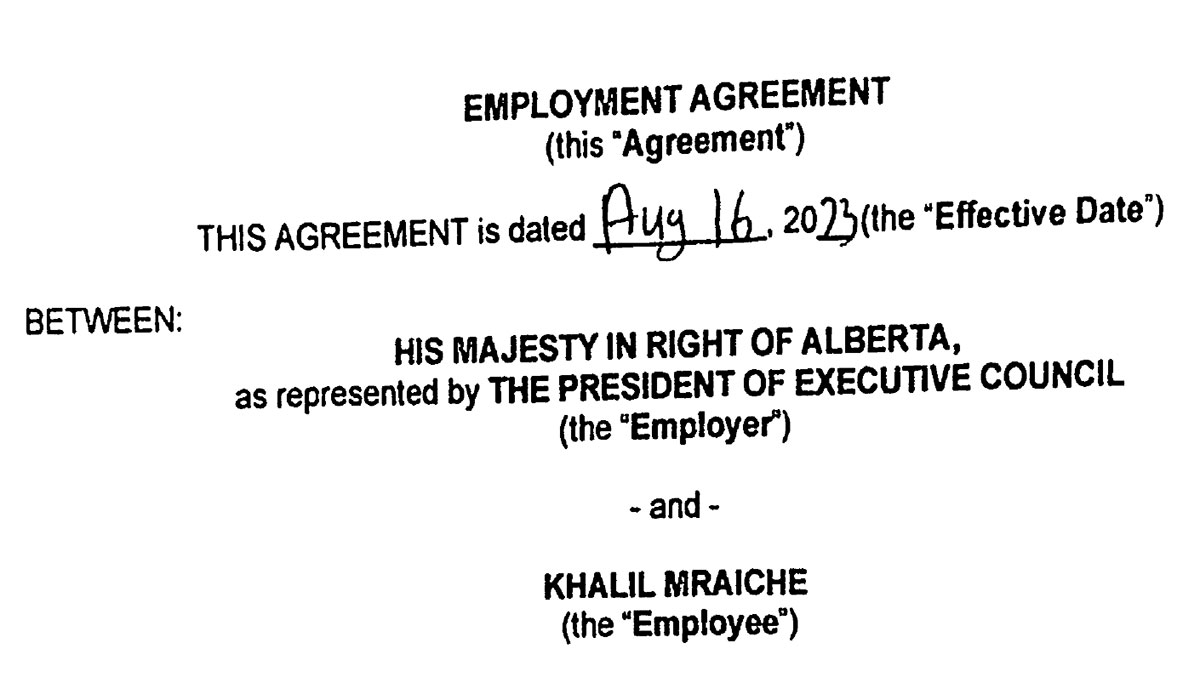
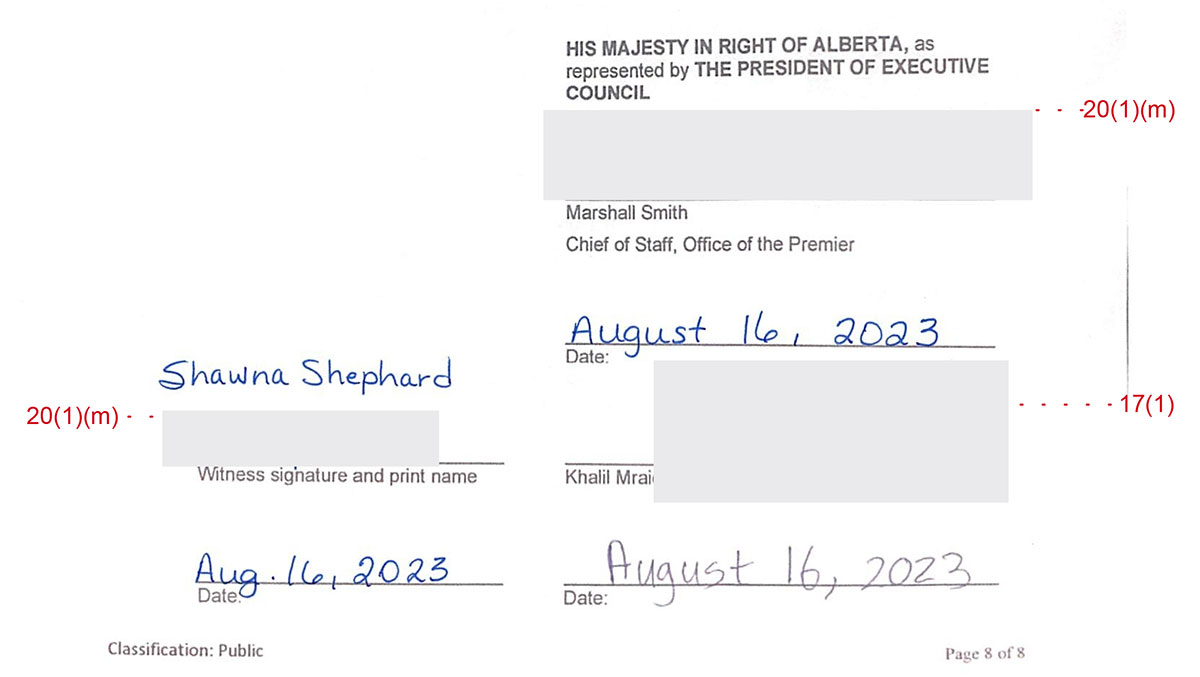
Days after Mr. Mraiche’s sister took possession of the home, his son, Khalil, was hired as a policy adviser in the government. Employment records obtained by The Globe show his contract was signed by Mr. Smith. Khalil left the government in December, 2023, records show.
Mr. Smith also signed contracts for three of Mr. Mraiche’s nephews over the next year, records show.
Ahmad and Mahmoud Jebara joined the government as policy advisers in August, 2023, and May, 2024. Ahmed Eldassouki was hired as a ministerial intern in April, 2024, and left four months later.
Separately, a fourth nephew, Hussein Moussa, landed a job in procurement at Alberta Health Services after reaching out to Jitendra Prasad, the procurement chief, in late 2022. Mr. Moussa left the health agency in September.
None of the hired relatives responded to The Globe’s requests for comment.




The order to ‘cease’ the investigation
In the summer of 2024, Athana Mentzelopoulos, the chief executive of Alberta Health Services, became concerned about a contract her agency was negotiating.
The United Conservative Party under both Jason Kenney and Danielle Smith had touted private surgical facilities as key to easing Alberta’s backlog of ailing patients. These private clinics perform operations, such as knee and hip replacements, paid for by the public purse.
Ms. Mentzelopoulos worried the contract with one of these private providers – an Edmonton business called Alberta Surgical Group – contained overly generous rates, she later alleged in a lawsuit.
Ms. Mentzelopoulos paused negotiations and hired law firm Borden Ladner Gervais LLP to investigate. Further, she later alleged her staff flagged that Jitendra Prasad and another former health agency purchasing official, Blayne Iskiw, may have had “linkages” with the surgical provider that caused them concern.
In a statement to the The Globe, Mr. Iskiw said that the retired judge’s review had found he complied with “all applicable rules, regulations and guidelines.” A lawyer for Mr. Prasad declined to answer questions from The Globe, and Alberta Surgical Group did not respond to questions.
When Ms. Mentzelopoulos paused the Alberta Surgical Group negotiations, that also halted talks over proposed deals for surgical centres in Red Deer and Lethbridge – projects owned, in part, by Sam Mraiche.
The owners of the Red Deer and Lethbridge projects − which also included Mr. Iskiw and shareholders of Alberta Surgical Group – had proposed 15-year contracts worth approximately $430-million, according to confidential documents obtained by The Globe.

Ms. Mentzelopoulos is now suing her former employer and the government for wrongful dismissal.Jennifer Gauthier/The Globe and Mail
Ms. Mentzelopoulos alleged she faced pressure from the government to restart negotiations.
Marshall Smith was among those who called her, she alleged.
“He said the proponents of the Red Deer and Lethbridge facilities were unhappy with the hold up and he warned me that I should not ‘mess with’ these ‘serious’ people who needed to get their financing in place,” she said in a court filing.
Mr. Smith, who is not party to Ms. Mentzelopoulos’ lawsuit, said in a separate lawsuit that the former executive’s description of the call is “false and defamatory.”
In October, 2024, about two weeks before Alberta Surgical Group’s contract was set to expire, then-Health Minister Adriana LaGrange ordered Alberta Health Services in a ministerial directive to extend the deal. Ms. Mentzelopoulos complied.

Adriana LaGrange, then Alberta's health minister, speaks at a news conference in February about the allegations lodged by Ms. Mentzelopoulos.Jeff McIntosh/The Canadian Press
But the probe continued. Ms. Mentzelopoulos expanded its scope to include the proposed surgical centres in Red Deer and Lethbridge. Borden Ladner Gervais recommended the health agency push the projects’ owners for answers about how and when Mr. Iskiw obtained a 12-per-cent stake, and whether he or Mr. Prasad had received “anything of value” from Mr. Mraiche, according to a confidential e-mail obtained by The Globe.
Alberta Health Services drafted a letter, but in December the health ministry instructed the agency not to send the letter, Ms. Mentzelopoulos alleged.
That same day, Ms. Mentzelopoulos briefed the agency’s board on some of the law firm’s findings, including that Mr. Prasad had an MHCare e-mail account the same month he was working on the children’s medication deal. Alberta Health Services’ directors advised Ms. Mentzelopoulos to alert the RCMP, she alleged.
Two days before Christmas, the government sent a letter to Ms. Mentzelopoulous ordering her to “cease any due diligence underway” into the Red Deer and Lethbridge projects, effectively ending the investigation.
On Jan. 8 – two days before Ms. Mentzelopoulos was scheduled to brief the province’s Auditor-General about her investigation – she logged onto Zoom for what was supposed to be a meeting with the chair of the health agency’s board. When she joined, she was instead greeted by then-Deputy Minister of Health Andre Tremblay and a representative from human resources, according to court filings.
“I just want to let you know that, unfortunately, we’ll be terminating your employment with AHS, effective immediately,” Mr. Tremblay told her.

‘A very professional relationship’
In February, Athana Mentzelopoulos sued the government and Alberta Health Services for wrongful dismissal, alleging she lost her job because of the investigation.
The government countered that it dismissed her because she “had become so infatuated with her investigation and various suspicions” that she was unable to perform her duties.
Following Ms. Mentzelopoulos’ allegations, Premier Smith appointed Raymond Wyant, the retired Manitoba judge, to review health care procurement in Alberta.
Mr. Wyant found that Alberta Health Services broke its procurement rules during its purchase of children’s pain medication. He also found that the agency and the health ministry didn’t follow policy in their dealings with Alberta Surgical Group.
The retired judge didn’t find evidence that politicians or political staff acted inappropriately, but said he was not in a position to make “a final and absolute determination” about political interference. His report did not mention Marshall Smith’s house rental, hockey games or the hiring of Mr. Mraiche’s relatives.
Mr. Mraiche’s lawyer said Mr. Wyant did not find fault with his client or any companies associated with him, and that the report rejected Ms. Mentzelopoulos’s allegations that political staff intervened inappropriately in the procurement process.
Mr. Smith, the only political staff member interviewed by Mr. Wyant, left the Premier’s Office in October, 2024. He sued The Globe and Ms. Mentzelopoulos in May, alleging defamation. Both deny the allegations, which have not been tested in court.
Blayne Iskiw, the former Alberta Health Services procurement official, told Mr. Wyant that Alberta Surgical Group gave him a 12-per-cent stake in the Red Deer and Lethbridge projects in exchange for taking care of the “day-to-day business,” according to the judge’s report. Mr. Iskiw consults for MHCare, the report said.
Mr. Iskiw said in a statement to The Globe that he “has been subjected to unfair innuendo and false allegations” and that he followed “all required and documented rules” and acted “at all times with integrity and proper intention.”
Jitendra Prasad, the former head of procurement at the health agency, is no longer with the public service. When Alberta Health Services received a media inquiry in the fall of 2024 about its contracts with MHCare and Mr. Mraiche, Mr. Prasad and a colleague drafted a response stating that the agency had no “contractual relationship” with either party. As a result, he was put on administrative leave, then reinstated following the involvement of Rob Anderson, Premier Smith’s top aide, according to Mr. Wyant’s report. He retired last November. Mr. Anderson did not respond to questions from The Globe.
Mr. Wyant determined that Mr. Prasad was in a conflict of interest in connection to MHCare’s children’s’ medication deal.
The Royal Canadian Mounted Police is conducting its own examination. Alberta’s Auditor-General is also investigating.
Citing litigation and the Auditor-General’s investigation, Alberta Health Services declined to answer The Globe’s questions.
Premier Danielle Smith, meanwhile, said there is nothing unusual about her relationship with Mr. Mraiche.
“I saw him socially a couple of times,” she told reporters in June.
“It’s the same thing that I have with many, many people who seek to have a relationship with our government. I have informal meetings with them, sometimes meet with them one-on-one – but I would say that it was a very professional relationship.”
With reports from Alanna Smith
This article has been updated to include information provided by David Postel, one of Sam Mraiche’s lawyers, after publication. Mr. Postel said his client was granted a pardon for an offence he was convicted of more than two decades ago.
More on The Decibel
Who is Sam Mraiche? Reporters Carrie Tait and Tom Cardoso spoke with The Decibel about their efforts to answer that question and learn more about Alberta’s health-care controversy. Subscribe for more episodes.