Behind the camera
Learn more from Gavin John’s personal essay about his reporting with the Canadian Rangers, and how he fared in the storm.
An evolving Nanook
For 19 years, the Canadian military has run Operation Nanook, its annual flagship set of Northern exercises designed to test sovereignty, readiness and the ability to operate in one of the world’s harshest regions.
But as superpowers jockey for control in the High North, what was once largely a domestic operation is evolving into something broader: Canada’s principal military contribution to an emerging allied architecture across the region.
Officials describe a three-pillar Arctic security system: the United States anchored in Alaska, the North Atlantic Treaty Organization across Europe’s northern flank and Canada covering possible central approaches.
Within that framework, Operation Nanook and NATO’s emerging Arctic Sentry initiative are being treated as complementary readiness mechanisms.
Starting in 2027, the operation will be a biennial multinational exercise, and Canada’s Arctic presence is expected to grow further. According to Joint Task Force North Brigadier-General Daniel Rivière, the plan is to expand Canada’s northern command dramatically in size, capabilities and partnerships by 2030.

Months before the snowmobile trek, Sergeant Titus Alulu shared his expertise on the route at this Ranger leadership summit in Ottawa.
In particular, the ability of the 1st Canadian Ranger Patrol Group to move across some of the harshest terrain on Earth has drawn attention from allies. Recruited largely from Northern and Indigenous communities, the Canadian Rangers are one of the Armed Forces’ few persistent on-the-ground assets.
They work with Joint Task Force North, the Royal Canadian Air Force and non-military partners such as the Royal Canadian Mounted Police and Parks Canada to create a whole-of-government response to crisis and threats in an area where a physical footprint is sparse and weather routinely defeats modern systems.
“In that lack of infrastructure, the Rangers are part of that backbone,” Brig.-Gen. Rivière said.
Denmark, confronting its own changing Arctic realities, including Greenland takeover threats from U.S. President Donald Trump, sent a delegation to Yellowknife and Inuvik to observe this year’s operation – specifically, to see whether the Canadian Ranger model of 1CRPG can be implemented in their own territory.
That interest is significant. A European country appears to be looking not only to high-end weapons systems or large permanent bases, but to a distinctly Canadian blueprint for austere Northern security: locally rooted, lightly equipped forces able to live, move and operate where conventional militaries struggle.

The journey begins
The Canadian Ranger Long Range Patrol expedition set out from Inuvik, NWT, about 150 kilometres north of the Arctic Circle, on Feb 18.
The unit was built for endurance, not speed, but on the first day the travel came easily enough.
The line of snowmobiles moved across the braided channels and frozen expanse of the Mackenzie River. Just outside of town, members from the Fort McPherson Ranger Patrol joined to guide the core party toward their home, a six-hour snowmobile ride south through country they knew by memory rather than map.
From there, the patrol turned west toward the Yukon’s Richardson Mountains, faintly visible on the horizon.
Before the drive to Manitoba, much of which would be done on sea ice, the patrol would loop through the territory to add the full terrain portfolio of the Arctic and involve as many Rangers as possible.
Snow lay deep in the passes, burying sections of the trail. The machines lurched through steep descents and side slopes that punished suspensions and riders alike.
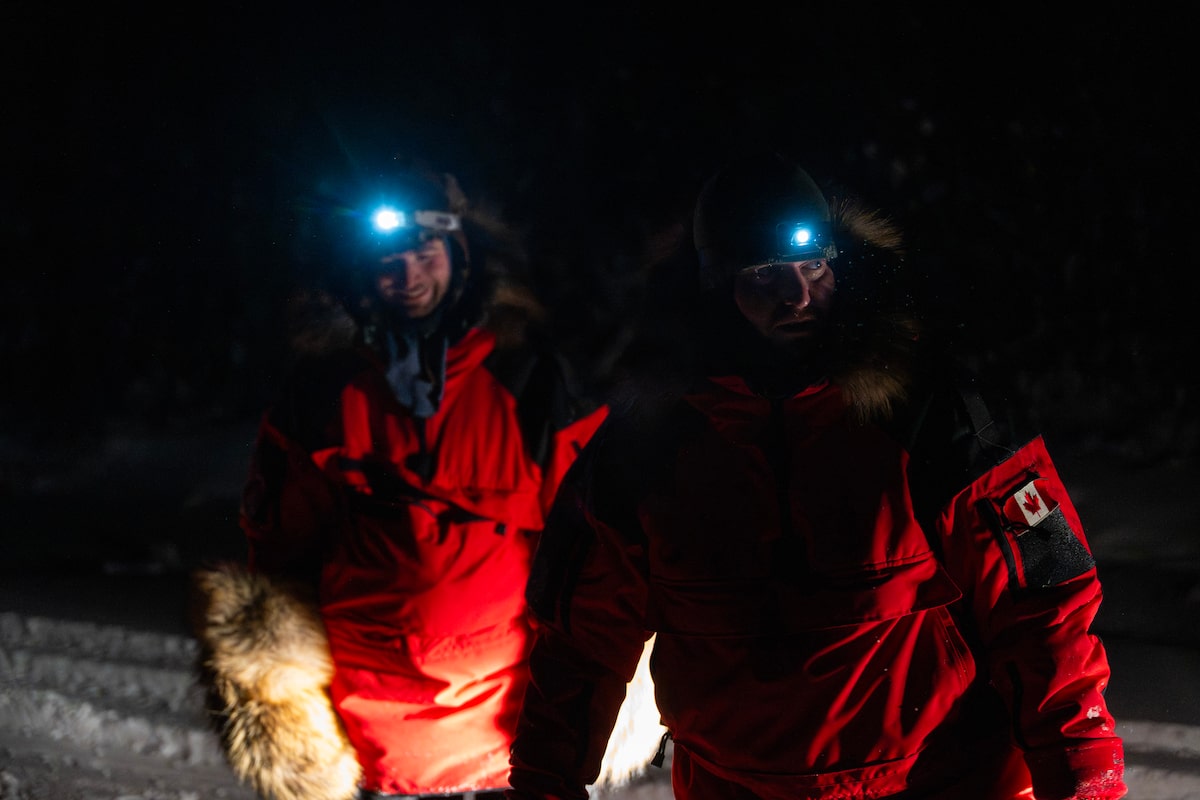
Night brought the first serious challenge.
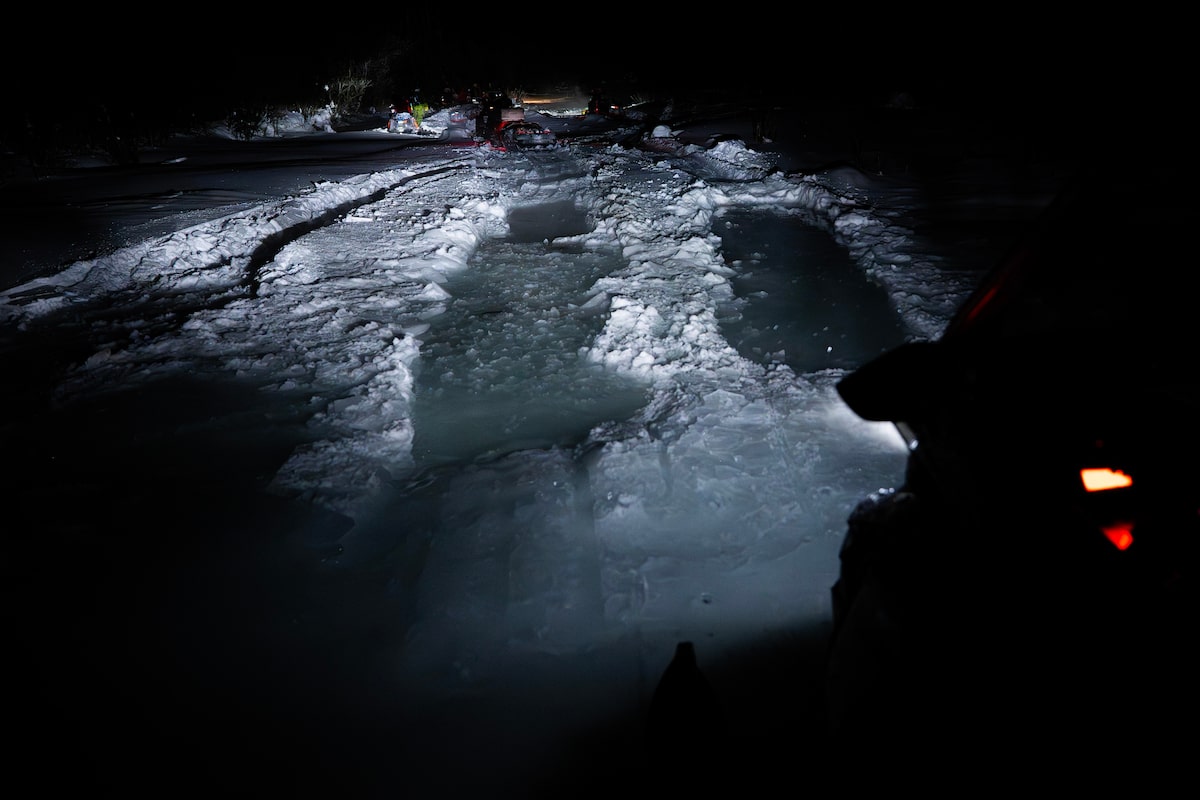
In the Arctic, one of winter’s deceptions is something called overflow: Water moving beneath river ice is forced upward through cracks until it spreads across the surface. Snow disguises the risk; what appears solid can easily collapse.
The sun had already dropped behind the Richardsons when the lead Ranger struck water in a narrow valley. Pools opened suddenly from beneath the drifts.
Riders hit the throttle and aimed for momentum. Some skipped across. Others, not as lucky, bailed clear onto firmer ground.
Then began the work. Hours of pulling, winching and shoving snowmobiles through water that in places rose to the knee.
By the time the patrol reached an isolated cabin, it was nearly 4 a.m.

Old Crow
Along the banks of the Yukon’s Porcupine River sits Old Crow, one of the country’s most isolated communities. Home to roughly 250 residents and the traditional territory of the Vuntut Gwitchin First Nation, it has no permanent road connection to the rest of Canada. In winter, when conditions allow, ice roads and trails offer a lifeline.
It was here, on Feb. 21, that the Long Range Patrol unit met with one of its most important reinforcements.
The day before, six members of the Old Crow Canadian Ranger Patrol, led by Sergeant Jeremy Brammer, had joined the group at a cabin in the Richardson Mountains and guided them into the community. Now the column would continue north, toward the Arctic Ocean.
Their goal was Shingle Point, a seasonal fishing camp and North American Aerospace Defence Command radar site on the Beaufort Sea coast. The route ahead, roughly 250 kilometres, had for generations been a travel corridor linking inland families to the water.
Ranger Tyler Lord described a route once travelled on foot in summer and by dog team in winter. “Back in the day, they’d go to Herschel Island and get their coffee and tea and smokes and then walk back,” he said.
But like many Northern routes, its use had faded with time. No one in the community had attempted the run to the ocean in the depth of winter for more than 15 years.
Still, the knowledge had not disappeared. It remained where such wisdom often does: with the people.
It was that knowledge that would lead the way to the sea.


The mountain pass
On Feb. 25, the patrol broke camp beside a small lake before sunrise. Tents were struck in the blue dark. Stoves were packed; fuel was lashed down. One by one, machines and Rangers came to life. Spirits were high, fuelled by the kind of optimism that comes easily in decent weather, and there was talk of reaching the Arctic Ocean that day.
There was impatience, too.
They had already lost the day before waiting out a storm to the north. Beyond the lakes and wetlands of the Old Crow Flats, the terrain rose into the British Mountains, the last barrier between the patrol and the sea. Crossing in bad weather would have been reckless. The 1CRPG Commanding Officer, Lieutenant-Colonel Travis Hanes, had ordered a pause.
Now, after one final check of forecasts and wind maps, the patrol moved north.
Gradually the trees thinned. Tall spruce gave way to willow. Then the willow shrank to scrub no higher than a boot. By noon there was nothing left to break the wind.

The rising wind makes it hard for MCpl. Lord and Ranger Derrick Kapuschak to light their cigarettes.
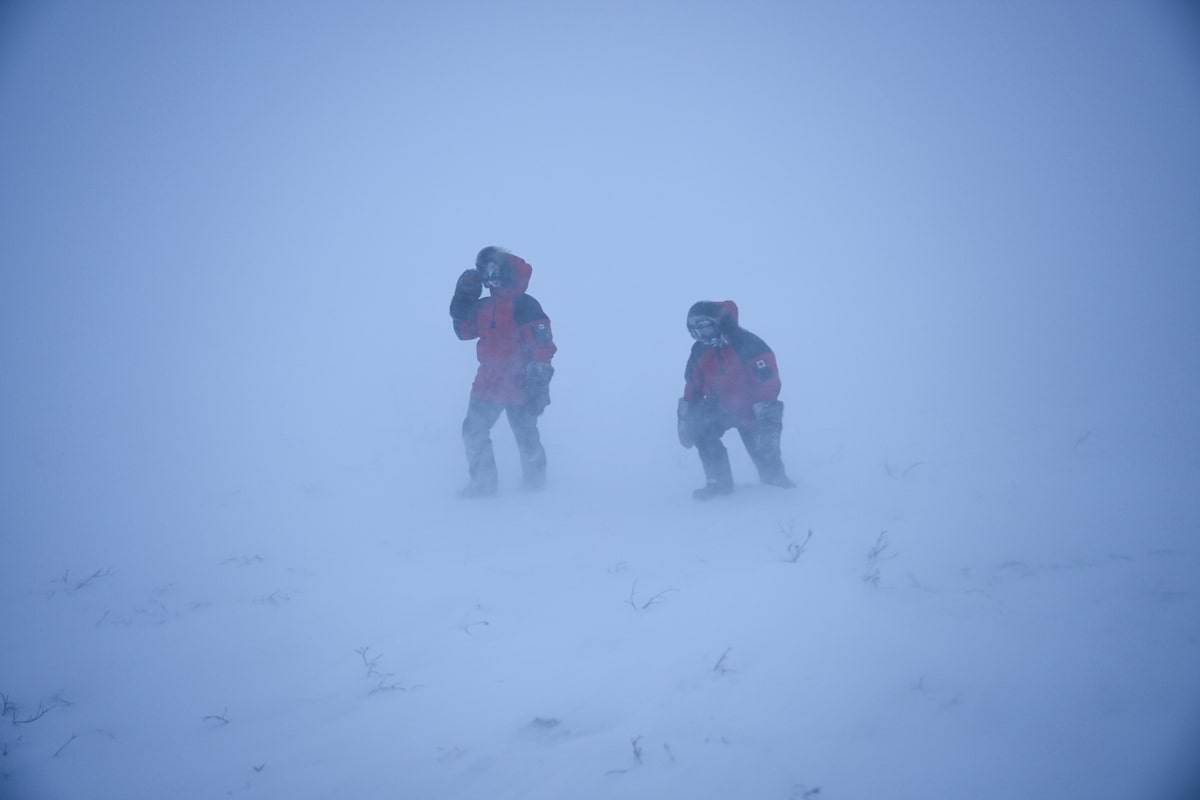
At first, the change in atmosphere was barely noticeable. A little more snow in the air. A faint haze on the horizon. Then, almost without warning, white swallowed everything.
Even in near-zero visibility it was clear they had reached the mountain pass; the ground had been climbing for hours. Progress slowed. The Rangers kept deliberate spacing, so no machine vanished completely in the blowing snow. Soon, they were moving little faster than 10 kilometres an hour.
Then slower still.
The column broke apart repeatedly. Riders doubled back for those lagging behind. Engines idled while others caught up. Rangers stepped off their machines and searched for tracks already being erased by the wind. A colleague 20 metres ahead could disappear between gusts.
The temperature dropped, hard.
Ice built around fur hoods and collars. Goggles fogged, then froze. Several Rangers took them off, choosing deep discomfort over blindness. Tears froze on eyelashes and had to be brushed away often.
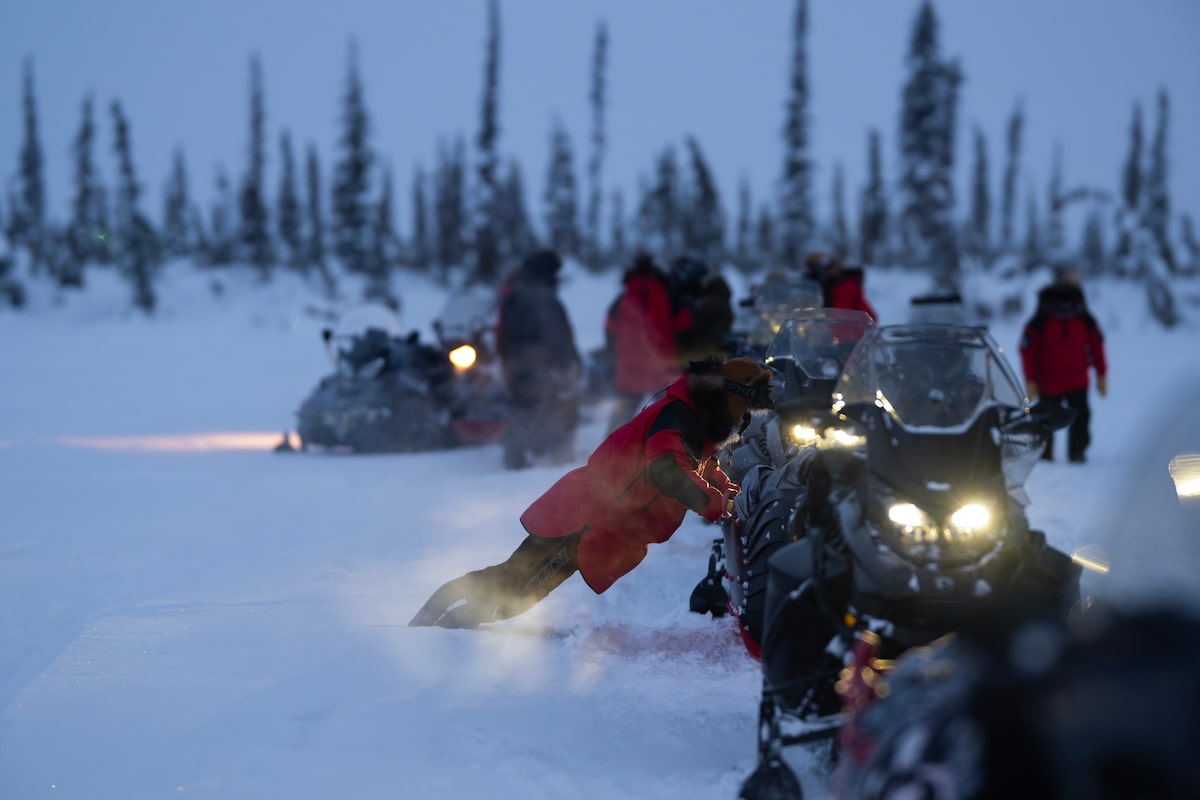
Snowmobiles clawed upward until they bogged down. Eventually, everyone dismounted.
One at a time, they hauled the machines uphill over the hard-packed snow. Free one. Walk to the next. Pull again. Return to your own. Drive until it failed. Pull once more.
Hours passed this way.
The mountain pass became less a route and more of a demonstration of resilience.
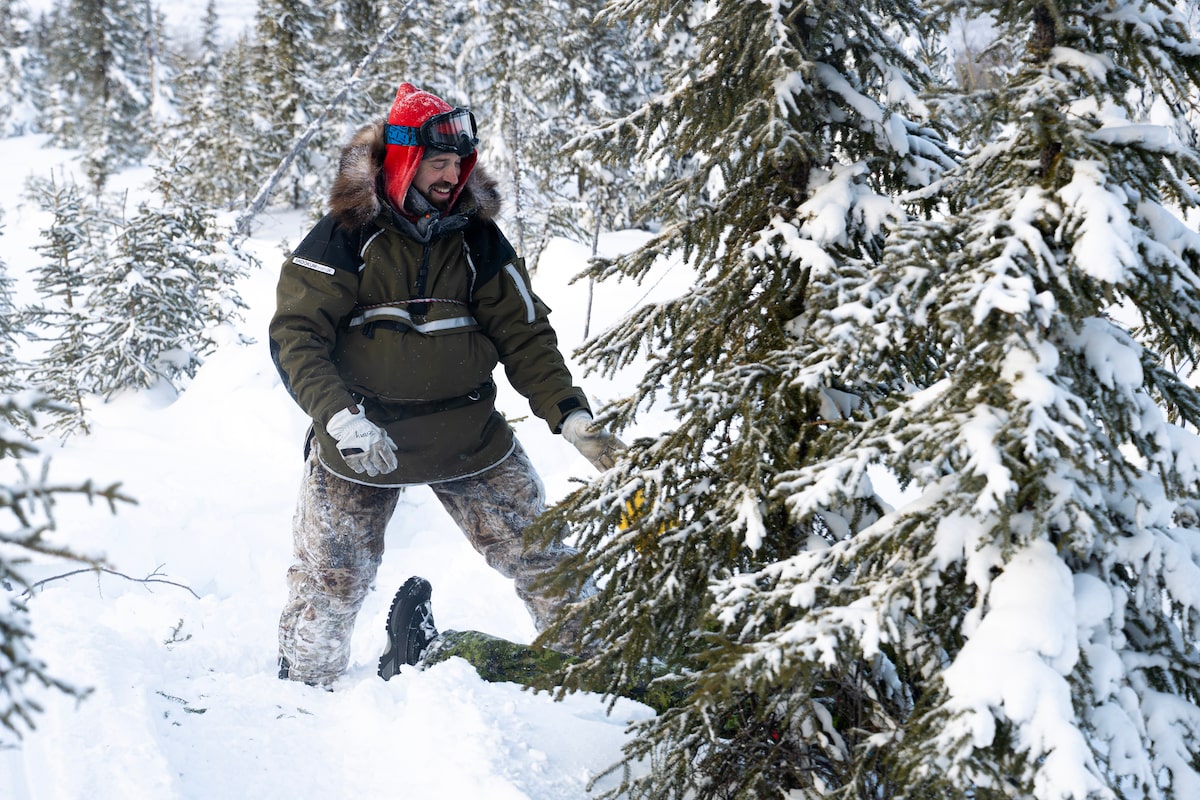
“If you give up, you’re going to perish,” Ranger Lord later reflected. “You’ve got to keep moving. You can’t just sit there.”
Slowly, the endless climb levelled. Then the ground tipped downward. They had made it through.
Exhaustion, and the storm’s refusal to relent, made the decision to stop an easy one. The patrol pulled into a narrow, sheltered valley, raised camp and waited to see what the next day would bring.


Frostbite and air evacuation
The purple stain had crept across the tip of Sergeant Brad Brennae’s big toe and spread to the first joint. No explanation was needed. The previous day’s battles through the mountain pass had left their mark
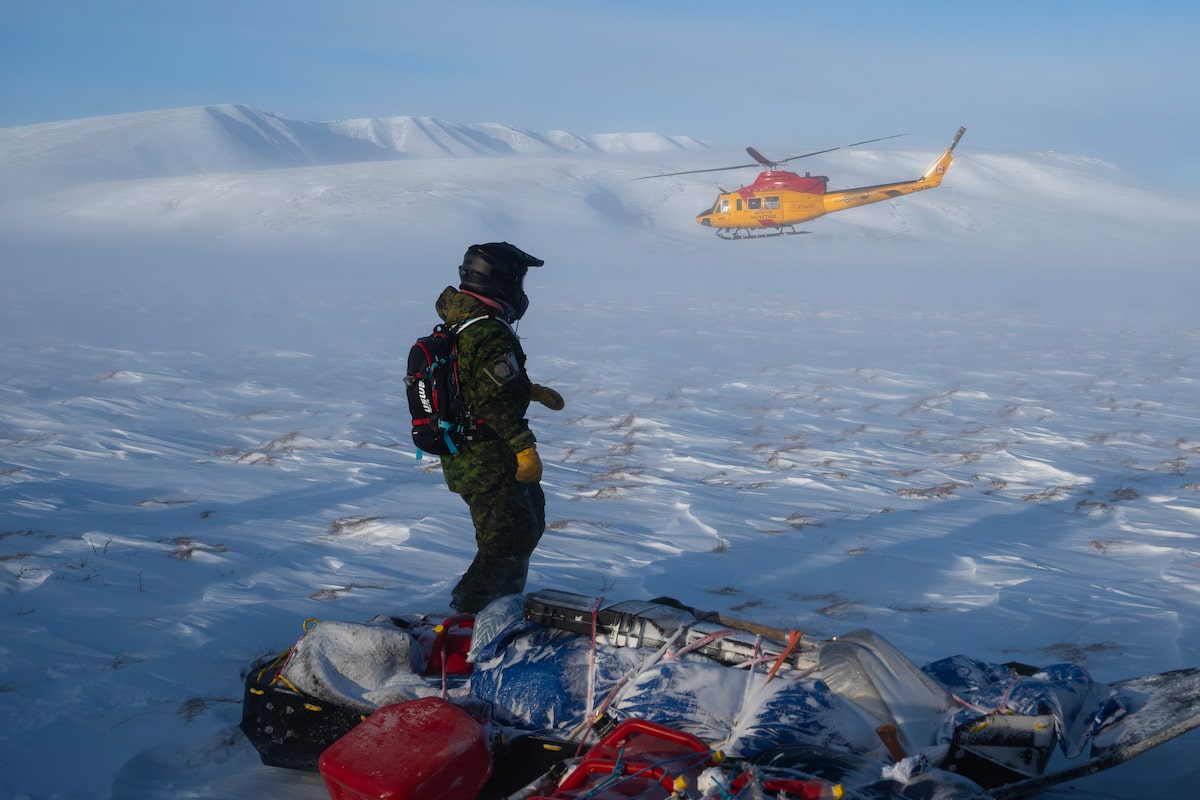
It was late morning. He had just returned to camp with MWO Murphy from the latest dashed hope: a landing zone marked out on the snow for a Royal Canadian Air Force Griffon helicopter requested to evacuate him.
The aircraft was only 130 kilometres away in Old Crow, but the weather moved faster than it did. Winds rose; visibility collapsed. The mission was aborted.
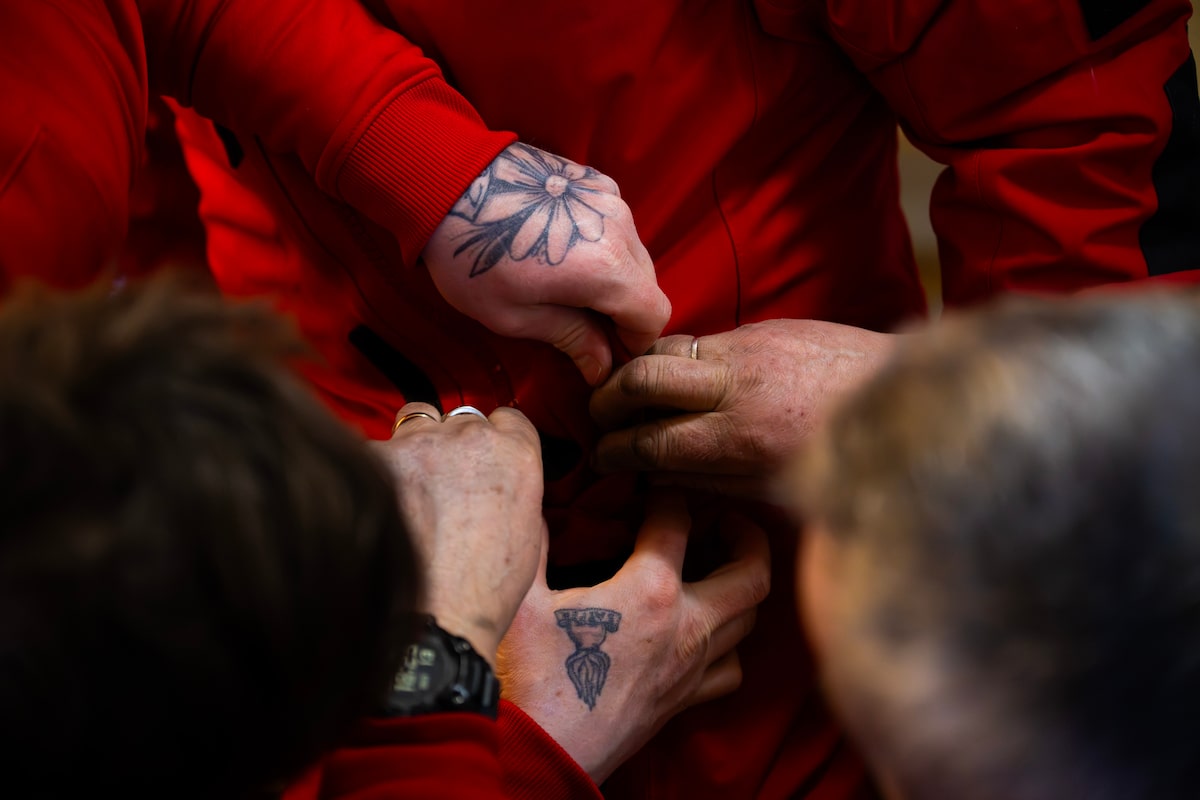
Now the patrol’s leadership stood in a circle on one of the sleeping tent’s uncovered floor, a nearby stove creating a slick ice layer.
The frostbite had been noticed the night before during routine checks. Sgt. Brennae had barely felt it.
Ranger Pat Lafleche, the team’s doctor, examined the foot under the light of a headlamp. He looked toward Lt.-Col. Hanes.
“He’s not going to lose it,” Dr. Lafleche said. “But that’s if we can get him out of here.”
He leaned on the word if.

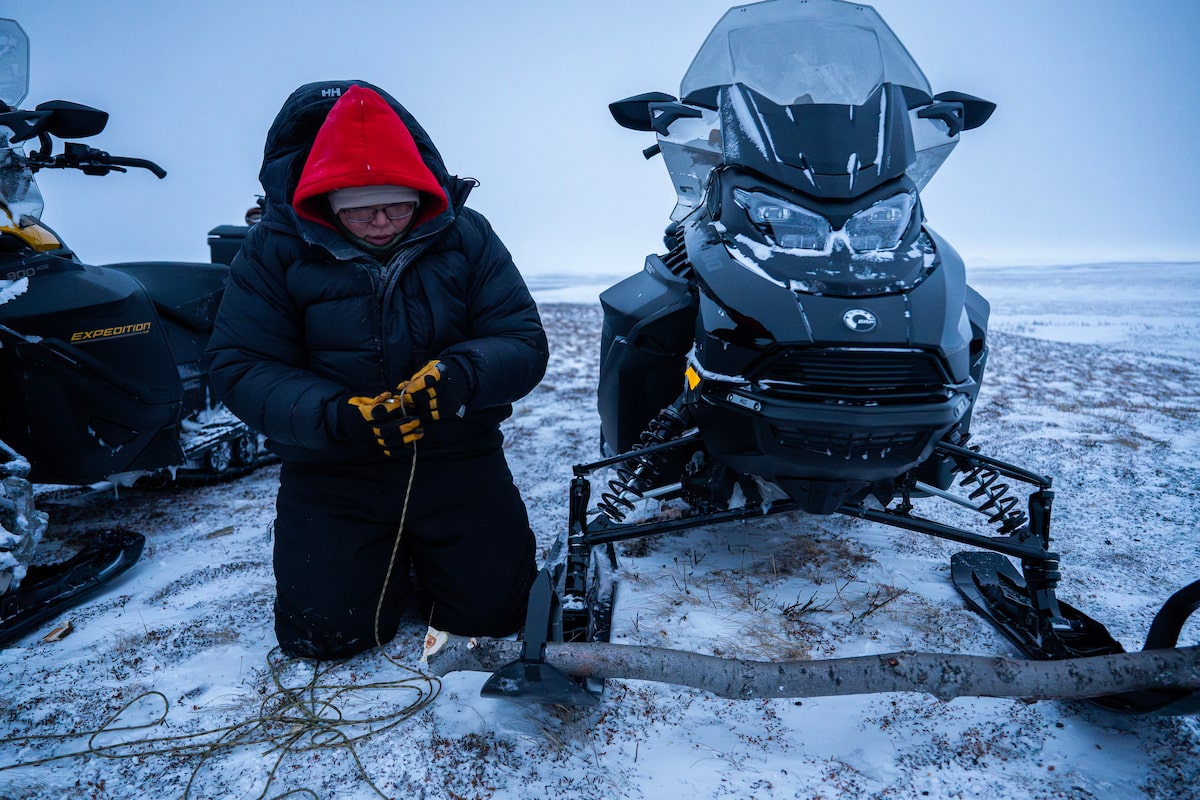
Through the Rangers' journey, tents could only go so far in protecting them from the cold.
Yet another storm was forecast to move in the next day. Staying where they were, a shallow valley that offered some protection from wind, meant shelter, but also further delay. Fuel and rations were finite. And Sgt. Brennae’s toe would not improve in a tent.
Moving north presented another kind of gamble.
Shingle Point lay more than 100 kilometres ahead on the Arctic Ocean. It offered hard shelter, heat and room to recover. But between the patrol and the coast stretched open barrens with little cover. If weather trapped them there, the consequences would be harsher than in the valley.
Stay, and the injury worsened. Move, and everything else might.
The discussion was practical and equal; everyone had a voice. Concerns were raised plainly. Risks were challenged; assumptions were tested. There was hesitation, disagreement and compromise. No one was offered a safe option because none existed.
After an hour, it was settled: The danger of remaining was greater than the risk of moving.
The Rangers would leave before sunrise, when Arctic winds are often weakest, and push on as far as conditions allowed. If the weather opened, they would identify a landing zone, call the air force back in and evacuate Sgt. Brennae. Then continue.
Come 5 a.m., they were already on the move.
A search-and-rescue helicopter reached them later that morning and Sgt. Brennae was flown out.
He still has his toe.

Reaching the Arctic Ocean
The relief accompanying Sgt. Brennae’s evacuation was short-lived. That evening brought the nightmare on the Babbage River.
After digging out the emergency camp, the Rangers did the math that decides Northern travel: a calculation factoring in fuel, food, weather and distance.
The results did not favour them.
Shingle Point was still almost 40 kilometres away. That’s not far on a map, but after days of breakdowns and exhaustion, the journey can feel like an eternity.
For now, the weather was calm. But storms were moving in from the coast with increasing frequency. Out on the open tundra there would be no protection as there had been in the forests and mountains – not even a rise in the land to break the wind.
Each ranger had started with eight days of rations. Many were down to two. The Old Crow Rangers only had one day left of firewood, the propane heaters had run out of fuel the night before and the small butane stoves the rest of the patrol carried were running dangerously low.
A request to the Royal Canadian Air Force for a supply drop was denied given the conditions. Lt.-Col. Hanes had no choice but to push onward, and fast.

MCpl. Brient braces into the wind as the Rangers prepares to leave for Shingle Point.
The Rangers packed quickly.
The patrol swung onto the tundra and headed north at a steady pace, hoping, for once, to outrun what was behind them. Punishing travel over frozen hummocks and other uneven ground reduced hours into nothing but engine noise and cramped legs.
Night had fallen when they reached the Arctic Ocean. Considering the coastline was an oft-discussed goal, reaching it generated little celebration. Fatigue had dulled everyone.
Aklavik Ranger Julia Elanik looked across the expanse of sea ice and said, almost casually, “Oh. There it is.”
For the first time in days, the ride became easy. Ahead stretched a white plain to the horizon, smooth with glittering points under a full moon and cloudless night.
The snowmobiles skimmed along the coast through buckled and broken slabs of sea ice, some as large as cars. Driftwood scattered across the shore cast long angular shadows in the headlines. Behind them, the tundra disappeared into darkness.

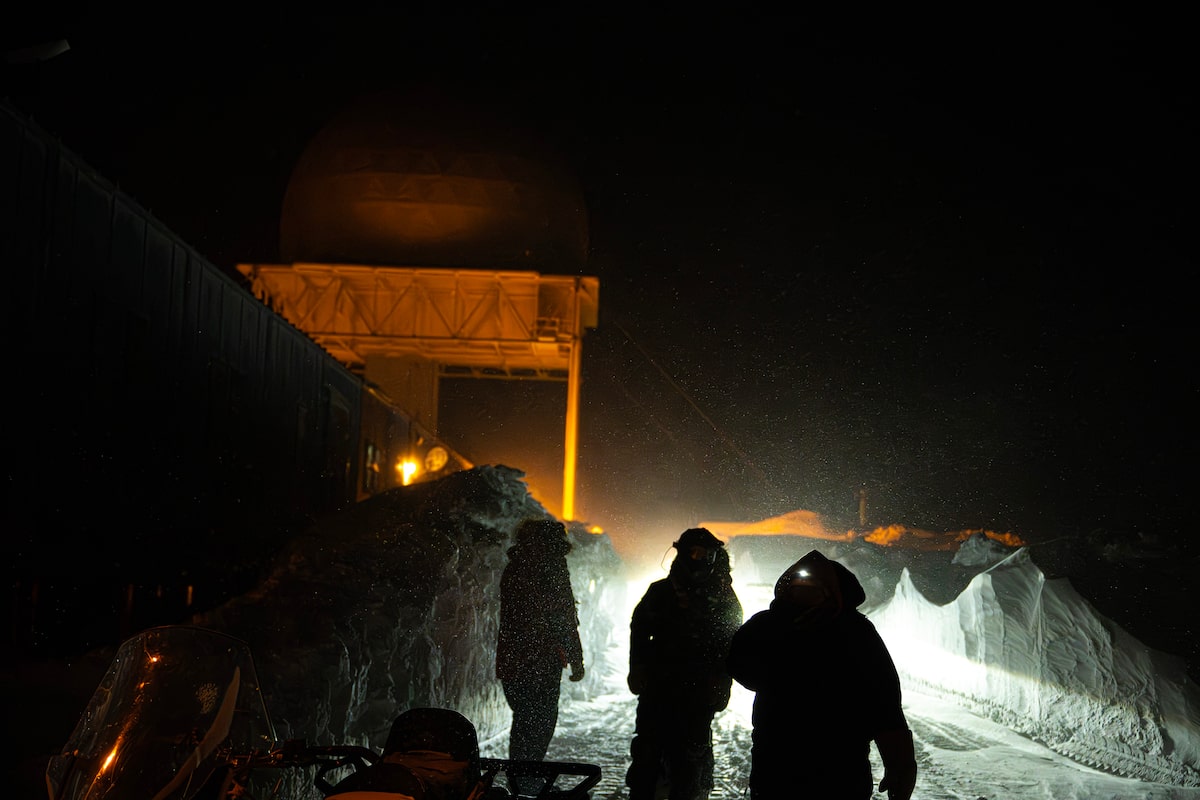
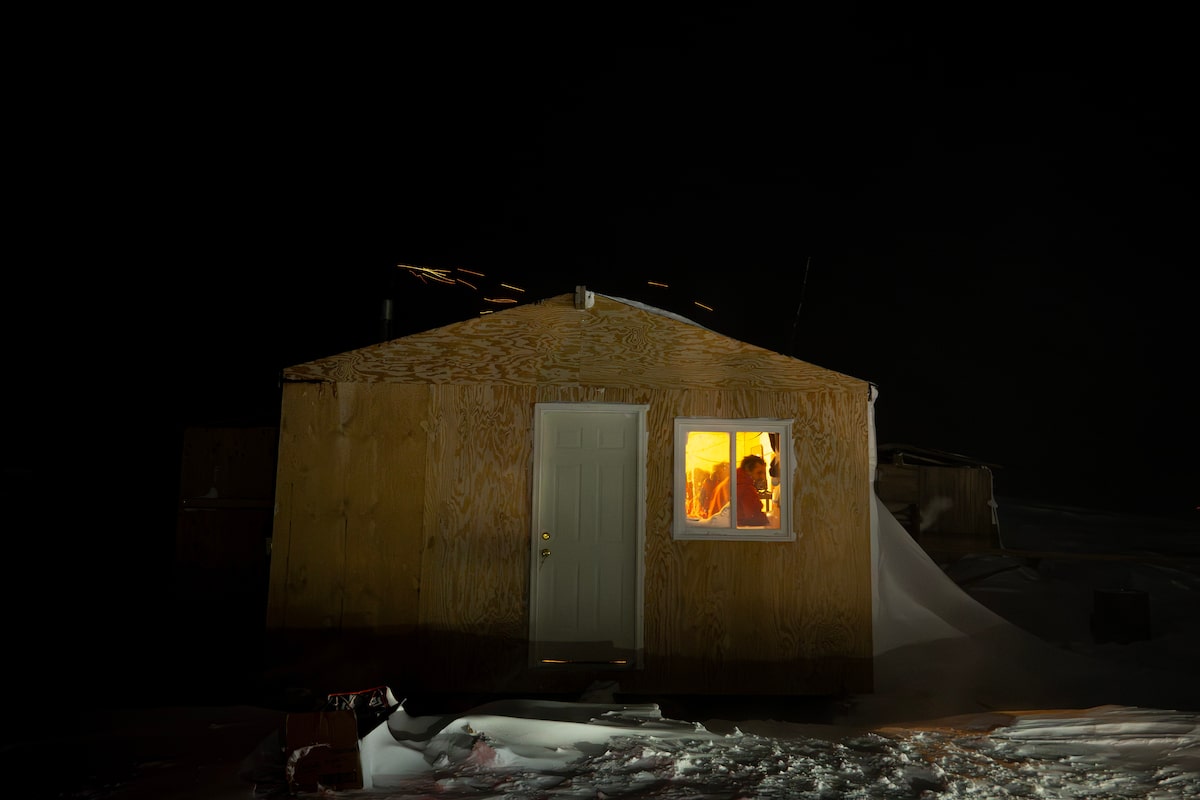
Near midnight, they saw the first lights since Old Crow.
Cabins emerged from the black, followed by smoke and embers rising from chimneys. Waiting outside were cheering members of the Inuvik Ranger Patrol. Inside was caribou stew. Heat. Dry clothes. Beds.
Most of the patrol was already asleep when the fiercest blizzard of the journey tore through. They had completed roughly 1,000 kilometres, but it was only the beginning. Ahead lay more than a month of travel. More sea ice, blizzards, mechanical failures, shifting weather, logistical scarcity and grinding fatigue. Through it all the Rangers would continue, community by community, coast by coast, until reaching Churchill on April 12.
But for now, for once, they had beaten the storm.
Editor’s note: This article has been updated to correct the spelling of the Griffon helicopter.
