The moon hung low over the final ridge of the British Mountains of the Northern Yukon. Slowly, the horizon brightened.
Purple gave way to blue, then pale morning light until the sun finally broke free, casting warmth across a landscape few people will ever see.
As a journalist and photographer, my duty is to document. But the sunrise that followed will live only in the memory of the few who were there.

With the moon behind them at left, the Rangers watch the sun rise on Feb. 27. Their destination to the east is Shingle Point, a radar base whose fishing village will give them a warm place to stay.
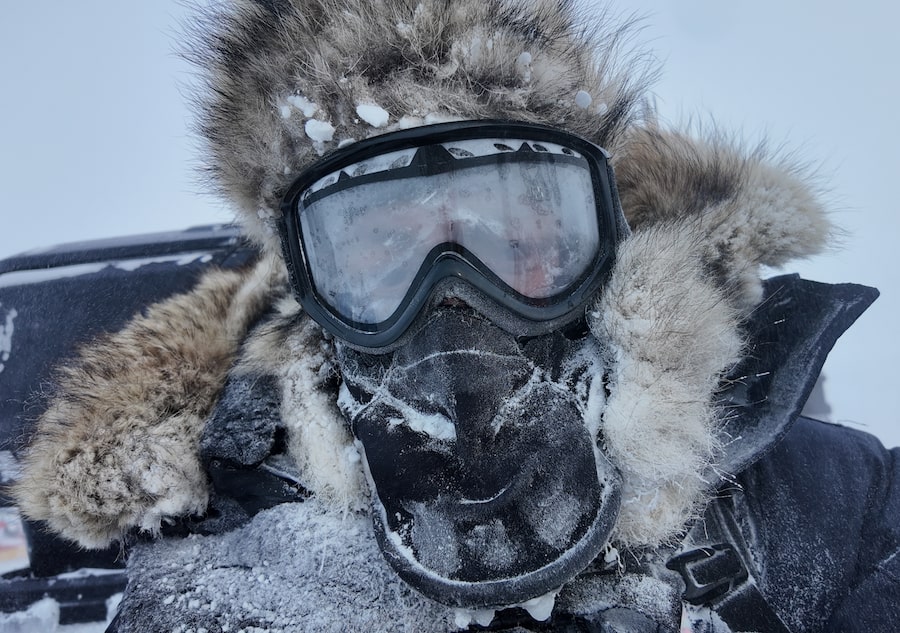
After two weeks in the field, all three of my cameras had finally frozen solid. Every battery dead. Every lens sealed in frost. Every camera body coated in ice.
The final image I managed was of Sergeant Brad Brennae, who had asked for a photo that morning to send to his mother. There are no more photographs of that day, and I am okay with that. For once, I could simply be present in the North rather than recording it.

A RCAF Search and Rescue CH-146 Griffon evacuates Sergeant Brad Brennae on Feb. 27.Gavin John/The Globe and Mail
I was raised in southern Alberta and live in Calgary. I am far from a Northerner. My own Indigenous background gave me little automatic understanding of the Gwich’in, Dene and Inuit peoples whose lives are tied to the land.
What first drew me north was not romance or adventure, but strategy. I am convinced that Canada’s future security will be shaped there: sovereignty, infrastructure, defence, climate change and great-power rivalry. Yet there is little field-based journalism on the people who operate at the top of the country. That realization led me to report on the Canadian Rangers, work that requires me to travel north often and at length.
It also shaped my academic path. I believe that reporting on defence and security requires context, history and analytical rigour. I returned to university in 2016 to complete a degree in international relations and later entered a graduate program.
I now study at the University of Calgary’s Centre for Military, Security and Strategic Studies, where my research focuses on Arctic security and the modernization of the Canadian Armed Forces.
Without academics, anecdotes can distort reality. Without lived experience, academic analysis lacks humanity. The best journalism requires both. Frostbite and footnotes.
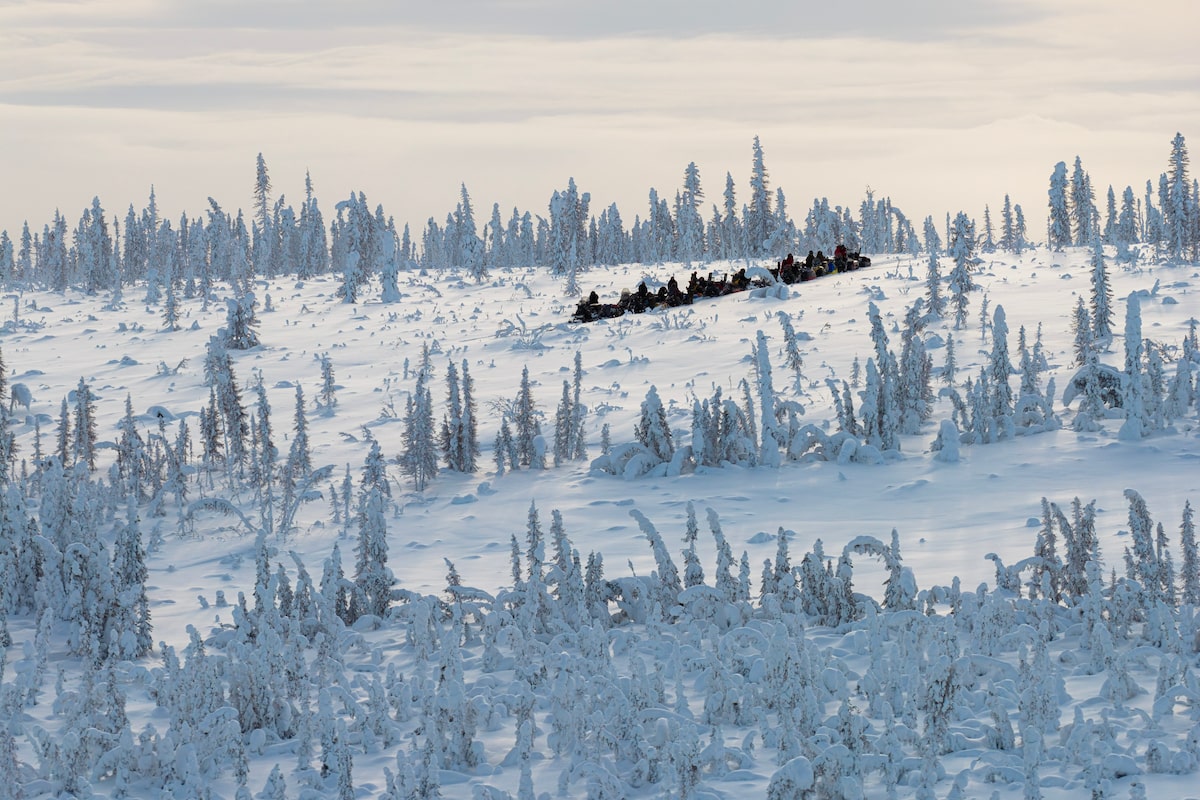
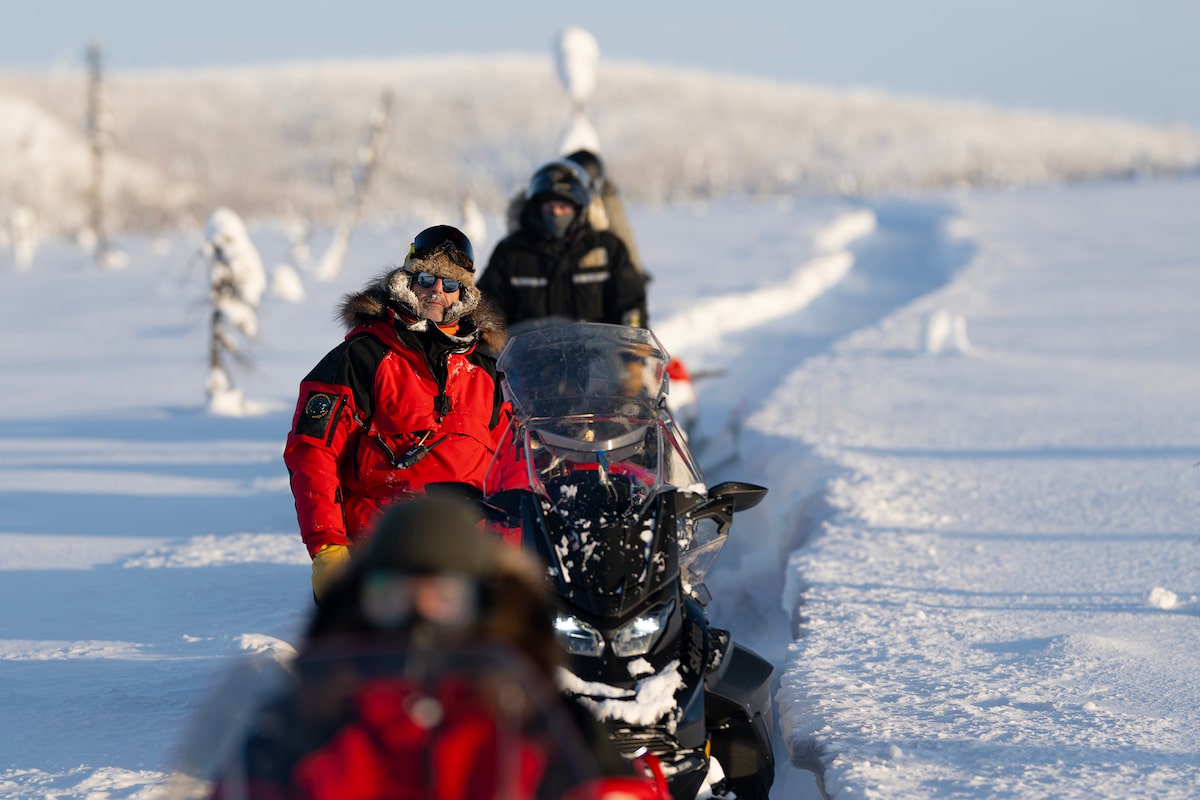
To embed with the military as a civilian journalist is to exist in a liminal space, neither fully independent nor participant.
Soldiers are understandably wary of journalists, whose visits are often brief and conclusions often reductionist.
Boundaries must be clear from the start. I am not there to inherently promote the military, nor to condemn it. My job is to observe, question, challenge assumptions and tell the truth as accurately as I can.
I am not a soldier, nor do I claim to be one. Yet on patrols, the expectations are often the same as for everyone else: keep up, carry your weight, endure the conditions, do not become a burden.
If the patrol rises at 4, I rise at 4. If it moves in darkness, I move in darkness. If it suffers, I suffer, all while trying my best to do my job.
Photo opportunities can appear and vanish in seconds because the patrol is moving and someone reminds you bluntly that photography time is over.


‘I was in pretty rough shape’ when the blizzard hit, recalls Gavin John, who took this selfie inside the first tent the Rangers set up. ‘I figured I’d get a shot for posterity’s sake to remind me of the worst situation I’ve ever found myself in.’
Long-term fieldwork also comes with a physical and mental price. Deep in the mountains, we drove into a blizzard so complete that my world was white. My snowmobile struck a hardened drift and rolled, throwing me clear. When I got to my feet, there was no sign of a person or machine. I righted the sled alone, then pushed forward into the storm.
When I finally reached a small group of Rangers, I was overwhelmed. I sat in the snow beside my machine, hiding from the wind in the meaningless cover it cast. Fighting through the gale, Master Warrant Officer Kevin Lincez came over and sat beside me. “You okay, Gavin?”
“I’m spinning, Kev,” I told him, using a field term for confusion and disorientation. Then I admitted the truth. “I’m afraid.”
He put a hand on my shoulder. “You’re with the best people on the planet,” he said. “We’re not going to let anything happen to you. You’re doing great. Drink some water. Eat something. Move when you’re ready.” Then he stood and walked back into the storm to help the others.
Canada’s national security will not be understood from southern offices alone. It requires eyes on the ground, relationships built over time and a willingness to endure discomfort to see clearly what it takes to defend this country. Sometimes that clarity takes the form of a camera-free sunrise over a mountain range. Sometimes it’s a hand on your shoulder in a storm.

Gavin John returned safely from his Arctic journey. Learn more in his story for The Globe about what happened when the Rangers made it through the storm.
Northern sights: More from The Globe and Mail
The Decibel podcast
For Inuit, Arctic sovereignty is more than just a military exercise: It’s a question of how they’ll feed themselves and supply their homes in a warming world. Journalist Jenn Thornhill Verma took The Decibel to Nunatsiavut, in northeastern Labrador, to see how elders are adapting. Subscribe for more episodes.
Arctic alliances
Canada, Nordic countries can work together to defend the Arctic, Finnish President says
Canada signs agreement to work with Denmark on Arctic security
Japan may join Canadian NANOOK exercises as part of new strategic partnership