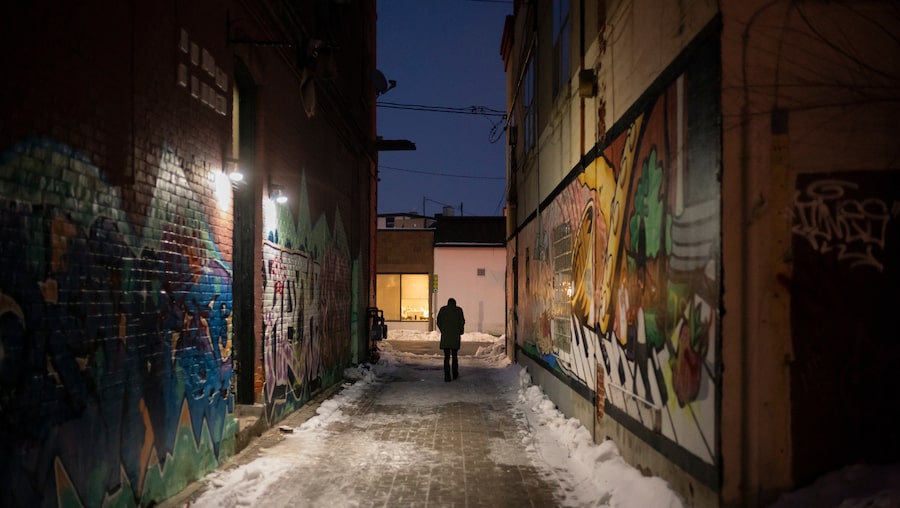
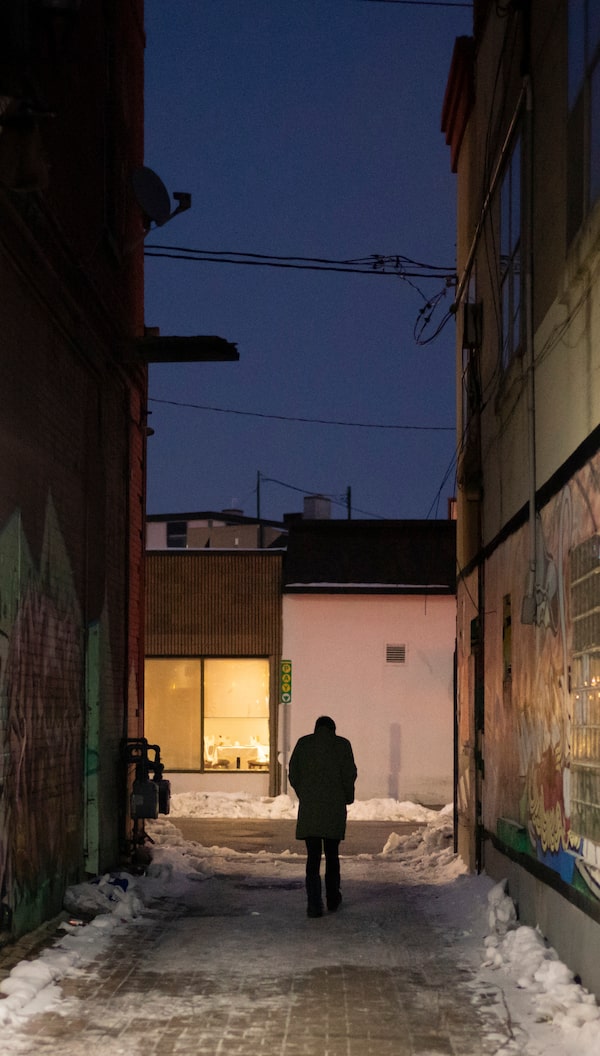
In early November, workers in pickup trucks arrived at Milligan’s Pond, a wooded oasis in Barrie, Ont., an hour north of Toronto. Their orders were clear.
After a double murder nearby left two men from a local homeless encampment dead and another charged with the crime, the city had declared a state of emergency and started clearing its biggest encampments. The last one left was at Milligan’s Pond.
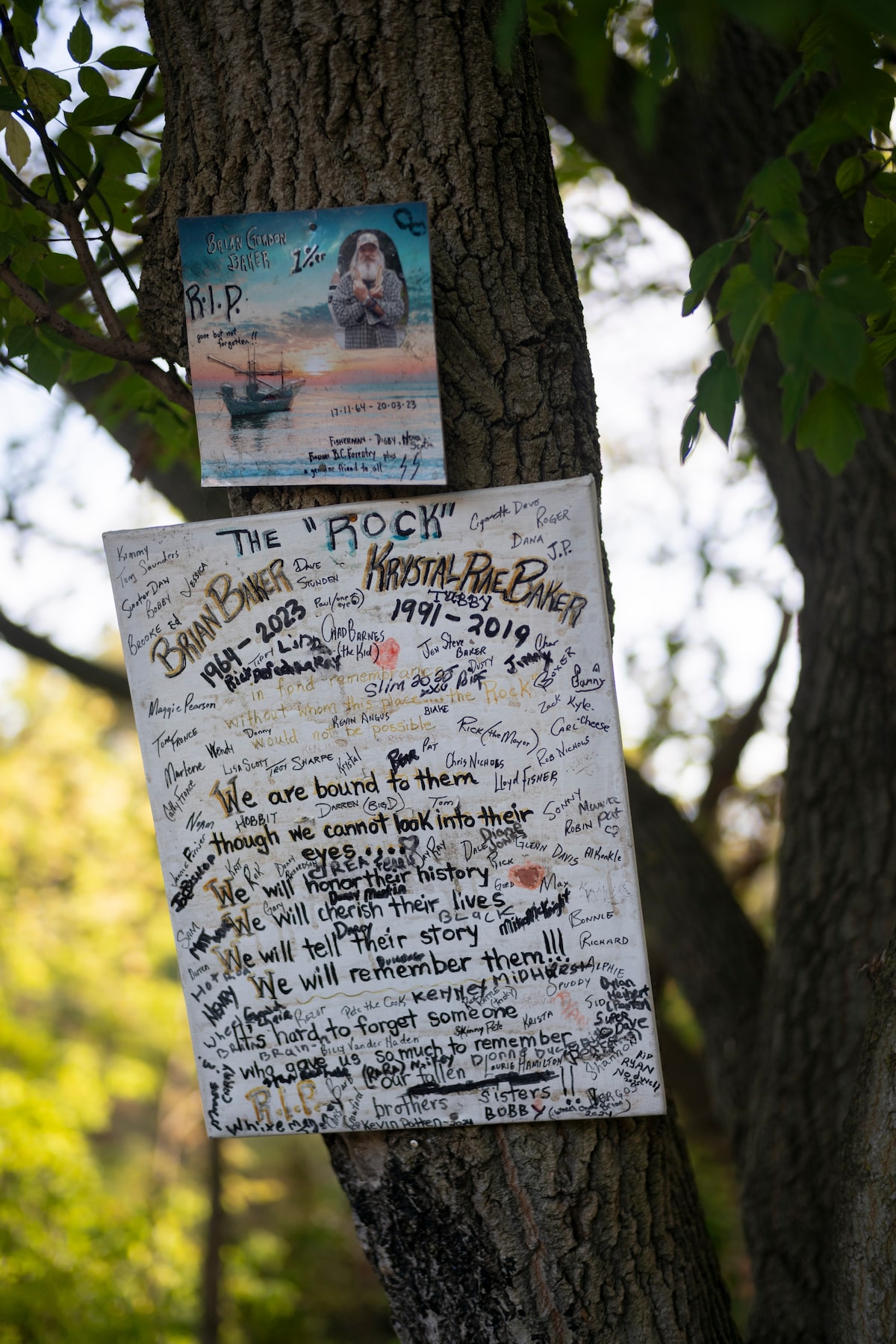
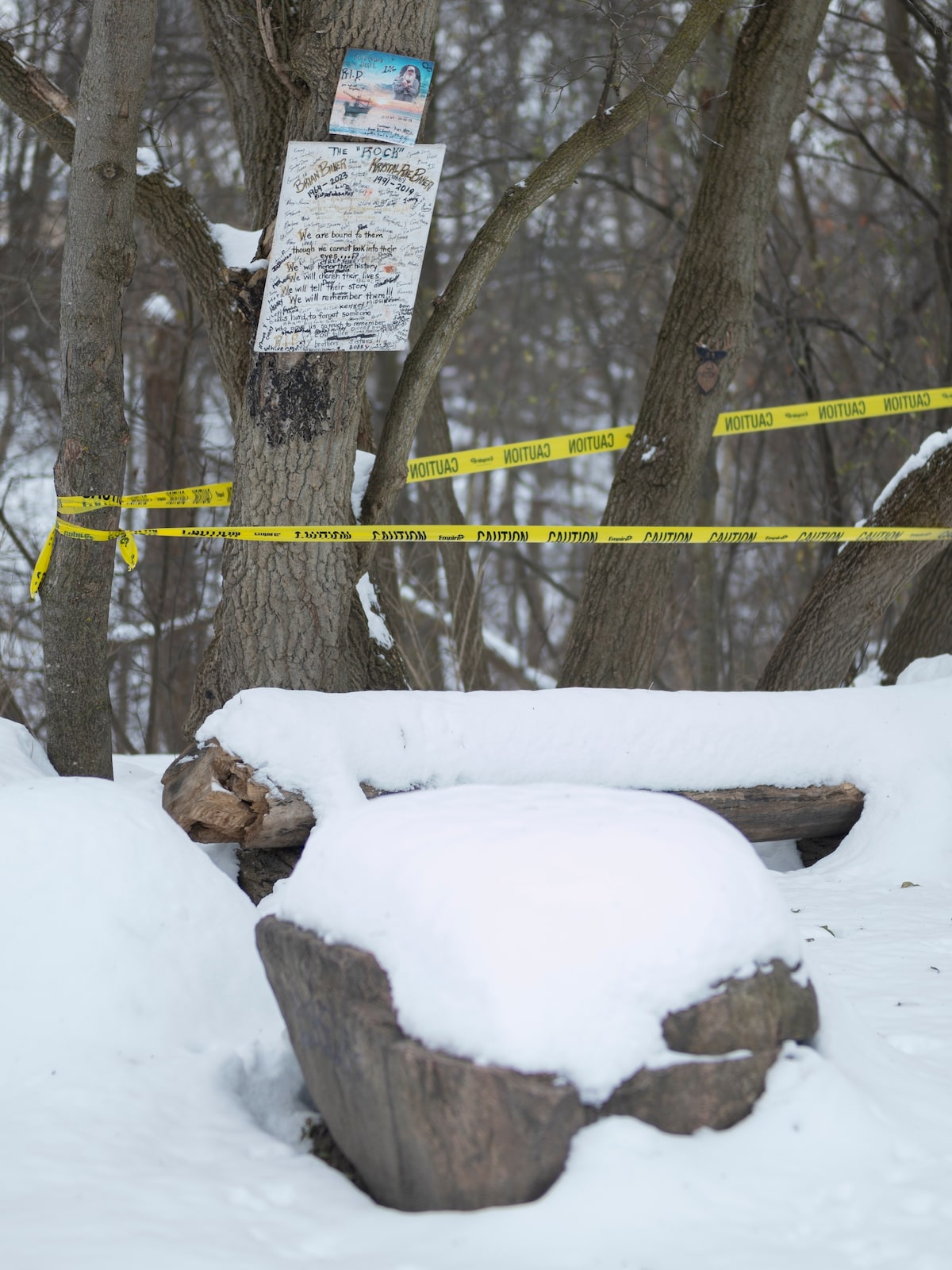
The city issued trespass notices to the men and women living there, and then the workers swept up everything: tents, sleeping bags, shopping carts, propane tanks. But if you looked closely, you could still see the remnants of a homemade memorial to those who have died on Barrie’s streets, many of them from drug overdoses. Locals call it The Rock. Its story is the story of the city’s struggle, written on stone.

Tributes at 'The Rock' in Barrie, still visible in October, were covered with snow on a more recent visit.

Apart from remnants of a makeshift memorial, Milligan's Pond today has little trace of the encampment that was once here.
When I first set eyes on The Rock in 2018, it consisted of a single boulder marked with names: Christina, Matty, Rocky, Jason, Gary. That boulder filled up, so people started writing names on a second one. That filled up as well. Someone nailed a whiteboard to a tree. That, too, was soon covered with names: Kimmy, Tubby, Rick, Scooter Dan. As the opioid crisis worsened, The Rock grew into a sprawling shrine with plastic flowers and hand-painted hearts.
The opioid crisis – if something that has been happening for so long should even be called that – has been with us for close to a decade now. More than 53,000 people have lost their lives since overdose numbers erupted on Canada’s West Coast in 2016, more than the number of Canadians who died fighting in the Second World War, and nearly as many as have died from COVID-19. Their names are marked on memorials across the country, from a mural in a Vancouver alleyway to rows of handmade crosses in Sudbury.

Someone has stowed a sleeping bag and belongings in a doorway in downtown Barrie. Police have cleared away the more conspicuous encampments, but homelessness has not gone away.
Governments have spent billions fighting back. Communities from Tofino to Regina to St. John’s have rethought their policing methods, trained their paramedics to reverse overdoses, handed out sterile needles and opened addiction clinics. Barrie has done all of that and more.
Yet the crisis grinds on, cutting lives short, destroying families and turning city centres such as Barrie’s into places that many residents fear to visit. About 50 people died of overdoses in Barrie last year alone, a staggering figure for a pleasant lakeside city that had only seven traffic fatalities. As recently as Oct. 3, the county health unit issued an alert after three people were killed by toxic drugs in the course of two days.
This fall, I spent several weeks visiting Barrie, returning to the places I had visited on my first trip in 2018 and asking everyone from health officials to people living on the streets why the community is still struggling after all these years.
My visits were part of The Globe and Mail’s Poisoned series, a continuing investigation into what opioid drugs have done to this country. The articles have looked at everything from the toll on construction workers to the everyday chaos it has caused on one city block in Victoria.
What I found was a small Canadian city facing problems far beyond its ability to cope.


‘It was dramatic and it was scary’
Barrie sits at the head of Kempenfelt Bay, an arm of Lake Simcoe. It is a lovely spot with a deep history. Indigenous peoples used a nearby portage route for centuries. The colonial settlement that took root there in the early 19th century was named after Robert Barrie, a leading British naval commander.
Today, it is a community of 166,000 linked with Greater Toronto by a busy multilane highway, the 400. Thousands commute between the cities every day by car or rail. Residents with good incomes can pop down to Toronto for a show or a ball game, go skiing in Collingwood or get away to a lake in Muskoka. Condominium towers for retirees and young couples have sprouted along its nicely groomed waterfront.
The opioid crisis struck Barrie like one of the famous winter storms that come in from Georgian Bay and bury the city in snow.
When I interviewed him in his City Hall office seven years ago, the mayor at the time, Jeff Lehman, told me that the crisis “hit in a hurry and it hit late,” catching the city shockingly unprepared.
People were collapsing in the bathrooms of downtown bars after using a tiny quantity of drugs, usually containing fentanyl, the potent synthetic opioid. The young people who worked as servers would find them.
“It was dramatic and it was scary,” Mr. Lehman recalled when I caught up with him again earlier this fall.
More and more victims started turning up in Barrie’s main hospital, the Royal Victoria, some of them already “VSA” – vital signs absent.
A local paramedic, Sean Sharp, remembers treating his first: a man lying on the landing of a stairwell, drug-use gear by his side.
Mr. Sharp’s training told him he was seeing an overdose. The man had small, “pinpoint” pupils and blue lips. Mr. Sharp revived him with a shot of the anti-overdose medicine naloxone – the first of many rescues he would perform in the coming years.
Back then, when naloxone was still new, he had to call a doctor to get approval to administer it.
Before long, medics found themselves racing from overdose to overdose. On a single night in 2016, four men and a woman collapsed in various parts of Barrie’s downtown after going to a party and using cocaine that police suspected was laced with fentanyl.
It didn’t help that, until a couple of years ago, prisoners from the big jail up the road at Penetanguishene would often be dropped off in Barrie when they were released. Many would fall into the same kinds of trouble that had landed them behind bars in the first place, sometimes ending up in hospital or even dead from sudden overdoses.
In 2005, the fatality rate from opioids in the Simcoe Muskoka region, which includes Barrie, was 3.1 per 100,000. By 2018, that had risen to 13.3. In Barrie itself, it was 22.9 for 2017-18, the highest of any sizable city in Ontario except for Thunder Bay. In downtown Barrie, the rate of emergency-department visits for overdoses was 10 times the provincial figure.
Unless they came in dramatic bunches, authorities did not announce overdose deaths, and the local media did not report them. If there was a death notice, it would often mask the cause.
So the denizens of Barrie’s streets started daubing the names of the departed on the boulder in Milligan’s Pond, a secluded place a few blocks from downtown where many of them came to camp or use drugs away from prying eyes. If the person had been a peewee athlete, they would leave one of his old hockey trophies; if she had loved horses, a toy pony. “Our brothers and sisters … always in our hearts,” someone wrote, edging the letters in white to make them stand out.
Exposed to the rain and snow, the names would fade over time, but there were always more to replace them. Krystal-Rae Baker died in 2019 from a heart infection caused by injecting drugs. She was 27. Her name joined the others on The Rock.
Her father, Brian Baker, brought a Christmas tree from home – Krystal’s last – and stood it in the growing shrine amid the woods. A well-known figure on Barrie’s streets with long, greying hair and a shaggy beard, he became a kind of custodian for the memorial, picking up trash and asking people to treat it with respect.

Krystal-Rae Baker was 27 when she died of a drug-related heart infection.
When I first started writing about fentanyl’s impact on the Barrie area, the evidence of the deepening crisis was not hard to find. I talked to one guy who had already seen half a dozen friends succumb to drugs, including his best friend.
A local woman told me how she had saved her severely addicted son many times, using chest compressions or naloxone when he collapsed in their home, recording each rescue on her wall calendar.
Another bereaved mother, Evelyn Pollock, told me about her son Daniel. He had seemed to be back on track after years of living on the streets. His parents helped him settle into a tiny mobile home, with a small garden out front that he took pride in tending. A couple of years later, he was found lying on his bathroom floor one morning, dead from a dose of fentanyl at the age of 43.
The loss turned Ms. Pollock into an activist. She went to Barrie City Council to plead for help, handing each of the councillors a small battery-powered light and asking them to push the button. The light went on, then just as quickly went off again. That, she said, is how long it takes for fentanyl to snuff out a life.

Evelyn Pollock began pressing for action on fentanyl when it killed her son, Daniel.
In late 2018, the local MP, Alex Nuttall, a Conservative, released a 49-page report on the issue and pleaded for action during a special debate in the House of Commons.
He was shocked at what was happening to his hometown. Six-foot-five and built like a linebacker, Mr. Nuttall grew up poor in a Barrie housing project.
A guy he skateboarded with when they were kids would end up losing two brothers to drugs. The guy’s mother died of hypothermia on Barrie’s streets.
With deaths continuing to mount, Barrie began to organize a response. It included handing out thousands of naloxone kits and opening a special clinic so that patients who came in with overdoses could get on safe addiction medicines right away.
“Let’s not let this become our normal,” the region’s associate medical officer of health, Lisa Simon, said when I talked to her then.
But it did. In fact, it got worse.

The pandemic effect
The arrival of COVID-19 left many drug users cut off from their usual supports as clinics, shelters and drop-in centres closed their doors or limited one-on-one contact. The drug supply changed because of border closings that disrupted smuggling routes and left dealers to cook up their concoctions.
The overdose rate shot up. As with many parts of the country, Barrie found itself facing both a pandemic and a drug epidemic at the same time – a crisis within a crisis.
The Simcoe-Muskoka region as a whole had 182 overdose deaths in the peak pandemic year of 2021. That was more than twice the number that it saw in 2018 and six times the number it had as recently as 2011.
A progress report on the regional opioid strategy said dryly that, despite “very important progress” in implementing it, “a reduction in the rate of opioid-related deaths has not occurred.”
With shelters closed to prevent the spread of COVID-19, officials moved many shelter users into hotels, which became Petri dishes for drug overdoses. A local churchman, Larry Leger, recalls that volunteers at the shelter hotels had to knock on room doors every couple of hours just “to make sure that people were not dead.”

Ryan Nayler, killed by tainted drugs at age 34, has his name inscribed on The Rock in Barrie.Supplied
The number of names on The Rock kept growing. Christine Nayler used a marker to write her son’s name there. Ryan Nayler was a harp, violin and Irish-flute player with what his mother called “the heart of a poet.” An ethical vegan, he cared so much about animals that when the University of Victoria threatened to stage a cull after its campus was overrun by rabbits, he organized a campaign to stop it.
But he suffered from bipolar disorder and became reliant on drugs such as crack cocaine and crystal methamphetamine. The pandemic meant he could no longer go to hang out with others at the local drop-in, library or mental-health centre. Ms. Nayler says he became more and more isolated. Her son died on Nov. 29, 2020, at the age of 34.
It was not just the people living on the streets who were dying. Mr. Nayler was not homeless. Nor was Darci-Lynn Beers, a bubbly 24-year-old with a job at a pharmacy and a three-year-old son. A friend came by with what she thought was cocaine one night, local media reports said. A blood test after her death revealed the presence of U-47700, a designer opioid sometimes known as “pink” or “pinky.”
In time, drugs became the leading cause of early deaths in the Simcoe region, accounting for as many as heart disease and lung cancer combined. Unlike those who died of COVID-19, the bulk were people with many years of life before them. More than half were between the ages of 20 and 44.

The door is boarded at this property in Barrie, where real estate is increasingly hard for some to afford.
As the pandemic faded, a third wave washed over the community: a wave of homelessness.
The rising cost of housing and groceries pushed many people on the city’s margins out of their homes. Barrie house prices nearly doubled. Rents soared. Some people started living in their cars, parking them for the night at Walmart or on the city’s waterfront.
An in-depth report by the Association of Municipalities of Ontario found that 81,000 people were homeless in 2024, a rise of 25 per cent in just two years. Around Ontario, as in other parts of Canada, the tents that had sprung up in towns and cities during COVID times became fixtures in parks, ravines and vacant lots.
In Barrie’s Simcoe County, a survey last year discovered that the number of people living in “unsheltered locations” such as encampments had risen more than tenfold in two years. They counted 325 individuals in all, up from just 31 in 2022. Though the survey cautioned that better canvassing may have accounted for some of the increase, the dramatic figure underlined what people were seeing on the streets.
Many of those without a reliable roof over their head were suffering from mental illness and addictions as well as homelessness. Instead of one crisis, Barrie now faced three, each feeding on the other.

‘We lost, quite frankly, the streets’
It was not as if Barrie was ignoring the problem. Clinics, drop-in centres and outreach workers handed out vast quantities of sanitary drug-use equipment such as tourniquets, filters and crack pipes. In 2023 alone, regional authorities distributed close to a million needles, an effort to stem the spread of infections and diseases that come from injecting drugs with dirty ones.
The police set up a special squad to patrol downtown Barrie on bikes and on foot, focusing on building trust with people on the street instead of addressing them for minor crimes. One officer took time off to help a woman reconnect with her family. Another started a clothing drive.
Private groups, too, stepped up their efforts. One housing outfit called Redwood, supported by grants and donations, opened dozens of units for needy people, including one for men who had done jail time.
In spite of it all, Barrie’s problems kept growing. Several big, chaotic and highly visible encampments became established right in the heart of the city. Fires often broke out when the tent dwellers used propane heaters and barbecues. Local merchants complained their stores were being vandalized. Some fled the downtown or closed their doors.
Open drug use and public urination became common. Officials closed the fountain and pond outside City Hall this September because of vandalism and contaminated water. Staff reported that people were using it as a toilet.

Police cars park outside the Busby Centre, which supports people struggling with homelessness.
As a regional service hub with an array of food banks, soup kitchens, shelters and clinics, all within a few blocks of each other, Barrie had become a magnet for people suffering from addictions and related problems.
On Mulcaster Street, people pitched their tents right next to the local courthouse. This summer, police making a drug arrest searched a tent and found cash, drugs and weapons, including knives, crossbows, two axes and a flare gun.
Passersby witnessed sad, often bizarre scenes, such as a man pulling a large, clear plastic bag over his head and smoking his drugs inside, “hotboxing” as he stood.
Local paramedics complained about being punched, kicked and threatened while responding to calls. To avoid being spit on, they started carrying spit hoods, which they can place over the heads of those they treat to block flying saliva.
A 2024 survey of the public found that 65 per cent of respondents felt unsafe downtown during the day and 94 per cent at night.
Under pressure to act, the city considered bringing in a bylaw banning charitable groups from handing out food and other supplies on city property. Officials had complained that the handouts were creating unruly scenes in a waterfront park. They withdrew the measure after an outcry.
Then came the double murder. Police investigating a missing persons case announced this summer that they had discovered the dismembered remains of two men who had been living in a Barrie encampment. Some of the remains were found in Huntsville, 125 kilometres to the north.
They arrested and charged Robert Ladouceur, 52, who had lived in the same camp. The victims were William (Blake) Robinson, 45, and David (Kyle) Cheesequay, 41.
Friends remembered Mr. Cheesequay as a skilled skateboarder who had the nickname “Cheeze” written on his board. A local news report said he had his own catchphrase: “It ain’t easy being cheesy.” Mr. Robinson was a quiet, six-foot-one former high-school basketball player who liked riding motorcycles.
Their names, too, were inscribed on The Rock.

By October, months after the killings at a homeless encampment in Barrie, there were still tributes to the two dead men on the fence around the site.
The crime shocked a community that thought it had seen everything. It also gave Alex Nuttall, the former MP, who had been elected mayor in 2022, the reason he needed to act against the encampments. On Sept. 9, he announced the state of emergency, giving the city special powers under provincial emergency-management law.
“Barrie residents have had enough,” he said in a statement. “Our city will not allow lawlessness to take over our community.”
Local activists called the move cruel and punitive. When city council met to approve the emergency, they brandished signs saying “kindness is not a crime.” Many think that the city should have long ago set up a supervised consumption site where people with addictions can use their drugs in safety.
Mr. Nuttall would not budge. Since September, Barrie has closed down – it prefers to say “addressed” – all of its major encampments. In one of them, workers found and carted away 409 tons of garbage.
The mayor invited Ontario Premier Doug Ford to town to see what Barrie was up against. Mr. Ford later called Mr. Nuttall an “absolute champion” for acting.
Mr. Nuttall himself says that the move was a necessary course correction. “The point that we’ve gotten to in society is that we feel like it’s people’s right to get high,” he told me. Instead of focusing on helping those suffering from addictions get better, authorities helped them use drugs – in effect, “giving up on people.” The result, he said, was that “we lost, quite frankly, the streets.”

Angela Vos and Ash Pineau, front row, came to City Hall on Oct. 1 to speak out against the city's change in policy on homelessness. Barrie's state of emergency, then a few weeks old, is still in force today.

Mayor Alex Nuttall defends his efforts to combat the city's problems, but does not believe those problems are over.
Along with cracking down on the encampments, Barrie and its partners are investing in solutions.
Simcoe County broke ground this summer on an affordable housing project that will include 220 units in two towers.
The Royal Victoria hospital just opened a new live-in addiction-treatment centre that offers visitors 21 days of help. That comes on top of its 18-bed withdrawal management program that helps patients get through the agonies they suffer when they stop using street drugs.
The provincial government is funding a HART Hub, where visitors can get help finding housing, treatment and care. HART stands for Homelessness and Addiction Recovery Treatment. Queen’s Park promised to establish a string of them around Ontario when it decided to ban supervised drug-consumption sites near schools and daycares. The first Hub to open was in Barrie.
Another local group, Barrie Cares, is opening a new base for services aimed at helping the homeless. It includes a warming centre, a kitchen, urgent-care rooms and a 40-bed modular housing unit designed to house the homeless until they find something more settled.
Over time, the city hopes things will turn around.
Mr. Nuttall said in mid-November that the number of people living in tents had been more than halved since the emergency was declared, to around 50, and that 68 people had moved to safe indoor spaces.
There are other promising signs. The annual number of drug deaths has dropped sharply since the pandemic surge, a North America-wide trend that authorities do not fully understand. Ontario’s Chief Coroner reports that in the three months from August to October this year, deaths in the province were down 31 per cent from the same period last year. The number who died – 621 – is still 47 per cent higher than it was in 2019, but at least the line on the graph is going in the right direction.
In the Simcoe Muskoka health unit, the number of emergency-department visits for “opioid toxicity” – overdoses – was down to 240 in the first half of this year, compared with 351 in the first half of 2024. Paramedics say that naloxone is so easy to get now that they often arrive at 911 calls to find that a friend has already given a shot of the life-saving drug to the victim, who may be up or even walking away when they get there.

Naloxone can be a lifesaver for those going through drug overdoses, and it is easier to obtain around Barrie these days.
But no one thinks the city is out of the woods yet. That includes the mayor.
He calls the triple threat of addiction, mental illness and homelessness “the No. 1 issue facing Canadian society today.”
The latest report showed about 600 people in Barrie were still homeless, down by about 100 from the number before the emergency, but a big number for a city of Barrie’s size.
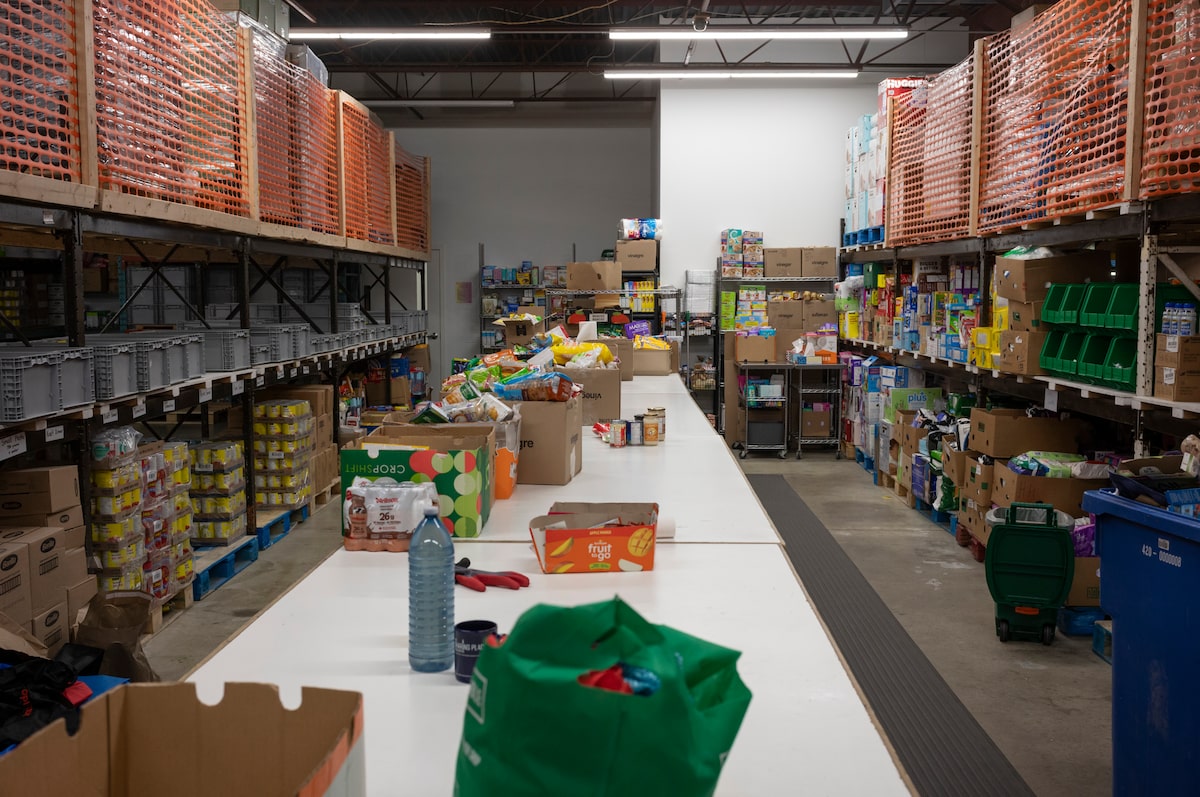
The food banks keep handing out more and more groceries. The shelters keep adding beds, then filling up.
Health officials say that the face of homelessness and addiction is getting younger. Typical sufferers used to be 45 years old or so. Now they are in their low- to mid-30s.
Mortality rates for children and teens in the region have fallen by 14 per cent since the early 2000s, and for people aged 65 to 74 by 19 per cent, but the death rate for young adults actually grew by 29 per cent. The main culprit is fentanyl.
Victims of all ages continue to stream into local emergency departments. A veteran ED doctor just up the road from Barrie in Orillia, a sister community, told me that, when he came into work on the morning we spoke, about a dozen police officers and security guards were trying to deal with two different violent psychiatric patients. The doctor, Don Sangster, said he saw no end in sight. “The snowball is growing bigger and bigger as it rolls downhill.”
A paramedic with 16 years on the job in Barrie, Amanda Root, says she and her colleagues find themselves reviving the same people over and over. Some call 911 just so they can get a ride to the hospital and stay warm for a while.
Many have deep-seated addictions or mental illnesses, but aren’t getting help. It seems futile to her – like treating a patient’s fever but not the infection that caused it.

Lori Douglas, Krystal-Rae Baker's mother, had been homeless for two years when The Globe last met her in Barrie this fall.
‘Where are we supposed to go?’
Barrie’s downtown has been gentrifying over the past decade or so. Coffee shops offering matcha lattes and fresh croissants have sprung up. A lunch place serves an açaí bowl called the Hyper Berry Barrie.
But you don’t have to look far to see the victims of Barrie’s struggle, bearing the telltale marks of the lives they lead. Missing teeth. Scars from infected injection points. Burned or discoloured tongues from sucking on hot drug pipes.
One November afternoon, a man stood blocking traffic in the curb lane of a busy main street, bent over double and swaying back and forth. A city bus honked at him. So did a well-dressed woman in a high-end SUV. He told me he was the father of eight children and lived in the shelter up the street with their mother.
When I first came to Barrie this fall, Milligan’s Pond was still full of people and their belongings. A few steps from The Rock, I found Lori Douglas sitting in a cluttered tent. She kept the tent warm by burning hand sanitizer in a metal bowl.
It was her daughter, Krystal-Rae Baker, whose name went on the memorial in 2019, and her husband, Brian Baker, who tended it. He died of throat cancer in 2023, and his own name went up on The Rock next to Krystal’s.
Ms. Douglas showed me a picture of the young woman. It happened to be her daughter’s birthday – Oct. 1 – so she was feeling the loss more than usual. She told me she was dreading getting kicked out of Milligan’s, where she had lived for the past month.
“It’s terrible, because where are we supposed to go?”
The next time I visited, there was no trace of her or of her tent. Everything had been flattened. When I asked around, no one could say where she had gone, though many encampment dwellers have been placed in motels or shelters.
But you could still see the names of her husband and daughter on the whiteboard above the original boulder that gave The Rock its name.
An inscription read: “Though we cannot look into their eyes … we will honour their history, we will cherish their lives, we will tell their stories, we will remember them!!!”
Poisoned: More from The Globe and Mail
The Decibel podcast
Opioids and homelessness do not always go hand in hand: Fatal overdoses disproportionately kill tradespeople with full-time jobs. To their families, death is an immeasurable loss, but to their employers, the costs are real and quantifiable. Reporter Jason Kirby spoke with The Decibel about what he learned from workers, unions and health researchers. Subscribe for more episodes.
More from this series
Have Victoria’s millions made a difference on Pandora Avenue? The Globe returns to check
How ‘tranq’ became a deadly, and increasingly common, addition to Canada’s illicit drug supply
Why are fentanyl deaths in Europe a fraction of those in North America?