
Kevin Simmonds owns The Red Herring Pub in Saint Andrew, N.B., where he and front-end manager Shawn Christie are at work on a Sunday morning. Each summer, their community fills up with tourists from the United States, but the trade war has sown doubt about who will turn up this year.
The Globe is visiting communities across the country to hear from Canadians about the issues affecting their lives, their futures and their votes in this federal election.
There’s a rule that those who work behind the bar at the Red Herring all know. The proprietor, 56-year-old Kevin Simmonds – best known for his bellowing laugh and penchant for suspenders – makes it clear to staff at his pub in the tiny seaside town of Saint Andrews, N.B.: “We don’t talk about politics. And we don’t talk about religion.”
The pub rule is an important one, given the wide range – and diverse views – of customers who pop in for a pint or bowl of fish chowder. For generations, Saint Andrews, often referred to as “St. Andrews by-the-Sea,” has earned its reputation as a playground for tourists. Some 150,000 flock here every summer from all corners of the country, and from south of the border.

The Red Herring's collection of license plates includes specimens from across North America.
About a quarter of those tourists have typically come from the United States. In 2017, USA Today declared Saint Andrews “Canada’s Best Destination.” So, with just weeks to go before the start of another summer season here – and against the backdrop of escalating tensions between Canada and the U.S. – the obvious questions on everyone’s minds here are: Will the Americans come? And if not, what will this summer look like?
On a recent weekend in Saint Andrews, it was clear that many in town were ignoring Mr. Simmonds’s rule. Whether it was around the table at the diner, in line at the clam shack or, yes, even at the pub, the subject of politics just kept bubbling up. And it was clear from those conversations that locals have complicated feelings about their position – and complicated feelings about relying on American dollars at this given moment.
The subject of the Canadian election came up as well, though mostly in the context of what the results might mean for Canada-U.S. relations. For many of the approximately 3,000 year-round residents here, their livelihoods – at least up until now – have depended at least in part on Americans. Tourism is their most important industry, whether it’s working at the Algonquin resort – the historic red-and-white hotel that looms over the town like the backdrop of a Wes Anderson film – or in one of the dozens of cottages or inns with wind-beaten shingles and crooked shutters.

The Algonquin resort and golf course have been a magnet for tourism since the late 19th century. Its VIP guests have included Franklin Roosevelt, Pierre Trudeau and the future King Charles III.
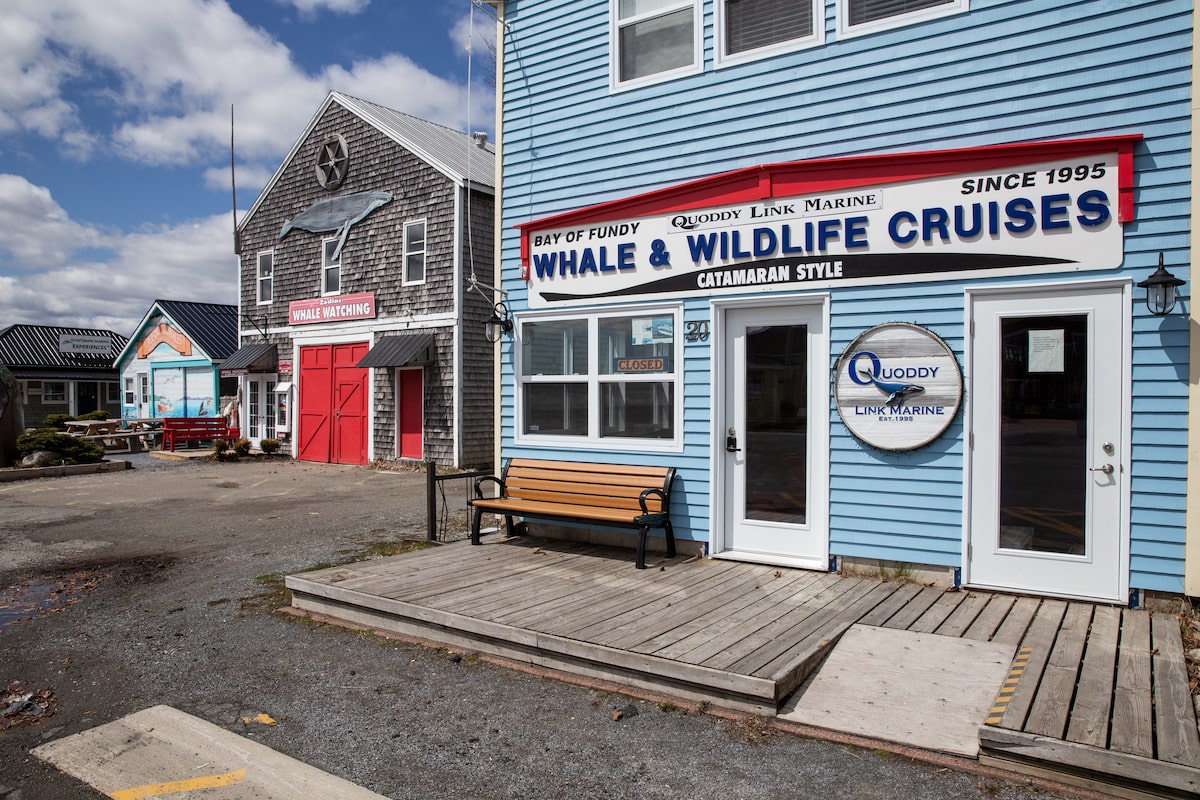
Tourists come here for the sweeping views of Passamaquoddy Bay, the whale-watching and storefronts painted the colours of jellybeans. Every few steps is another historic building – another plaque that says so-and-so lived here, and so-and-so built this. And in peak summer season, from May long weekend until October, the American presence is obvious – especially from New Englanders. The drive up from Bangor, Me., is just two hours. It’s as common to see visitors donning ballcaps bearing the Red Sox and Bruins logos as it is the Jays or Habs.
The impact of U.S. President Donald Trump’s tariffs on tourism so far isn’t yet clear. But last month, the number of Americans crossing the border into Canada by car dropped by 10 per cent compared with 2024.
And anyone who suggests that might be a good thing does not understand the realities of living in a tourism-dependent economy, Mr. Simmonds said. “If we didn’t have tourists here, we might as well close our doors,” he said. He employs 40 people at the pub alone during the summer months. At his other businesses – a pizza restaurant and a café – he employs dozens more.
Despite the tensions, he’s optimistic for this season. Back when COVID hit and New Brunswick closed itself to outsiders, tourism in Saint Andrews still thrived. Fellow New Brunswickers flocked there, and it had one of its best years.

Brad Henderson works part-time as mayor of Saint Andrews, and the rest of the time as managing director of Kingsbrae Gardens.
Over at Kingsbrae Garden, another popular Saint Andrews attraction, managing director Brad Henderson was similarly optimistic. Each summer, the garden alone welcomes some 70,000 visitors. People still want to travel, he said. Canadians – and even international tourists – who opt not to visit the U.S. may instead visit New Brunswick.
But Mr. Henderson’s view comes with some element of bias. It’s his job to paint a rosy picture: Aside from working at the garden, he’s also the mayor of Saint Andrews. In a town this size, it’s a part-time job.
“You’re going to have to use your imagination,” he said, standing in the middle of the 27-acre garden. The full-time gardeners hadn’t yet started their work for the season, and there were still dead leaves from the winter on the ground. “In a few weeks, this place will just blow up.”

Lauren Naish, co-owner of Honeybeans Coffee Tea & Treats, plays with a patron's dog in front of the café.
Still, others acknowledged they were anxious about the months ahead. “The unpredictability of it all is unnerving,” said Lauren Naish, co-owner of Honeybeans Coffee, a popular café on the main street. As she spoke, an espresso machine grunted and hissed from beside her. “I just dug my way out of COVID, and then it was like, ‘Not another thing.’ ”
Ms. Naish hasn’t shied away from making her views known. On the front door of the café, she had affixed two stickers. The first said “Buy Canadian.” Right below it, the second sticker bore a red circle with a line through it – the universal “no” sign – on top of an illustration of Mr. Trump.
“It’s slightly aggressive,” she acknowledged. “But so far, the feedback I’ve gotten has been positive.” She emphasized that it’s the American President – and not the American people – she takes issue with.
Back at the Red Herring, Mr. Simmonds had landed on an issue for which he was willing to break his own rule. The government’s recent changes to immigration policies, he said, are “dumb.” These changes have made it more difficult for him and other tourism operators to employ international students or foreign workers.
“Like, come on, BS,” he said.
“People who say, ‘Don’t let them in’ –” he said, shaking his head. “We need them. We’re made up of people from all over the world.”
That, he said, is what makes us Canadian. “We’re accepting. We say, ‘Come on in.’ ”
East to West: More from The Globe and Mail
The Decibel podcast
Through the 2025 election, producer Kasia Mychajlowycz is travelling across Canada to ask locals what’s on their minds. In Nova Scotia and New Brunswick, many spoke of increasing patriotism and anger at Donald Trump, as well as their struggles with cost of living in rural communities. Subscribe for more episodes.
From our reporters
Moncton’s rapid growth leaves some residents out in the cold
For farmers of Souris, PEI, every pressing campaign issue is a hot potato
Trois-Rivières, feeling pain of tariffs, thinks of rebuffing the Bloc
Calgary’s diverse Northeast has big hopes and gnawing worries