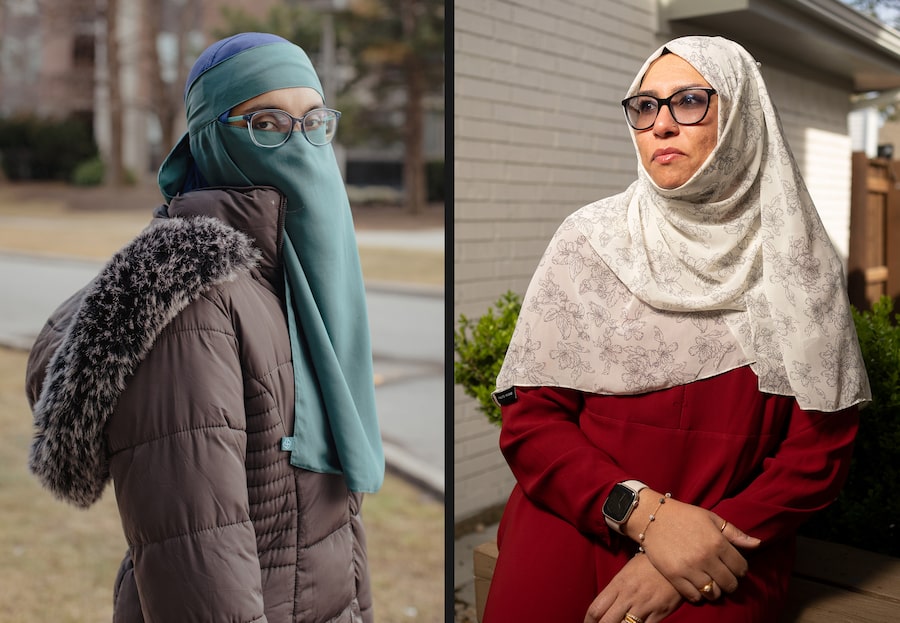
Nadia Naqvi, the oldest and fiercest in a family of five children, was born in 1981 in Montreal. Her father, who emigrated from Pakistan in the 1970s, instilled in his children that he was the immigrant in the family.
You are just Canadian, he would tell them, and if anybody asks, you’re Canadian-Pakistani. Always put the Canadian in front, he’d say. But growing up in Montreal’s suburban West Island, Ms. Naqvi never felt fully Canadian. She was bullied more times than she could count, called a “Paki” and “smelly.”
Despite the years of torment, in Grade 9, Ms. Naqvi chose to start wearing the hijab. She saw it as part of maturing as a Muslim woman, something both internal and outwardly expressed in her community. The first time she wore the hijab to school, the day passed mostly unremarkably, but as she boarded the bus to go home, she noticed something on the sleeve of her jacket. Spit.

Ms. Naqvi still has a ‘#1 teacher’ ornament she got from a pupil.Annie Burns-Pieper/The Globe and Mail
Once she grew up, Ms. Naqvi would choose a life in the classroom. For nearly 15 years, she taught high-school science, continuing to wear the hijab. But now she feels bullied once again – this time by the province of Quebec.
Bill 21, passed in 2019, prevents certain civil servants such as justices of the peace, police officers and teachers, from wearing religious symbols like the hijab or yarmulke at work.
The law was created to reinforce Quebec’s commitment to secularism, forged during the Quiet Revolution of the 1960s and 70s when the government began to drive a wedge between the church and the state. But studies show Bill 21 has disproportionately affected Muslim women, like Ms. Naqvi. Two-thirds reported being exposed to hate incidents after the law was passed, according to research conducted by the Association for Canadian Studies and administered by polling firm Léger.
Research published in 2025 by the National Council of Canadian Muslims found that 73 per cent of Muslim women have applied or are considering applying for work outside of Quebec since Bill 21 was passed. The same study found that roughly 20 per cent of Muslim women who have stayed in the province have experienced physical threats or aggression at work since 2019.

With demonstrators outside, the Supreme Court kicked off its hearings about the Quebec secularism law on March 23. A judgment is expected as early as November or some time next year.Sean Kilpatrick/The Canadian Press
To protect the law from legal challenges, the government pre-emptively invoked the notwithstanding clause, which allows governments to override portions of the Canadian Charter of Rights and Freedoms. The Supreme Court recently heard a challenge to the bill from groups including the National Council of Canadian Muslims, the Canadian Civil Liberties Association, the English Montreal School Board and the Fédération autonome de l’enseignement, a Quebec teachers union.
The federal government and five provinces also filed arguments in the case. Ottawa, British Columbia and Manitoba all want to see a bigger role for the courts on the use of the notwithstanding clause. Meanwhile, Ontario, Alberta and Saskatchewan, all of which have used the constitutional tool in recent years, defended Quebec’s right to use it unfettered. The court has also accepted a record number of outside organizations as intervenors, the majority of which oppose the law and the use of the clause, arguing that it infringes upon equality and minority rights.
While the case has grown into a broader constitutional fight over provincial powers, the stakes are far more personal for people like Ms. Naqvi. It is about how a lifetime of feeling like a second-class citizen in Canada was codified into law.


When Bill 21 passed, Fatima Ahmad was starting her last year of an education degree. Her path to becoming a teacher in a Montreal elementary school vanished overnight.
She grew up in one of the first Muslim families in Point Saint Charles, a historic neighbourhood in the southwest of Montreal.
As a child, she was so quiet during her first year of school that her teacher asked her parents to bring in a recording to prove she could talk.
Less than a year after the Sept. 11, 2001, terrorist attacks, her father, an immigrant from Bangladesh, opened the Khadijah Centre Mosque in a rented building near their home. The new mosque was unpopular in the neighbourhood and Ms. Ahmad remembers getting unfriendly looks in the hallways of her family’s three-storey walk-up. Children would comment on their skin colour. Their shoes, which they left outside their front door, would go missing.
In the spring of 2004, Ms. Ahmad, then 7, was watching a movie when a neighbour barged into her family’s apartment brandishing a knife. In a rage, he violently toppled a large bookshelf of Islamic and Bengali literature. When her father heard what was happening, he rushed home, arriving just in time to see the man breaking the windows of the family’s 1993 blue Pontiac.
Months later, the girl who had been too shy to speak in front of a class of kindergartners swore on a Bible and testified in court against the intruder. It would be the first of many times she would be required to speak out against hate toward Muslims in Montreal.

The 2000s, when Quebec’s legislature still had this crucifix above the speaker’s chair, would bring contentious debates about secularism in the province.Clement Allard/The Canadian Press
In the decade after 9/11, the climate was tense for Muslims in Canada. In Quebec, publicized incidents of religious accommodations, like a maple sugar shack providing pork-free options and pausing celebrations for daily prayers for Muslims, stirred debates over whether immigration and religious minorities threatened the province’s unique culture.
The provincial government tasked the Bouchard-Taylor Commission with evaluating the extent of accommodation and issuing recommendations to ensure practices aligned with Quebec values. In 2008 the report concluded there was a crisis of perception rather than of accommodation and that sensational and inaccurate news coverage had often blown such requests out of proportion. Yet the commission also set the stage for future bans on religious symbols by suggesting that people working in a small handful of professions with unique authority, including judges, prosecutors and peace officers, be prohibited from wearing religious signs. Teachers were not mentioned.

Sociologist Gérard Bouchard and philosopher Charles Taylor were hired to question Quebeckers about ‘reasonable accommodation’ and issue a report in 2008 on what that might look like.Ian Barrett/The Globe and Mail
As a teen, Ms. Ahmad was mostly oblivious to the political debate playing out in Quebec. But even at the English-language school where she was a top student, prejudice shadowed her. She switched French classes after her teacher made denigrating comments about Islam to her class, suggesting, for example, that the religion permits incest between a father and daughter.
Despite, and perhaps because of her experience, she felt called to the profession herself. She loved teaching children at the mosque and felt most confident in front of a class. In the fall of 2016, she started her elementary education degree at McGill University.
The summer before, she had started wearing the niqab. The head and face covering made her feel closer to God and that the respect she received was for her character rather than her physical appearance. No one in her immediate family wore one, and her parents feared she would become a target.
The verbal abuse started almost immediately, and she would be confronted with it repeatedly. She would hear people tell her to go back to her country or that it’s not Halloween as she walked down the streets of Montreal.
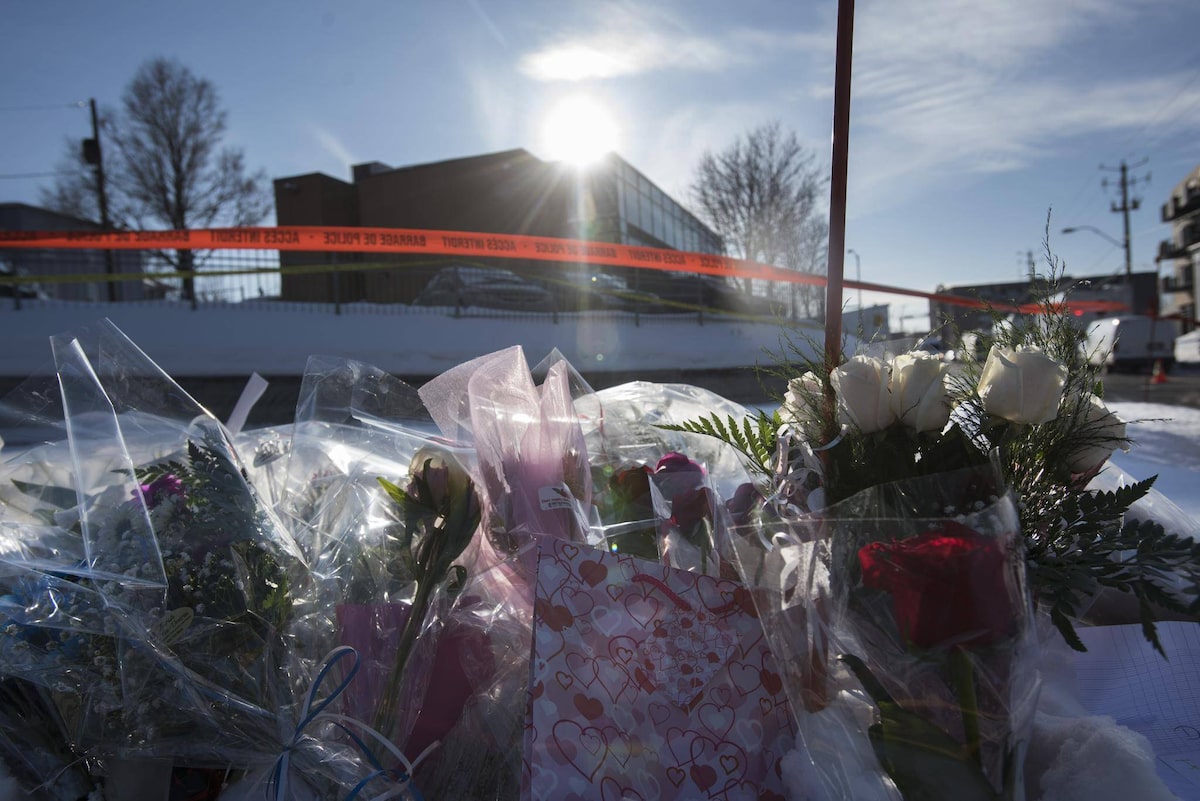
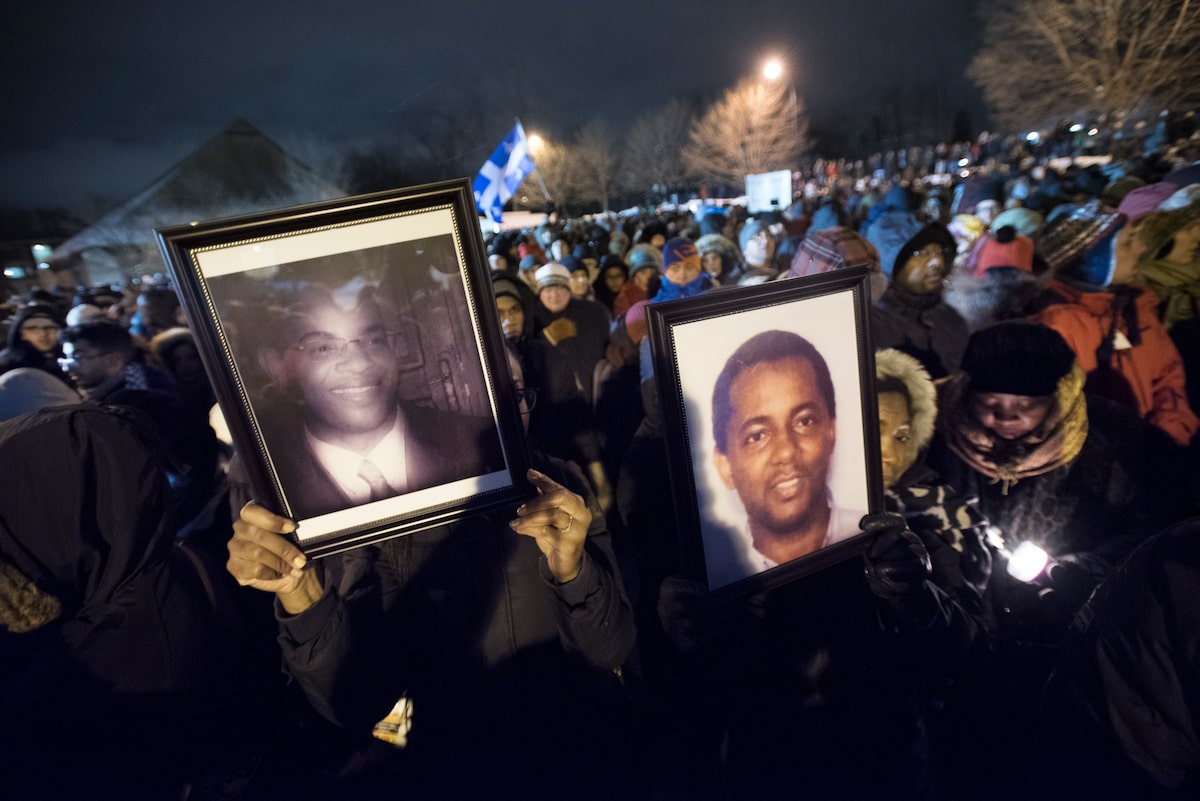
On the evening of Jan. 29, 2017, Alexandre Bissonnette, then 27, approached the Centre culturel islamique de Quebec, where evening prayers had just ended. He opened fire on community members exiting the Quebec City mosque and then continued into the building. Less than two minutes later, when the shooting stopped, six men lay dead, and 19 others were injured.
That Sunday evening, Nadia Naqvi, was getting ready for bed before her teaching week began the next day. She was in her bedroom when she heard her brother-in-law call out. He’d been watching the news when the ticker alerted him to the shooting. She stayed up for hours watching the news despite not knowing anyone from that mosque.
The next day, exhausted and drained, she drove to school, barely able to see through her tears listening to updates on the radio.
She spoke to all four of her classes that day about the attack. Students made signs for the vigil she planned to attend that night, pencilling slogans like, “Stand Up Against Racism.”
On breaks, Ms. Naqvi’s colleagues reached out; one gave her flowers, another knelt to her eye level to say how sorry he was.

Ms. Naqvi, leaving her high school in Pointe-Claire in 2021, tried to make the Quebec City shooting into a teachable moment for her pupils.Annie Burns-Pieper/The Globe and Mail
Ms. Naqvi is from a family of educators. Her grandfather was the chairman of the Board of Secondary Education in Karachi, and her grandmother also taught in Pakistan.
As a student, she never felt comfortable talking to her teachers about the bullying she experienced. They were often the source of racism and microagressions themselves. During a bomb threat at her high school, a history teacher walked up to her and her Muslim friends and asked where they had planted the bombs this time.
But Ms. Naqvi’s experiences at school shaped who she would become as an educator. She hoped she could be a more positive force for her students.
For years, she’d felt racism manifested in the things that had happened to her family. It started with her earliest memory of seeing her father arriving home bloodied after being dragged out of his car and attacked while out shopping, weeks after growing out his beard. But the mosque attack forced her to confront her deepest, darkest fears about the society she was living in.
In the months and years that followed, she would conduct hours of workshops on discrimination in schools and the community.

While people gathered to remember the victims of the Quebec City mosque shooting in Montreal, Fatima Ahmad’s father’s mosque was vandalized with eggs and graffiti and a window was broken. Ms. Ahmad, then 20, nervously spoke to journalists for the first time, wearing her niqab.
That year, Statistics Canada showed the highest number of police-reported hate crimes against Muslims.
But attacks on the community did not slow the political developments in Quebec, which would disproportionately affect Muslims, approximately 5 per cent of the province’s population.
In October 2017, Quebec passed Bill 62, which prevented people wearing face coverings from riding a city bus, using health care, or attending university classes. At the time, it was estimated there could be as few as 30 niqab-wearing women in Quebec.
By then, Ms. Ahmad had been wearing the niqab for a year. While some proponents of the law argued that it was freeing for Muslim women, she now feared leaving the house.
The verbal attacks increased. By then, she had heard every kind of profanity but what struck most deeply was being called a “ghost.” It erased her humanity.
Some relief came when McGill’s administration said it would not enforce the law. And while she could keep attending classes, the transit ban meant she couldn’t take the bus to school.
One day, she tried and watched the bus drive by her as if she really was a ghost. From then on, she was forced to rely on her father for rides.

Ms. Ahmad, one of a small number of niqabi women in Quebec, would get involved in a legal challenge to the limits on their public activities.Annie Burns-Pieper/The Globe and Mail
Ms. Ahmad was approached to participate in a legal challenge launched by the National Council of Canadian Muslims and the Canadian Civil Liberties Association in 2017. She filed an affidavit in the case, her first time being involved in court proceedings since testifying against her neighbour as a child. She felt optimistic, bolstered by supporters in the province.
In the summer of 2018, Quebec Superior Court Justice Marc-André Blanchard ruled that if the regulations were to continue, “irreparable harm will be caused to Muslim women.”
Ms. Ahmad posted on Facebook, “I can breathe again.”
But in June 2019, Bill 21 passed and she feared the hate she had been experiencing nearly daily while wearing the niqab would intensify.
It did. In February 2020, while she was returning home on the Metro after tutoring a student, a white man in his early 30s pulled her niqab so hard he knocked off her glasses. She heard him tell her to go back home.
She attempted to photograph the man to report him to the police but he ran toward her, grabbing her phone. After two previous physical attacks, she had taken a self-defence class. She punched him and they both fell to the ground. His friend began hitting her in the back until a bystander appeared by her side and helped her retrieve her phone and call the police. The attacker tried to leave the scene but Ms. Ahmad and the bystander followed him until the police arrived.
She took the next day off work, injured, shaken and scared to go outside.

In early 2018, Nadia Naqvi had pain in her chest. For months, doctors had no answers. Known for her energy, the teacher struggled to make it through the day.
She finished the school year but landed in hospital shortly after, diagnosed with a rare autoimmune disease called neuromyelitis optica that affects the central nervous system.
After five weeks in hospital, she was transferred to a French-language rehab centre. She hadn’t been able to work or care for her busy family. She was paralyzed from the waist down and needed assistance.
The first time she was bathed at the rehab facility, workers, not knowing she understood French, gossiped and cracked jokes about her hijab, such as asking whether her hair was made out of gold.
She spent five months between the hospital and the rehab centre, where subtle and overt discrimination like this continued.
It was then that she first learned of the proposed religious symbols ban.
A provincial election was scheduled for 2018. In the lead-up to the vote, Coalition Avenir Québec (CAQ) became the third party in a decade to take up the issue of religious symbols.

François Legault, casting his ballot in L’Assomption for the 2018 election, would go on to be premier for nearly eight years.Ryan Remiorz/The Canadian Press
Since the mosque shooting, Ms. Naqvi had become a well-known advocate. She fielded calls from reporters from her hospital bed, the rehab centre and her wheelchair after she returned home.
She co-founded the Muslim Teachers Association to oppose Bill 21. It was a distraction from her illness but also from getting better. While the advocacy was taking a toll on her emotionally and physically, she couldn’t let it go.
Ms. Naqvi was paralyzed from the waist down for all of 2019, unable to teach. But in the spring of 2020, during Ramadan, she recovered enough to use a walker.
By summer, the city was opening again after the worst of the COVID-19 lockdowns. On an August day, she and her three kids met with their large extended family. They ordered a pizza and went to a well-kept park on Montreal’s West Island.
When her son saw the swing set, he called her over. They sat down to swing. It was a small act of joy after spending two years in a wheelchair.
It was then that a white woman approached and told her the swings were for children only. Ms. Naqvi immediately understood what was going on. She politely dismissed the comment and continued swinging. But the stranger persisted, insisting that Ms. Naqvi get off the swings.
The woman then called the police to say that an adult woman was swinging at the park.

Protests to the secularism law would continue after it passed in 2019, but both the Quebec Superior Court and appeal court upheld it.Graham Hughes/The Canadian Press
Ms. Naqvi was on disability when Bill 21 was enacted. She can keep her job if she recovers because she was already in the school system. If she does return to teaching, Bill 21’s grandfather clause would allow her to keep wearing a hijab but prevent her from changing jobs or taking roles she once aspired to, like becoming a principal.
Many of the Muslim families she grew up with have left the province over the years. And in 2024, Ms. Naqvi’s family temporarily left Quebec as well and is currently in Dallas. At this point they don’t know where they will end up long-term. The warmer climate is helping her health, and the multicultural city, despite being in a conservative state, feels more inclusive. But she misses teaching every day. “I was my truest self in my classroom,” she said.
Since she left, Quebec has tabled two new laws restricting religious symbols. Bill 94, which passed last October, expands the religious symbols ban to all school employees and even parent volunteers. Dozens of employees have been fired or left jobs and hundreds more stand to lose their jobs as a result of the legislation, according to reporting by local media.
Bill 9, introduced in December, will extend the ban on religious symbols to childcare facilities, prohibit religious practice in public buildings, and restrict exclusively religious based diets like halal or kosher being offered in public and subsidized institutions. In 2023, the provincial government also banned prayer rooms in public schools.

Ms. Naqvi's children are part of the reason she worries about Islamophobia in Canada.
Ms. Naqvi worries about the impact of Islamophobia on her children’s identity and mental health, and she sees the Coalition Avenir Québec government as a bully, no different from the one that spat on her the first day she wore a hijab to school. For her, Islamophobia has been a constant threat, but Bill 21 made it feel state-sanctioned.
Fatima Ahmad had hoped that by the time she had finished her master’s degree in inclusive education, Bill 21 would have been repealed. But she has now graduated, and any teaching she does in the province is restricted to private institutions while wearing the niqab. She has since moved to Ontario, had a daughter and teaches Muslim students online.
She meets with community members online to discuss how they make their voices heard regarding new legislation they feel sidelined the rights of their community.
Both women fear for the impact these laws will have on the next generation of Muslims in Quebec. Ms. Ahmad believes losing Muslim teachers who choose to wear the niqab or hijab will perpetuate the ignorance of other religions and cultures in the province.
She doesn’t plan to return to Quebec and has become more cautious in her optimism. Until recently, she told the young people she worked with at the mosque to keep the faith, things will change, Inshallah, by the time they grow up. But though her faith in God is strong, she is starting to lose hope for short-term change in Quebec.
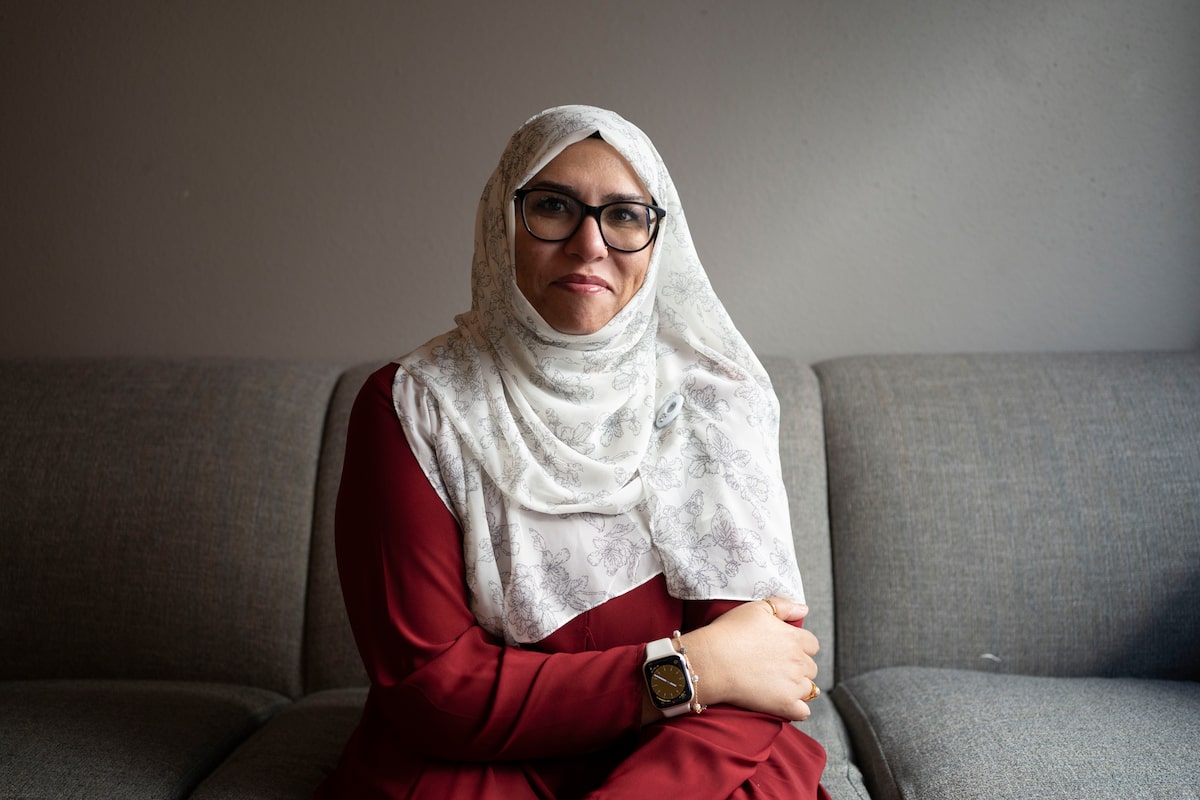
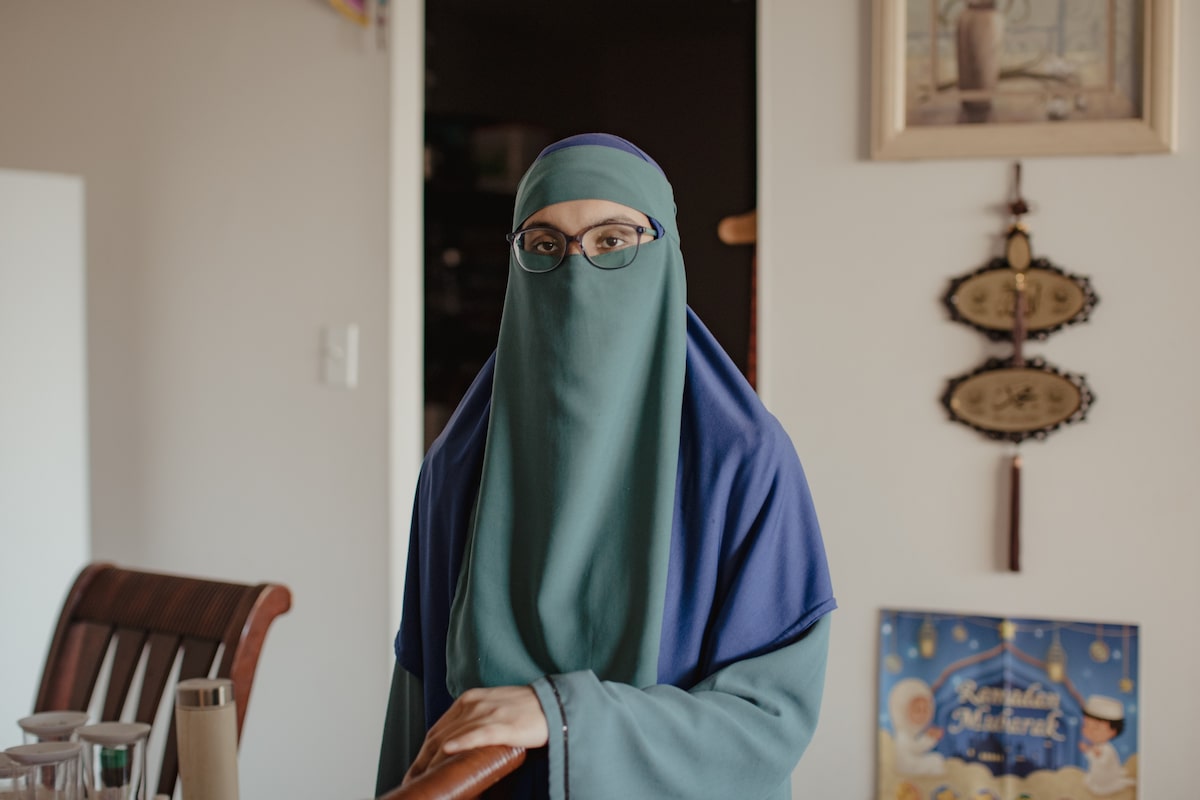
Editor’s note: In a previous version of this article, the first photo caption incorrectly stated that Nadia Naqvi no longer lives or works in Quebec; she divides her time between Montreal and Dallas. Another photo caption incorrectly stated that Ms. Naqvi grew up in the house on Montreal’s West Island where she is pictured.