- The verdict
- The case
- The trial
- The impact
Table of contents
Five former members of Canada’s 2018 world junior hockey team have been found not guilty of sexual assault in their high-profile trial.
After a mistrial and two dismissed juries, Justice Maria Carroccia decided to hear the case herself. She delivered her verdict on Thursday to a packed courtroom in London, Ont.
Hockey Canada sexual-assault trial is over. We’re answering your questions after the verdict
Latest updates
- Justice Maria Carroccia’s Hockey Canada verdict has received both criticism and praise, reflecting a sharp divide in the legal community and public about the trial and sexual assault proceedings
- At the bars lining London’s streets, the Hockey Canada verdict hits close to home
- Lawyers explain how Justice Maria Carroccia arrived at her ruling in the sexual-assault trial
- NHL says players ineligible to join league as judge’s verdict is reviewed, while NHLPA says players should get opportunity to ‘return to work’
- Advocates describe ‘heartbreaking’ verdict in Hockey Canada trial and warn that Thursday’s verdict could discourage victims from going to police
- Opinion: #MeToo changed our culture, but it couldn’t change our courts
- Opinion: Restorative justice could have offered a better path for everyone involved in the Hockey Canada trial

Media, spectators and protesters gather outside the Ontario Court of Justice in London on Thursday, ahead of the verdict in the Hockey Canada sexual-assault trial.Sammy Kogan/The Globe and Mail
The verdict
Justice Maria Carroccia said the Crown has not met its onus of proof on any of the criminal charges in case. Dillon Dubé, Carter Hart, Cal Foote, Alex Formenton and Michael McLeod have been found not guilty on the charges of sexual assault. Mr. McLeod was found not guilty on a second charge of being a party to sexual assault.
The judge suggested there are not necessarily wider legal implications that flow from the evidence or her ruling: “This case, on its facts, does not raise issues of the reformulation of the legal concept of consent. In this case, I have found actual consent not vitiated by fear.”
Hockey Canada decision: Here’s what happened at court
Justice Carroccia noted that the case has a long history and several layers of investigation that “led to multiple, often conflicting, statements from the complainant, the defendants and witnesses.” For those reasons, the judge said she found the amount of time E.M. spent under cross-examination by the players’ lawyers – seven days – to be “entirely appropriate.”
Justice Carroccia began the legal analysis of her verdict by highlighting there is a high bar – beyond a reasonable doubt – to convict someone of a crime. She noted that the accused players are not required to prove its case.
The judge made a point to say that the slogan “believe the victim” – which has gained traction not only during this trial, but amid wider cultural conversations started by the #MeToo movement – has no place in a criminal trial, as it inverts the accused’s presumption of innocence.
Stating her factual findings, the judge highlighted “inconsistencies” in E.M.’s testimony and statements to police, and listed examples of E.M.’s memory gaps. In her view, E.M. “exaggerated” her level of intoxication, citing the consent videos as evidence of E.M.’s sobriety. She found that there was “no basis” upon which she could find that the post-incident group chat between the accused players was created to concoct a version of events – as the Crown had suggested.
Read the judge’s full decision in Hockey Canada sexual-assault trial

Crown attorney Meaghan Cunningham speaks to media outside the London courthouse following the verdict.Sammy Kogan/The Globe and Mail
Can the men return to the NHL after the verdict?
The five players are ineligible to play in the NHL until the league reviews the judge’s findings, the league said in a statement.
Opinion: NHL delivers a lesson after the Hockey Canada verdict: Be nice, or else
Prior to their arrests in 2024, four of the five players had been playing in the NHL though all took leaves from their teams after the charges were laid and some of their contracts have since expired. During the trial, Mr. Hart – who was the only player to testify in his own defence – told the court he is a free agent, meaning he is still eligible to play in the NHL, but is not signed to a team. None of the men are suspended from their teams or the NHL.
A spokesperson for Avangard Omsk, the KHL team based in Omsk, Russia, for which Michael McLeod played last season, said in a statement ahead of the judge’s decision that he would be welcomed back if found not guilty.
The case
Michael McLeod, Dillon Dubé, Carter Hart, Cal Foote and Alex Formenton were charged with sexually assaulting a woman, known publicly as E.M., in a hotel room after a Hockey Canada gala in London, Ont., on June 18, 2018.
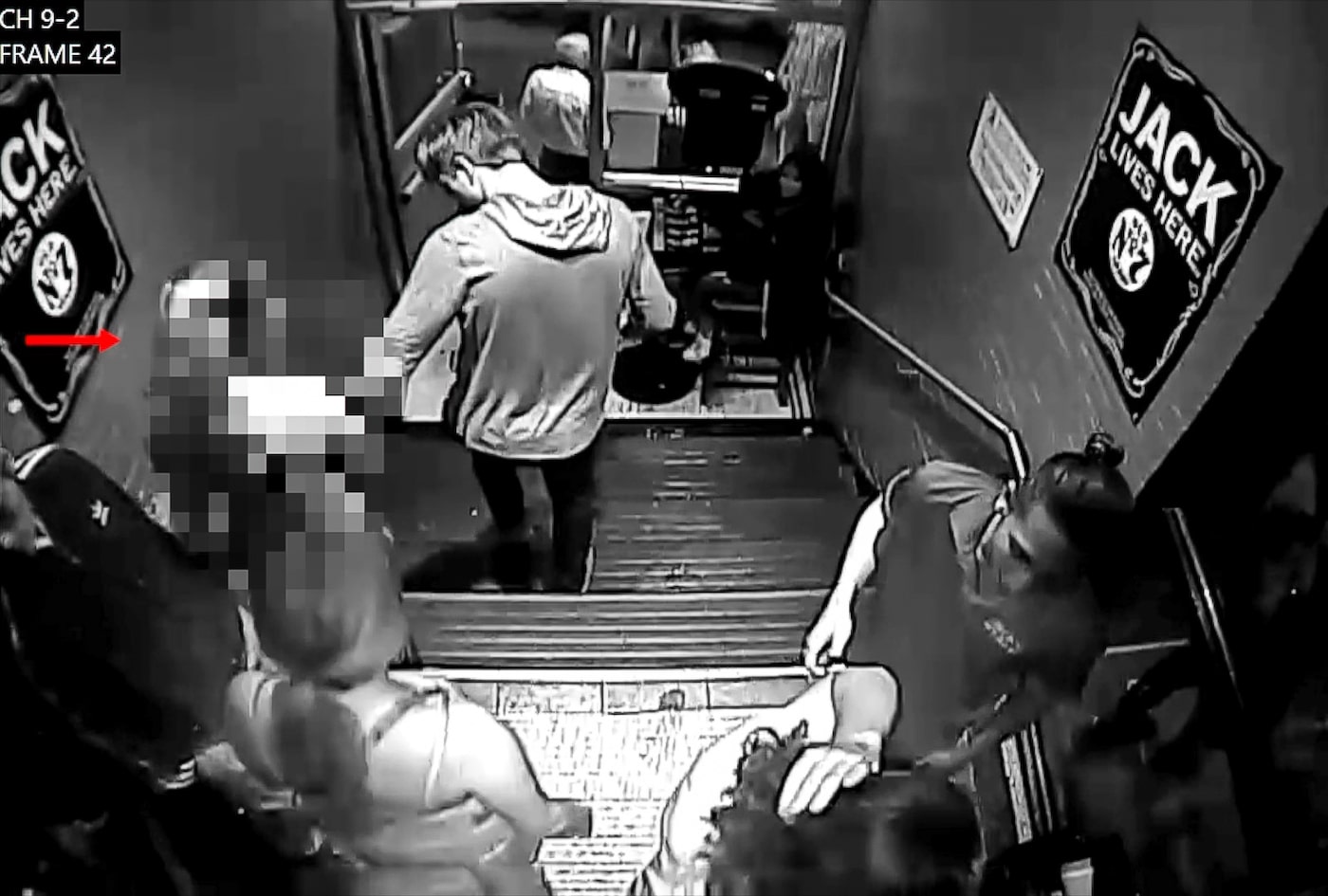
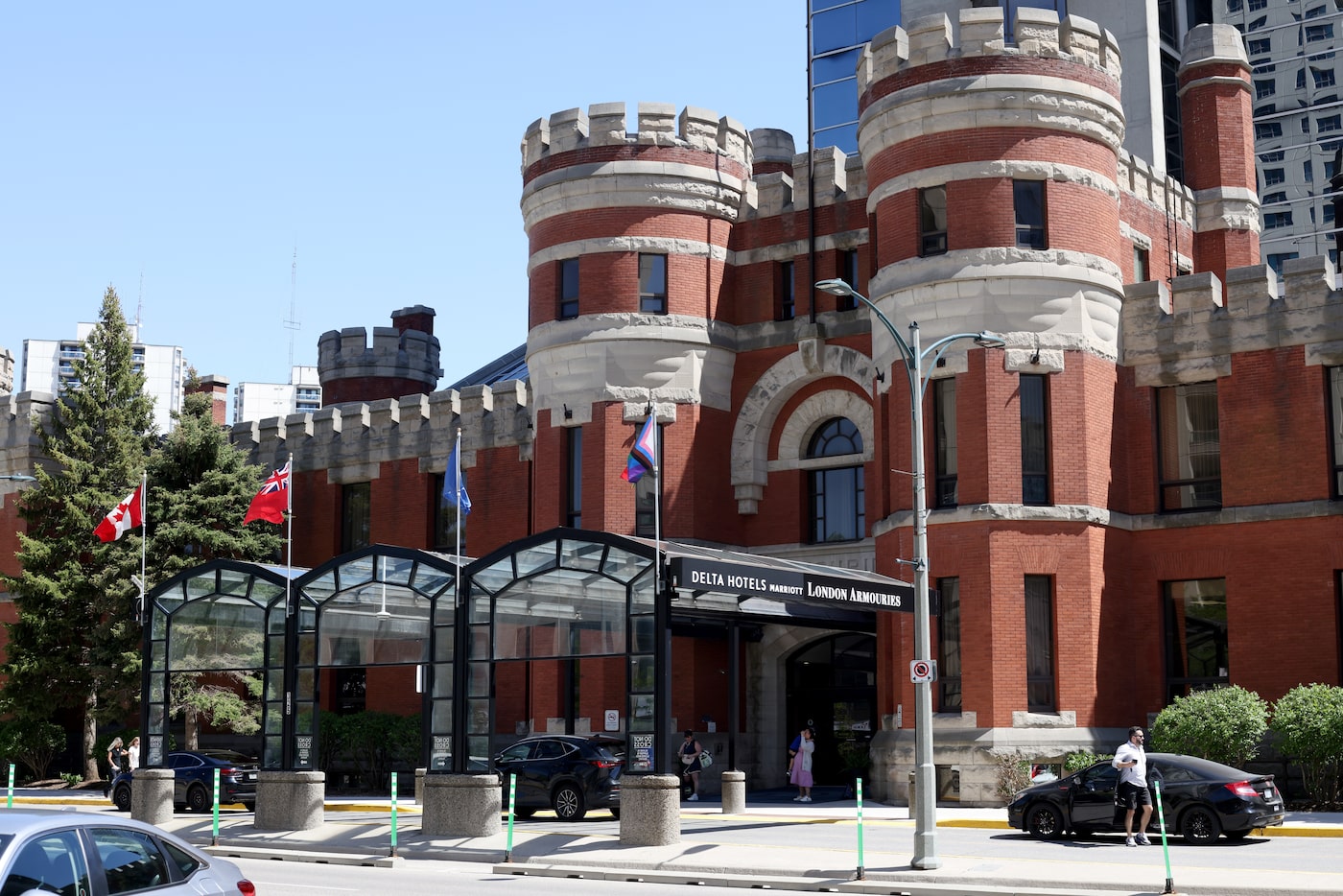
In E.M.’s interviews with London police detective Stephen Newton, she described how she met Mr. McLeod in a local bar called Jack’s and went with him to his hotel room at the Delta Armouries. She said they had consensual sex, but that she was then forced to engage in sex acts with a group of teammates he had invited in without her knowledge as several others in the room watched. E.M. said she initially tried to resist, but felt she had no choice but to comply.
Court filing reveals new details about alleged Hockey Canada group sexual assault
E.M. reported the incident to police the following day, but an initial investigation led by Det. Newton was closed without charges in February, 2019. He believed there was not enough evidence to lay charges.
The case only became public knowledge in May, 2022, after TSN reported that Hockey Canada had settled a $3.55-million lawsuit brought by E.M. against the organization, as well as the Canadian Hockey League and eight unnamed players. The settlement was made without the players’ knowledge or consent.
Timeline: Key events in the Hockey Canada case before it went to trial
London police reopened E.M.’s case in July, 2022, just days after The Globe and Mail published details of videos and texts from around the time of the incident that were provided to police in 2018. Hockey Canada and the NHL have also conducted their own independent probes, but the results of those have not been made public.
Hockey Canada sex-assault trial spotlights roadblocks and missed opportunities

From left, Alex Formenton, Cal Foote, Michael McLeod, Dillon Dube and Carter Hart as they individually arrive to court in London, Ont., on April 30.Nicole Osborne/The Canadian Press
Who are the players accused?
The five members of the 2018 Canadian world junior team charged with sexually assaulting a woman are Dillon Dubé, Carter Hart, Cal Foote, Alex Formenton and Michael McLeod. Mr. McLeod faced a second charge of being a party to sexual assault. The men have each pleaded not guilty. All five have denied wrongdoing and staged vigorous defences, and all have taken leaves from their teams.
Who are the 2018 world junior players charged with sexual assault?
Four of the five players had been playing in the NHL prior to their arrests in 2024. Mr. Dubé was a member of the Calgary Flames, Mr. Hart was with the Philadelphia Flyers, and Mr. McLeod and Mr. Foote were playing for the New Jersey Devils. Mr. Formenton was playing for the Swiss club HC Ambri-Piotta at the time, but he had previously been a member of the Ottawa Senators.
Who is E.M.?
The complainant in the case is a woman publicly identified only as E.M., who was 20 years old at the time of the alleged assault. Her name is subjected to a mandatory publication ban that applies to complainants in sexual assault cases.
The fallout from the news that Hockey Canada had quietly settled a lawsuit filed by E.M. prompted London police to reopen the case in July, 2022. The charges against the five men were laid in January, 2024.
From 2022: Woman at centre of Hockey Canada scandal breaks silence

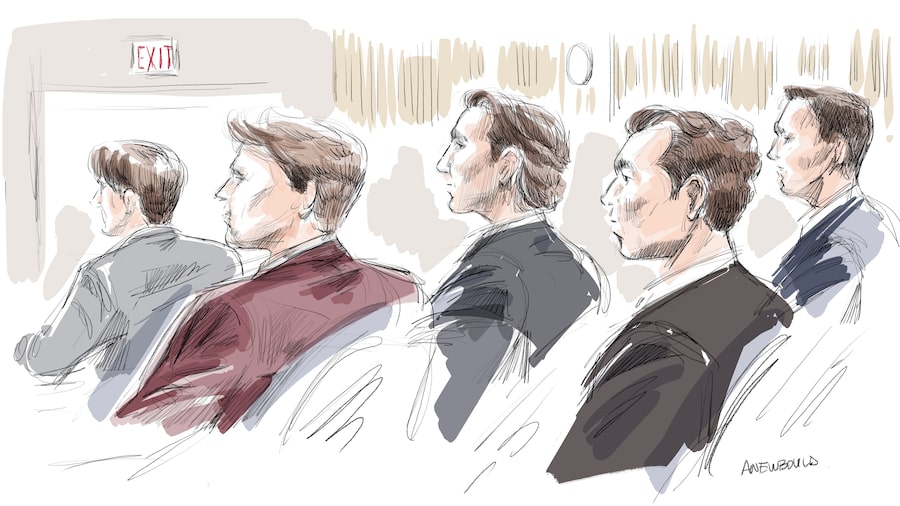
Crown attorney Meaghan Cunningham (left) and Justice Maria Carroccia are pictured in a courtroom sketch during proceedings on May 29.Court illustration by Alexandra Newbould/The Canadian Press
Who is the judge?
Justice Maria Carroccia worked for decades as a leading criminal-defence lawyer in Windsor, Ont., before she was appointed as a judge to the Ontario Superior Court of Justice in 2020. In her five years as a judge, Justice Carroccia has overseen high-profile and complex cases, from murder to sexual assault trials.
Justice Carroccia’s work during the Hockey Canada trial focused on the difficult nuances of sexual-assault law and what constitutes consent. Consent must be given voluntarily and continuously for each sexual act under Canadian law.
Opinion: Hockey Canada trial judge faces tough call on the invisible question of consent
The trial

Former NHL player Cal Foote arrives at the courthouse in London for trial proceedings on April 22.Geoff Robins/The Globe and Mail
The trial began in a London, Ont., courtroom in late April, and was plagued by disruption, including a mistrial and the dismissal of a second jury. After weeks of intense testimony and arguments over the admissibility of some key evidence, legal arguments in the trial concluded June 13, with the Crown laying out what it called a “path to conviction,” and defence lawyers arguing that there is insufficient evidence for a guilty verdict.
E.M. testified that after consensual sex with McLeod, she felt “shocked” when other men started showing up to the room. The court heard that when she attempted to leave, the players stopped her and convinced her to stay. E.M. told the court that she went on “auto-pilot” as the men demanded sex acts.
Timeline: Key moments in the Hockey Canada trial
But over seven days of gruelling cross-examination by the five players’ lawyers, defence counsel asserted to E.M. that she was the instigator of the sexual activity looking for a “wild night” and pressed her over inconsistencies between her court testimony and statements she had given to police, the amount of alcohol she consumed and her actions inside the hotel room.
Court also saw several messages, including one sent around 2 a.m. on the night of the alleged assault from Mr. McLeod’s cellphone to a 19-person team group chat: “Who wants to be in 3 way quick. 209- mikey.” Then, after 3 a.m. and again just after 4 a.m., Mr. McLeod took two videos of E.M. Wrapped in a towel, she can be heard saying, “it was all consensual” and that she “enjoyed it.”
Several witnesses testified during the proceedings, including detectives in both London police probes and four former team members who are not accused of wrongdoing and were present during parts of the night in question: Brett Howden, Tyler Steenbergen, Taylor Raddysh and Boris Katchouk.
Howden’s recollections became the subject of fraught legal arguments after Crown prosecutors accused him of feigning memory loss on the stand. However, their arguments to enter some of his text messages about that night into evidence were unsuccessful.
Carter Hart was the only accused hockey player to testify in his own defence, telling court he was positive E.M. was an excited and active participant to all the sexual activity. But Crown prosecutors pressed Mr. Hart on why Mr. McLeod felt the need to record a consent video and aimed to illustrate that Mr. Hart did not ensure E.M. was voluntarily and continuously consenting to each sexual act, as required by law.

Alex Formenton is seen exiting the London courthouse with his lawyers, Daniel Brown (left) and Hilary Dudding in May.Nicole Osborne/The Globe and Mail
Why was there no jury?
Just days after the trial began in late April, Hilary Dudding, one of the lawyers representing accused player Alex Formenton, and a member of the first jury bumped into each other at a local food market. The juror had concerns the interaction was inappropriate; Ms. Dudding said she had made a benign comment to the juror apologizing for the run-in. But the event caused Justice Carroccia to dismiss the original 14-member jury and restart the trial with a new jury.
In May, a member of the second jury accused lawyer Daniel Brown, another member of Mr. Formenton’s defence team, and his co-counsel Ms. Dudding of bullying the jury.
Who is Daniel Brown, defence lawyer in the Hockey Canada sex-assault trial?
A note handed to Justice Carroccia by juror 11 alleged: “Multiple jury members feel we are being judged and made fun of by lawyers Brown and Hilary Dudding.”
The lawyers categorically denied the accusation and the judge said she did not see any inappropriate behaviour. However, Justice Carroccia nonetheless said she had no choice but to dismiss the jury again. After two juries were dismissed, Crown lawyers reluctantly agreed to proceed before a judge alone rather than starting the trial anew, which would have required E.M. to testify and be cross-examined by all five defence teams all over again.
Why did it take so long to get to trial?
London police reopened their 2018 sexual assault investigation in July, 2022, after determining there were additional investigative avenues to pursue.
After the initial criminal investigation was concluded without charges in 2019, the case was not examined by a civilian committee whose mandate is to scrutinize the London Police Service’s sexual assault investigations for missteps. It is not clear why the case wasn’t brought to its attention.
Trial testimony and court documents have also shed more light on what police missed and the roadblocks investigators faced in the initial probe, from myths about the role of alcohol to not asking E.M. or the suspects important questions.
Court filing reveals new details about alleged Hockey Canada group sexual assault
Opinion: The Hockey Canada trial shows how we need to be talking to young men
The Globe’s Robyn Doolittle answers reader questions on the Hockey Canada trial coverage
The trial of five former members of Canada’s 2018 world junior hockey team, who are accused of sexually assaulting a woman in a London, Ont., hotel room in 2018, has raised questions about how news organizations cover such cases. Robyn Doolittle answers reader questions with Standards Editor Sandra E. Martin. The accused players have all pleaded not guilty.
The Globe and Mail
Impact of the settlement and trial
The impact of the Hockey Canada settlement scandal and subsequent criminal trial has been widespread.
The case has shaken the foundations of Hockey Canada, one of the country’s most prominent sports organizations, forcing difficult questions about the culture within a beloved game as well as triggering parliamentary hearings and high-level departures within the organization.
In London, Ont., the Hockey Canada sex-assault trial looms large over the courthouse’s neighbourhood
Opinion: Whatever the verdict, the benefits of hockey are diminished
The issue of sexual assault allegations against Hockey Canada players has been well-known to the organization’s top brass for years. During parliamentary hearings in Ottawa in 2022, former Hockey Canada CEO Bob Nicholson said he regretted that there was not more focus on “the culture of silence that appears to persist to this day.”
Former Hockey Canada CEO Scott Smith revealed during the hearings that Hockey Canada has dealt with an average of one to two sexual assault cases a year for the past six years.
A Globe and Mail investigation in July, 2022, found that Hockey Canada kept a special multimillion-dollar fund built up by registration fees of players across the country, that it used to pay out settlements in cases of alleged sexual assault without its insurance company, and with minimal outside scrutiny.
In the wake of Hockey Canada’s response to the sexual assault allegations in 2022, Tim Hortons suspended its World Juniors sponsorship, and Canadian Tire and Telus withdrew their support. Scotiabank also suspended its sponsorship of Hockey Canada.
Some major sponsors reinstated their partnerships with Hockey Canada in 2023, ahead of the world junior championship tournament.
Opinion: The important moral question Hockey Canada sponsors now face

Alex Formenton passes demonstrators as he arrives at the courthouse in London, Ont. in May.Geoff Robins/The Canadian Press
The high-profile trial has also given a rare insight into how the Canadian criminal justice system addresses sexual assault. The verdict could set a new legal precedent on the question of what constitutes voluntary consent, particularly in cases of power imbalance.
Legal experts and sexual violence advocates have also said the case’s handling and trial have highlighted failures of the legal system to address sexual-assault accusations, and some say they fear a not guilty verdict may have a chilling effect and prevent others from bringing forward allegations of sexual assault.
Opinion: Canada’s sexual-assault law is not the problem – it’s the application of it
‘Honestly, it’s gotten a lot worse’: Teen girls on the Hockey Canada trial and life after #MeToo

Demonstrators raising awareness for sexual assault survivors protest outside the London courthouse during the Hockey Canada sexual assault trial.Geoff Robins/The Canadian Press
The trial has also reignited broader conversations around consent, misogyny and sexual violence in hockey, and how insular cultures within professional sports organizations allow abuse to endure in secrecy.
As the trial has played out in the media, front-line staff at women’s shelters and crisis centres have seen more victims coming forward to formally report or seek support. At the London Abused Women’s Centre, some people have walked in with donations in E.M.’s name, while others have sent money from as far as Alberta.
Compiled by Mackenzie Lad and Moira Wyton
With reports from Robyn Doolittle, Grant Robertson, Colin Freeze, David Ebner, Joe Friesen, Marty Klinkenberg, and Dave McGinn.