The Globe is visiting communities across the country to hear from Canadians about the issues affecting their lives, their futures and their votes in this federal election.
Living by the fertile banks of the Seine and Red Rivers more than a century ago, the tight-knit people of St. Boniface were determined to retain their francophone identity. After Manitoba stripped away their language rights, they taught themselves French in secret for decades.
The 1890 legislation that deemed only English could be used in classrooms, courtrooms and public records – discriminating against the mostly Métis population, equal then to the number of anglophones in the province – was ruled unconstitutional in 1979 by the Supreme Court of Canada. But remnants of those early acts of resilience to protect francophone traditions persist today.
St. Boniface, the heart of Franco-Manitoba and the birthplace of Louis Riel, is one of the country’s largest French-speaking communities outside Quebec. One in four people in the population of more than 60,000 call the language their mother tongue. Incorporated as a town in 1883 and a city in 1908, it amalgamated with Winnipeg in 1971, though its uniquely francophone culture remains distinct from the rest of the capital city.
“There’s a little joke among these parts,” says Geneviève Pelletier, executive and artistic director of the Théâtre Cercle Molière, Canada’s oldest theatre company with uninterrupted programming, “that everybody still thinks of us as our own little Franco city.”

Provencher Boulevard, the main thoroughfare in Winnipeg’s St. Boniface community, cuts through the area before crossing the Red River.
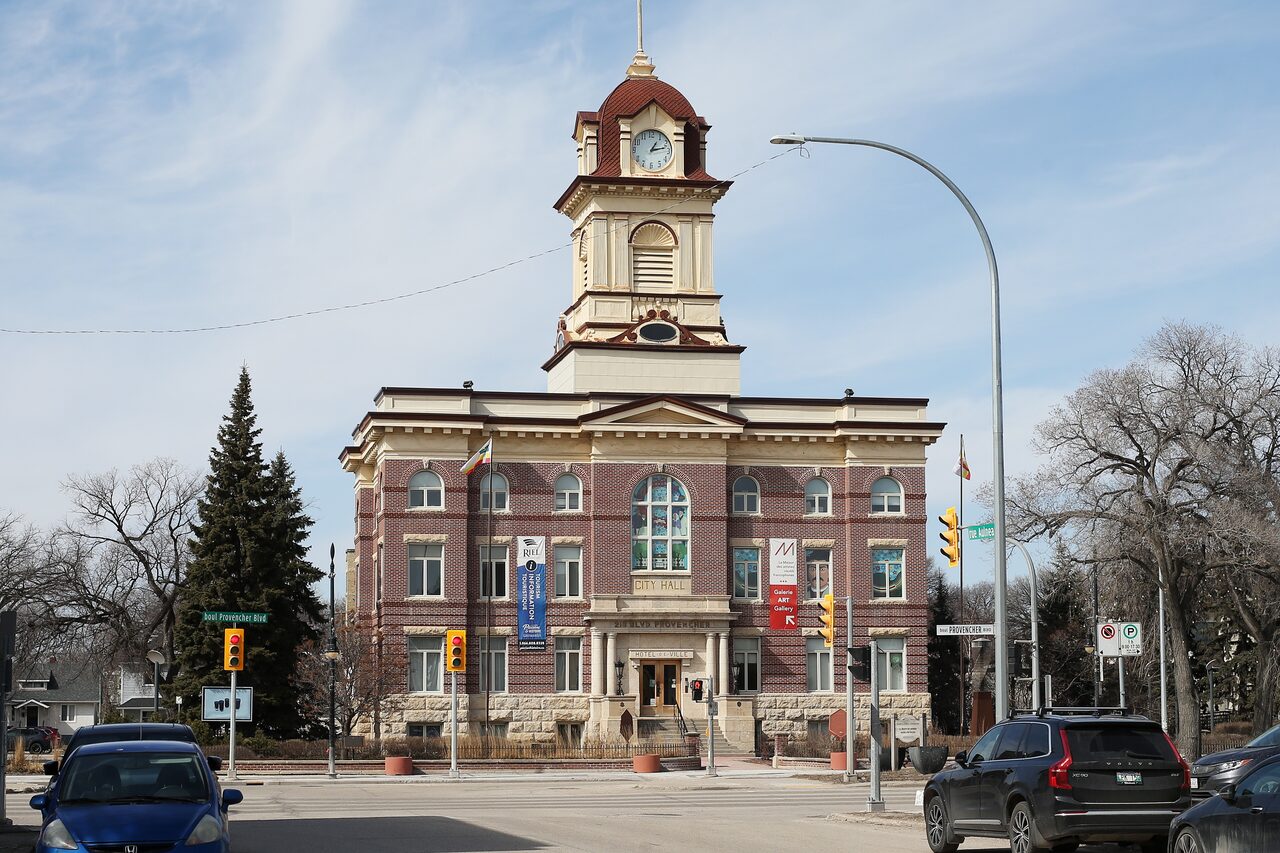
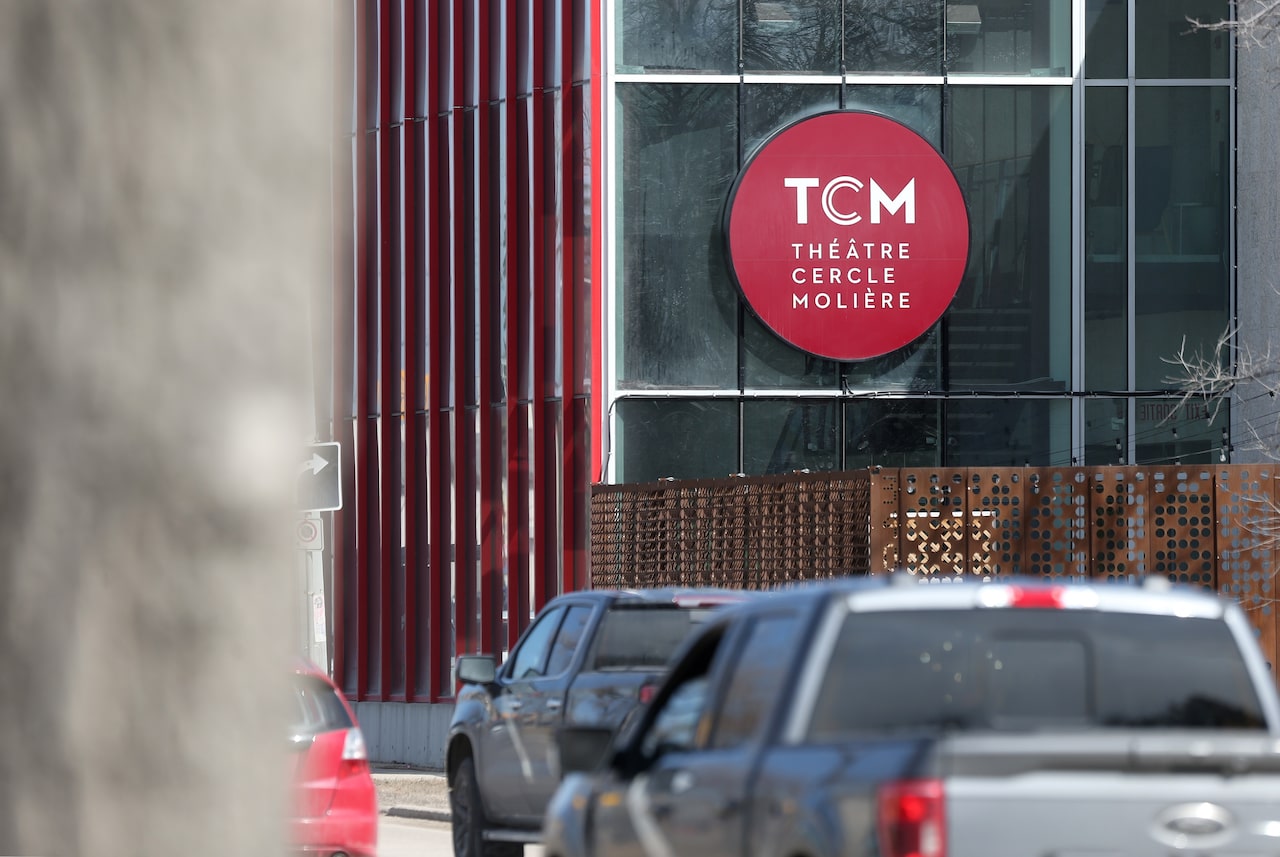
Ms. Pelletier’s theatre sits on Provencher Boulevard, the neighbourhood’s main thoroughfare, a route lined by some of the best-known cafés, patisseries and restaurants on the Prairies. A short walk across the Esplanade Riel, which connects Winnipeg’s downtown core to the francophone quadrant, bilingual stop signs and street names – otherwise a rarity in the province – are prevalent on this side of the Red River.
Le Musée de Saint-Boniface Museum, situated next to Riel’s final resting place, offers educational resources and holds the biggest collection of Riel-related artifacts. Down the same street is St. Boniface Hospital, Manitoba’s second-largest health care institution.
French radio thrives here, as does local weekly newspaper La Liberté. The community is also home to the annual 10-day Festival du Voyageur, Western Canada’s largest winter festival, celebrating the country’s fur-trading past and Francophonie heritage, along with Cinémental, a francophone film fête.

Bilingual stop signs and street names are prevalent in St. Boniface, an otherwise rarity in the province.
“Clearly, French-language rights are incredibly important to us here,” Ms. Pelletier says, donning a customized button on the front pocket of her denim jacket that says “Strong Métis Woman” in upper-case letters.
“Do I believe we’re talking enough about language rights in this federal election, though? I don’t think so. Although, if I’m being honest, I also don’t think it’ll really matter. There’s so many things we’re not discussing properly because we’re in a sort of one-track mindset these days.”

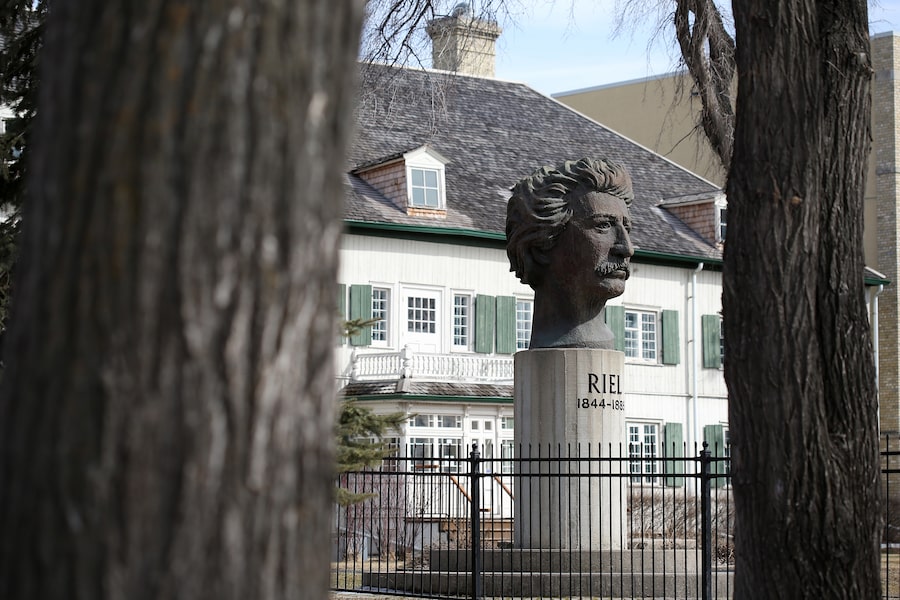
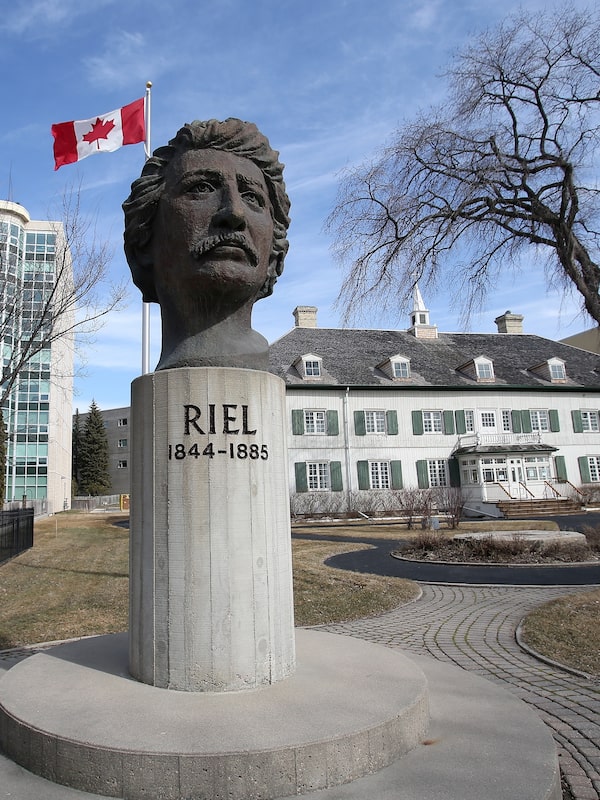
St. Boniface is the heart of Franco-Manitoba and the birthplace of Louis Riel. It is also home to his gravesite and a neighbouring museum, which holds the largest collection of his artifacts.
In any other year, protecting francophone culture and bilingualism would be top of mind for voters in St. Boniface; it would matter that Liberal Leader Mark Carney’s French-speaking skills are shaky and have caused some gaffes. But the 2025 election campaign has been unique, with one issue rising above all others: the threat of U.S. President Donald Trump’s trade war and looming tariffs on Canada.
Even in Quebec, Mr. Carney’s limitations in la langue de Molière have seemingly borne little significance for voters, with polls consistently showing him well ahead of Bloc Québécois Leader Yves-François Blanchet, NDP Leader Jagmeet Singh, and top Conservative rival Pierre Poilievre, whose French-language skills exceed those of the Liberal Leader.
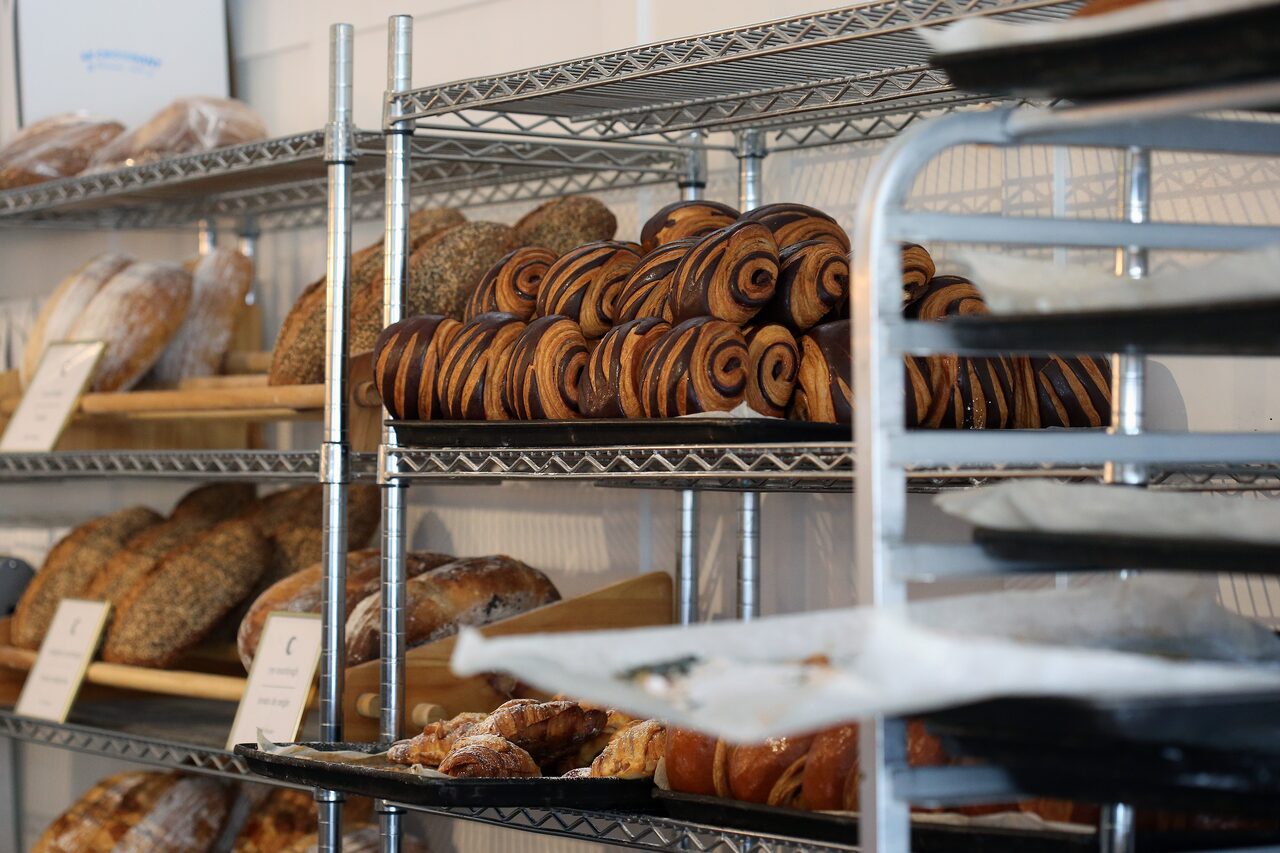
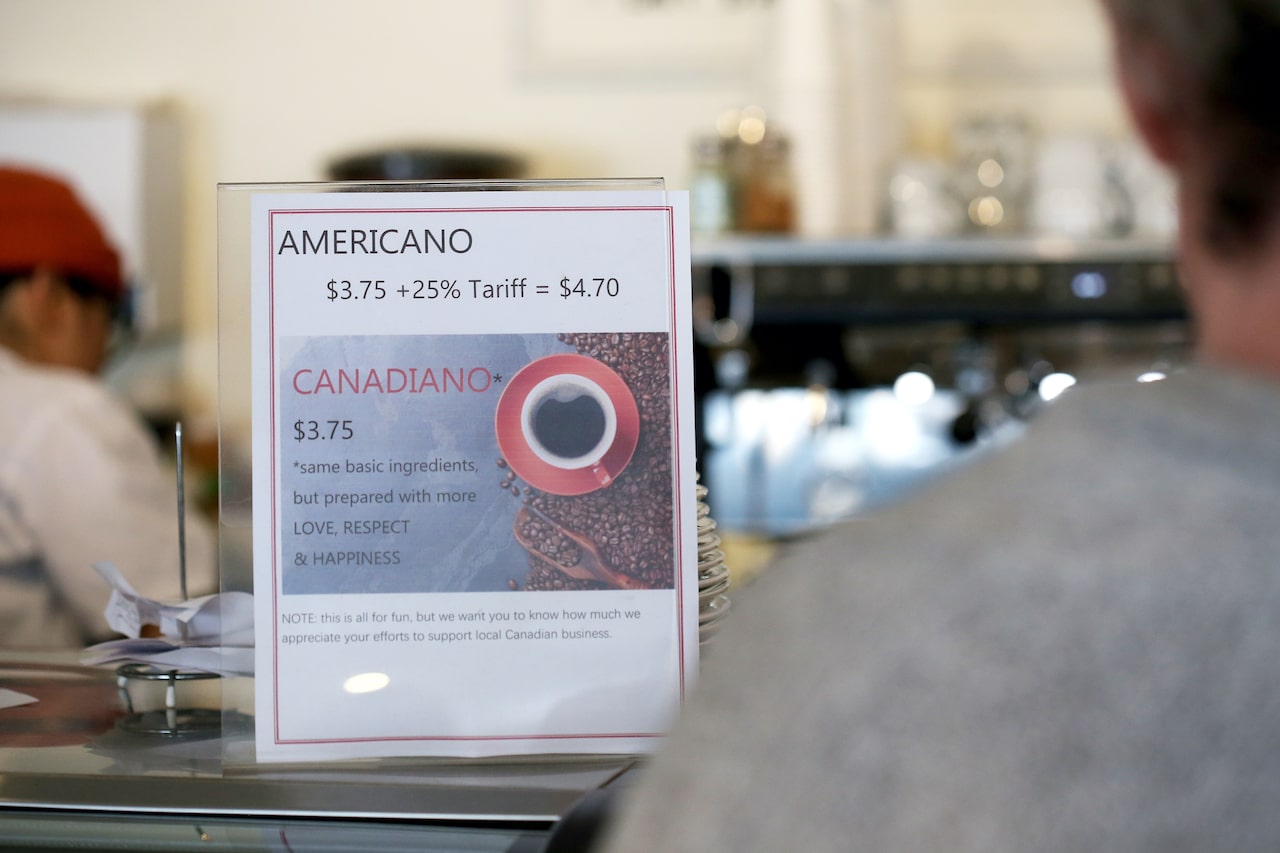
Matt Allard, city councillor for St. Boniface, believes the polling numbers on French-language issues are quite telling. As he sips a coffee at the bustling Le Croissant bakery on a sunny Friday morning, he points to a cheeky sign next to the baristas: With a photo displaying an Americano, it shows that a Canadiano would be cheaper to purchase at $3.75 because the former would cost $4.70 after a 25-per-cent tariff charge.
“Same basic ingredients, but prepared with more LOVE, RESPECT & HAPPINESS,” it states, with a footnote: “This is all for fun, but we want you to know how much we appreciate your efforts to support local Canadian business.”

Matt Allard, city councillor for St. Boniface, describes the community as a bellwether when it comes to voting patterns.
While the sign is humorous, Mr. Allard calls it a harbinger of the community’s likely voting intentions. “They’re watching what’s happening globally and deciding on that. Yes, French is important, but there’s a larger question of who would be best to defend our French.”
Added into the mix is the changing tide of new voters. Over the years, immigrants from French-speaking countries have been encouraged en masse to settle in the enclave, as officials hoped to boost its francophone flavour. The diaspora now hosts its own cultural events, such as African Fashion Week earlier this year, while upward of 51 per cent of students in some St. Boniface schools are Black, Indigenous or people of colour.
When it comes to voting patterns in St. Boniface, Mr. Allard describes the community as a bellwether.
“It’s truly microcosmic of the national trends and isn’t afraid to flip its script. The community almost only elects leaders from the party that forms the government in Ottawa,” he says.

Mr. Allard, who was elected to council in 2014, believes the polling numbers on French-language issues are indicative of voter priorities during an uncertain time.
Mr. Allard was elected to council in 2014 after Dan Vandal, a five-term councillor for the ward, left to run federally for the Liberals. Mr. Vandal represented the riding of St. Boniface-St. Vital until Parliament was dissolved last month.
Mr. Vandal, for whom Mr. Allard worked as an executive assistant, decided not to seek re-election this year, perhaps leaving a window open for the Conservatives and NDP to cinch the gap.
Bellwether status notwithstanding, some voters have yet to decide which way they’re leaning.
“I’m confused as a new voter,” says Fadel Alamou, a computer-science student at Université de Saint-Boniface, originally from Ivory Coast.
Protecting the Francophonie is paramount for him; it’s what led him to the institution where he proudly takes all his classes in French. He’s read all the talking points, watched the debates, and feels his experiences have not been reflected in the current election cycle. “I’m struggling to pick the right person to represent me,” Mr. Alamou says.
His friend Yasmine Zaré, who studies biochemistry at the university, and hails from Morocco, feels the same.
“What I like about my studies is that you can learn English at the pace that feels comfortable, and that there is no pressure to master English in order to excel,” she says.
“Doing my learning in French is part of my Canadian dream. I hope I hear more in the next coming days on these things that are so big to me and my community. But maybe that can only happen after this election, when we are done talking about only tariffs and Trump.”