
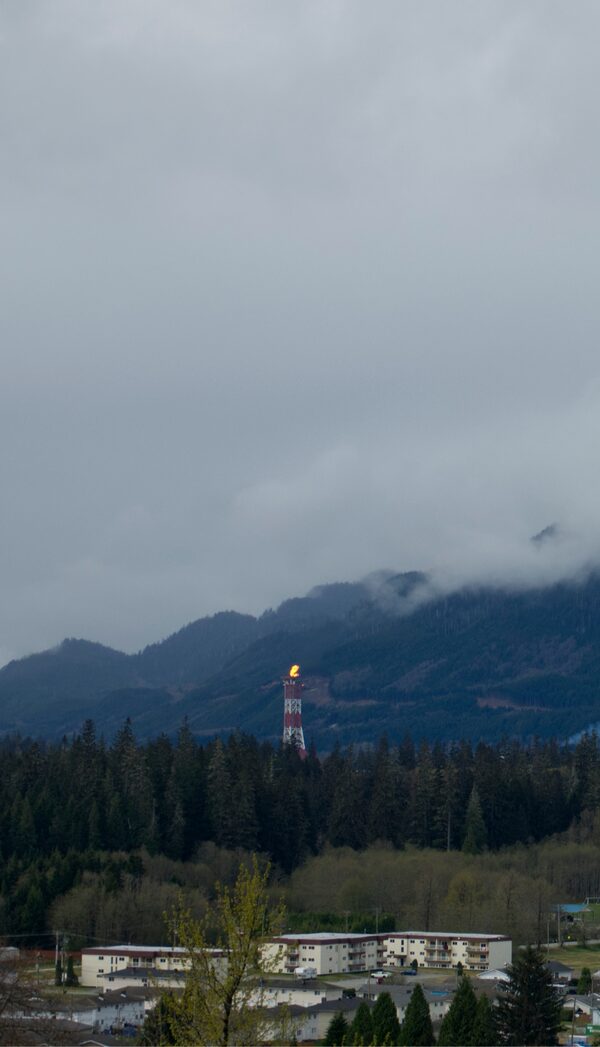
The Globe is visiting communities across the country to hear from Canadians about the issues affecting their lives, their futures and their votes in this federal election.
Kitimat’s construction boom is tapering off. The Help Wanted signs that used to decorate businesses are coming down. And hotel rooms in the northern B.C. port city are no longer packed with construction workers, as the process of building a new, $18-billion gas terminal winds down at the harbour.
But judging by the abundance of $80,000 pickup trucks, the local economy is still going gangbusters.
Residents here have learned to be cautiously optimistic in the face of economic threat, and also restrained in their enthusiasm when things are looking up.
Right now, they’re having to do both at the same time.
“Whether we’re booming or busting depends on the commodity markets,” Haisla novelist and local resident Eden Robinson said. “That’s the reality of a company town.”


There are pickup trucks aplenty at the City Centre Mall, where the Fields department store offers discount wares for an increasingly budget-conscious town.
LNG Canada, the $40-billion liquefied natural gas project that helped transform this tiny northern burg of 8,500 from doom town to boom town, will kick off Canada’s bid to become a global energy player when it comes online later this spring. That’s when the country will, for the first time, begin exporting its gas to somewhere other than the United States.
At the same time, B.C.’s “Aluminum City” is also bracing for the impact of the 25-per-cent tariffs the U.S. imposed on aluminum imports. Last year, $1.1-billion of the $1.3-billion of Kitimat’s aluminum exports ended up south of the border.
“It’s scary,” said Steve Marce, who owns North Coast Mechanical, a plumbing and heating company. He noted that the aluminum industry has been Kitimat’s biggest employer for seven decades. Until a few years ago, Mr. Marce had been living in Langley, B.C., working in plumbing.
Kitimat’s volatility can be wearying, he said, but the upsides of living here can feel as wide and vast as the surrounding rainforests. “I was never going to be able to afford to own a house in the Lower Mainland.” Then a work opportunity brought Mr. Marce to Kitimat. “Now I own two homes and a successful business up here.”


Kitimat, a 20-hour drive from Vancouver, is by any standards isolated. But what it lacks in escalators and bright lights, it more than delivers with the kaleidoscopic beauty of the surrounding inlet.
Humpback whales, wolves and white Kermode bears thrive in the waters and lush forests of the Douglas Channel. (Locals will tell you that sasquatches lope through the forests, too.)
The town exists for one reason: In 1951, the Aluminum Company of Canada decided the Kitimat Valley was the best place for a new smelter and a hydroelectric project big enough to power it.
At the time, it was the largest private project in Canadian history. There was no port, no road, no rail line at Kitimat. The Haisla were the only people there.
When Pierre Berton visited for Maclean’s magazine, he wrote there were 10 bachelors for every “girl.” To counter the climate and remoteness – and attract some women – Alcan chose to build the “city of tomorrow,” at the mouth of the Kitimat River.
Within a few years, the region had become known as “pregnant valley” – a baby boom following hard on the heels of the economic one. It was just as “Uncle Al” – as the smelter is fondly known – had hoped.

Eden Robinson has revisited her childhood home of Kitamaat Village in several novels.Fred Lum/The Globe and Mail
While the booms here have been spectacular, so have the busts. Ms. Robinson, who grew up in Kitamaat Village, on Haisla territory, remembers when some city streets had “For sale” signs at the end of every driveway. This was in 2011, during the last downturn, after the closing of the Eurocan paper mill and Methanex, the local methanol plant. “You could get a handyman special for $35,000,” she said. It was a such a “gloomy, weird place,” she made it the setting for her Trickster series, about a teenaged boy who keeps his family afloat by selling drugs.
Ms. Robinson said the “big underlying fear” here is that once the industries are no longer viable, “everything will collapse again, and we’ll be left with a ghost town.”
The key to getting out of that feast-or-famine cycle, Mr. Marce said, is ensuring Ottawa gives the green light to more projects like LNG Canada. “People here want development. They want the major projects. They want them done safely, with as little impact on the environment as possible.”
That’s a central message for candidates running here in the federal election campaign.
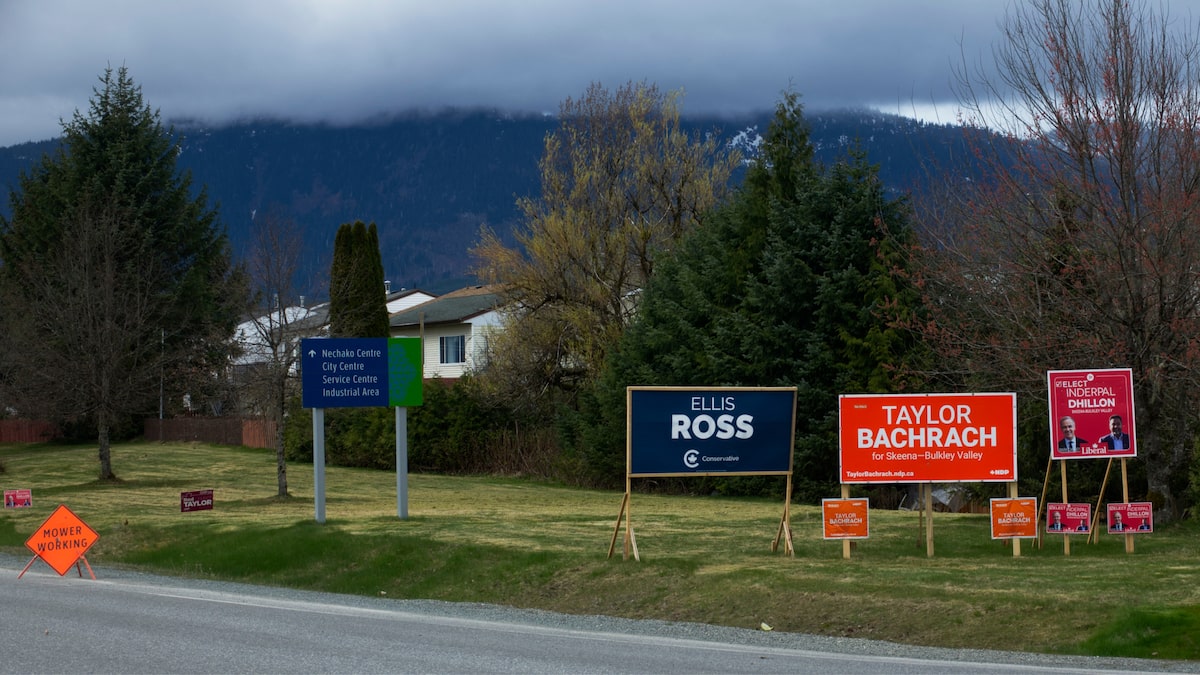
Conservative Ellis Ross, a former Haisla chief and provincial MLA, is running on a platform that includes touting the economic gains for the Haisla and the surrounding community that followed after the First Nation worked hard to get the LNG project approved. “This would not have happened under Carney,” he said, referring to Liberal Leader Mark Carney.
Mr. Ross is trying to unseat the NDP incumbent, Taylor Bachrach, who has represented the riding since 2019. Mr. Bachrach, a former mayor of Smithers – a three-hour drive to the east – is also vocal about responsible resource development, telling a town hall earlier this month that resource companies “need to do right by this environment that we enjoy so much.” That includes ensuring projects minimize environmental impacts and meet obligations of Indigenous consent and international climate goals, he said.

Brandon Highton left Kitimat after high school in 2002 along with, he estimates, about 75 per cent of his graduating class.
“I was never coming back.”
But a decade ago, after earning a finance degree and working in banking in Calgary, Mr. Highton returned with his wife, also a Kitimat native. He got a job in construction there, immediately doubling what he was earning in Alberta.
By then, the city was roaring again. Rio Tinto had acquired Alcan and had begun a major expansion. Construction on the LNG Canada project was under way. A large core of Mr. Highton’s friends from high school were drawn home, too.
“The money was just too good,” Mr. Highton explained.

Mr. Highton, who co-founded the Two Peaks brewery with a friend, says he's in Kitimat to stay.
Two years ago, he launched Two Peaks Brewing with one of his lifelong pals, Nick Markowsky. They named the business for the two summits of Kitimat’s local range, Mount Elizabeth.
Mr. Highton misses the restaurants in Calgary, but Kitimat is quiet and safe. He has no plans to leave.
Like him, Ms. Robinson left at 18, and swore up and down she was done with Kitimat. She moved back after publishing Monkey Beach, her “homesick book,” which she wrote while “bopping around” the Lower Mainland.
Growing up, she used to complain that everyone here knew her backstory – and vice versa. “It felt like living in a fishbowl,” she explained. “But now, in my 50s, it feels very comfortable.”
For now, it feels like the community is holding its breath. “We just don’t know what’s going to happen yet.”
Editor’s note: Owing to an error introduced during editing, a previous version of this article incorrectly attributed a statement made during a candidate's forum earlier this month about the need for resource development to be environmentally sound to the riding’s NDP incumbent, Taylor Bachrach. In fact, the comment was made by Rod Taylor, a candidate for the Christian Heritage Party. Mr. Bachrach said resource companies "need to do right by this environment that we enjoy so much." That includes ensuring projects minimize environmental impacts and meet obligations of Indigenous consent and international climate goals.
East to West: More from The Globe and Mail
The Decibel podcast
Through the 2025 election, producer Kasia Mychajlowycz is travelling across Canada to ask locals what’s on their minds. In Nova Scotia and New Brunswick, many spoke of increasing patriotism and anger at Donald Trump, as well as their struggles with cost of living in rural communities. Subscribe for more episodes.
From our reporters
Nelson’s war resisters hear echoes of an authoritarian past down south
This B.C. riding broke ground for the Greens. But its mostly senior population is eyeing a change
Regina powwow tries not to let trade malaise break its stride
Trois-Rivières, feeling sting of tariffs, considers abandoning the Bloc