The tent looked deserted. It stood in an empty lot, buffeted by a piercing wind and surrounded by ankle-deep snow. But inside, someone was stirring.
A grey-haired man lay on an air mattress, covered from head to toe with sleeping bags and blankets. The necessities of his life lay strewn around him: a pair of winter boots, a half-eaten bowl of stew, plastic bottles full of frozen water. He didn’t want to give his full name but said he had moved into the tent in April after getting out of jail with nowhere to go.
As temperatures dipped into the minus twenties, most people who live rough in Thunder Bay began sleeping inside, finding a shelter bed or a couch in someone’s house. But a few have stayed on, often fearful of being robbed or getting sick if they bunk with others.
Even in the depths of a harsh winter, people are living outdoors in many Canadian cities, trying to survive in the shabby encampments that have become a common sight in recent years. What to do about those camps has divided communities across Ontario, which goes to the polls on Thursday.
Progressive Conservative Leader Doug Ford, vying for a third term as premier, has said his government would bring in legislation allowing towns and cities to clear them, even if that means the province has to invoke the notwithstanding clause of the Constitution. The NDP and the Liberals have attacked the plan, saying what is really needed is more housing and better addiction treatment.

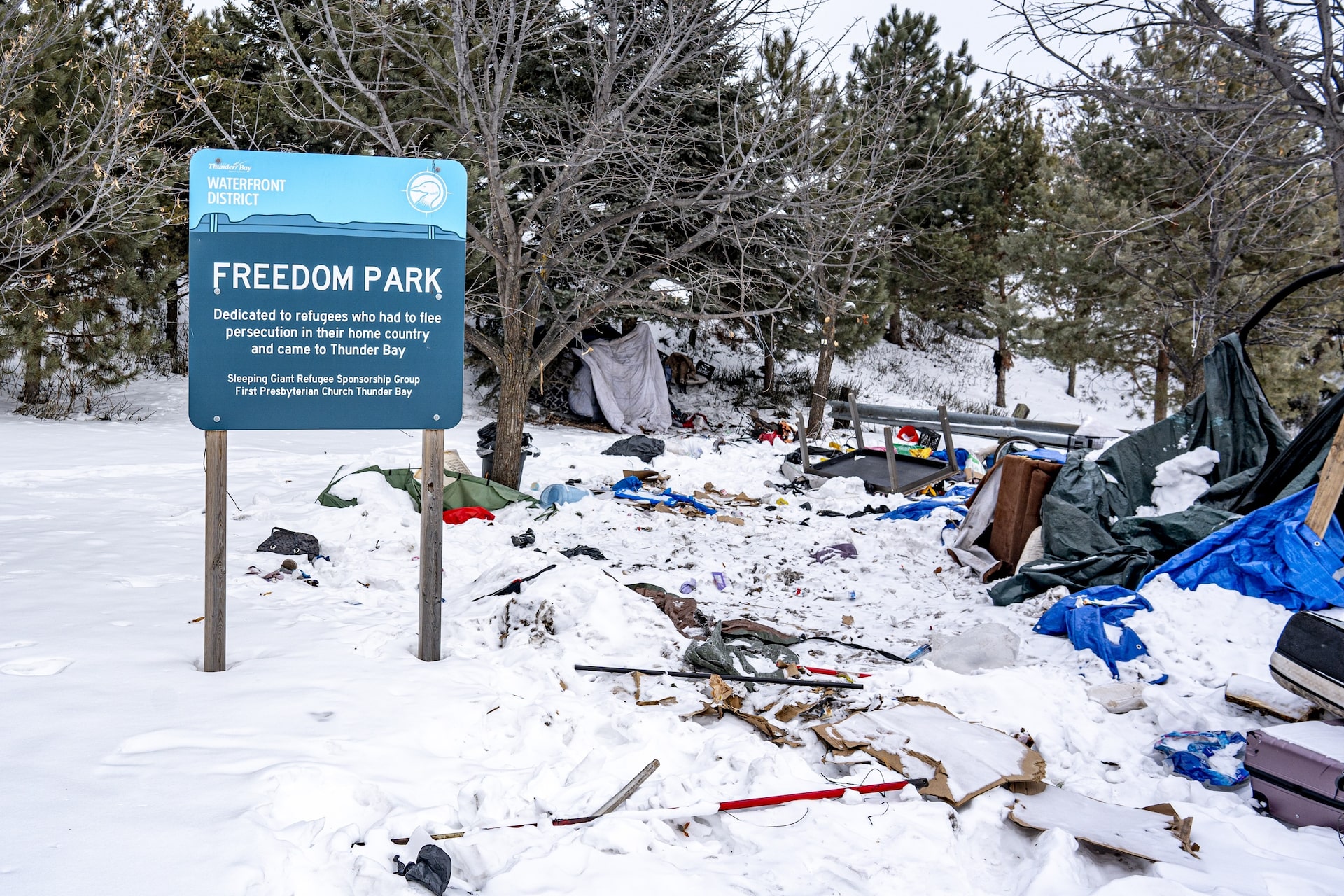
Even in the depths of winter, around 30 people continue to live in outdoor encampments in Thunder Bay, according to local care groups.
Thunder Bay is as polarized as any community grappling with this issue. Until a few years back, most of its homeless would camp away from public view, in the woods or by the rivers. Now, big, highly visible encampments have sprung up around the historic grain-handling city of 120,000.
The incumbent MPP for one of the two provincial ridings in Thunder Bay, the NDP’s Lise Vaugeois, said rent is so high and housing in such short supply that low-income people are forced onto the street. Even if the government could clear people out of the encampments, “Where are they supposed to go?” she asked. She wants tougher rent controls and higher social-assistance rates.
Ms. Vaugeois is being challenged by Progressive Conservative Rick Dumas, mayor of Marathon, Ont., in the riding of Thunder Bay–Superior North. He declined to comment on the encampments issue. So did the Liberal candidate, Brian Hamilton, a city councillor in Thunder Bay who recently came under fire for social-media posts from 2014 supporting Jian Ghomeshi after his dismissal from CBC amid sexual assault allegations. Mr. Hamilton has apologized and the Liberals are standing behind him.
A second local riding, Thunder Bay–Atikokan, is being defended by a PC incumbent, Kevin Holland. Both ridings featured close races in the last election in 2022 between the New Democratic and PC parties, with the Liberals not far behind.
A report last month from the Association of Municipalities of Ontario found that 81,000 people were homeless in Ontario last year, 25 per cent more than in 2022. In northern Ontario, the numbers have tripled since 2016, reaching 5,377 last year. About three-quarters of the homeless population in Thunder Bay is Indigenous, according to a recent city count.
A dozen Ontario mayors wrote a letter to Mr. Ford last fall demanding stiff sanctions on open drug use and encampments. Thunder Bay’s Ken Boshcoff was not among them. The Lake Superior city has taken a gentler “human-rights” approach, as a recent city report termed it.
With millions of dollars in funding from the province, the city has helped build transitional housing, run outreach programs, open a new warming centre and step up services, such as garbage collection, around the tents.
The city’s boldest idea is to create a sanctioned temporary village for the homeless with up to 100 “tiny-home” units. The question is where to put it. City council had settled on a site in Fort William, the southern half of the city but backed off last fall after objections from locals. It hopes to find another place.
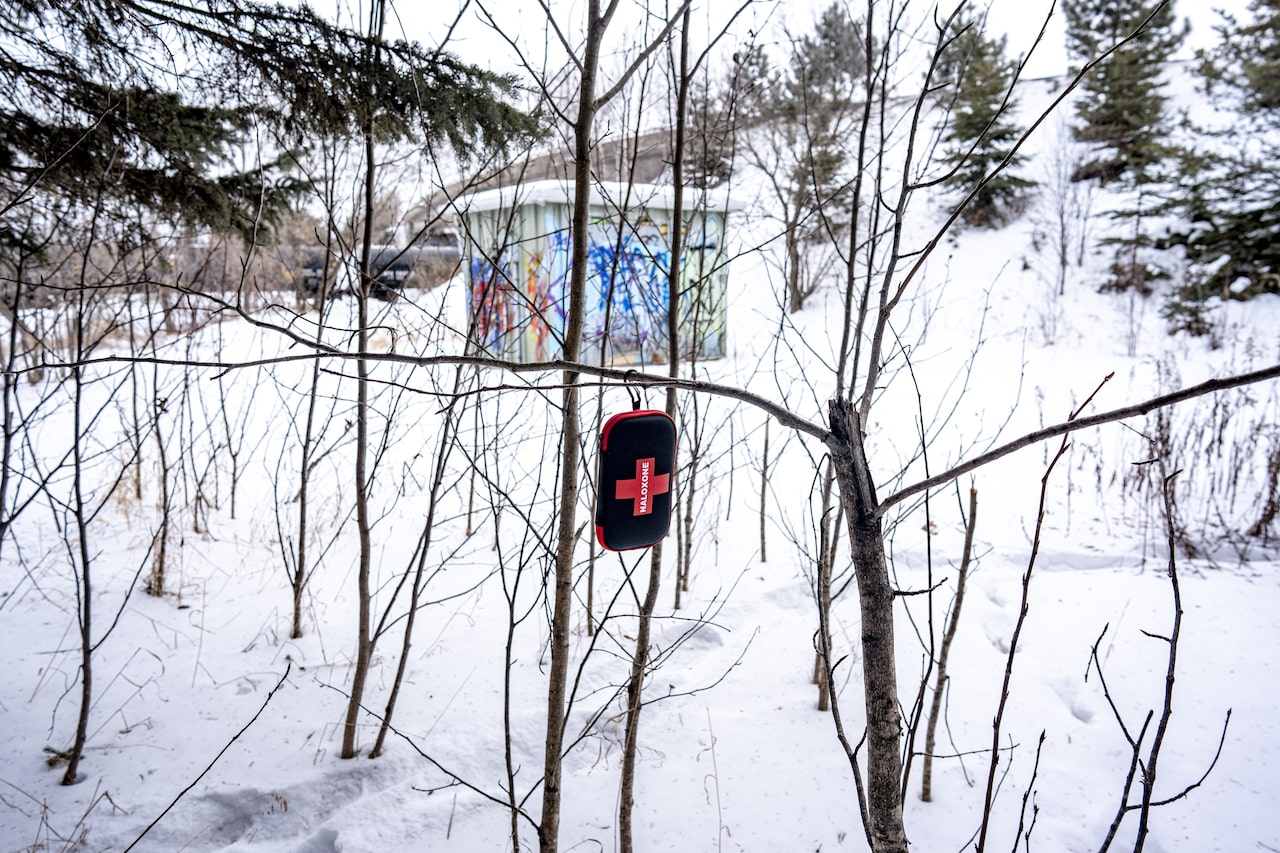
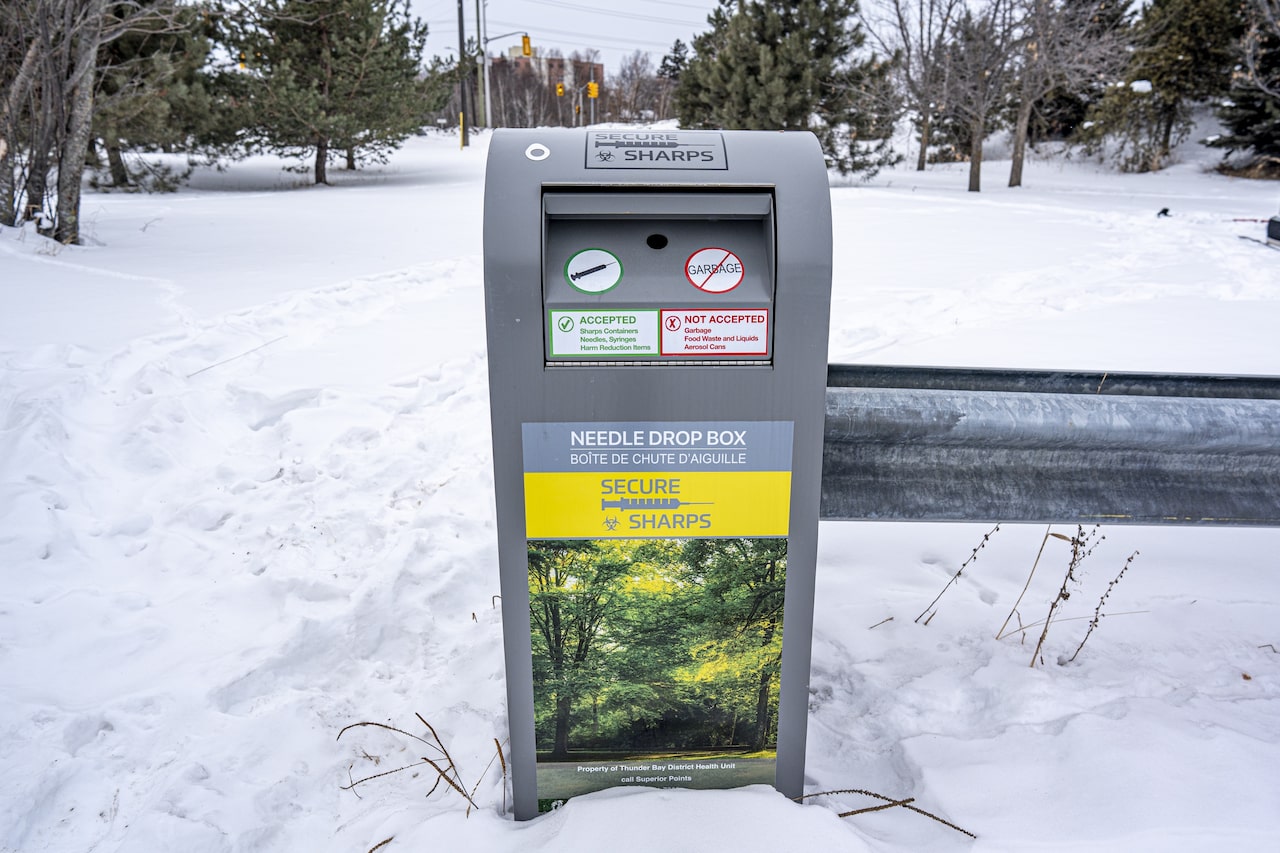
In the meantime, the camps keep growing. Some of the inhabitants have created substantial structures using tarpaulins, plywood and even collapsible ice-fishing huts. They use generators for power, propane heaters for warmth and gas barbeques to cook their food. Local officials have installed portable toilets and “sharps” boxes where drug users can dispose of their used needles.
Last summer, the number of people living in tents peaked at about 200. Even now, 30 or so stay outdoors, local care groups say.
The risks they face are many. Some suffer drug overdoses. Thunder Bay has one of Ontario’s highest death rates from opioids. Others die in fires that break out when they warm their tents with candles or heaters. The charred remnants of a tent that burned to the ground last month lie in one Fort William encampment. A man was killed and two were taken to hospital with burns.

Tamara Kilby is an outreach worker at Elevate NWO in Thunder Bay. In less than two years on the job, she has found four people dead in the community.
Outreach worker Tamara Kilby often visits the encampments to hand out warm clothes and check on residents. She has found four people dead in a year and a half on the job. “Some of them don’t even make the news,” she said. One kind-hearted guy who always wore a red team jersey died of a suspected overdose just after Christmas. Ms. Kilby thinks of him whenever she sees someone in a red shirt.
Murray Bluecoat, 46, came to the city from a northern Indigenous community to help his mother get through kidney dialysis. When she died, he could not make rent and fell into homelessness a couple of years ago, spending time in a tent during the good weather.
If Mr. Ford wants to wind up the encampments, Mr. Bluecoat said, he had better provide more shelter spaces or affordable apartments for people, because “you can’t just sweep them under the rug.” He wishes politicians such as the Premier would spend a day in his shoes, roaming the streets. “I bet you he couldn’t even fathom the idea.”

Murray Bluecoat came to the city from Muskrat Dam First Nation to help his mother through kidney dialysis. After she died a couple of years ago, he could not make rent and fell into homelessness.
Even if they sympathize with the plight of people like Mr. Bluecoat, many residents say the encampments are making them feel unsafe.
Aldo Ruberto says they have caused a rash of shoplifting, public intoxication, open drug use, smashed store windows and street fights, a complaint being echoed in communities all over Ontario. “Where is the law?” asks Mr. Ruberto, a former city councillor who chairs the business improvement area in Fort William. Though he said he is a lifelong Liberal, he thinks Mr. Ford is on the right track.
Holly Gauvin, the head of a group that supports the homeless, called Elevate NWO, said she sees an ugly backlash growing in the city. People have gone into the encampments to slash tents, steal stuff and even kick the inhabitants. The government, she added, is making a huge mistake by deciding to close the city’s only supervised-consumption site, one of 10 the Ford government is shuttering and replacing with addiction-recovery hubs.
As the debates rage on, those in the encampments just do their best to get by. In a gravelly voice tinged with the accent of his native Newfoundland, the grey-haired man in the empty lot said he has no friends or relatives around to help him. A trucker by trade, he lost his prized possession, a high-end pickup, when he went to jail. So he lies in a tent amid the snow. In a place like Canada, “one of the best countries in the world,” he said, “this shouldn’t even be.”