
The property where David and Dianne Nadalin’s house once stood on the shores of Lake Erie in Leamington, Ont.Melissa Tait/The Globe and Mail
More • Wheatley explosion: The Globe investigates • Hydrogen sulphide explained • Methodology: Finding Ontario’s old gas wells
A year before an explosion wrecked several buildings and injured about 20 people in Wheatley, Ont., a retired couple was killed in a blast at their home only 10 kilometres away.
The possible culprits in both cases are old, leaky natural gas wells.
David and Dianne Nadalin died when their small beach house along the Lake Erie shore outside Leamington, Ont., exploded on July 12, 2020, with such force that debris was thrown more than 40 metres.
While the Office of the Fire Marshal (OFM) did not reach a firm conclusion about the cause, methane gas from a well at the edge of the couple’s property was noted as a potential source along with a propane-gas system that provided heat and powered appliances, according to OFM’s confidential fire investigation report obtained by The Globe and Mail under freedom-of-information legislation. Unsafe levels of hydrogen sulphide were also found around a gas well vent near the house, which is located in a narrow, cottage-lined spit of land known as Marentette Beach.
The explosion at Marentette Beach set off alarm bells for Ontario government engineers and other experts who had been warning successive provincial governments about thousands of abandoned wells in Southwestern Ontario, many of them leaking toxic gases.

The site of the Nadalin's home on July 13, 2020, a day after the explosion.Office of the Fire Marshal/Supplied
In October, 2020, the Professional Engineers of the Government of Ontario (PEGO) wrote to the then-ministers of Natural Resources and Forestry, Environment, Transportation and the Solicitor General urging them to beef up engineering oversight within government, including over abandoned wells.
“A recent explosion that killed two Ontarians nearby to Leamington should be a wake-up call to everyone, but senior managers at MNRF continue to ignore our concerns,” wrote Barbara Sylvestre-Williams, then-president of PEGO, which represents about 550 engineers within the public service.
Investigation: Despite pleas for help, a gas explosion rocked this Ontario town. What went wrong?
Asked to respond to calls for more action in the wake of this and other incidents, Ontario’s Ministry of Natural Resources sent a statement saying it supports municipalities by providing information on potentially hazardous wells and “technical support on wells and geology and decommissioning high-risk wells.” It says fire departments or other service providers can install gas detection systems.
“The Province also works collaboratively with the Municipalities to share knowledge and expertise, and to work together in finding solutions toward our collective goal of public safety,” the statement reads.
In the wake of last August’s explosion in Wheatley, pressure on the province to act has intensified, including calls to map risky wells and seal them properly – and to encourage residents living near wells to install hydrocarbon gas detectors.

The lack of a definitive conclusion from the OFM has left the Nadalins’ family with many questions.Supplied
At the Nadalins’ Marentette Beach home, family and friends often visited for summer parties and barbecues. No one ever thought much of the rotten-egg odour that would sometimes waft over them during their get-togethers. “We figured there were farmers in the area and that it’s probably nothing to worry about,” said the couple’s daughter Carly Lemire, who lives in Windsor.
Her parents had bought the modest house, built in 1960, after they both retired from work at the Windsor Regional Hospital, where Mr. Nadalin was a respiratory therapist and his wife was a registered nurse. The couple spent winters in Texas, but summers were enjoyed at beloved Marentette Beach.
Her parents had not been warned there was any risk from the old well, she said. Her mother complained about odours “now and again,” especially when the wind was strong, but they didn’t think anything was amiss.
“They just figured it’s an old well, and that’s that,” Ms. Lemire said. “For 10 years we’ve had fires and barbecues and all kinds of stuff and nothing ever happened so we figured nothing was going to happen.”
Tests done after the explosion showed a “high level of migrating gas releasing from the ground within the [dirt floor] basement as well as the surrounding areas,” states the report from the Office of the Fire Marshal. One gas sample showed the methane gas in the basement matched a sample taken from the well vent pipe, 33 metres from the house.

This gas well vent was built in 1986 after gas was found leaking from underground.
The gas well vent – a metal pipe extending more than three metres above ground – was a major focus for OFM investigators. They found levels of methane exceeding flammable limits, and levels of hydrogen sulphide more than 10 times higher than safe-exposure limits.
The well pipe was installed in 1986 after gas was found migrating from the ground, according to correspondence in 1991 between MNRF and the town of Leamington, cited in OFM’s fire protection engineer report. The pipe had likely corroded underground owing to the “high concentration” of hydrogen sulphide, which is highly poisonous and known to be “extremely corrosive” to steel, the report said. It also said that corrosion of the pipe likely caused the “widespread” presence of methane in the soil found after the explosion.
OFM investigators could find no records for the well in Ontario’s Oil, Gas and Salt Resources Library. “It is well known that many wells, numbering in the thousands … have been abandoned and orphaned with casings rusting, rotting or removed, resulting in a hazardous situation for property owners,” the OFM’s engineer report states.
For residents of Wheatley, Ont., life is full of aftershocks from last summer’s gas-leak explosion
After the initial gas testing in the wake of the explosion, investigators and representatives from other agencies including MNRF returned later that month to take samples deeper in the basement soil.
Their readings were so alarming that an OFM investigator and an Enbridge Gas technician went door-to-door in the area with a gas detector to check several neighbours’ basements. They found gas readings in two sump pump pits, though the levels at that time were low. They recommended the Leamington Fire Service pass on their concerns to local property owners.
Leamington Fire Chief Andrew Baird told The Globe his department directed the local property owners’ association to the website of the Ministry of Agriculture, Food and Rural Affairs, which advises residents on how to find out if there is a well nearby. Residents were also told to call the Ontario Spills Action Centre if they smelled a rotten-egg odour.
While OFM investigators considered a propane leak from the home’s appliances or pipes as a possible fuel for the blast, almost all those potential causes were eliminated. Propane was still cited in their report because one pipe fitting connected to the water heater could not be found for examination after the explosion.
The lack of a definitive conclusion from the OFM has left the Nadalins’ family with many questions.
Ms. Lemire and her brothers are consulting with a lawyer to find out “what do we need to do to get more solid answers,” she said.
She doubts the explosion was caused by the propane system in the house: “You found all this methane gas on the property and you’re saying, ‘Oh it could be propane?’ Seriously, come on.”
Ms. Lemire thinks more should be done to protect the public, not only at Marentette Beach, but across Ontario. Government officials should be identifying other possible dangerous well sites, she said.
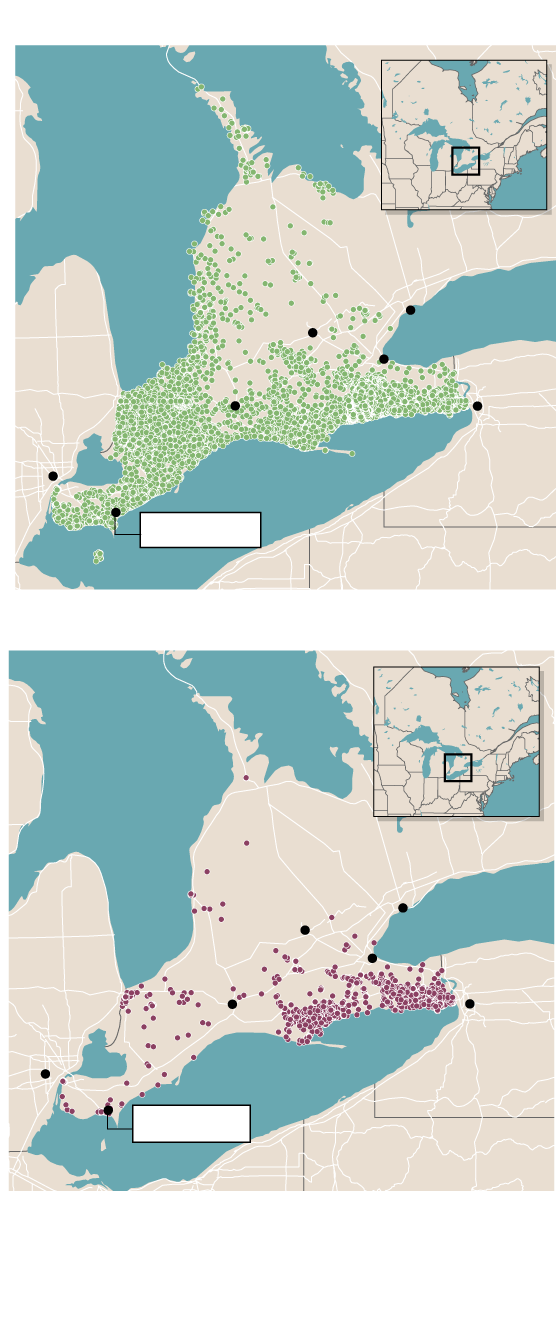
Abandoned wells
ONT.
QUE.
Georgian
Bay
Detail
Lake Huron
U.S.
ONTARIO
Toronto
L. Ontario
Kitchener
Hamilton
MICH.
London
Buffalo
Detroit
NEW YORK
Lake Erie
Wheatley
OHIO
PENNSYLVANIA
Wells within 75 metres of a structure
ONT.
QUE.
Georgian
Bay
Detail
U.S.
Lake Huron
ONTARIO
Toronto
Kitchener
L. Ontario
Hamilton
MICH.
London
Buffalo
Detroit
Lake Erie
NEW YORK
Wheatley
OHIO
PENNSYLVANIA
Only wells with location information and accuracy higher
than 50 metres are included.
chen wang and john sopinski/the globe and mail,
Source:Ministry of Natural Resources and Forestry
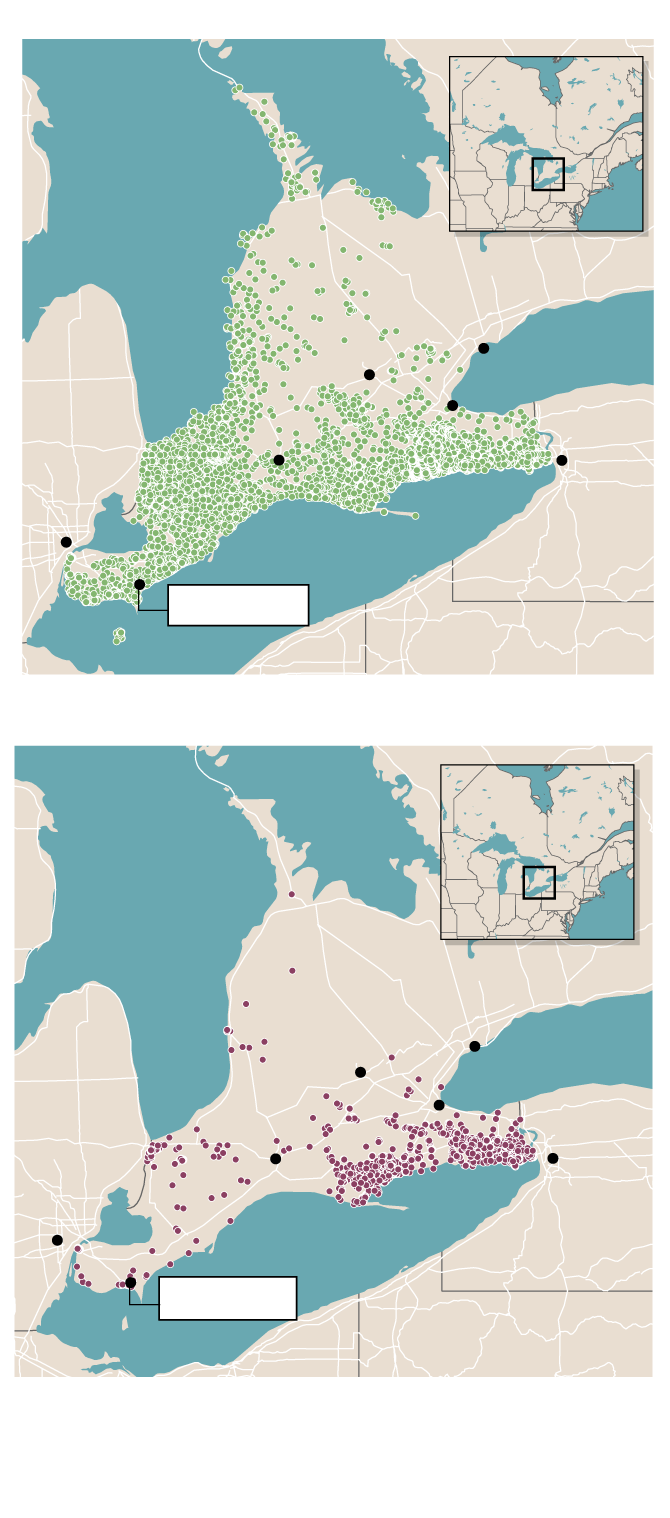
Abandoned wells
ONT.
QUE.
Georgian
Bay
Detail
Lake Huron
U.S.
ONTARIO
Toronto
L. Ontario
Kitchener
Hamilton
MICH.
London
Buffalo
Detroit
NEW YORK
Lake Erie
Wheatley
OHIO
PENNSYLVANIA
Wells within 75 metres of a structure
ONT.
QUE.
Georgian
Bay
Detail
U.S.
Lake Huron
ONTARIO
Toronto
Kitchener
L. Ontario
Hamilton
MICH.
London
Buffalo
Detroit
Lake Erie
NEW YORK
Wheatley
OHIO
PENNSYLVANIA
Only wells with location information and accuracy higher
than 50 metres are included.
chen wang and john sopinski/the globe and mail,
Source:Ministry of Natural Resources and Forestry
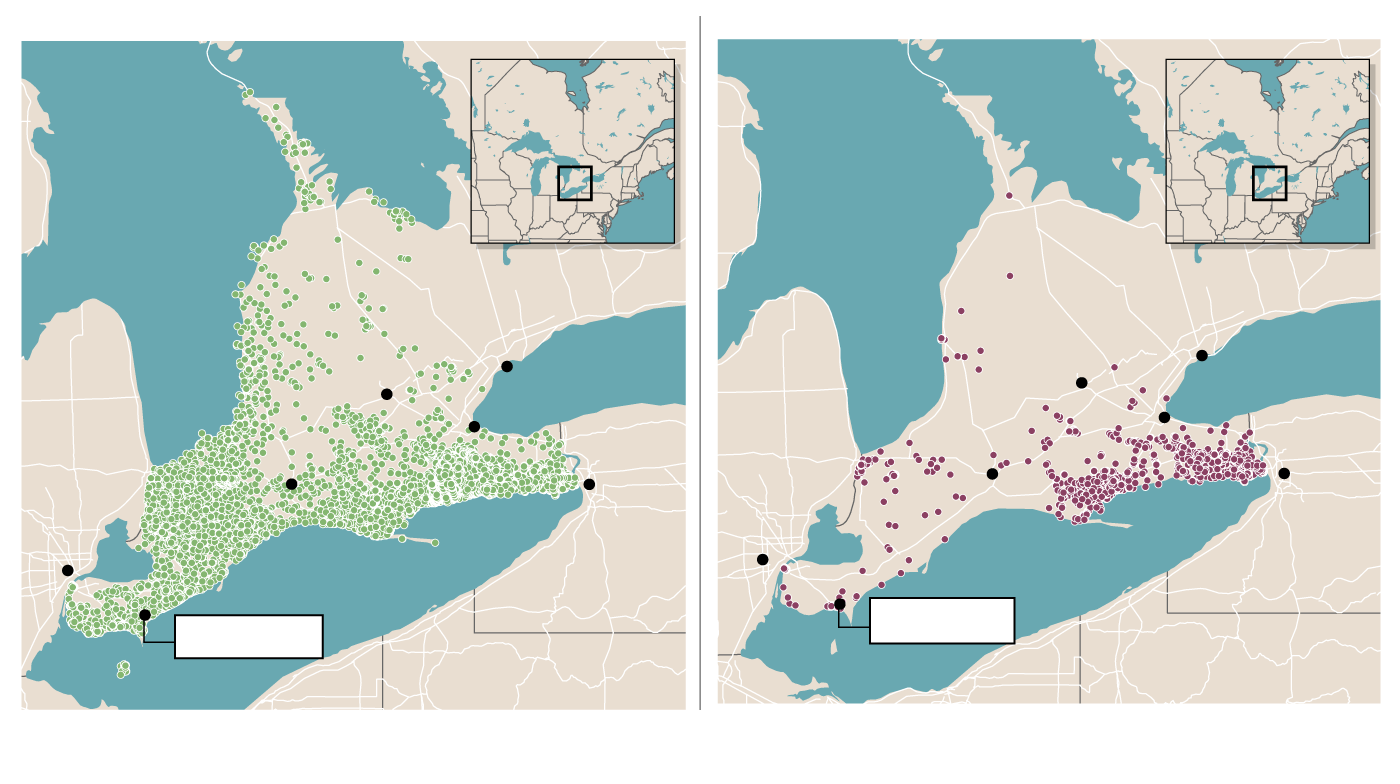
Abandoned wells
Wells within 75 metres of a structure
ONT.
QUE.
ONT.
QUE.
Georgian
Bay
Georgian
Bay
Detail
Detail
U.S.
Lake Huron
Lake Huron
U.S.
ONTARIO
ONTARIO
Toronto
Toronto
Kitchener
L. Ontario
L. Ontario
Kitchener
Hamilton
Hamilton
MICH.
MICH.
London
London
Buffalo
Buffalo
Detroit
Detroit
Lake Erie
NEW YORK
NEW YORK
Lake Erie
Wheatley
Wheatley
OHIO
PENNSYLVANIA
OHIO
PENNSYLVANIA
Only wells with location information and accuracy higher than 50 metres are included.
chen wang and john sopinski/the globe and mail, Source:Ministry of Natural Resources and Forestry
For geoscientist Stewart Hamilton, the high water levels in Lake Erie at the time is another circumstance pointing to the gas well as the possible cause of the Nadalins’ death.
Dr. Hamilton, who recently retired as senior science leader with the Ontario Geological Survey, interpreted the chemical analysis of the gas samples for the OFM. In a letter to OFM investigators, he said basement sump pumps, such as the one in the couples’ home, can draw methane-saturated groundwater into a house from “10s of metres” around. That gas can later release into the air and fuel an explosion, he explained to The Globe.
Bill Timbers, a chemical engineer from Alberta specializing in risk management, said additional safety measures are needed at the Marentette Beach explosion site, such as restricting access to the area around the well vent with fencing and adding warning signs. The well should be monitored for gas releases, he said, and the gas should be sampled to determine how fast it is flowing and which chemicals are present.
The public “is not adequately served” as things stand now, Mr. Timbers said. He would like to see Ontario develop risk maps for areas with known oil and gas activity. Other jurisdictions map earthquake and hurricane zones, he said in an interview. “There’s been a few explosions, so why don’t they have a map?”
Dr. Hamilton recommended that people living near gas wells should install special hydrocarbon gas detectors in their basements. The gas alarms, which cost around $70 and resemble a regular fire or carbon monoxide alarm, plug into an electrical outlet and give warning of high levels of propane or natural gas. The main component of natural gas is methane.
Detectors may also be important for residents with water wells in most rural areas of Southwestern Ontario because gas can enter the wells. “I don’t believe in scaring people, but honestly I feel we’ve been sitting on this for too long,” he said.
In August, 2021, the centre of downtown Wheatley, Ont., exploded, injuring 20 people, and destroying its downtown core. It was the during the third hydrogen sulphide leak in as many months. It never should have exploded. See the full investigation at tgam.ca/WheatleyExplosion
The Globe and Mail
With reports from Jeff Gray in Toronto and Emma Graney in Calgary
If you have information to help inform The Globe’s reporting on abandoned wells, please e-mail tips@globeandmail.com
Our Morning Update and Evening Update newsletters are written by Globe editors, giving you a concise summary of the day’s most important headlines. Sign up today.