Physician-assisted death became legal in Canada a decade ago, and more than 76,000 people availed themselves of the procedure between 2016 and 2024, according to data from the federal government.
Over the years, the federal government has amended and expanded medical assistance in dying to include not just people whose death was reasonably foreseeable, but to those living with an incurable condition when their quality of life no longer felt sustainable.
MAID will be expanded next year to those whose sole underlying condition is mental illness, unless Ottawa legislates a delay for the third time.
Behind the law, there is a more human side to the story in the voices of those who have chosen assisted death and the reflections of their loved ones and friends who’ve supported the decision or disagreed with it.
The Globe and Mail has collected five of those accounts.
Tom Campbell
Date of MAID: Sept. 3, 2017
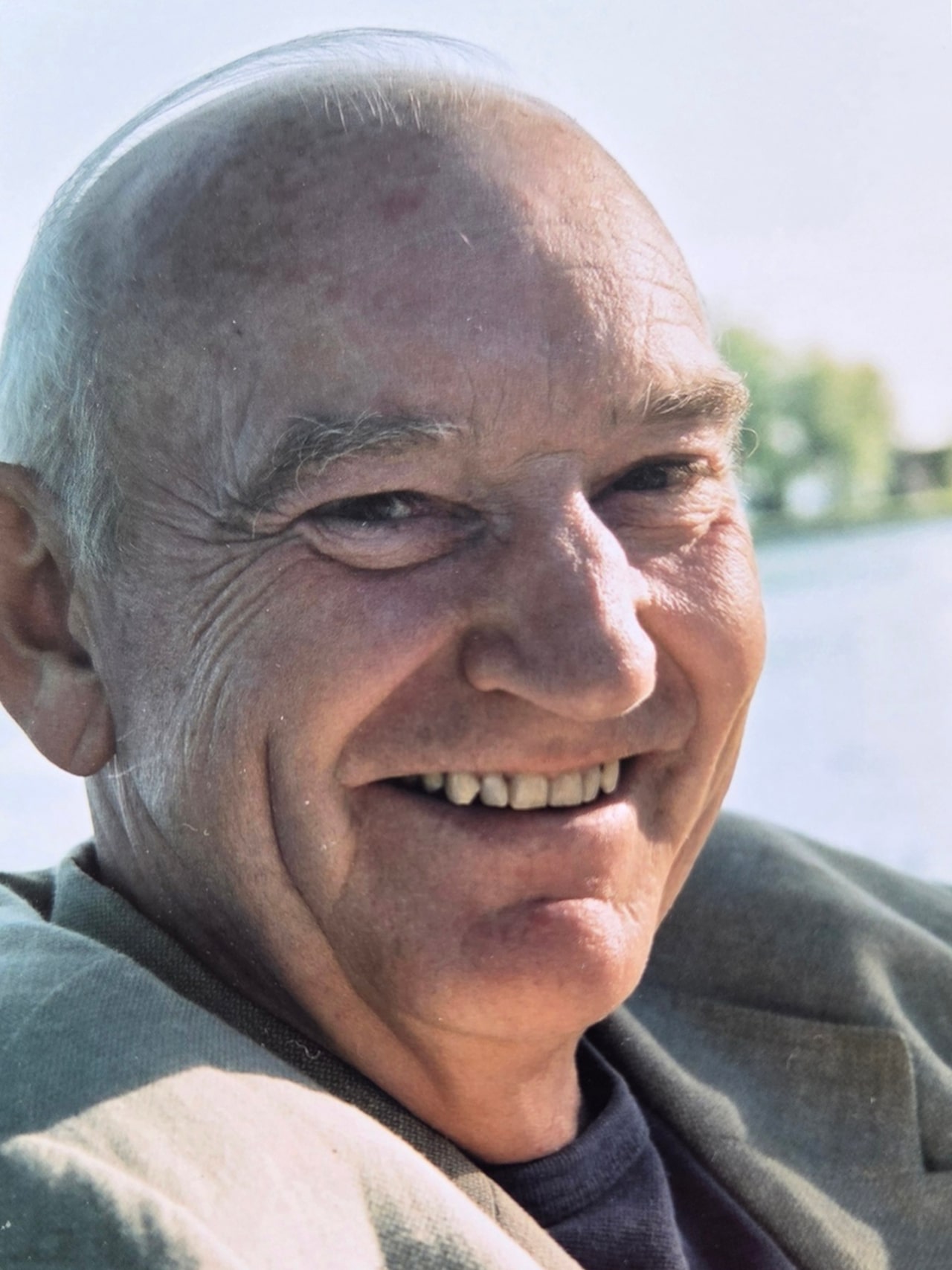
Tom Campbell earned many professional accolades in his 83 years, and served as deputy minister of health in Ontario in the 1980s. He had a loving family and many friends. Most of all, he aspired to be kind.
Mary Mogford remembers his wit, care and confidence. They spent 41 years of their lives together.
“Everybody says this about a loved partner, but he was a very remarkable person,” Ms. Mogford recalls.
Mr. Campbell was a fervent supporter of the 2016 MAID law. He believed it was a basic human right to decide how one wishes to die.
The following year, as he faced bladder cancer, he knew he wanted to end his life with the help of his physician.

Mr. Campbell and his children on a family vacation to England.Mary Mogford/Supplied
Mr. Campbell also wanted this spelled out in his obituary, a rare move at that time. In it, MAID was described as a “wonderfully humanitarian addition to the health system which he had once led.”
“He wanted to help others understand it’s their basic human right to have MAID if they wish to die with dignity,” Ms. Mogford says.
In the early days of MAID, she remembers the challenge for Mr. Campbell to find a health care provider to administer the procedure.
Eventually, he was successful, but he saw MAID as an insurance policy of sorts; he hoped to stay alive many months longer.
Instead, excruciating pain broke through as cancer advanced to his lymph nodes. He then prepared for MAID at his Newcastle, Ont., home on Sept. 3. Mr. Campbell was not afraid of death.

Beyond his professional achievements in public service, Mr. Campbell was a lifelong skier who took to the slopes until the age of 82.Courtesy of Mary Mogford
“He said, ‘If you could go into a deep, dreamless sleep from which you wouldn’t wake up, why would you be afraid of that?’ He didn’t want to leave us, but he didn’t want to stay with unbearable pain,” Ms. Mogford says.
On his last morning alive, he got out of bed and dressed in a blue blazer and white shirt. A ceremony unfolded in his living room, where he was surrounded by close friends.
Afterward, Mr. Campbell, his wife and his two children, John and Alexandra, went into the household den, a comfortable space where he had retreated while in considerable pain.
There, Dr. Ed Weiss was waiting to administer the procedure.
Dr. Weiss said: “‘You understand, Tom, that the injection I’m going to give you is going to end your life,’ ” Ms. Mogford recalls. “Tom said: ‘At last.’ ” The family held each other.
“If death can be beautiful, it was beautiful.”
– Kristy Kirkup
Audrey Parker
Date of MAID: Nov. 1, 2018
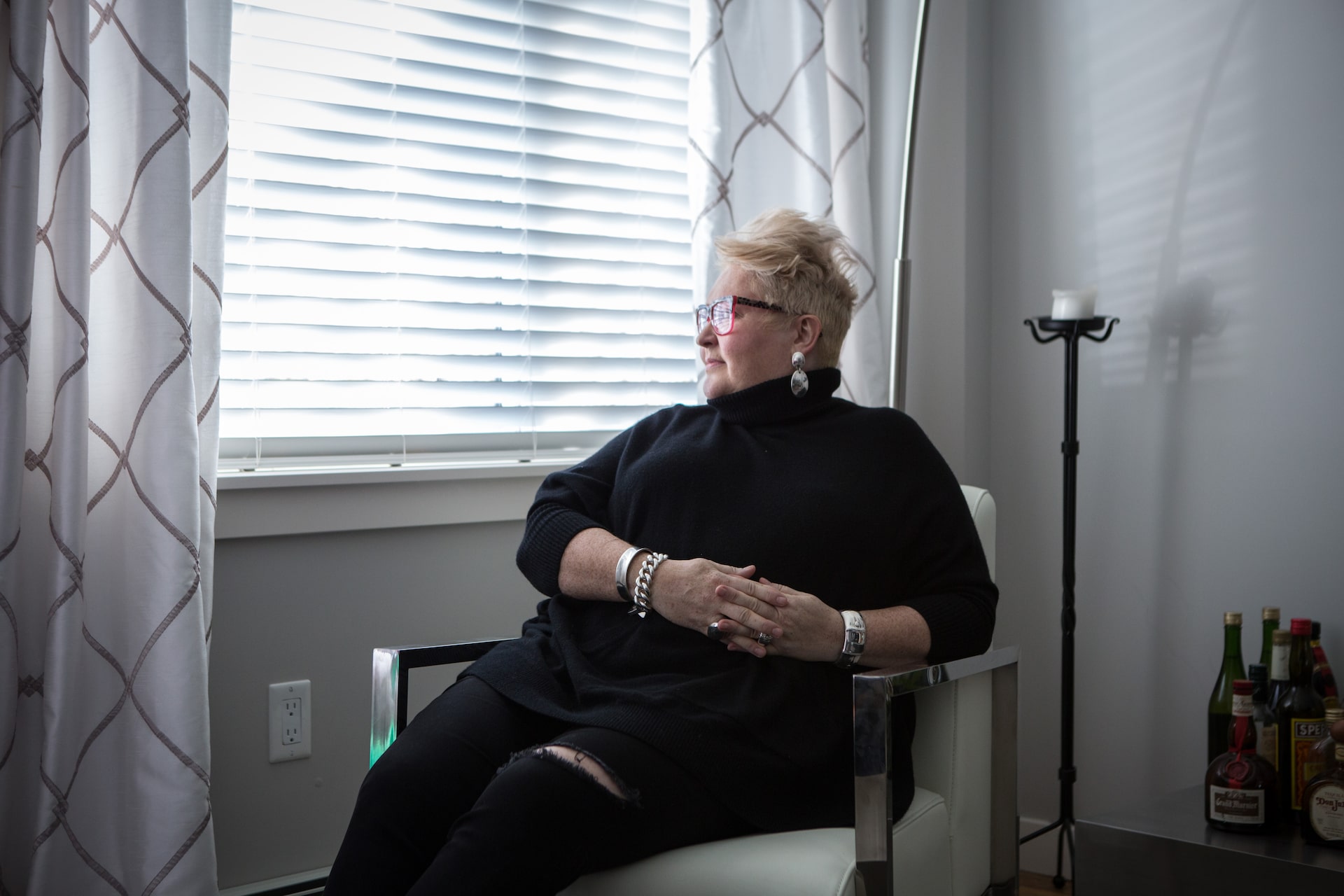
In the month leading up to her death, the effervescent Audrey Parker would lie in her king-sized bed known as The Bed of Truth.
From there, the 57-year-old divorcee spoke candidly, sharing frank advice with her family and closest friends at her side – including her views on how to choose the right romantic partner.
“We would sit and have a little sip of wine,” her long-time friend Kim King recalls. “Audrey was somebody who could read people really well. She often would give advice that maybe others wouldn’t, but you knew you needed to hear.”

Ms. Parker reads a letter from a stranger who followed her journey online. She told The Globe at the time that she was happy to see her message was having an effect.Chris Donovan/The Globe and Mail
Ms. Parker, a makeup artist, was diagnosed with Stage 4 breast cancer in 2016 that eventually spread to her brain. Knowing death was near, Ms. Parker wanted MAID so she could have final say over how her life ended.
While she qualified for the procedure, patients at that time were legally required to give late-stage consent before a doctor or nurse practitioner could administer the cocktail of life-ending drugs.
Ms. Parker feared, with cancer in her brain, that she would lose her capacity to consent. Instead, she chose to die early.
Someone who loved beautiful items and was known to have a fierce sense of style, Ms. Parker curated every aspect of her final day at her Halifax apartment on Nov. 1, 2018.
She was served lobster eggs Benedict by a friend dressed as a chef. Her apartment was filled with the acoustic guitar of Atlantic Canadian artist Laura Smith.

In the month leading up to her death, Audrey Parker would lie in her bed, which she called The Bed of Truth, and share advice with her family and closest friends.Chris Donovan/The Globe and Mail
Looking back, Ms. King remembers the peaceful expression on Ms. Parker’s face as she gave the final nod to a nurse practitioner who would deliver a lethal injection.
“She just put her hand on her chest. She closed her eyes,” Ms. King says. “She smiled her beautiful smile, and she just lay down and the procedure took place.”
A few days later, Ms. Parker’s ashes were carried in a Chanel bag to Pier 21, a venue on the waterfront in Halifax, for her celebration of life. Her family and friends took part in a ceremony featuring 32 honorary pallbearers. A house party followed.

Audrey Parker and Kim King in 2018. Ms. King helped push for what is known as Audrey’s Amendment, in honour of her friend.Courtesy of Kim King
After her friend’s death, Ms. King pushed, alongside the advocacy organization Dying with Dignity Canada, for other patients to avoid having to provide on-the-spot consent for the procedure. She didn’t want others to feel forced into making the decision early.
Three years later, they were successful. Often referred to as Audrey’s Amendment, the reform allows terminally ill patients to waive consent for a scheduled MAID procedure if they fear they will lose the ability to offer it immediately before it is administered.
This change, Ms. King says, affords other patients and families “a very precious gift of time.”
Her dear friend, Ms. Parker, chose to die earlier than she wanted to. But she also helped to effect change.
– Kristy Kirkup
Jean Truchon
Date of MAID: April 7, 2020
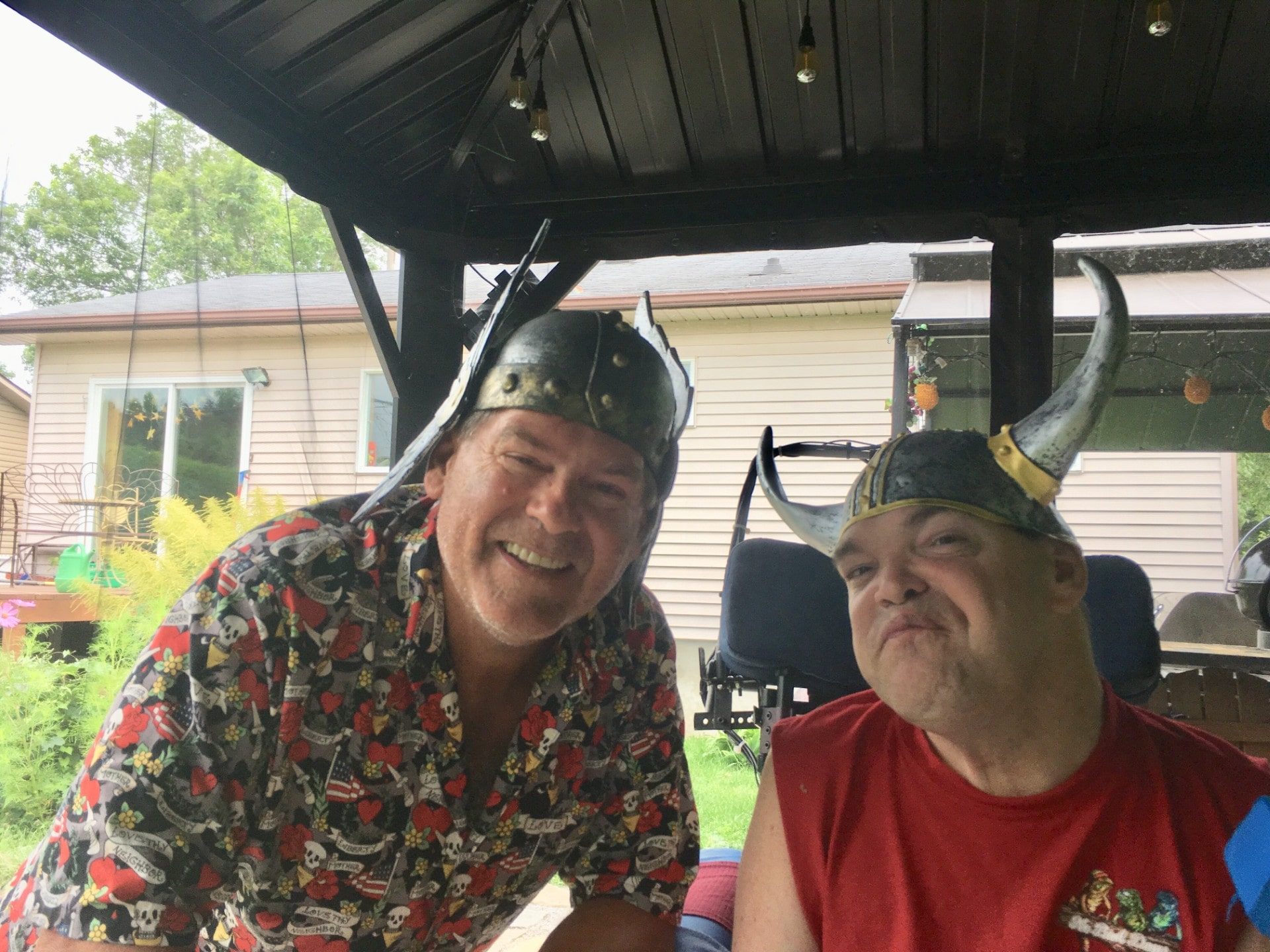
Jean Truchon was known for having a great network of friends and a wonderful sense of humour.
He remained positive despite physical challenges associated with his cerebral palsy, including navigating persistent pain and needing to be in a wheelchair.
But in 2012, Mr. Truchon’s condition deteriorated; he lost use of his left arm, his only functioning limb, and was in constant pain.
To end his suffering, he wished to pursue MAID once it became available in 2016. But at the time, he was ineligible because his death was not “reasonably foreseeable.”
Patrick Martin-Ménard spoke to The Globe of behalf of his father Jean-Pierre, who is navigating his own health challenges and was Mr. Truchon’s lawyer in a case that ultimately resulted in eligibility changes.
Mr. Martin-Ménard, a lawyer as well, was also involved in the legal challenge of the 2016 law that introduced MAID.

Mr. Truchon’s lawyer Jean-Pierre Ménard, left, worked on a pro bono basis to challenge the restrictions that previously deemed Mr. Truchon ineligible to receive MAID.Graham Hughes/The Canadian Press
He says his firm was contacted by patients who hoped to access MAID because of persistent health conditions that caused significant pain and suffering that could not be eased.
“They were very disappointed to see that it would not be possible for them to have it,” Mr. Martin-Ménard says.
Mr. Truchon, 51, and Nicole Gladu, a 74-year-old who had a degenerative disc disease called post-poliomyelitis syndrome, became co-plaintiffs in a case fought in Quebec Superior Court.
Mr. Martin-Ménard says challenging the 2016 law placed a huge burden on Canadians with significant limitations. Mr. Truchon and Ms. Gladu shouldered this burden with “great determination and motivation,” he says.

Mr. Truchon and his friends, the Côté family. He was known for having a great network of friends and a wonderful sense of humour and positivity despite the challenges he faced.Alain Côté/Dying With Dignity Canada
On Sept. 11, 2019, the court ruled in Mr. Truchon and Ms. Gladu’s favour. That led to the federal government passing legislation in 2021 to extend MAID to patients whose deaths are not reasonably foreseeable, a policy often referred to as Track 2.
In April, 2020, Mr. Truchon was able to die by MAID, though he requested the circumstances be kept private.
In a public statement, he said the COVID-19 pandemic that was declared the previous month stole time with people he loved, and he wanted to “take the train and leave my friends and all those who believed in me and my cause at the station.”
– Kristy Kirkup
Price Carter
Date of MAID: June 20, 2025

Price Carter had a larger than life personality; his laugh would bellow through the entire house.
His three kids, Jenna, Lane and Grayson Carter, remember his imaginative mind and the fun he brought to their lives, including at their annual Halloween bash that always featured a haunted house in the wine cellar.
All the partygoers were encouraged to dress in costume, and the house would be adorned in cobwebs and jack-o’-lanterns as Monster Mash played in the background.
“Our dad was such a fixture of making our childhood so special and magical,” Lane says in an interview with her two siblings.
Mr. Carter was also known for his love of belting out showtunes, from Les Misérables to Cats.
And his kids fondly remember their father’s sense of adventure. He once took a boat from Hawaii to Victoria with a group of friends. He also climbed Mount Kilimanjaro.

Mr. Carter, a retired pilot, was known for his sense of adventure. His children recall his bellowing laugh and the fun he brought to their lives.Courtesy of family
When he was diagnosed with Stage 4 cancer in 2025, the 68-year-old retired pilot remained upbeat. Sympathies did not resonate with him. He knew he was dying and he was at peace with it.
“I’m okay with this; I’m not sad,” he told The Globe in an interview in May of last year. “I’m not clawing for an extra few days on the planet. I’m just here to enjoy myself. When it’s done, it’s done.”
Mr. Carter was not comfortable with the idea of people focusing on his illness at the end of his life. Instead, he felt strongly about trying to take advantage of the moments he had left.
Fifteen years prior, Mr. Carter had sat by his mother’s side as she sought MAID overseas because it was not yet legal in Canada. The 89-year-old had spinal stenosis, which causes spaces in the spinal canal to narrow. She used a wheelchair.
Her name, Kay Carter, is a familiar one. Carter v. Canada was the landmark Supreme Court of Canada decision in 2015 that led to the legalization of MAID in Canada.
She didn’t live to see it. Kay Carter flew to Switzerland in 2010 to die. She popped chocolates into her mouth before her death, Mr. Carter recalled in his interview with The Globe.
“It was one of the greatest learning experiences ever to experience a death in such a positive way,” he said.


On June 20, 2025, a thunderstorm roared outside of a Kelowna, B.C., hospice as Mr. Carter prepared to avail himself of the law his mother fought for.
“When we went into the room with him and it was time, this massive, massive downpour of rain just started, and thunder and lightning,” Lane says. “It was very powerful.”
“We were just all there around him, and laughing, making jokes right up until the very end,” Grayson says.
Grayson says his father never wavered in his decision to die. He took medication orally and, soon after, let out a little snort as he dozed off, prompting laughter in the room.
“He had good comedic timing,” Lane recalls.
– Kristy Kirkup
Kiano Vafaeian
Date of MAID: Dec. 30. 2025
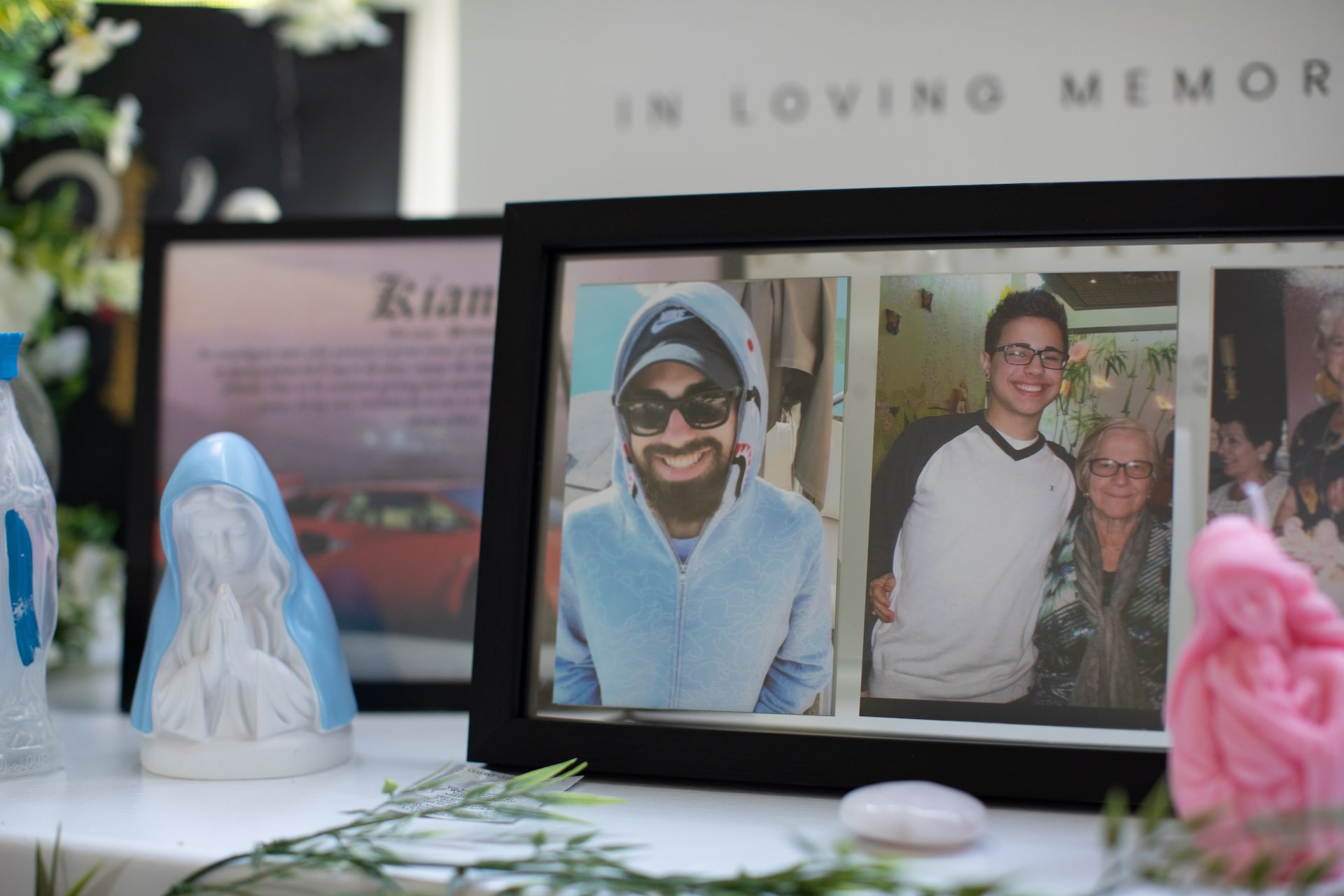
Throughout his childhood, Kiano Vafaeian was the picture of propriety.
With a signature design always shorn in the side of a fresh hair cut, the boy with Type 1 diabetes would often help elderly shoppers lift their groceries onto the checkout belt, says his mother Margaret Marsilla.
At 8, he had the confidence to walk up to her new partner and shake the hand of the man who would later become his stepfather, she recalls.
By 16, he was managing a local movie theatre in Bolton, Ont., she says, but over the next couple of years, he began struggling with his mental health.
Two incidents caused turns for the worse. He became increasingly paranoid and reclusive after he was beaten up by three guys while walking at night in Toronto, Ms. Marsilla says. He also suffered a serious brain injury when a driver blew through a stop sign and T-boned his car.

A family photo of Ms. Marsilla and Mr. Vafaeian as a teen. Ms. Marsilla says she saw his mental health deteriorate in the years after he turned 16.Courtesy of family
Ms. Marsilla says her son’s doctor recommended Percocet for the post-crash neck pain and headaches, but Mr. Vafaeian wanted a prescription for cannabis.
“My husband and I decided because Kiano was already smoking some marijuana, and we figured instead of him getting it off the streets, maybe this might be better,” she says.
“My husband and I just had to throw in the towel because we’re like, ‘Okay, so if they give him Percocet, he might get addicted to Percocet. If he takes weed, he might get addicted to weed. Which of the two evils is better?’ ”
Mr. Vafaeian became a heavy cannabis user and dropped out of school, Ms. Marsilla says. He became obsessed with owning pit bulls, which she saw as his attempt to protect himself against another random attack.
Meanwhile, he suffered worsening diabetes symptoms. At 23, he lost vision in one eye.
It was under those conditions that Mr. Vafaeian applied for MAID. Two Ontario doctors approved it in the fall of 2022, but Ms. Marsilla discovered his plan and started a social-media campaign that successfully dissuaded the doctor from going through with it. His approval eventually lapsed, which she says led her son to resent her and distance himself further.
The saga was chronicled shortly afterward in an episode of the CBC’s Fifth Estate program.
Mr. Vafaeian continued pursuing the procedure, yet failed to get another pair of physicians to agree that he needed it.
Until last year.
A Vancouver-based doctor carried out the procedure during the Christmas holidays at a funeral home in a non-descript industrial park bordering the Fraser River.
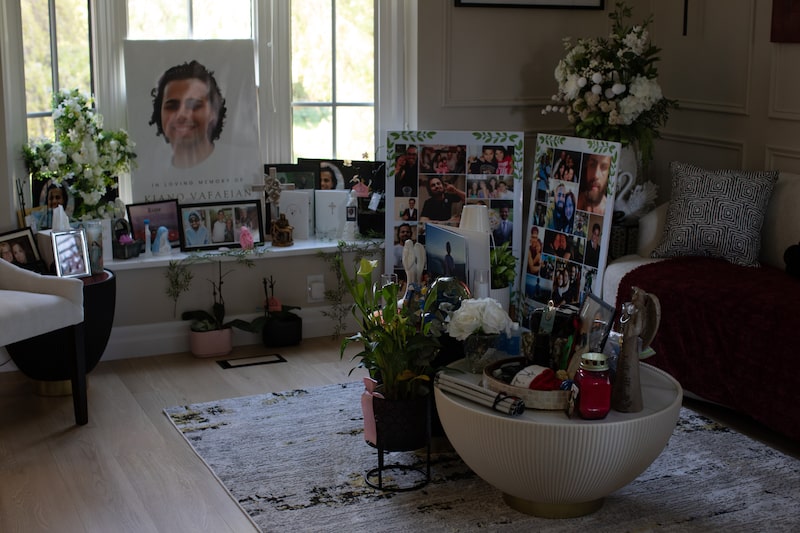

After his mother expressed her horror and surprise at his death online, the case made international headlines and fuelled criticism that Canada’s MAID system lacks appropriate safeguards.
The doctor wrote on her son’s death certificate that the cause of death was MAID because of “blindness + peripheral neuropathy” as a result of his diabetes.
But Ms. Marsilla is adamant that her son should not have been eligible under Track 2, which allows patients to qualify for the procedure if they endure intolerable suffering because of chronic diseases and disabilities.
She believes there should be a moratorium on the procedure for anyone without a terminal illness. But for now, she is focusing on doing her utmost to stop the possible expansion of MAID next year to include people whose sole condition is a mental illness.
“People have to be more concerned, more vigilant and more understanding that it can happen to someone that they know – because it happened to my son,” she says.
– Mike Hager
With a report from Yang Sun