
Ask us about this story
The Globe’s Sara Mojtehedzadeh and Mahima Singh answered your questions about this investigation at a live Q&A on June 3.
In his first two months as a long-haul truck driver, Raminderjit Singh racked up 29,000 kilometres on the road, traversing the continent from Ontario’s densely forested north to the desert thornscrub of Laredo, Tex.
For the hundreds of hours spent at the helm of a heavy-duty vehicle in late 2022, he was paid around $1,000 – less than six cents a mile.
Mr. Singh was, in theory, his own boss, hired under a numbered company he’d incorporated himself. But he did not own his truck, decide which loads to pick up or choose his punishing schedule. To meet the demands of the firm that hired him, Mr. Singh recalled sometimes driving on just a few hours of sleep. Yet his paycheques arrived in puny increments.
Finally, Mr. Singh complained. It would take a year and a half for federal labour officials to weigh in on his case, deeming that he was in fact an employee – and was owed thousands of dollars in unpaid wages.
Trucking, which employs roughly 300,000 drivers in Canada, was once a path to a middle-class life.
Today, this essential sector is riddled with accusations of wage theft, exploitation and safety lapses, despite persistent warnings from industry experts and drivers themselves.
In response, Ottawa has enacted legislative changes and promised harsher penalties for law-breaking firms. But a fractured oversight system, poor information-sharing between governments and shoddy enforcement continue to allow bad actors to escape scrutiny, a year-long Globe and Mail investigation has found.
To expose these challenges, The Globe filed more than 30 freedom-of-information requests, analyzed datasets from transport regulators across the country and conducted interviews with more than 20 drivers and industry insiders.
The findings are stark: Only a fraction of the thousands of trucking firms analyzed by the Globe have ever received an in-depth safety audit by provincial transport authorities. Firms routinely violate labour laws without penalty.
And while long-haul trucking is the largest source of workplace complaints in federally regulated industries, the federal government has penalized just a handful of employers and collected a sliver of the millions of dollars of unpaid wages it ordered trucking firms to pay drivers.


Among the violations is employee misclassification, an illegal business model that sees employers falsely categorize drivers as self-employed to evade payroll contributions and strip workers of basic rights.
Drivers and worker advocates describe the practice as just one symptom of lax enforcement across the industry. But the issue has landed in the political spotlight as industry heavyweights warn it risks driving law-abiding firms out of business.
The Globe’s investigation charted the explosive growth of own-account self-employment, a precarious form of work that experts use as an indicator of misclassification. In some areas, such as in Windsor and Brantford, Ont., the total number of drivers in this category increased by more than 300 per cent over a decade, while median earnings in some cities dropped to the poverty line – part of what experts describe as a troubling race to the bottom in trucking.
Ottawa says it has introduced robust measures to tackle misclassification over the past several years: It changed labour laws to explicitly prohibit the practice as of 2021, and created a specialized unit at Employment and Social Development Canada to root it out.
In the fall, the federal government committed $77-million for the Canada Revenue Agency to increase scrutiny of trucking firms’ payments to contractors. This April, Ottawa launched consultations to ramp up penalties for labour violations, and federal and provincial labour ministers agreed to create a working group to “develop a joint plan on addressing misclassification in the trucking industry.”
“The Government takes non-compliance with labour standards very seriously,” said ESDC spokesperson Samuelle Carbonneau.

Trucking firms fall under federal labour laws when they cross international or provincial borders – as this driver is doing on Ottawa's Macdonald-Cartier Bridge, entering Ontario from Quebec.Spencer Colby/The Canadian Press
Vital information to help flag repeat violators and high-risk carriers is, in theory, at regulators’ fingertips: Ministries across provincial and federal governments collect exhaustive data on different parts of the trucking sector, from labour violations to injury claims.
But little is shared between agencies on a formal basis, The Globe’s investigation found, creating regulatory gaps that some companies exploit.
The implications extend beyond individual firms. Almost every product Canadians touch has spent time in the back of a truck, ferried by a driver sharing the road with thousands of others. And research has found low wages and precarious work in the sector are associated with poor safety outcomes.
Canada’s fractured approach to enforcement puts drivers – and the public – at risk, advocates warn.
“We really believe this is a systemic failure at this point,” said Navi Aujla of Labour Community Services of Peel, a non-profit organization that supports truck drivers in the Brampton, Ont., area.
“We have folks that have been driving for decades in their career. And they feel hopeless.”

When Mr. Singh landed his job at Brampton-based VIJ LDH Transport in the fall of 2022, the full-time role seemed like a step up from his previous gig driving through a temp agency.
A former computer repair technician who had come to Canada from India as an international student in 2018, he’d changed careers believing long-haul trucking would offer better wages.
His new boss was a man named Karan Vij. Mr. Vij spent years working as a truck driver, but soured on the role after a company he was working for failed to pay him $10,000 of wages he was owed, he told The Globe and Mail in an interview. He decided to start his own outfit instead, officially launching VIJ LDH in the summer of 2022.
Mr. Vij said he was not familiar with the laws around employee classification at the time; similarly, Mr. Singh said that he believed self-incorporating as a numbered company was the only way to land a job.

It is against the law for companies to misclassify truckers as self-employed. But census data suggest the practice became increasingly common in the decade before Raminderjit Singh got his job in the industry.
Misclassification is illegal under federal labour law, which governs a small number of sectors including interprovincial trucking, telecommunications and banking.
The practice excludes workers from labour protections such as earning minimum wage and overtime. It also allows employers to evade mandatory contributions to government pension and employment insurance plans, as well as payments to public workers’ compensation systems that cover workplace accidents.
Talk of the practice is now dominating discussions at the House of Commons transport committee, which began convening hearings in October to address the “changing landscape” of long-haul trucking.
False self-employment is being used by some firms to garner significant cost savings, according to the Canadian Trucking Alliance, which represents thousands of companies across the country. In a recent submission to the committee, the organization breaks down those savings, factoring in holiday pay, sick leave, taxes and other contributions. Through misclassification, an employer would slash their labour expenses by $22,000 per year on one driver earning $80,500, the CTA estimates.
“Law-abiding carriers are forced to compete with those who gain an unfair cost advantage by misclassifying workers,” the CTA submission says.
Not all trucking organizations agree with this position. The Canada Truck Operators Association, which describes itself as the country’s newest industry group championing “inclusive decision-making,” argued in its own federal submissions that the country’s most powerful fleets have weaponized the misclassification issue to drive out competitors.
Of 10 truck drivers interviewed by The Globe, almost all said they had been misclassified as self-employed at some point on the job. Most said that, as with Mr. Singh, they were unaware of the rules around the practice when they started out in the industry, and they were told by their employers that the only way to get paid was to incorporate their own company. Some employers may tout self-employment as a way for drivers to avoid income tax or statutory contributions such as employment insurance.
Quantifying the problem is difficult: A definitive analysis would require inspecting individual trucking firms’ payrolls and unpacking their employment relationships with drivers. Typically, true independent contractors have more say over their own schedules, can sub-contract out their work to others and own the tools of their trade. Employees have less ability to control their working conditions.
ESDC can only identify misclassification on a case-by-case basis, said a spokesperson. Absent ministry data on the scale of misclassification, The Globe requested custom census data from Statistics Canada between 2011 and 2021, the most recent available year, that breaks down trucking workers by employment type, immigration status and annual income, nationally and across provinces and census metropolitan areas.
The Globe also filed freedom-of-information requests with transport regulators across Canada to obtain commercial vehicle registration information, safety ratings and audit history for more than 100,000 commercial vehicle operators, which can include buses, dump trucks and tow trucks.
To isolate freight transportation companies, we obtained workers’ compensation board registration data, which provide more precise detail on commercial activity. The Globe matched this dataset with the transport regulators’ data, using company names and, when available, the city of registration or mailing address.
This allowed us to identify more than 7,000 trucking firms registered in B.C., Saskatchewan, Manitoba and Ontario. The Globe’s database is not exhaustive because some provinces provided only partial responses, or did not release the records requested.
Through access-to-information requests, The Globe also obtained data on labour violations among federally regulated employers, as well as internal research conducted for the Ontario Transportation Ministry on truck safety.
Between 2011 and 2021, the census data show, Canada saw a large rise in trucking workers described as self-employed with no paid help, which means their business engages no other employees. The number of workers in this category more than doubled over that span, representing around a fifth of the industry nationwide by 2021, the data show.
In some regions, the growth was even more pronounced: In Toronto, for example, these workers constituted almost a third of the trucking workforce by 2021.
This category of self-employment captures some legitimate owner-operators who run their own small business. But given that truck ownership is one of the hallmarks of whether a driver is truly self-employed, Ontario Trucking Association president Steve Laskowski said it was “impossible” for the data obtained by The Globe to reflect an uptick in legitimate owner-operators: Purchasing a big rig is costly, while the demand for owner-operators’ services has remained relatively stable.
The rapid growth in self-employment starting in 2011 coincides with a policy change implemented that year. In an effort to cut red tape for small businesses, Ottawa stopped penalizing the failure to report “fees for service” transactions. In trucking, these transactions involve money paid to drivers who have self-incorporated but may not meet the legal definition of someone who is self-employed.
This, the OTA has argued, weakened oversight of the trucking sector and accelerated the “predatory use” of the misclassification model.
In its latest federal budget, Ottawa announced it would resume enforcing its reporting rules.
Employee drivers consistently report higher annual earnings than all other types of drivers, and enjoyed modest wage growth nationally over the 2010s.
Meanwhile, self-employed drivers with no paid help, who are significantly more likely to be immigrants, report the lowest earnings of any category of trucker in the country.
By 2021, their annual earnings in many cities had declined – in some cases, barely exceeding the poverty line.
In late October, 2022, a month into his job at VIJ LDH, Mr. Singh said he began to pester his boss about a paycheque. Mr. Vij usually brushed off complaints through reassurance that drivers’ wages would soon be paid in full, Mr. Singh told The Globe. But by mid-November, as the kilometres racked up, he was becoming desperate.
“Please send (payment) tomorrow … I have to pay rent bills and grocery,” reads one text from Mr. Singh to a number saved as “Karan Truck Work.”
Just over a week after sending that text, Mr. Singh quit in disgust. He filed a wage theft complaint with Employment and Social Development Canada, a process that requires workers to complete a seven-page form detailing their allegations within six months of the incidents occurring.
After waiting a year and a half for a decision, in the summer of 2024, Mr. Singh won his case. An ESDC officer deemed him an employee of VIJ LDH – not a contractor – and found he was owed almost $9,000 in unpaid wages.
Mr. Vij denied any wrongdoing. He told The Globe that Mr. Singh wanted to self-incorporate to avoid taxes, accused him of faking the logbook entries submitted as evidence in the case and said Mr. Singh damaged his truck.
Mr. Singh said fatigue did, on one occasion, cause him to hit a wall at a service stop and sustain a flat tire. He said Mr. Vij later cited the incident as a reason to continue withholding his pay.
While Mr. Singh said his unpaid wages were part of his reason for quitting, these concerns were secondary to safety. He sometimes slept less than three hours a night while on the road, he said, because Mr. Vij threatened to take him to court if he did not turn around deliveries fast enough.
“He was forcing me to work, work, work, work.”
Commercial vehicle records from the Ontario Transport Ministry obtained by The Globe show VIJ LDH’s safety record is checkered. Between 2022 and 2025, the company racked up 17 convictions for safety infractions, and its fleet of seven trucks was involved in four collisions.
Over that period, the firm’s overall violations rate, which is a safety metric calculated by the Transport Ministry based on an allowable threshold of collisions and convictions, was 87 per cent. The provincial average for trucking firms is around 10 per cent, Ontario Transport Ministry data analyzed by The Globe show. Mr. Vij attributed his safety issues to hiring inexperienced drivers who lied about their credentials and damaged his trucks.

Canada has had fewer deaths on its roads since 2012, when people in Hampstead, Ont., made this memorial to one of Ontario’s deadliest collisions. A flatbed truck hit a van carrying migrant farm workers, killing 11.Fred Lum/The Globe and Mail
Overall, Canada’s roads are a relatively safe place to be: Deaths from road collisions have declined significantly since 2012, even though there are more licensed drivers and vehicles.
Collision rates can fluctuate based on a myriad of factors, from traffic volume to economic conditions, a Transport Canada spokesperson said. However, between 2021 and 2023, the fatality and serious injury rates in collisions involving commercial vehicles ticked slightly upward, the latest available figures show.
Over those three years, 537 fatal collisions involving transport trucks occurred. At federal transport committee hearings, that issue has been the subject of impassioned testimony.
Speaking to the committee about the dangers of misclassification, Johanne Couture, executive director of the non-profit advocacy group Women’s Trucking Federation of Canada, warned of “more fatigue-related accidents, poorly maintained equipment and unnecessary risks on our roads.”
“This isn’t just a labour issue; it’s a public safety issue,” she said.
In an interview with The Globe, Bloc Québécois MP Xavier Barsalou-Duval, who is a vice-chair of the committee and his party’s transport critic, said misclassification reduces drivers’ power to refuse unsafe working conditions.
“There is no guarantee of employment,” he said.
Existing research has established a link between poor working conditions, driver fatigue and road safety. Research conducted for the U.S. transport regulator, the Federal Motor Carrier Safety Administration, has long identified a “safety rate of pay” – an amount that reduces the likelihood of excessive driving and incentivizes truckers to abide by hours-of-service rules that govern on-duty time and rest periods.
In 2017, this rate worked out to 60 US cents a mile, notes a collision causation study for the Ontario Transport Ministry, which The Globe obtained under freedom-of-information law. Mr. Singh was promised 56 Canadian cents a mile when hired, he noted in his ESDC complaint, but was ultimately paid a tenth that rate.
Low pay combined with job precarity increases the likelihood of drivers violating hours-of-service rules, according to research cited in the Ontario collision study. (In the U.S., truckers are generally restricted to 11 hours of driving a day, while Canada imposes a 13-hour maximum.)
“One of the main factors associated with excessive driving may be uncertainty,” the study states.
As trucking jobs become increasingly precarious, critics believe too little is being done to prevent tragic outcomes. While roadside inspections are a crucial first line of defence, regulators also have the power to conduct in-depth assessments of a carrier’s safety plans, vehicle maintenance and driver records. In Ontario, these evaluations, known as facility audits, resulted in “significant improvements” to safety performance when combined with charges being laid for infractions, according to a 2019 Transport Ministry study obtained by The Globe.
These in-depth audits are exceedingly rare, according to the records obtained by The Globe for approximately 7,000 trucking companies in B.C., Saskatchewan, Manitoba and Ontario. Of the trucking companies The Globe analyzed, about 85 per cent had never received a facility audit.
While facility audits can be resource-intensive, advocates argue that even pared-down checks – performed in greater numbers – would improve safety standards.
“Every restaurant or food service business in this province gets inspected,” said Mr. Laskowski of the Ontario Trucking Association. “But we can’t do it for companies that put 80,000-pound vehicles on the road with your families? It doesn’t make any sense.”
Trucking regulation in Canada is highly fragmented.
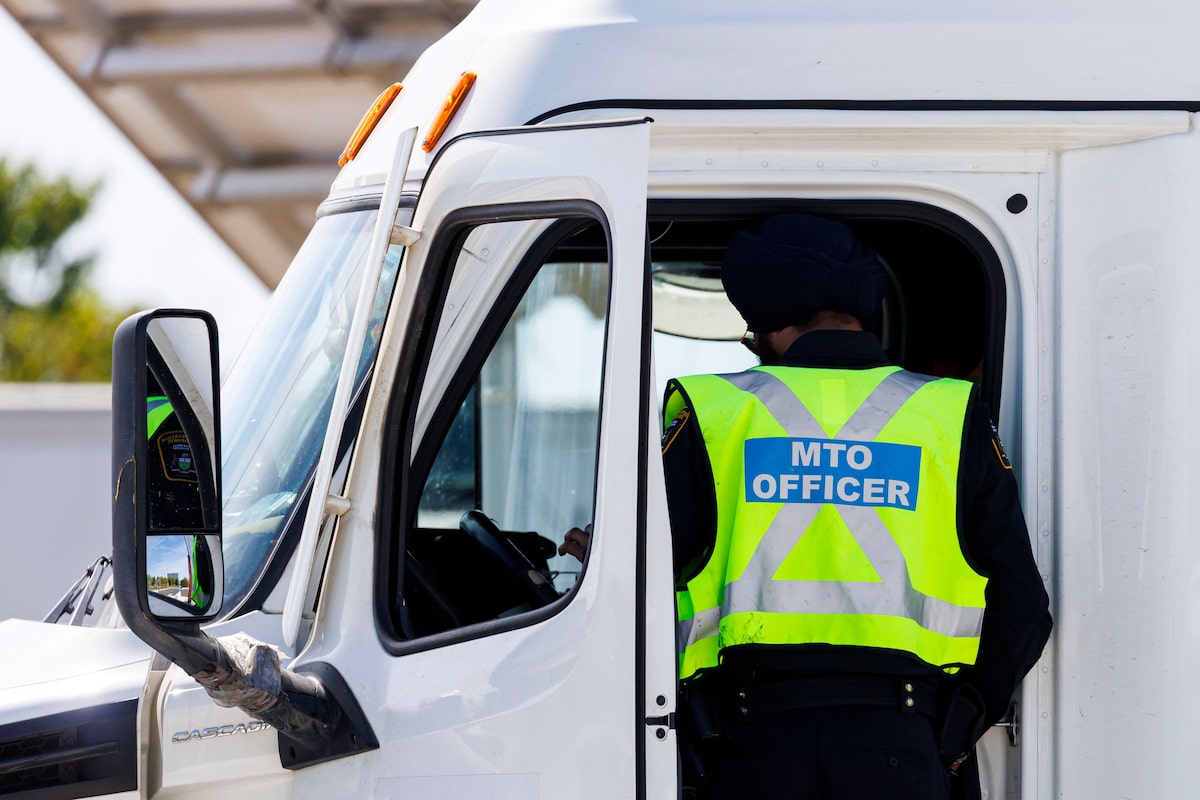
ESDC is responsible for workplace standards for cross-country trucking firms, as well as temporary foreign worker inspections. Companies that operate trucks within their home province alone are regulated by provincial labour ministries. The federal government and provinces co-operate to set the country’s national safety code governing commercial vehicles and drivers. But provinces license trucking companies and enforce road safety.
Advocates have flagged poor labour enforcement in trucking for years, said Mary Gellatly of Parkdale Community Legal Services, a Toronto clinic that supports low-income people with housing, work and immigration issues.
Indeed, as far back as 2006, experts were sounding the alarm about the long-haul industry on Parliament Hill. That year, a government-commissioned study on workplace standards led by one of the country’s pre-eminent labour law experts, Harry Arthurs, warned that the trucking sector was showing signs of distress. It generated a large number of workplace complaints, but the Labour Ministry’s enforcement efforts were “derisory.”

Labour law expert Harry Arthurs penned a report 20 years ago warning the federal government about the state of long-haul trucking.Ryan Carter/The Globe and Mail
Across Canada, these issues have only festered, data obtained by The Globe under access-to-information law show. Since 2022, there have been almost 2,500 successful complaints about workplace violations such as wage theft in long-haul trucking.
That represents 88 per cent of such violations identified among federally regulated employers.
An ESDC briefing note from December says the department has issued a total of 24 penalties for misclassification-related offences.
A publicly available government database of non-compliant employers, which the department said is incomplete, lists just four trucking firms fined for misclassification. The database names a total of 12 trucking companies that have been penalized by ESDC for a range of occupational safety and wage violations.
Federal court filings show that along with Mr. Singh, at least two others have filed successful wage theft complaints against VIJ LDH. The company is not named in the penalties database. An ESDC spokesperson said not all penalties issued by the department were made public prior to February, 2026.
Almost all of the publicly listed penalties issued to trucking companies were $12,000 or less. Compliance is listed as unconfirmed for all but one trucking company, and another firm was the only one to pay its fine, according to the database.
“Companies are making up their own rules,” said Ms. Aujla of Labour Community Services of Peel. “There’s not really any consequences.”

'We have folks that have been driving for decades in their career. And they feel hopeless,' says Navi Aujla, whose group supports truckers in the Brampton area.Eduardo Lima/The Globe and Mail
In a statement, the ESDC spokesperson, Ms. Carbonneau, said that more than 1,600 compensation-related complaints in the trucking sector had been resolved through voluntary compliance since 2022, recouping $2.6-million for drivers without the need for official payment orders.
However, when payment orders need to be issued, ESDC’s efforts to enforce them are sometimes frustrated by “complex and non‑standard work arrangements,” Ms. Carbonneau acknowledged.
Ottawa has collected less than 20 per cent of the $6-million in payment orders issued to trucking firms since 2022, the internal data show.
The department “remains committed to holding employers accountable and continues to improve its enforcement methods, while exploring new approaches to locate non‑compliant employers,” said Ms. Carbonneau.
The department has also taken numerous steps to tackle misclassification, she added, including partnering with provincial authorities to assess trucks at highway checkpoints for labour compliance. The department has also conducted more than 1,000 of its own inspections in the trucking sector since 2023, including recent blitzes in the Greater Toronto Area aimed at identifying misclassification.
ESDC declined to provide data on its GTA blitz results. A December memo obtained by The Globe said preliminary findings indicated 49 employers were suspected of breaking misclassification rules, while 20 were deemed likely compliant. Investigations were incomplete at an additional 58 employers.
That suggests a provisional non-compliance rate of more than 70 per cent. The department said its investigations are ongoing.
In addition to resuming enforcement of fees-for-service reporting rules, Ottawa also recently established information-sharing agreements between the CRA and ESDC. These moves have been lauded by many in the trucking industry who see them as crucial components of tackling misclassification.
However, the division of ESDC that investigates labour violations did not receive any new funding in the most recent budget. This worries worker advocates, who say expansive labour investigations are needed to address not just this issue, but related ones such as wage theft.

Prime Minister Mark Carney's 2025 budget cut back funding for the public service, and added no new money for ESDC's labour program, which leads efforts to identify workplace violations.Justin Tang/The Canadian Press
Today, workers with labour standards complaints can expect to wait between 15 to 16 months for their file to even be assigned to a case officer, according to a March e-mail from ESDC to a driver that was reviewed by The Globe.
ESDC says it is taking steps to improve service delivery and resolve complaints as efficiently as possible. But long wait times mean some employers empty their bank accounts, close down and open a new company, said Ms. Aujla.
Efforts to identify these firms, known as chameleon carriers, are currently hamstrung by “significant gaps in communication between Canadian jurisdictions,” says the Canadian Trucking Alliance’s submission to the House transport committee.
Provincial transportation ministries and workers’ compensation boards are rich repositories of information on carriers’ safety records and employment practices.
British Columbia is the only province that publishes safety information for all registered carriers. Five provinces – Alberta, Quebec, New Brunswick, Prince Edward Island and Newfoundland and Labrador – confirmed to The Globe that they do not have formal information-sharing agreements with ESDC. Most said they share data upon request, or under specific circumstances – for example, if a road accident has occurred.
Manitoba said it shares information “when required and requested.” A spokesperson for Saskatchewan’s transport regulator would not comment on specific information-sharing arrangements because it could “compromise enforcement and investigative activities,” but said misclassification issues are referred to the appropriate authorities when identified.
The remaining provinces did not respond directly to questions on their information-sharing arrangements with ESDC.
After his experience with VIJ LDH, Mr. Singh said this patchwork system left him with little confidence that bad actors will be held to account, leaving the work of enforcing basic rights to drivers themselves.
“We can’t trust anyone,” he said.
Ontario Ministry of Transport records currently list VIJ LDH’s operating status as suspended; the company failed a facility audit last year, the records show.
Until this April, Mr. Vij was listed as one of the directors of another trucking firm in Ontario, which was established in 2024 and still has provincial authority to operate. Mr. Vij said he is no longer involved with the firm and is now focused on his truck repair business – though he still has a number of trucks that are used by “different companies,” he said.
In the two years since ordering Mr. Vij to pay Mr. Singh, the federal government has recovered just a portion of the thousands of dollars in wages owed – a total of $122.
With reports from Stephanie Chambers

Illustration by Daria Lada
On the road: More from The Globe and Mail
Regulation and safety
Some Ontario colleges accrediting truck drivers without minimum training, A-G finds
Advocates call on Ottawa to commit to mandatory anti-drunk-driving technology in new vehicles
‘We can’t afford to wait’: The Northern Ontario mayor pushing for a safer Trans-Canada Highway
Trucking industry subject to closer scrutiny from tax authorities under new budget
Jason Tchir on driving dos and don’ts
Should I wait until the end of the lane to merge?
Should I stay out of another driver’s blind spot?
Can I legally make a U-turn at a traffic light?
The Decibel podcast
How did alleged wage theft become so rife in the trucking industry? Reporter Sara Mojtehedzadeh spoke with The Decibel about her investigation and the working conditions of drivers. Subscribe for more episodes.