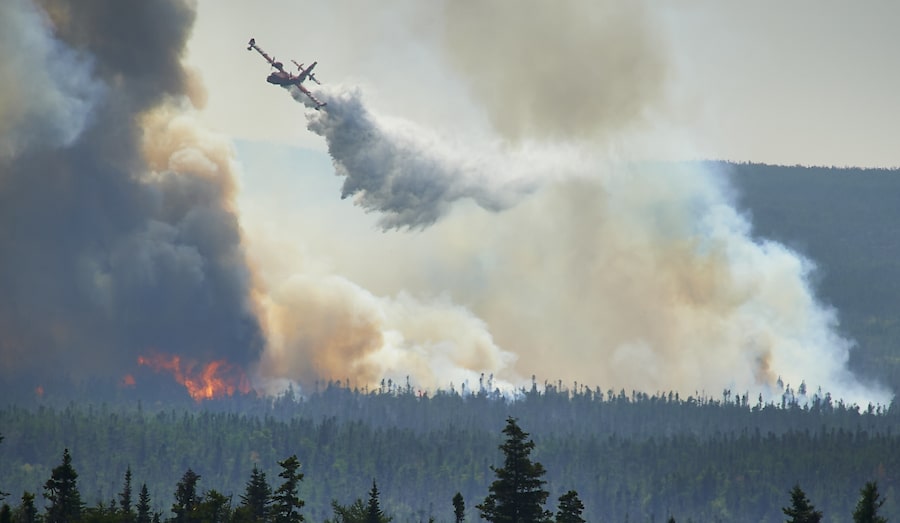
Saskatchewan was in crisis before summer even began.
By early June, fast-moving wildfires had torn through the province, destroying hundreds of structures and forcing 15,000 people from their homes. Evacuees travelled far distances to seek shelter in jam-packed hotel rooms.
The province declared a state of emergency and brought in personnel and aircraft from five provinces, three U.S. states and the Northwest Territories.
Faced with criticism for not requesting further assistance from the Canadian Armed Forces, Premier Scott Moe said that what his province needed – water bombers and firefighting resources – the military would not have been able to provide.
By late July, Saskatchewan Public Safety Minister Tim McLeod requested from Ottawa as many as 300 personnel to mop up fires, along with helicopters, water haulers and sprinklers. It was a tacit admission that this fire season has challenged provincial resources.
Since then, Canada’s summer of fire has swept further east and Ottawa has now approved requests from Manitoba, Nova Scotia and Newfoundland and Labrador for resources and support.

Saskatchewan's Little Bear Lake fire, visible from space on May 30, signalled an early start to a highly destructive 2025 season – not as bad yet as 2023, but higher than any other in the past four decades.Maxar Technologies/AFP via Getty Images
If the record-breaking fire season of 2023 was a wake-up call for how a warming climate is turning Canada into a tinderbox, this is the year that the country has been forced to come to grips with a new, pressing question: How will we be able to continue fighting fires and protecting communities inside a patchwork system that has been pushed to its limits?
The debate centres on whether the country’s combination of provincial, territorial and federal resources will be enough to meet future needs. Longstanding calls for a national wildfire strategy have taken on new urgency, and now Ottawa is formally examining the options, with a decision expected late this fall.
The Globe and Mail spoke with experts in wildfire management across the country to better understand the ideas being put forth. The broad range of recommendations reflects the complexity of planning for a rapidly changing wildfire landscape while addressing differing opinions on where the problems lie.
While some say that existing agencies know their turf best but must be better resourced, there is also a growing consensus that the frequency of large, multi-jurisdictional fires demands a national response led by a single federal agency with shared firefighting resources.

The night after the Paddy's Pond fire began, Newfoundlanders got reinforcements from CFB Gagetown in New Brunswick. The military's role in a busy wildfire season is usually to move equipment and people.Greg Locke/The Globe and Mail
Under the current system, provinces and territories are primarily responsible for their own wildfire management.
When a jurisdiction requires additional assistance, the Canadian Interagency Forest Fire Centre co-ordinates resource sharing within Canada and internationally, managing requests for personnel, equipment, aircraft, information and expertise.
The federal government, through the Government Operations Centre, co-ordinates further support, such as deploying the military to assist with evacuations or to move equipment.
While this system functioned well for decades, there is now a seasonal debate about why it is no longer sufficient and whether a federal agency is needed.
Emergency Management Minister Eleanor Olszewski said that her department is considering options aimed at a more proactive approach to wildfire seasons. That could include a new federal disaster response agency and shared national firefighting resources, such as water bombers.
“One of the things that the Prime Minister has said many times is that it’s the responsibility of the new government to strengthen national security and to keep Canadians safe, and it goes without saying that emergency management is a foundational part of that,” Ms. Olszewski said in an interview.

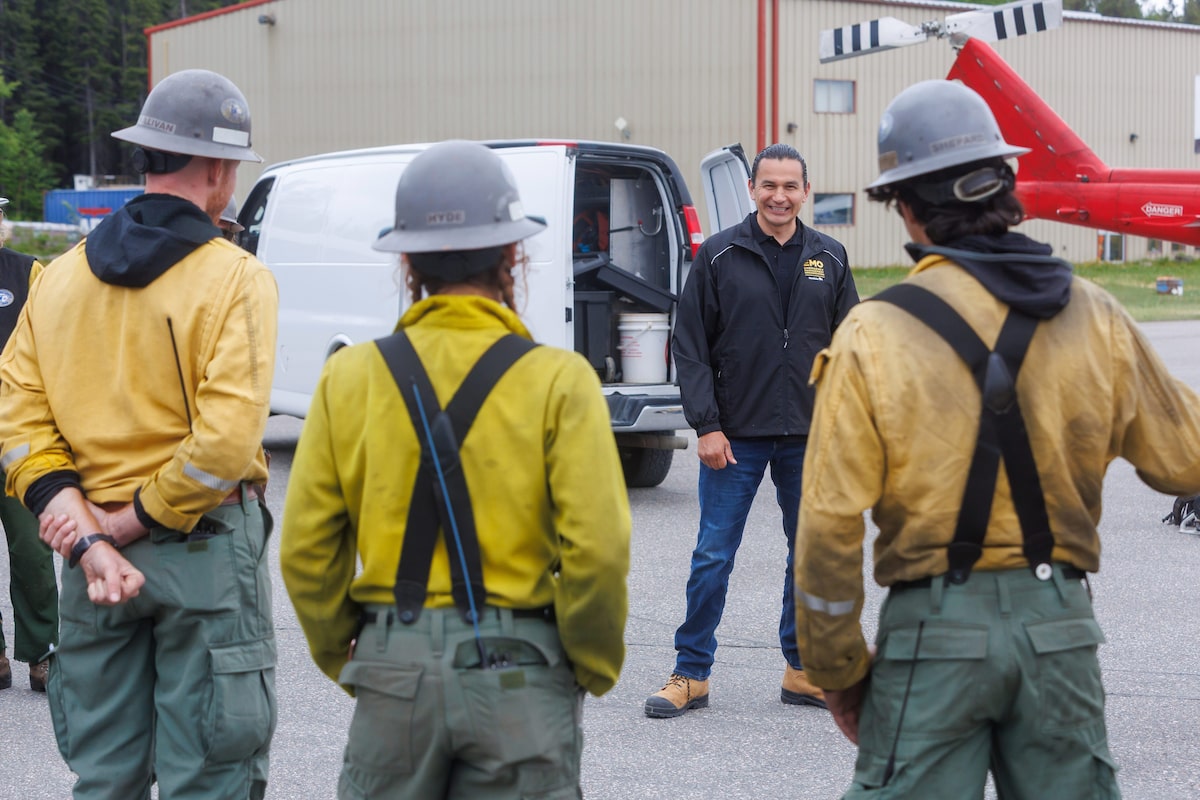
These B.C. recruits are training in wintertime as an initial attack crew, whose job is to get newly emerging fires under control by 10 a.m. the day after they are found. Most of the personnel transferred between provinces are there for sustained action, when an initial attack is not enough.Jesse Winter/ The Globe and Mail
As it stands, provinces and territories bear primary responsibility for fighting wildfires for the simple reason that they own 90 per cent of Canada’s forests. (By comparison, the federal government is responsible for only about 4 per cent of Canada’s forests, those located in national parks and on First Nations reserves and military lands.)
As the scale of the threat increases, Ms. Olszewski said her department is meeting with provinces, territories, Indigenous leaders, emergency management experts and humanitarian groups, and looking at a number of changes to bolster wildfire response while being mindful not to add needless bureaucracy. She expects to announce details late this fall and to include lessons learned from this fire season.
Matt Godsoe, director of the Emergency Management Strategy Implementation Office at Public Safety Canada, said that increasingly destructive natural disasters have stretched thin the current system, and that relying on the army is unsustainable.
“What we’re seeing today with these disaster-driven events, they’re increasingly outpacing the capacity of the Canadian emergency management system,” he told a July 18 wildfire briefing.
The Canadian Interagency Forest Fire Centre publishes a daily “national preparedness level,” ranging from Level 1 – few wildfires burning, new ones unlikely, firefighters and equipment on hand – to Level 5, indicating that resources are fully committed throughout the country.
This year, it has reported Canada at Level 5 every day since the end of May.

The call for a national firefighting service
Mike Flannigan, a professor at Thompson Rivers University who specializes in emergency management and fire science, said one of the biggest problems with the existing approach is that it is too reactive. Provinces request help when local resources are exhausted, and it can take about three days for personnel from elsewhere in the country to arrive on the front lines.
“Often, that’s three days too late,” he said.
A province’s decision to send firefighters can also be fraught, he said. If, for example, Alberta requests help and Ontario sends a crew, that team could be away for about three weeks, during which wildfire conditions at home could quickly change.
Prof. Flannigan advocates for a national firefighting service capable of rapid deployment. Some politicians, including former NDP MP Richard Cannings, who served as emergency preparedness critic, have similarly called for a national force.
A national firefighting service would augment provincial wildfire resources and could pre-emptively deploy to high-risk areas, Prof. Flannigan said. He added that such a force could be housed in an organization such as the Canadian Interagency Forest Fire Centre, which already co-ordinates wildfire resource sharing.

Mike Flannigan of Thompson Rivers University believes a national wildfire service could be better at rapid response than provincial services acting alone.Marissa Tiel/The Globe and Mail

Emergency Management Minister Eleanor Olszewski says there are many ideas on the table to change how Canada responds to wildfires.Sean Kilpatrick/The Canadian Press
Previous ministers of emergency preparedness have mused about the idea in vague terms. Harjit Sajjan, Ms. Olszewski’s predecessor, said in late 2023 that Canada was looking at some kind of federal “response force,” with details to be determined.
Before him, Bill Blair told CBC News that the government was mulling both a “NORAD-like approach,” referring to the joint U.S.-Canadian military organization, and a civil defence force similar to the U.S. National Guard.
Others have called for a national pool of firefighting resources, either to be used by existing wildfire management agencies or by a new, national firefighting force. Centralized, readily available resources would augment provincial resources and could lead to faster response times and increased capacity, they say.
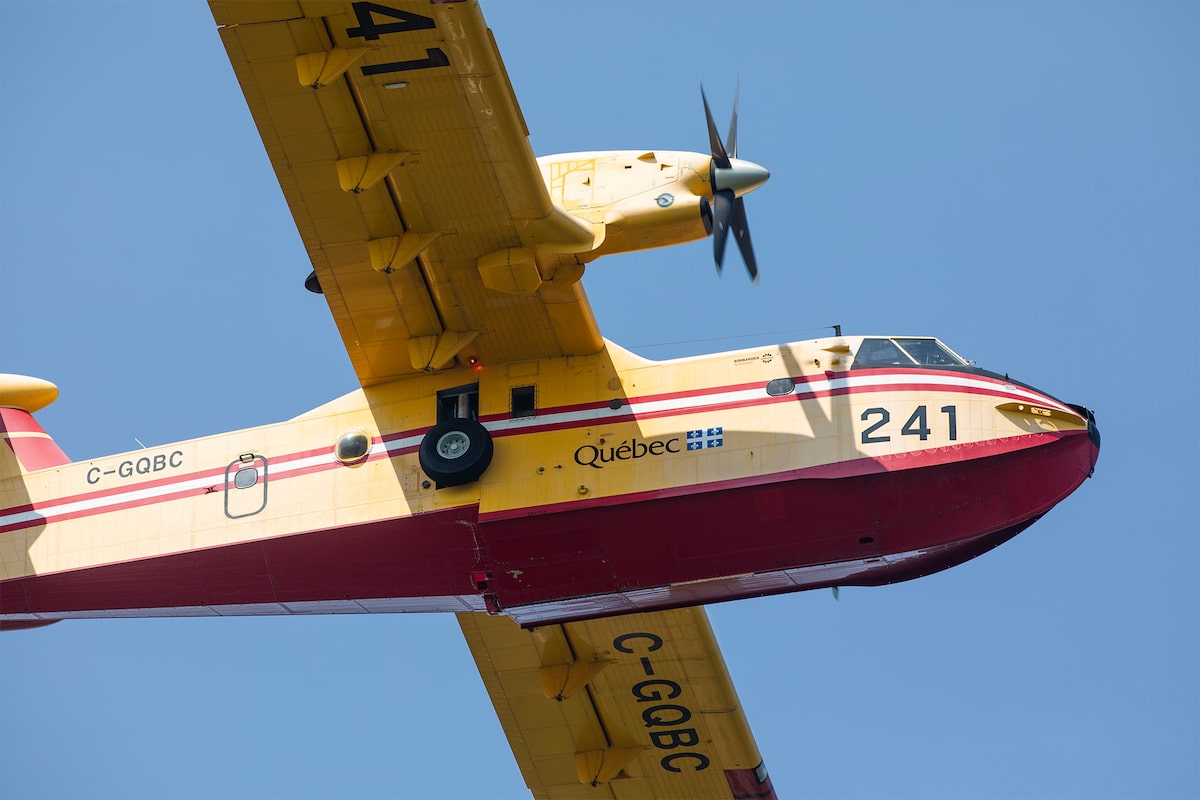
The Federation of Canadian Municipalities has called on the federal government to consider “acquiring a sufficient national fleet of Canadian-made water bombers,” with strategically located home bases in rural communities. Politicians including Mr. Moe and Ontario Premier Doug Ford also raised the idea this year of a shared fleet of water bombers.
Ms. Olszewski acknowledged that some provinces have more robust wildfire response capabilities than others, and said the idea is under consideration.
“One of the things we need to do is make sure that our system can take into account all of those regional variances, and one of the ways of doing that would be a pooling of resources,” she said.
However, a surge in demand for the aircraft have led to huge backlogs. Manitoba Premier Wab Kinew said in April that his province had put down an $80-million deposit on three water bombers to replace three older aircraft but that they won’t be ready until the 2031 and 2032 wildfire seasons.
A new agency, or more resources for the current system?
Ali Asgary, a professor at York University who specializes in disasters and emergency management, says a federal emergency management agency could significantly improve disaster readiness “with national wildfire exercises, the formation of a national wildfire response team and equipment, pre-positioning resources, and establishing a standard co-ordination process.”
Prof. Asgary added that the existing system focuses on putting out fires but is not well-poised for other aspects of emergency management, such as issuing public warnings and handling evacuations.
A federal emergency management agency could guide risk assessment and planning, helping communities prepare before disasters strike, he said. As is, municipalities must hire their own consultants and draw up their own individualized plans – something he deems “time-consuming and also inefficient.” A federal agency could publish standardized tools for municipalities to use, he said.
Prof. Asgary said such an agency would not remove emergency response leadership from local and provincial governments, but rather enable them to do more and better with limited resources, benefiting from an economy of scale.
“While some of the major emergency response resources are needed at the national level more frequently, they are not as often required at local and provincial levels,” he said.
The Federation of Canadian Municipalities has also called on the federal government to explore the development of a federal emergency management agency.


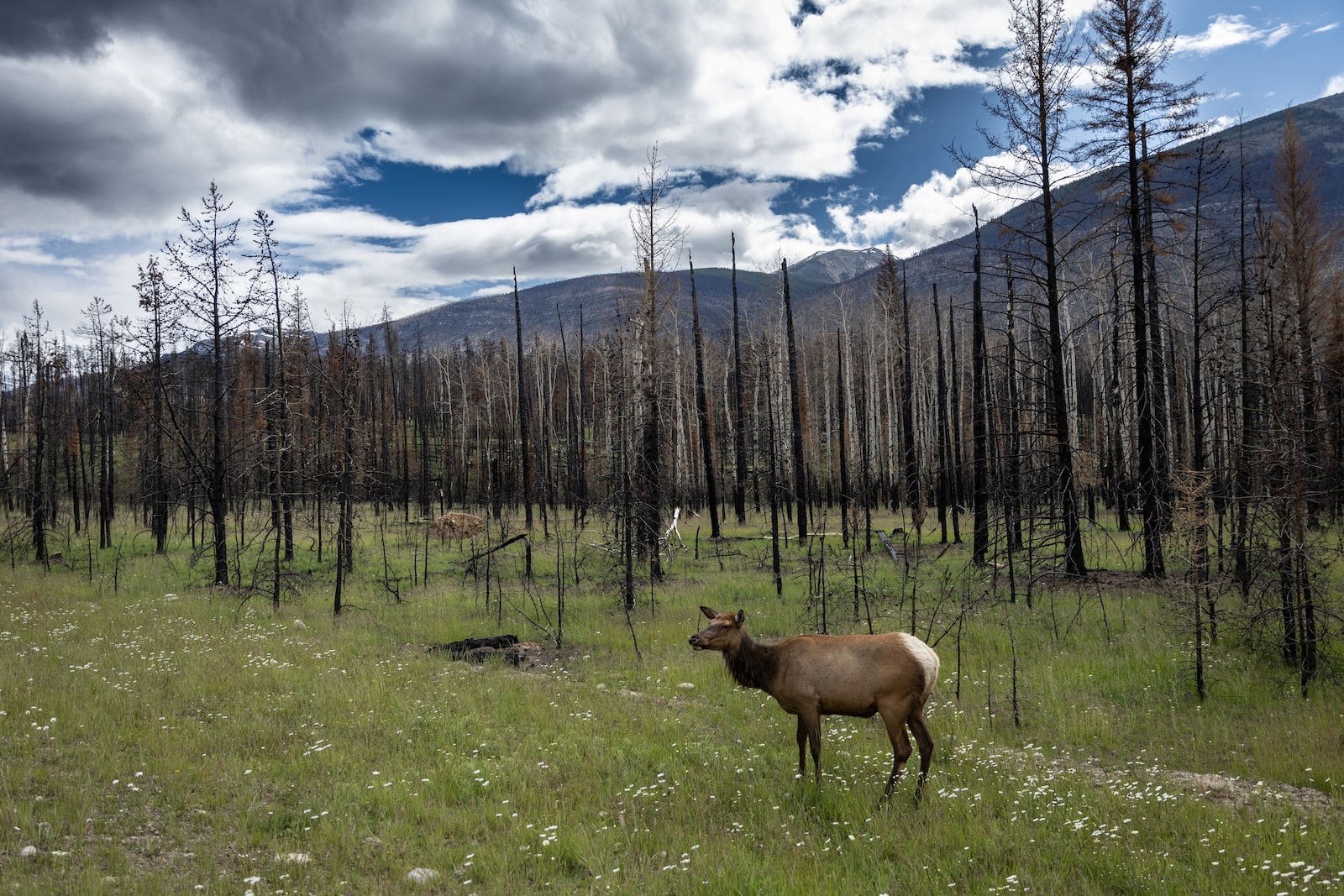
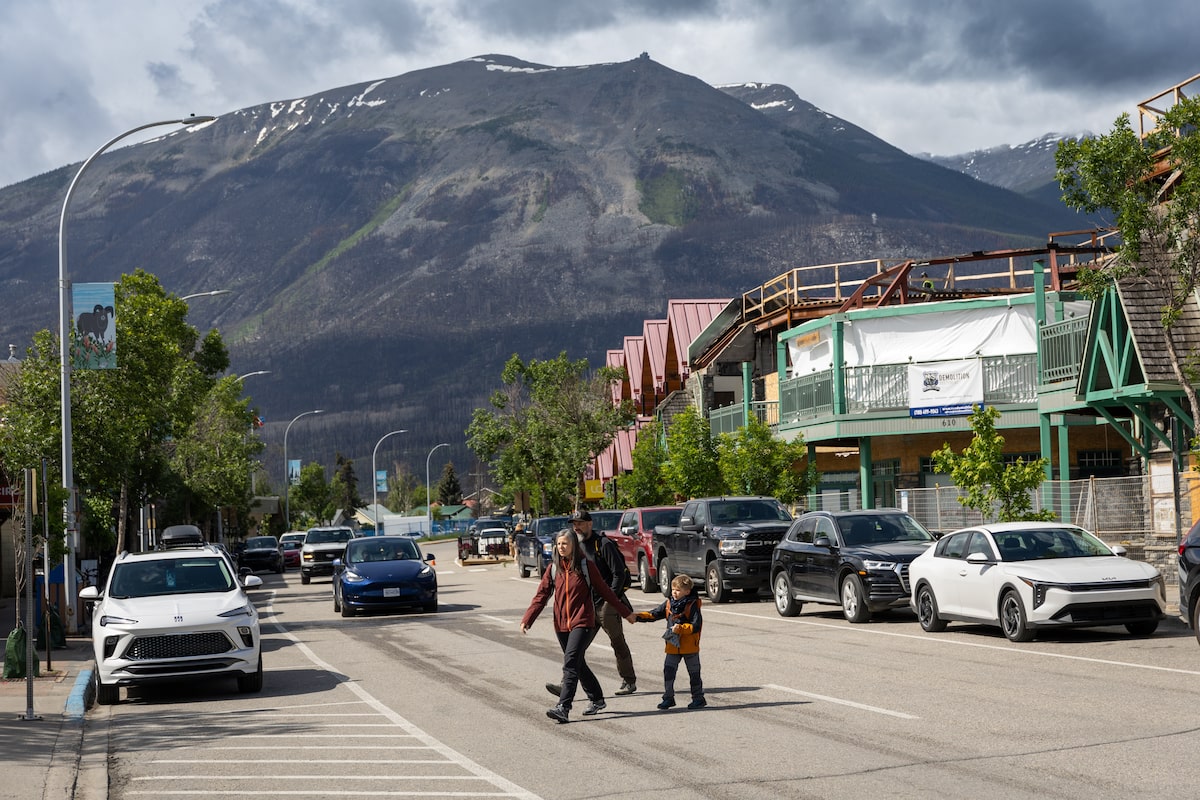
Last July's fires in Jasper left a trail of destruction through much of the Alberta town and the scenic national park.Amber Bracken/The Canadian Press
Last summer’s wildfire in Jasper National Park offers a look at how Canada’s existing approach to wildfire management was applied to a massive, multi-jurisdictional fire – and how the ideas being floated could improve the response to future megafires.
According to official timelines published by Parks Canada and the Municipality of Jasper, four wildfires were reported in quick succession near Jasper on July 22, 2024, nearly two weeks after hot and dry weather conditions along with prolonged drought triggered an “extreme” fire danger rating in the park. Gusting winds of up to 30 km/h quickly merged the three fires south of town into one large inferno.
Parks Canada, the agency responsible for fire management in national parks, already had four fire crews working to contain existing wildfires, while initial attack crews patrolled looking for signs of new ones.
Within half an hour of ignition, Parks Canada and the Municipality of Jasper issued evacuation alerts and began mobilizing firefighting resources. The federal agency requested air tankers but discovered that none were immediately available, with some having been assigned to other fires in the province.
Hours later, what became known as the Jasper Wildfire Complex spread over 6,000 hectares, flames rose as high as 50 metres into the sky and new fires were starting up to half a kilometre ahead of the blaze. More than 25,000 people were ordered to evacuate.
Parks Canada reported that 25 local firefighters, from both the federal agency and the municipality, were on-site within an hour, supported by four helicopters and eight fire engines. Within 24 hours of ignition, there were more than 250 personnel responding to the fires, co-ordinated under Unified Command structure between Parks Canada and the Municipality of Jasper.
By July 24, “hundreds of firefighters and resources” arrived or were en route, but fire-generated winds propelled the fire’s rapid growth toward town. About 820 housing units were destroyed that day, with expected losses in the hundreds of millions.
Mr. Sajjan said at the time that every request for resources was approved and that more boots on the ground would not have helped.
But Prof. Flannigan said that had fire crews and aircraft been strategically pre-positioned in the area, such as when the park officially declared the fire risk “extreme,” they could have put out the initial fires before they grew larger.
“The fire was reported right away,” Prof. Flannigan said. “If they had some initial attack crews in Jasper with helicopters and they got there within 30 minutes, they could have put it out.”
Prof. Asgary said an early emergency declaration could have been issued, and visitors prevented from entering the area before the fires reached critical levels. He also noted that some evacuees who fled to B.C. were turned back because that province was dealing with its own fires – a situation that might have been avoided with better co-ordination and communication.
An after-action review by the municipality, published this summer, noted many areas of strength in the response but also highlighted opportunities for improvement.
This included communication deficiencies, delays in tactical updates, unco-ordinated firefighting efforts and shortages in essential tools, logistical support and safety equipment. The Alberta government’s involvement also “introduced complexity due to uncertain decision-making authority and jurisdictional overlap”– a finding that prompted Alberta Premier Danielle Smith to demand an apology from the municipality.

Kelsey Winter, director of the Canadian Interagency Forest Fire Centre, says the current system of provincial fire forces is more national than its critics think.Chad Hipolito/The Globe and Mail
The alternative to a new agency, argue others enmeshed in Canada’s firefighting efforts, is simply more resources and improved interoperability across provinces and territories to ensure the current system works better.
Kelsey Winter, the executive director of the Canadian Interagency Forest Fire Centre (CIFFC), notes Canada already has a national firefighting force.
“Yes, it’s housed in provinces and territories, and yes, it relies on shared resources. But realistically, it’s not a broken system,” she said.
“What we need to do, in my opinion only, is invest in those provinces and territories, and provide them with more sustainable funding to bolster their own forces. They know their provinces.”

Prescribed burns like this one in Cranbrook, B.C., play an increasingly important part in fire-proofing landscapes in cooler seasons.Jesse Winter/The Globe and Mail
Ms. Winter said there is a cultural shift under way, with some wildland fire agencies expanding their efforts so that personnel are not only putting out fires in the summer but working on prevention and mitigation year-round, such as through prescribed burns. The CIFFC’s mandate was also expanded in 2021 to include co-ordination of prevention and mitigation.
The CIFFC is part of the Wildfire Resilience Consortium of Canada, a new not-for-profit organization launched this summer to facilitate knowledge exchange and collaboration between governments and affected communities.
Its five founding partners are the research and development organization FPInnovations, the Institute for Catastrophic Loss Reduction, the National Indigenous Fire Safety Council, the TRU Wildfire initiative at Thompson Rivers University and Forest Products Association of Canada.
Ms. Winter described the consortium as a knowledge mobilizer, intended to bridge research and action while breaking down provincial and territorial silos.
She cited as a hypothetical example researchers with a new technological innovation that could get water to firefighters more quickly. The consortium could connect those researchers to wildfire management agencies, affected communities and venture capitalists, turning an idea into a real-world solution.
“It’s all about being an organization that connects those dots and tries to accelerate those great solutions,” she said.
In July, Minister of Energy and Natural Resources Tim Hodgson announced $11.7-million in funding over four years for the initiative.

Budgets at U.S. disaster agency FEMA, headquartered in Washington, have been cut back dramatically under the Trump administration.Gene J. Puskar/The Associated Press
While Canada considers whether a new national agency should be developed, the United States is moving in the opposite direction.
U.S. President Donald Trump’s administration has presided over a rapid downsizing of the country’s Federal Emergency Management Agency (FEMA) since assuming office, and Mr. Trump said in June that he planned to start “phasing out” the agency after this hurricane season.
The President portrays FEMA as bloated and inefficient; chief among his complaints is that FEMA is “extremely expensive.” He has said he wants to eliminate it and transfer more responsibilities and costs associated with emergency management to the states.
Homeland Security Secretary Kristi Noem, whose department supervises FEMA, co-chairs a council charged with recommending how to shrink the agency. She has said that FEMA is too slow to respond to crises, a complaint that has cropped up repeatedly throughout its nearly half-century history.

Wildfire season ‘not slowing down’
In a briefing this week, officials in Ottawa confirmed this year is now Canada’s second worst wildfire season on record, in terms of hectares burned. Wildfires have now consumed an area roughly the size of New Brunswick.
As of Aug. 18, there are 707 wildfires burning in Canada. The national wildland fire preparedness level is at 5.
“That means that firefighters and equipment are in use in every province and territory in Canada,” Ms. Olszewski said. “The wildfire season is not slowing down.”
In Saskatchewan, wildfire officials recently lifted a provincial fire ban because the weather has improved. The total area burned in Saskatchewan now stands at over 2.5 million hectares, according to estimates.
The Saskatchewan Public Safety Agency’s Steve Roberts said Australian firefighters are headed home after a month-long deployment. Crews from elsewhere in Canada, as well as the United States and Mexico, remain on hand, as do about 300 military firefighters.
As Atlantic Canada – notably Newfoundland and Labrador, New Brunswick and Nova Scotia – continues to grapple with several mass fires, he said the agency would assess what resources Saskatchewan can send if needed.
“We will make resources available once we no longer have the need,” Mr. Roberts said. “We made our partners in Newfoundland and New Brunswick know what we’re releasing, so they have the opportunity to potentially get those resources shifted to them.”
With a report from The Canadian Press

Illustration by Marcelle Faucher (source photo: Getty Images)
Fires of the future: More from The Globe
Firefighting and land management
First Nations land guardians on Vancouver Island are the keepers of a changing coast under threat
Commentary
Ken Steacy: It’s not a bird! It’s a Super Scooper plane, Canada’s most powerful water-bombing tool
David Lindenmayer and Charles Krebs: Oh, Canada, don’t make the same wildfire mistakes as Australia
The Decibel podcast
When wildfires contaminate Canada’s air, remote Indigenous communities often face the most harmful health effects. During 2023’s disastrous season, researcher Nicole Redvers spoke with The Decibel about the lasting impacts of smoke. Subscribe for more episodes.