
A road trip. A shack on the side of a highway. A paper cone of steaming, crispy fries.
For many Canadians, stopping at a chip stand on summer vacation or en route to the cottage is a rite of passage.
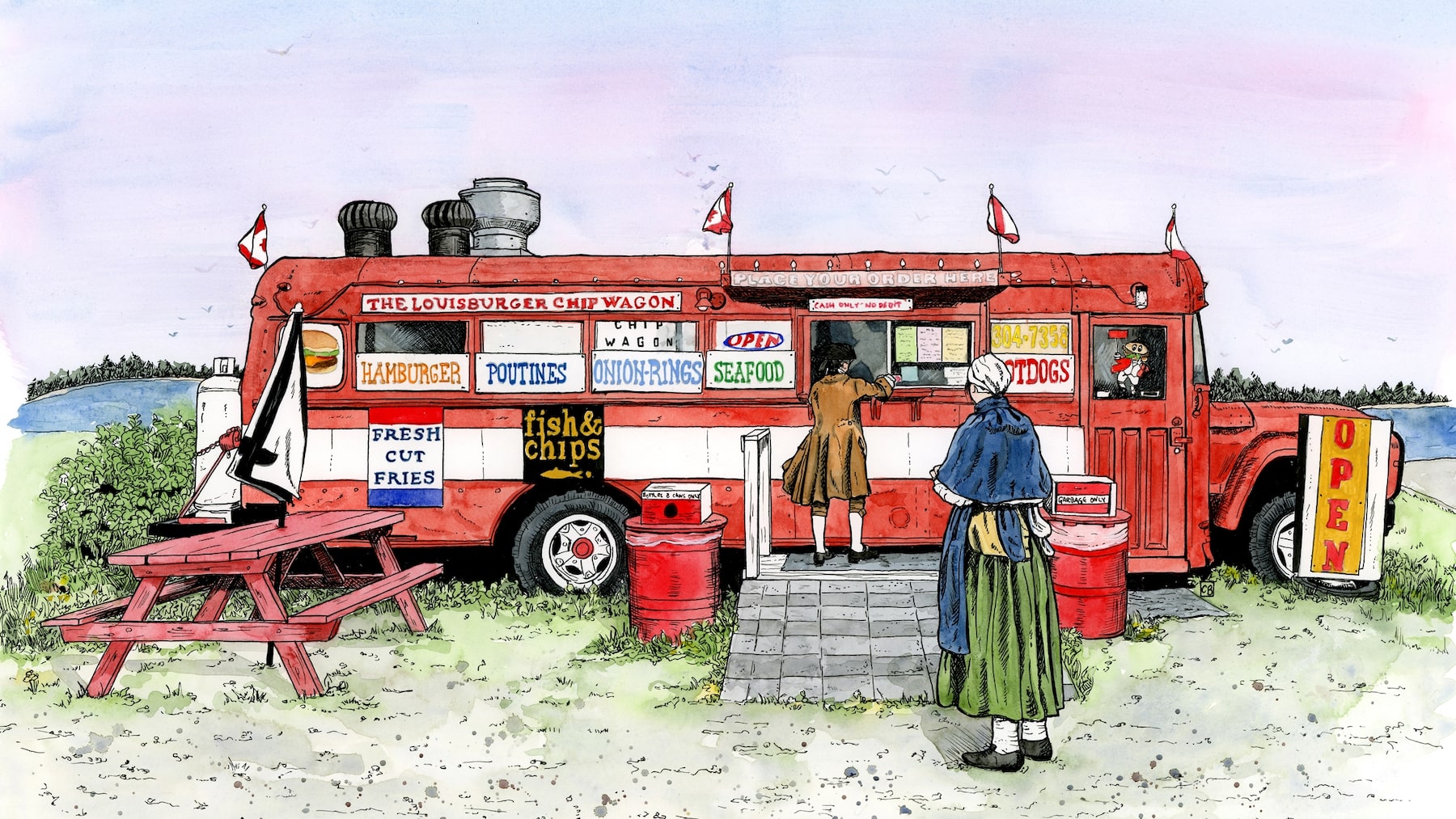
In The Chip Stand: 130 of Canada’s Iconic Food Landmarks, illustrators and married couple Chantal Bennett and Joel Kimmel pay homage to hundreds of the iconic fast-food joints they’ve encountered during a decade of road trips across the country, from British Columbia to Newfoundland.

The Chip Pit, Cobden, Ont.Illustration by Chantal Bennett/Supplied
Often found in small towns and on the fringes of cities, chip stands are places where food, travel and culture intersect. The book, released by Firefly Books in March, includes delightfully quirky illustrations – including, for example, a sketch of a decommissioned airplane that’s been converted into a chip stand in Saint-Esprit, Que. It also features comic strips, interviews with chip stand operators and short cultural histories. (Care to learn about the origins of the deep-fried Pogo corn dog? They’ve got you covered.)
The couple sat down with The Globe and Mail to talk about what makes chip stands so endearing.


What is it about chip stands that makes them so iconic?
Chantal: I mean, they serve a pretty specific menu. It has to be fries, and most of them serve poutine, which differentiates them from anywhere else in the world. The other fun thing is that so many of them are off-the-beaten track, and you don’t know they’re there until you stumble across them. The majority of food trucks tend to be in cities, whereas chips stands can be spread around the country. It’s the sort of thing you find on road trips, which is really a fun thing to come across accidentally, or as a tradition. It’s definitely part of road-trip culture.
You interviewed some of the chip stand operators you encountered. Did anything surprise you during those conversations?
Joel: I think the book really emphasized to the owners that they are part of this Canadiana culture. And I think at first they didn’t really see the importance. A lot of these owners are just slinging fried foods in a shack and they’ve been doing it for a long time.
Also, one of the owners did tell us how much money he made, and I was surprised by how much. I guess it’s just that the potato has a low overhead and a high profit margin, I don’t know. I think the chip stand owners who really have a business mind are the ones that last.


You also talk about the “disappearing chip stand.” Why are we seeing fewer of these places?
Chantal: When we talk about the disappearing chip stand, what we’re really talking about is the traditional chip stands, like the ones that we drew, which are kind of ramshackle, with a lot of character and history. There are new chip stands popping up all the time, so I don’t think the genre is in danger of disappearing, but the problem is they’re all popping up in these food trucks that are kind of bland, and we’re disappointed that they aren’t more interesting to look at. Since we started working on the book in 2015, almost 50 of the chip stands we chronicled have closed.
Joel: The history of the chip stand is so fascinating. I mean, they started as horse-drawn wagons in the 1930s. But the farther we get away from the converted school bus or the Canada Post truck or any other quirky vehicles and into shiny new food trailers, it just takes away from the charm.

Sully's Spudz, Mattawa, Ont.Illustration by Joel Kimmel/Supplied
Why did you think this book should be illustrated?
Chantal: Every chip stand is so different, and we wanted to experiment with different types of media, like charcoal and pencil crayon. I even did some fibre arts and made some miniature replicas, which was fun. It’s like the variety of styles reflects the variety of chip stands. Each chip stand has its own mood.
Joel: Some people have asked us, ‘Why didn’t you just photograph all these chip stands?’ Well, it’s not always possible to get good photos because they’re in parking lots and the sun is beating down. The bonus of being able to draw and paint is that you can exclude certain things: You can remove a garbage can, for example. You can add gulls and clouds. We did take some artistic licence, because you can only draw a parking lot so many times.
You must have really enjoyed stretching your artistic muscles.
Joel: You could say we’ve been “chipping away” at it for more than a decade.

This interview has been edited and condensed.