|
|
|
|
Hello, welcome to Politics Insider. Let’s look at what happened this week. |
|
|
|
|
|
|
|
|
|
|
|
|
|
|
|
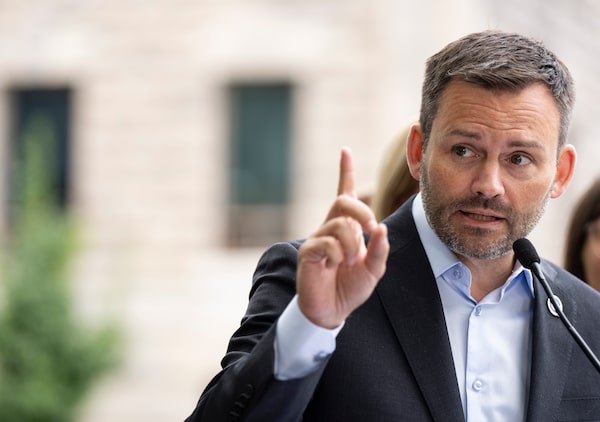
Parti Québécois Leader Paul St-Pierre Plamondon speaks to the media during a campaign stop in Saint-Jerome, Que., on Wednesday. Christinne Muschi/The Canadian Press
|
|
|
|
|
The leader of the Parti Québécois is accusing the federal government of interfering in the Quebec election campaign to benefit his main adversary. |
|
|
|
|
Paul St-Pierre Plamondon pointed today to a series of recent announcements made by Prime Minister Mark Carney alongside Quebec Premier Christine Fréchette. |
|
|
|
|
|
|
|
|
|
|
“I think we should be concerned about the possibility that this could be the greatest federal interference in our affairs and our election since 1995,” he told reporters in response to questions at a press conference in Chibougamau in northern Quebec, referring to the province’s last independence referendum. |
|
|
|
|
|
|
|
|
The comments come as the governing Coalition Avenir Québec, led by Fréchette, has made an unlikely comeback amid the ongoing fallout from the trade war with the United States. |
|
|
|
|
|
|
|
|
|
|
In fact, inbound investment is picking up. Foreign direct investment into Canada is on the upswing, for example, having outpaced outbound FDI in 2025 for the first time in 12 years. |
|
|
|
|
Prime Minister Mark Carney has been busily pitching Canada as a dependable partner as the U.S. proves itself, day by day, to be anything but. |
|
|
|
|
| This is the daily Politics Insider newsletter, curated by Ian Bailey. It is available exclusively to our digital subscribers. You can sign up for more than 20 other newsletters on our signup page. |
|
|
|
|
|
|
|
|
|
|
|
|
|
|
|
|
|
Canada’s employment loses 42,000 jobs in August: Statistics Canada also said today that the unemployment rate held steady at 6.4 per cent last month. |
|
|
|
|
|
|
|
|
|
|
Court orders Ottawa to release details about resettlement of Nazi war criminals in Canada: The court ruling is the result of legal action by B’nai Brith, which had challenged Ottawa’s decision to keep secret some details of American efforts to help Nazi collaborators enter Canada. |
|
|
|
|
Major changes coming to 24 Sussex Drive, famed architect says: “Change is coming and I think change is inevitable,” says Moshe Safdie. “This building, one hopes, is there for a long, long time, and needs to accommodate more than what Sussex had in the past.” |
|
|
|
|
Three ex-B.C. Conservative legislature members join newly formed party: Five legislators who quit the B.C. Conservatives will be part of a new party they say offers a “stable, serious alternative” to the governing NDP. |
|
|
|
|
Bank of Canada unveils new $20 bill: For the first time in more than 70 years, a new monarch will appear on Canada’s $20 bill via a bank note unveiled this week. |
|
|
|
|
|
|
|
|
|
|
Political Lives, Dick Proctor: The NDP MP, who, in 1998, took notes on an overheard conversation involving Canada’s solicitor-general, and disclosed its contents leading to Andy Scott’s resignation, has died. He was 85. |
|
|
|
|
|
|
|
|
|
|
|
|
|
|
|
|
Goodbye Ottawa, says McKenna: As she departs Ottawa after 24 years as a resident of the nation’s capital, former environment minister Catherine McKenna has some parting advice for the city where she was also Ottawa Centre MP. |
|
|
|
|
“Be more ambitious,” she said in an interview. “I think Ottawa is a great city. I just think sometimes it just seems to think small and also define itself solely by politics, and I think there is a lot more going on there.” |
|
|
|
|
The Hamilton, Ont., native announced her departure this week in a social-media post, and explained it further in an interview, noting she has two children at the University of Toronto. |
|
|
|
|
Now her MP is Evan Solomon, the Minister of Artificial Intelligence, and, as an inveterate open-water swimmer, she is now swimming at Cherry Beach instead of Meech Lake. |
|
|
|
|
McKenna, the founder and chief executive officer of Climate and Nature Solutions, said she has been out of politics, with a caveat. “When you’re the former member of Parliament for Ottawa Centre, it is very hard to get away from politics,” she said. “I’m not in politics any longer. It felt like it was time to go.” |
|
|
|
|
As for life out of politics, in Toronto, McKenna noted, “I can be way more anonymous here.” She added, “When I was in Ottawa, it still felt like a small town and people would come up to me and they would be, like, `Can you tell Mark Carney X?’” |
|
|
|
|
Carney book in the works: Lawrence Martin, a public affairs columnist with The Globe and Mail and a bestselling author, is turning his attention to Prime Minister Mark Carney. Martin told the newsletter he was working on a second volume of his 1982 book The Presidents and the Prime Ministers, but has struck an agreement with his publisher, Penguin Random House, to focus on the current prime minister. |
|
|
|
|
“On Carney I don’t want to do a book on his governance. You bring it out and it’s outdated a couple of months later. Instead it will be a set-piece book on his rise to power. Working title The Making of Mark Carney,” Martin wrote in a statement to the newsletter. |
|
|
|
|
Martin said the book will explore all phases of Carney’s life and career, possibly up to his Davos speech before concluding there. He is hoping to interview Carney. |
|
|
|
|
“I love delving deeply into the early lives and careers because you can unearth new material that illuminates your subject,” Martin wrote, citing the first volume of his biography of former prime minister Jean Chretien, Chretien: The Will to Win, published in 1995, as well as his 1993 biography of hockey great Mario Lemieux, titled Mario. |
|
|
|
|
Martin, who, like Carney, studied at Harvard, said he will be doing research in London, noting he has a head start there because his daughter is the head of media and stakeholder engagement at the Bank of England. |
|
|
|
|
Martin said he is hoping to have the book finished and published in 2028, though it may take until 2029. |
|
|
|
|
Prime Minister’s Week: This week, Mark Carney convened gatherings of labour and union leaders as well as business leaders on the Canada-U.S. trade relationship. Carney also spoke to journalists outside the Ottawa office of the prime minister. In Thunder Bay, on Thursday, Carney announced the federal government would spend $4.7-billion to build and maintain more than 300 Via Rail passenger rail cars in Canada, using facilities in Quebec and Thunder Bay. Carney did not have any public events scheduled for today. |
|
|
|
|
Party Leaders: As voters went to the polls in this week’s by-elections, Green Party Leader Elizabeth May was campaigning in North Vancouver-Capilano with her party’s candidate, Shelley Luce, and also attended an election-night watch party. NDP Leader Avi Lewis was scheduled to participate in Toronto’s Labour Day parade. No schedules released for other party leaders. |
|
|
|
|
|
|
|
|
|
|
In Charlottetown today, Agriculture Minister Heath MacDonald announced $3,111,486 for the Canadian Pork Council to advance the scope and quality of swine health surveillance in Canada. From next Tuesday to Thursday, MacDonald was scheduled to travel to southern Alberta to visit local producers, tour farming and food processing facilities, and meet with industry leaders. |
|
|
|
|
Finance Minister François-Philippe Champagne was in the North Carolina city of Asheville on Monday and Tuesday for the G20 Finance Ministers and Central Bank Governors meeting. |
|
|
|
|
On Monday, Artificial Intelligence Minister Evan Solomon, also minister responsible for the Federal Economic Development Agency for Southern Ontario, announced over $12.5-million to support nine Hamilton-area businesses affected by U.S. tariffs. On Thursday, in Markham, north of Toronto, he announced Canada’s Responsible Data Centre Development Principles. |
|
|
|
|
Foreign Affairs Minister Anita Anand was in the town of Wicklow, south of Ireland, on Tuesday and Wednesday to participate in the informal meeting of European Union foreign affairs ministers. Anand’s department said this is the first time a Canadian minister of foreign affairs has participated in such a meeting. |
|
|
|
|
On Tuesday, Emergency Management Minister Eleanor Olszewski was in Jasper, Alta., with Mayor Richard Ireland to announce a joint investment of more than $7.9-million in a wastewater lagoon recommissioning project. On Thursday, Olszewski, also the minister responsible for Prairies Economic Development Canada, was in Winnipeg to announce federal funding to support Winnipeg manufacturers as they respond to tariff pressures. |
|
|
|
|
On Wednesday, Justice Minister Sean Fraser, also minister responsible for the Atlantic Canada Opportunities Agency, announced more than $14.1-million in federal support to help businesses across Nova Scotia respond to tariff pressures. |
|
|
|
|
In Victoria, B.C., Defence Minister David McGuinty attended the 28th annual Indo-Pacific Chiefs of Defense Conference held this week. Next Monday and Tuesday, McGuinty is in Poland, with International Trade Minister Maninder Sidhu, to attend the International Defence Industry Exhibition . |
|
|
|
|
On Thursday, Energy Minister Tim Hodgson and Housing Minister Gregor Robertson, as well as B.C. Premier David Eby, were in Prince George, B.C., to highlight a clean energy milestone. Today Robertson announced over $11-million in support for 10 businesses and organizations across Northern B.C. |
|
|
|
|
|
|
|
|
|
|
Governor-General in Norway: Louise Arbour is travelling to Oslo next week to attend the Wednesday funeral of King Harald V of Norway. |
|
|
|
|
Newly appointed diplomat: Amanda Strohan has been named Canada’s new ambassador to Thailand, replacing Ping Kitnikone, according to a statement from Foreign Affairs Minister Anita Anand. |
|
|
|
|
New NDP National Director: François Picard, a veteran NDP organizer, is the new national director of the party. He starts his new assignment on Sept. 7. |
|
|
|
|
|
|
|
|
|
|
|
|
|
|
|
|
|
|
|
|
|
|
|
|
|
|
|
|
The Politics Insider newsletter continues to hear from MPs about the fiction and non-fiction they are reading this summer. This week’s list is from federal Fisheries Minister Joanne Thompson: |
|
|
|
|
The Life Cycle of the Common Octopus: A Novel by Emma Knight (Penguin Canada, 2025) |
|
|
|
|
“A must-read, especially for fans of Canadian authors.” |
|
|
|
|
Best Canadian Poetry 2026, edited by Mary Dalton and Anita Lahey (Biblioasis, Published in 2025) |
|
|
|
|
The Keeper by Tana French (Penguin Publishing Group, 2026) |
|
|
|
|
“I always have a mystery book in the mix. I had hoped that Louise Penney’s latest Miss Wolcott’s Ghost would be out. It lands in October and I have preordered!” |
|
|
|
|
|
|
|
|
|
|
|
|
|
|
|
|
The federal government is still trying to decide whether or not to proceed with the purchase of 88 F-35 jets from the U.S. company Lockheed Martin. Meanwhile, Sweden is making the case for Canada to buy Swedish-made Gripen jets from aerospace and defence company Saab. |
|
|
|
|
But looking back, what was the first model of jet deployed for use by the Canadian military? |
|
|
|
|
|
|
|
|
|
|
|
|
|
|
|
|
|
|
|
|
|
|
 | The future of the USMCA is far from guaranteed. Not only is the U.S. negotiating separately with Mexico, but Mr. Trump has repeatedly mused about pulling out of the deal altogether. — Rita Trichur, Columnist |
|
|
|
|
|
|
|
|
|
|
|
| Any escalation in the Canada-U.S. trade war – a possibility if a vindicative Mr. Trump responds to Mr. Carney’s counter-tariffs with even more punitive levies on Canadian goods – could help Ms. Fréchette consolidate the anti-PQ vote as she courts supporters of Mr. Milliard’s Liberals and Éric Duhaime’s Conservatives to vote strategically. — Konrad Yakabuski, Columnist |
|
|
|
|
|
|
|
|
|
|
|
| Which brings me back to the unpopular Mr. Eby. — Gary Mason, National Affairs Columnist |
|
|
|
|
|
|
|
|
|
|
|
|
|
|
|
|
|
|
|
|
|
|
|
|
|
|
|
|
|
|
|
|
|
|
|
The answer to today’s question: The first jet-powered aircraft for full Royal Canadian Air Force service were 85 Mark III de Havilland Vampire jets. They were put into service in 1946 and eventually retired by 1958. |
|
|