|
|
|
|
Good morning. Ottawa will soon find out how hard it is to keep teenagers off social media – more on that below, along with an Air Canada pilot’s forged credentials and Apotex’s billion-dollar IPO. But first: |
|
|
|
|
|
|
|
|
|
|
|
|
|
|
|
|
|
|
|
|
|
|
|
|
|
|
|
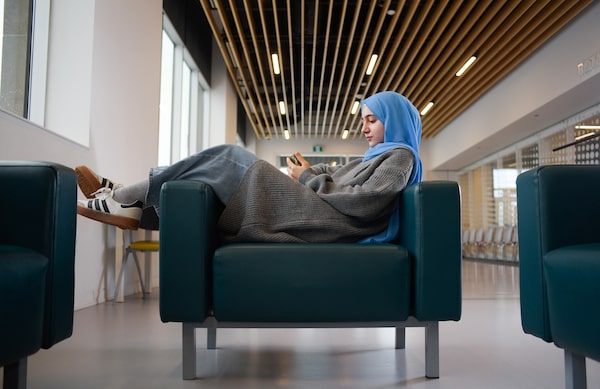
Grade 11 student Nour Alzoubi scrolls on her phone in Charlottetown. The Globe and Mail
|
|
|
|
|
|
|
|
|
|
|
|
|
|
|
|
|
Canada has big plans to boot kids off social media. The federal government will introduce legislation today banning anyone under the age of 16 from accessing platforms such as Instagram, TikTok, Snapchat and X. (Although I’m not convinced teens have much cause to use X.) It’s part of a sweeping digital safety bill – long awaited in Ottawa – that would also require tech companies to rein in their AI chatbots and suppress the spread of harmful material online. |
|
|
|
|
There’s been mounting pressure to table this kind of measure. In December, Australia imposed the world’s first social media ban for children under 16, designed to protect them from cyberbullies, toxic content and the addictive algorithms hijacking their brains. Lawmakers in France, Spain, Malaysia, Denmark and Turkey have all taken steps toward similar restrictions; Britain is expected to announce its own under-16 crackdown next week. Manitoba Premier Wab Kinew said a social media ban is on the way in his province. Ontario Education Minister Paul Calandra is looking into one, too. |
|
|
|
|
|
|
|
|
But Ottawa’s law differs in an important way from Australia and Europe’s blanket bans: This safety bill offers Big Tech a carrot alongside its age-gating stick. If companies meet the harm-reduction standards laid out by a new digital regulator, then teenagers will be allowed onto their platforms again. |
|
|
|
|
Psychologists hope these standards focus on social media features that lead to compulsive use, like infinite scroll, constant notifications and video autoplay – the same features called out in a landmark court verdict earlier this year. In March, a California jury ordered Meta and YouTube to pay millions in damages for deliberately designing products that are addictive to young people. But Meta, which is appealing the decision, hasn’t overhauled its algorithm yet. And tech giants have good reason to believe that any social media ban won’t actually keep teens off their sites. |
|
|
|
|
|
|
|
|
|
|
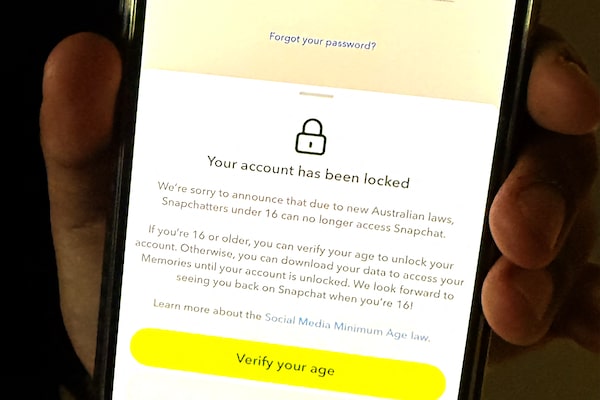
Australia didn’t want to hold kids or their parents responsible for circumventing the country’s social media rules. Instead, it left Big Tech on the hook to police their own platforms, including through ID checks and AI-powered face scans that analyze bone structure and skin texture to guess someone’s age. If companies failed to make reasonable efforts to block underage users, they’d have to fork over roughly $50-million in fines. |
|
|
|
|
|
|
|
|
|
Australia's social media ban for children kicked in last December. STR/AFP/Getty Images
|
|
|
|
|
But six months in, it’s fair to say the ban isn’t going especially well. Even Australia’s online safety czar says it: “You’re effectively asking us to fence the ocean,” Julie Inman Grant told a Sydney newspaper last week, and the law is “very thin scaffolding.” |
|
|
|
|
According to the government’s data, around 70 per cent of teens under 16 are still on social media. Two-thirds of them were never asked to go through any age verification, while some platforms gave kids dozens of attempts – each day! – to get around the test. TikTok, YouTube, Snapchat, Facebook and Instagram are now all under investigation for non-compliance, though no penalties have been issued so far. And Inman Grant seems less than confident that the world’s biggest tech companies will be daunted by those fines. “I don’t have potent powers,” she said, then went on to compare them to “sticking a pink parking ticket on a windshield.” |
|
|
|
|
|
|
|
|
|
|
I’d really like to leave you on a more optimistic note, so let’s take a quick trip over to Bradford, a large district in northern England (and the birthplace of artist David Hockney). Researchers there suspected that all-out social media bans were too blunt – and, ultimately, too toothless – to keep teenagers off the sites. But they wanted to see if reducing social media time could actually prove effective and improve mental health outcomes. |
|
|
|
|
This fall, Bradford will pilot the world’s first-ever study on digital curfews. Four thousand students aged 12 to 15 agreed to take part in the six-week experiment: Half will get a bespoke smartphone app tracking their unencumbered social media use, while the rest will have their time limited to one hour a day between 7 a.m. and 9 p.m. Significantly, the students will be randomized by their school year, meaning all the Grade 7s could be in the control group, for example, and all Grade 9s could be in the restricted group. That way, they’re less likely to miss out on interactions with their friends. |
|
|
|
|
The kids, understandably, are apprehensive. Social media is “such a big part of my life at the minute,” 15-year-old Lucia told the BBC. Still, they’re already starting to anticipate a world beyond Snapchat. “The only way I talk to my friends outside of school is on my phone – I don’t go and meet them,” 14-year-old Aisha said. She thinks that’s bound to change come September. “Hopefully it’ll make me more relaxed, because I’ll be able to go outside and not just be stuck at home.” |
|
|
|
|
|
|
|
|
|
|
|
|
|
|
|
|
‘The details read like a movie script.’ |
|
|
|
|
|
|
|
|
|
At least the man was a licensed commercial pilot. Christinne Muschi/The Canadian Press
|
|
|
|
|
A former Air Canada pilot has been charged after flying tens of thousands of passengers on more than 900 flights with a forged captain’s license – and getting away with it for 17 years. Read more about subterfuge here. |
|
|
|
|
|
|
|
|
|
|
|
|
|
|
|
|
What else we’re following |
|
|
|
|
At home: Ottawa will unveil a new task force on preventative health care today, more than a year after a breast-cancer-screening controversy shut the old panel down. |
|
|
|
|
|
|
|
|
|
|
|
|
|
|
|
|
Business: Apotex, Canada’s largest drug manufacturer, increased the size of its initial public offering to $1.3-billion on the back of strong investor demand. |
|
|
|
|
Beavers: Several dozen four-foot-tall statues of Canada’s toothiest creature have taken over downtown Toronto to welcome tourists to the World Cup. |
|
|
|
|
|
|
|
|