Jesse Winter is a reporter and photojournalist covering western Canada for The Globe and Mail’s B.C. bureau. He’s the author of Wild Fire: Dispatches from a Country Ablaze, from which this essay has been adapted.
A helicopter swinging a bulging water bucket beneath it hammered over the treetops behind me and roared toward two of the nearby smokejumpers, ready to drop its load.
I turned to smokejumper Tyler Moylan as he shouted instructions into his radio. He craned his neck to keep the helicopter in sight as it hovered almost directly above him, barely 100 feet away. Over the roar of the helicopter’s engine and the howling downdraft from its rotors, I couldn’t hear what he said. Whatever it was must have worked, though, because as soon as he said it the pilot opened the bucket’s giant drawstring. It released a towering column of water that crashed down in front of us, right on target. Mr. Moylan flashed him a thumbs-up. Through the machine’s window I caught the pilot’s brief wave of acknowledgement before he punched the throttle and lumbered away into the sky.

Alaska smokejumper Tyler Moylan, right, nearly gets his dinner snatched by the puppy of a heavy equipment contractor. His team came to Vanderhoof, B.C., for a controlled burn in 2023.
It was July, 2023, and it seemed like all of Canada was on fire – and I was determined to see it for myself, up close. After arranging access through the BC Wildfire Service, I had arrived earlier that day to cover the Tsah Creek wildfire in northern B.C., which had been burning for days and threatened to sever a key highway corridor through the region.
That day, I was embedded with Mr. Moylan and his colleague Steve Lozano as they chased spot fires. Then, as the sun set, they regrouped for the night operation: They were going to set part of the forest on fire, on purpose. By burning up stretches of forest under favourable conditions, firefighters can prevent it from burning during unfavourable ones. A successful planned ignition is one of the best tools firefighters have to contain an out-of-control wildfire, but they are risky, and they can occasionally go sideways.
As the firefighters gathered for a planning briefing, I walked over and introduced myself to one of their squad leaders, a bearded Alaskan smokejumper named Jake Murie. Mr. Murie is tall, with sloping broad shoulders and the firm handshake of someone who fights fires all summer, then rafts whitewater and climbs mountains all winter. He proceeded to sketch out the nearby terrain, highlighting water features, a small pond and swamp, a ridge line, and their main fire guard – an old logging road that had been improved with the help of heavy equipment, which had plowed away overgrown shrubs and plants and removed everything down to unburnable mineral soil to keep their ignition from escaping.

Jake Murie gives instructions to his firing team during the planned ignition near Vanderhoof.
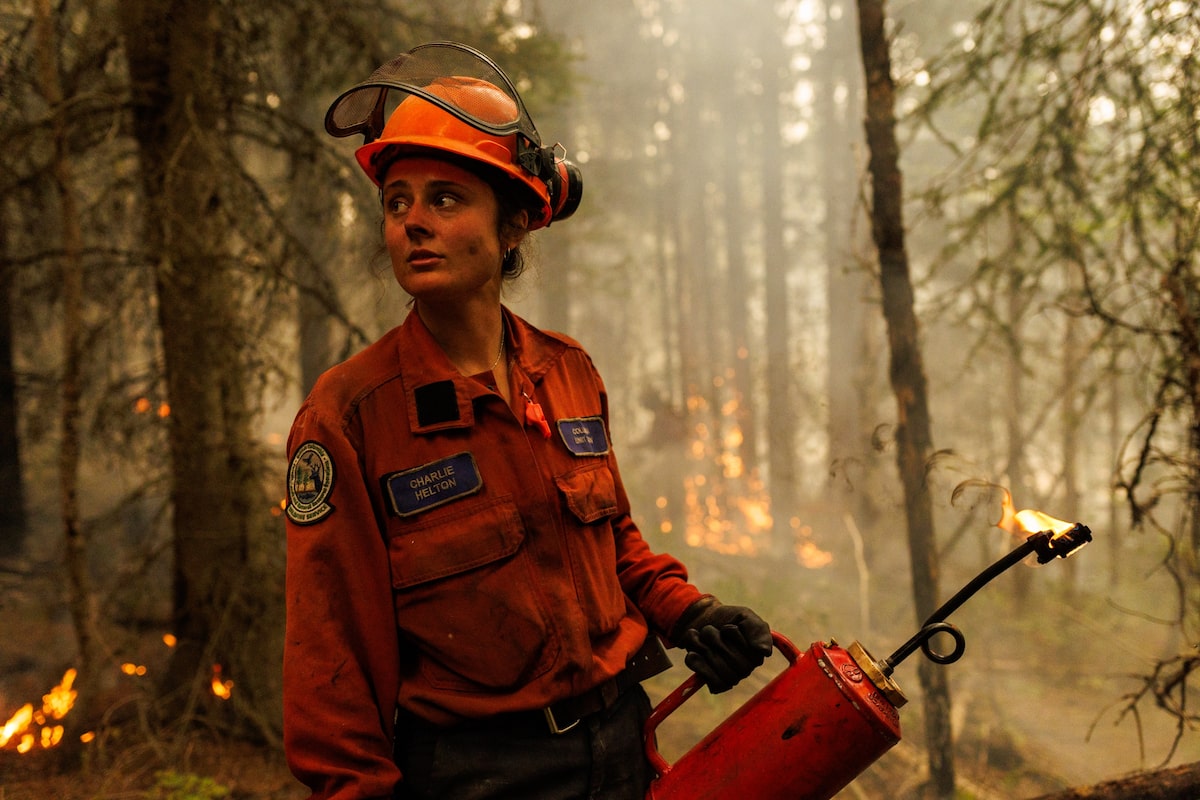
Once the ignition got under way, I followed Mr. Moylan and BC Wildfire Service firefighter Charlie Helton as they worked their drip torches through dense thickets of shrubs, over tangles of fallen logs and dead branches. Only a few dozen feet away, stands of pine trees were torching together – fire tearing up along their trunks, climbing the tree branches like a ladder.
Later, back on the roadway I found Mr. Murie again, pacing along the fire guard, radio in hand. What he read in the flames I couldn’t exactly say – all I saw were walls of fire belching embers high into the night sky. Around us other crew members stood and marvelled at the sight.
Mr. Murie turned to me with a smile. “Pretty incredible, isn’t it?”
The burn continued through the night and went off without a hitch, eating up hectares of potential fuel and helping secure that section of the fire’s perimeter. As I crawled into my sleeping bag back at the fire camp sometime after 2 a.m., I had trouble falling asleep – not from nerves or fear, but from the rush of seeing something so few people get to see. It’s no mystery to me why, despite the danger and the stress, wildland firefighters love their jobs so much.


I didn’t realize it at the time, but reporting from the Tsah Creek fire has become foundational to my understanding of modern wildfire, and what is changing in our forests.
Media coverage of wildfires often drives simplistic narratives about wildfire as wholly bad – a thing we need to tame, control, stamp out. The truth is much more complex, and that story hides our own complicity in the destruction now frequently wrought not by traditional wildfires, but by megafires.
As overwhelming as it was to a relative rookie like me, the Tsah Creek wildfire was a pretty unremarkable workaday fire – the kind that generations of wildland firefighters have perfected the art of containing, suppressing and putting out. In fact, we’ve collectively gotten so good at it over the past century that we have virtually eliminated wildfire from the landscape. And, as we are slowly learning, that is not a good thing: Fewer routine healthy fires have paved the way for the destructive monsters that are entirely unstoppable. The country woke up to this reality 10 years ago this week when the Fort McMurray fire burned down thousands of homes, but what seemed like an aberration at the time has continued.

But fire doesn’t just destroy; it restores. Many ecosystems across western North America are what’s called fire-adapted. It means they’ve evolved not just to co-exist with fire, but to rely on it. Photographs from 120 years ago, at the founding of what became Jasper National Park, show the Athabasca River valley not as the dense, tree-choked forest it became, but as a mosaic, with open meadows of grass dotted by stands of trees all varying in age. You’d be forgiven for thinking you were looking at a golf course, not a Rocky Mountain forest.
Indigenous peoples in North America learned how to co-exist with fire here thousands of years before the first settlers arrived. Their use of strategic, cultural burns was widespread, and accomplished many important tasks, including improved berry crops, the creation of easier hunting grounds, and community protection. European colonizers outlawed those practices and built a whole industry around trying to put out wildfires at almost any cost.
But wildfires are as inevitable as rain, and just as necessary for the health of many North American ecosystems. Trying to eliminate them is as futile as trying to dam the heavens, and such efforts have helped set the stage for a new kind of wildfire we are not prepared to face. Confident in our ability to put out all wildfires, we grew complacent. Many of us put wildfires out of our minds, and put off doing the important, simple tasks that make homes and towns more resilient, safe in the belief that if a fire ever did threaten, an army of Nomex-clad twentysomething firefighters would show up to save the day. We blame them when they can’t, not realizing that what we’re asking of firefighters today is far more difficult – and more dangerous – than even 10 years ago. The rules of the game have changed, because we changed them. Wildfire behaviour experts call it fire debt – obsessively extinguishing healthy fires doesn’t actually prevent wildfires from happening, it just worsens the outcomes when that debt finally comes due.

This Jasper neighbourhood was an ashen ruin in August of 2024, after a fast-moving wildfire tore through the surrounding national park.Amber Bracken/The Canadian Press
Two years after the Tsah Creek fire, I would see the devastation wrought by this new kind of monster. In Jasper National Park, it wasn’t the blocks of destroyed homes or the blackened husks of burned-out cars that got to me. As painful as that destruction is, I’d seen it before. Those images have become a near-constant presence in our summers now. What most shocked me was seeing the mountainsides just below the famous Marmot Basin ski area, only a few kilometres from the town itself, where a suspected fire tornado had touched down. Across a nearly 15-square-kilometre area, not a single tree was left standing. Most had been ripped from the ground, roots and all, and scattered like straw in wide, curving arcs. Fire-generated winds had topped 180 kilometres per hour, fast and hot enough to flay the bark off trees, leaving them gleaming white, dead, and so disfigured forestry experts struggled to determine their species. It doesn’t look like the aftermath of a wildfire. It looks like the site of a nuclear blast.
What Tsah Creek and Jasper and a dozen fires in between taught me is that there are wildfires, and then there are megafires. Our blanket fear of the former, and our obsession with eliminating them drove us to create the conditions for the latter, literally stoking our forests with fuel. Human-caused climate change is dumping gasoline on the pile. And yet we still talk of wildfires like they are all the same, all equally bad, and all equally possible to put out if only we had enough water bombers and firefighters willing to risk their lives.
I set out determined to understand our fastest-growing blazes, our narrowest close calls, and the monster fires that really should scare us. I learned that we can either rethink most of what we know about wildfires, and fast, or we can watch as more of our homes goes up in flames.

Fires of the future: More from The Globe and Mail
The Decibel podcast
The climate crisis is growing worse. How can parents prepare children for it without overwhelming them? Columnist Amberly McAteer spoke with The Decibel about challenging conversations at home. Subscribe for more episodes.
Commentary
Jonah Bryson: A Youth Climate Corps could be Carney’s FDR moment
Toby A.A. Heaps: Fighting wildfires should be counted as defence spending