The Globe is visiting communities across the country to hear from Canadians about the issues affecting their lives, their futures and their votes in this federal election.
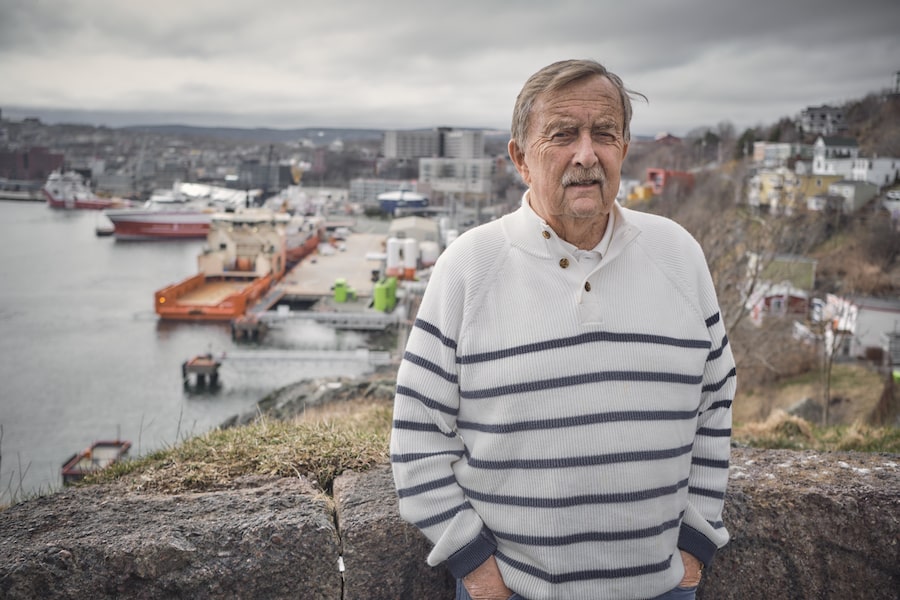
As a pioneer in Newfoundland and Labrador’s offshore oil sector, Rob Strong has enjoyed a view from the deck of the industry that transformed his once hard-luck province into a booming producer of black gold too rich to qualify for the federal equalization payments that were long its mainstay. When the 1979 discovery of the Hibernia oil field unleashed a Klondike of offshore drilling, “there were more cowboy boots and big belt buckles to be seen in Newfoundland than anyone ever saw before,” Mr. Strong, still sporting a tan from a recent Jamaican vacation, recalled over coffee in one of the spiffy hotels near St. John’s harbour that cater to oil-industry executives.
To be sure, there have been ups and downs. Mr. Strong lost five friends in the 1982 sinking of the Ocean Ranger drill rig at Hibernia that left all 84 crew members dead. Exploration dried up after oil prices plummeted in the 1980s, delaying the start of commercial oil production at Hibernia until 1997.
Since then, though, oil has become Newfoundland’s leading commodity by far, with $8.4-billion worth of crude produced in 2024, accounting for 18 per cent of the province’s gross domestic product, and exceeding output in mining, fishing and forestry combined. The provincial government is projected to take in almost $1.6-billion in offshore oil royalties this year, accounting for about 15 per cent of total revenue.
Still, there are clouds hanging over Newfoundland’s offshore sector as big and grey as any to be seen on the stormy North Atlantic Ocean. The province has had no bidders for new offshore oil parcels in three of the past four years. No exploratory wells are expected to be drilled during the 2025 summer season, and none are on the horizon for 2026, either.

The Atlantic Shrike offshore oil supply vessel arrives in St John's. Oil has become Newfoundland’s leading commodity, accounting for 18 per cent of the province’s GDP.
“We desperately need some new discoveries,” insisted Mr. Strong, who now runs his own energy consulting firm. Newfoundland’s three offshore wells in operation – Hibernia, Hebron and Terra Nova – produced about 200,000 barrels a day in 2024. That was down from overall production of more than 250,000 barrels in 2019. And while production has now resumed at the White Rose offshore well that had been shut down for maintenance, and new output will come on stream at the adjacent West White Rose project next year, the province faces a grimmer economic future as all four wells are expected to be depleted by the late 2030s.
While there is some optimism that a memorandum of understanding signed by Quebec and Newfoundland to develop new hydroelectric projects on the Churchill River in Labrador might partly offset future contraction in the oil sector, the deal has not been finalized and it could take years before any shovels go into the ground.
Mr. Strong blames Ottawa for the pall hanging over the offshore oil industry, as environmental regulations adopted and proposed by the Liberals drive energy companies to look beyond Newfoundland. Ask him about what outcome he would like to see in the April 28 federal election, he does not beat around the bush.
“Get rid of Guilbeault and Wilkinson,” he fired back, referring to former environment minister Steven Guilbeault and current Energy and Natural Resources Minister Jonathan Wilkinson.
Mr. Strong and other oil industry executives say Ottawa’s proposed cap on oil-and-gas sector carbon emissions – a policy piloted by Mr. Guilbeault until he was appointed Minister of Canadian Culture and Identity last month by Prime Minister Mark Carney – has put a chill on investment. They also accuse Mr. Wilkinson of killing off hopes for a liquified natural gas (LNG) terminal on Newfoundland’s coast.

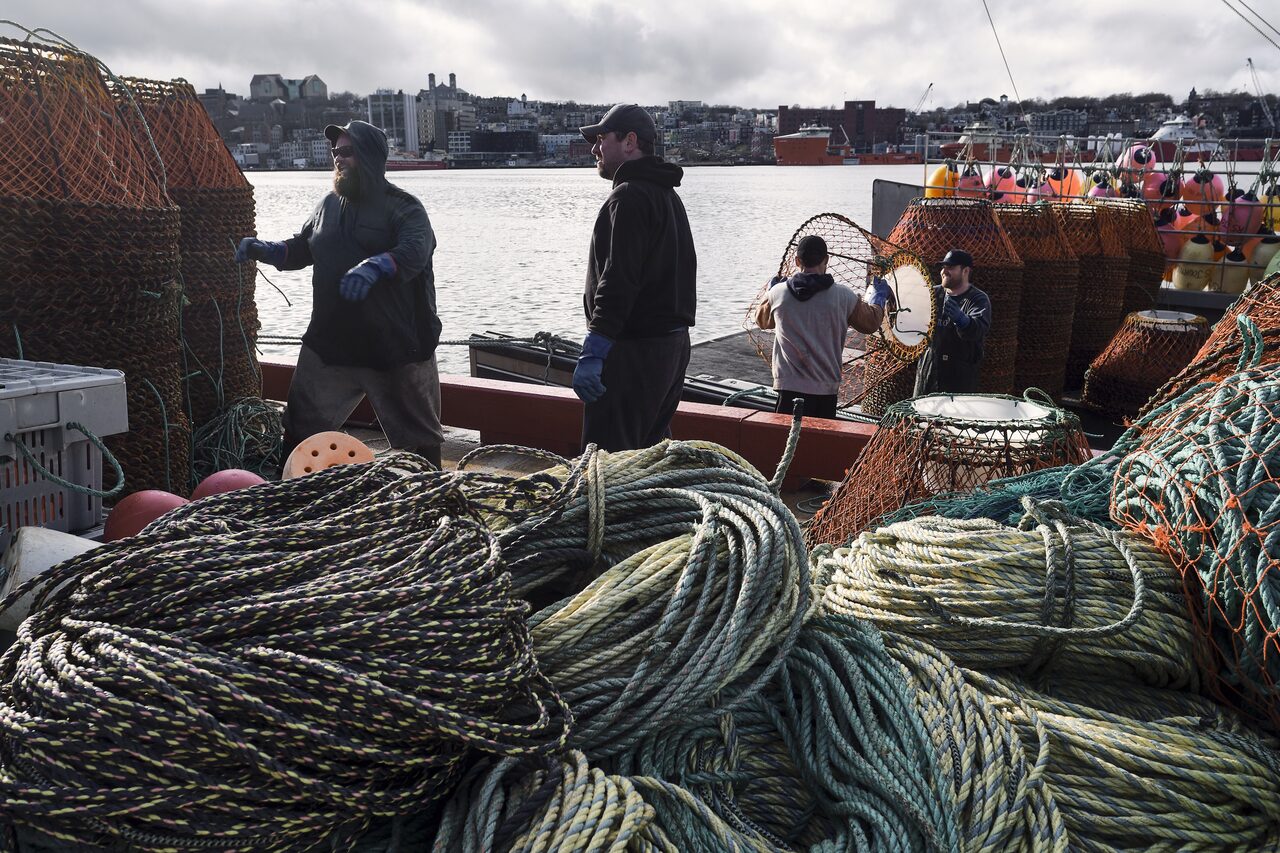

On a spring morning in St. John's, fishermen prepare their traps and boat before heading out to sea, and small businesses on historic Water Street set up for the day.
“When you talk LNG to the federal government, they can’t think beyond British Columbia,” lamented Mr. Strong, chalking it up to his province’s lack of influence in the federal capital. “Look, we’ve only got seven seats [in Newfoundland]. Years ago, we had powerful regional ministers like John Crosbie and Brian Tobin. We don’t have that anymore.”
Mr. Carney, the Liberal Leader, named St. John’s East Liberal MP Joanne Thompson to cabinet for the first time as Fisheries Minister. But she is not seen as having the same influence in Ottawa as Mr. Crosbie and Mr. Tobin had.
Charlene Johnson, chief executive officer of Energy NL, which represents companies that work in Newfoundland’s offshore oil industry, says it sees the emissions cap as a production cap. “With the emissions cap, you don’t know if you can sell your product and make a profit on it.”
Mr. Carney and his new Environment Minister, Terry Duguid, have so far refused to back down on the proposed cap, which would require oil and gas producers to reduce emissions by 35 per cent below 2019 levels by 2032. Emissions from Newfoundland’s offshore oil industry represented less than 1 per cent of Canada’s total 186 megatonnes of oil-and-gas industry greenhouse gases in 2022. And with its lighter conventional crude, Newfoundland’s oil sector is several times less carbon-intensive than Alberta’s oil sands, on a per barrel basis.
Even so, Ottawa’s proposed emissions cap is seen as one reason Norway’s Equinor put its proposed Bay du Nord offshore oil development on hold for three years in 2023 and has still not committed to proceeding with the project, then estimated to cost about $16-billion.
Though he has endorsed Mr. Carney, Newfoundland Liberal Premier Andrew Furey strongly opposes the proposed emissions cap. He argues it would violate the 1985 Atlantic Accord, which requires Ottawa and Newfoundland to jointly agree on policy changes affecting the offshore oil sector. He warns the province could take legal action if Mr. Carney goes ahead with it.
“We are not subject to the emissions cap,” Mr. Furey, who is stepping down after a new provincial Liberal leader is chosen on May 3, insisted in an interview in his office in St. John’s Confederation Building. “I don’t think there should be an emissions cap, but if they do it, that cap is not going to sit on our head.”

An offshore oil supply vessel docks in St John's. Newfoundland’s oil sector is several times less carbon-intensive than Alberta’s oil sands, on a per barrel basis.
While about two-thirds of Newfoundland’s oil is sold to buyers in the United States, its crude is considered USMCA-compliant and is not currently subject to the 10-per-cent tariff U.S. President Donald Trump has slapped on Canadian energy exports.
Still, export diversification remains top of mind, Mr. Furey added. Luckily, Newfoundland’s oil can be shipped across the globe by tanker.
“Our product is not landlocked,” he said. “We don’t have to build pipelines across six provinces [to get oil to market]. It can go anywhere in the world.”
Despite widespread opposition to the federal Liberals’ environmental policies, the party is nevertheless hoping to hold on to all six of its Newfoundland seats on April 28. That is big turnaround from only a few months ago, when the Conservatives looked poised to win several seats and five of the province’s six incumbent Liberal MPs announced they would not run again. Now, Clifford Small, the sole Conservative MP in the province, is in a tight race to hold on to his Central Newfoundland riding.
”The Liberals are just really strong right now, and if they’re going to be strong anywhere, it’s here,” said Memorial University political science professor Scott Matthews.

While about two-thirds of Newfoundland’s oil is sold to buyers in the United States, it is not currently subject to U.S. President Donald Trump's 10-per-cent tariff on Canadian energy exports.
Mr. Strong worries that having the Liberals remain in power will result in a continued slowdown in offshore oil development that could move his province backward to the bad old days when Newfoundland was dependent on federal transfer payments to get by.
While oil wealth made Newfoundland too rich to qualify for equalization payments for several years after 2008, that is no longer the case. The province collected $218-million in equalization from Ottawa last year and is projected to collect $113-million this year.
In its April 9 budget, Mr. Furey’s government announced a $90-million program to encourage oil exploration. But Mr. Strong doubts it will have an impact unless Ottawa scraps environmental regulations on the industry.
“What I’m afraid of is that we’re going to lose all the capability we’ve built up in the oil sector, engineering and services and all that,” Mr. Strong said. “Where are these kids coming out of university going to work?”