
Nancy Macdonald is a reporter at The Globe and Mail.
Every July, on our way to the family camp, we drove past the building that had brought my family to Kenora in the first place.
I never thought much about it.
For most of my life, the Kenricia Hotel was simply a fading red-brick building at the corner of Main and Second streets, the city’s busiest corner. Its windows were dark – some covered with foil – and its brickwork bore the marks of decades of decline. The landmark had become, in the eyes of many residents, an eyesore and a reminder of what the community had lost.


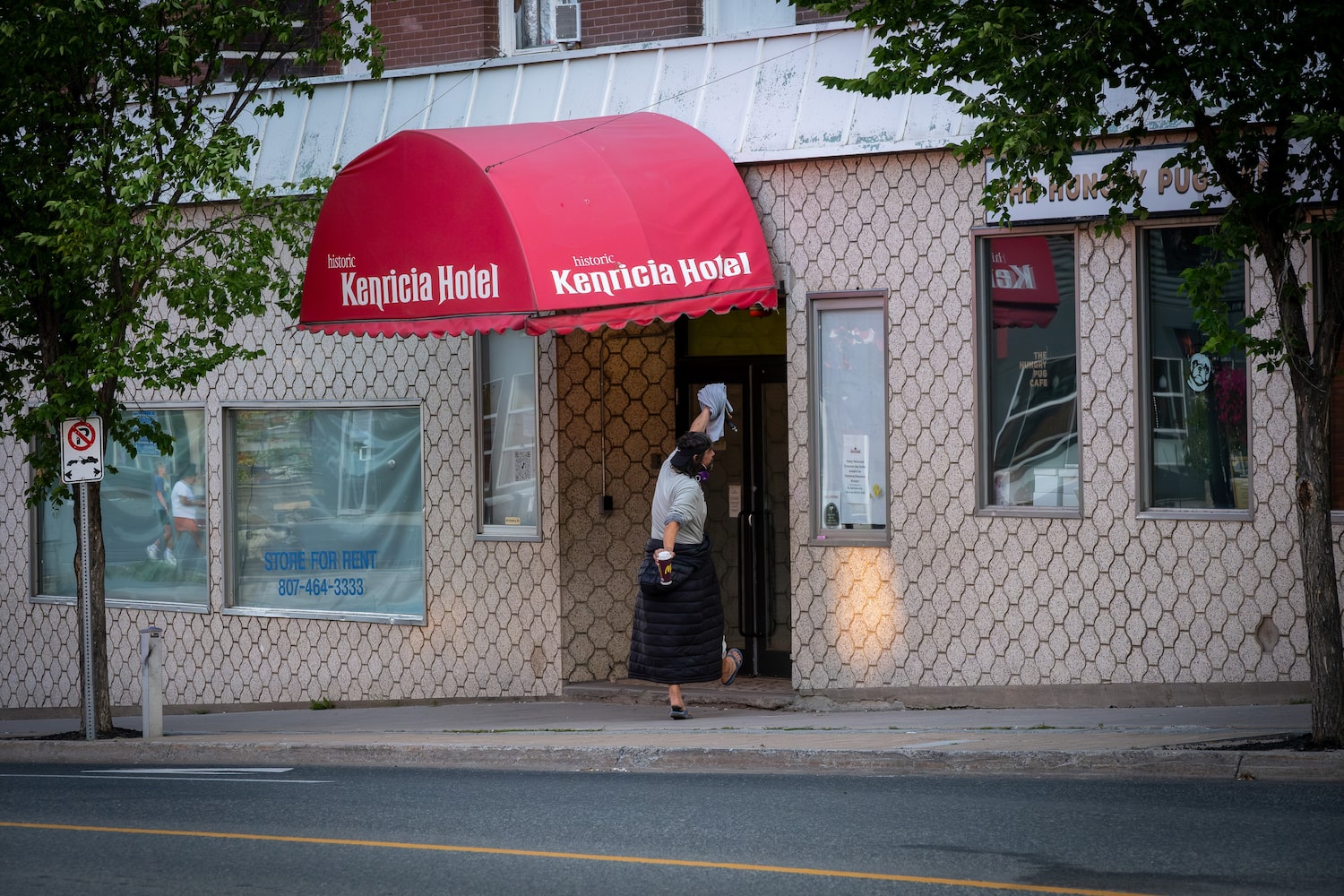
I knew its history. My great-grandfather had owned it. My grandparents had honeymooned there. In another era, it had been one of the grand hotels of Northern Ontario.
What I did not understand then was that places can disappear while they’re still standing.
The building I barely noticed had been born of a dream that once helped define Kenora.
Exploring Lake of the Woods, the landscape does not sit before you like a painting. It surrounds you. You move through it, across it, inside it. Every turn reveals something new: a hidden channel opening toward another bay, a cluster of islands rising from the water, a black bear racing along the shoreline as a boat slips past.
Sunsets there are less an event than a long negotiation between water and light.
For more than a century, people have looked at this landscape and imagined what it could become. The Kenricia was a part of that. The twin engines that once powered Kenora were the pulp and paper industry, which provided generations of well-paying jobs, and Lake of the Woods, which drew cottagers, anglers and visitors from both sides of the border.
When the Abitibi-Consolidated mill closed in 2005, one of those engines went silent, forcing the town to lean more heavily on tourism and the seasonal economy. But by then, the Kenricia had already lost its place in Kenora, its rooms increasingly rented by the month rather than the night.
As the Kenricia’s condition worsened, demolition began to feel less like a possibility than an inevitability, clearing a valuable piece of downtown real estate for whatever came next. Now, after years of decline, uncertainty, and debate, Kenora has made a decision: This building matters enough to save.
The Kenricia was never just a hotel. It was a place where generations of stories took root. And its restoration raises a question every family and every community eventually faces: What happens when the places that carry our memories need us to carry them?

Kenora's Tourist Hotel, now known as the Kenricia, under construction circa 1907.Courtesy of the Lake of the Woods Museum
The Kenricia was never conceived simply as a hotel. It was an act of imagination: a small northern town dreaming itself into a different future.
At the turn of the 20th century, Kenora’s civic leaders saw their community as the “Saratoga of the West,” a destination that could draw American visitors to the extraordinary landscape of Lake of the Woods. When the Canadian Pacific Railway declined to build the grand resort hotel they envisioned, local businessmen decided to do it themselves.
They commissioned Chicago architect Frank Newell to design a hotel that would anchor something far more ambitious: a private island resort complete with Turkish baths, an indoor pool, bowling alleys, a ballroom and Swiss-style chalets. Financial troubles eventually forced them to scale back those dreams. Only half of the original design was completed.
But when the Kenricia opened in 1910, the Beaux-Arts building rose above Main and Second streets, its distinctive tower giving the town a landmark unlike anything else in the region. It became a declaration: This was a town willing to believe in what it could become.

In 1938, my great-grandfather, John James Gray, bought the Kenricia from Kenora. The hotel had become a burden the town could no longer carry; after years of financial difficulty and unpaid taxes, the municipality had taken possession of the building. JJ saw something different: not an ending, but another beginning.
By then, Lake of the Woods had become a summer destination for Winnipeg’s business class, many of whom were building family camps among its islands. For a hotelier who had made his name in Winnipeg, the lake itself may have seemed like the next logical frontier.

JJ, as everyone called him, was not given to exuberance. He was careful and deliberate, a man who measured a room before he entered it. He carried himself with the formality of another era: a grey felt homburg hat, a suit and tie, his back straight and his blue eyes fixed intensely on the person before him.
His wife, Mary – known to everyone as Dodie – was his opposite in every way. Where JJ was restrained, Dodie was all force. She loved furs, high heels, strong opinions and gambling. A ribbon of steel ran through her.
Their differences ran deeper than temperament. JJ was a Presbyterian Scot. Dodie was Irish Catholic – a divide that carried enormous weight in their world and was sharpened by the disapproval of JJ’s father, who called her “the harlot of Rome.” In the end, JJ made the choice that mattered most to her: He converted.
They were two people who knew that choosing something meant fighting for it.
When JJ bought the Kenricia, he was not simply acquiring a hotel. He was choosing a place to make a life with Dodie.

Sign for the Kenricia Hotel, taken by Clarence Dusang of the Miner and News in the 1960s.Courtesy of the Lake of the Woods Museum
After JJ’s death in 1949, the hotel remained in the family for another decade. By the time I was born, I knew it only through stories.
But it was not the only dream JJ left behind. There was another, built not for a town but for a family: a camp on Coney Island, near Kenora.
In Northwestern Ontario, cottages are known as camps, a name that reflects their origins as simple seasonal retreats that, over generations, became places of deep family attachment. But like the hotel, it too would have to change over time.
The camp was not grand in the way the Kenricia was. It did not announce itself to a town or welcome hundreds of guests. Its grandeur was private.
It was built around a granite fireplace that rose 15 feet toward the ceiling. Hand-hewn fir beams stretched across the room.


JJ understood what a room like this was meant to do: hold people.
For generations, it did.
The room has barely changed. Only the sofa has wandered, each generation pulling it a little closer to the fireplace to watch the flames dance on summer evenings.
The camp has kept the things that cannot be packed away: the rustle of the white pines above the roof; the calls of the eagles that return every year; the sting of summer sunburns; even the bats, mice and squirrels we have spent decades trying to keep out.
But mostly, it has kept the people we have lost.
My grandmother Dixie – known in our family as Big Nan – is still there. She took me, Little Nan, as I was known, to the Kenora Public Library to get my first library card. I see her whenever I pass the dock, sitting with her shins curled beneath her, watching her grandkids learn to swim, never touching the water herself.
My grandfather is there too, and the Evinrude engine he spent 20 years rebuilding under the baking sun. So is my father. He died when I was young, but on the lake, he remains as I remember him: throttle down, laughing, so alive.


And so is my uncle John, who died of cancer in his early twenties and spent his final weeks on Coney Island, too ill to get out of bed, but determined to spend one last summer there.
The mystery of places we love is that the people who leave them often remain.
I was born after John’s death, but the magnitude of his absence seemed to have settled into the walls themselves. For decades, no one entered his bedroom.
Coney Island taught my family the rhythm of return. Every winter, the camp receded into memory: the dock buried beneath snow, summer reduced to a dream half remembered. The May long weekend marked the beginning of the annual migration, as we travelled back with boats, golden retrievers, the anticipation of another season. We were not simply going to a place. We were returning to the versions of ourselves that existed only there.
Some places become home slowly. Not because we choose them once, but because we choose them again and again.

Moving the family cottage across the ice of Lake of the Woods.Photo supplied by Nancy Macdonald
But places do not survive simply because we love them. Sometimes they require us to do something difficult.
My grandmother Dixie resisted any attempt to change the cottage. She wanted it preserved as a family archive, every object and room bearing the imprint of the people who had created it, down to the worn kneeler where Dodie bent to pray.
My mother, Mary-Jane, came to understand something else: A place cannot survive if it exists only in the past.
The camp was beautiful, but it sat hidden in the middle of Coney Island, separated from the water it seemed built to celebrate. Her father had always dreamed of moving it to the shore.
Eventually, she decided to do what had seemed impossible.
She bought a lot on the water and moved it across the bay.
In March of 2004, a mason carefully dismantled the great granite fireplace so the camp could be lightened enough to travel across the ice of Lake of the Woods. Every stone was numbered, removed and replaced exactly where it had stood. She insisted that the fireplace – the heart of the camp – remain unchanged.

My mother added windows, bringing light into rooms that had once been dark. Each looks onto the lake. On sunny mornings, the water casts diamonds of light that dance along the wide-plank pine walls. She removed the bedroom that had once belonged to her brother John.
She did not preserve the camp by freezing it in time. She changed it so it could continue.
In its new location on a peninsula jutting into the lake, the camp finally seemed to belong to the landscape it had always been built for.
The cottage had not lost its history. It had found its place.
Preservation is often mistaken for the desire to keep things as they were. But that has never really been true. Preservation asks us to decide what matters. Sometimes that means restoring a building. Sometimes it means moving one.

Kenora's old post office, now city hall.Getty Images
The first thing you see as you enter Kenora from the east is the old post office, a grand stone building with an elegant clock tower rising above the street. When postal services moved out in 1970, its future was uncertain. The City of Kenora chose not to let it become another empty relic. It purchased the building, restored it and moved municipal offices there. Today, it is difficult to imagine the city’s downtown without it.
Now the Kenricia faces a similar choice. How do you honour a place without asking it to stand still?
For decades, the hotel faded from the centre of Kenora’s life, its future uncertain. Last July, Kenora began the process of expropriating the property, and in April the Ontario Land Tribunal concluded that the expropriation was fair, sound and reasonably necessary to restore the hotel.
The decision was not without controversy. A city taking ownership of a commercial property is never simple. It raises difficult questions about government’s role and what communities owe the places that define them.
In October, the city is expected to take possession of the landmark – a moment that will determine what comes next for the building that once stood at the centre of the community.
The vision is to bring the hotel back to life as a boutique property, a gathering place for visitors and residents – a place that could bring new energy and tourists to Kenora not only in summer, but throughout the year.

The Kenricia’s first life was built on optimism. Its next chapter will depend on imagination.
It is a lesson my mother understood: that loving a place does not mean keeping it exactly as it was, but finding a way for it to endure.
Perhaps that is the choice before Kenora now.
Not to rescue a relic.
But to give an old place another chance to change, to endure, and to become part of the future.

The family cottage at its new location, on July 24.Tom Thomson/The Globe and Mail
This summer, I brought my eight-month-old son to the lake for the first time. He carries the name of my great-grandfather and my uncle. Both are buried in Kenora.
Each morning, I swim the kilometre from our dock to the beach opposite. Some days, the lake is so still I find myself quieting my strokes as if moving through a cathedral; others, I find myself fighting a stubborn wind and white-capped waves. A curious tern sometimes keeps me company, dipping and circling above my white bathing cap. Over time, the swim became less about exercise than about paying attention.
Two weeks ago, a great storm rolled in. It came from the west, a dark, navy wall moving over the lake, swallowing the light, driving the loons into sheltered bays. The wind came first, roaring through the pines. Next came the thunder, distant at first, then gathering, echoing through the islands. Boats began heaving against their moorings, white ropes pulled taut. Then came the rain, hard enough to erase the horizon. The lake, completely still only moments before, erupted into white water.
And then, as quickly as it came, the storm passed. The lake returned to itself. Kids pulled on their cold, wet bathing suits and flung themselves off the dock, as though nothing had happened. The granite still held the day’s warmth.
After dark, the lake reveals another self. On the water, with the boat cutting a narrow path through the dark, the shorelines disappear. You navigate buoy to buoy, guided by memory more than sight. The sky opens above you, a canopy of stars stretching beyond the edges of the lake. Out there, time loosens its grip. The lake was here long before me and will remain long after I am gone. And yet, for that brief passage across the water, I belong to it.
Perhaps that is why we hold on to places. Not because they allow us to stop time, but because they remind us that we are part of it. A place stitches together the lives that came before us with those that follow.
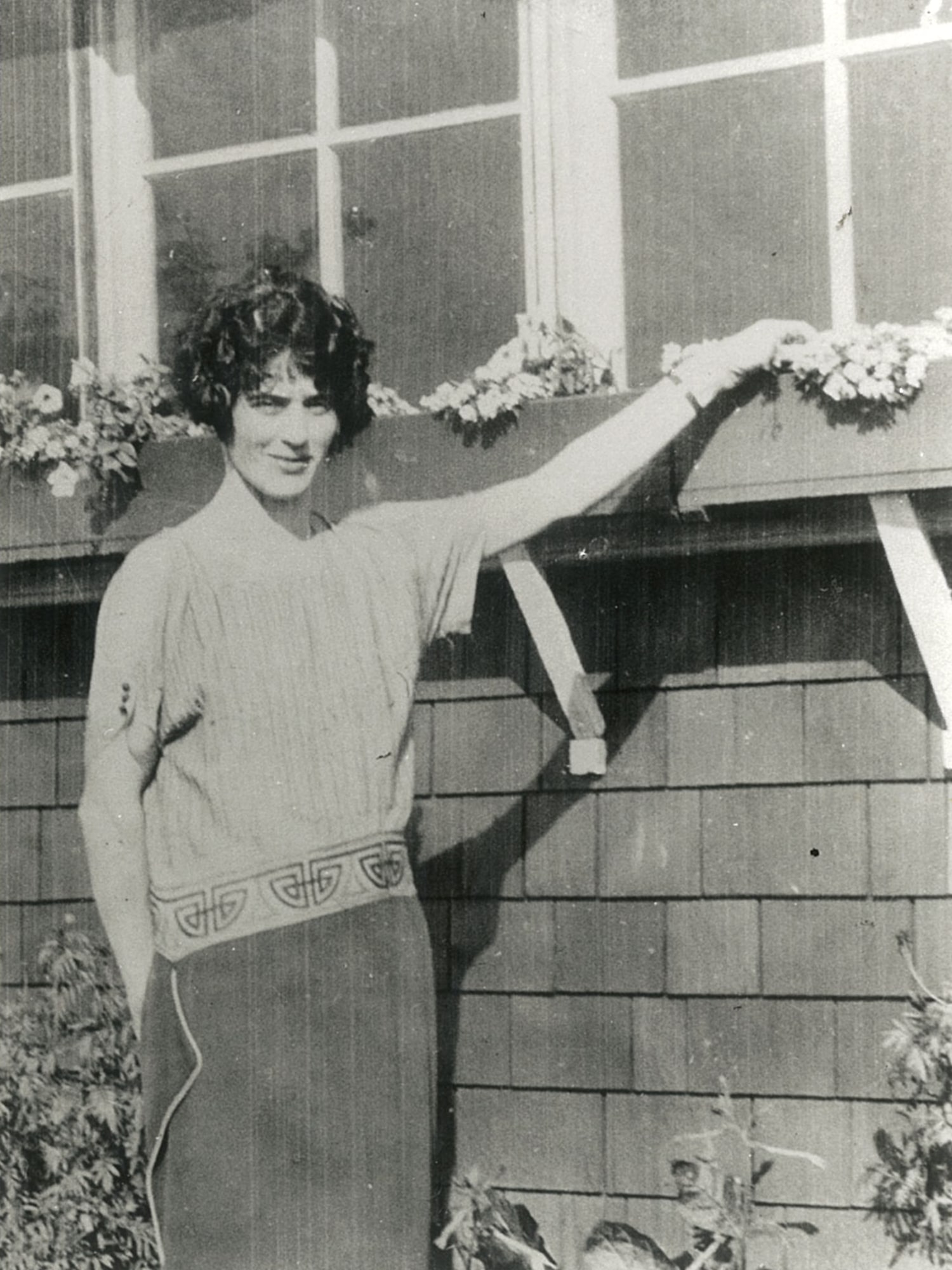


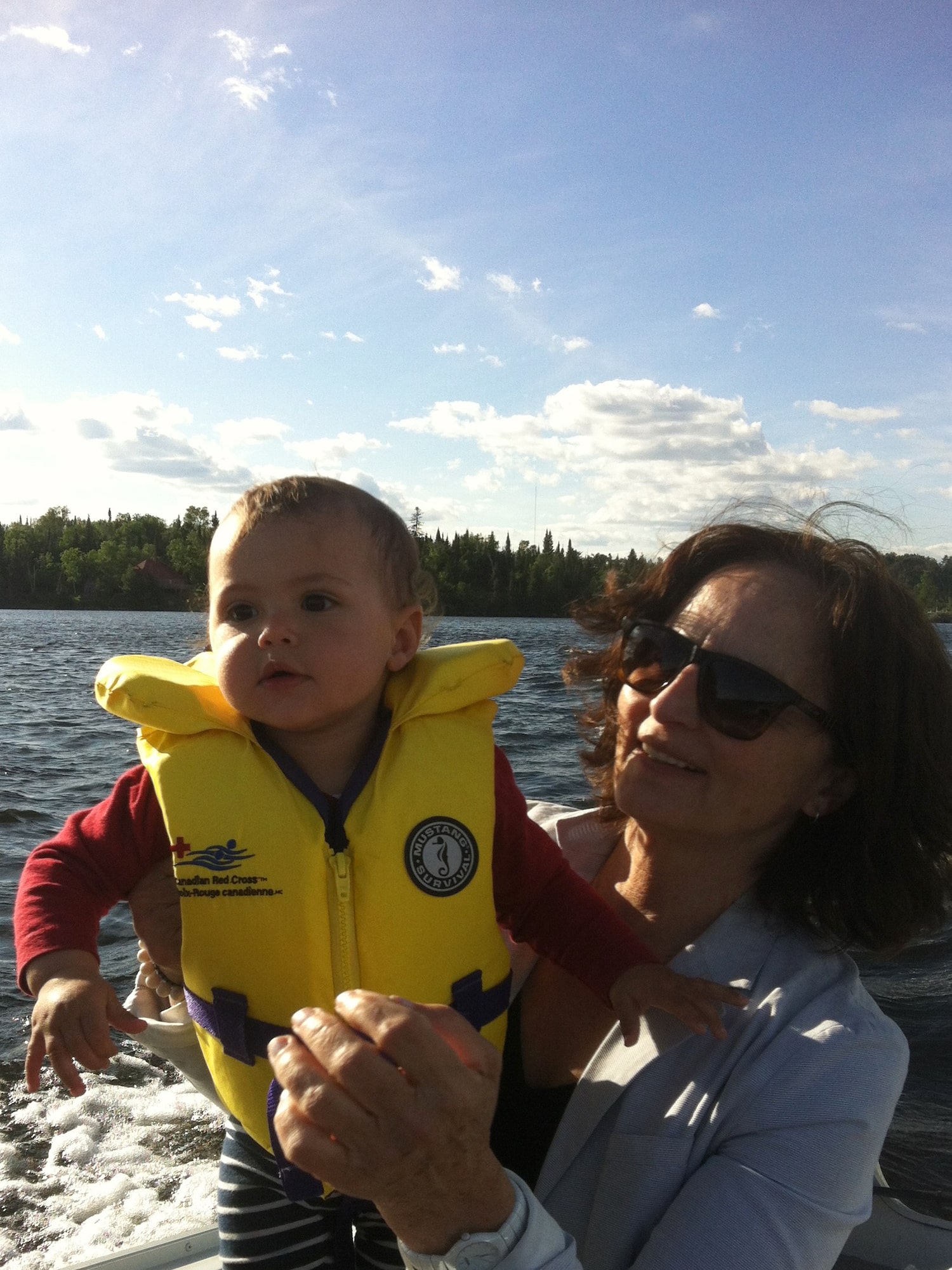
The people who built the Kenricia could not have known all the stories it would hold. My great-grandfather could not have imagined that almost a century later, his family would still be gathering on the shores of Lake of the Woods.
Sometimes we inherit places. Sometimes places inherit us.
We inherit them in the middle of their stories, carrying the responsibility – and the privilege – of deciding what comes next.