
According to evidence I recently unearthed in a trunk in my basement, that is how many of my high school essays began. I cringe as I admit this.
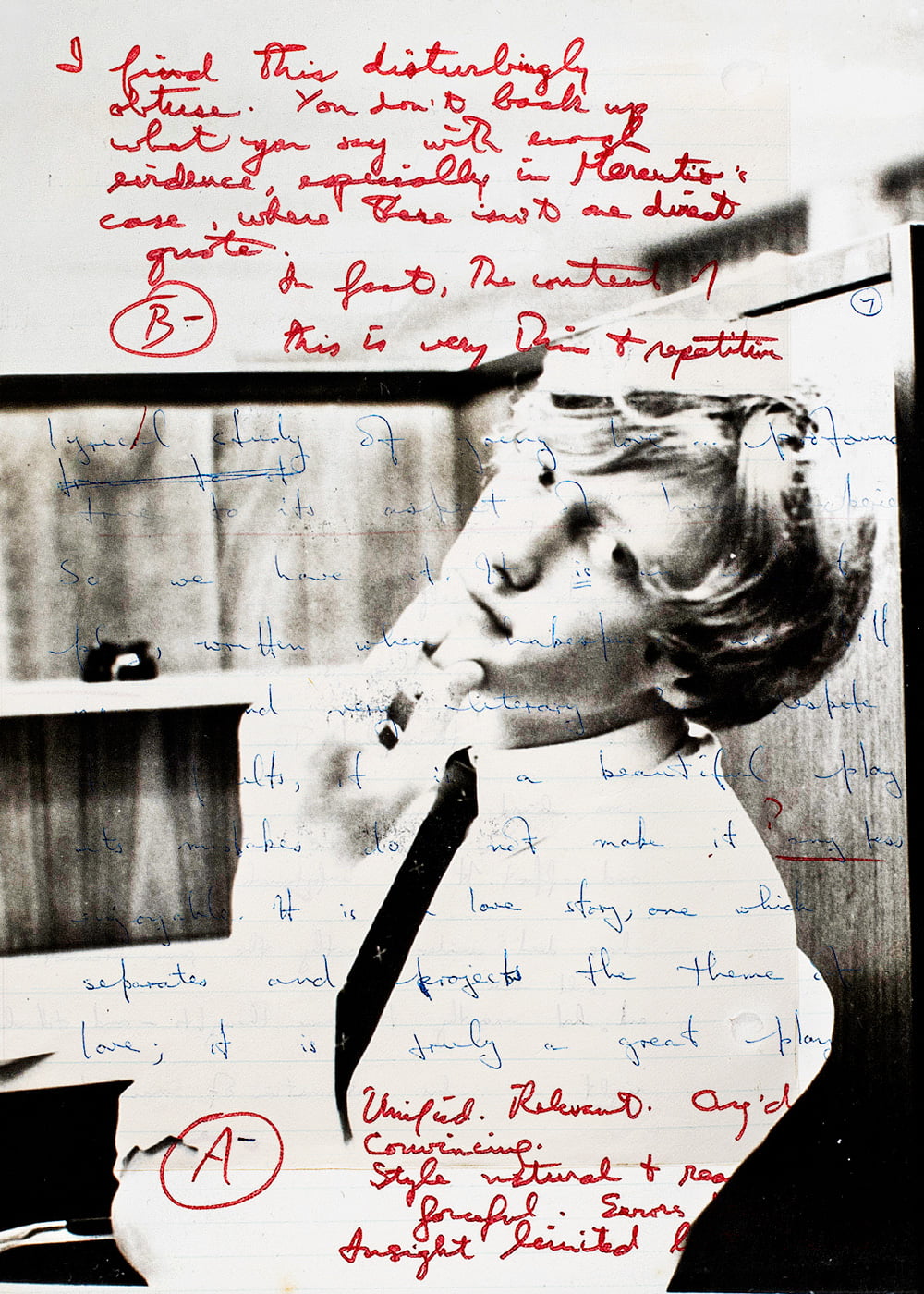
My teachers implored me, again and again, in the margins of my homework, to “recapture simplicity in style, Ian.” I was alarmingly fond of the expression it would seem. It would seem that every time I trowelled it into an essay, my Grade 12 English teacher, Mr. Lawson, wrote “Paul Martin still!” in the margin in bright red ink.

He meant Senator Paul Martin Sr., the father of the man who later became Canada’s prime minister. My early writing was being compared to a man famous across the land for his empty logorrheal blather.
Evidently, and shockingly, I was not the gracefully inspired student of writing and literature I have fondly remembered – er, invented – lo these past 50-plus years.
The marginal insults didn’t stop there. On a handwritten Grade 12 essay (they were all handwritten, often in fountain pen, an early and lasting pretension) about Romeo and Juliet and whether Romeo is a drip, Mr. Lawson wrote, “Insight limited but sound.”

On an essay comparing Mercutio and Cyrano de Bergerac: “I find this disturbingly obtuse.”

This was around the time in my life when I was trying to work up the nerve to shun a career in the money world and become some kind of writer. In a term paper about the novel Dr. Zhivago, the question was: “‘Man is born to live, not to prepare for life.’ To what extent is this novel an illustration of the above opinion?” Mr. Lawson, evidently much exercised, scrawled across the page, “I find your ideas … sick. You ‘play’ with important ideas but don’t grasp them firmly.”

And was I vague? “The subject of my essay,” one such essay began, “is that of personal attitudes towards life as a whole.” Oof.

I discovered this evidence of my early callow glibness quite recently because I noticed a foul smell in the basement of our house. I pretended I was imagining the smell for three days and then went in search of its source. I had moved and inspected half the storeroom when my wife insisted I pull a trunk out of the last corner. Behind the trunk I discovered a dead rat.
My neighbourhood in downtown Toronto, the Annex, is one of the more economically diverse neighbourhoods in the city. It is rife with rats because so many old Victorian houses are being renovated into airy moderne family homes. The rat in my basement was the size of a Nerf football. The rodent had crawled up an old drainpipe left unplugged by the gentlemen who renovated our basement, eaten its way through the gyprock wall, and succumbed. I figured it had been there a week. I disposed of the rat (wearing gloves and a mask), Javexed the floor, and decided (with my wife’s eager agreement) I might as well get rid of the trunk as well. It was a trunk I’d owned in high school and contained the only extant evidence of intellectual activity in my brain between the fifth and 12th grades.
I hauled the trunk – it weighed at least 150 pounds – up to the front porch of my house, and began to dig through its contents. I was instantly encased in a mildew of despair. The interesting question is why. In our AI- and algorithm-driven era, in which machines dictate our ever-narrowing range of interests, what we liked and what we will like; when everything serendipitous and personal and private – reading, writing, books, human curiosity – is on the wane; and at a time when teenaged boys are considered some of the most troubled beings on the planet, I remembered myself as a youth with advanced literary proclivities. I must say, before I continue: not so much.
Social scientists have studied writers for decades, trying to codify and quantify the creative process. Their research generally agrees that any serious line of intellectual endeavour requires at least 10 years of study and practice before the practitioner achieves competence. Dean Simonton, a professor of psychology at the University of California at Davis, was one of the first researchers to claim that creative work (and writing in particular) requires an extra stretch of years to achieve “greatness,” and that the length of the second ripening phase varies widely.
In general, writers (as opposed to scientists) need an extra decade. Norman Mailer took 11 years after his first novel to produce what was deemed by a panel of media critics to be his “best” work (Advertisements for Myself); Don DeLillo needed 26. Some late bloomers have required 50 years to flower.
Naturally, I e-mailed Dr. Simonton. If anyone could explain why my early writing was abominable, he would. He replied instantly, which made me feel a bit better. But then he started talking about that rare trait, youthful genius. “After my wife died,” he told me, “my first wife, having recently been widowed herself, decided it was opportune for the two of us to get back together. To get things going, she sent me scans and photos of the various poems, gifts, and other items I gave her during our courtship. I was absolutely blown away. I had completely forgotten how imaginative and witty I once was.”
What happened? “I became a social scientist and learned how to write like a social scientist.” But he admitted that, in general, juvenilia tends to be juvenile. (Also, and incidentally, his ex-wife’s reunification plan didn’t work.)
Even the great Margaret Atwood admits, in her memoir Book of Lives, that her first poem – composed at 16 as she walked across a playing field in her second-to-last year of high school – was “a bad one.” This didn’t prevent her from thinking at the time that it was brilliant. “I was so intoxicated by it that I stepped off the path I was on,” and, she adds, abandoned biology for writing.
She confesses she wrote an early short story in which the narrator goes mad because he strangles a gerbil – not exactly the lit of ages. Her Grade 10 English teacher, Florence Smedley, claimed, “Peggy showed no particular ability in my class.” I found this encouraging. One of her early poems is called First Snow:
The first snow is the saddest snow, By city slums the first flakes blow; They fall upon the streets in vain, And trickle down the window pane.
Still, it turns into a poem about the Hungarian Revolution, a serious topic for a teenager. And she did write her first “novel” at the age of seven. Meanwhile she was inhaling the Aeneid and the Odyssey and anything else she could get her eyes on. We all know how those early inklings turned out.
Self-recrimination is par for the course in the lives of even the most successful writers. Figuring out how to survive those dark patches is part of the job – maybe even the biggest challenge. The problem is that, to its writer, bad writing (hideous juvenilia especially included) – insufficiently nuanced, mawkish, tone deaf, cliched, derivative – isn’t just bad writing. To its author, it’s a failure of character. Shallow glib naive presumptuous writing indicates a shallow glib naive presumptuous soul, hence upsetting to one’s self-assessment and to whatever it is one is writing. This isn’t always rational, but seems to be unavoidable.
The strangest fact is that I kept the trunk, and all it contained, for 55 years. Why? What gems did I think it contained? Was I planning to wear my high school jock strap again – the one with the red-lettered name tag (Ian P. Brown) sewn onto the front of its elasticized belt? Perhaps I thought a single whiff might have the inspirational powers of Proust’s madeleine? Ew, I did not.
Did I plan to display the diminutive plastic trophies I won for being best debater at the University of Toronto Schools Debating Tournament or coming third in the under-15 Southern Ontario Ski Zone cross-country ski race? I wouldn’t dream of it. Was I planning on selling on Etsy my Boy Scout merit badges (Interpreting, Painting, Fire-Starting, Orienteering, Agriculture (!), First Aid, plus the weird one that came with a certificate, unsigned and undated, demanding that “on my honor … I promise … to do my duty to God”)? No and no again.

But it was my early writing, stored away in the trunk in some delusion of future greatness, that was really unsettling. For years I told myself I was hanging on to my grade- and high-school exercise books as potential material for a book or movie about boarding school. Now all they were was proof of my inflated sense of my own talent.
True, every writer is delusional when it comes to his or her talent, at least when they aren’t flaying themselves for their lack of it: you have to be delusional, or you’d never try to be a writer in the first place. (Writing is difficult and demanding; standards have been established over thousands of years and are therefore impossibly high; reception to the work is variable, often subjective and seldom profitable; I could go on.)
But it’s hard to forgive Smiles, which I actually sent (at the age of 16) to a magazine, magnanimously noting in my (typed) cover letter that I would be willing to sell it to them – !!! – for $10:
“Salami on rye,’ I said to the man; He gave me a big fat grin. “Good morning” I said to the lady next door; She laughed and wiggled her chin. “Keep the change,” I said to the newspaper boy; He gave me a look of delight. “Thanks,” I said to the man holding the door; He nodded, and said “Goodnight!”

Did I think I was Ogden Nash? And why would I want to be Ogden Nash? And that was nowhere near the worst of it. I can’t bring myself to reveal all eight stanzas of A Cloudy, Misty Day (I sit, peering out/The window/Looking at a picture/Of my mind./It is a misty day and/One cannot see/Very far at all);

or The Everlasting Endurance of Stuart Carmichael (a short story I wrote, after reading Tolstoy’s The Death of Ivan Ilyich, about a suburbanite to whom nothing happens and who dies in middle age); or the poem about two chocolates in a box, one white and one black, the white one eaten and the black one half-chewed, its cherry centre staining the white tablecloth they sat on …
It wasn’t just Mr. Lawson’s jabs about my shallowness that discouraged me as I pawed through the trunk. The problem was that the detritus presented evidence that he was right. I mean, look: I was your standard confused, hopelessly immature, hormone-addled teenage boy hiding behind whatever front I could muster.
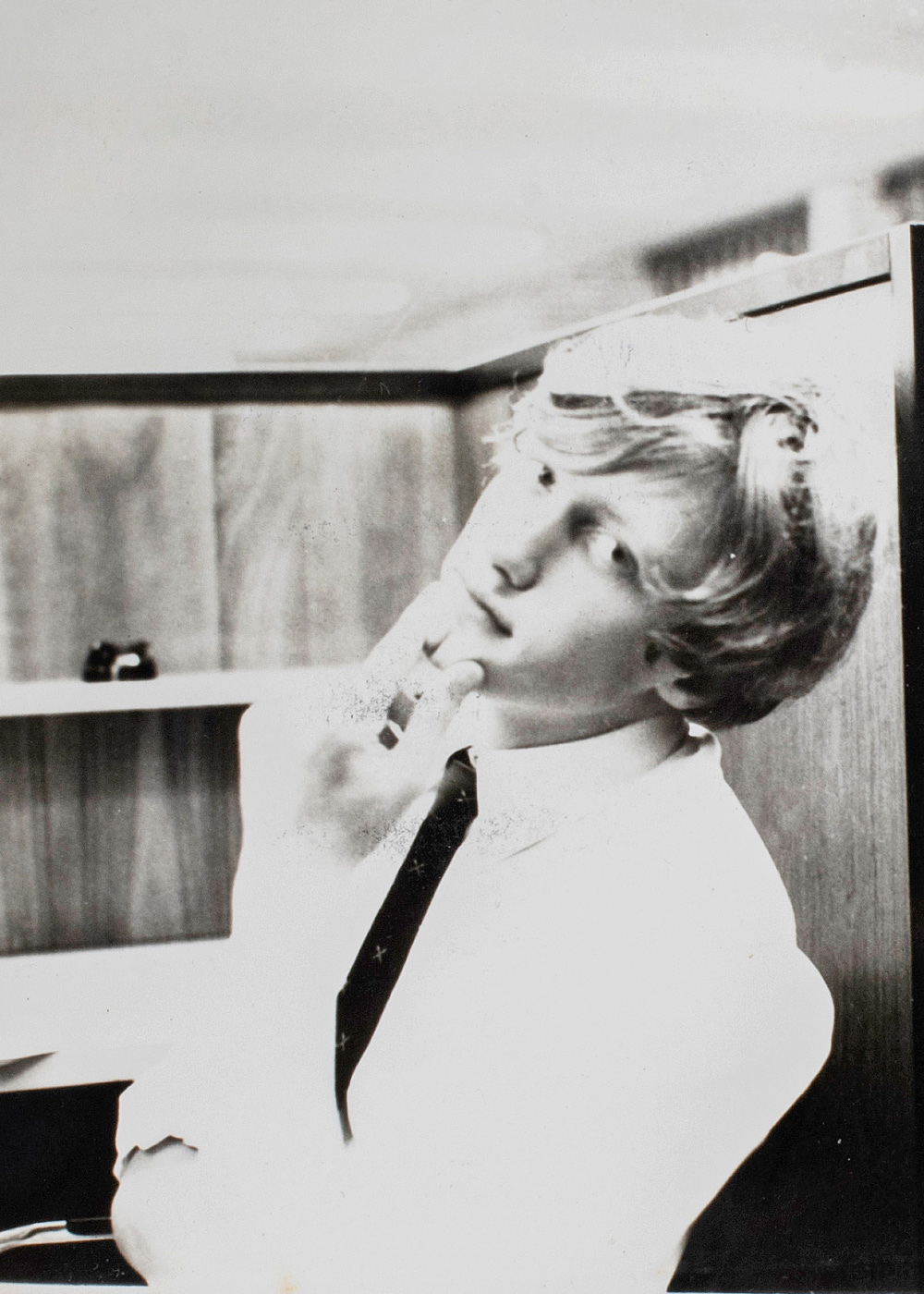
Very little grave or challenging – or, at least, that I understood at the time to be grave or challenging – had confronted my existence. What did I have to write about? My patchy efforts to keep a diary were either eye-glazing (age 10: “January 3. Went tobogganing and played with girls. Went to Allan’s house in the afternoon. Not a very exciting day.”) or judgey, because judgment is an act of daring available to everyone (Brighton, England, to 16-year-old me, was “a dead loss” with “the atmosphere of laziness and of mooching, sucking people.”).


My teenaged friends – by now I had found a pile of musty high school yearbooks in the trunk – were dropping acid and listening to Pink Floyd and Procol Harum and writing about the Vietnam War. Their enthusiasms didn’t feel any more authentic than mine, but at least they weren’t prigs like me:
Another thing I often wonder about is these people who take drugs. I cannot understand why a human being can’t get a thrill out of life, instead of taking drugs. I’ll never take drugs. I don’t think I’ll ever smoke, either.

Wrong on both counts, buster.
Adults and teachers and parents kept asking me what I wanted to do with my life, what my plan was, and I didn’t know.
I want to find out what I live for and what I would die for. Am I noble enough to have a quest in life? It will probably be a difficult journey, trying to find something, someone, that may not even exist. And if and when and where I find it, will what I find please me? Will it please others? But most of all, how long will it take me to find myself?


I was a) so inexperienced that I was incapable of writing about the world from any point of view but my own, and b) beside myself trying to satisfy the expectations of other people. That’s the original formula for cringey writing.
All that mouldy teenaged terror wafted up the moment I opened the trunk. I first wanted to be a writer at 11 (my parents, not book people, were derisively against the project) when I read Hemingway’s Big Two-Hearted River story. I wanted to make a reader feel the way Hemingway had made me feel, as if I was sitting next to him on the bank of the river, catching grasshoppers and watching trout and trying not to be sad. But there was no known path to that glorious end, at least to me, and zero evidence that I could write even a simple declarative sentence. I must say, before I begin.
And now, on the front porch of my house in a rat-infested neighbourhood of Toronto, there was no indication that I’d made the right decision, that I was fulfilling some imagined quasi-literary destiny. I wasn’t expecting to find glimmers of precocious genius – Mozart composing minuets at five, that sort of thing – but I thought I might spot at least a speck of early talent. It was nowhere to be found.
I called Max Saunders, a professor of modern literature at the University of Birmingham. He was somewhat reassuring: “By the standards of a successful professional writer your writing as a child may make you cringe.” But he was also realistic: “As writers develop, they need to feel their current work is their best.” His stepfather, the painter Alfred Cohen (who had a couple of shows in Canada in the 1960s) “was full of stories of fellow painters inflating themselves as they showed their latest work, calling it a ‘masterpiece’.” The alternative was to look at their earlier work and think, “Why can’t I do that any more?”
In the park near my house I ran into an acquaintance, a very distinguished historian, now emeritus. He too had been looking through his old stuff. “The young stuff is just dumb,” he said. “But then I found a paper I wrote early on, and I was amazed: How did I ever write something that good?” Pause. “No matter what age we are, we’re never satisfied.”
Eventually I called an old friend, a psychologist, and reported my experience in the trunk. Why, I asked him, has finding my early failed efforts at writing left me feeling like a failure at 70? “Oh,” he said, “everyone who ever roots through that stuff feels exactly the same way.”
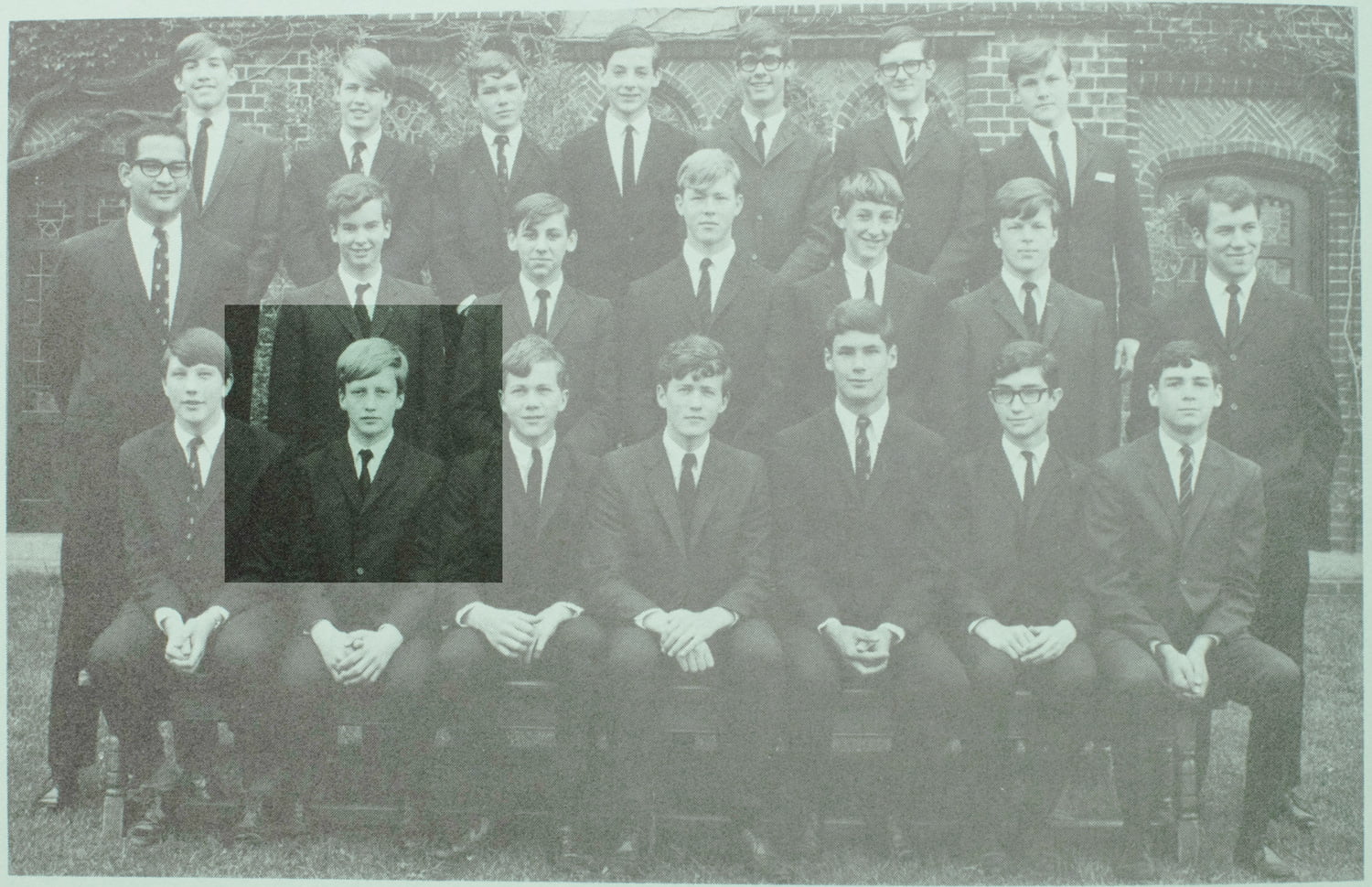
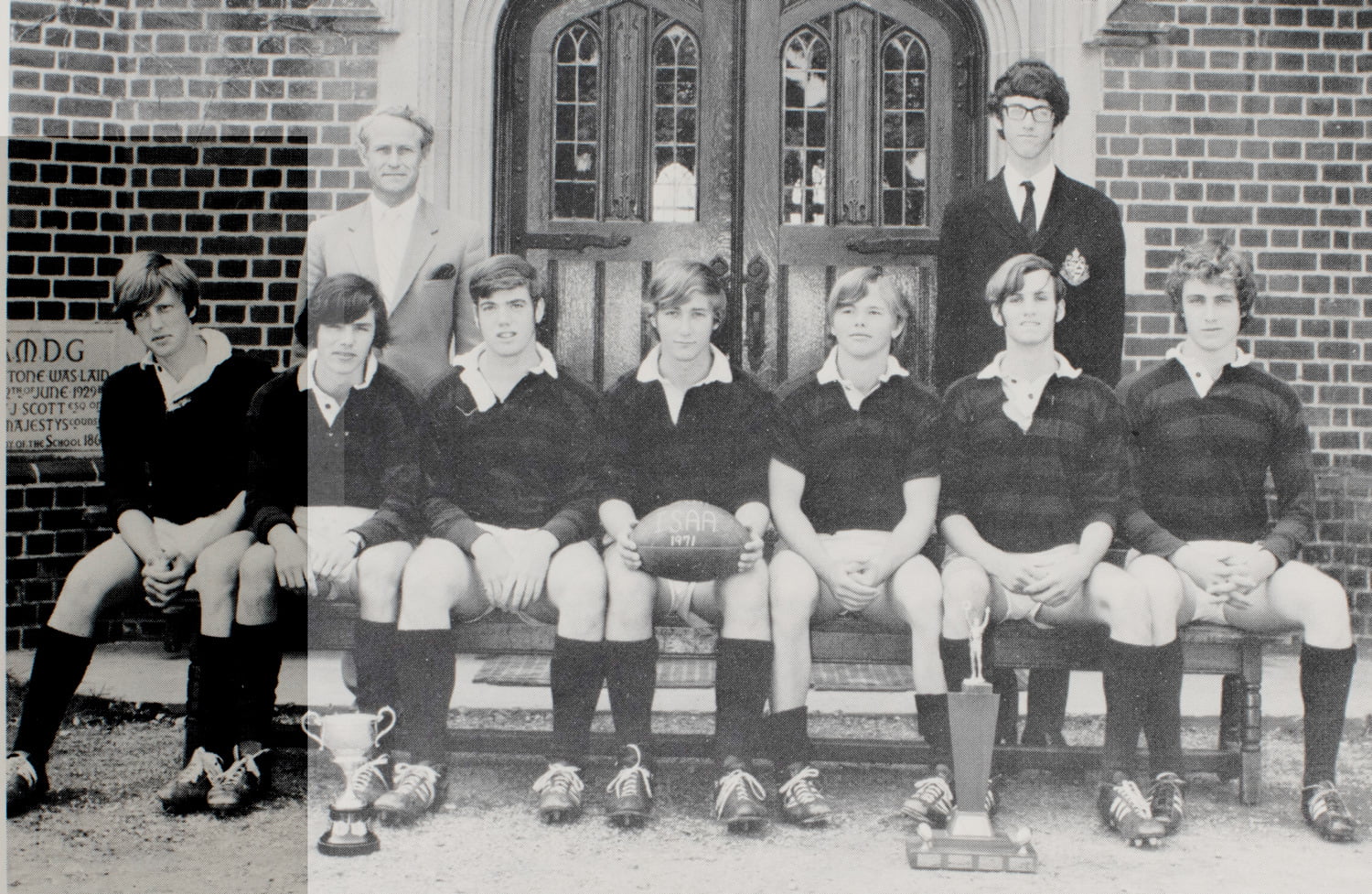
We want proof that we made the right decisions in life, that all the effort was worth it, that our die was already cast, but definitive proof is never there: even at 70, T.S. Eliot – “that is not what I meant; that is not what I meant at all” – was afraid he had wasted his life pushing words around on a page, and by then he was the English-speaking world’s most celebrated poet. Part of the problem, as the American writer Charles Baxter has observed, is that anyone who wants to be a writer unavoidably starts by pretending to be one. “The trouble is that the first stage – of pretending to be a writer – never quite disappears.”
Every time a writer (good or bad, famous or otherwise, seasoned or not, novelist or journalist) writes something, they take that leap and wait to see what happens. Despite the countless rationales we invent to feel better about the largely random outcomes of our lives and choices, there is no guaranteed correct answer. There is only what actually happened.
As it turns out, the best people to consult about dealing with one’s bad writing are other writers. They know exactly what you’re talking about. They write about the despair of writing all the time. It was in such an essay by Zadie Smith, the English novelist and essayist and short story writer that I eventually found a narrow path out of regret.
Her essay bore the title – quelle surprise! – “Fail Better.” I found it in The Writer’s Reader, a riveting anthology in which a raft of proven talents, from Henry James and Virginia Woolf to Lydia Davis and David Foster Wallace, discuss why they keep writing in spite of the despairing imperfectibility of the job.
Slowly, painfully and step by step, Ms. Smith describes the scorched terrain of a writer’s conscience: the gutting fear that a piece of writing is not only not good, but not true; that it is too autobiographical (always an issue, no matter how much novelists deny it); that it is insufficiently reflective of both the writer’s consciousness and all the writing that has preceded it; that it isn’t perfect, though it can never be perfect anyway.
So why do writers write at all? Because it makes them feel more vital than anything else they do. “To speak personally,” Ms. Smith admits, “the very reason I wrote is so that I might not sleepwalk through my entire life.” She is talking about writers of fiction, but I think it is also true of journalists, of anyone who discovers something and wants to tell someone else this thing they did not know, in a way they might not have been told before. It was certainly true of me as a teenager: I wanted to feel more alive, no matter how bad I was at expressing it.
“When I write,” Ms. Smith goes on, “I am trying to express my way of being in the world. This is primarily a process of elimination: once you have removed all the dead language, the second-hand dogma, the truths that are not your own but other people’s, the mottos, the slogans, the out-and-out lies of your nation, the myths of your historical moment – once you have removed all that warps experience into a shape you do not recognize and do not believe in – what you are left with is something approximating the truth of your own conception.”
Isn’t that what we all seek, no matter what we do or who we are, whether we are writers or accountants or mothers or friends? To find something that feels authentic and true, that moves us beyond our self-prescribed world? That’s why my trunk was such a trauma. It was evidence of my mind before that lifelong process of culling to the authentic had begun. I could suddenly see how far back I had started, and wasn’t sure how far I’d moved beyond it. It would seem one never is. You never know when or if you’ll really get going, or when the entire edifice may collapse. (It will eventually collapse.)
So it’s actually astonishing, given what we start with and the precariousness of the process, that anyone ever writes anything at all that can open an eye or an ear or a mind or a heart. It might be a form of human miracle. We should be grateful to (or at least forgiving of) those who try. Needless to say, I am trying to take my own advice.
Ian Brown is a Globe and Mail feature writer.
Editor’s note: This article has been updated to correct Ian Brown's age when he wrote the poem Smiles.