Michael Byers co-directs the Outer Space Institute.
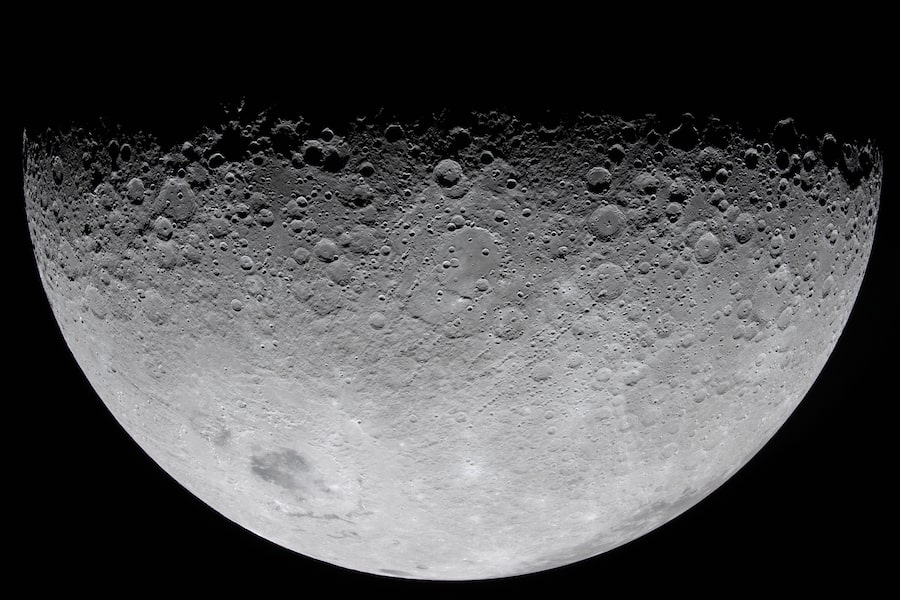
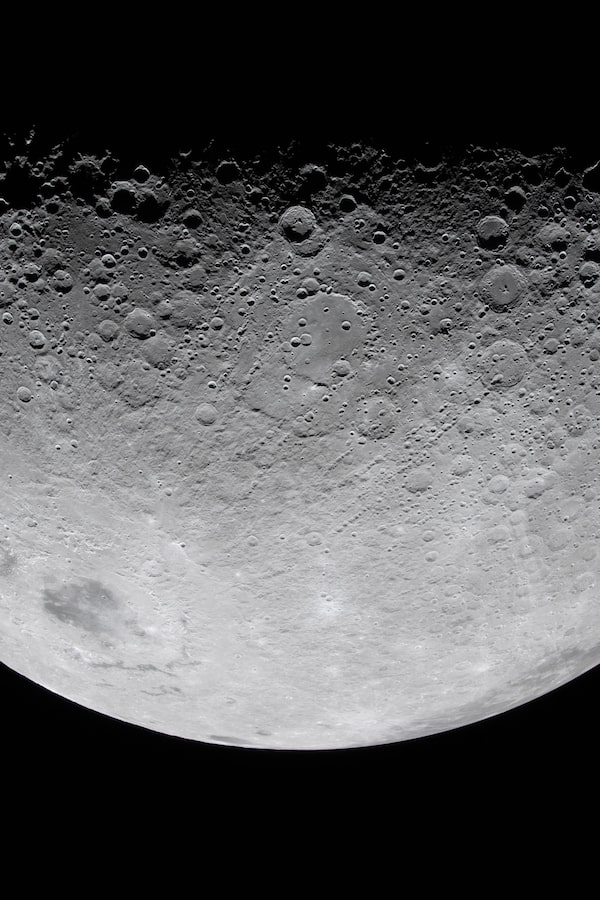
When Neil Armstrong descended from the Apollo 11 lunar lander in 1969, he could never have imagined that – more than a half-century later – we’d be celebrating how four astronauts flew around the moon without attempting a landing.
Don’t get me wrong: the Artemis II mission was great fun. There was a spectacular launch, a made-for-TV splashdown, and heartwarming camaraderie. There was even a toilet malfunction!
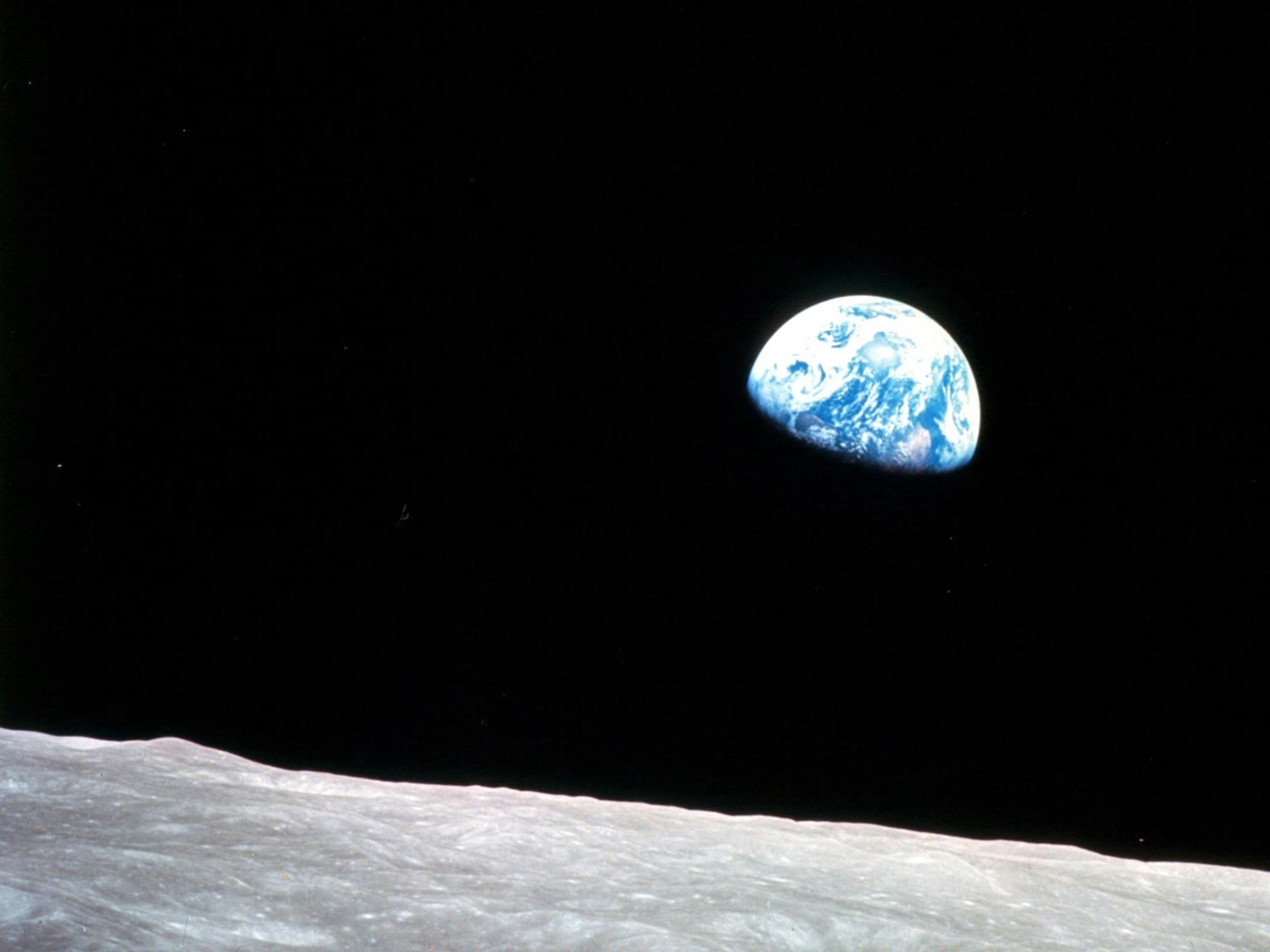
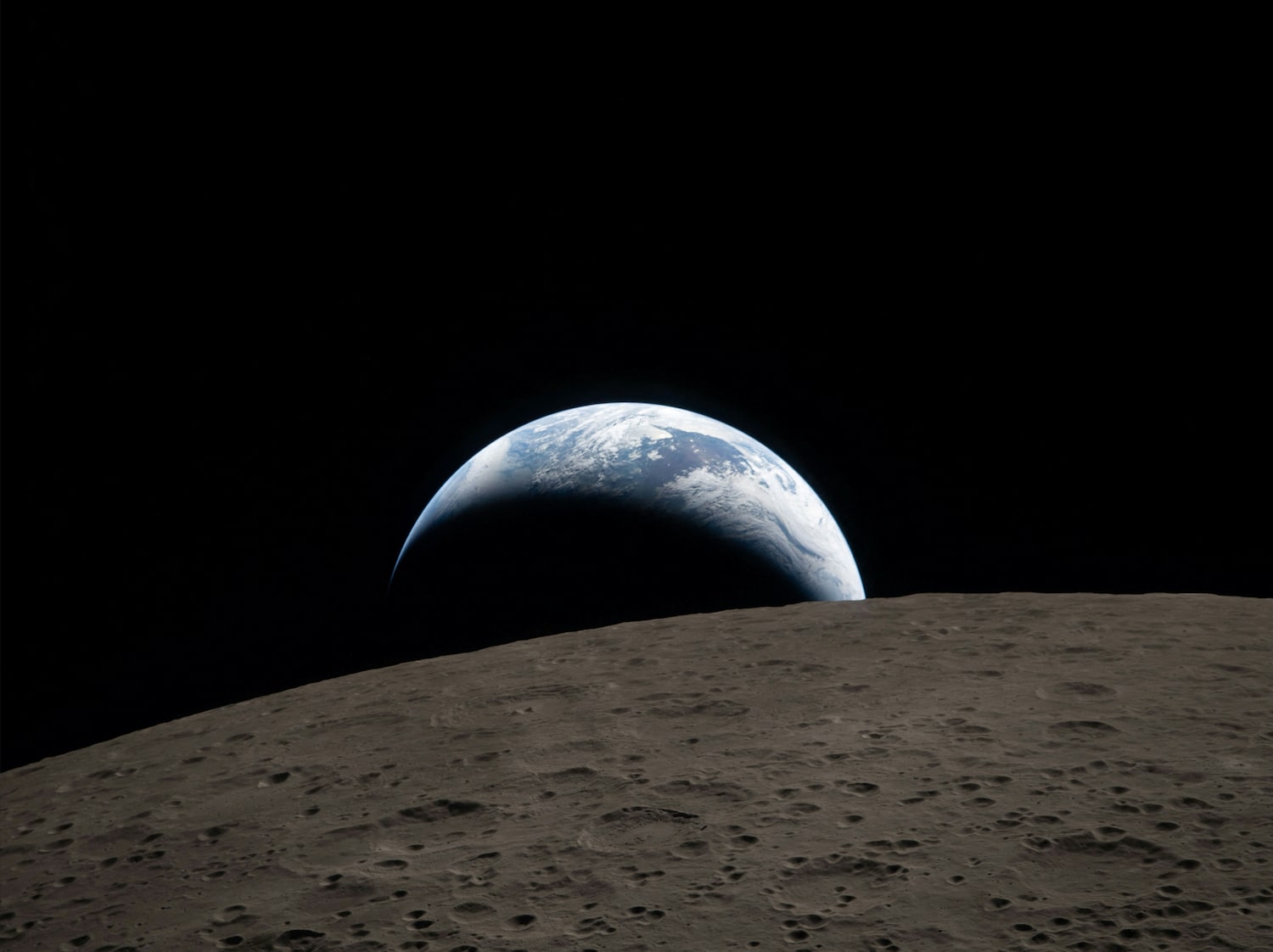
Stunning photographs of our beautiful planet almost made it possible, for a few precious moments, to forget about climate change, economic inequality and wars.
But those moments have passed, and we can consider the reasons for this 1960s-style mission. Why, in 2026, would anyone fly around the moon?

n 2010, President Barack Obama directed NASA to build a rocket that could deliver astronauts to Mars. Thirty-eight years after the last of the Apollo missions, he wanted the United States to reach farther than before. At the same time, Elon Musk, who’d founded SpaceX in 2002, was intent on establishing a human presence on the Red Planet. Both men understood that Mars is more interesting than the moon.
Mars, you see, has one-third of Earth’s gravity, making it plausible that human beings could live entire lives there and produce viable children. The moon, with only one-sixth of Earth’s gravity, will always be a fly-in, fly-out destination.
Opinion: As we continue to explore space, we must keep human health in mind
The moon does have Helium-3, a potential fuel for nuclear fusion reactors. But these molecules are dispersed across the lunar surface and would require very expensive strip-mining operations to collect.
The moon also has some water, trapped in deep craters at its poles, that could be used for life support and making rocket fuel. But travelling to the moon in pursuit of this water would be like sailing to a small desert island and staying there, just because you found a puddle, rather than charting a course for the unexplored continent visible on the horizon.
For unlike the moon, Mars has a watery past, with ancient watercourses still visible, and large amounts of water remain just beneath the surface, as permafrost.
Most interesting of all, Mars may once have been home to microbial life. Since 2021, NASA has been using a rover named Perseverance to search for signs of ancient life – and to collect and cache samples with a view to another spacecraft retrieving and transporting them to Earth for scientists to study.
Establishing that life developed elsewhere than on Earth could be the greatest scientific discovery in human history. Yet it’s unlikely to happen for decades now, because of the renewed attention on the moon.

ur return to the moon began in 2017, after Donald Trump became U.S. president.
Mr. Trump was intent on reversing everything that Mr. Obama had done, and he therefore directed NASA to land astronauts on the moon, not Mars, by the end of his hoped-for second term in 2024.
The deadline was unrealistic, and Mr. Trump lost the next election, but the opportunity to preside over a lunar landing returned with his re-election in 2024. A new deadline of 2028 was imposed.
With the exception of Mr. Musk, the shift back to the moon was embraced by corporate and military leaders. Neither group had much interest in Mars, since missions there would take place in the absence of competitors and therefore be focused on science and exploration.
The moon was already attracting the interest of other countries, especially China, which landed rovers on the surface in 2013 and 2019 before carrying out sample return missions in 2020 and 2024.

Researchers work around Chang’e-5 lunar return capsule carrying moon samples next to a Chinese national flag, after it landed in northern China’s Inner Mongolia Autonomous Region on Dec. 17, 2020.China Daily via REUTERS
It’s entirely possible that China’s lunar program was motivated by scientific curiosity and national pride. However, for those who stand to benefit from competition and conflict, that program, and China’s increasing reliance on satellites for communications and Earth imaging, have been easy to portray as an effort to dominate space.
Defence lobbyists and officials argued that the United States needed to “seize the high ground” before China could do so. They began referring to space as a “war-fighting domain,” even though no country has ever struck another country’s spacecraft in anger. In 2019, Mr. Trump adopted the same language when he announced the creation of the U.S. Space Force as the sixth branch of the military.
Portraying China’s space program as a threat was made easier by a phenomenon called the “security dilemma.” This occurs when one country has limited information about another country’s actions and intentions, and out of precaution, strengthens its military capabilities. The second country sees that buildup and responds in kind, even if it lacked any intention to do so initially. Often, an arms race ensues.
Compounding matters in this instance, most U.S. officers and analysts have never been to China, spoken with Chinese experts, or read their publications. Sometimes, it seems as if they don’t even read peer-reviewed research from the United States.
As a result, one frequently expressed concern is that Chinese astronauts will land on the moon first and secure the best locations for mining Helium-3 or ice. This ignores the extreme challenges associated with space mining, as well as the fact that the moon, while not as large as Earth, is still very big.
Another worry is that the first country to establish a lunar base will “set the rules” for lunar activities. This overlooks that the 1967 Outer Space Treaty, which has been ratified by all of the spacefaring states, both sets out its own rules and recognizes that “international law, including the Charter of the United Nations,” applies in space.
A third concern is that Chinese space companies are controlled by their government. This may be true, but consider this: All successful space companies in the United States, including SpaceX, only exist because of government contracts and subsidies.

he continued use of astronauts is the most curious aspect of all this. Astrophysicists Martin Rees and Donald Goldsmith argue that the combination of robotics and artificial intelligence offers a far more practical and economical path for exploring and developing space. For them, the only remaining question, is “whether astronauts nonetheless perform a valuable inspirational role.”
The public reaction to the Artemis II mission suggests yes, especially since the crew included the first woman and the first person of colour to travel beyond low Earth orbit.
I will go further and argue that astronauts also play a geopolitical role by representing a country’s presence more emotively, and with greater political impact, than machines ever could. I’m just not convinced that this geopolitical role is helpful.
In 2021, China and Russia announced that they would construct an International Lunar Research Station open to scientists from anywhere. Eleven more states, including South Africa, Egypt, Pakistan and Senegal, have since signed on. That’s a short list, and Russia is a space power in decline, but the prospect of Chinese scientists living on the moon has only amplified concerns in the United States. And so, just one week before Artemis II launched, NASA Administrator Jared Isaacman announced that the United States would spend US$30-billion to construct its own permanent outpost on the moon.
There’s another, even more cynical explanation for the continued use of astronauts. In the 1950s and 1960s, the race to put astronauts in orbit and then the moon occurred alongside the rapid development of space-related military capabilities, including intercontinental ballistic missiles as well as communications and reconnaissance satellites. The civilian and military programs were lumped together in a single “space race” with the Soviet Union and, as a result, strong public support for the Mercury, Gemini and Apollo programs translated into more money for everyone.
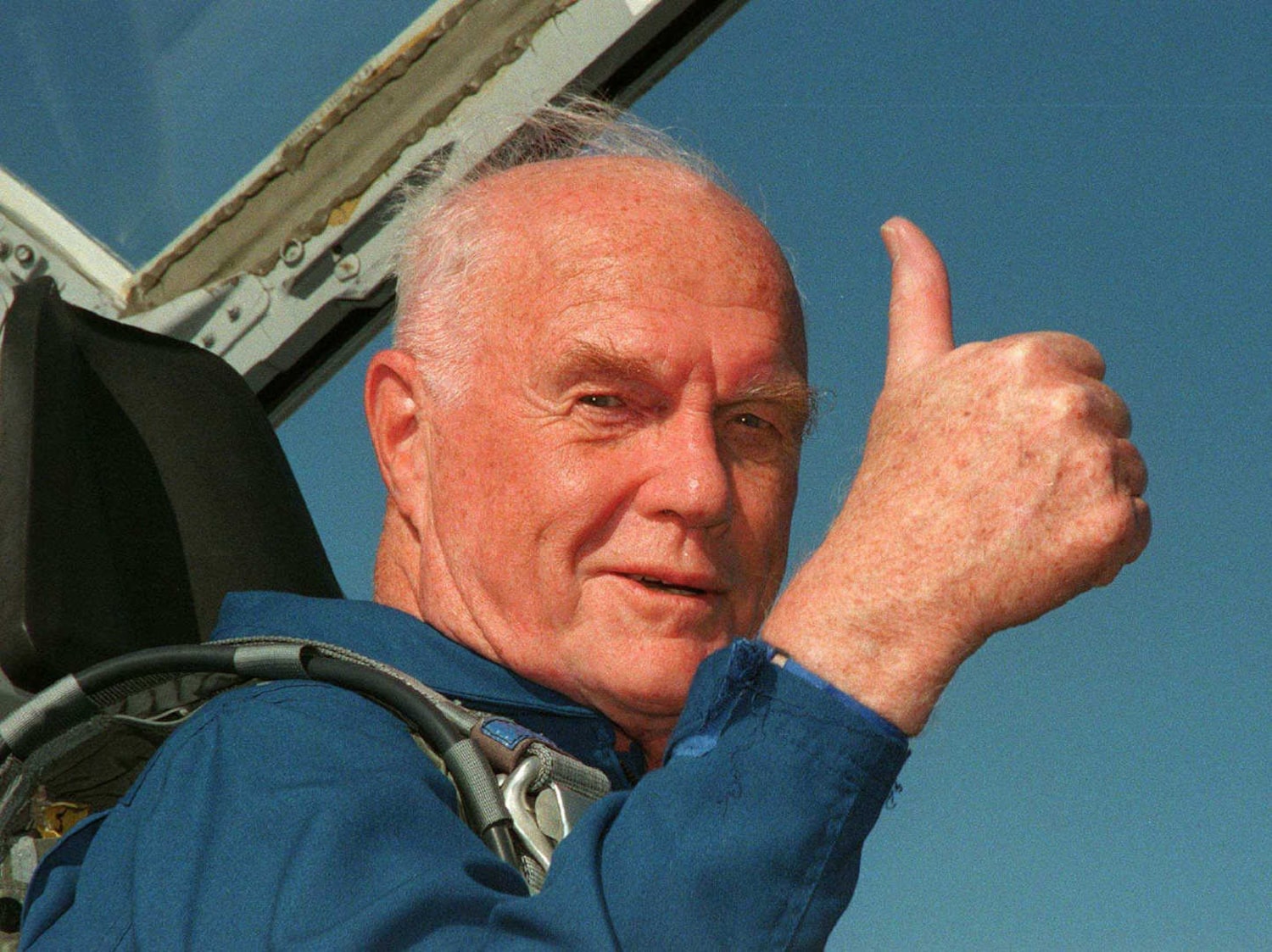
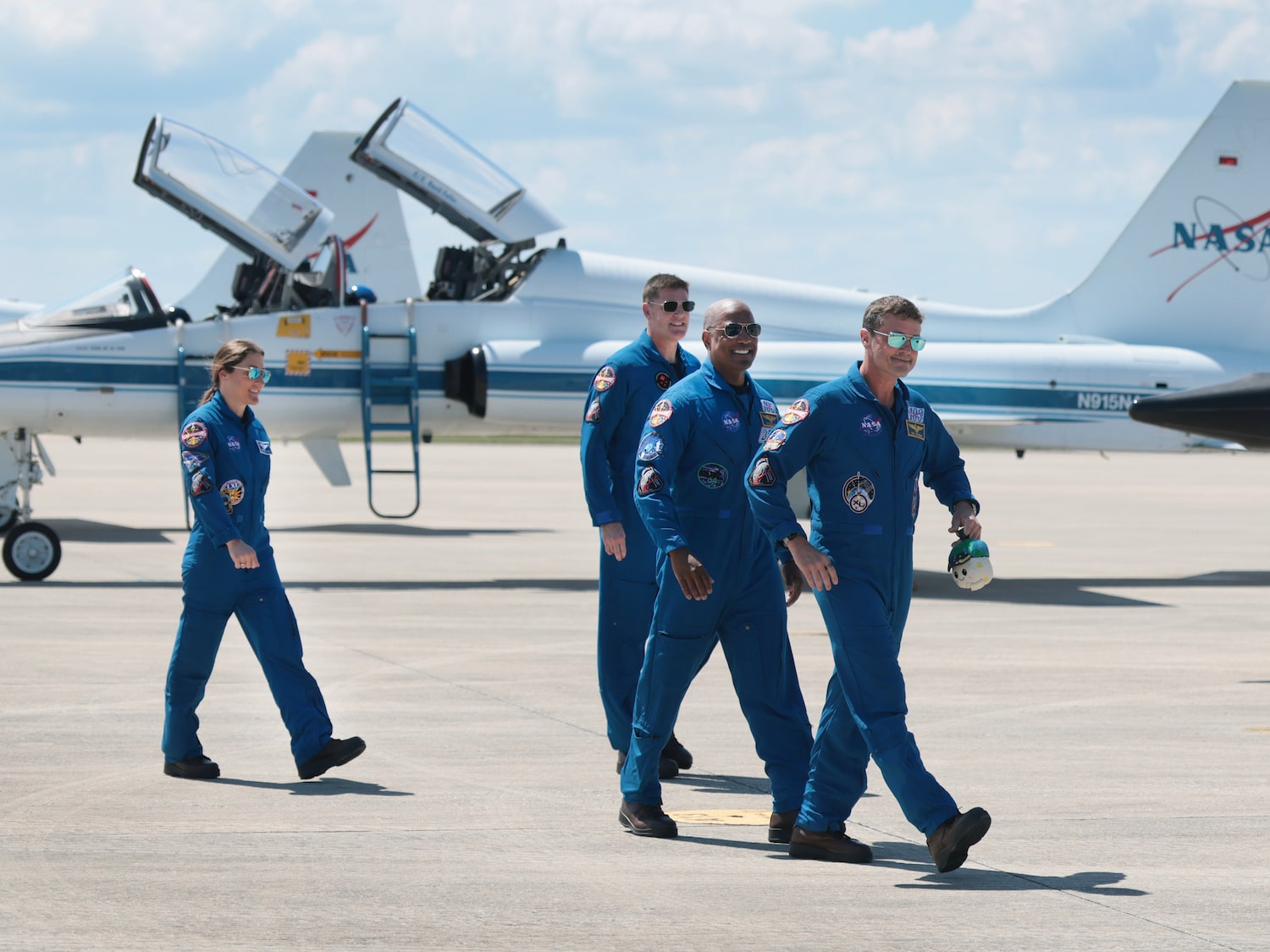
The association between civilian and military space programs is most visible in the preference given to fighter pilots in astronaut selection. This might seem like a historical matter; all seven of the first NASA astronauts were test pilots. But even today, three of the four Artemis II crew members, including Jeremy Hansen, are former F-18 fighter pilots.

n January, 2026, the Trump administration cancelled the Mars Sample Return Mission, a partnership with the European Space Agency that would have seen a robotic spacecraft retrieve the samples cached by the Perseverance rover. As a result, scientists will be denied their first real chance to determine whether life existed on Mars.
Then, as Artemis II was speeding toward the moon, the administration proposed to cut NASA’s budget by 23 per cent, to US$18.8-billion. The deepest cuts will be to science programs, with 40 robotic missions on the block. Meanwhile, the administration proposed to more than double the Space Force’s budget, to US$71-billion.

U.S. soldiers attend the activation ceremony for the United States Space Forces Korea on Dec. 14, 2022, in Pyeongtaek, South Korea. The U.S. military set up space-monitoring organizations to keep an eye on North Korea's nuclear and missile activity as its capabilities continue to improve.Pool/Getty Images
As space becomes further militarized, U.S. space companies have little choice but to follow the money. One example is Planet Labs, which was founded by three former NASA scientists in 2010 and quickly became an important source of low-cost satellite imagery for farmers worldwide. After Russia invaded Ukraine in 2022, a large contract from the Pentagon changed the company’s direction. By 2026, Planet Labs, now valued at around US$7-billion, was reporting that almost 60 per cent of its revenue came from defence and intelligence contracts.
Canadians cannot feel superior about any of this, since our government has been following the same path as the Trump administration when it comes to militarizing space – including by cancelling science missions.
Take the Lunar Rover Mission, announced to great fanfare in 2021. The following year, Canadensys Aerospace was awarded a $43-million contract to build the 30-kilogram rover. The Canadian Space Agency even booked a space launch with a Texas-based rocket company named Firefly, for 2029. But then, just last month, the project was terminated.

A prototype moon rover drives over a lunar test environment at Canadensys Aerospace in Stratford, Ont., on Aug. 15, 2022.Patrick Dell/The Globe and Mail
A few days later, the president of the Canadian Space Agency, Lisa Campbell, joined NASA Administrator Jared Isaacman in Washington, D.C. At that meeting, Mr. Isaacman announced the cancellation of the Lunar Gateway, a space station that would have orbited around the moon equipped with a $1-billion robotic Canadarm. In 2019, the Canadian government had described the Lunar Gateway as the “cornerstone” of Canada’s space strategy.
Money for the military side of space is another matter. Last summer, Prime Minister Mark Carney committed to raising military spending to 5 per cent of GDP. As a result, the Department of National Defence is flush with cash – and spending lots of it on new space capabilities.
In December, 2025, the new Defence Investment Agency entered into a “strategic partnership” with Canada’s two largest space companies, Telesat and MDA Space, to develop military satellite communications in the Arctic, at a cost of more than $5-billion.
Last month, Defence Minister David McGuinty announced the $200-million lease of a still-to-be-constructed rocket launch pad at Canso, N.S., and a further $105-million in grants for technology development in support of Canada’s “sovereign space launch capabilities.” Other recent announcements include an approximately $32-million contract with MDA Space for three ground-based observatories to identify and track “new and emerging threats to critical space infrastructure.”
Then there is Golden Dome, Mr. Trump’s plan for a continent-wide missile defence system that will include thousands of missile interceptors based in space. The U.S. president has been pushing Canada to participate, while insisting that it would have to pay between US$61-billion to US$71-billion to do so.

Posters for the proposed Golden Dome for America missile defence shield are displayed before an event with President Donald Trump at the White House on May 12, 2025.Mark Schiefelbein/The Associated Press
As a response, Mr. Carney could simply point to Canada’s investment in radar systems to detect intercontinental ballistic, cruise and hypersonic missiles approaching North America over the Arctic. The data from these systems, which are already expected to cost tens of billions of dollars, will be shared instantaneously with the United States under the joint North American Aerospace Command, or NORAD.
However, with some estimates putting the eventual total cost of Golden Dome above US$1-trillion, any opening for Canadian companies to participate could be very attractive, including to Mr. Carney.
MDA Space has already made its move, announcing in January that it had been pre-approved as a contractor by the U.S. Missile Defense Agency, making it eligible for a large pool of Golden Dome-related work. Two months later, the company announced that it would be listing on the New York Stock Exchange.
Corporations are of course obligated to maximize shareholder value. My problem is not with them, but with politicians who allow themselves to be persuaded that most taxpayer money for outer space should be directed to militaries. When this happens, serious non-military challenges can be overlooked or minimized.
For example, there are already millions of pieces of space debris in low Earth orbit, most of them too small to be tracked by ground-based radar or telescopes, which makes them impossible for satellites to avoid. There are currently around 14,000 operational satellites, with plans, led by Elon Musk and SpaceX, for at least one million more. The almost inevitable consequence of this kind of growth will be a collisional cascade, as impacts between debris and satellites create more debris, and more collisions, and so on.

A projection of the Earth generated by Aerospace Corporation’s Satellite Orbit Analysis Program highlights objects orbiting the globe.The Associated Press
All these satellites create light pollution that impedes the work of astronomers and the ability of every human being to enjoy the night sky. And when satellites are steered toward Earth at the end of their operational lives, they “burn up” into millions of small particles that alter the chemistry of the upper atmosphere, potentially degrading the ozone layer or changing Earth’s energy balance and thereby exacerbating climate change.
These and other challenges, including the security dilemma – which exists in Ottawa as much as it does in Washington, D.C. – can only be addressed through diplomacy, co-ordination and co-operation among spacefaring states.
Previous Canadian governments have understood this, leading diplomatic efforts at the Conference on Disarmament in Geneva, partnering with Russia in the International Space Station, and agreeing to host the secretariat for an international organization called Cospas-Sarsat in Montreal. Established by Canada, France, the United States and the Soviet Union in 1979, Cospas-Sarsat co-ordinates the use of satellites for receiving emergency distress signals, taking the “search” out of search-and-rescue and, over the decades, saving tens of thousands of lives.
Past governments also understood the value of science diplomacy, which is why there was a Canadian laser altimeter on Osiris-Rex, a NASA probe that collected a sample from an asteroid and carried it to Earth in 2023.
Unfortunately, Mr. Carney’s government has taken a blinkered approach, cutting the budget, not just of the Canadian Space Agency, but Global Affairs Canada also.
It is time for a more holistic approach. For every dollar put into military capabilities in space, we should invest a dollar in space science and diplomacy. We should reinstate the Lunar Rover Mission, study the atmospheric changes caused by tens of thousands of re-entering satellites, and lead a diplomatic effort to prevent a “tragedy of the commons” in low Earth orbit.
Last but not least, we should work with the European Space Agency, Japan, India and perhaps even China to mount a robotic mission to retrieve the Perseverance samples – that precious, possible evidence of ancient life of Mars.