Justin Trudeau’s Liberals won the 2015 election campaign in part on a deficit promise that was radical then, and is today – but for much different reasons.
In that campaign, Mr. Trudeau thumbed his nose at balanced-budget orthodoxy, instead laying out a plan of limited deficits. “We will run modest short-term deficits of less than $10 billion in each of the next two fiscal years to fund historic investments in infrastructure and our middle class. After the next two fiscal years, the deficit will decline and our investment plan will return Canada to a balanced budget in 2019,” the Liberal platform stated.
Back then, a promise to run deficits was seen as radical, when even the federal NDP was promising to balance the budget. But from the perspective of today, it’s the rest of the promise that seems unfathomable: That the Liberal Party would be promising a balanced budget at all.

Former Prime Minister Justin Trudeau arrives to Liberal election headquarters in Montreal after winning the 2015 federal election. During his campaign, Mr. Trudeau laid out a plan of limited deficits to fund investments in infrastructure and the middle class.Sean Kilpatrick/The Canadian Press
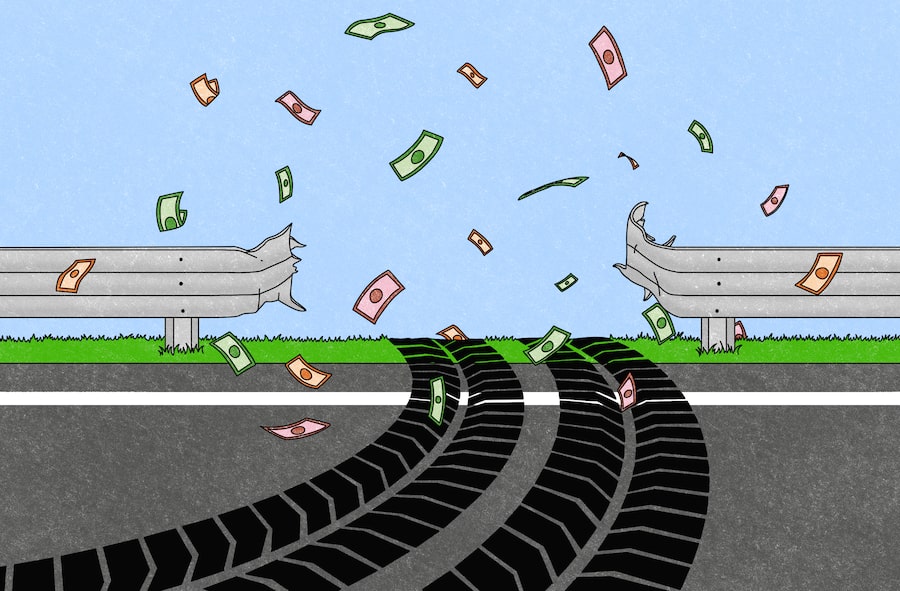
In the decade plus since the 2015 vote, the Liberals have promised, and then broken, a procession of fiscal guardrails that were supposed to keep federal finances on a prudent course. Whenever spending plans collided with a guardrail, they simply drove through it, and came up with a new fiscal rule.
The result has been an unbroken string of deficits, a worryingly rapid increase in the federal debt and, most recently, an increasing proportion of revenue siphoned off for interest payments. All of it adds up to a dangerous gamble by today’s Liberal government that there will not be any economic emergency that requires debt-fueled spending on the order of the global financial crisis or the pandemic.
2015-16: The short shelf life of limited deficits
The ink had barely dried on the Trudeau Liberals’ pledge for limited deficits when the government reneged on its promise. The Liberals had promised a $10-billion deficit for their first budget. Instead, barely five months after the election, then finance minister Bill Morneau tabled a fiscal plan for a $29.4-billion shortfall in fiscal 2017. (The actual deficit came in at $19-billion.)
Not only was the $10-billion promise broken – it was not even mentioned in Mr. Morneau’s speech (indeed, the word “deficit” does not appear at all). For fiscal 2019-20, the Liberals were not forecasting the previously promised balanced budget. Rather, the deficit was pegged at $17.7-billion.
As this first chart shows, that initial budget was the first in a string of 10 consecutive budget deficits. The Carney government is forecasting that the red ink will continue to flow through to fiscal 2031.
That pattern marks a sharp break with the previous two decades of federal fiscal policy. The Liberal government of the 1990s brought the deficit to heel, with the straightforward goal of a balanced budget. A string of surpluses followed. The Conservative government under Stephen Harper fell back into deficit during the global financial crisis, but it was committed to returning to a balanced budget, missing by only a scant $550-million in fiscal 2015.
In his debut budget speech, Mr. Morneau tried to wipe the slate clean, and proposed a new fiscal rule: debt would shrink relative to the size of the economy. “By the end of our first mandate, Canada’s debt‑to-GDP ratio will be lower than it is today," he said.

Former Prime Minister Justin Trudeau and his finance minister Bill Morneau arrive to table the 2016 budget. In his debut budget speech, Mr. Morneau proposed a new fiscal rule: debt would shrink relative to the size of the economy.Justin Tang/The Canadian Press
That much looser rule would give the Liberals the freedom to spend. If the economy grew briskly, the ratio of debt to the (now larger) gross domestic product would fall, without the need for any politically pesky budget trimming.
2016-19: Spending to rule
Mr. Morneau’s fiscal rule allowed the Liberals to spend, and spend they did. The first Liberal budget forecast revenue of $329.3-billion and program spending of $314.2-billion in fiscal 2019-20.
By the time of the fall fiscal update of 2019, the last pre-pandemic view of federal finances, projected revenue had jumped substantially for the 2020 fiscal year, rising to $340.1-billion. The Liberals spent all of that added revenue, and more, with program expenses rising by $26.6-billion to $340.8-billion.
But as this second chart shows, Mr. Morneau was able to keep his (rather loose) fiscal pledge. The ratio of federal net debt to GDP fell to 30.7 per cent in fiscal 2019, lower than the 31.9 per cent it sat at in the spring of 2016. The 2019 fiscal update, delivered in December, forecast a slight increase in fiscal 2020, but a decline below 30 per cent by the middle of the next decade.
Three months later, the economic maelstrom of the pandemic erupted, and demonstrated the flimsiness of Mr. Morneau’s fiscal rule.
2020: The year without rules
If the Liberals had stuck with Mr. Morneau’s rule, they would have needed to roll out massive budget cuts as the economy went into a freefall in the spring of 2020. Of course, that would have been catastrophically foolish: Workers and businesses both needed support from government. Beyond the moral imperative, the Canadian economy would have fallen into a deep recession, perhaps worse, without vigorous federal fiscal measures.
But the pandemic also showed up the essential falsity of the Liberal fiscal rule: It is a floor, not a ceiling. When times are good, the rule allows governments to spend any extra revenues that growth delivers. But the converse is not true. Economic contractions do not lead to smaller spending; instead, it’s a reason to spend even more.
The contradictions were obvious even to the Liberals. Mr. Morneau formally cashiered his fiscal rule in his July, 2020 fiscal update. His successor, Chrystia Freeland, did not come up with a replacement in her November, 2020 fiscal update (although she did articulate economic criteria for paring back stimulus spending).

Former finance minister Chrystia Freeland delivers her first fiscal update, the 2020 Fall Economic Statement, in which she said the government would aim to reduce the debt-to-GDP ratio 'over the medium term.'BLAIR GABLE/Reuters
2021-23: A line that must not be crossed sorta gets crossed
In her first budget, Ms. Freeland came up with an even looser version of Mr. Morneau’s already loose fiscal rule. The government would aim to reduce the debt-to-GDP ratio “over the medium term,” without defining what time span that meant.
A year later, in the 2022 budget, she was more emphatic, saying, “We are absolutely determined that our debt-to-GDP ratio must continue to decline. Our pandemic deficits are and must continue to be reduced …This is our fiscal anchor – a line we shall not cross, and that will ensure that our finances remain sustainable so long as it remains unbreached."
But that line was crossed, that line was breached. Sort of. Ms. Freeland’s spring 2022 budget forecast a steady decline in the net debt-to-GDP ratio from fiscal 2022, which had just ended, through to fiscal 2027. But that steady decline did not materialize, in part due to the Liberals continuing their habit of spending additional revenue from an expanding economy.
In fiscal 2024, the debt-to-GDP ratio rose, edging up to 42.1 per cent from 41.1 per cent the previous year. In either case, the ratio was still lower than the starting point of 2022. But Ms. Freeland’s statement that the ratio “must continue to decline” is at odds with the record.

Mr. Trudeau and Ms. Freeland arrive to deliver the fall economic statement in November, 2023. Of the three fiscal targets laid out, none were fully achieved under Mr. Trudeau's leadership.BLAIR GABLE/Reuters
2024: The year with many rules
The fiscal update in the fall of 2023 proposed a trio of fiscal rules for federal finances:
- The deficit for the (then current) 2024 fiscal year would be no higher than the $40.1-billion forecast in the spring budget
- The debt-to-GDP ratio for fiscal 2025 would be lower than the figures in the fall update, and would then keep on falling
- The ratio of the deficit to GDP would be lower in fiscal 2025 than the previous year, and would remain below 1 per cent of GDP from fiscal 2027 onward
Not one of those targets was fully achieved. Only the third rule was, partially. The fiscal 2025 deficit-to-GDP ratio was lower than the previous year. But as this third chart shows, the deficit ratio rose in fiscal 2026 and is projected to be well above Ms. Freeland’s target well into the next decade.
Of course, much happened between the fiscal update in the fall of 2023 and today. There’s a new prime minister, a new finance minister, a trade war, global economic instability and now, war in the Middle East. The Carney government has much different priorities than its predecessor. But it is still a Liberal government. Unless one believes that a change in leadership absolves the government of all previous promises, the verdict is clear: The Liberals chose to scrap their fiscal rules rather than make tough budget choices.

Mark Carney, then the newly elected Liberal Leader, campaigns in Ottawa ahead of the 2025 election. Mr. Carney’s platform said the Liberals would 'ensure that government debt to GDP declines over the budget horizon.'Spencer Colby/The Globe and Mail
2026: A new government’s new rules
As Liberal Leader in the 2025 election, Mark Carney’s platform contained two fiscal rules, which were not significantly different than those laid out by Ms. Freeland. The Liberals said they would “ensure that government debt to GDP declines over the budget horizon” and that the deficit to GDP ratio would also decline. (The Liberals also promised to eliminate the deficit in what they defined as “operating spending,” a newly confected category.)
Just as in 2016, one of the Liberal campaign promises didn’t last long. The first rule, of a declining debt-to-GDP ratio, simply vanished.
The government bluntly declared it had met the goal of a decreasing deficit-to-GDP ratio, without acknowledging that it had scrapped one of its goals. Even the deficit rule was fudged somewhat: the projections in last week’s spring update projected show higher shortfalls relative to the economy than the Liberal platform.

Former Bank of Canada governor David Dodge in October, 2007. The eponymous 'Dodge rule' is a fiscal guideline recommending Ottawa keep the proportion of federal revenue going to interest payments below 10 per cent.FRED CHARTRAND/The Canadian Press
The future: Dodging the Dodge rule
More than three years ago, former Bank of Canada governor David Dodge sounded a warning about the increasing fiscal weight of interest payments, which were growing sharply amid persistent deficits and rising interest rates.
Mr. Dodge urged Ottawa to lay out a fiscal path that would keep the proportion of federal revenue going to interest payments below 10 per cent. In fiscal 2023, when Mr. Dodge made that recommendation, the interest bite out of revenue was 7.8 per cent.
Needless to say, the Liberals – first the Trudeau government and now the Carney government – ignored his advice. As this last chart shows, interest costs have been taking a bigger and bigger bite out of federal revenues.
By fiscal 2031, interest costs are projected to rise to 13.2 per cent of revenue, well beyond Mr. Dodge’s threshold. Defenders of the government’s fiscal record like to point out that even the 2031 projections are low by historical standards.
That’s true, in a limited way. As recently as 2008, Ottawa’s interest bite was bigger than the 2031 projected level. And today’s levels are far below those of the mid-1990s, when more than a third of federal revenues were diverted to servicing debt.
But what those counter-critics ignore is the direction of federal finances. Ottawa has made no commitments to stabilize, never mind reduce, the interest bite. What will be the size of the interest bite in 2035? In 2040?

Finance minister Francois-Philippe Champagne delivers the spring economic update in the House of Commons on April 28, 2026. Without intervention, interest costs are projected to rise to 13.1 per cent of revenue by fiscal 2031.Sean Kilpatrick/The Canadian Press
Absent a firm commitment from the Carney government, the likely answer is a choice between higher debt costs – or much higher, if an economic emergency once again forces the federal government into massive stimulus spending. Or if interest rates spike. Or both.
That is a scenario for a rerun of the fiscal crisis of the 1990s, when the federal government was forced to take radical measures to stabilize its finances. Ottawa should be doing everything in its power to avoid a repetition.
Even without a disaster, the government’s current fiscal path will erode the value of tax dollars. Every year, a bigger bite will go to bondholders, leaving a smaller share for health care, day care, the armed forces and every other federal expenditure.
The Liberals have willfully scrapped their own fiscal rules as it has suited them, but they will not be able to discard the inescapable logic of that simple arithmetic.