Table of contents
Deficit • Debt • Public service • Defence • Immigration • Investment • Trade • Climate • Competitiveness • Other
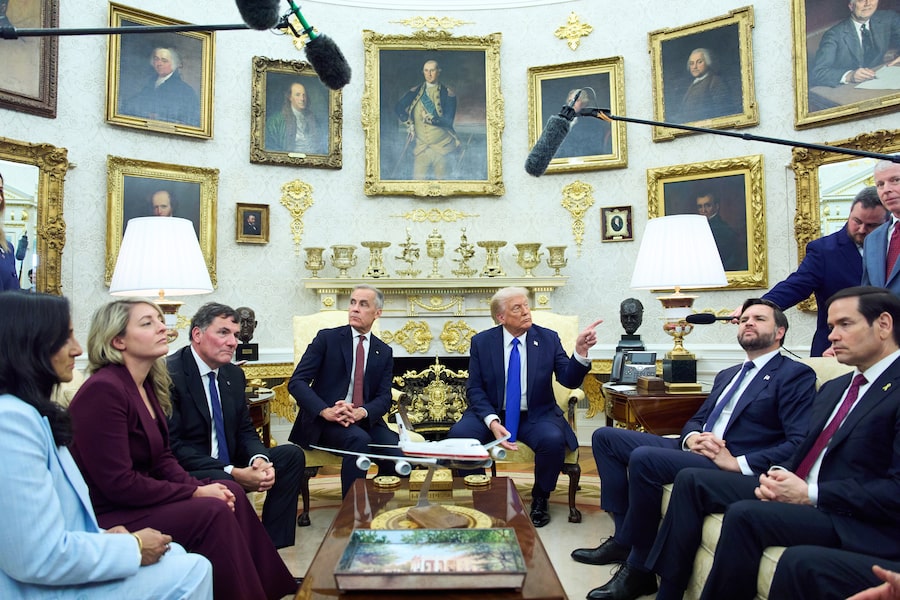
Donald Trump doesn’t appear by name in the 2025 federal budget, even if his One Big Beautiful Bill does get a mention, but the U.S. President has left his mark all over the 493-page document.
From the opening words, “The world is changing,” the Carney government’s first budget is a response to Mr. Trump’s trade war and the threat to Canada’s economy. That means ramped-up defence spending, measures to make Canadian businesses more competitive and billions in new investment around trade diversification.
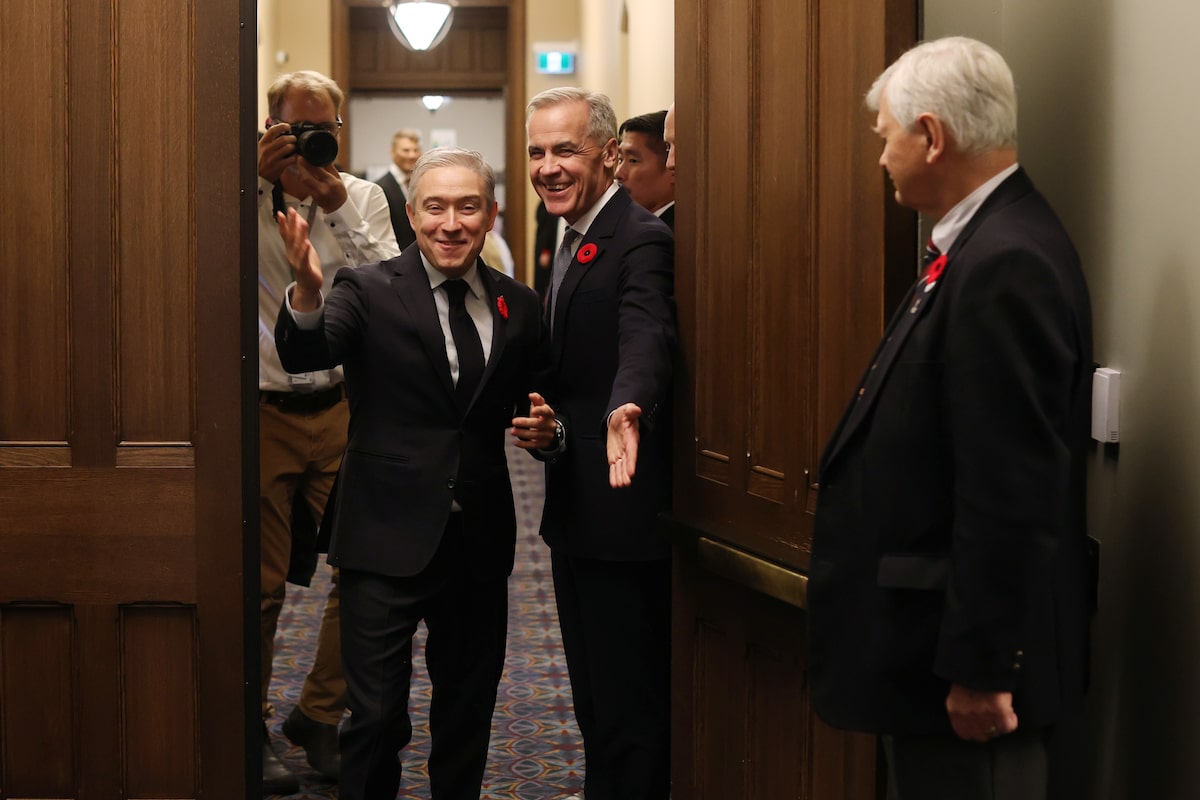
This all comes at a cost in the form of a $78.3-billion deficit for this fiscal year, and Prime Minister Mark Carney faces intense pressure from investors, and the opposition Conservatives, to prove Canada has a path to fiscal stability. As such, the budget also imposes a new era of austerity on the public service and measures to slash the government’s operating costs. Here are the highlights.

Deficit
For many budget watchers, the document can be distilled down to one number: the budget balance. And for the 2025-26 fiscal year, the deficit amounts to $78.3-billion, roughly in line with several estimates from the private sector in recent weeks. The deficit will edge lower over the projection horizon, reaching $56.6-billion in 2029-30.
The budget shows the latest evolution of the government’s fiscal anchors. Now there are two objectives: maintaining a declining deficit-to-GDP ratio and balancing operating costs with expenses by 2028-29. For this fiscal year, the deficit will amount to 2.5 per cent of gross domestic product, declining to 1.5 per cent in 2029-30.
For the 2024-25 fiscal year, the deficit arrived at $36.3-billion – quite a bit smaller than projected in last year’s fall economic statement. But going forward, the government will be running larger deficits as it looks to make what Mr. Champagne called “generational” investments that bolster the economy.
Debt
In its campaign platform this spring, the Liberal Party said that a Mark Carney-led government would “ensure that government debt-to-GDP declines over the budget horizon.”
But if anything, the budget shows that debt as a proportion of economic output will tread water, if not increase.
In the current fiscal year, the debt-to-GDP ratio will amount to 42.4 per cent, rising slightly over the next two years, before heading back down to 43.1 per cent in 2029-30. And, of course, new spending and larger deficits could easily send that percentage higher, as could a slower expansion of the economy – a clear risk when Canadian trade is getting battered.
Trudeau governments had frequently made this metric one of their stated fiscal objectives, but that’s been jettisoned in the Carney era. The debt-to-GDP ratio is a popular measure of fiscal performance among many economists and business leaders.

The public servants who commute through downtown Ottawa every weekday might find leaner workplaces once government departments carry out new orders to scale back.Keito Newman/The Globe and Mail
Public service cuts
The federal public service ballooned by 40 per cent under the first nine years of the Trudeau government, far outpacing Canada’s population growth. The 2025 budget sets out a timeline to bring the population of federal workers back to what Finance Minister Francois-Philippe Champagne calls “a sustainable level.”
These aren’t exactly the DOGE-level cuts seen in the U.S. By 2028-29, the budget calls for the public service to shrink to 330,000, a decline of roughly 30,000 from where it was in 2024-25. That would bring it roughly back to where it was in 2021-22.
Don’t expect mass layoffs. The government believes it can get there largely through attrition, and it’s tweaking retirement rules to encourage older workers to enter their golden years earlier.
Depending on when federal workers started, the earlier retirement incentive will allow eligible employees to retire without any penalty as young as 50 (for those who joined before 2013) and 55 (for those who joined after Jan. 1 that year).
The government said the measure will cost $1.5-billion over five years starting in 2025-26 and provide ongoing savings of $82-million annually.
Bosses won’t be spared, either. The budget calls for the public service executive offices to shed 1,000 positions over two years, which includes 650 positions already eliminated under the Comprehensive Expenditure Review.

Defence
In a budget that is heavy on restraint, defence spending stands out for the tens of billions earmarked to rebuild Canada’s military, a sharp reversal from past budgets.
Justin Trudeau’s first budget mentioned defence fewer than 20 times. This one uses the word nearly 150 times.
The government plans to spend $84-billion on a cash basis over the next five years, $9-billion of which was already announced by Mr. Carney in June. Of that amount, one-quarter will go to pay raises and recruiting.
Among other big-ticket items, $19-billion will go to repair Canadian Armed Forces infrastructure and on training. Digital infrastructure and cyberdefence will get a $10.9-billion injection.
Another $17.9-billion will go to boosting Canadian military capabilities with money for armoured vehicles, counter-drone technology and long-range strike capabilities.
And where industrial policy under the Trudeau government leaned heavily on electric vehicles and batteries, the 2025 budget puts another $6.6-billion toward the Carney government’s defence industrial strategy to bolster a sector it says employs 81,200 people.
Immigration plan
The budget outlines the immigration levels plan for the next three years and continues a recent theme of restraint. Permanent resident admissions will be set at 380,000 annually for 2026 through 2028. (The Trudeau government had ramped up that target to 500,000 before scaling it back.) And the federal government will further hack away at the inflow of temporary residents; next year, admissions will tumble to 385,000 from this year’s target of 673,650.
The previous federal government had set a goal of reducing the share of temporary residents to 5 per cent of the total population by the end of next year – a target that many analysts say is unachievable, given progress to date. There were roughly three million temporary residents (including students, workers and others) in the country as of July 1, or 7.3 per cent of the total population.
The federal government has implemented various measures, such as capping study visas, that have led to a significant slowdown in population growth.
Investment
The budget is chock full of measures aimed at getting the corporate sector spending, and investment is clearly the overarching theme of this year’s document. Case in point, the words “investment” and “investments” appear nearly 800 times in the budget.
The government promises to be among the big spenders. The budget projects its capital investments will rise to nearly $60-billion in 2029-30 – nearly double the $32.2-billion for 2024-25. That said, around $50-billion in annual investments were already baked in for future years, with Tuesday’s budget adding some additional billions. A chunk of that new spending falls under what’s billed as “generational infrastructure investments.”
The budget said it intends to create a new Build Communities Strong Fund for local infrastructure, which The Globe and Mail reported earlier Tuesday. The government proposes to provide $51-billion over 10 years, starting next fiscal year (2026-27), for the initiative.

Trade
In October, the federal government set an ambitious goal: double non-U.S. exports over the next decade, taking annual exports to $600-billion. Before the budget, Ottawa had already made a slew of announcements related to trade, including the Major Projects Office, which aims to fast-track nation-building projects such as expansions to port infrastructure.
The budget formally proposed $5-billion over seven years to create the Trade Diversification Corridors Fund, which the Liberals had pitched in their election campaign. The fund “will consider investments in key projects in the Great Lakes-St. Lawrence Region, at ports in northeastern Quebec like enhancing the Port of Saguenay’s capacity to build a second wharf, rail lines in Alberta, port and rail infrastructure on the West Coast, and more,” the budget reads.
Among a variety of other initiatives, the budget proposed $1-billion over four years to create the Arctic Infrastructure Fund, “which will invest in major transportation projects in the North with dual-use applications for civilian and military use,” such as airports and all-season roads.
Climate strategy
The “climate competitiveness strategy” included in the budget does not scrap plans for a federal cap on emissions from the oil-and-gas sector, which was a subject of widespread speculation beforehand.
However, it sets the stage for doing so, stating that the cap – which was developed under Mr. Trudeau, but has not yet been implemented – won’t be needed if a series of other measures to reduce the industry’s emissions are taken.
Those include strengthened regulations to reduce methane leaks, which were also proposed under Mr. Trudeau, and which the budget pledges to follow through on.
But the primary and more contentious way that the government will seek to make the emissions cap unnecessary is by strengthening Canada’s industrial pricing regime, toward which the budget promises to work with the provinces. Its aim is to make the carbon-credit markets under that system strong enough to incentivize long-sought investments in carbon-capture technology.
Left unstated in the budget is that the emissions cap, industrial pricing and other regulations are currently tied up in negotiations with Alberta aimed at landing on compromises between the various emissions-reducing options.
Competitiveness
Well before Mr. Trump hammered Canada’s economy with tariffs and threats, the country was a laggard in business investment. The budget aims to change that narrative through a mix of tax measures and targeted spending.
Under the guise of what the government calls the “productivity super-deduction,” it will speed up and increase the share of new capital investments that businesses can write off. The measure covers a wide range of investments in manufacturing and processing equipment, clean-energy generation, productivity-enhancing technologies and research and development. (Many of these were announced in 2024.)
The budget adds to those with new incentives allowing manufacturers and processors to immediately expense costs for buildings and revives accelerated capital cost allowances for low-carbon liquefied natural gas facilities that expired at the end of 2024.
The government said the measures in the budget will push Canada’s marginal effective tax rate down from 15.6 per cent to 13.2 per cent, the lowest in the G7 and below that of the U.S., even after including measures contained in Mr. Trump’s One Big Beautiful Bill.
Still, it’s unclear if businesses will view the tax measures with the same enthusiasm the government hopes.
Canada Strong Pass, Eurovision and other miscellaneous items
In between the defence spending and public-service cuts, the budget features an array of other announcements. Here are a few:
The budget includes $116.3-million to renew the Canada Strong Pass, which offered discounts on national parks, museums, galleries and rail travel, through the upcoming holidays and next summer.
The government said it will provide $150-million to the CBC to strengthen its mandate and “better reflect the needs of Canadians.” One of those needs, apparently: “to explore participation in Eurovision.” Ottawa says it is working with the public broadcaster to see about taking part in the annual international song contest run by the European Broadcasting Union.
Billed as a way to aid the boating and aviation industries, the budget would scrap the luxury tax on private aircraft and vessels.
On the other end of the spectrum, and with youth unemployment on the rise, the budget sets out $594.7-million over two years to create 100,000 summer jobs for students.
Under the budget, the government said it will introduce legislation to regulate the issuance of fiat-backed stablecoins, with the Bank of Canada setting aside $10-million over two years starting in 2026-27 to cover administration costs.
With a report from Adam Radwanski
Stephanie Levitz, The Globe's senior reporter in Ottawa, details some of the key elements of Prime Minister Mark Carney's first federal budget.
The Globe and Mail
Editor’s note: In a previous version of this article, the chart titled “Youth employment rate” incorrectly stated that the data comprised people aged 15 to 24 and showed the participation rate instead of the employment rate. It has been updated to show the youth employment rate for 15 to 19 year olds.