
Election 2025: Latest updates
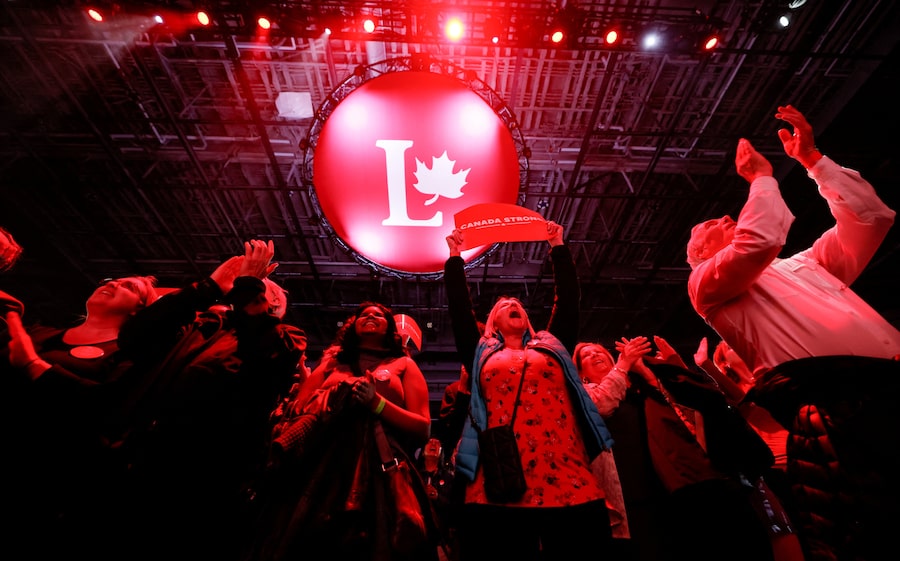
- “Lots of energy, lots to do,” Mark Carney said on his way into the Prime Minister’s Office on Tuesday, where his Liberals, returned to power by the previous night’s election, are planning their next moves. They must set up a new cabinet, make a date for Parliament’s return and plan for a meeting between the Prime Minister and U.S. President Donald Trump, who he spoke with on Tuesday.
- Pierre Poilievre, who lost his suburban Ottawa riding to a Liberal, pledged to stay on as Conservative Leader after his party made gains in the Toronto area and B.C., and stayed strong in his home province of Alberta, but not enough to form government.
- The Bloc Québécois, diminished in Quebec but still the third largest faction in the House, could be a powerful player now that the NDP has lost official party status and its leader, Jagmeet Singh, was defeated in his riding. Mr. Singh promised to step down once an interim replacement is available.
Canada’s election results, and what they mean
The new political map
To win a majority in this election, a party needed at least 172 seats in the House. None succeeded on Monday night, but the Liberals almost reached the mark. That was more than they expected in the final months under Justin Trudeau, whose resignation made way for Mark Carney to become Prime Minister.
The Canada-U.S. tariff war and President Donald Trump’s annexation rhetoric propelled most federalist voters to the Liberals – who peeled away crucial Quebec ridings from the Bloc, but faced disappointment in Ontario’s 905 region – or the Conservatives, who got their biggest share of the popular vote since Brian Mulroney’s and Stephen Harper’s eras, but could not translate that into enough seats.
How the leaders’ ridings went
The fate of the Liberal, Conservative and NDP leaders’ ridings tells us a lot about how the election went overall. Mr. Carney, who had never held elected office before, and Pierre Poilievre, an MP for more than 20 years, ran in neighbouring parts of suburban Ottawa. Whereas Nepean voters turned out comfortably for Mr. Carney, Carleton voters replaced Mr. Poilievre with Bruce Fanjoy, a Liberal. And far to the west, in Burnaby Central, Jagmeet Singh fell to a distant third behind the Liberal and Conservative challengers before he pledged to step down as NDP leader.
How the pollsters fared
Public opinion polls, including Nanos Research’s findings for The Globe and Mail, more or less accurately anticipated the surge in support for the Liberals and Conservatives, but some misjudged how deeply the New Democrats would lose. “The NDP are about to hit a historic low in popular support never seen before,” chief data scientist Nik Nanos said, adding that the drops in New Democrat and Bloc support were within his pollsters’ margin of error.
Voter turnout
Elections Canada’s turnout figures are preliminary, but overall, as experts expected, they do not break records in the way that advance polls did over the Easter weekend. Turnout is higher than the campaigns of the past three decades, but it would have had to reach 75.3 per cent to match the consequential elections of 1984 and 1988, which, like this one, centred on Canada-U.S. relations and trade.
What Carney has promised to do next
Implementing Mr. Carney’s agenda will be a delicate process in a Parliament where the Liberals need help to govern, but their usual federalist partners, the New Democrats, are in no shape to offer it. Here’s what we can expect within the next few weeks:
- Cabinet making: Mr. Carney took office in March with a 24-person cabinet, and the new one will be no more than 30, a senior Liberal official told The Globe.
- Recalling the House: Official business has been on hold since January, when Justin Trudeau resigned, but MPs could be back in session by late May.
Once Parliament returns, a Throne Speech will set out what the Liberals plan to do first. Trade and the economy are among the top issues for the next government to address, but not the only ones.
- Trade talks: Since taking office, Mr. Carney has stressed the need to reset the Canada-U.S. trade relationship, and now he must sort out what that looks like.
- Tax cuts: One of Mr. Carney’s promises was a middle-class tax cut, which, by his party’s estimates, would save two-income families up to $825 annually.
- Carbon pricing: When Mr. Carney dialled down the consumer carbon price to zero on his first day in office, it did not change the legislation that keeps the contentious policy in place. It will take Parliament to amend those laws.
- Housing: The promised Build Canada Homes program aims to stimulate construction of 500,000 new homes per year, and give GST breaks to first-time homebuyers.
'Who's ready to stand up for Canada with me?' Listen to excerpts from Mark Carney's victory speech and learn more about the political landscape his Liberals must navigate.
Reuters
What will Trump and Canada’s allies do now?
Mr. Trump shared more of his “51st state” rhetoric on Truth Social while polls were open on Monday, but had a different tone with Mr. Carney when they spoke on the phone the day after. “The leaders agreed on the importance of Canada and the United States working together – as independent, sovereign nations – for their mutual betterment,” and the leaders plan to meet in person in the near future, according to the PMO summary of the call. Leaders in Europe and Australia also congratulated Mr. Carney on his victory and underlined their countries’ ties with Canada.
Compiled by Globe staff
With reports from Bill Curry, Stephanie Levitz, Robert Fife, Steven Chase, Marie Woolf, Eric Andrew-Gee and Paul Waldie
Election 2025: Commentary and key reads
The Decibel podcast
Ottawa bureau chief Robert Fife and feature writer Shannon Proudfoot stayed up late on election night to brief The Decibel on who will now govern Canada, and where the country could be headed. Subscribe for more episodes.
From our columnists
Andrew Coyne: Trump vs. change made for an uncertain mandate
Shannon Proudfoot: Election hopes deflate at Tory HQ
Tony Keller: This election came down to ‘who do you trust?’
From the campaign trail
The East to West series took our journalists to communities in every province, where they asked people what issues mattered to them most. Here's a sampling of what they said.
The Globe and Mail