Briefing highlights
- Canada churns out millionaires
- But some don’t plan on sharing when they die
- Markets at a glance
- Canadian home sales rise 0.9 per cent
- Loblaw profit surges in third quarter
- Target’s profit slips
- U.S. consumer prices up marginally
- What to watch for today
Millionaires club swells
Canada is churning out more and more millionaires, with wealth on the rise as both financial and other assets climb in value.
And, it seems, some of them don't want to share the wealth with their kids when they're done with this earthly world.
Canada ranks relatively high in the world when it comes to the number of millionaires compared to other countries. And we're going to have even more over the next few years, according to an annual report from Credit Suisse.
Some of the Credit Suisse findings:
Canada is now home to 1.1 million millionaires, as measured in U.S. dollars, whose wealth includes financial and real assets such as their homes. That's up from 968,000 in 2016, and Credit Suisse forecasts their ranks will swell by 35 per cent, to almost 1.5 million, by 2022.
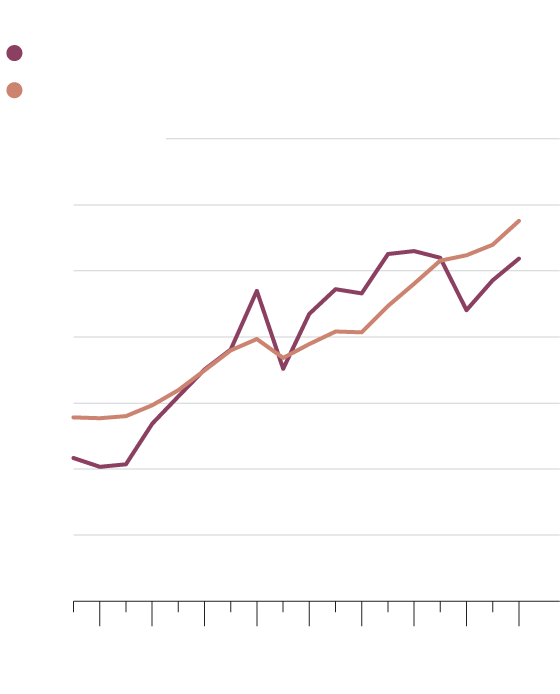
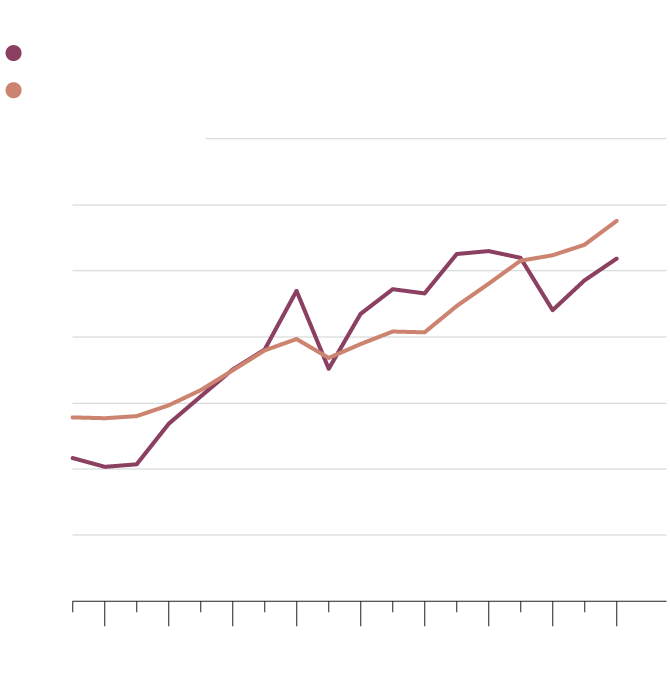
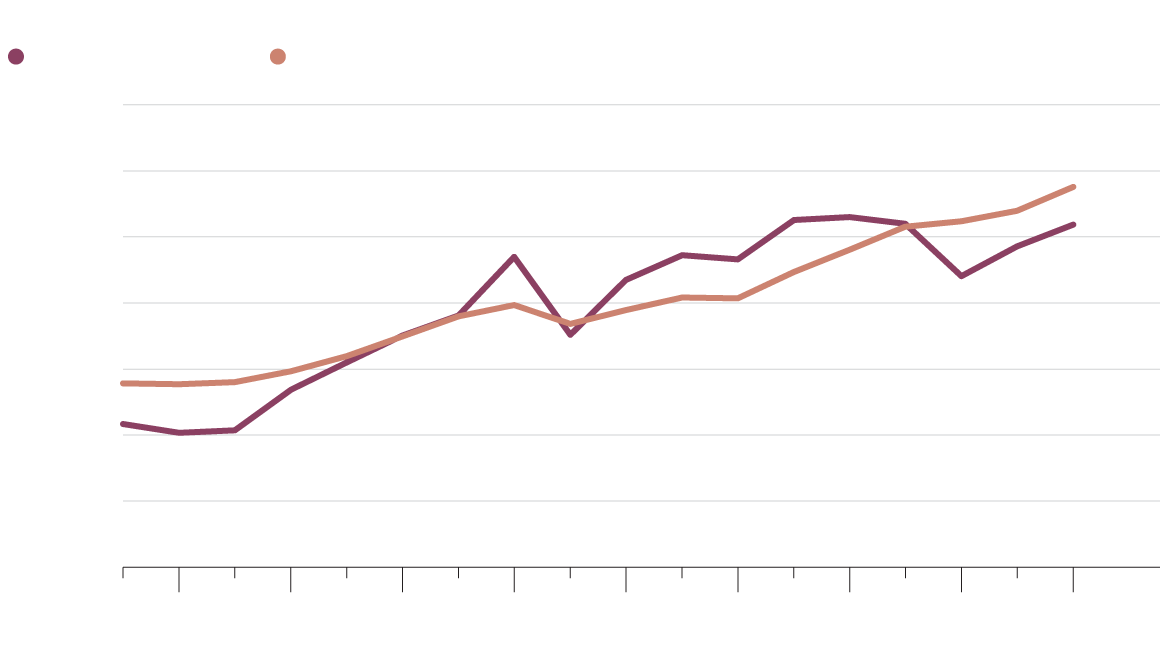
Wealth per adult rose by an average 5.3 per cent in Canada between 2000 and 2017, if calculated in U.S. dollars. If you measure it by loonies, the rise was just 4.4 per cent.
"The small dip in wealth during the global financial crisis, and subsequent moderate growth in domestic currency units, is characteristic of the experience in several other major economies," Credit Suisse said.
And while we're more than just commodities, we still depend heavily on them.
"The economy was hit hard in 2015 by the drop in the world price of oil, but has weathered that and performed well in the 12 months to mid-2017," according to the report.
"Low interest rates were maintained, helping to stimulate house prices in major cities," it added.
"For these and other reasons, wealth per adult rose quite strongly in both U.S. dollars (6.8 per cent) and Canadian dollars (6.7 per cent) between mid-2016 and mid-2017."
Credit Suisse measured Canadian wealth per adult at $259,271, or 33 per cent below that in the U.S.
There's a nice but there, particularly given global concerns about inequality.
"Wealth is more equally distributed than south of the border, however, which accounts for the much higher median wealth of USD$91,100, compared with USD$55,900 for the USA," Credit Suisse said of Canada.
"Relative to its neighbour to the south, Canada has both a smaller percentage of people with less than USD$10,000 and a larger percentage with wealth above USD$100,000," it added.
"It has 1.1 million millionaires, and accounts for 3 per cent of the top 1 per cent of global wealth holders, despite having only 0.6 per cent of the world's adult population."
Wealth per adult over time, Canada
Wealth per adult
Wealth per adult at constant exchange rate
$350
(thousands)
300
250
200
150
100
50
0
‘01
‘03
‘05
‘07
‘09
‘11
‘13
‘15
‘17
SOURCE: CREDIT SUISSE
Wealth per adult over time, Canada
Wealth per adult
Wealth per adult at constant exchange rate
$350
(thousands)
300
250
200
150
100
50
0
‘01
‘03
‘05
‘07
‘09
‘11
‘13
‘15
‘17
SOURCE: CREDIT SUISSE
Wealth per adult over time, Canada
Wealth per adult
Wealth per adult at constant exchange rate
$350,000
300,000
250,000
200,000
150,000
100,000
50,000
0
2001
2003
2005
2007
2009
2011
2013
2015
2017
SOURCE: CREDIT SUISSE
So much of this is driven by stocks, which rose by about 15 per cent in Canada, China, Japan and the United States, and by 10 per cent in Britain and Russia from 2016 to 2017.
"However, these lagged well behind France, Germany, India and Italy, where market capitalization rose by 30 per cent on average."
As for the really, really, really rich, or those whose net worth tops $50-million, we have 3,000 of them.
In a somewhat interesting twist, the Credit Suisse report just happened to come on the same day that investment firm Edward Jones released a survey on inheritance, as in, who gets one and who doesn't.
And when you put two and two together, you find that some of the Credit Suisse rich people don't necessarily plan to leave money to the Edward Jones would-be recipients.
The Edward Jones survey, done by Leger Research, showed that almost half of Canadians don't expect a windfall when their loved ones (maybe not-so-loved, as the case may be) pass on.
Younger Canadians, those in the 18-54 age group, are "the most optimistic" in expecting a big inheritance. Even those aged 55 to 64, and one in three over 65, expect something decent (which, in theory, ought to come soon).
Here's a breakdown:
Thirty-two per cent of us don't expect to leave a "significant financial contribution" behind, while 58 per cent do. The rest either didn't know or preferred not to answer.
By income category, 54 per cent of those with less than $40,000 expect to leave something big to their loved ones. That rises to 58 per cent for those between $40,000 and $59,000, 57 per cent for those between $60,000 and $79,000, and 64 per cent in each of the $80,000-$99,000 and $100,000+ groups.
"An inheritance can have a major impact on your financial strategy," Patrick French, principal of solutions tools and consulting at Edward Jones, said in releasing the survey results.
"Planning ahead so that you can have an appropriate strategy in place is crucial, whether or not you are expecting an inheritance from your loved ones."
(Memo to my four kids: You are loved dearly. It's the amount that's left that's in question.)
Read more
Markets at a glance
Read more
More news
- Clare O’Hara: RBC to launch its own robo-adviser business
- Loblaw third-quarter profit more than doubles
- Target’s comparable sales beat estimates, profit falls
- U.S. consumer prices rise marginally, while underlying inflation firms
- Canadian home sales rise 0.9 per cent in October