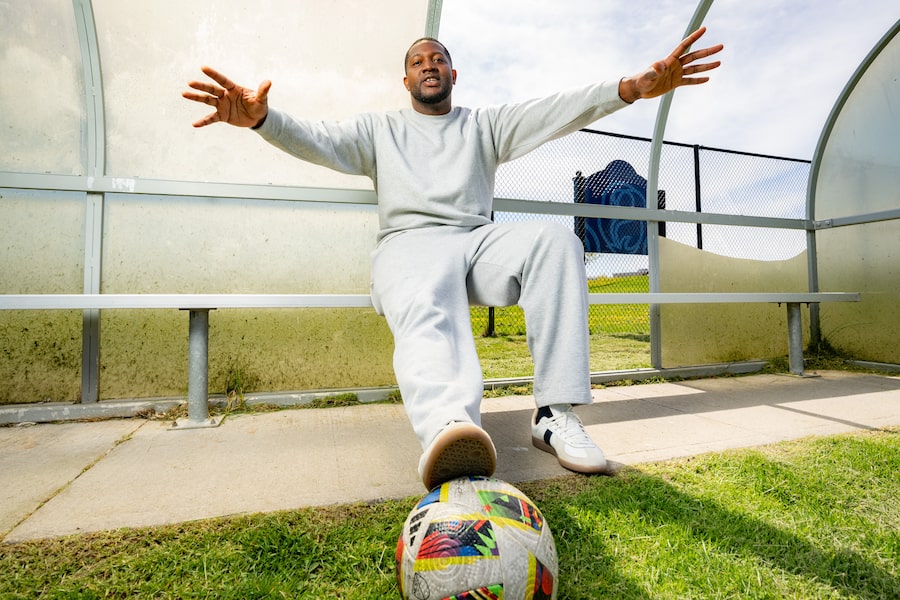
While Edmonton waits anxiously to see whether adopted son Alphonso Davies will be fit enough to play at BMO Field when Canada’s World Cup team kicks off in Toronto next month, there are no such worries a few kilometres down the road from the stadium.
Brampton’s representation at the world’s biggest sporting event is all but assured: It’s a strong possibility that the Ontario city, with a population of just 777,759, will lay claim to a quarter of the 26-man squad when head coach Jesse Marsch announces his roster on May 30.
“I remember when I first joined the team, and the guys asked me where I was from and I said Brampton, the first thing they said to me was, oh, not another one,” said Liam Millar, who began playing soccer at age four for Brampton Youth. “So many guys from this team have been in Brampton. It’s a real identity of our team.”
Mr. Millar, who left the city at 13 to pursue his soccer dreams in England, made his national-team debut in 2018 and got on the field at the 2022 World Cup in Qatar, coming on as a substitute against Belgium. (That tournament’s team featured seven players from Brampton.)
The 26-year-old, who now plays for Hull City in England’s Championship – one rung below the Premier League – credits his globe-trotting career in part to what he feels is a uniquely Brampton upbringing in a country that is traditionally obsessed with winter sports, especially hockey. “In many different parts of Canada, I don’t feel like everyone was playing soccer all the time,” he said. “And I felt like always at my school and where I was, there was always a soccer ball, there was always someone trying to play. We just had that soccer-first mentality.”
Blazing a trail
Long before Mr. Millar pulled on a national-team jersey, other Bramptonians – such as Iain Hume and Paul Stalteri – were putting the city on the soccer map. But among past and present players from the area, one name stands above the rest: Atiba Hutchinson.
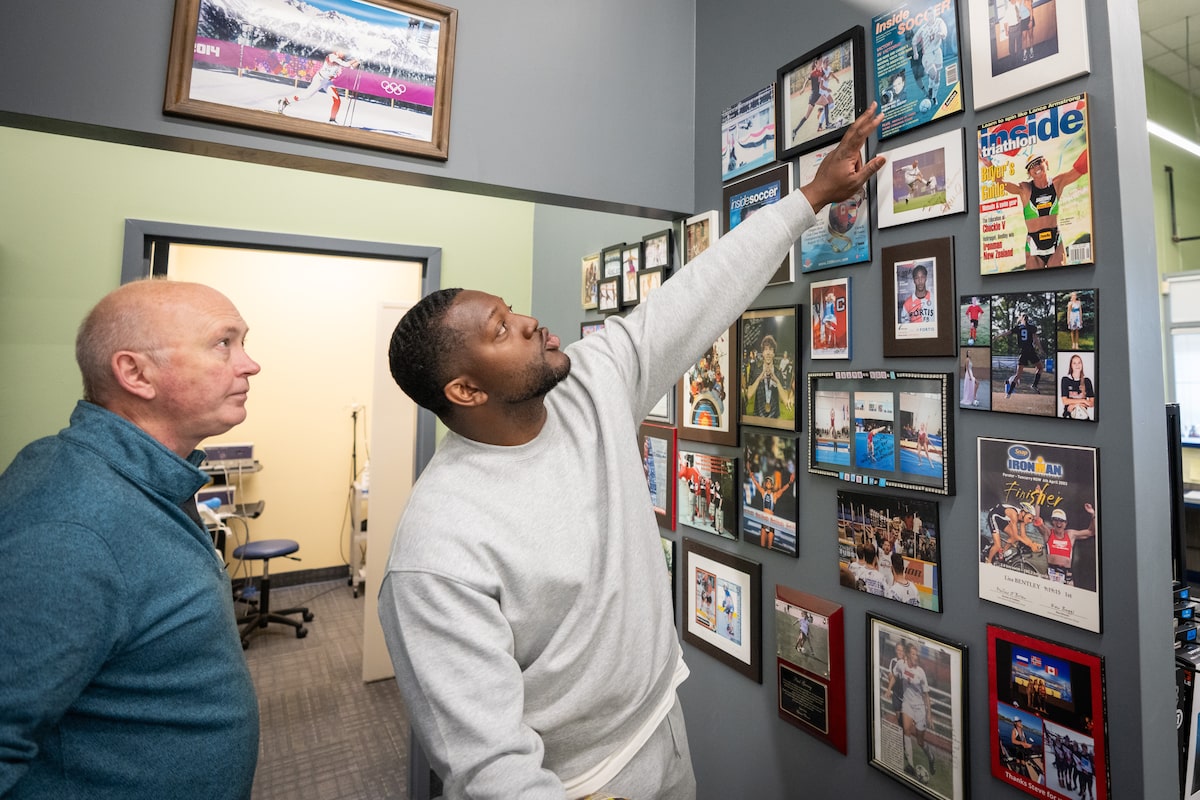
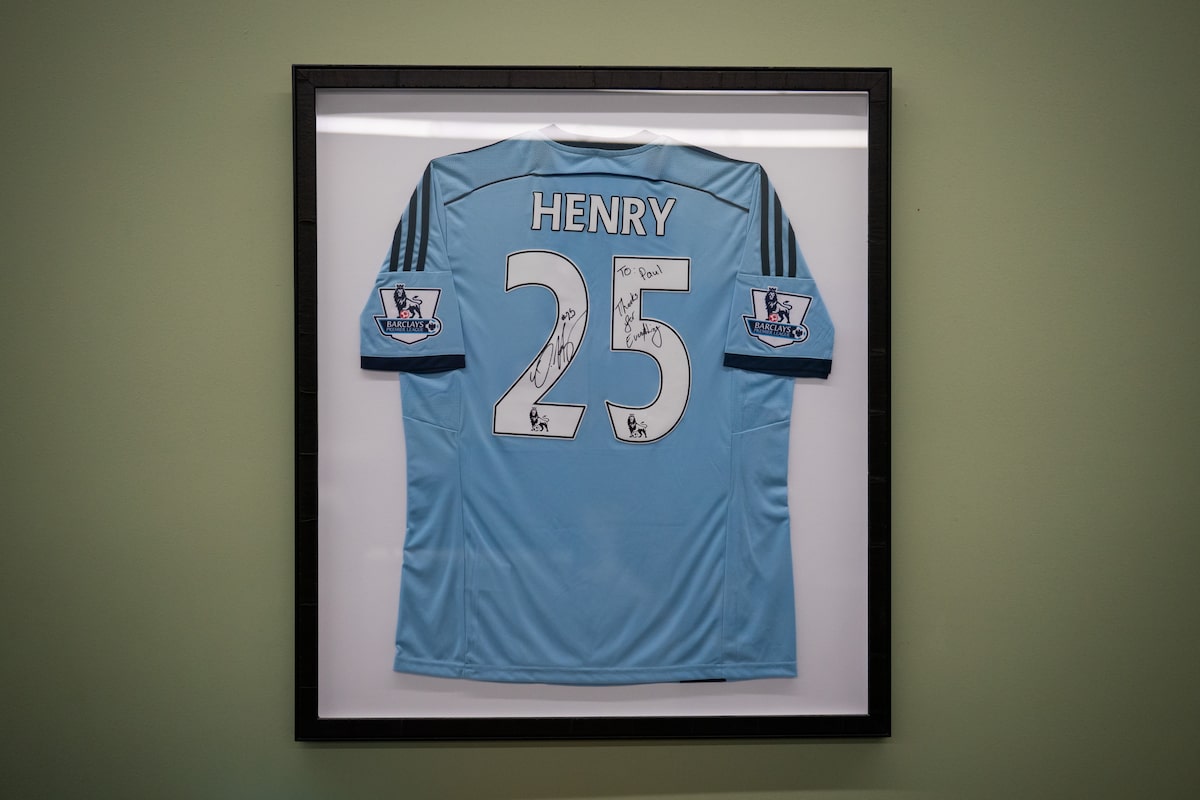
“He’s one of the most important people in football in our country,” said former national team defender Doneil Henry of Mr. Hutchinson, who skippered Canada in Qatar. “He’s cap. He’s played at the highest level, of course, but he’s also an amazing human being. So there’s so much to take from Atiba and what he’s done in the game.”
Mr. Hutchinson, who made a record 104 appearances for the national team before retiring three years ago, started playing just like Mr. Millar: as a four-year-old at Brampton Youth. He left Canada at 19 to try his hand in Europe, ultimately playing his way into the Champions League and rubbing shoulders with the best players on the planet. In 2021, he captained Turkey’s Besiktas JK to a league and cup double – alongside fellow Brampton native Cyle Larin.
Despite the accolades, Mr. Hutchinson has never forgotten the place where he grew up. Two years ago, he gave his name to the drop-in Atiba Hutchinson Soccer Court at Century Gardens – the first fully lit soccer court in the country.
“This city played a huge role in shaping us as players and as people,” Mr. Hutchinson told a Brampton soccer rally earlier this year. “The lessons we learn here – hard work, resilience and believing in yourself – stay with you your entire career. Brampton has always been full of talent, passion and diversity. That’s what makes this city a very special community, and why so many players have come from here.”

Atiba Hutchinson, in action against Honduras at a qualifying match for the 2022 World Cup, is 'one of the most important people in football in our country,' Mr. Henry says.Vaughn Ridley/Getty Images
Creating a brotherhood
For Mr. Henry, who played alongside Mr. Hutchinson on the national team for a few years, being able to literally touch someone who was living the dreams he aspired to helped instill the self-belief that he could do the same.
Growing up in a family of hard-working Jamaican immigrants, Mr. Henry started playing for Brampton Youth at age 10, beginning a lifelong friendship with current Toronto FC captain and national-team midfielder Jonathan Osorio. He trained at the Toronto FC Academy, then embarked on a itinerant career that took him to England, Denmark, South Korea and the United States, before retiring in 2023.
And just as Mr. Hutchinson played a role in his journey, Mr. Henry has influenced other Brampton players now in contention for Canada’s World Cup squad, including Jayden Nelson and Jahkeele Marshall-Rutty.
“These interactions are the biggest thing,” Mr. Henry said. “You might not see the impact while you’re playing, but when I see Jahkeele, and I see these guys, and they’re like, yo fam, you remember when you saw me here? … You changed my life.”
Mr. Marshall-Rutty, who also went through the TFC Academy, now plays for Red Bull New York. He made his national-team debut in March with a substitute appearance against Tunisia. The winger had previously broken Mr. Davies’s record for the youngest men’s national-team call-up when he was included on the Canada squad in 2021 as a 16-year-old.
Now 21, Mr. Marshall-Rutty grew up playing for Brampton East, and credits the city’s youth clubs for allowing him to have a professional career. “I think they did so well to kind of set us up for our next step,” he said. “And for me, that was Brampton East for two, three years.”


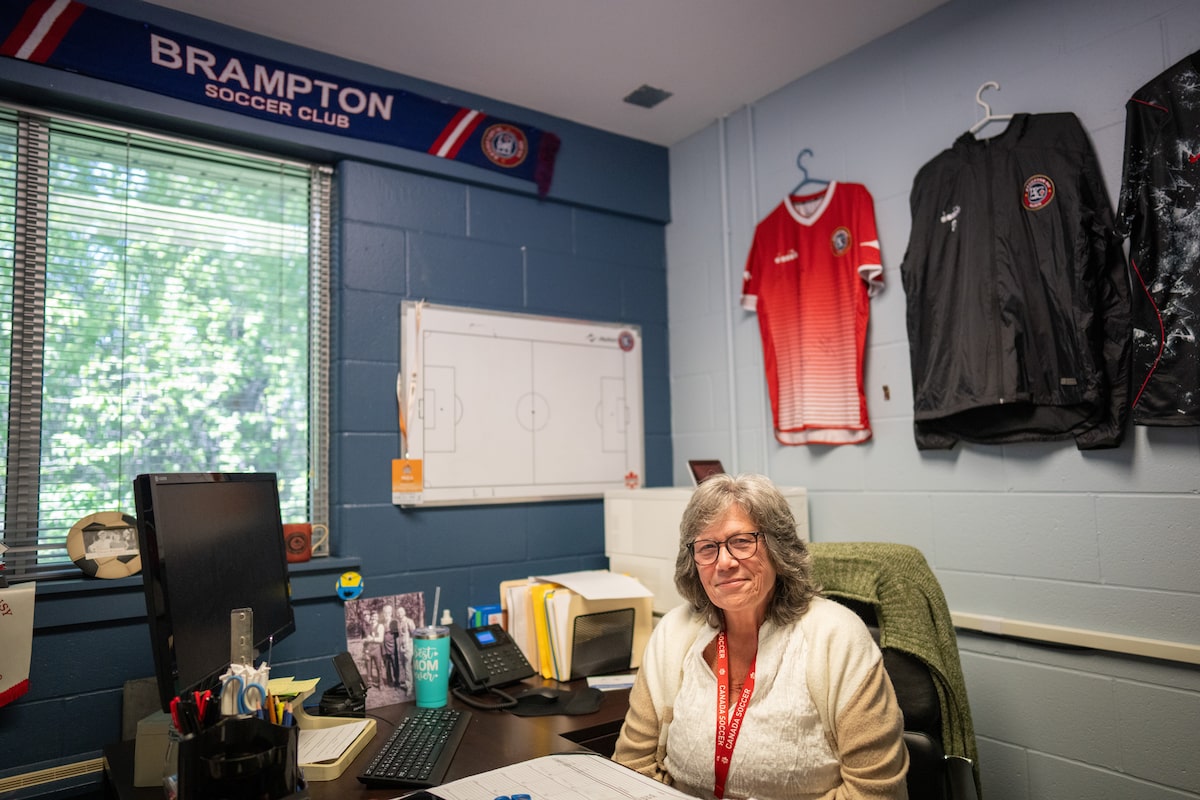
The field outside Brampton Soccer Club is one of 100 across town, the city says. Locals also have their pick of venues for cricket, a popular sport here.Arlyn McAdorey and Christopher Katsarov/The Globe and Mail
Building a foundation
With the World Cup less than a month away, there is understandable pride at Brampton City Hall in the way these players have represented the city.
Brampton has long been known as the cricket capital of Canada – it has often played host to international tournaments – and Mayor Patrick Brown is more than happy to add soccer to that moniker. As to whether the city itself laid the foundations for that title, or whether its superstars greased the wheels, Mr. Brown doesn’t hesitate to credit people such as Mr. Hutchinson. “Honestly, looking at Atiba’s journey, I think the great players developed first, and we’ve made investments into recreation after the fact, really, in their honour and to inspire the next generation,” he said.
To cater to more than 153,000 people between the ages of 15 and 29, the city has 100 outdoor soccer fields, according to city officials. Last year, its young people recorded more than 31,000 hours of soccer play on those pitches.
Bill Boyes, Brampton’s commissioner of community services, says there are between 2,500 and 3,000 registrations for outdoor soccer in the city, with a similar number opting to play the game indoors.
The city also offers an “active assist program,” which subsidizes children’s sports programs for families of a certain income.
It helps that soccer doesn’t have a high cost of entry in the way that hockey does, says Chrys Chrysanthou, who coached national-team winger Tajon Buchanan with the Brampton Blast and Mississauga Falcons. “They may be living paycheque to paycheque, they may be living hand to mouth,” Mr. Chrysanthou said. “… They may not be able to do very much, but they have just enough to be able to get their kids into the sport.”


Mandarin and Sinhalese are among dozens of languages that Bramptonians grow up speaking.Michelle Siu/The Globe and Mail
Coming together
Others Bramptonians note that the city’s sporting successes extend beyond the soccer pitch.
Mr. Chrysanthou points to athletes such as Toronto Raptors star RJ Barrett, who played for the Brampton Warriors, and Buffalo Bills wide receiver Josh Palmer, who attended the city’s St. Roch Catholic Secondary School.
“If you look demographically, who are the best athletes in the world, that kind of population base is concentrated in Brampton,” he said. “You’ve got a large Jamaican population. Jamaican sprinters, they’re all quick, some quicker than others, but all of these guys were quick.”
In sports, as the saying goes, iron sharpens iron. Putting all this talent together, to be forged in the crucible of sports, can only be beneficial in producing skilled players.
“The city has 271 different cultures, okay, and we speak 171 different languages,” city councillor Rowena Santos said. “And so when you have that level of diversity in a small footprint in Brampton, in a city, you’re bound to have tremendous talent.”

Jonathan Osorio, greeting children at a Team Canada kit unveiling in March, is the son of Colombian immigrants.Cole Burston/The Globe and Mail
Case in point is Mr. Osorio, who grew up in a Spanish-speaking home after his parents immigrated from Colombia. At one point, the Toronto FC captain was coached in Brampton by Argentine Juan Cruz Real – who currently coaches the Nicaraguan national team.
Greg Spagnoli, the soccer coach at Brampton’s St. Edmund Campion Catholic School until 2024, had Mr. Osorio on his team for four years – during which time they won a provincial title. He also coached Mr. Buchanan and Mr. Larin during his almost two-decade tenure at the high-school soccer powerhouse, and feels that the city’s melting pot has paid dividends on the pitch.
“Brampton was a hotbed for large immigrant populations,” Mr. Spagnoli said. “... I think when you share that commonality of something, just the ball and being able to play anywhere – parking lot, grass field, wherever – I think you can just find that sense of belonging, inclusivity, to where you can just elevate and do what you love. And it’s a cheap sport to play.”

Greg Spagnoli remembers coaching Mr. Osorio in Brampton. These days, he's a vice-principal at St. Marcellinus Catholic Secondary School in Mississauga.Arlyn McAdorey/The Globe and Mail
Performing for the world
Before joining up with Canada for a World Cup training camp in Charlotte, N.C., later this month, Mr. Millar has another important appointment – at England’s Wembley Stadium. Fittingly, given Brampton’s outsized impact on the global game, it will be against a fellow Bramptonian, as Mr. Millar’s Hull City takes on Mr. Larin’s Southampton FC for a place in next season’s Premier League, the world’s richest soccer league.
But whether a game is taking place at the world’s most famous soccer stadium or in front of billions on TV this summer, people in Brampton want everyone to know exactly where their hometown heroes are from.
“When we are playing on those fields at the World Cup or anywhere you go, please say you’re from Brampton, not from Toronto, okay?” Ms. Santos said. “Brampton represent.”