The national sports of Ireland and Canada share a 250-year connection that is woven into the very origins of ice hockey and the story of the Irish in this country.
Hurling is one of the oldest field games in the world and has been played for at least 3,000 years in Ireland. While ice hockey is considered the fastest team sport on the planet, hurling is considered the fastest field game. It’s rooted in skill, passion and pride, an embodiment of Irish culture and community.
It’s little surprise that the Irish who now call Canada home brought this mythical game with them and continue to grow it, while for many Canadians it’s proven a familiar and exciting pastime.

Sean McGrath grips his hurley, an ash-wood stick, as he follows the sliotar, or ball.
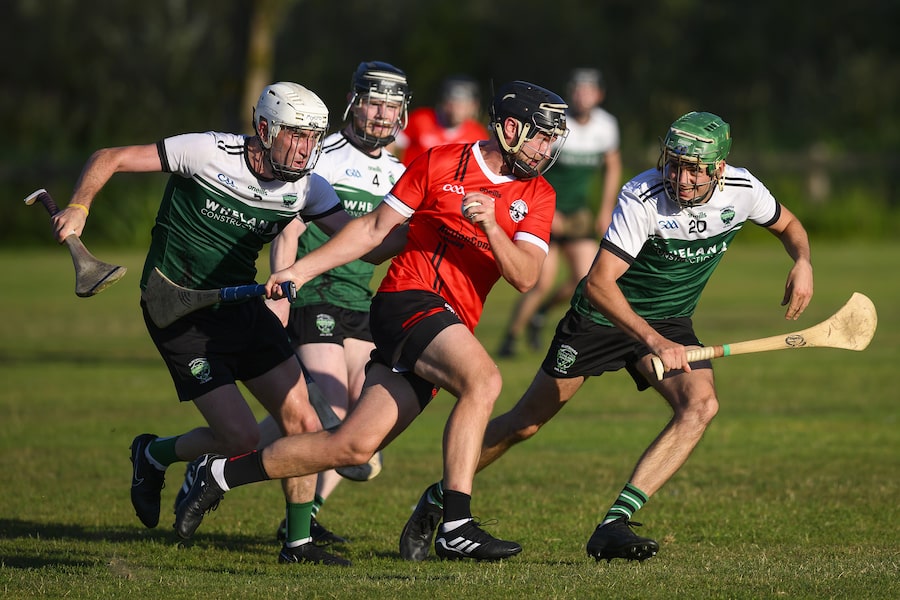
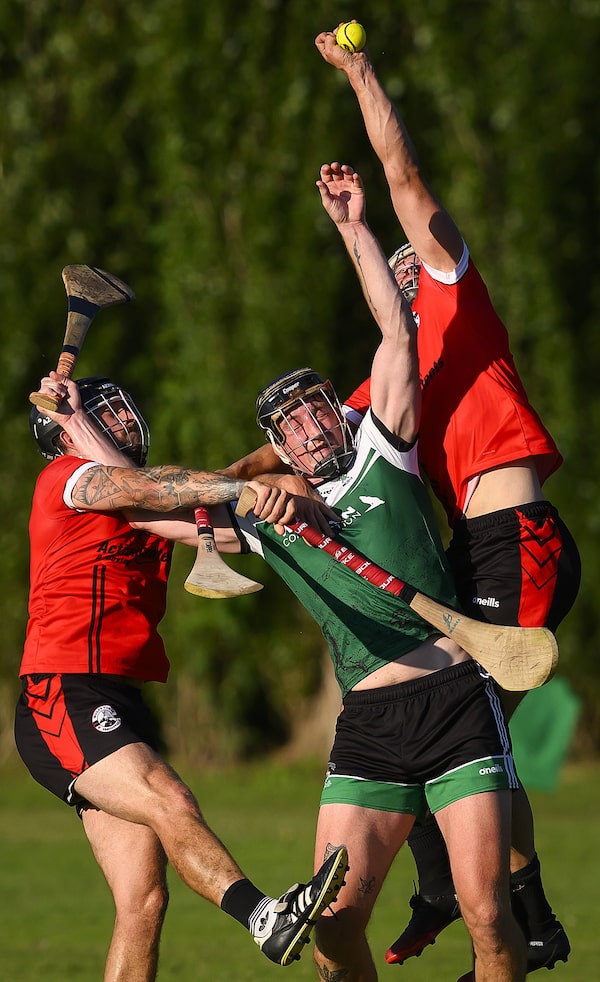
Hurling (camogie is the women’s version) is 15-a-side, played on a rectangular pitch both longer and wider than a rugby field. A sliotar (ball) can be hit distances of over 100 metres by a hurley – a wooden stick made from ash. Light but strong with a flat, curved end used to lift, control, or “poc” the ball on the ground and in the air.
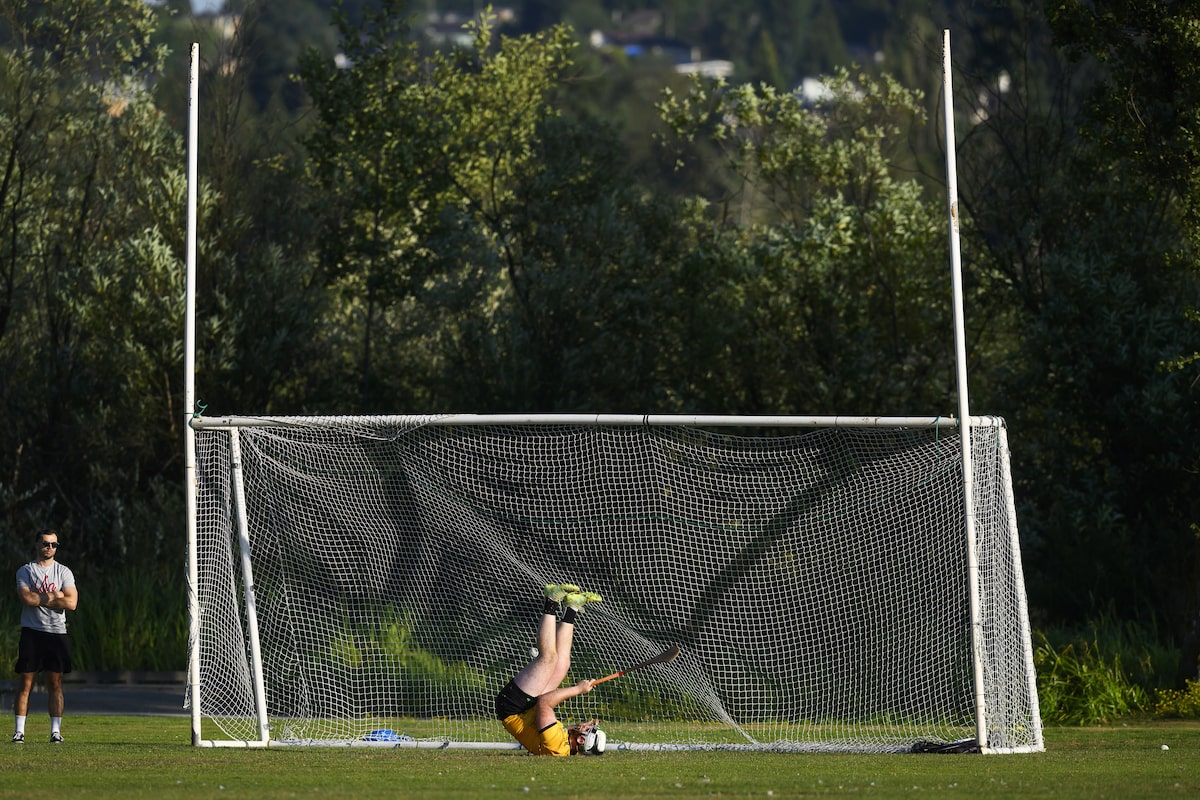
Scoring a goal equates to three points, while one point is given if the ball goes over the bar and between the H-shaped posts. Players can run with the sliotar on their hurley much like lacrosse, and take up to four steps with ball in hand before passing, shooting or clearing.
Shoulder-to-shoulder tackling is commonplace, and other than helmets there is no padding or protection. Players can run between 7-10 kilometres per match and teams often accumulate several end-to-end scores within a minute.
This all culminates in a breathtaking spectacle of all-round athleticism and skill execution at instinctive speed. In Ireland, hurlers can only represent clubs in communities where they are from or live. The highest level of hurling selects the best club players for county teams which compete in the All-Ireland championship.

Cú Chulainn is one of nine clubs in the Vancouver Gaelic Athletic Association. Since the first Vancouver hurling club emerged in 1974, the city has become a powerhouse for Gaelic sports.Jennifer Gauthier/The Globe and Mail
In the late 1700s an Irish principal named William Cochran was documented directing the boys of King’s College, Windsor, in Nova Scotia to play “ice hurley” on the long pond. It was an adaptation of the ancient game of hurling to Eastern Canada’s freezing conditions. Ice hurley soon spread as soldiers stationed at nearby Fort Edward took it up, carrying it with them to Halifax and beyond as they were reassigned to other posts along the St. Lawrence River and into the Great Lakes. This is the first documented stick-and-ball game on ice in Canada, and is cited as a precursor to modern ice hockey.
In Éamonn Ó Cualáin and Sam Kingston’s Poc na nGael documentary for Irish language station TG4, Nova Scotia historian David Carter explains: “Certain rules or aspects of the game of hurling would’ve been applied to what we referred to as ‘hurley on the ice.’ In the early days ‘puck’ of course meant hitting the ball, and it still does in Ireland, but in time the object itself became ‘the puck.’ We have photographs of sticks that look very much like hurleys. For what was more of a ground game at the time in Ireland, they also suited the ice game. You can understand how the hurley evolved into what we now know as the ice hockey stick.”
The Irish imprint on ice hockey didn’t stop there, however, as waves of Irish immigrants arrived in Canada through the 19th and early 20th centuries. In Toronto, the Maple Leafs NHL franchise began as the Toronto St. Pats, reflecting the city’s large Irish Catholic population. Montreal, too, boasted a team named the Shamrocks, which won the Stanley Cup in 1899 and 1900.
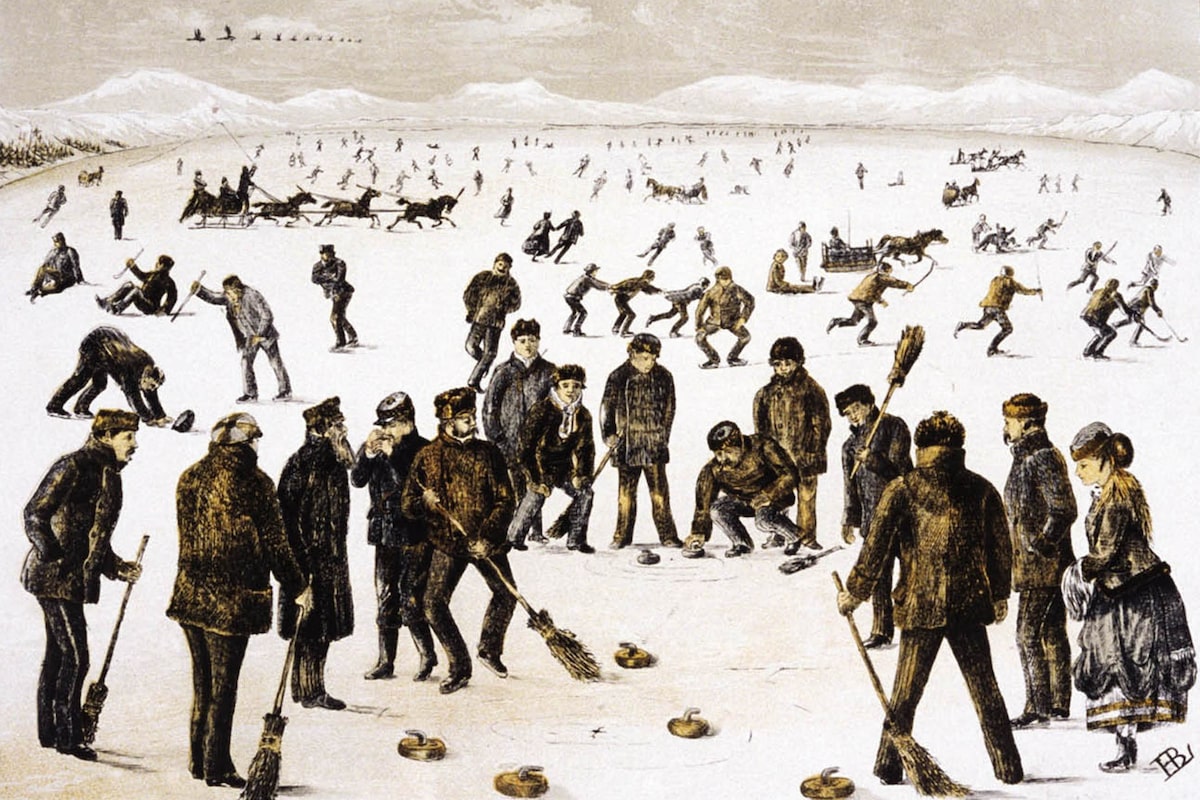
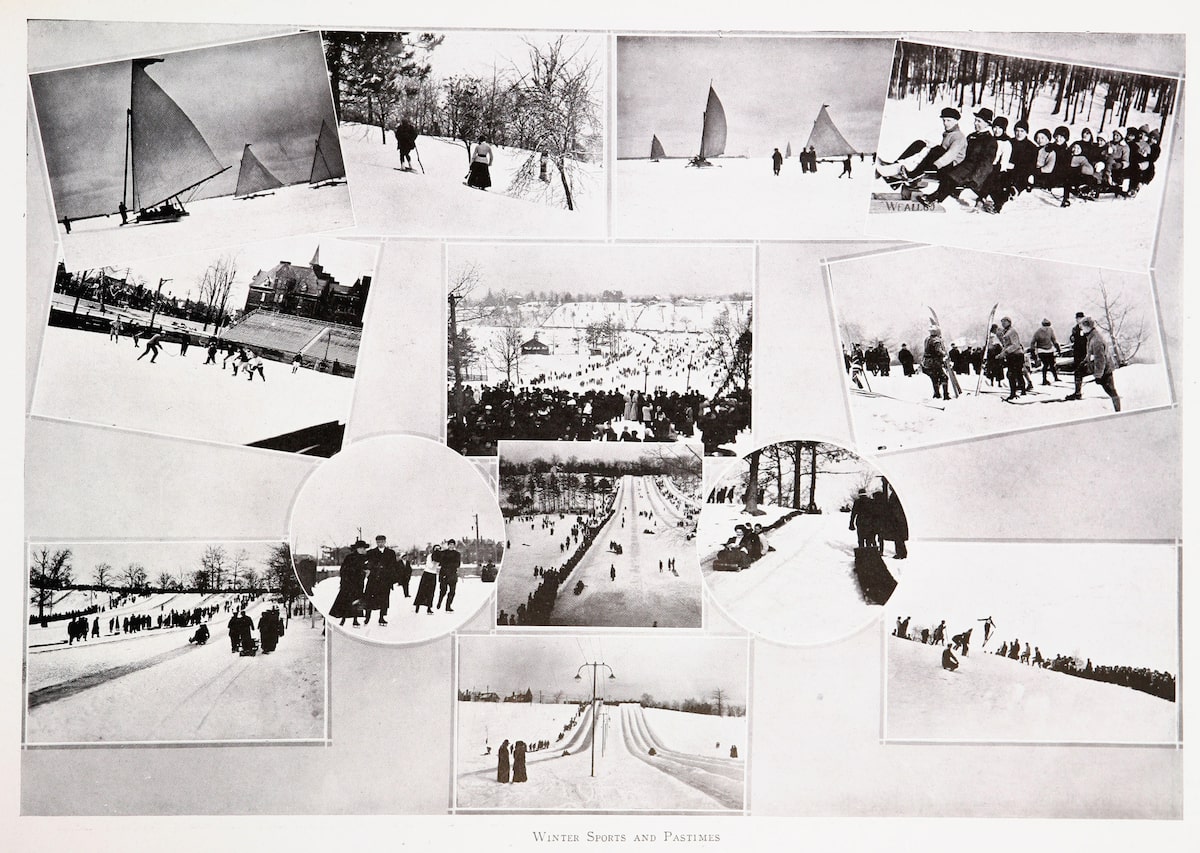
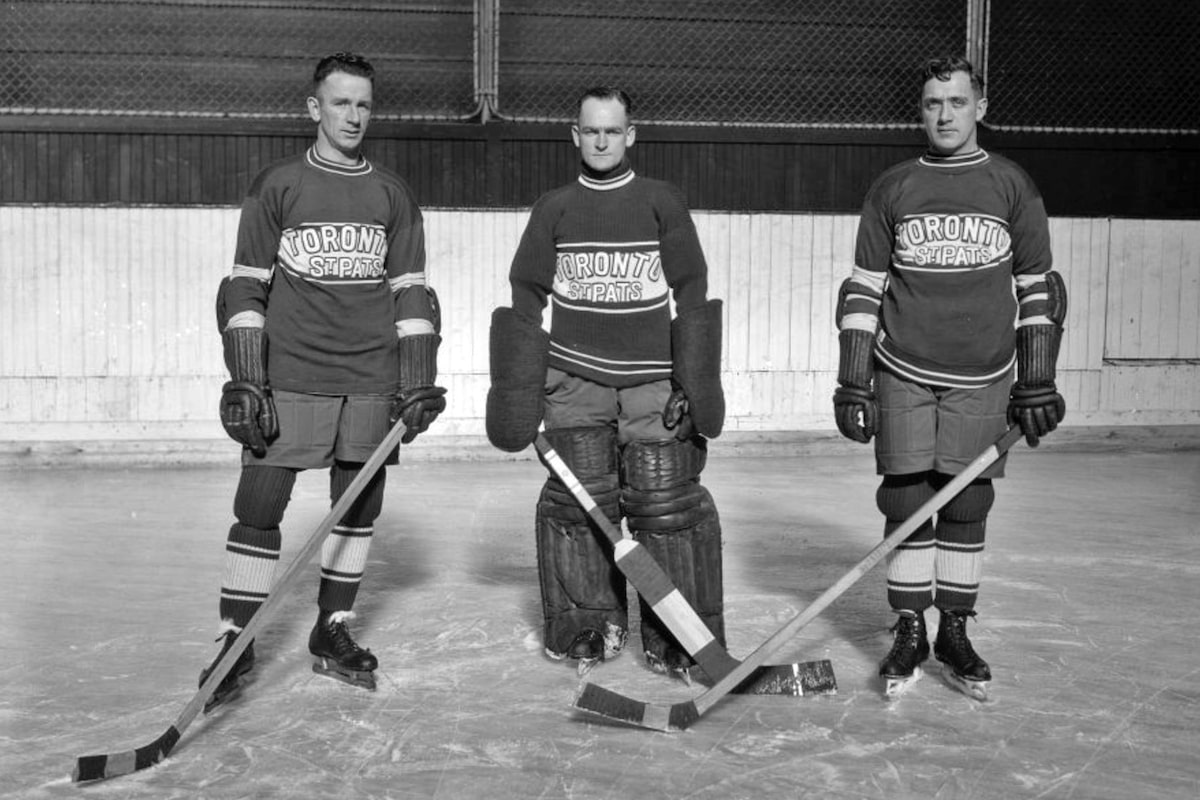
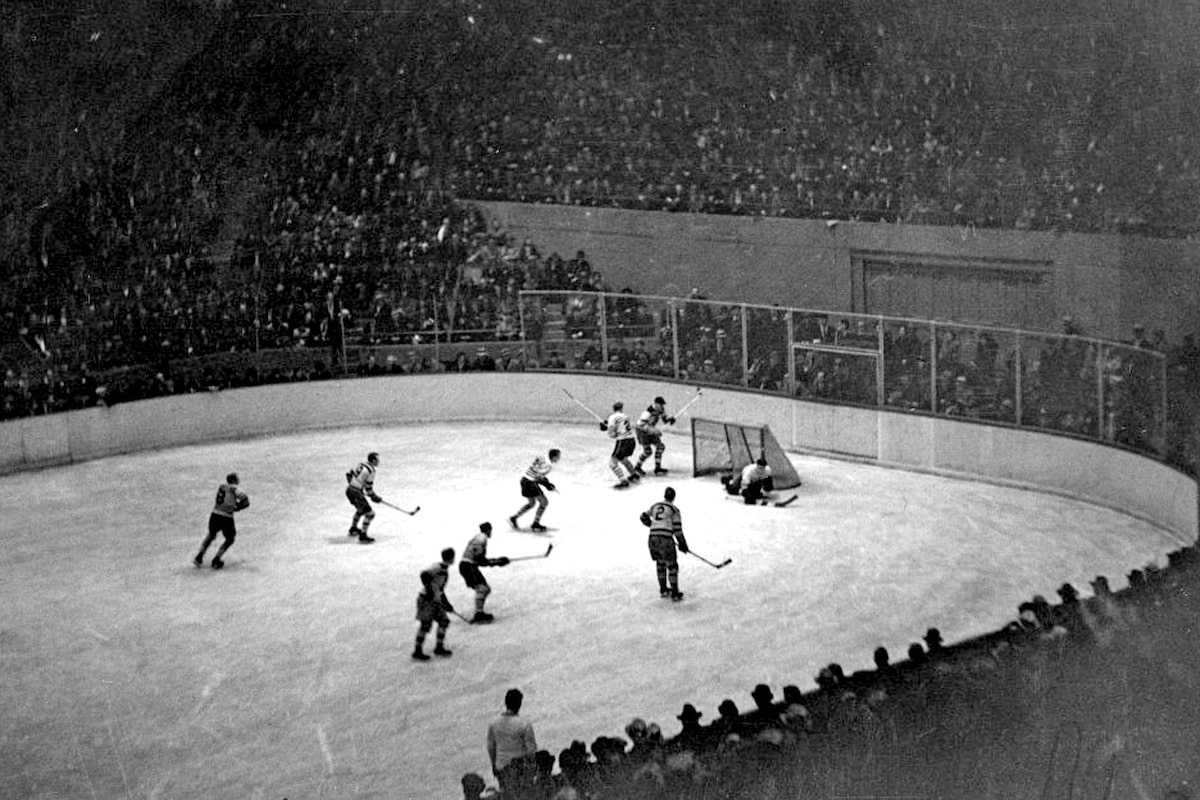
While the NHL developed into one of the world’s most lucrative sporting leagues, Ireland’s biggest sporting stars remain amateur athletes. This despite their games being consumed by global TV audiences of more than a million viewers, and over 80,000 fans attending games at the third-largest stadium in Europe, Croke Park.
Sean McGrath is a former Division One hurler with Dublin now living in Vancouver and playing for reigning Canadian champions Cú Chulainn.
“We trained and performed at an elite level in Ireland, but then woke up the next morning to study or work. At the end of the season we went back to play with our clubs and the people we grew up with,” he explained. “Those same values and that special bond exist here, and while I love the skills of the game, I also love that unique feeling of togetherness which has been re-created on the other side of the world.”
McGrath was supported by his new clubmates in setting up his Complete Physio clinic in Kitsilano last year.
“The Irish community in Canada is one of the fastest growing, most vibrant and youngest Irish diasporas anywhere in the world,” McGrath said.
“Hurling is a massive part of how we connect – we battle on the field together and we help each other succeed off it, too.”


McGrath in action against Eamonn Bracken and Mossy Skeffington of the Wolfe Tones, above, and conferring with teammate Sam Donovan. McGrath says he values the 'special bond' hurling builds on and off the field.
While in Ireland the significant revenue the sport generates is funnelled by its governing body (the Gaelic Athletic Association) back into every club and community, it has grown significantly on the global stage and is now played in more than 100 countries.
In 2025, Canada is home to an estimated 4.6 million people of Irish descent, representing about 15 per cent of the Canadian population. In a recent census almost 30,000 Canadian residents registered their place of birth as Ireland.
There are over 3,000 registered members of nearly 30 affiliated GAA clubs across Vancouver, Western Canada, Eastern Canada, and Toronto.
Last held in 2024, the Canadian Championships take place every two years. In Vancouver the annual senior hurling final was played Aug. 9, with JP Ryans beating Cú Chulainn by two points. The Toronto final throws-in on Aug. 24.
Delbert Donnelly is from Cochrane, Alta., and played three years of Junior A lacrosse and four years of NCAA D2 in Florida. He now plays hurling for JP Ryans in Vancouver.
“In lacrosse you get bruised, but don’t get your shins split open nearly as often and everyone is wearing padding so you’re swinging at guys’ hands and you’re trying to actually dislodge the ball from someone,” he said. “It took a few years to figure out the contact level in hurling, but striking is definitely the toughest thing. Also running with the ball is more challenging as you have those four steps to be aware of and everything just moves quicker.”
Alanna Budden is originally from Windsor, Ont. and lives in Toronto, where she plays with the Na Piarsaigh club. She first learned about hurling while on vacation in Ireland, buying her first hurley in county Limerick and starting her journey with the Montreal Shamrocks club while at Concordia University.
“It appealed to me instantly as I grew up playing ice hockey. Both are very physical,” she said. “My specialty was always digging in the corner for pucks and I get that same elation now when I go in a ruck for the sliotar.
“So the hand-eye co-ordination was there, being able to bounce off people, get low and anticipate where the puck or sliotar is going to go next – I think those helped me the most. I played for team Canada at the GAA World Games in 2023 and it’s been a great experience.
“In Montreal there were lots of us playing and this season with Na Piarsaigh we’ve added two more Canadians and an American. Everyone has been super welcoming and I love talking about the sport, introducing Canadians to it, and just having a stick in my hand.”

As the second teams for Cú Chulainn and the Wolf Tones take position, spectators lay back to watch.
The sporting set: More from The Globe and Mail
The Decibel podcast
Canadian Blind Hockey games sound like clanging, from the oversized pucks; tapping, as players use sticks to navigate pylons; and cheering, as teams celebrate their victories. In 2023, The Decibel and sports reporter Rachel Brady went to a game to hear from parents, players and coaches. Subscribe for more episodes.
From our sports writers
Walking soccer offers a new pace for players to enjoy the beautiful game
Northern Super League brings women’s pro soccer dreams to life in Canada
Albertan heads back to hockey after farm accident took her arm
Maven Maurer, first pro football player to come out as trans, tells her story