After more than a decade of contraction, sanctions and isolation, Venezuela’s economy is entering what could be its most consequential period in decades, as the removal of authoritarian leader Nicolás Maduro opens the door to renewed oil flows, tentative financial normalization and a cautious reawakening of investor interest.
The shift comes amid early moves by the United States to ease restrictions on Venezuelan crude oil exports, discussions around safeguarding oil revenues and growing signals from Wall Street that a long-frozen market may be inching back into play. Together, these developments have triggered a reappraisal of Venezuela’s growth prospects, albeit one riddled with political, legal and logistical uncertainty.
Under a scenario of normalization between Caracas and Washington, Venezuela could post one of the fastest growth rates in the region, economists say – largely driven by oil. “If there is a real recovery of the oil sector and sanctions are lifted, the economy could grow [annually] between 10 per cent and 15 per cent,” said economist Asdrúbal Oliveros, a consultant and researcher in Caracas. Oil output itself could expand by around 30 per cent, roughly double the pace over the past two years, he added.
Even just days into the “co-operation agenda” with Washington proclaimed by interim leader Delcy Rodríguez, some Venezuelans say they are already seeing early signs of economic relief.
“At the start of January, the [U.S.] dollar kept rising and inflation was eating away at everything,” said Adriana Buelvas, who works in logistics for an import company in Caracas, “But now the dollar [exchange rate] has come down sharply; there are at least some early hints that things could improve.”
The outlook, however, remains highly conditional.
Venezuela’s oil industry is burdened by decaying infrastructure, limited access to diluents, shipping bottlenecks and years of underinvestment. Production gains are likely to materialize gradually, over 12 to 24 months, rather than immediately.
Despite U.S. President Donald Trump having met with more than a dozen U.S. oil companies last Friday, executives are divided. Some, such as Chevron Corp., have expressed enthusiasm about expanding operations, others, including Exxon Mobil Corp., have described Venezuela as “uninvestable,” citing its weak legal framework and the deterioration of its oil industry.
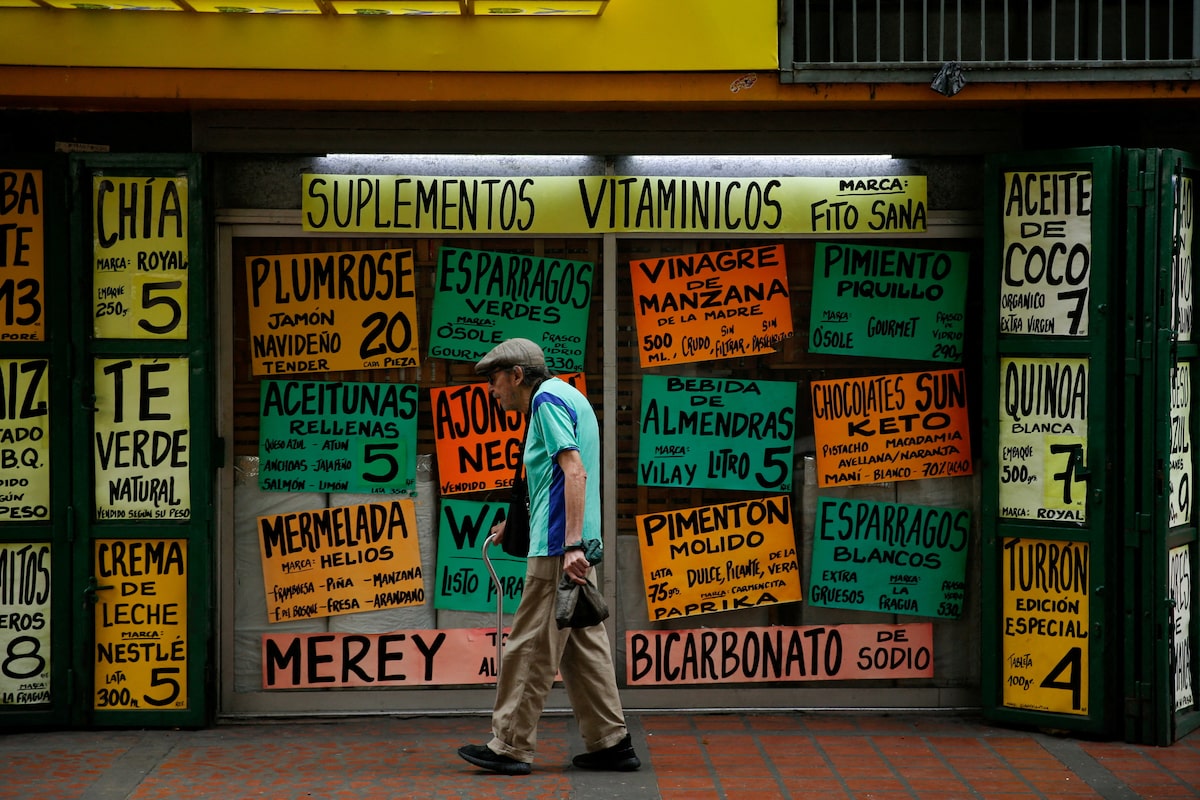
Inflation, however, remains one of the economy’s most pressing challenges. Venezuela closed 2025 with inflation near 480 per cent, according to Mr. Oliveros’ unofficial estimates. Official figures are not publicly available. In a normalization scenario, that figure could fall to around 120 per cent, he said. That would be a sharp improvement, but still among the highest in the world.
“Reducing inflation requires a monetary program, and that takes time,” he noted. Any disinflation would depend on restored oil revenues, tighter monetary discipline and renewed confidence in the financial system.

But Venezuela’s economy is “on a knife’s edge,” said Juan Nagel, a Venezuelan scholar at the University of the Andes business school. The risk of catastrophic inflation has been underappreciated, he said, pointing to Mr. Trump’s demand for 30 to 50 million barrels of Venezuelan crude, equivalent to a month or two of the country’s total output.
“The wealth of the country depends on oil flows,” Prof. Nagel said. Take that away, and “you’re basically going to have close to zero income. And the government has to keep printing local currency. That’s the recipe for hyperinflation.”
Problems that affect the financial well-being of Venezuelans have much larger consequences, too, at a moment when the U.S. is demanding large-scale shifts in how the country is managed.
A bad economy “could significantly hurt the political ability to implement any kind of change they want,” Prof. Nagel said.
More recently, inflation has also been amplified by a rapidly depreciating currency.
The instability of the bolívar, and the widening gap between official and market exchange rates, has been fuelled by uncertainty and the collapse of foreign currency supply. With the state as the dominant supplier of dollars and unable to sell foreign currency, distortions have intensified.

The bolívar currency is, like many things in Venezuela, named for the 19th-century revolutionary who defeated the Spanish empire in this part of South America.Federico PARRA/AFP via Getty Images
If oil exports normalize and agreements advance among state-owned oil firm PDVSA, foreign companies and U.S. authorities, Mr. Oliveros expects the gap to narrow.
For Venezuelans, a recovery in oil revenues would amount to a lifeline.
“It is expected that the economy will improve with the reopening of [the] oil [industry],” said José Arias, a construction worker in Caracas. “But it will only work if there is real investment and if growth goes beyond oil.”
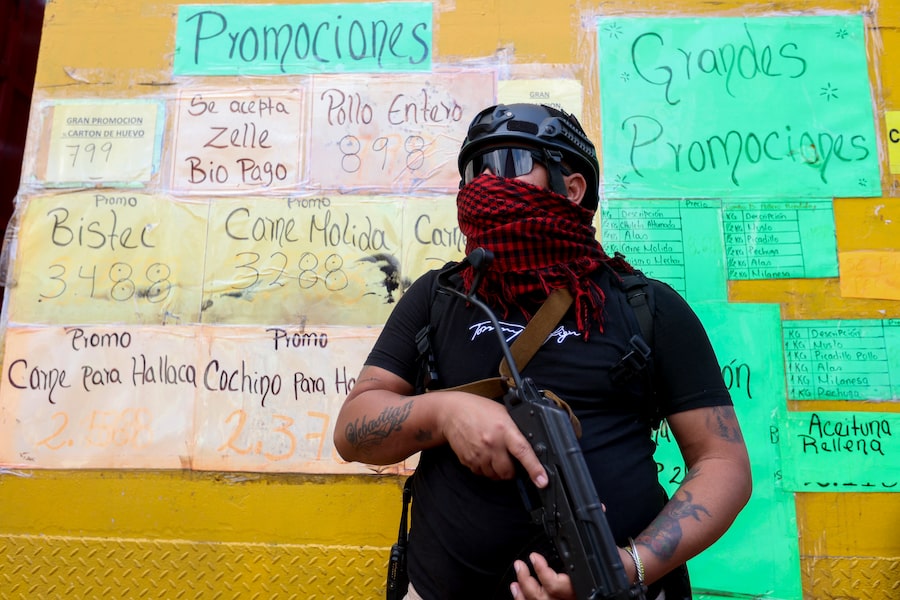
Other people are less sanguine. Immediately after Mr. Maduro’s removal, “people went out, buying like crazy,” said Fernando, a Venezuelan vendor in Cúcuta, Colombia, who sells goods to people who cross the border from Venezuela.
“Everything became more expensive,” added Nalberto, who came to Cúcuta to buy a small can of paint, which would cost less than half what it would at home. The Globe and Mail is not publishing the full names of the men, who said they fear reprisal for speaking critically.
As a result, Nalberto said, the immediate outcome of Mr. Maduro’s removal is that “everything is harder.”

Without Mr. Maduro – whose likeness is ubiquitous around Caracas – Venezuelans are getting used to the new economic reality he leaves behind.Carlos Becerra/Getty Images
In addition to the difficulties of day-to-day life, few issues loom larger than Venezuela’s external debt, which Mr. Oliveros estimates around US$168-billion once foreign settlements and different loans are included.
According to María Cristina París, a Caracas-based financial adviser, the country’s ability to restructure depends squarely on oil production and access to international financial channels.
“If production reaches two to three million barrels per day, servicing the debt becomes viable, at least under certain assumptions,” Ms. París said.
But she stressed that the debate remains unresolved: whether Venezuela should prioritize growth, debt repayment or a balance of both, particularly given the country’s humanitarian needs.
Any economic restructuring is unlikely in the immediate term. Oil revenues will not ramp up fast enough over the next three months to sustain payments.
Before negotiations can even begin, Venezuela must regain access to foreign accounts, allow creditors to assess assets abroad and define the legal framework for a restructuring, including potential debt haircuts and repayment schedules.

Still, in recent days, the Caracas Stock Exchange has seen record-breaking gains. And teams from Wall Street banks and investment funds are expected to visit Caracas to evaluate companies and sectors firsthand, exploring opportunities that extend well beyond oil.
Investors are increasingly focused on agriculture, infrastructure and human capital, sectors for which Venezuela’s needs are large, but financing requirements are modest by global standards.
This shift is already reflected in market indicators. Venezuela was reintroduced into JPMorgan’s Emerging Market Bond Index in 2023, and since early January, its country risk premium has declined, a signal of improving sentiment – even in the absence of concrete reforms.
“The market is reacting to expectations,” Ms. París said. “Not to reforms that have already happened.”
For now, Venezuela’s economic reopening remains precarious. Growth projections hinge on political stability, credible economic policy and sustained oil recovery. Inflation, currency distortions and debt overhangs continue to weigh heavily.
Yet after a decade of contraction and isolation, even cautious optimism marks a profound shift.
An oil market reopening “is clearly a positive thing because it brings cash flow,” Ms. Buelvas said, “But it won’t work miracles overnight, and if inflation doesn’t come down, we’ll stay stuck.”

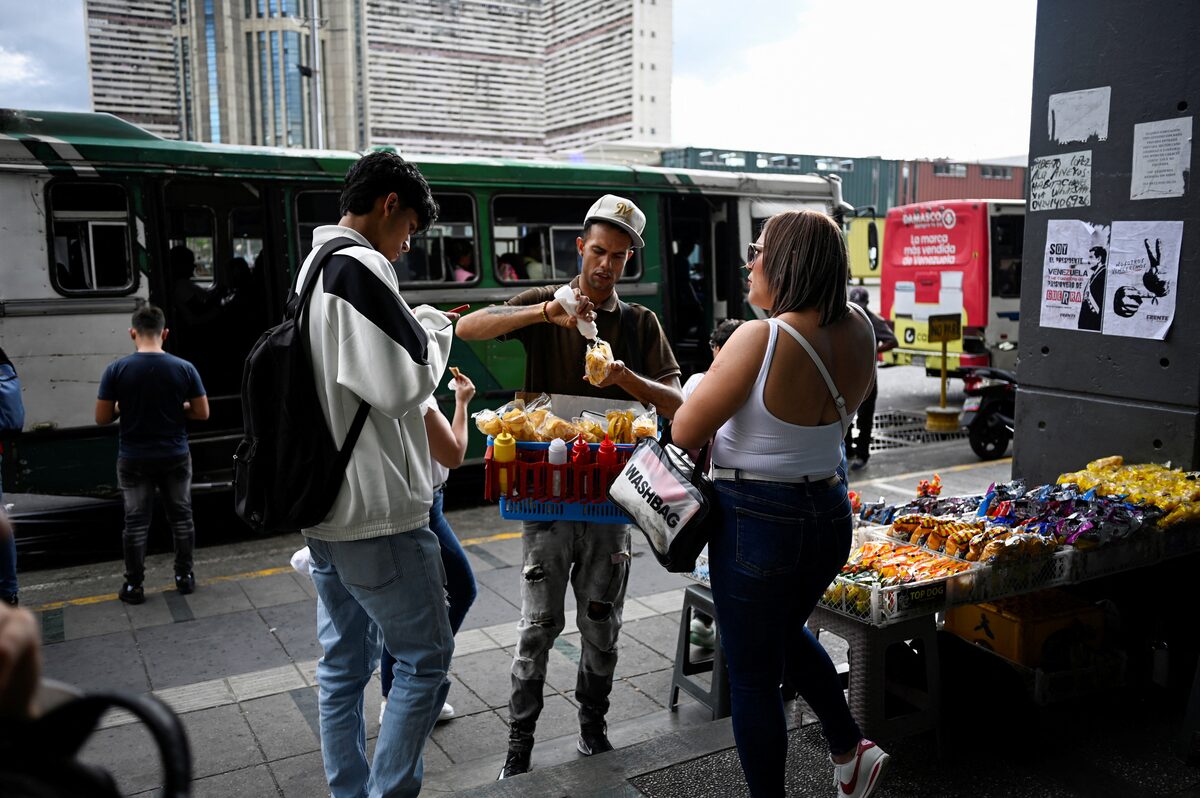
Pedro MATTEY/AFP via Getty Images
Venezuela in upheaval: More from The Globe and Mail
The Decibel podcast
Attacking Venezuela fits into a larger plan for global dominance that the Trump administration made public last year. Vincent Rigby, a former Canadian national security adviser, spoke with The Decibel about this Monroe Doctrine 2.0. Subscribe for more episodes.
Venezuela and the economics of empire
Doug Saunders: Venezuelan oil exceptionalism is dead at last
John Rapley: Venezuela attack shakes Canada’s economy far beyond oil – it’s a reckoning for the ages