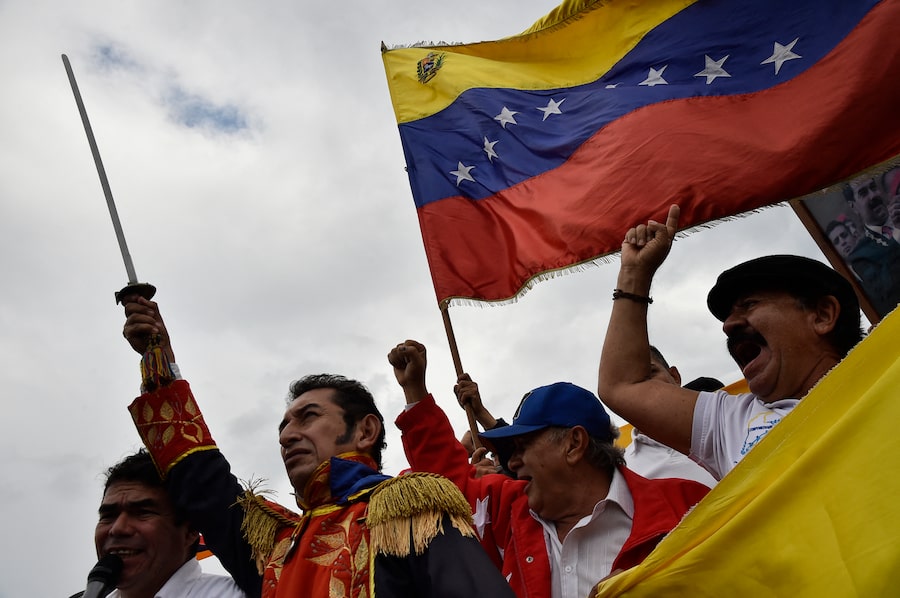
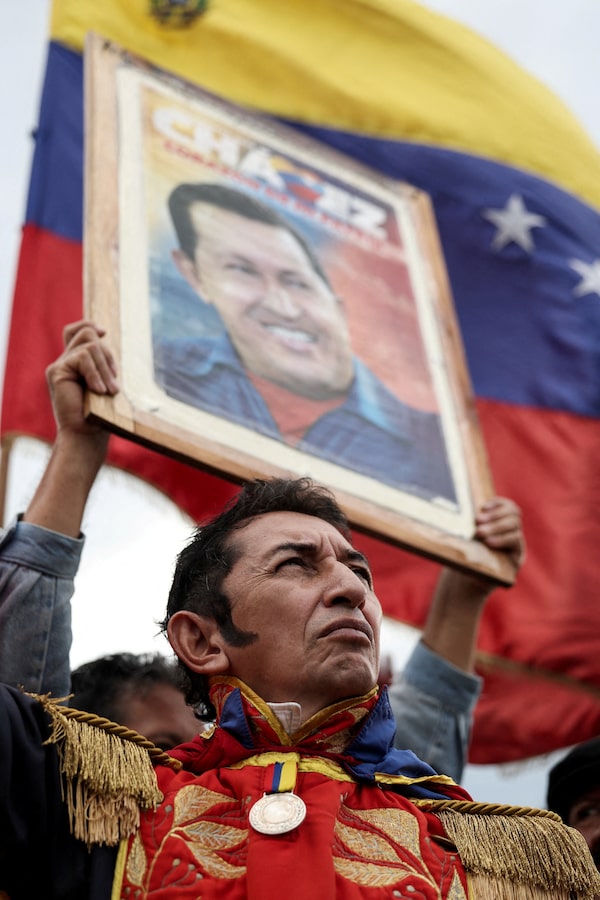
During his childhood in a frontier oil-drilling town amid the rain forests of eastern Venezuela in the 1960s, Miguel Tinker Salas witnessed firsthand what Venezuelans had long been taught: That their country was a special place, not subject to the usual rules of economics or politics.
“During my youth, and for decades after, Venezuela saw itself as an exceptional country. It looked northward; it didn’t look southward. Because of its fortune, Venezuela didn’t consider itself part of mainstream South America,” Dr. Tinker Salas, now a historian of Venezuelan politics and economics, said in an interview this week.
During decades when the rest of Latin America was struggling out of poverty, Venezuela seemed wealthy and highly developed, its big middle class claiming more ties to Miami-Dade County than to neighbouring Colombia or Brazil. While emigrants fled the poverty and violence of other South American countries, multicultural Venezuela took in hundreds of thousands of immigrants. During decades when the continent was rocked with guerrilla insurrections and far-right dictators, Venezuela enjoyed half a century of democratic stability under moderate, liberal governments. And when neighbouring countries were subject to gunboat diplomacy and Washington-imposed strongman leaders, Venezuelans quietly got along with the Yankees.
That exceptionalism sprang from the sea of low-grade crude oil beneath its territory – the largest reserve in the world, though among the hardest to extract – which provided its governments with an easy revenue stream from the 1930s onward.
Generations of Venezuelans came to believe that oil wealth was their natural gift, much as many believed it no coincidence that it was a Venezuelan, Simón Bolívar, who had liberated South American countries from their colonial masters in the early nineteenth century. Both had seemingly delivered salvation and independence that many Venezuelans came to consider their birthright.
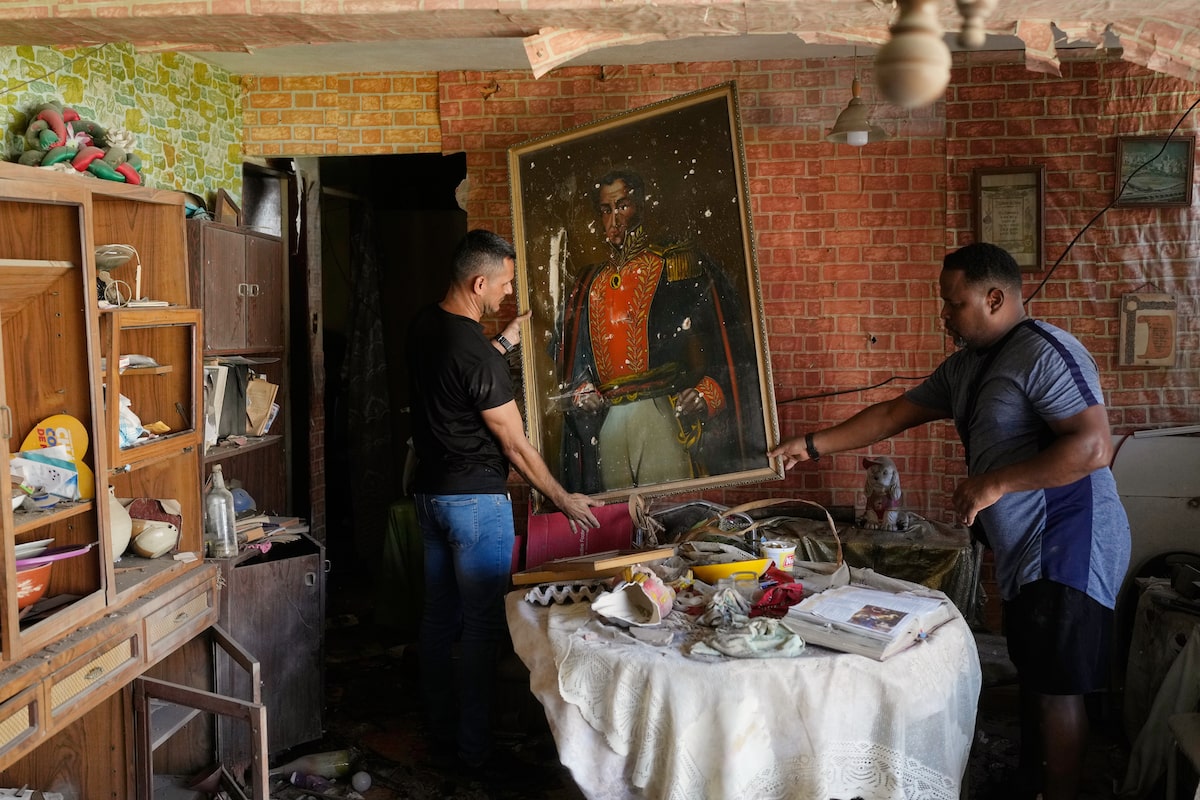
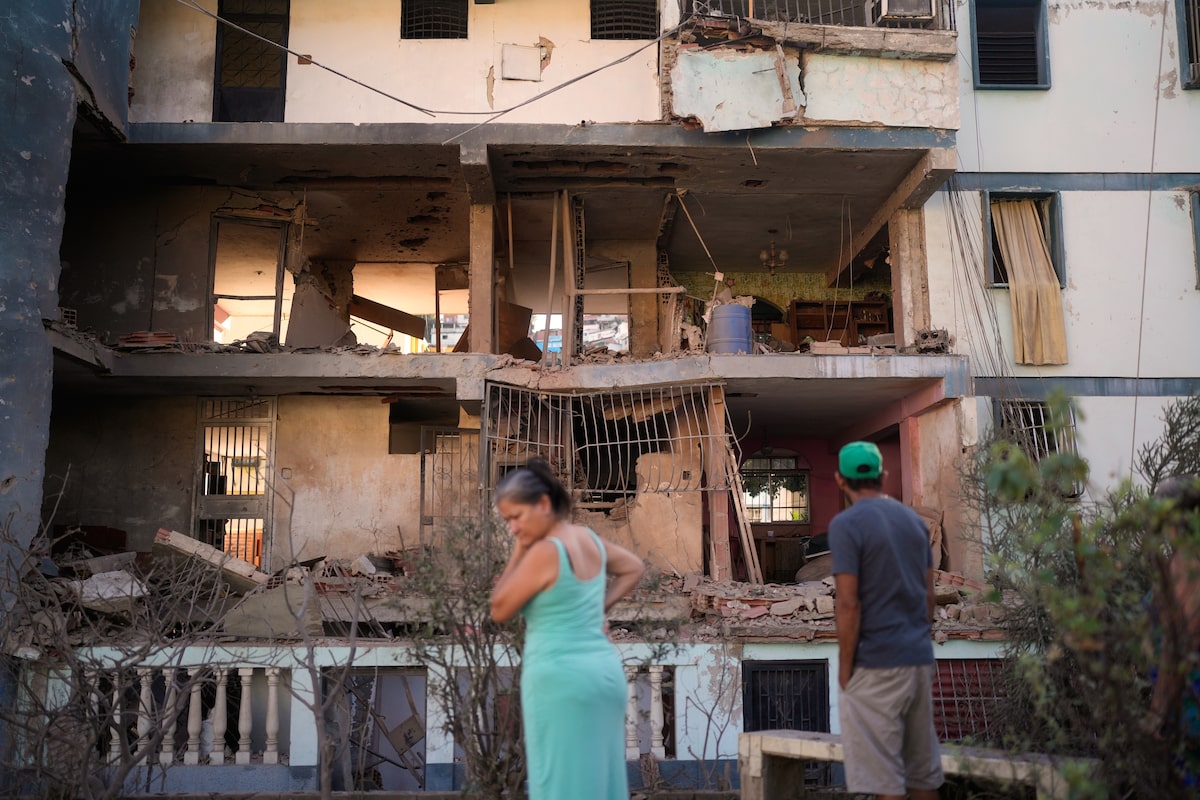

Monuments to oil are ubiquitous in Caracas, the city where Bolívar was born in the late 18th century.Javier Campos/picture alliance via Getty Images
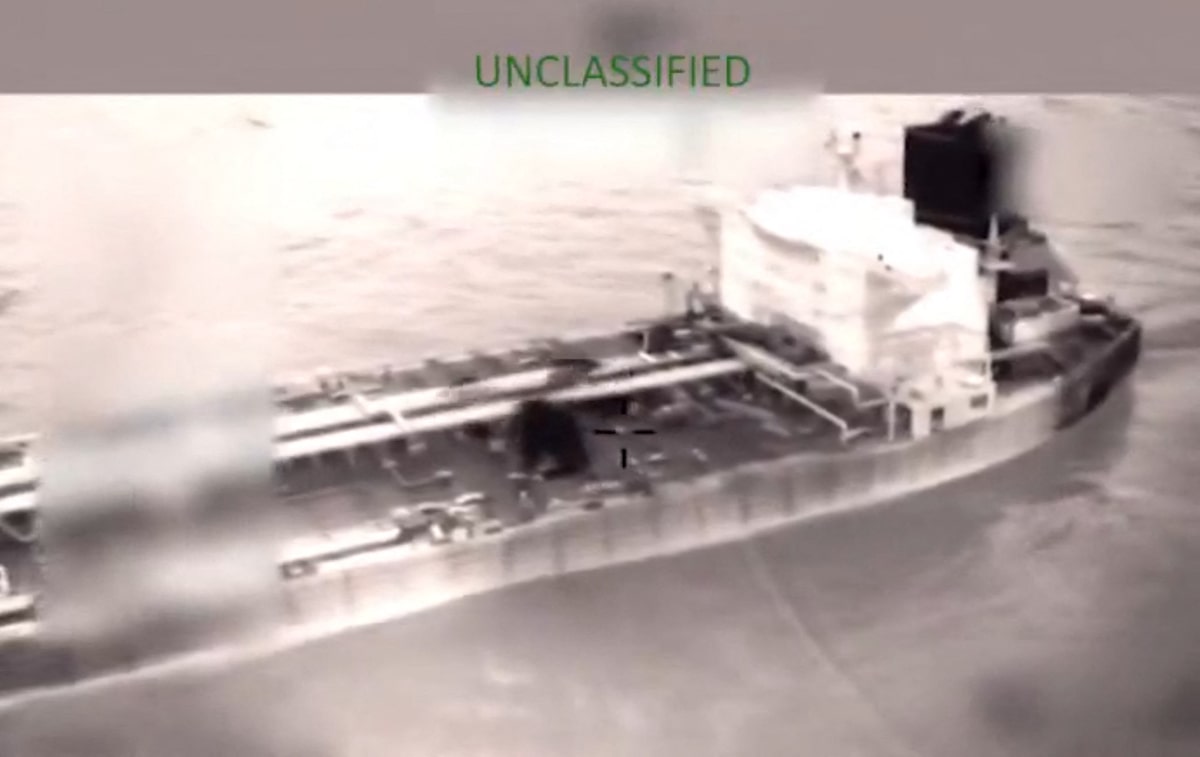
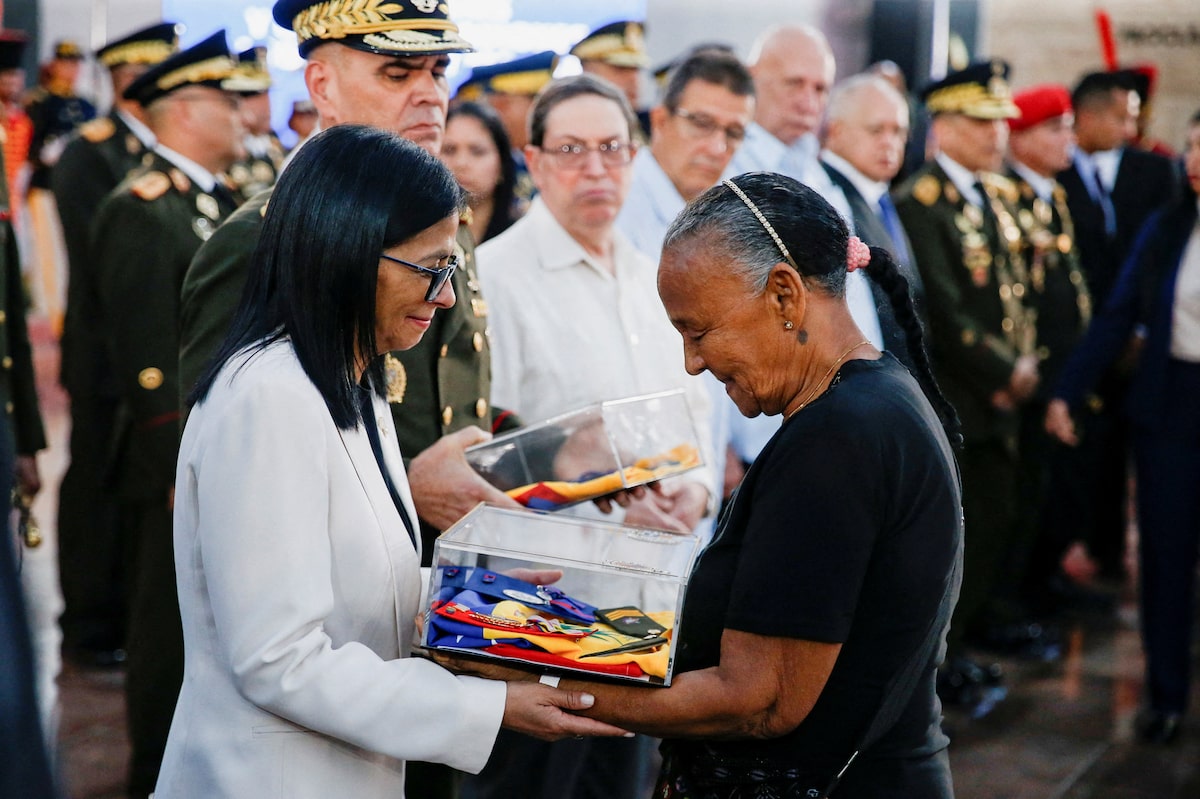
The current confrontation between U.S. President Donald Trump and Venezuela – which culminated in the Jan. 3 capture of authoritarian President Nicolas Maduro and his wife in a military raid, and the imposition of U.S. control over the country and its oil industry, while keeping Mr. Maduro’s illegitimate regime in power – is in many ways the culmination of this myth of oil-fueled exceptionalism.
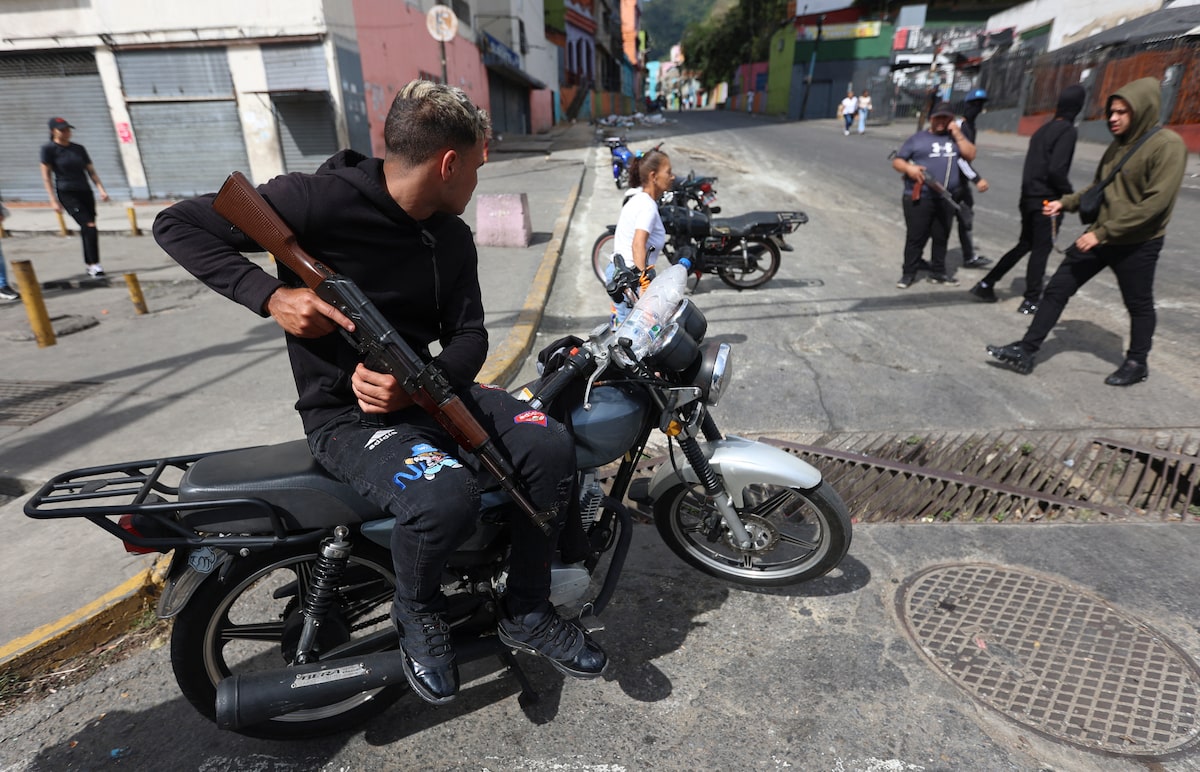
That myth suffered a catastrophic decline in the 2010s as Venezuela became an autocratic and impoverished failed state under Mr. Maduro, and the combination of starvation-level economic ruin and widespread state violence forced eight million Venezuelans to flee. But there were two places where the myth of salvation through Venezuelan heavy crude still held sway: Within President Maduro’s inner circle, and in the imagination of President Trump.
“I think the redemptive power of oil – which was very much part of the culture growing up in the 1950s and 1960s, and even the 1970s – is gone,” Dr. Tinker Salas said. “That notion – that oil would be the vehicle by which Venezuela achieved modernity, that it would become a first-world country – that idea is long gone. I don’t think people believe oil is going to save Venezuela any more.”
In fact, far from saving it, oil has failed Venezuela. That failure was visible long before Mr. Maduro’s rule. Even at Venezuela’s peak in the 1970s, when Venezuela’s oil exports were bringing in annual revenues of more than USD $3,000 per capita, it was apparent that this wealth and its effects on the currency and balance of payments had destroyed the foundation of any other major industries, such as Venezuela’s once formidable agriculture sector. It also made the livelihoods of millions highly vulnerable to oil price swings.
In 1976, in the midst of what was by most measures his country’s greatest moment, Venezuela’s former Minister of Hydrocarbons, Juan Pablo Pérez Alfonzo, made a dark and accurate prediction: “Ten years from now, twenty years from now, you will see, oil will bring us ruin,” he told U.S. scholar Terry Lynn Karl, drawing on an old Indigenous term for petroleum to make his most famous pronouncement: “We are drowning in the devil’s excrement.”

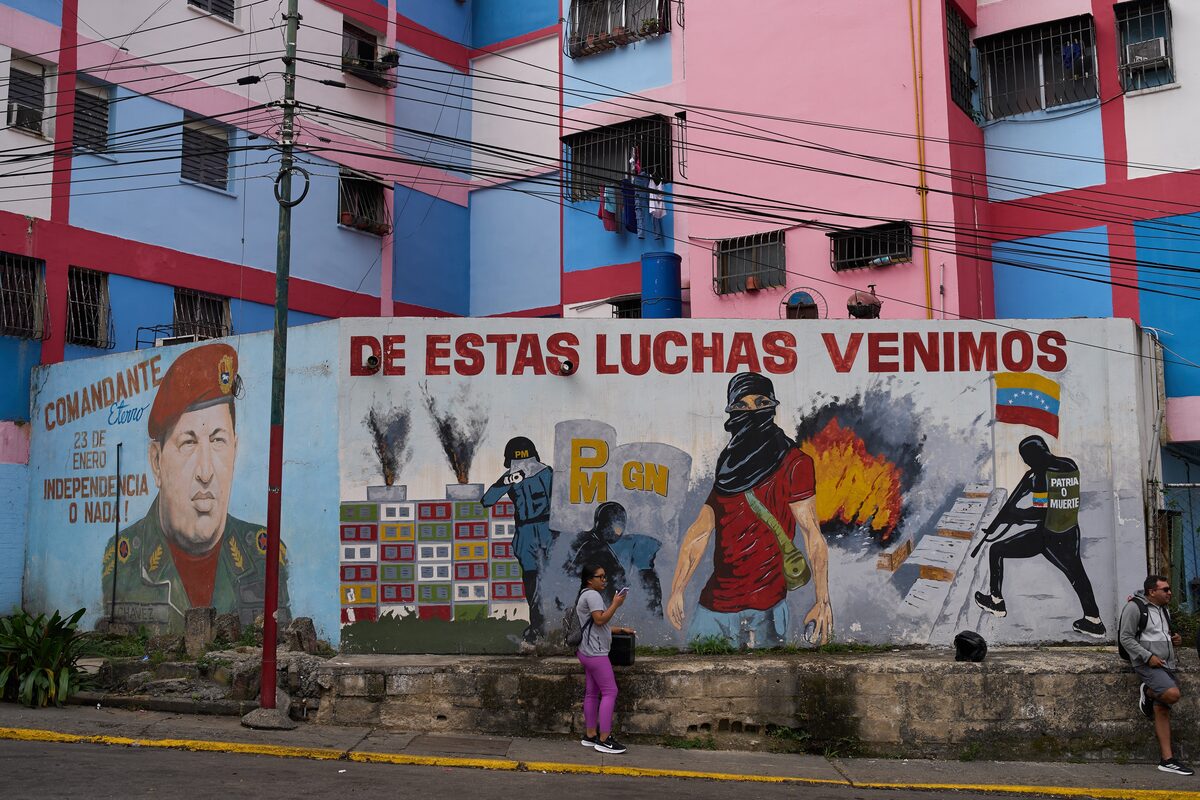
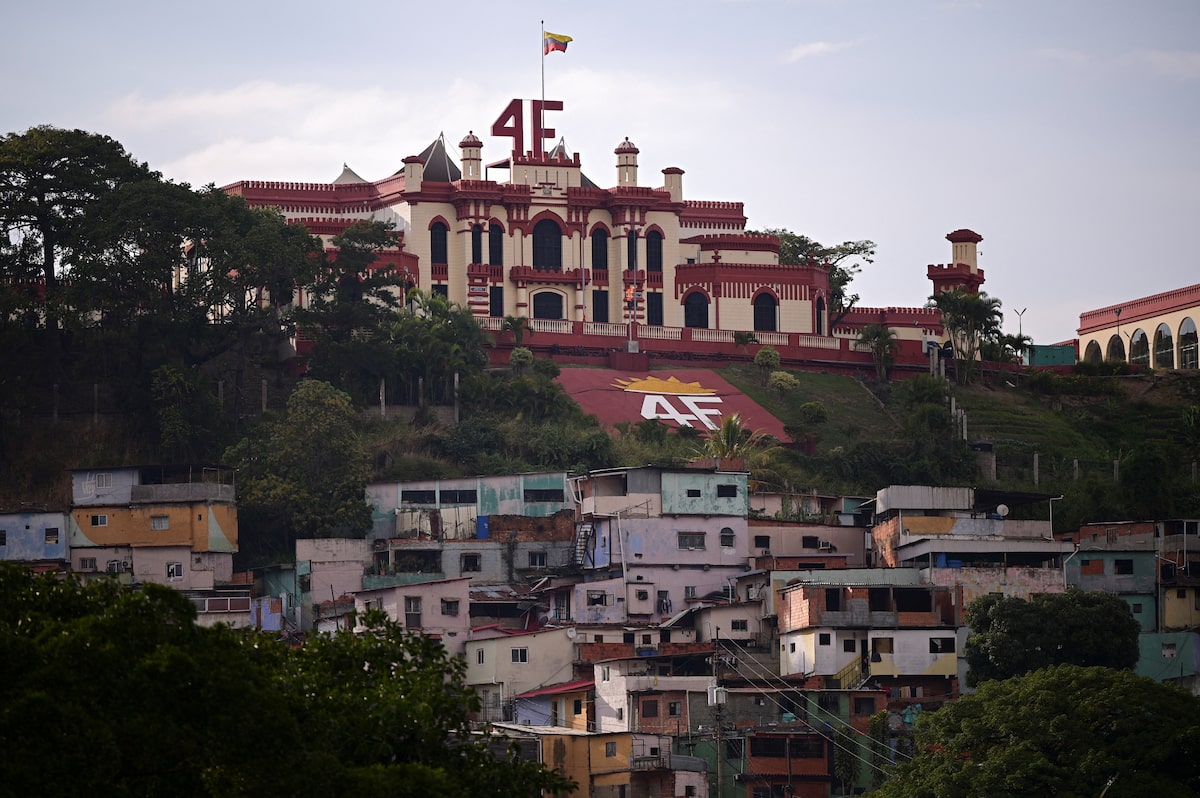
Yet it was the same Mr. Pérez Alfonzo, two decades earlier, who had given the world the modern concept of the petro-state, and effectively turned Venezuela, for a while, into its most successful exemplar.
In 1958, Venezuela became one of the first reliably democratic South American countries, ending a lengthy U.S.-backed military dictatorship. Venezuela’s major centre-left and centre-right parties signed a treaty to hold free and fair elections and honour their results, which was generally respected for the next 55 years.
The first Venezuelan president elected under this pact, the social democrat Rómulo Betancourt, set the pattern for the next half century of leaders: He secured reasonably good relations with the United States and its oil companies, and used the oil revenues to modernize the country with new infrastructure and institutions.
The next year, U.S. President Dwight Eisenhower, fearing that his country’s dependence on foreign oil was a security threat, imposed the Mandatory Oil Import Program, designed to ensure that most U.S. fuel was sourced domestically or from Canada or Mexico. Venezuela, at that time the largest oil exporter after the United States, was the main victim of the program.
In 1960, Mr. Pérez responded by inviting the leaders of Saudi Arabia, Kuwait, Iraq and Iran to Caracas to sign on to his new idea: The Organization of Petroleum Exporting Countries, an international cartel to control supply of crude oil.
A decade later, OPEC would rapidly quadruple worldwide oil prices, creating the 1970s oil crisis, serious inflation in many countries – and a time of staggering riches for Venezuelan governments.

OPEC was a year old when the Kennedys visited this agrarian settlement in La Morita, Venezuela, in 1961. Their host was Rómulo Betancourt, a reformer who helped usher in Venezuela’s long era of democracy.IMAGO/piemags via Reuters


OPEC set up its headquarters in Vienna. Austria has never been a member state, so when the 1973 oil crisis hit, Viennese queued for gas just as millions did across the West.Heinz-Peter Bader/Reuters; Bridgeman Images via Reuters Connect
The country’s annual revenues tripled overnight, and those governments made the fatal error of assuming that this windfall would be permanent.
They poured money into the economy, driving up the currency; instead of investing in refineries and research and development, they created hundreds of state-owned companies run by cronies, none of them profitable. Venezuela still relied on imports for much of its refined gasoline, and subsidized fuel prices so Venezuelans paid only a penny a litre at the pump. The country’s vast arable lands remained mostly undeveloped. Oil revenues provided the majority of government income.
In 1976, the oil industry was nationalized to create the monolithic state firm PDVSA, which remained dependent on U.S. companies for many extraction operations, and encountered many of the problems of big state monopolies: Corruption was estimated to have siphoned off billions.
“Venezuela became a different country when it discovered crude. The agricultural nation became a petro-state,” writes Raul Gallegos, an energy-industry analyst. “Venezuelans became accustomed to generous governments and quick riches. People’s ideology, their habits, even their tastes changed.”
In the 1980s, as oil prices slumped and borrowing costs rose, Venezuelan governments maintained their spending levels and ran up huge debts.
Only in 1989, facing a default, did long-serving President Carlos Andrés Pérez institute reforms – including a doubling of gasoline prices and a steep hike in public-transit fares. These provoked six days of brutal riots known as the Caracazo, seen by many as a turning point in Venezuelan democracy. Four years later, President Andrés was impeached for corruption.


The 1989 protests known as the 'Caracazo,' and the corruption trial of president Carlos Andrés Pérez, brought disenchantment with democracy in Venezuela.AP; Bertrand Parres/AFP via Getty Images/AFP / Getty Images
The dark and disillusioned political environment of the 1990s created an opening for revolutionary politics. Lieutenant Colonel Hugo Chávez made his first bid for power with an unsuccessful coup in 1992, then won the presidency in the 1998 election. His “Bolivarian Revolution” – which created a cult of personality casting him as the political heir to Simón Bolívar – promised innovative social programs, health care institutions and housing for the millions in poverty, at least if they were members of his party.
But the Chavistas weren’t a break from the Venezuelan myth of oil-fueled exceptionalism – rather, they were its apotheosis.
“Chávez increased the dependence on oil in ways we had not imagined,” says Dr. Tinker Salas. “He helped promote the certification of Venezuela as having the largest oil reserves in the world. He was the one who said that, with oil profits, you could have expansive social programs – medicine, housing, eye surgeries, and so on. He bought into that process, into that belief. So he was as much a product of it as anyone else.”
The oil industry was already nationalized. Mr. Chávez went a step further, turning the PDVSA into an effective branch of his party. He crushed the oil workers’ union and fired thousands of employees and managers, replacing them with party loyalists who didn’t necessarily have technical skills. (Though at least one U.S. company, Chevron, continued to operate in Venezuela). Facilities deteriorated, driving down output. And then, after 2008, oil prices sank – particularly bad news for Venezuela, whose extra-heavy crude, similar to Alberta oil sands, is only profitable to extract at higher prices.

The government of Hugo Chávez would rely heavily on income from Venezuelan oil fields, like this one he visited in Anzoategui in 2006.The Associated Press
By the time Mr. Chávez died in 2013 and his minister Nicolas Maduro took his place, Venezuela’s economy had entered a death spiral. Oil revenues continued to stagnate; this meant key industries, which had been nationalized by Mr. Chávez in the 2000s, didn’t have public funds to operate. Public debt mounted, a monetary crisis leading to a rapid devaluation of the currency and out-of-control inflation; Mr. Maduro responded with price controls which led to goods shortages and mass nationwide riots in 2014. Mounting public debt led to a default in 2017 and further riots.
In 2018, Mr. Maduro’s government barred most opposition figures from running in the national election; in 2024, they ignored what United Nations observers said was a two-thirds majority victory by the opposition. The U.S., Canada and the European Union began applying sanctions in 2015, and Washington had trade embargoes on Venezuelan oil during part of the decade, which were only partially compensated with sales to China and Russia.
Ironically, it was only during this period of economic collapse and isolation in the 2010s that secondary industries, especially agriculture, began to develop in Venezuela. For the first time since 1935, Venezuela is no longer a net importer of food – though food shortages and malnutrition have become chronic. The inability of Venezuelans to feed themselves and make a living, combined with threats of violence and repression from Mr. Maduro’s regime, provoked a mass exodus of citizens, beginning with middle-class Venezuelans around 2015 and now encompassing more than a quarter of the population – and there are new fears that Mr. Trump’s military action and support for the Chavista regime will provoke further departures.
With President Trump’s Jan. 3 military strike and announcement that America will “run” the country, Venezuela suddenly ceased to be the Latin American exception. It has now faced what most other South and Central American countries have at least once in their history: A direct takeover by the United States.
And Mr. Trump’s demand this week that Venezuela “turn over” 30 to 50 million barrels of oil to the United States – reportedly at market price – marked a symbolic end to the myth of petroleum salvation, the end of the oil-soaked pathway to modernity. That demand was presented as a sort of bounty, but in fact is what every Venezuelan leader has sought – a return to sales of petroleum to the United States. Only this time, unlike in 1960, nobody in Venezuela really believes it will lead to a middle-class economy.
Today Venezuela accounts for only 1 per cent of world oil exports. Analysts say that could double in a couple years if technology and trade relations return to their norms – still only creating a fraction of Venezuela’s twentieth-century revenues. And most industry voices say that a second doubling would take a decade or more and many billions in investments – the sort of long-term play that hardly anyone wants to take on, given deep uncertainty about future petroleum demand, never mind about the future stability of Venezuela.
There is still hope among many of the eight million exiled citizens that Venezuela will once again be a good and safe place to live. Another restoration of democracy, like the one in 1958, is certainly possible in coming years. But it won’t be oil riches that bring anyone back. That story, of a pot of black gold beneath the jungle, has now been relegated to the fevered imagination of Donald Trump.

Esteban Felix/The Associated Press
What questions do you have about the news in Venezuela?
On Jan. 3, United States forces captured Venezuelan President Nicolás Maduro and his wife in an early morning raid that included attacks on the capital city of Caracas. Washington says key figures in the old autocratic regime will "run" Venezuela on its behalf, and has threatened other countries if they challenge its hegemony over the Western Hemisphere. Do you have questions about the situation in Venezuela and its impact on Canada? Submit your questions in the box below.
Eyes on Latin America: More from The Globe and Mail
The Decibel podcast
Attacking Venezuela fits into a larger U.S. plan to dominate the world, militarily and economically, that they made public last year. Vincent Rigby, a former Canadian national security adviser, spoke with The Decibel about this Monroe Doctrine 2.0. Subscribe for more episodes.
From our correspondents
Venezuelans and Colombians in Bogotá tackle three big questions on their post-Maduro future
Trump’s aim to dominate Venezuela’s economy could put U.S. in conflict with China
David Shribman: What the raid on Venezuela teaches us about the Trump administration