Few figures did more to build modern Canada than William Van Horne. The irrepressible railroad executive drove the laying of the ribbons of steel that brought commerce and settlement to the West, sealing British Columbia’s membership in Confederation and knitting the country together from coast to coast.
As a leader of the Canadian Pacific Railway company, Mr. Van Horne connected citizens of the new country together in ways many had considered impossible, delivering transportation and telegraph communication across thousands of kilometres. Doubt hung so heavily over the project that at one point Ottawa offered B.C. a wagon road instead. Alexander Mackenzie, the country’s second prime minister, had predicted the line would take more than a decade to build, even “with all the power of men and all the money of the Empire.”
After Mr. Van Horne was brought in, he completed it in 46 months.

William Van Horne was born in America, but spent much of his life and career in Canada, famously overseeing the construction of Canada's first transcontinental railway.W.A. Cooper/Library and Archives Canada/PA-182603
He then nurtured a new Prairie bread basket into life, promoting the use of Red Fife wheat. He named Vancouver. He pioneered attractions for people to see for themselves in the far-flung mountains and oceans of a nascent country. He opened new frontiers of trade, too, through steamships that traversed the Pacific.
For his contributions, the cigar-smoking Mr. Van Horne was given honorary knighthood, his name still affixed to schools and streets.
But Mr. Van Horne was not, by birth, a Canadian.
His ancestors were among the first Dutch to settle New Amsterdam, now New York. His father was an Illinois lawyer acquainted with Abraham Lincoln. Mr. Van Horne built his railroad expertise in the U.S. Midwest. When he was brought north to work for Canadian Pacific, he was jeered as an “alien.”

Sir Donald A. Smith drives at the final spike at Craigellachie, B.C., on Nov. 7, 1885, completing the CPR transcontinental rail line, as Mr. Van Horne looks on.CPR Archives/NS1960/The Canadian Press
He built the transcontinental railroad alongside a team of lieutenants he had brought with him from the U.S. and hired a Minnesota contractor to build the line across the Prairies. One of the toughest stretches of the route through the mountains of B.C., Rogers Pass, is named after the American engineer who surveyed it.
The railroad was the filament that bound Canada together. But even the idea to connect the St. Lawrence to Burrard Inlet owed at least some debt to Americans, who in the mid-19th century had proposed a series of their own continent-spanning lines.
“The Canadian people, though few in number and poor in all but undeveloped natural resources, were stirred by ambition to emulate their powerful neighbours,” Walter Vaughan, a lawyer for the CPR, wrote in a 1920 biography of Mr. Van Horne.
More than neighbours
We Canadians like to define ourselves as not American.
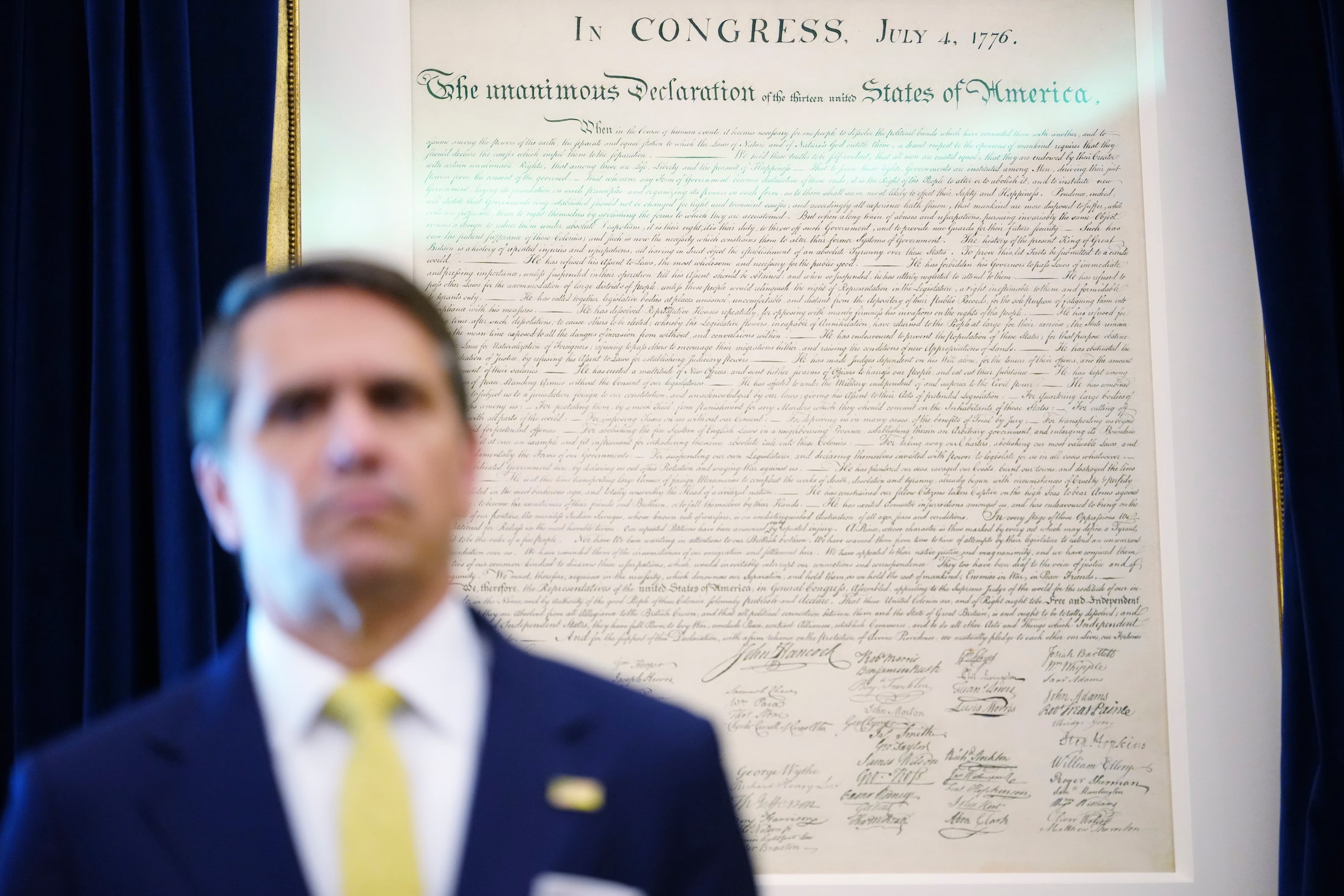
But the United States of America, over the quarter-millennium in which it has transformed from revolutionary society to superpower, has often been more than a neighbour and ally. It has been a co-author of Canada, its people and pivotal historic moments also formative north of the 49th parallel. The battles for independence that gave birth to America also, over the course of time, helped bring Canada into being.
“Canada, like the U.S., was a product of the American Revolution,” said Colin Coates, a York University professor of Canadian studies and history. “Canada is the result of all the parts of British North America that refused, for different reasons, to join the newly independent U.S.”
As the U.S. marks the 250th anniversary of its independence, it’s worth considering some of the ways it has shaped this country, too. Our railroads owe something to the Americans. Our oil sands do, too, as do some our most beloved songwriters. Independence Day has always lit up U.S. skies. But Canada also has much to celebrate.

A map of the Province of Canada by royal cartographer James Wyld. Britain united Upper and Lower Canada (parts of modern day Ontario and Quebec) into the single, fractious 'Province of Canada' in 1841.Supplied
Canada, floundering
Canada during the mid-19th century was a fragile place, an idea in danger of failing. In 1841, Britain united Upper and Lower Canada − roughly, Ontario and Quebec − into the single Province of Canada, which struggled to find common cause. Its people were cleaved by language, its politics fractious. For years the entire machinery of government was regularly transported between two different capitals. One government fell after just two days.
In 1858, Sir Edmund Head, the governor-general of British North America, proposed something extraordinary. He wanted to begin talks to establish “the principles on which a bond of a federal character” could be made, one that could bring together all the provinces of what would become this country.

Sir Edmund Walker Head, governor-general of the Province of Canada from 1854-61, helped lay the groundwork for modern Canada with his support for Confederation.George Theodore Berthon, circa 1884/Supplied
In part, the Canadians were wary of the Americans, whose Continental Army had briefly occupied Montreal in 1775 and who, citing a list of grievances that some historians believe served as cover for American expansionism, attacked again in 1812.
Those events “had bred in the British colonies the unshakeable conviction that the United States was the one real threat to their survival on the North American continent,” Canadian historian Donald Creighton noted in a 1958 speech. Indeed, “at every moment of trouble in British North America, on every occasion of dispute between the United Kingdom and the United States, the threat of American intervention or American attack returned.”
Sir Edmund’s proposal did not lead directly to Confederation.
But the continent was about to be bloodied by the U.S. Civil War, which did not merely pit Americans against each other. It battered U.S. relations with the United Kingdom, acrimony that at times threatened to bring British North America into the war.
“There was pressure on Lincoln at one point to invade Canada,” said Donald Wright, who chairs the historical studies program at the University of New Brunswick.
Lincoln’s response: One war at a time. But “he didn’t say no,” Prof. Wright said.
In 1864, Confederate soldiers even attacked Vermont from the Province of Canada. The Americans mulled tearing up a treaty limiting naval armament on the Great Lakes. Canadian political leaders feared that lingering American resentments with their old colonial masters would, at the conclusion of the Civil War, kindle a desire to ”look north and rid North America of Great Britain,” Prof. Wright said.
The war did not ”cause Confederation,” he noted. That idea had long roots.
But it made clear to both Canadians and British alike that “it was not enough to do a little constitutional tinkering and make a few budget cuts,” Mr. Creighton noted. “They had to build a nation.”
True friends
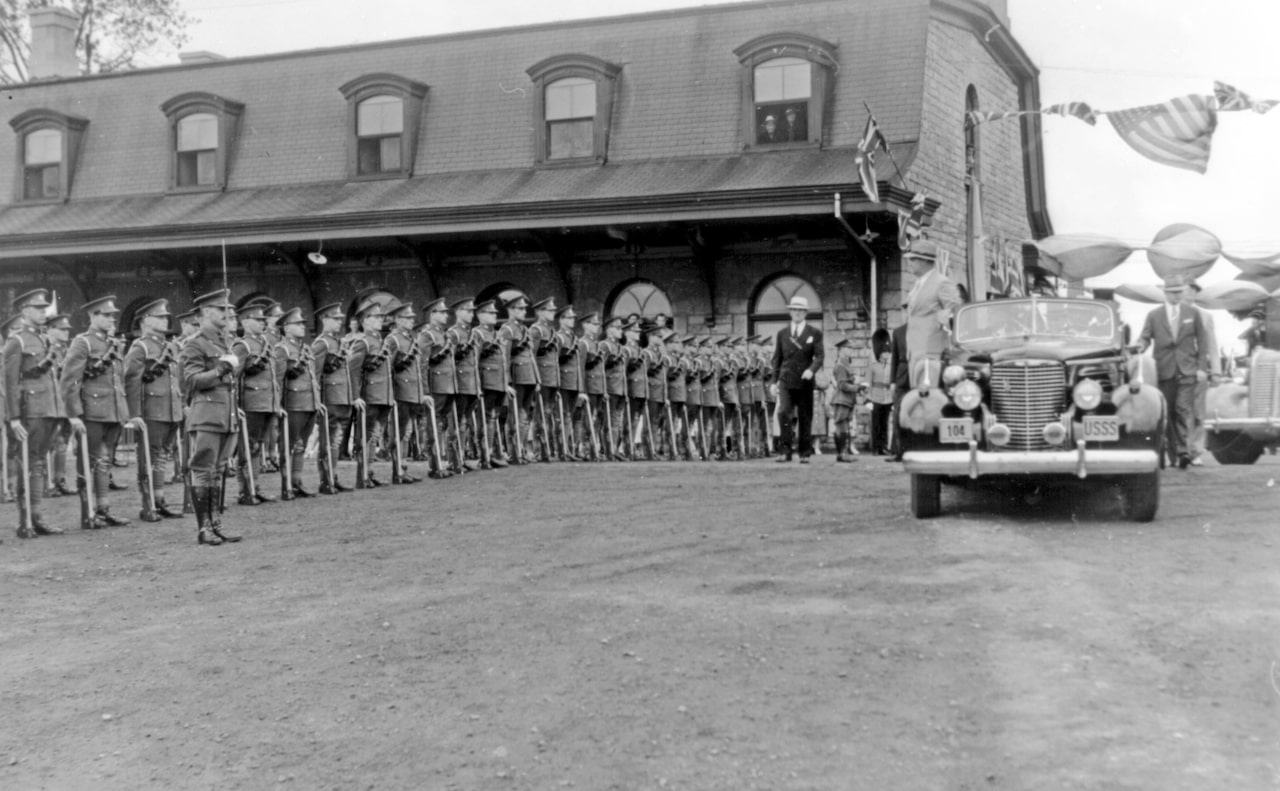
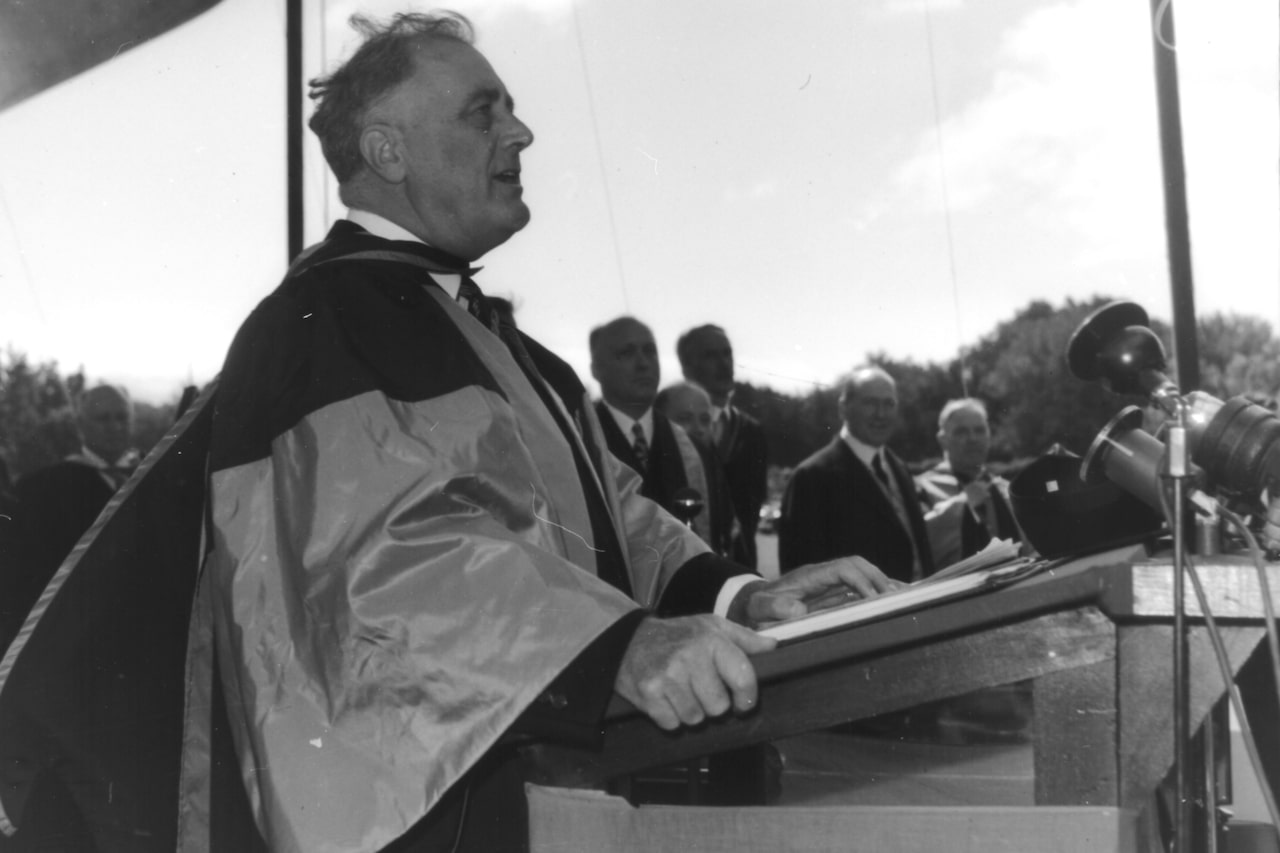
In August, 1938, as the clouds of war gathered over Europe, U.S. President Franklin D. Roosevelt, in an address at Queen’s University in Kingston, promised that Canada would not stand alone no matter what the coming years would bring.
“I give to you assurance that the people of the United States will not stand idly by if domination of Canadian soil is threatened by any other Empire,” he said.
“We as good neighbours are true friends.”

Prime Minister William Lyon Mackenzie King and U.S. President Franklin D. Roosevelt in 1938.The Canadian Press
The 1938 speech marked the beginning of what would become a closely interwoven defence relationship throughout the Second World War, which included the construction of the Alaska highway, a northern oil pipeline, new communication lines and a raft of other joint military measures. The benefits to Canada would accrue for decades.
The U.S. feared that a weak Canada could allow foreign adversaries to threaten its own soil. For Canada, meanwhile, the assurance of U.S. military protection freed Ottawa to devote resources to the defence of Great Britain.

Construction on the Alaska Highway at Kluane Lake, Yukon. As a result of the strong defence relationship between the two countries throughout WWII, the road through the Canadian wilderness was built to link Alaska with the rest of the mainland U.S.The Globe and Mail
But Roosevelt also saved Canada from a crippling economic blow. The British war effort relied on vast quantities of supplies from Canada − more than the British could afford. They turned to buying on credit, leaving Canada with a shortfall of the hard currency it in turn needed to pay for goods it was importing from the U.S. The situation threatened a financial crisis.
Roosevelt, on the urging of Prime Minister William Lyon Mackenzie King, agreed to solve the problem with a unique arrangement. The U.S. would bring Canada into its lend-lease arrangement with the U.K., allowing American components for goods destined for Britain to flow north and be put on its war tab rather than demanding immediate payment. That relieved Canadian cash obligations and kept Canadian industry working. It was an early form of economic integration, one that buoyed the country. When the war ended, Canada was not left destitute and cash-strapped, but instead ”able to smoothly enter into peacetime,” said Matthew Hayday, who chairs the history department at the University of Guelph.
Its economy strong, “it was possible for Canada to build its welfare state − to have family allowances, to expand old age pension,” he said.
“And that is, in part, thanks to decisions made by the United States to help Canada both defend itself and to keep its economy strong.”

From left, U.S. President Franklin D. Roosevelt, Prime Minister William Lyon Mackenzie King and U.S. Secretary of War, Henry L. Stimson, depart the history-making conference at Ogdensburg, New York, in August, 1940. The resulting Ogdensburg Agreement was devised to provide a framework for closer continental defence cooperation between Canada and the U.S in the face of WWII.John Boyd/The Globe and Mail
They came north
One helped to make modern Toronto, with protests that kept new freeways from bisecting its neighbourhoods. Another spent years as the city’s voice of morning radio. Another was a long-time fixture of municipal politics in Vancouver. Another became one of the most influential writers of science fiction. Another was in Quebec’s first gay marriage, nuptials he and his partner successfully fought to make legal. Others formed the band Heart. Still others gave birth to prominent authors and political leaders.
All of them were Americans who came around the time of the Vietnam War, some to evade the draft for themselves or their children, others to find new adventures in hashish: Jane Jacobs, Andy Barrie, Jim Green, William Gibson, Michael Hendricks, Roger Fisher, Steve Fossen and Ann Wilson, and the parents of Naomi Klein and Svend Robinson.
Together, they shaped Canadian society and cities.
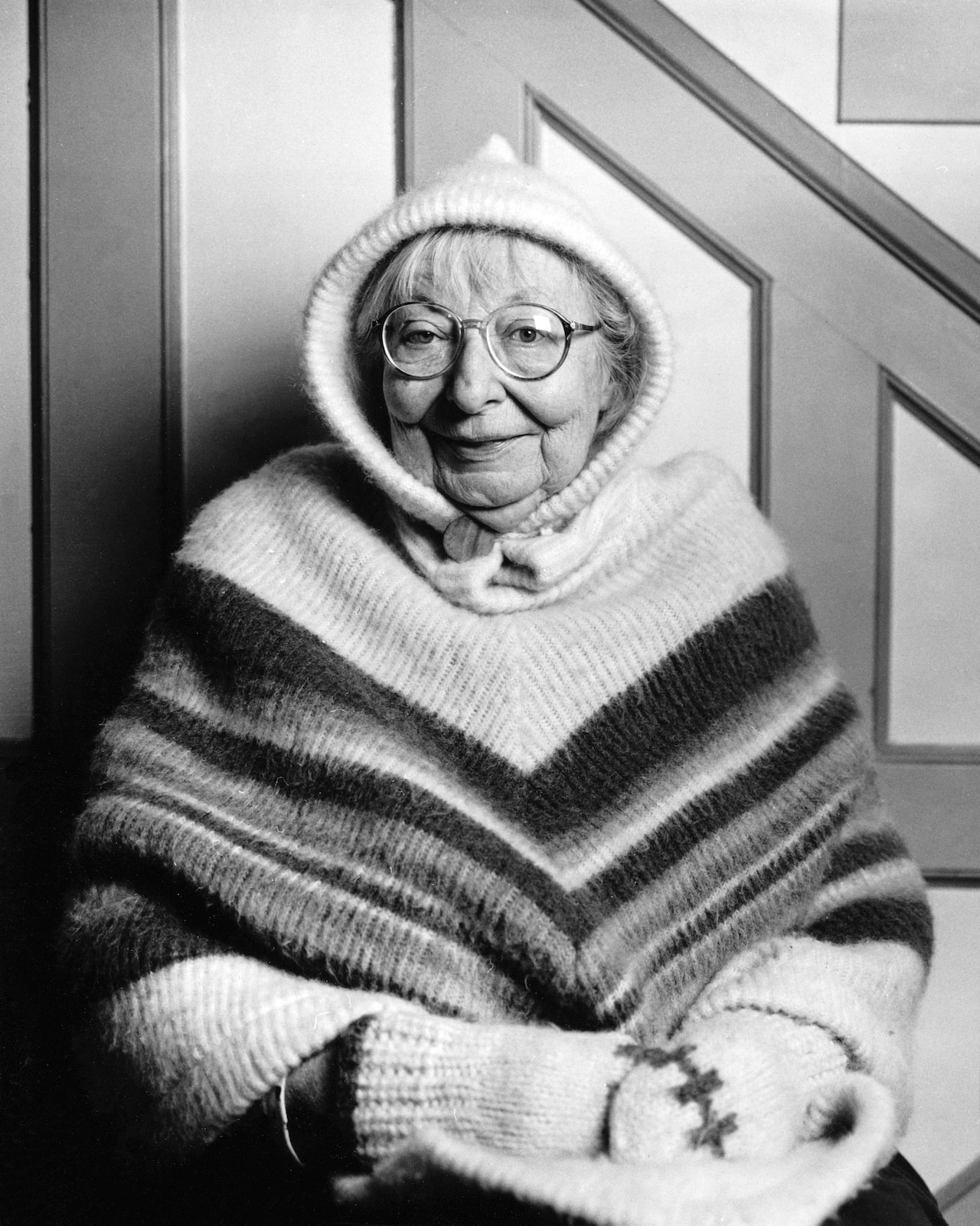


The flight of people seeking an escape from American troubles continues today, with scholars and medical doctors leaving the authoritarian impulses of Donald Trump’s administration.
But Americans, migrating for opportunity and to flee oppression, have long altered the complexion of Canada.

People visit the historic home of Rev. Josiah Henson near Dresden, Ont., in April, 1956. Rev. Henson was an abolitionist and author who was born into slavery in the U.S. In 1830, Rev. Henson escaped with his wife and children using the Underground Railroad, arriving in what was then Upper Canada where he founded a settlement for other escaped slaves.The Globe and Mail

The Josiah Henson commemorative stamp, issued by Canada Post in 1983. He is the first Black man to be featured on a Canadian stamp.Canada Post
Shortly after the signing of the Declaration of Independence, tens of thousands of Loyalists settled central and Atlantic Canada. Their influence sped the creation of new colonies in Upper Canada and New Brunswick.
The Loyalists “remade British North America, including Quebec, which saw the number of English-speaking citizens increase, especially in the Eastern Townships,” Prof. Wright said.
The Underground Railroad brought tens of thousands of escaped slaves to Canada, where slavery had been abolished in 1834. Later, Mormons who came to Alberta built infrastructure for agriculture and industry.

A map of underground routes to Canada, published in 'The Underground Railroad from Slavery to Freedom' by Wilbur H. Siebert in 1898. The Underground Railroad was not an actual railroad, but a network of secret routes and safe houses used by slaves in the U.S. to escape to free states and Canada.Library of Congress/Public domain, via Wikimedia Commons

American-born C.D. Howe, the "Minister of Everything," at the opening of the Orenda jet engine plant in Malton, Ont. in 1952, when he was Federal Minister of Defence Production. Mr. Howe was one of the primary political architects behind the creation of Trans-Canada Air Lines, now known as Air Canada.Supplied
C.D. Howe, the man who would become the “Minister of Everything” in Mackenzie King’s wartime cabinet, was born in Massachusetts. An engineer who came to Nova Scotia to accept a job as a professor, he soon took up building grain elevators across the country. When the Great Depression ruined that business, he entered politics, where his efforts underpinned the founding of the CBC and Trans-Canada Air Lines, the predecessor of Air Canada.
The story of Canada, notes James Hull, an emeritus historian at the University of British Columbia Okanagan, is replete with Canadians who moved south to find riches and fame. But Americans have also come north in considerable numbers, leaving indelible imprints upon this country.
American money and desire
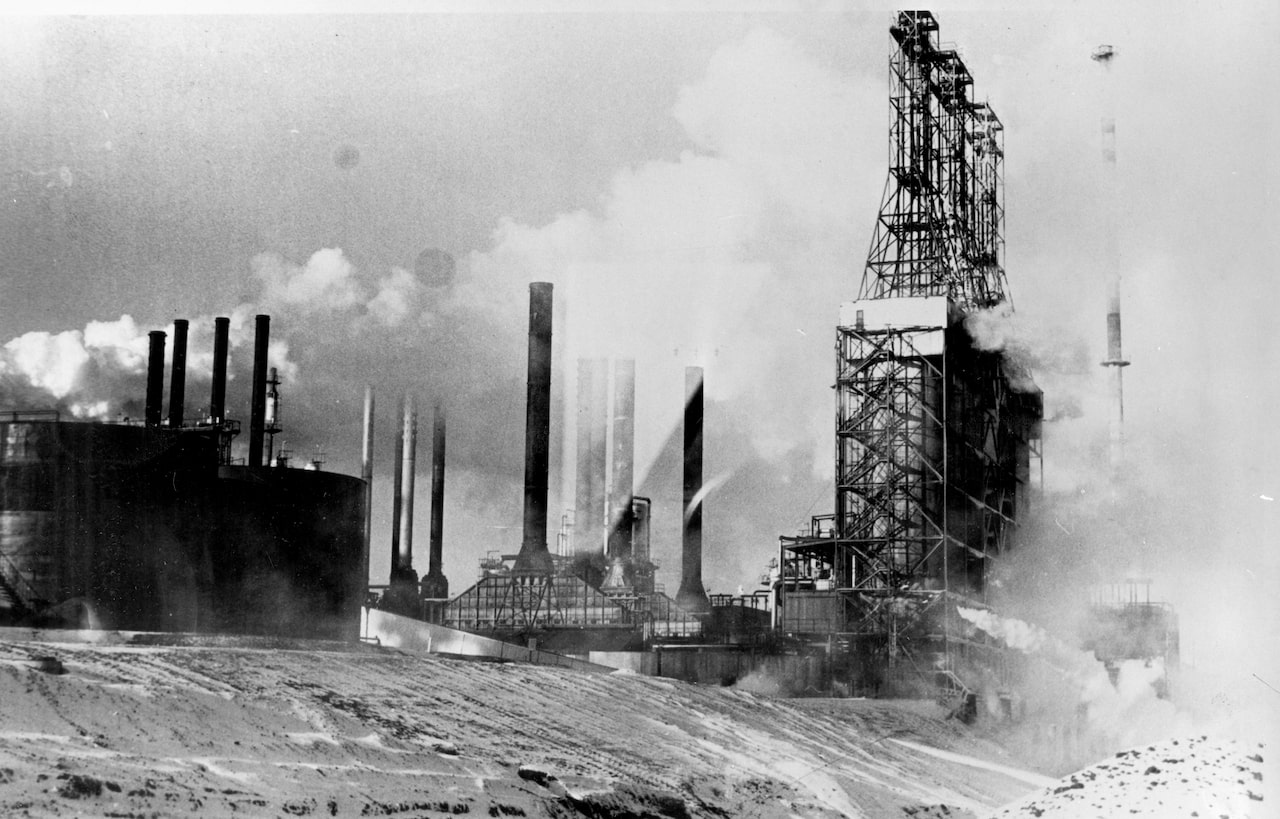
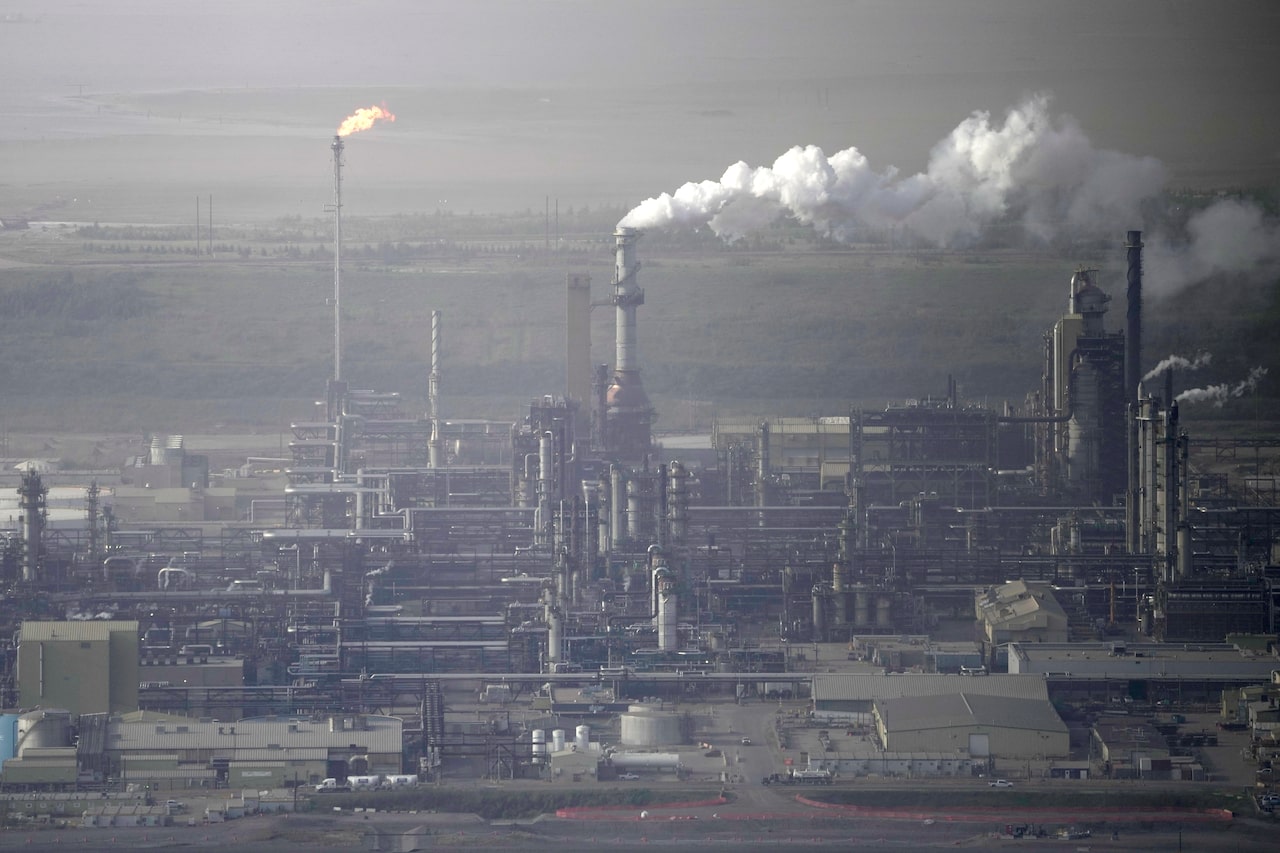
In 1962, the Government of Alberta issued a permit for a company to develop the oil sands. That company bore a boldly patriotic name, Great Canadian Oil Sands, which would become Suncor Energy, the Calgary champion in extraction of the country’s greatest petroleum resource.
All of it inconceivable without U.S. involvement.
“It’s the combination of American markets, American investment and American desire that the oil sands were developed commercially,” said Paul Chastko, a University of Calgary scholar who has written extensively on Canadian energy history.

The Great Canadian Oil Sands refinery near Fort McMurray, Alta., which opened in September, 1967.The Globe and Mail
Americans, in fact, were in Alberta from the dawn of the petroleum era, a “near-constant stream of entrepreneurs, roughnecks, scallywags and scoundrels,” as Prof. Chastko put it, coming north to strike it rich. Turner Valley, once the country’s largest oil field, boasted a Little Chicago, a Little New York and a Little Philadelphia.
It was a Philadelphia company that played an outsized role in solving the puzzle of how to turn the thick bitumen beneath Fort McMurray into profitable crude. Sun Oil Company was led by J. Howard Pew, an engineer and devout Christian who was convinced the oil sands could be profitable, even though the Canadian government had concluded they were commercially unviable.

Ernest Manning served as Alberta Premier from 1943 to 1968, longer than any other premier in the province's history.John Robert Young/The Globe and Mail
He formed a close relationship with then-Alberta Premier Ernest Manning, himself a preacher. The two men vacationed and prayed together. It was under Mr. Manning that Great Canadian Oil Sands was granted approval to build a small commercial operation; Sun Oil then secured a majority stake in the company. Production began in 1967.
It was in many ways a disaster. The first winter, the plant froze solid, shutting down for months.
“They only made money once in their first 10 years,” Prof. Chastko said. Internally, the venture was called “Pew’s folly.”
Pursuit of that folly, of course, yielded an industry that has become a pillar of the Canadian economy, even if its success is in many ways an American story, too.
“There’s no modern oil sands industry without the United States,” Prof. Chastko said. “I mean that quite literally.”
Canadian content
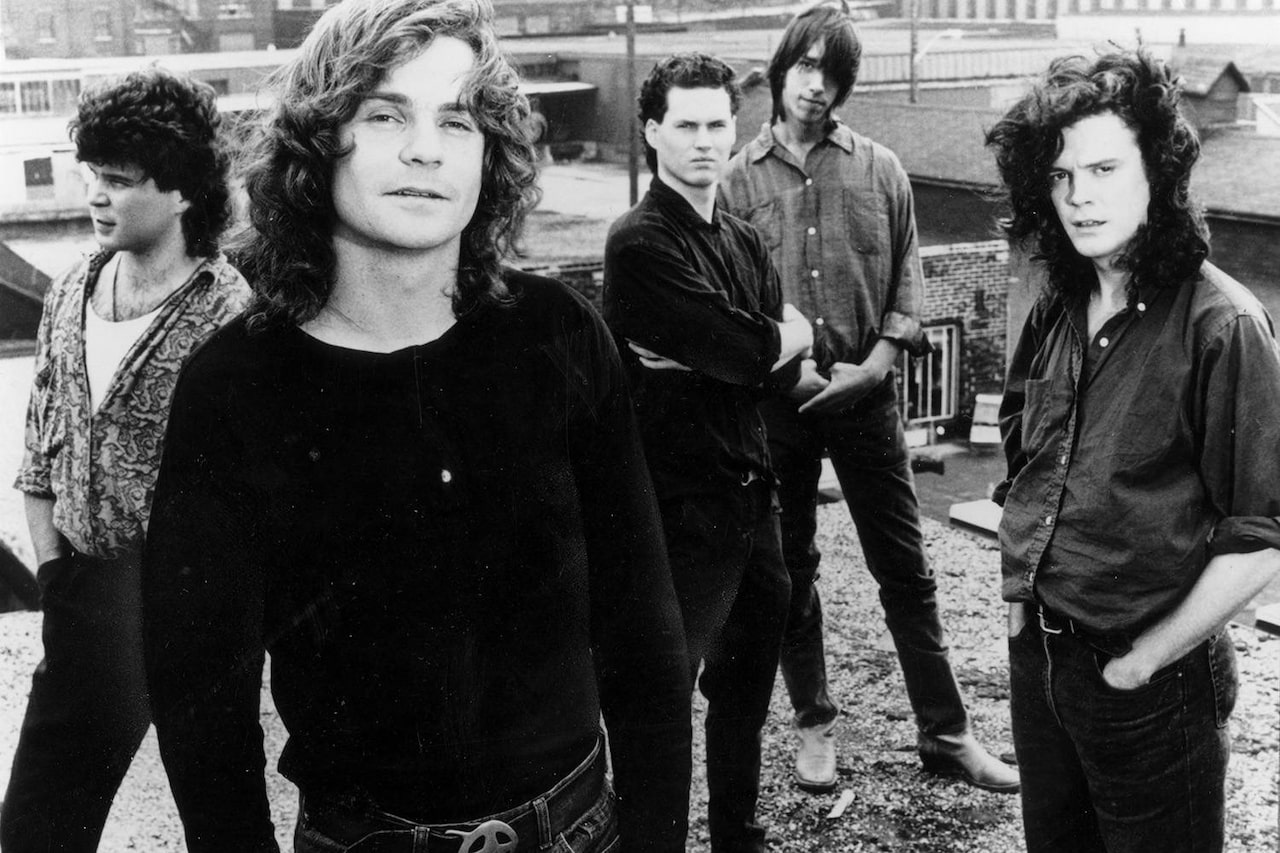
They were, the BBC once said, the “most Canadian band in the world.” The Tragically Hip made music about hockey, justice denied and seeking respite and redemption in cottage country. Gord Downie’s “evocative lyrics came to define a country,” Prime Minister Justin Trudeau said after the band’s frontman died in 2017.
Among the Hip’s great accomplishments was succeeding in music without succeeding in the U.S., a market that never embraced Mr. Downie’s dense songs or the band’s pared-back sound. But it’s not clear they could have reached their place in this country’s firmament without that country’s influence.

Canadian folk singer Joni Mitchell performs at The Riverboat Coffee House in Toronto in 1968.Dennis Robinson/The Globe and Mail
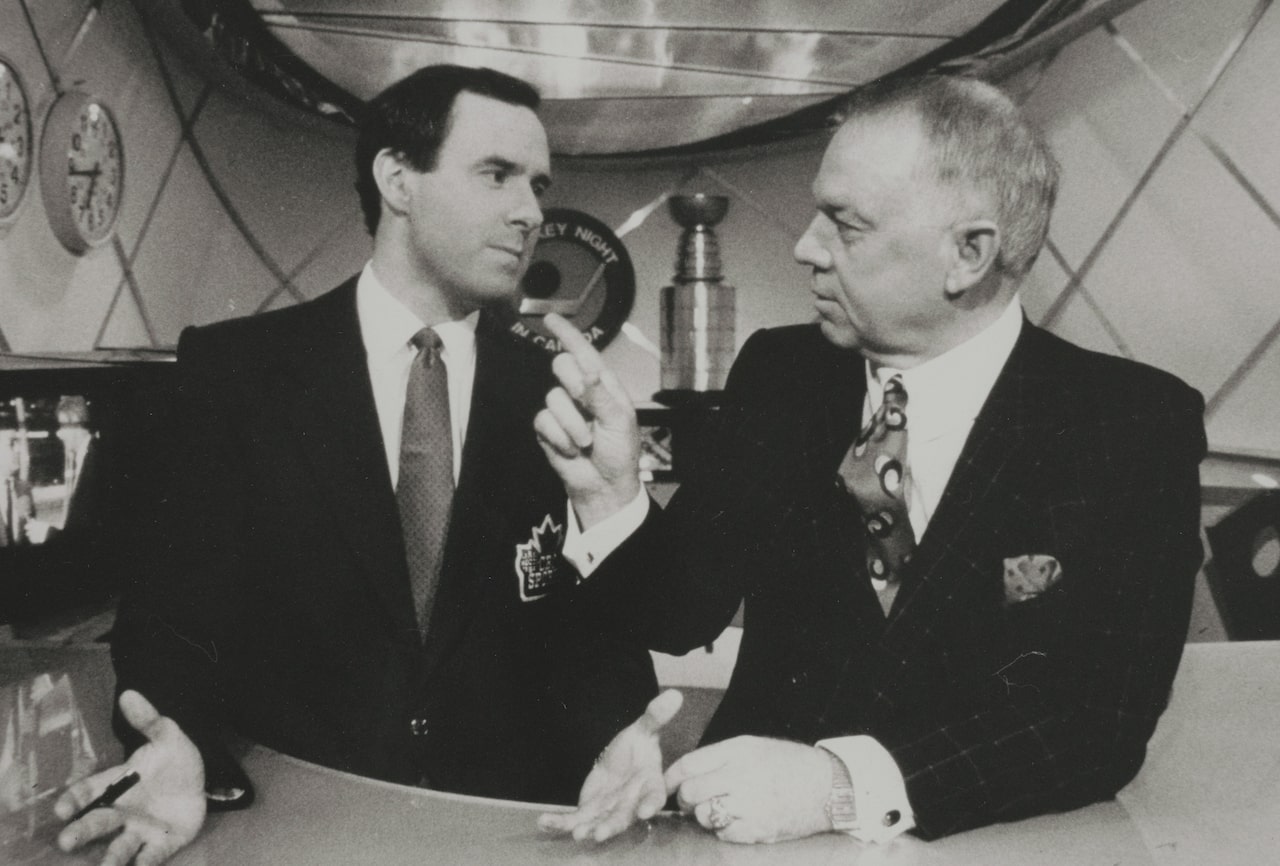
For much of the early decades of Canada, English-speaking Canadians consumed American and British cultural content − a wellspring of national angst more than a century old that led, among other things, to the creation of the CBC and no shortage of commissions and inquiries. For years, “Hockey Night in Canada was the one thing English Canadians listened to that was Canadian-produced,” Prof. Hayday said.
CBC to stop airing NHL games after 74 years, marking end of free hockey on Canadian TV
British programming raised fewer eyebrows for Canadians who saw themselves rooted in the Commonwealth. In the postwar period, however, U.S. influence waxed as British cultural output waned, alarming Canadians who saw Americans as an undesirable model: more violent, more commercial and less religious.
So governments intervened, funding universities, regulating airwaves and then, in 1971, adopting the MAPL system, which defined Canadian content and reserved space for it on the radio.
At the outset of the CanCon area, the spoils of new airtime went to Canadians who had already made it big, the Joni Mitchells and Neil Youngs. But by the time five young men got together in Kingston to start a band in 1984, “it meant you could have a band like the Tragically Hip that had no presence in the United States, ever, but got tons of Canadian radio airplay,” Prof. Hayday said.

The Tragically Hip perform in Vancouver in July, 2016. When frontman Gord Downie, centre, died the following year, former Prime Minister Justin Trudeau said his "evocative lyrics came to define a country."JONATHAN HAYWARD/The Canadian Press
In many ways, the advent of the Hip was exactly what those promoting Canadian content hoped to see.
“There’s so much of Canadian identity in the post-Second World War era that is finding ways to carve out areas of distinction between the two countries, so that Canada isn’t simply sucked into the American morass,” Prof. Hayday said.
And what is true in music is often true of far weightier matters.
Across this country’s history, one pre-eminent factor has remained, the fear of the U.S. − real and imagined,” said Allan Levine, a Winnipeg-based history writer. “Fear of American territorial annexation. Fear of being consumed and controlled by American foreign policy. Fear of American corporate power. And fear of American cultural dominance that still resonates to the present day.”
“Take the U.S. factor out of the story and it may have unfolded quite differently.”