Spring is a time of awakening. The days get longer and warmer. Plants start a new growth cycle, flowers blossom, migratory birds return, and animals emerge from hibernation.
Yet this very shift in daylight, warmth and renewal can be catastrophic for French producers of some of the most prestigious and renowned wines in the regions of Burgundy, Bordeaux and the Loire.
The town of Chablis is located about two hours’ drive southeast of Paris, a small wine-producing town in northern Burgundy, famous for its dry white wines made from Chardonnay grapes.
A sudden freeze during the warming days of early spring, when young and fragile shoots bloom, can be devastating − ruining an entire crop and causing tremendous losses for growers. Spring frost affects young buds and shoots, not the entire vine. The primary buds die. The vine may push secondary buds, but they would produce fewer grapes and the yield production for the year drops drastically. Dangerous temperatures are zero to -1 degrees. The ideal temperature during springtime for early growth is 10 to 15 degrees.
To limit the damage, many wine producers light thousands of paraffin-based anti-frost candles in a fight to raise the temperature of the air around their vines. This is a labour-intensive exercise − and expensive, as each candle costs €13 ($21). Some also place artificial lights among the vines to generate additional warmth or use low-flow sprinklers to coat their buds with a thin layer of ice, insulating them from frost.
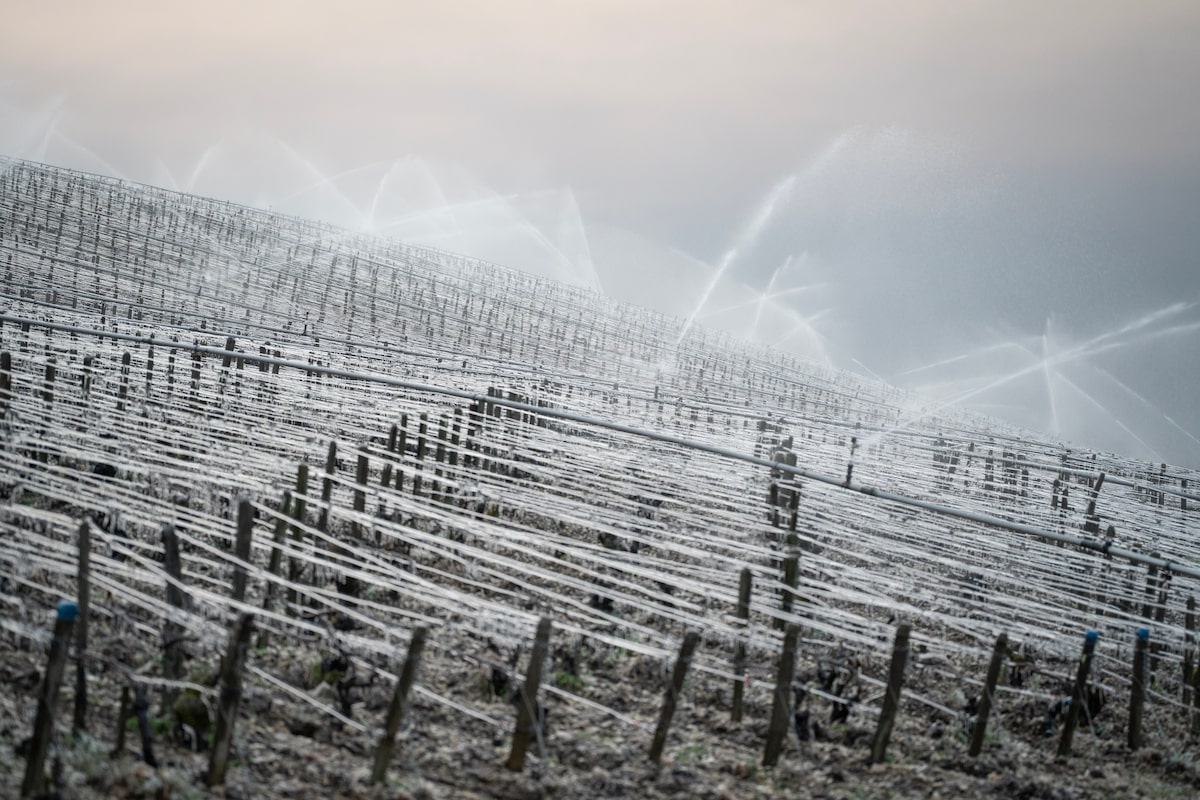
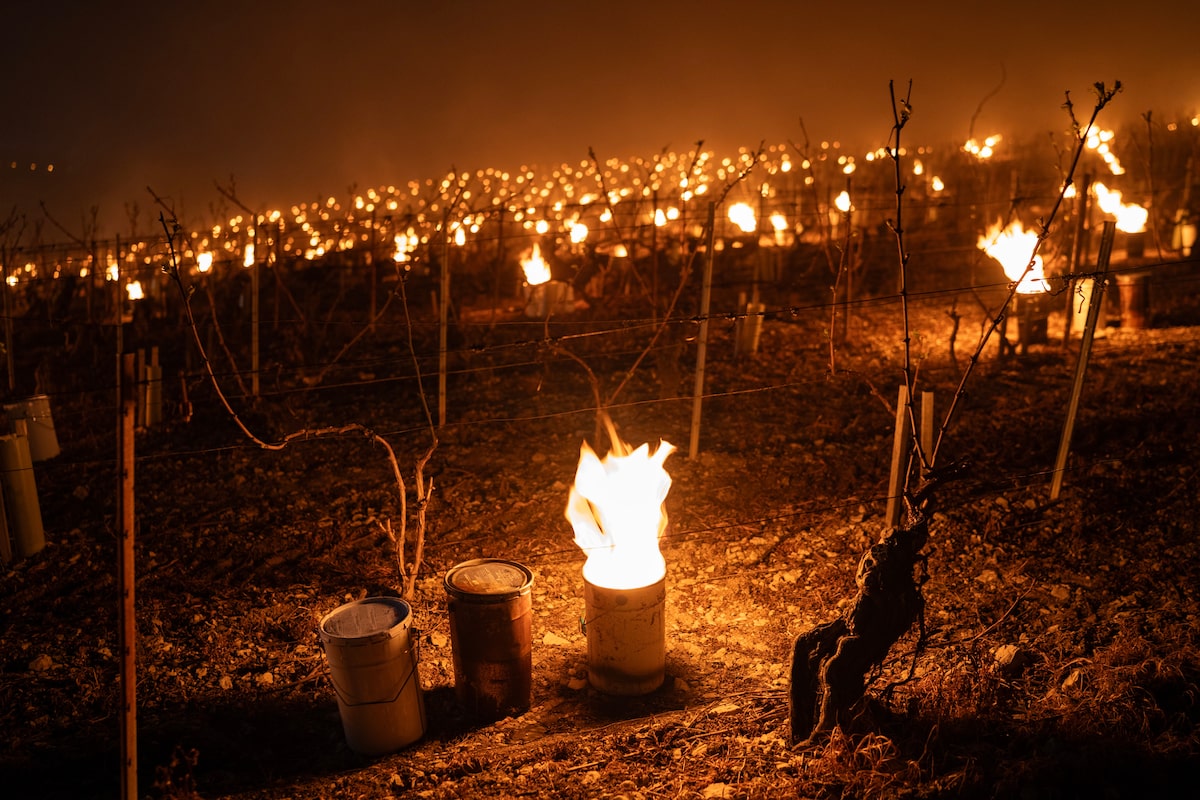
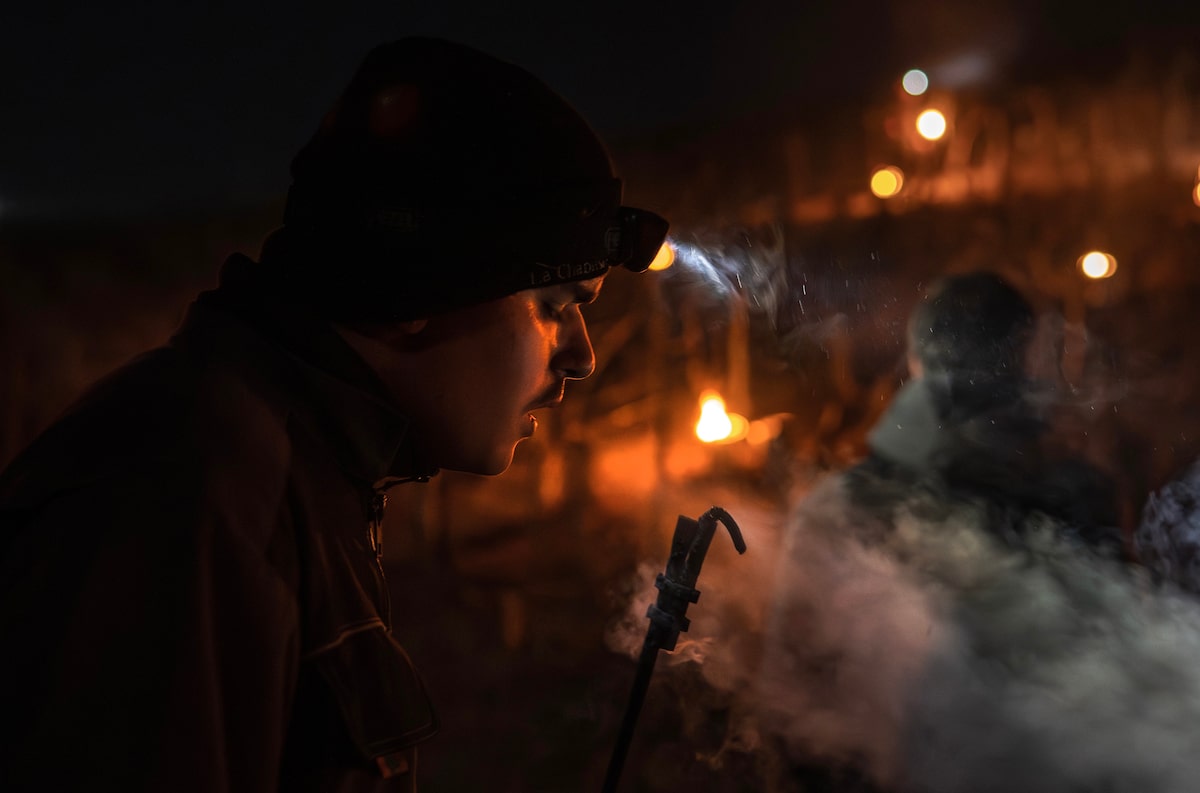
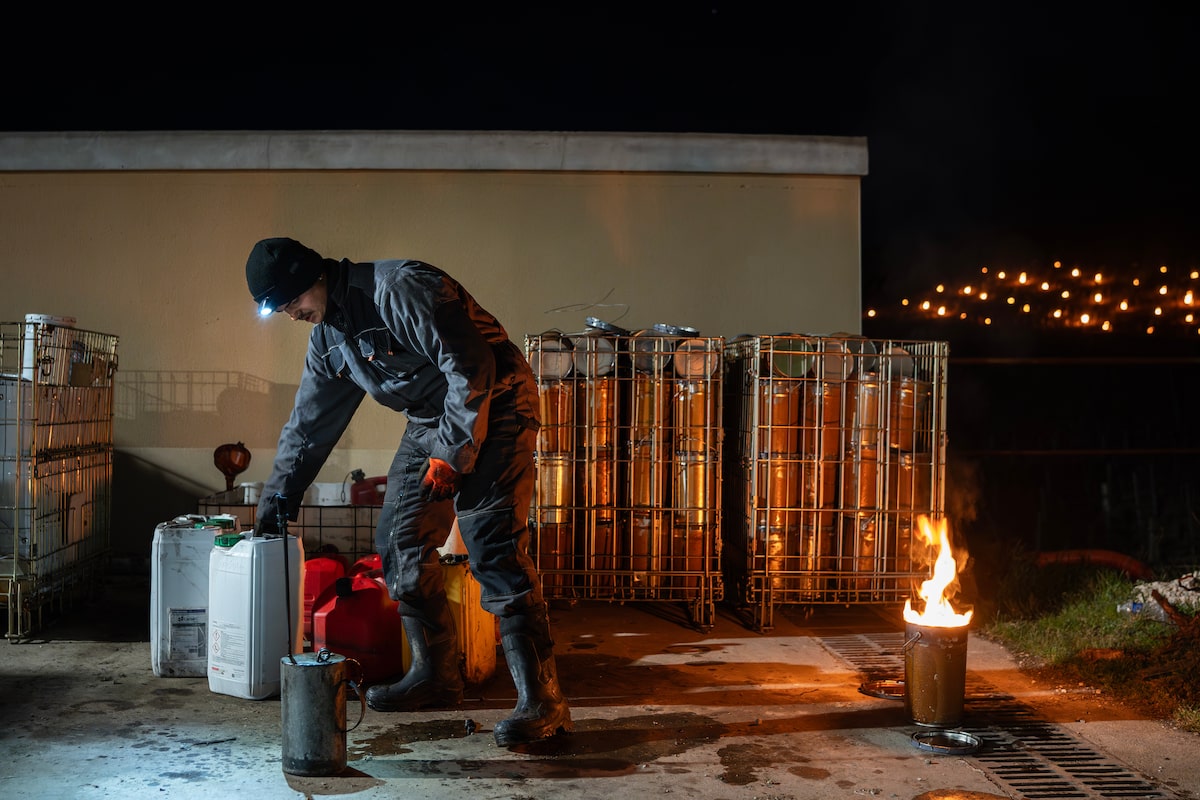

While this is a beautiful spectacle to witness, with thousands of candles burning bright in the night across picturesque wine valleys, it is also a sign of a severe agricultural threat. Yet many growers say the effort and high costs are worth it if they are able to save their vineyards. So they spring into action when they anticipate temperatures dropping to dangerous levels. After midnight, small groups of men and women arrive at their designated vineyards. Their mission: to light each candle they earlier placed close to the vines.
It takes patience. The candles need to be lit individually, one by one. Each wine grower goes in with a lit paraffin lamp, lighting each candle in turn until the entire field − then the entire valley − flickers with the light of a thousand candles.
Within four hours, the flickering diminishes, a sign that the candles have to be replaced, so the exercise starts again, into the early morning if necessary, when low temperatures and the risk of frost are most acute.
At dawn, a black cover of paraffin-laced smoke envelops the sky above the picturesque town of Chablis, an almost apocalyptic sight that reminds its residents of the night’s battle against the elements to protect their most precious regional produce, Le Chablis en Bourgogne.


In vino veritas: More from The Globe and Mail
Christopher Waters on wine
Are wines sold by the glass at restaurants the best deal?
Five crowd-pleasing and affordable malbecs to buy now
Three Canadian rieslings to toast the grape’s birthday
Video: Ordering off a wine list like a pro
Sommelier William Predhomme shares his tips on choosing the perfect bottle every time.
Globe and Mail Update