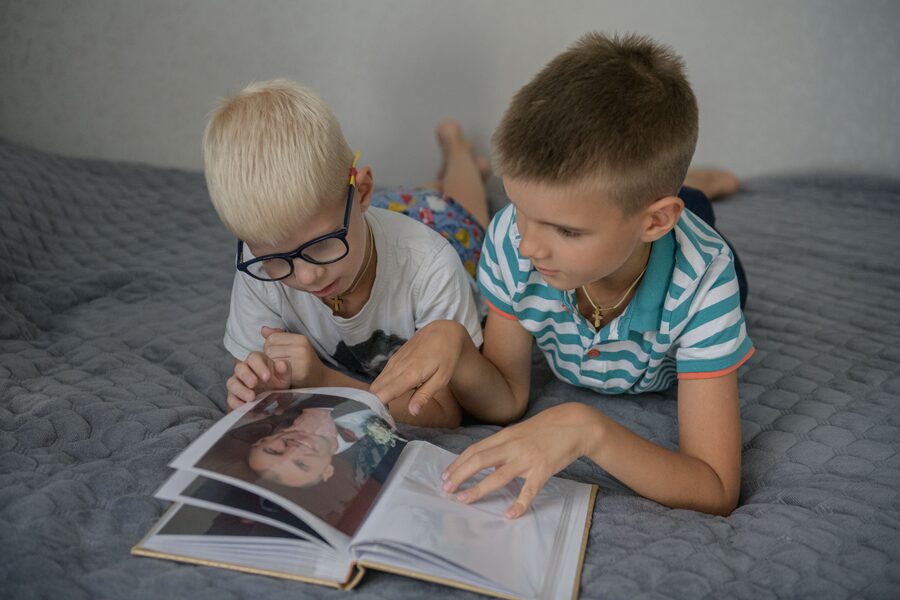

Brothers Maksym and Myshko Kendzor were just 6 and 4 when they lost their father, Roman, to the war in Ukraine.
Mr. Kendzor had joined the army on the second day of the full-scale invasion in February 2022. First, he defended the Kyiv region. A few months later, he was sent to the front line in Luhansk. Inna Kendzor, his wife, decided to visit him there with their children, before he went to the front.
“We bought ice cream in cups and they ran, fooling around, the three of them, and poked each other’s noses in their ice cream. And that was the moment the children remembered the most.” Mrs. Kendzor told The Globe and Mail. “A few weeks later, my husband was killed.”

It's been three years since Maksym and Myshko lost their father – Roman, in the photo album at top – on the front lines of the Russian invasion. They and mother Inna Kendzor remember crying for days.
One in five children in Ukraine has reported losing a close relative or friend since the escalation of fighting three years ago, according to a UNICEF survey conducted in February. (Ukraine considers Russia’s annexation of Crimea in 2014 the start of the conflict.) Those deaths, along with other consequences of the war, mean tens of thousands children are living through unthinkable trauma – pain that is often intensified as they keep it to themselves.
“Every day at the front, someone dies or is injured among the military personnel, and these are someone’s parents, someone’s brothers, and many children are learning to live with loss,” says Olena Rozvadovska, co-founder of the Voices of Children foundation.
The Kyiv-based non-profit has been providing psychological aid to Ukrainian children affected by conflict since 2019. Its mission is to restore mental resilience and self-confidence, and create a sense of support. So far, it has offered help to more than 137,000 individuals.
“We are faced with the fact that children have no one to turn to, especially when their parents are experiencing the loss with them,” said Yuliia Tukalenko, a psychologist with the foundation. “Very often there are no other relatives who could support the child. Then the child is left alone with the emotions that he is experiencing.”

Myshko's father got a posthumous award for bravery.
Mrs. Kendzor said that in their family, her husband was a gentle disciplinarian for her two boys. “I am trying to cover all their needs, but no one can replace father for them.”
After his death, the three of them sat together and cried for days. Now, three years later, the children still find it difficult to walk near the Alley of Heroes – Kyiv’s memorial to fallen soldiers – or see other fathers bringing their kids to school. “They are asking me sometimes, why they are here?” Mrs. Kendzor said.
Myshko, 7, will often offer candies to soldiers he passes. Maksym, 9, had to mature much quicker and become the main “man” at home. “Even when they are smiling and all good in their lives, they are having lack of male advice and support,” Mrs. Kendzor said. “And it will be more visible, when they become fathers themselves, because they are growing up without a father.”


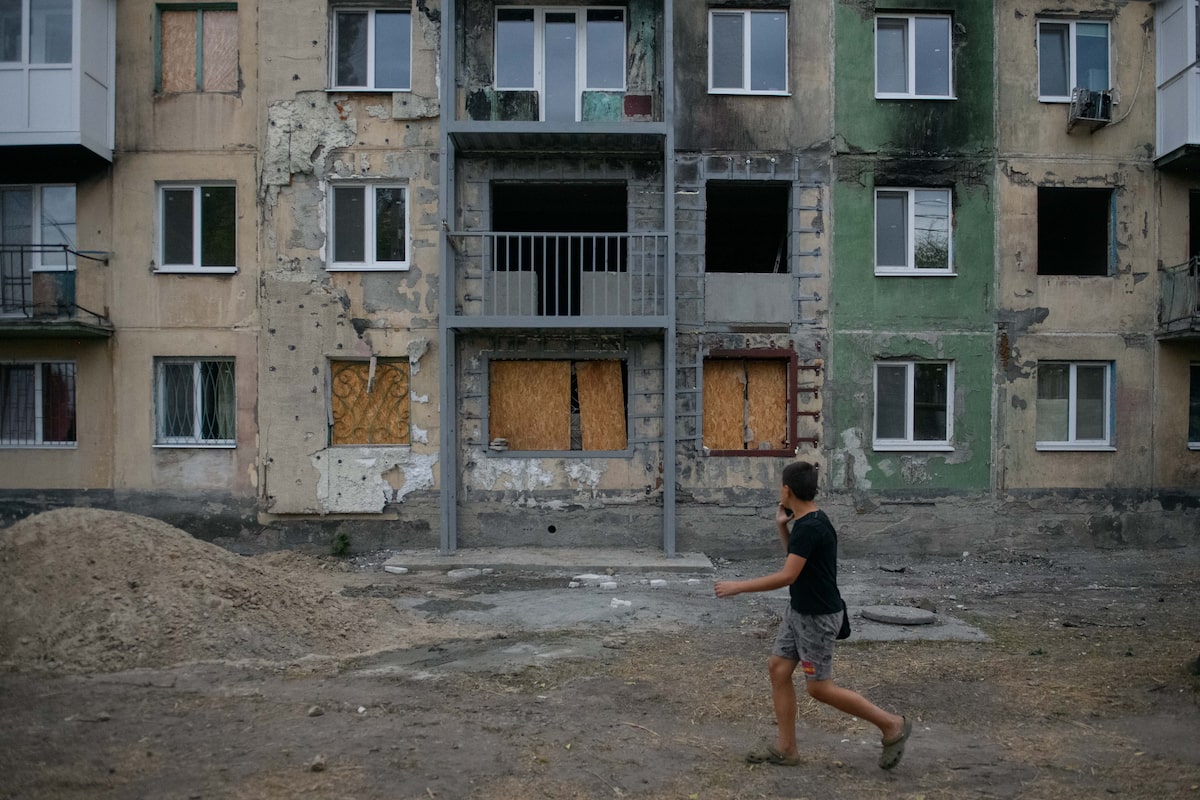
One in two children in Ukraine are showing anxiety symptoms as a result of stress, according to Voices of Children. They are also having problems with trust and communication.
“Whether it is experiencing the absence of a father, or a difficult move, or an evacuation, or everything has changed, or nights in shelters, it is hard for them,” the organization’s Mrs. Rozvadovska said.
Another cause of trauma is bullying as a result of displacement.
Occupation forced millions of Ukrainians to flee their homes.
Among them were Valentyna Semenova and her family, who left Polohy, a city in the Zaporizhzhia region, two weeks after the 2022 invasion began. Her son, Tymofii, was 9 at the time.
“We told our son that the war started when he heard the first explosions. It was weeks without electricity, and in the basement without possibilities to move in the city,” she recalled.

Tymofii and his mother, Valentyna Semenova, have settled in Kyiv since the occupation of their hometown of Polohy.
Leaving their small business behind, the family moved first to the western part of the country, before arriving in Kyiv a year ago. Since then, Tymofii, now 12, has been taunted by classmates at his new school.
This is just one problem displaced children face, said Ms. Tukalenko, the psychologist. “Due to their movements, they lose their circle of friends, and it is not so easy to restore it.” At home, stress and forced changes of residence can also lead to school refusal, tension or constant conflict.
Tymofii’s parents had hoped the situation would improve this year, and that he would be more open to talking. He’s received psychological help from Voices of Children, including attending its therapy summer camp.
But his classmates continue to tease and even bite him, according to his mother. His marks have dropped.
“When people hurt him, he closes down and doesn’t want to communicate,” Mrs. Semenova said.


War in Ukraine: More from The Globe and Mail
The Decibel podcast
Don’t provoke the soldiers. “If he shouts – do not argue, hide and wait.” These are some of the things captured Ukrainian children are told to do in pamphlets from Russian detention centres. Reporter Janice Dickson spoke with The Decibel about the documents and Russia’s strategy for indoctrinating youth. Subscribe for more episodes.
From our correspondents
This city isn’t on the front lines yet. If that changes, everything changes
Russians in Ukraine’s army are ready to fight until Putin falls