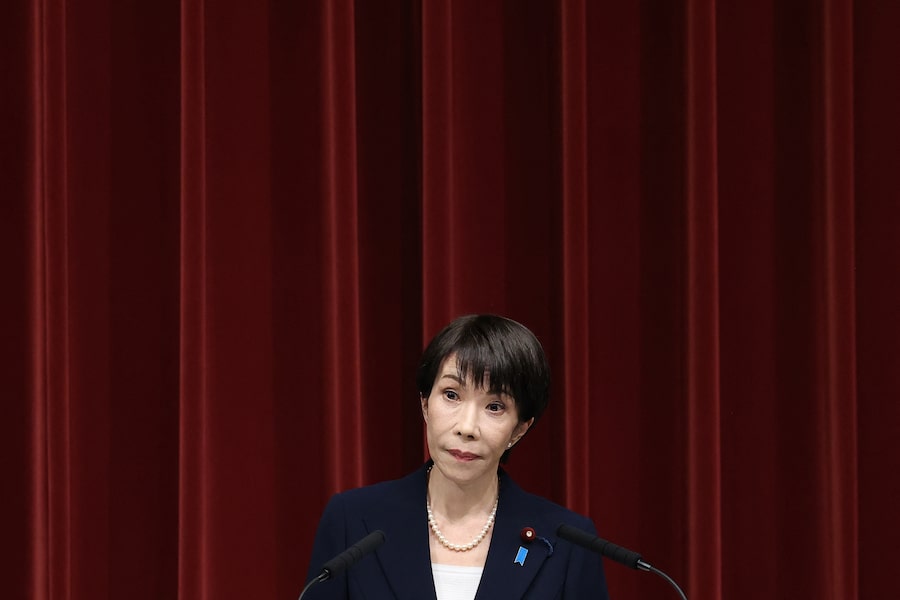
When Sanae Takaichi first ran for the leadership of the Liberal Democratic Party, which has dominated Japanese politics for much of the past eight decades, she was eliminated in the first round with less than 20 per cent of the vote.
It was 2021, and Ms. Takaichi had been in the party for 25 years. A protégé of former prime minister Shinzo Abe, she was popular with the LDP’s conservative faction, but seemed too right-wing to win the leadership, let alone lead the LDP to victory in a general election.
But that is what Ms. Takaichi, who last year finally became LDP leader and subsequently Japan’s first female prime minister, seems poised to do Sunday. Polls suggest she could deliver the LDP a strong majority, reversing years of steady decline.

Lawmakers applaud as Sanae Takaichi is elected Japan’s new prime minister, the first woman to hold the role, in Tokyo, in October, 2025.Eugene Hoshiko/The Associated Press
“As a woman, and not being from a political dynasty, Takaichi faced a number of handicaps, which she overcame in a very courageous way,” said Izuru Makihara, a politics professor at the University of Tokyo. “Initially, no one saw her as a credible candidate for LDP president, but she overturned this prediction.”
Sanae Takaichi was born on March 7, 1961, in Yamatokoriyama, in central Japan. She attended the prestigious Kobe University, commuting six hours from the family home and working part-time to afford her studies. After stints as a political researcher and television presenter, she entered parliament as an independent in 1993.
At the time, just 2 per cent of the House of Representatives, the lower house of the Japanese Diet, were women, and female lawmakers were often marginalized and faced sexist remarks and harassment from their male colleagues.
In 1996, Ms. Takaichi joined the LDP, but it was not until a decade later, when Mr. Abe, scion of one of Japan’s most prominent political dynasties, became leader, that Ms. Takaichi’s career truly surged, and she would spend most of the following two decades in cabinet.
After Mr. Abe resigned for health reasons in 2020, the LDP fell into disarray, cycling through a number of leaders. Mr. Abe’s assassination two years later, and subsequent revelations about the LDP’s links to the Unification Church plus allegations of widespread corruption, hastened the party’s decline.
Former Japanese Prime Minister Shinzo Abe (centre), and his then-Internal Affairs Minister Sanae Takaichi (right), in September, 2014. A protege of Mr. Abe, Ms. Takaichi’s career with the LDP took off when he came into power.The Associated Press
Ms. Takaichi made multiple bids for the leadership, presenting herself as the natural heir to Mr. Abe. But she was defeated in 2021, and again three years later, losing in the run-off to moderate Shigeru Ishiba. He was out in 12 months, however, after the LDP lost its majority in both houses of parliament, and Ms. Takaichi got another shot, finally winning the leadership in 2025.
Even then, it looked like Ms. Takaichi might be denied the premiership. The LDP’s long-time coalition partner, Komeito, said it would not back her, deeming her too conservative, and opposition parties began scrambling to collate support around an alternative candidate for prime minister.

Prime Minister Takaichi, joined by Fumitake Fujita and Hirofumi Yoshimura of the Japan Innovation Party, attend a campaign event in Tokyo ahead of the February snap election.Kim Kyung-Hoon/Reuters
But Ms. Takaichi showed herself to be a more deft political operator than even many of her supporters expected, peeling off the Japan Innovation Party from the potential opposition grand coalition and securing its support for her premiership. She made history in a country that, more than three decades after she first entered parliament, remains the lowest-ranked G7 country in terms of women’s political representation.
Beyond her gender, Ms. Takaichi stands out among Japan’s recent leaders in other ways. Compared with the often dull, characterless men who preceded her, Ms. Takaichi is unafraid to show her personality, most notably when she took to a drum set alongside South Korean President Lee Jae-myung during a state visit earlier this year. (Ms. Takaichi was a heavy metal drummer in university.)

Ms. Takaichi plays drums with South Korea’s President Lee Jae Myung in Nara, Japan, during a state visit this January.Supplied/AFP/Getty Images
“She has a refreshingly candid way of speaking, she’s energetic, all of that has gone over well,” said Tobias Harris, founder of political advisory Japan Foresight and author of a biography of Mr. Abe.
Ms. Takaichi is not a feminist, and has attracted criticism for what some see as her overly traditional attitude toward gender issues, even as she herself breaks glass ceilings. She models herself on the late British prime minister Margaret Thatcher and soon after becoming premier vowed to “work, work, work, work and work.”
Despite this, Mr. Harris said the reality of Ms. Takaichi being Japan’s first female premier “has affected people, even people who don’t necessarily share her politics.”
“Every generation of Japanese woman looks at her and knows the struggles she experienced to get to where she is,” he added. “The fact she’s not a hereditary politician, that she comes from a middle-class background, makes her all the more endearing. People are rooting for her in a way that was not obvious beforehand.”

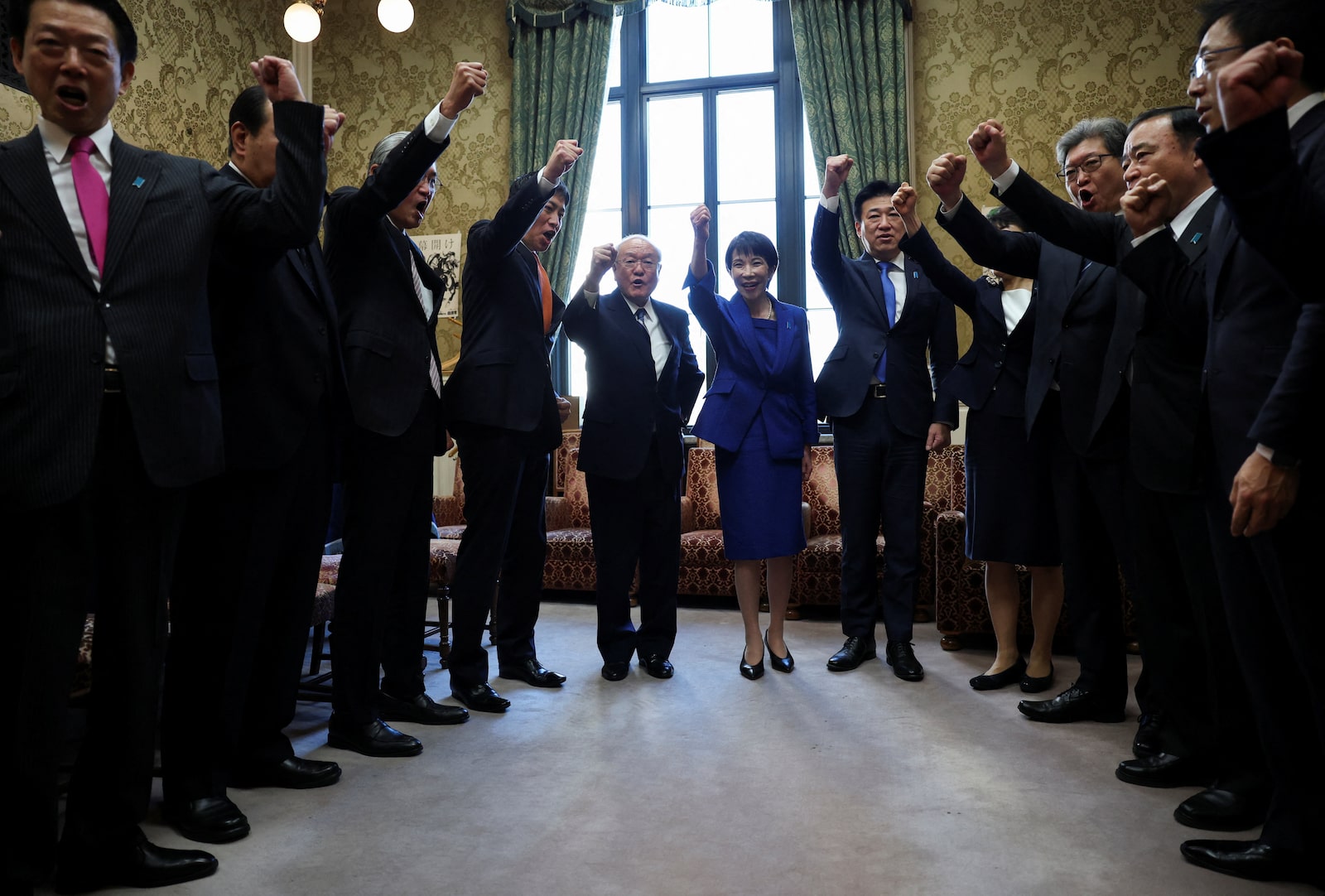
This is borne out in polling, which shows Ms. Takaichi is far more popular than the LDP, especially among young people. Her strong conservative credentials have also shored up the party’s right flank, winning back voters leaning toward the anti-immigrant party Sanseito, which surged in upper house elections last year.
Ms. Takaichi’s standing among conservatives has been boosted by a spat with China over remarks she made in November that a Chinese invasion of Taiwan would constitute an “existential threat” to Japan, suggesting Tokyo would intervene militarily in such a conflict.
The comments sparked fury in Beijing, which demanded Ms. Takaichi retract them. After she refused to do so, arguing she was merely stating Japan’s long-standing position (though far less obliquely than past leaders have) on a conflict that almost all observers believe Tokyo would inevitably be drawn into, China imposed limits on trade and tourism to Japan.

Weeks after she met with Chinese leader Xi Jinping in October, Ms. Takaichi made comments about potential military intervention by Japan if China were to invade Taiwan, sparking fury from Beijing and straining relations between the countries.KYODO/Reuters
“Takachi’s statement was a mistake that came from her lack of understanding of the situation,” said Ken Jimbo, a professor at Keio University and former special adviser to the minister of defence. “I don’t think she ever anticipated this level of response.”
Tokyo has said Ms. Takaichi would not repeat her remarks, but China has continued to demand a complete retraction, something that is both politically impossible and “would degrade our deterrence,” said Prof. Jimbo.
The dispute has put Japan’s relations with one of its biggest trading partners into a deep freeze, but did little to harm Ms. Takaichi’s domestic popularity. And she has proven more adept at handling other foreign relations, maintaining good ties with Japan’s former colony South Korea and cultivating a close relationship with U.S. President Donald Trump, in part by drawing on his friendship with the late Mr. Abe.

U.S. President Donald Trump and Japanese Prime Minister Sanae Takaichi visit the U.S. Navy base in Yokosuka, Japan, in October, 2025. Ms. Takaichi has cultivated a close relationship with U.S. President Donald Trump, who has publicly endorsed her.Kim Kyung-Hoon/Reuters
On Thursday, Mr. Trump offered his “total endorsement” for Ms. Takaichi, saying he had been “extremely impressed” after meeting her last year.
Ms. Takaichi’s gamble in calling an early election, if it pays off as polls suggest it will, could shore up her leadership against any geopolitical chaos to come. A majority would also give her a stronger hand when it comes to reshaping Japan’s economy, something she has said is vital to remain competitive.
Like Mr. Abe, Ms. Takaichi favours an expansionary fiscal policy, cutting sales taxes and boosting spending on areas including defence, artificial intelligence and semiconductors. There is widespread support for this within the LDP and the wider Diet, but some comments by Ms. Takaichi and her advisers have spooked the bond markets and raised concerns about any potential further weakening of the yen.


“Clearly she is someone who has a vision of where she wants the country to go,” Mr. Harris said. “But she is running enormous risks with fiscal policy, really playing with fire in terms of market reactions.”
Tamaki Yuichiro, leader of the centre-right Democratic Party for the People, warned if the LDP secures a majority Sunday, it will “run wild at 200 kilometres an hour,” but “full speed in the wrong direction.”
Such criticism does not seem to be denting the LDP’s resurgence under Ms. Takaichi, who regularly attracts large crowds at campaign stops. This week, a video message she posted online crested at 130 million views, an almost unheard of figure for a political advertisement.
“A country that never takes on challenges has no future,” Ms. Takaichi says in the video. “The future is something you have to build with your own hands.”

Ms. Takaichi has spent almost 33 years working her way through the ranks of the LDP to finally become its leader. If her gamble in calling an early election pays off, it could shore up her leadership against any geopolitical chaos to come.Eugene Hoshiko/The Associated Press