Ilya Yashin is out of Vladimir Putin’s prisons, but even strolling through a park on a crisp Friday afternoon in Berlin, he doesn’t feel free.
Mr. Yashin was released from Russia’s Correctional Facility No. 3 in August, after spending just over two years behind bars. His crime was describing the Russian army’s mass murder of hundreds of Ukrainian civilians in the city of Bucha in 2022 as a “war crime” on his YouTube channel. Given that his fellow opposition leader, Alexey Navalny, died in an Arctic prison camp this February, one might expect Mr. Yashin to feel relieved that he’s out of jail – and out of Russia – after being included in a mass prisoner swap.
I’m delighted to see him again, eight years after our first meeting, and particularly after two years of exchanging occasional letters with him while he was in prison. Mr. Yashin’s writings from behind bars – with their undimmed determination to keep fighting against the authoritarian system Mr. Putin has imposed on Russia – were inspiring, even as I wondered if I was accumulating material for an obituary I’d soon be forced to write.

In one of his handwritten letters to The Globe in 2023, Mr. Yashin said he preferred prison to exile: Doing the latter is 'exactly what Putin was counting on, that all his opponents get scared and leave.'
The fact that he survived brings him no apparent joy. Instead, he makes it clear that he’s annoyed to have been included in the Cold War-style exchange, in which 16 political prisoners were freed from Russian jails in exchange for eight Russians – most of them suspected intelligence operatives – who had been held in Western prisons.
As we settle into a café on the edge of Berlin’s sprawling Görlitzer Park, he refers to his release as a “deportation” rather than a liberation.
“I have found myself in a situation that I never in my life wanted to find myself in,” the 41-year-old says, looking down at our table. “I never considered the possibility of migration for myself. I would never voluntarily leave Russia.”
Mr. Yashin was full of energy and ideas and easy smiles when we first met in Moscow in 2016, just before he co-led a protest march to mark the first anniversary of the murder of yet another pro-democracy leader, Boris Nemtsov.
Despite the dark occasion, Mr. Yashin was in his element, marching at the front of a column of tens of thousands of demonstrators, shouting, “We’re the power here!” and “Russia without Putin!” through a megaphone as the crowd moved along the wide boulevards of the Russian capital. He was already a veteran of the anti-Putin movement by then, but I remember thinking that he looked younger than his 33 years.
He was 16 when Mr. Putin first came to power in 1999. Six years later, as Mr. Putin upped his pressure on political opponents and independent media, Mr. Yashin co-founded the Oborona youth movement, a group of Russian students inspired by the way the Serbian opposition had toppled Slobodan Milosevic at the turn of the century, as well as the Orange Revolution in Ukraine in 2004.
Oborona grew into the Solidarnost protest movement, which played a key role in organizing a series of massive demonstrations in the winter of 2011 and 2012 that came closer than any other effort to forcing Mr. Putin from power. By then, Mr. Yashin, alongside Mr. Navalny and Mr. Nemtsov, was one of the best-known faces in the pro-democracy movement, with a talent for rallying crowds with his impassioned speeches on snowy public squares.

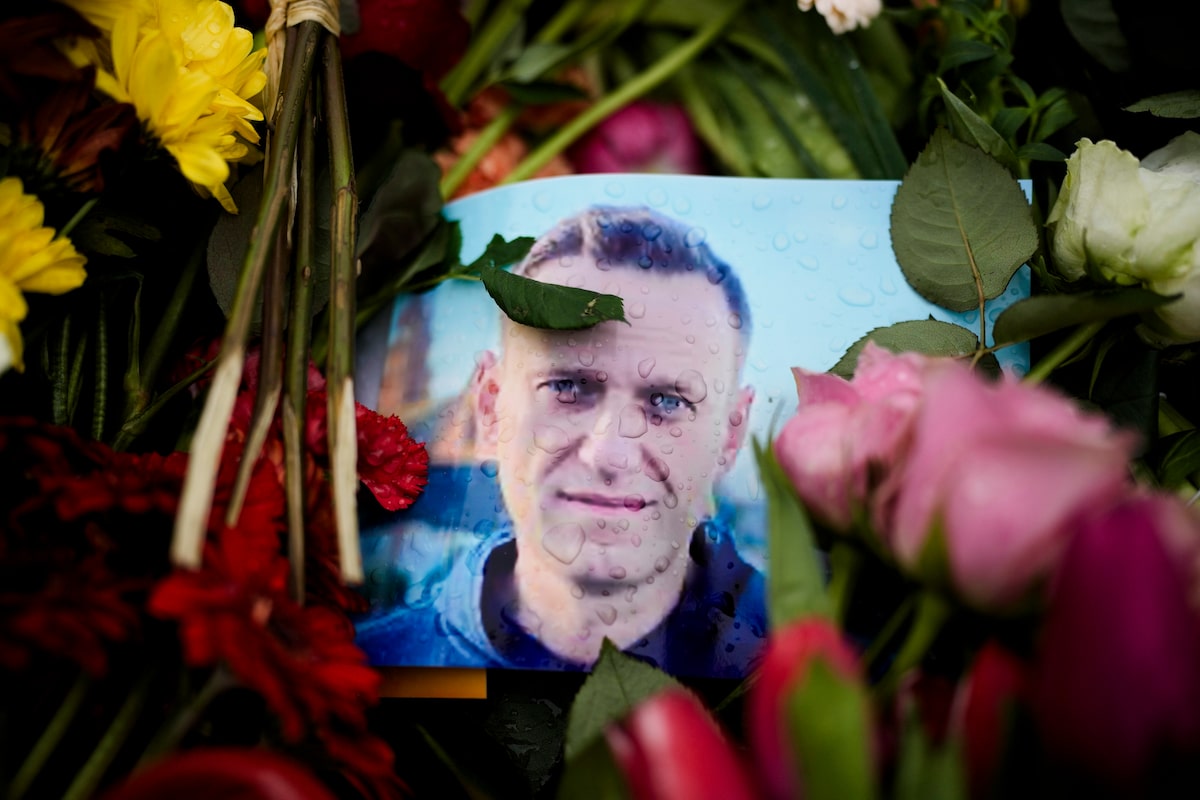
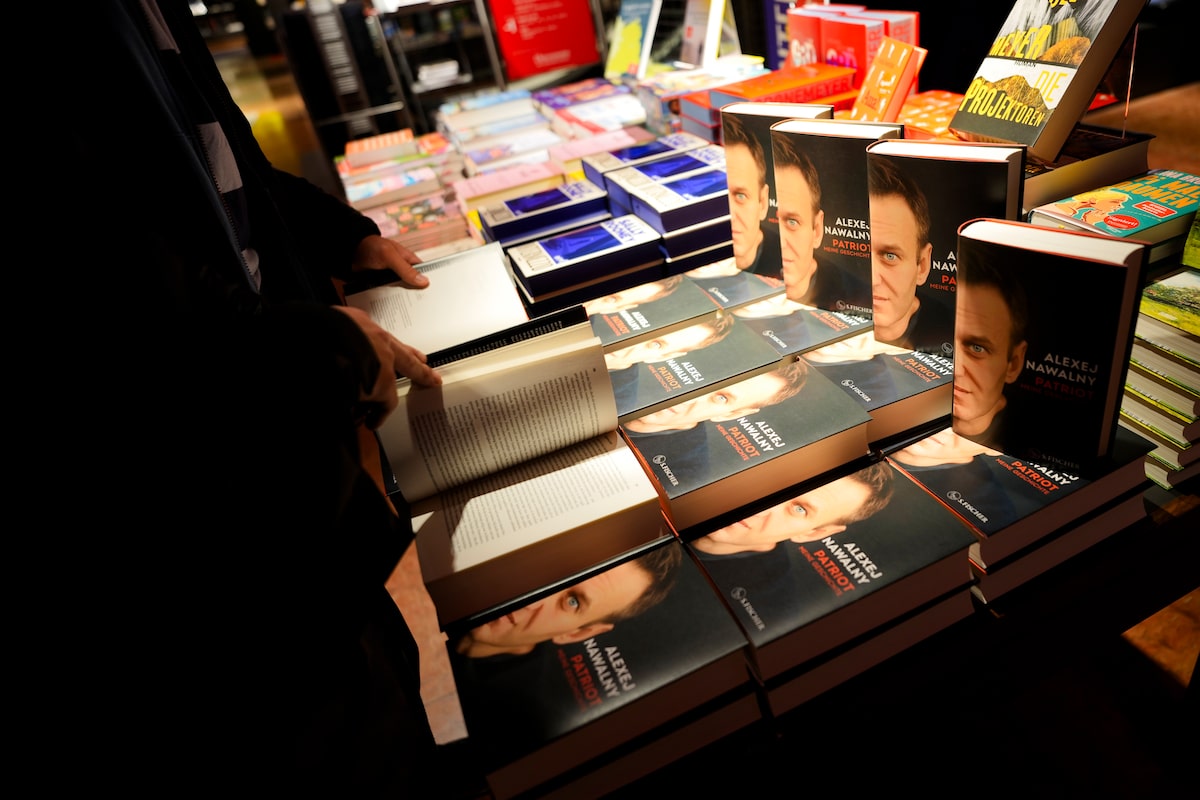
A dozen years and several wars later, Mr. Putin is still in power. Russia’s leading democrats are either dead, in prison or in exile. The closest Mr. Yashin has ever gotten to the government he so badly wants to change was a five-year term as a Moscow city councillor.
His hair is still jet black when we meet in Berlin, but time and stress have added new lines to his face. He comes across as irritated and depressed and admits that he’s struggling to adjust to his new life as one of Russia’s hundreds of thousands of political exiles.
“I know and understand well what it’s like to be a politician in Russia. I even know how to be a politician in prison. But I have only a very vague idea of how to be a politician abroad. So this is a big and serious challenge for me,” he says, flicking constantly at his phone as if hoping it will deliver some dramatic news that will make his next move clear.
“I am not here by my own will. I understand how difficult it is to be a politician in exile, but I have no choice. I have to do it.”
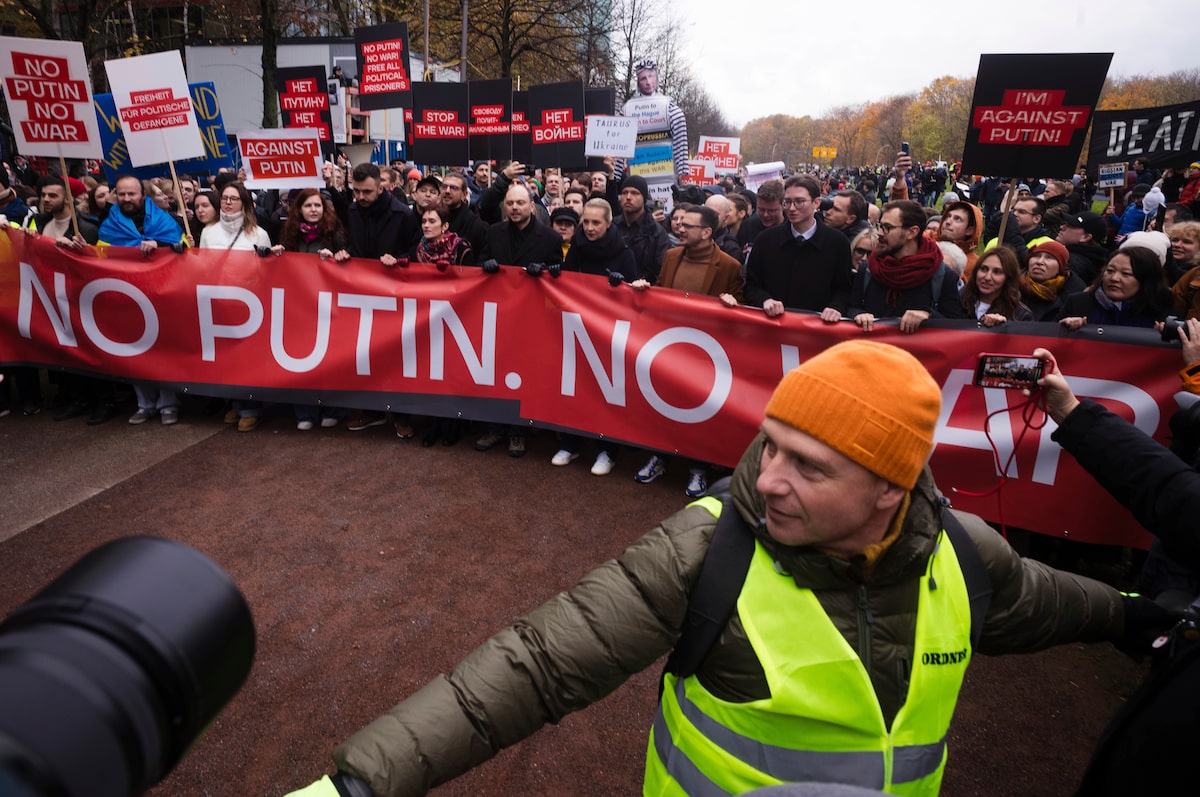
One recent attempt to figure out his new role came on Nov. 17, when he helped organize an anti-war demonstration that drew some 1,000 people into the streets of Berlin. Mr. Yashin marched at the front of the crowd – alongside Yulia Navalnaya, Mr. Navalny’s widow, and Vladimir Kara-Murza, another prominent opposition leader freed in the August prisoner swap – helping to carry a long red banner that read: “No Putin. No War.”
It resembled many of the demonstrations Mr. Yashin and his allies held in Moscow in the years before Mr. Putin ordered the invasion of Ukraine. But there has been little public protest in Russia since the early days of the war, as the Kremlin has escalated its years-long campaign to stamp out dissent.
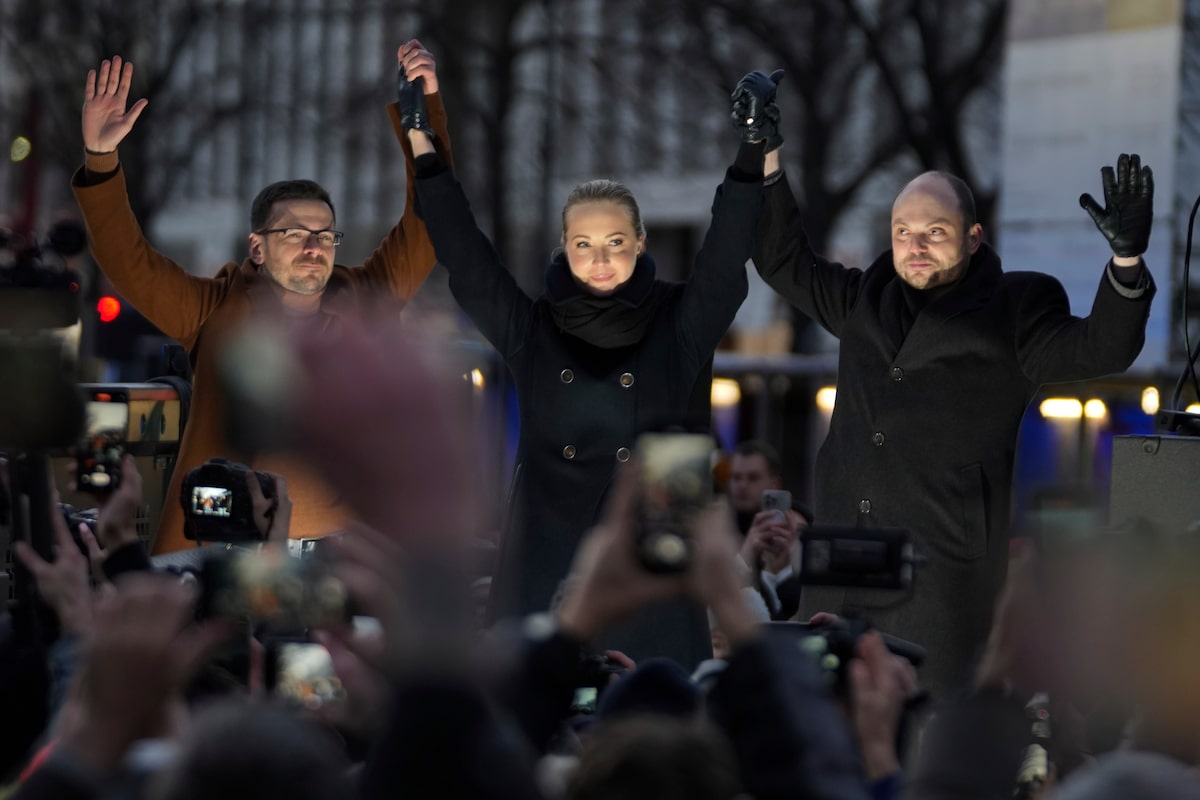
Mr. Yashin says the lack of public protest doesn’t mean Russians support the 72-year-old Mr. Putin or his war. He says most Russians regard the war as something akin to a natural disaster – bad for everyone, but something they can do little about.
“People think it’s stupid and suicidal to stand up and protest with a sign when a tornado is heading your way. If a tornado is coming, you hide under the table and wait it out.”
He says the Nov. 17 march in Berlin was a success because it helped build a feeling of community among some of the 235,000 Russian citizens who live in Germany, many of whom moved here after the start of the war. But it was still a protest held 1,800 kilometres away from Moscow – and would hardly have bothered the Kremlin.
Mr. Yashin has argued – in a pair of handwritten letters sent from jail to The Globe and Mail – that Russia’s opposition can be relevant only if it is based inside Russia, living among those it hopes to inspire and lead. (Letters from The Globe, and Mr. Yashin’s responses from behind bars, were exchanged via his lawyer.)
“Even in prison, I can still remain a politician. But not outside of the country. That’s exactly what Putin was counting on, that all his opponents get scared and leave and he would explain to the people that we are the foreign agents who ran away back to their masters. That’s why I’ve made the decision to stay, push back and hold my ground, despite the obvious risks,” he wrote in a six-page letter in May, 2023.
The problem for Mr. Yashin now is that he hasn’t changed his mind. “I really believe that when you are behind bars, your voice sounds much stronger and more convincing,” he says at the café as the city outside buzzes ahead of a cheerful weekend of Christmas markets and live music.

Mr. Yashin appears via video link at a court hearing in April, 2023, where he was denied appeal on an 8½-year sentence.Yulia Morozova/Reuters
Mr. Yashin was initially jailed in June, 2022, convicted under a new law that made it illegal to “discredit” the Russian military. He spent the first part of his detention in a prison near Moscow, where he shared a cell with three other inmates, before he was transferred to a facility in the city of Smolensk, near Russia’s border with Belarus. There he was sometimes held in a barracks with dozens of fellow inmates, other times in complete isolation.
He says the thousands of letters he received helped him combat the isolation that was the hardest part of his time in prison.
“When a political prisoner is behind bars, they are psychologically isolated from the outside world. The prison system tries to demonstrate the senselessness of what you are doing. They show you that no one needs you, that you are alone and have no support. And the only thing that brings you back to reality are the letters that people send from all over the world, from all over Russia.”
One of the first things he did after his August release was use his Telegram channel to call on his 200,000-plus followers to write letters to Alexei Gorinov, another former Moscow city councillor who has been jailed on charges similar to those brought against Mr. Yashin. On Monday, Mr. Gorinov – who is 63 and has a chronic lung condition – had an additional three years added to the seven-year sentence he was already serving.
Mr. Yashin says “it hurts” to see Mr. Gorinov still in prison while he’s free. He believes the Kremlin kept him in jail, rather than releasing him in the prisoner swap, as a way of influencing his colleague’s behaviour in Germany. “Gorinov is my hostage. Gorinov is being kept in prison to put psychological pressure on me,” he says.

Mr. Yashin still worries about the fate of Alexei Gorinov, whose placard reads 'do you still need this war?' at a 2022 court hearing.Reuters
He already puts a lot of pressure on himself. He says he likes Berlin and has delighted in seeing friends here. His parents also visited from Moscow to deliver some of his belongings. But he’s far more restless than relieved.
He recently toured several major European cities, meeting with members of the Russian diaspora to hear their opinions on how the pro-democracy movement should proceed now that it has largely been crushed inside Russia. He has also tried to listen to the Ukrainians he has encountered, after initially facing a wave of criticism for suggesting in a news conference soon after his release that “Russia and Ukraine need to sit down at the negotiating table.”
Mr. Yashin now says he has no right to give advice to Ukrainians – many of whom perceive negotiations, especially if they involve talks on territorial concessions, as capitulation. His message to Western politicians is that the best way to help Russia’s political opposition is to first help Ukraine defeat Mr. Putin.
One of the darkest moments of his 26 months in prison came when he learned of the Feb. 16 death of Mr. Navalny. “I don’t doubt that he didn’t just die but was murdered, and that the order to kill was given by Putin,” he wrote to The Globe moments after first hearing the news from his lawyer.
In the same Feb. 19 letter, Mr. Yashin acknowledged the possibility that he could be next.

Mr. Yashin says he isn't sure whether he is safe in Berlin, but is used to such risks.Jacobia Dahm/The Globe and Mail
He’s no longer in Correctional Facility No. 3, but he knows he’s not out of Mr. Putin’s reach. Berlin, he points out, is where Vadim Krasikov – a hitman for Russia’s Federal Security Service (FSB) who was sent back to Moscow in the prisoner exchange – murdered Chechen dissident Zelimkhan Khangoshvili in 2019, leading to Mr. Krasikov’s arrest.
“Was my life in danger when I was in prison? Yes, definitely. Can I feel safe in Berlin? I’m not sure. … When I was deported from Russia, the FSB officer who escorted me told me as we parted to behave quietly and calmly, because Krasikov could come back.”
Mr. Yashin has grown accustomed to such risk. What he struggles to deal with is his inability to go back to Russia and take the fight to Mr. Putin.
“I cannot say that I feel completely free, because I cannot return home. I cannot visit my parents, I cannot return to my apartment, I cannot walk around my favourite city. Putin has deprived me of my homeland.”

Axel Schmidt/Getty Images
Russia and the world: More from The Globe and Mail
The Decibel podcast
Nuclear sabre-rattling from Russia and a new weapons policy from the United States have brought the war in Ukraine to a critical phase, The Globe’s Mark MacKinnon told The Decibel recently. Subscribe for more episodes.
More from Mark MacKinnon
Putin confidently declares ‘new world order’ after his good week
Moldova’s pro-Western leader re-elected amid claims of Russian meddling
On a night with Ukraine’s drone warriors, the front line is far away but the fight is personal