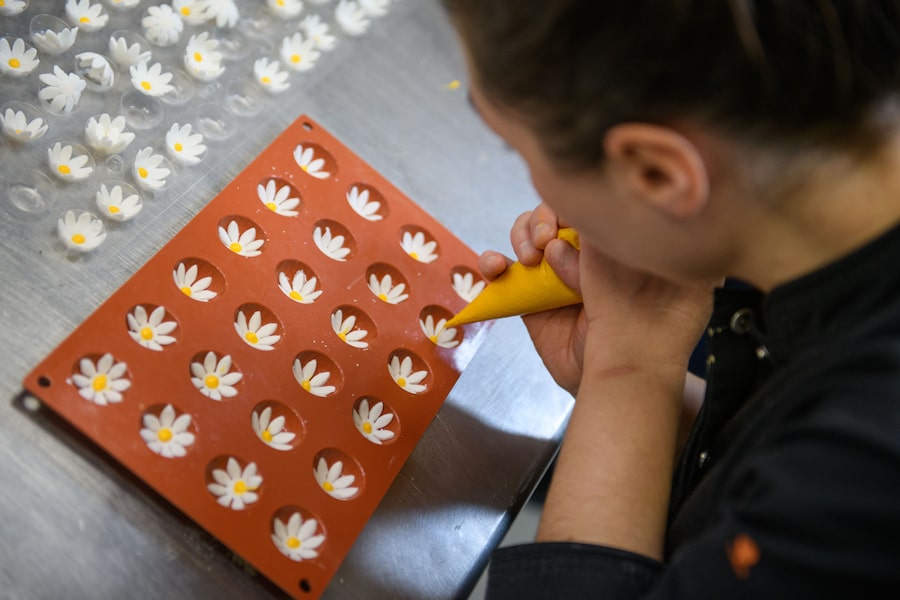
Stroke by stroke, Oleksiy Kamardin covers the paska with icing. The enriched, sweet bread is destined for a family to enjoy over the holidays and reminds Mr. Kamardin of his childhood in Donetsk, celebrating Orthodox Easter with his grandmother.
“My grandmother took me to the church for the night service, where we blessed our basket of Easter cake and eggs. It was really a big tradition and important day in Donetsk,” said Mr. Kamardin, 38, the owner of Dolceteka, a bakery and confectionery in Ukraine’s capital, Kyiv.
When Mr. Kamardin moved to Kyiv in 2014 from Donetsk to escape the Russian occupation, he was surprised that Easter was not a big celebration in the city. But since Russia’s full-scale invasion in 2022, Ukrainians have been buying more paska every year as they renew traditions and honour their roots.

Owner Oleksiy Kamardin, right, works at Dolceteka confectionery with head chef Oleh Ivzhenko, middle, and pastry chef Lyubov Shkarupila.
Paska is eaten at home, taken to church or enjoyed while spending time with loved ones. Gently sweet, soft and airy, it has notes of vanilla and dried fruit, giving it a warm and comforting taste.
Sliced and eaten with a cup of tea, it is the main Easter dish, traditionally shared with family after it is blessed in church.
“It’s all about sharing and saving our traditions. Showing the sense of normal life and continuity,” Mr. Kamardin said.
Orthodox Easter, on Sunday, is one of Ukraine’s most important religious and cultural holidays, and celebrates the resurrection of Christ. Ukrainians attend church services, bringing baskets of food including paska, and eggs to be blessed.

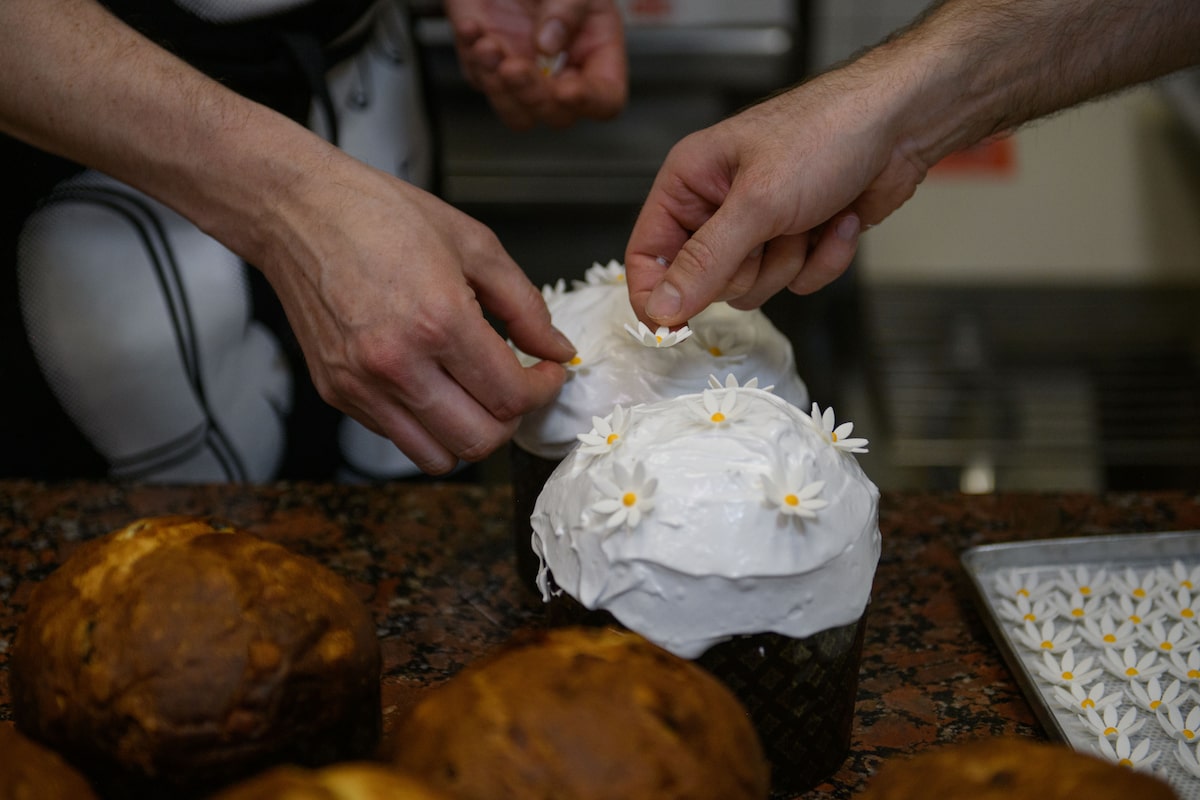
Ms. Shkarupila, preparing floral decorations, is part of a much reduced wartime staff at Dolceteka.
Mr. Kamardin never thought that he would live in Kyiv. Having gone to university in the capital, he returned home to Donetsk to work in his parents’ restaurant and confectionery shop. That changed when the Russians invaded and occupied his home city. He has not been able to return since because his life would be at risk.
“You really have to appreciate the ability to go home. Because, you know, when you can’t do that, it’s a completely different story,” Mr. Kamardin said.
In 2014, his family relocated to Kyiv with around 20 staff and, a year later, opened a new restaurant and bakery. Only a few remain from the original team. Some returned to Donetsk, some moved to Europe and others became soldiers or started new careers. Sous-chef Eduard Ostankov was conscripted by the army. He’s missed by pastry chef Oleh Ivzhenko, who said they would normally prepare paska together. Now, he has to do all the work himself.
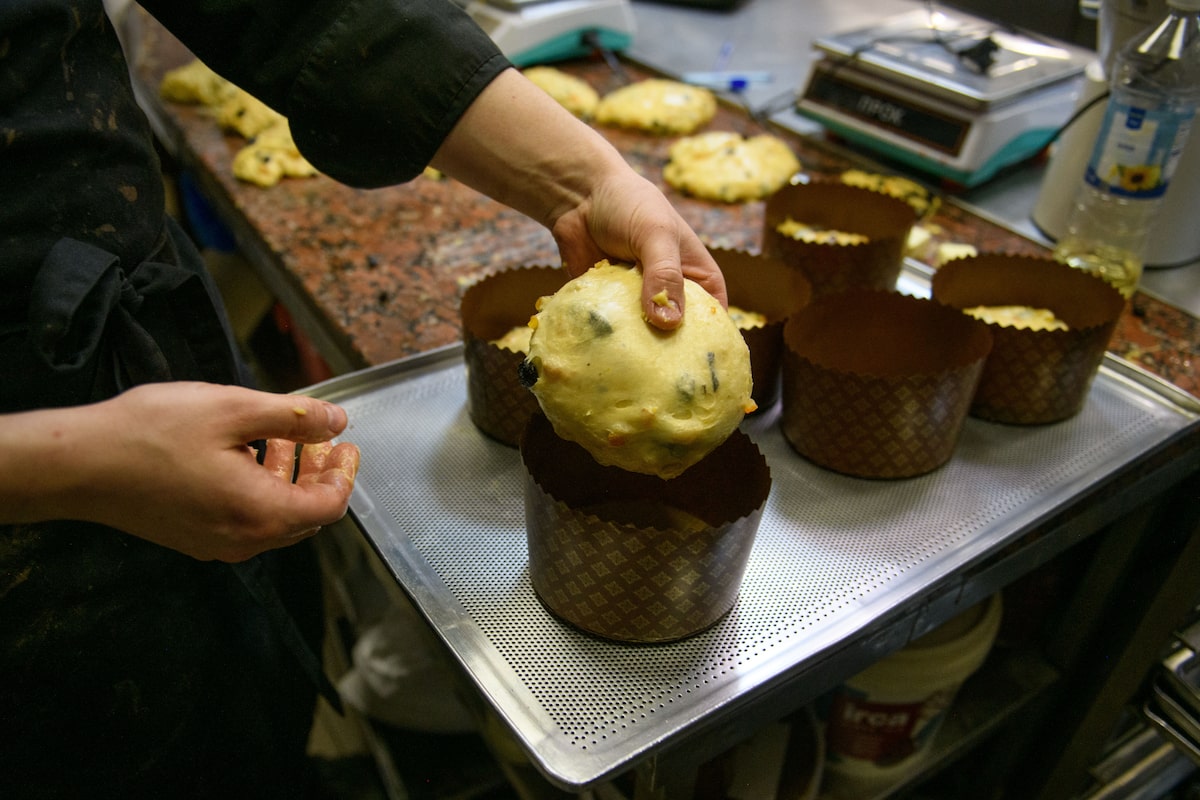
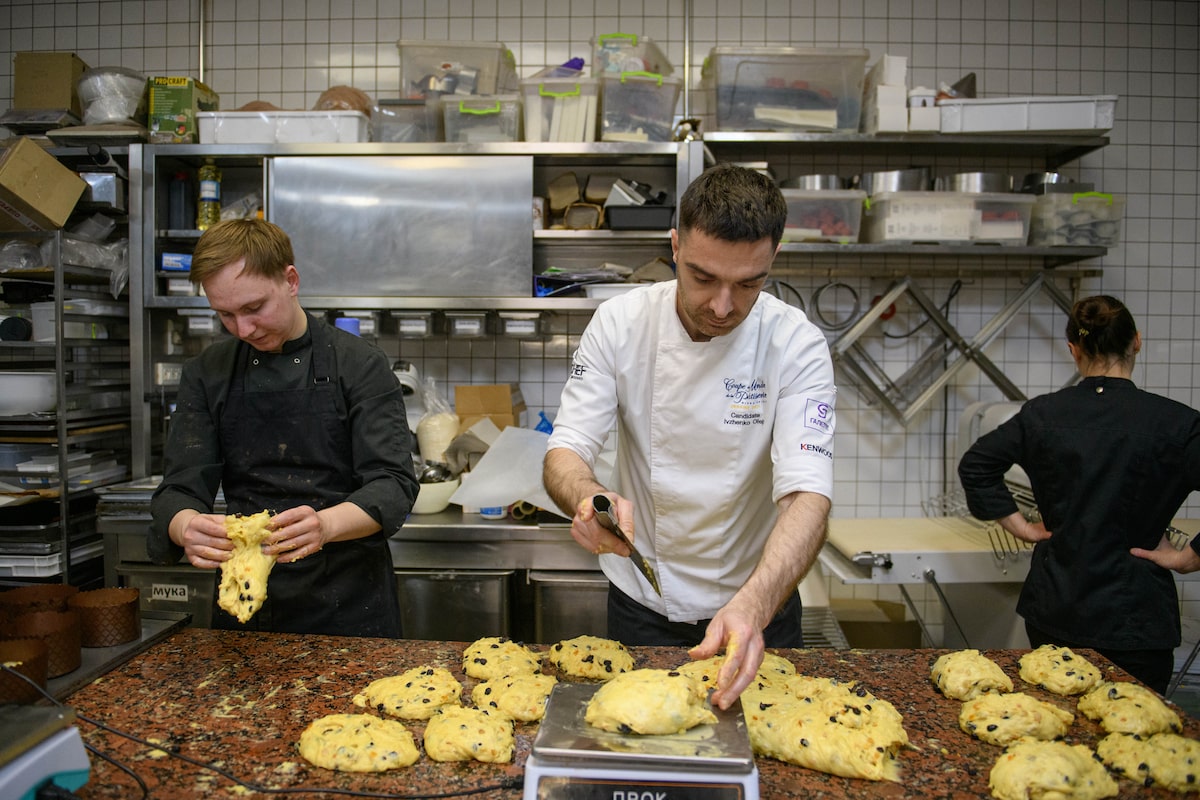
Mr. Ivzhenko forms the dough. He makes it look easy, but it takes around seven hours to make a single paska. The main ingredients are flour, eggs, milk, sugar, yeast and butter, along with raisins and vanilla.
It’s becoming more and more difficult to replace the staff, Mr. Kamardin explained. As the war continues, young men are being recruited into the army, or leaving the country, and girls are following them.
The hard work it takes to prepare sweets for the bakery is made even tougher after sleepless nights due to Russia’s rocket and drone attacks. If one member of the team doesn’t sleep through the night or has lost a loved one, they cannot put love into the paska because their thoughts are elsewhere.
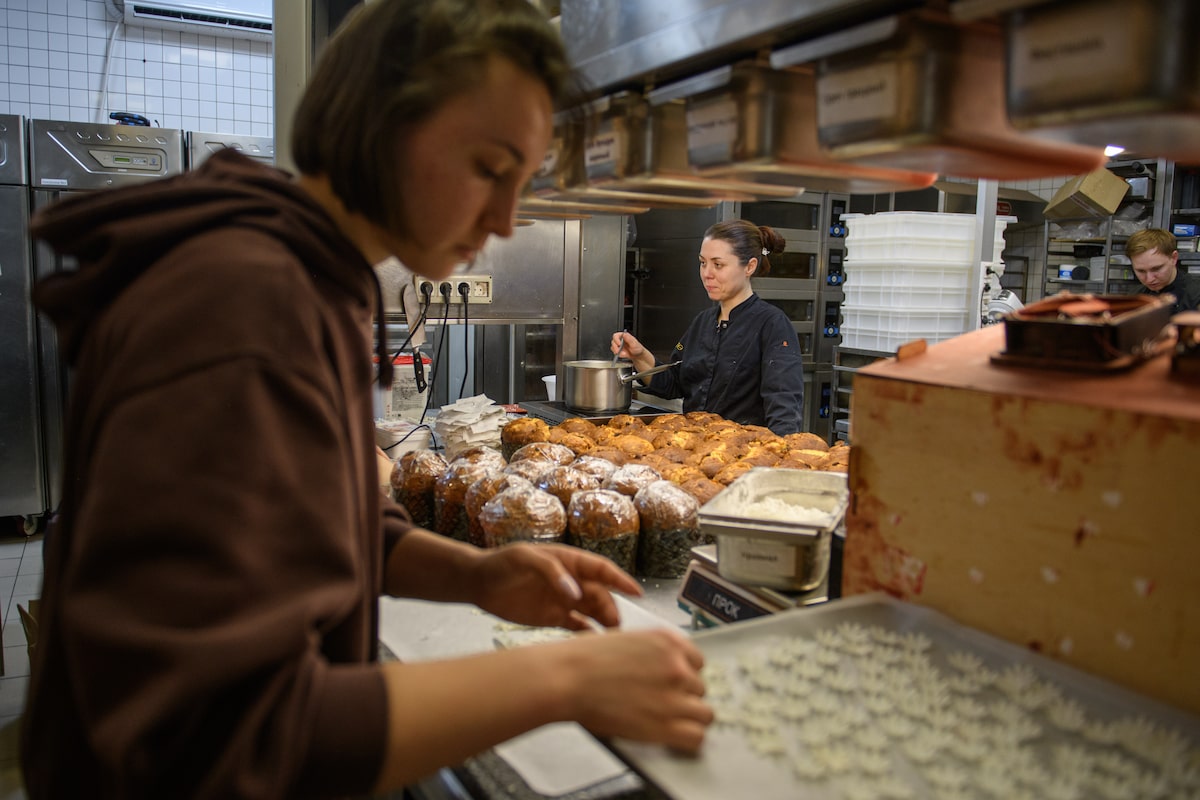
All the staff gather to decorate paska with icing and flowers made of sugar. They smile, sharing these moments like they would if they were celebrating with their families. Some staff are internally displaced people, some are Kyiv citizens, some have friends or relatives at the front.
But all are united by one thing – preparation of the Easter bread, the symbol of life’s victory over death.

Life during wartime: More from The Globe and Mail
In a frigid Pilates studio, Ukrainians keep moving after Russian attacks leave them without power
Soldiers heal through dance in a fifth year of war
This couple fled Ukraine four years ago. In Europe, one fateful piece of paper haunts them