

Latest updates
- Venezuela’s release of political prisoners is a “very important and smart gesture” that has spared it from a second wave of U.S. attacks, President Donald Trump said Friday. He added that the countries are “working well together” since last week’s capture of Nicolás Maduro, which left his deputy in charge of Venezuela.
- Canadians, from anxious oil producers to travellers cancelling Caribbean vacations, are still processing what this new status quo means to them. The Globe is collecting your questions so our reporters and experts can answer them as best they can.
Why did the U.S. attack Venezuela?
The U.S. military assault on Caracas on Jan. 3 was a big reversal of fortune for Venezuela’s Nicolás Maduro and the country he had ruled since 2013.
He is now a prisoner in the United States, where Mr. Trump accuses him of leading a drug cartel and claims he and his predecessors “stole our oil.”
Washington says key figures in the old autocratic regime will “run” Venezuela on its behalf, and has threatened other countries if they challenge its hegemony over the Western Hemisphere. That includes Canada, which is watching carefully as a new chapter of American empire unfolds.
How ‘Operation Absolute Resolve’ unfolded

Miraflores Presidential Palace
U.S. STRIKES*
National Assembly
La Carlota Air Base
Cuartel de
la Montaña
CARACAS
Fuerte Tiuna
2km
Higuerote
Catia La Mar
TRINIDAD
& TOBAGO
Barquisimeto
Hatillo
Charallave
VENEZUELA
GUYANA
COLOMBIA
BRAZIL
200km
*According to Colombian president Gustavo Petro
graphic news

Miraflores Presidential Palace
U.S. STRIKES*
National Assembly
La Carlota Air Base
Cuartel de
la Montaña
CARACAS
Fuerte Tiuna
2km
Higuerote
Catia La Mar
TRINIDAD
& TOBAGO
Barquisimeto
Hatillo
Charallave
VENEZUELA
GUYANA
COLOMBIA
BRAZIL
200km
*According to Colombian president Gustavo Petro
graphic news

Miraflores Presidential Palace
U.S. STRIKES*
National Assembly
La Carlota Air Base
Cuartel de
la Montaña
CARACAS
Fuerte Tiuna
2km
Higuerote
Catia La Mar
TRINIDAD
& TOBAGO
Barquisimeto
Hatillo
Charallave
VENEZUELA
GUYANA
COLOMBIA
BRAZIL
200km
*According to Colombian president Gustavo Petro
graphic news
A CIA team spent months in Caracas tracking Mr. Maduro’s movements and planning the ideal moment to strike.
Once Mr. Trump gave the go-ahead on the night of Jan. 2, a cyberattack threw the capital into darkness. Delta Force commandos raided Mr. Maduro’s compound, taking him and his wife, Cilia Flores, to a warship in the Caribbean Sea.
When the attack was over, 100 people were dead, Venezuela’s Interior Minister would later confirm. That includes a large part of Mr. Maduro’s security detail and, according to Cuba, 32 soldiers and intelligence staff from that country. (Venezuela and Cuba have a long history of exchanging soldiers, medics and other personnel.)

Nicolás Maduro, arraigned in New York with his wife, Cilia Flores, denies the drug-trafficking and conspiracy charges he now faces, and describes his capture as a kidnapping.Jane Rosenberg/Reuters
Is this legal?
Only the U.S. Congress has the power to declare war, but Mr. Trump left lawmakers in the dark before seizing Mr. Maduro. The Trump administration denies that this was an act of war, calling it a law-enforcement mission to capture a fugitive. Legal experts say that’s dubious: International law generally requires a military provocation for a military response. And since the U.S., like Canada, has not acknowledged Mr. Maduro as the lawful president since 2019, there is no local authority that could consent to his capture, as there was in other cases where U.S. forces seized criminal suspects abroad.
When is Maduro’s trial?
Mr. Maduro, awaiting trial for “narco-terrorism,” has his next scheduled court date on March 17 in New York. He’ll be represented by Barry Pollack, the Washington-based defence lawyer who helped Julian Assange secure a plea deal in 2024.
Who’s in charge of Venezuela?

Delcy Rodríguez is interim president of Venezuela, but Mr. Trump has threatened that she will govern only as long as he allows it.Leonardo Fernandez Viloria/Reuters
Venezuela’s Supreme Court swore in Mr. Maduro’s vice-president, Delcy Rodríguez, as interim leader on Jan. 5. Mr. Trump and U.S. Secretary of State Marco Rubio claim that they will govern Venezuela through her. It’s unclear how that will work: She’s a dedicated socialist, they are decidedly not. All three have given mixed signals about who is in charge. But Mr. Trump has made clear that, if Venezuela defies him, U.S. troops could attack the country again.
Mr. Trump has also sidelined two key figures in the Venezuelan opposition: María Corina Machado, leader of the main anti-Maduro bloc, and Edmundo González Urrutia, acknowledged by international monitors as the victor in 2024’s presidential election. Keeping Mr. Maduro’s party in power in exchange for oil has angered many in the Venezuelan diaspora who had hoped for a return to democracy.


Trump’s plans for Venezuela’s oil
Venezuela has larger proven oil reserves than any other country on Earth, and it’s spent decades trying to keep them under sovereign control. It co-founded OPEC in 1960 to balance the playing field with U.S. and British oil firms, though these still did business in Venezuela even after oil production was nationalized in 1976. High oil prices and good relations with the United States helped keep Venezuela a democratic, prosperous country through an era of U.S.-backed military coups across the rest of South America.
The relationship soured under president Hugo Chávez, a self-described socialist who made state oil company PDVSA into an arm of his party machine. PDVSA squeezed out U.S. companies such as ExxonMobil and ConocoPhillips, expropriating their assets in 2007. Mr. Trump characterizes that as “theft” and says U.S. companies will return to Venezuela to rebuild. That will not be easy: Venezuelan energy infrastructure is old, running at a fraction of its capacity in pre-chavista times. Mr. Trump acknowledges that fixing it will cost billions.
From the Monroe Doctrine to the ‘Donroe Doctrine’
In Washington, as in Caracas, ideas from the 1820s loom large in this conflict. The Monroe Doctrine, laid out by U.S. president James Monroe in 1823, was a plea to European empires to leave the Americas alone. At that time, Venezuela had recently broken loose from Spain under Simón Bolívar, the “Liberator” whose name Mr. Chávez used for his movement.
Later U.S. presidents used “corollaries” to the doctrine to justify armed interventions in Latin America. Mr. Trump has gone farther in this than his predecessors: He’s said the United States should take Greenland from Denmark to keep up with China in a struggle for resources and trade. Speaking about his “Donroe Doctrine” after Mr. Maduro’s capture, he said: “Under our new national security strategy, American dominance in the Western Hemisphere will never be questioned again.”

Jesus Linares, right, carries away a damaged painting of Simón Bolívar from his house in Catia La Mar, Venezuela, which he says was hit in the U.S. assault.Matias Delacroix/The Associated Press

The reaction in Venezuela, Latin America and beyond
Venezuelans
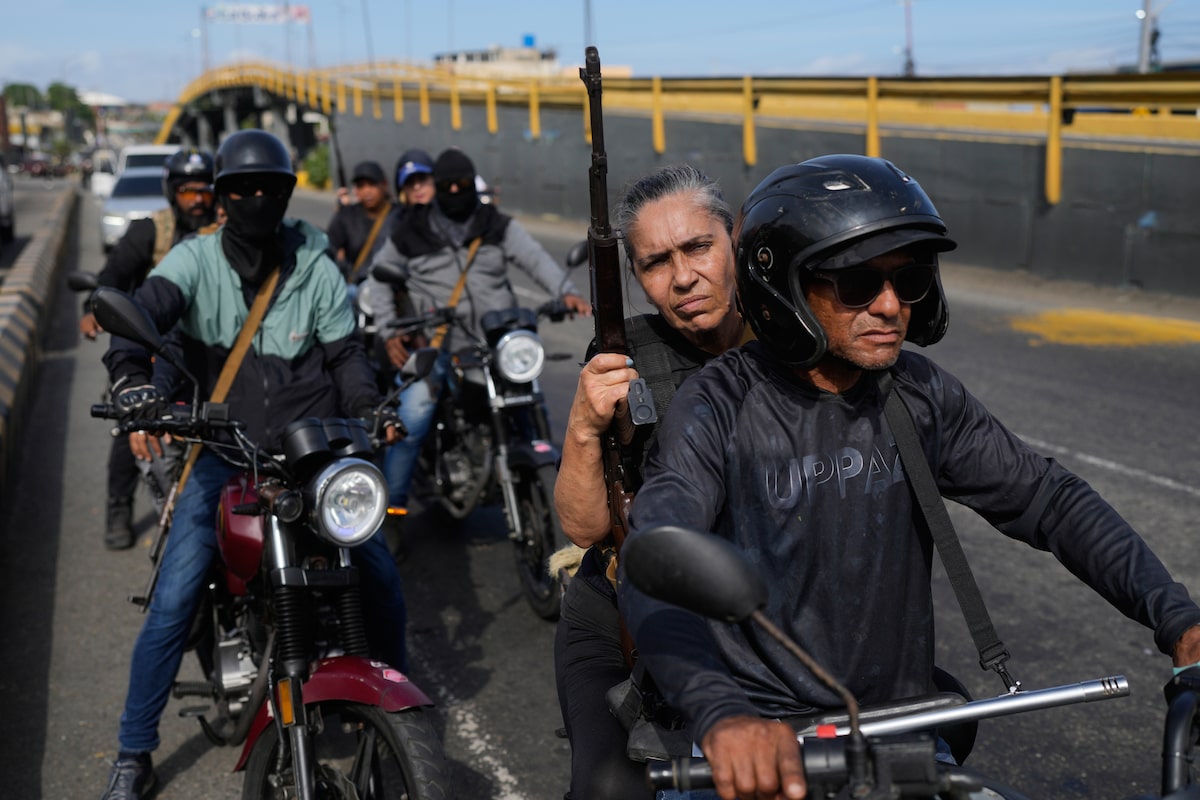
Gauging the public reaction within Venezuela has been difficult because Mr. Maduro’s loyalists and their colectivos – civilian militias – are still around to police dissent. They’ve arrested journalists and stopped Venezuelans in the street to check their phones for political messages.
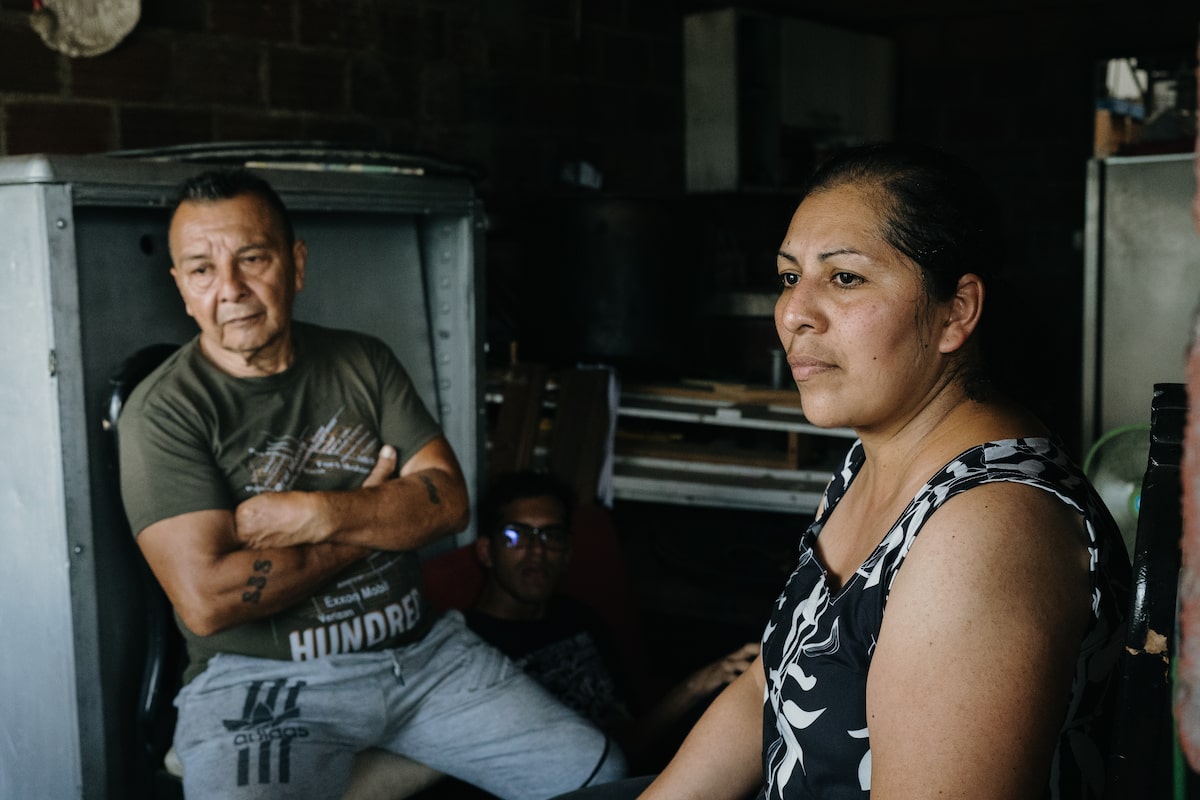
In the diaspora, many who fled the Bolivarian regime have celebrated Mr. Maduro’s ouster. Eddy Ramirez, a student in Canada, told The Globe she cried at the news, unsure whether it was joy or despair: “No one likes to see their home country being bombed. It’s not what we want for the place we love.”
Latin America
Trump allies such as Argentina’s Javier Milei and El Salvador’s Nayib Bukele cheered for what has happened to Mr. Maduro. Their leftist counterparts prepared for the worst when Mr. Trump suggested they could be next. President Gustavo Petro said arresting him would “unleash the popular jaguar” in Colombia, though his defence minister played down the threat of U.S. intervention.

Prime Minister Mark Carney, visiting Paris soon after the Venezuela attack, met with Danish counterpart Mette Frederiksen, who was again rebuffing U.S. threats to take over Greenland.Christinne Muschi/Reuters
Canada
Mr. Carney’s statements on Venezuela have been careful not to condemn the U.S. intervention; instead, he’s urged all parties to follow international law and respect the wishes of Venezuela’s people. He’s also reassured Canadian oil producers that a potential surge of U.S.-managed Venezuelan crude is a “low risk” to their bottom line.
China
Under Mr. Maduro, China was the biggest foreign player in Venezuela’s oil industry, and stands to lose much if Mr. Trump redirects the oil elsewhere. Beijing condemned Washington’s “blatant use of force against a sovereign state,” and analysts are watching in case a new Sino-American conflict erupts.
Compiled by Globe staff
With reports from Paul Waldie, Nathan VanderKlippe, Adrian Morrow, Janice Dickson, Jason Kirby, Patrick White, The Associated Press and Reuters